Understanding the rule of priority to the right is essential for safe driving and success in the French theory test. Many learners fail to scan effectively in small towns, where the absence of stop or yield signs means the default rule of yielding to the vehicle on your right always applies. This article breaks down how to identify these intersections and maintain constant vigilance to avoid common exam pitfalls.
Article content overview
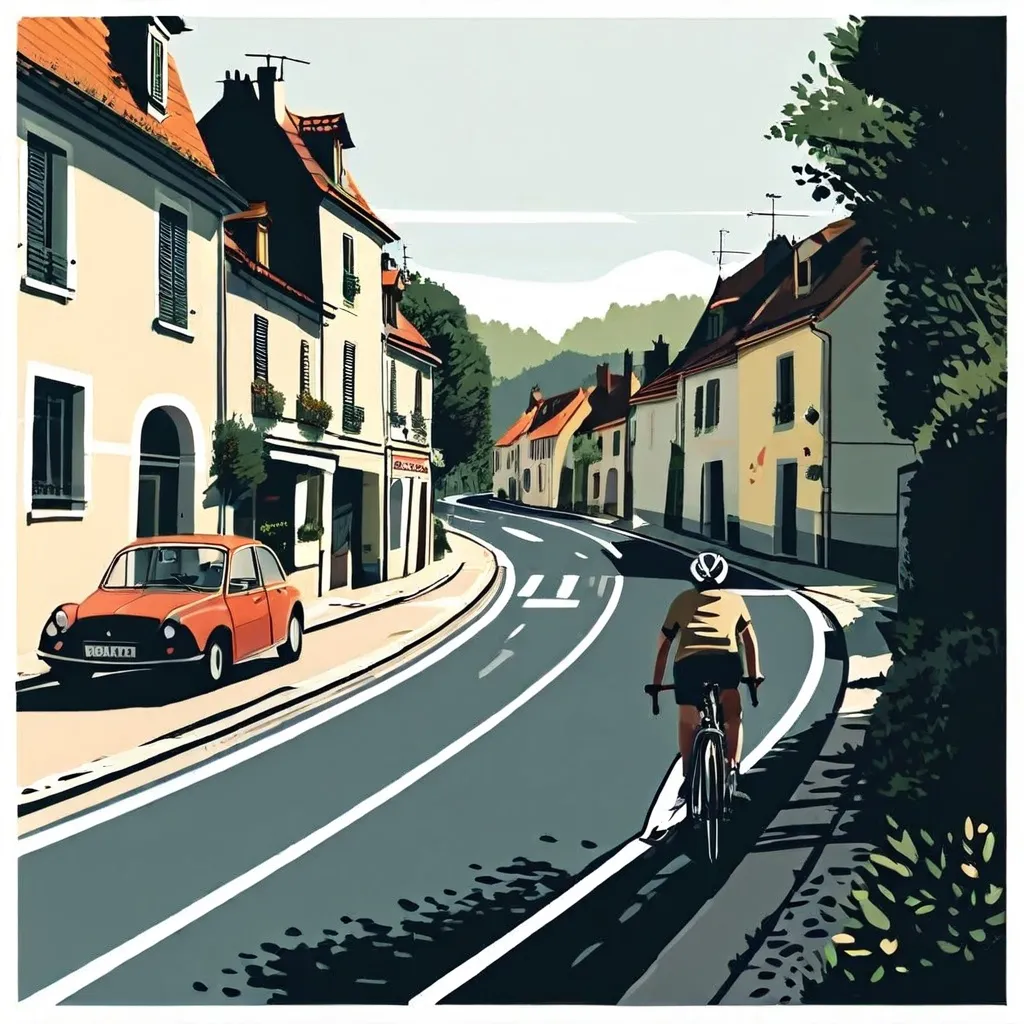
Navigating the roads of France requires more than just knowing how to operate a vehicle; it demands an acute understanding of the Code de la route. One of the most frequent sources of errors during the French driving theory exam—and a common point of confusion for new drivers in rural areas—is the rule of priorité à droite (priority to the right). When you drive through small villages or quiet residential areas, you will often encounter junctions where there are no traffic lights, stop signs, or yield markings. In these instances, the default rule applies: you must yield to any vehicle emerging from a road to your right.
The principle of priorité à droite is the default priority rule in France. Unless a sign or road marking explicitly indicates otherwise, the vehicle on your right always has the right of way. This rule applies even if the road on your right appears to be a smaller, less significant lane or a residential street. A common trap in the theory test involves images showing a wide road intersecting with a narrow gravel path; even in this scenario, if there is no signage like a "Cédez le passage" or "Stop" sign for the driver on the right, you are legally obligated to let them pass.
Many learners fail their exam because they assume that because they are on a "main" road, they have priority. However, in the absence of signs that modify priority—such as a "Route à caractère prioritaire" sign—your status as a driver on a wider road does not grant you the right of way over a vehicle approaching from the right. You must scan for these intersections, reduce your speed, and be prepared to stop if a vehicle appears.
To master the theory test, you must become adept at reading the environment. When approaching an intersection, your first instinct should be to scan for signs that dictate the flow of traffic. If you see a triangular sign with a cross, it indicates an intersection where priority to the right applies. If you see signs indicating that you are on a priority road, you can proceed with more confidence, but you should still maintain a defensive driving posture.
When you identify an intersection, follow this logical process to ensure you are complying with the Code de la route and avoiding common pitfalls.
While signs provide clear warnings, road markings serve as a secondary confirmation of your responsibilities. A "Stop" line, marked by a solid white line across the road, is absolute; you must come to a complete halt, even if the road appears empty. A dashed line, or "ligne de cédez le passage," indicates that you must yield but do not necessarily have to stop if the way is clear.
| Signage/Marking | Priority Status | Required Action |
|---|---|---|
| No signs/markings | Priority to the right | Yield to the right |
| AB1 Sign | Priority to the right | Prepare to yield |
| B6 Sign | You have priority | Proceed with caution |
| Stop Sign | You must yield | Full stop required |
The French theory exam (ETG) often includes challenging visuals designed to test your situational awareness. A common "piège" (trap) involves a scenario where a pedestrian is waiting to cross at an unmarked intersection. Remember that your duty to yield to the right does not override your responsibility toward vulnerable road users. Always scan for pedestrians and cyclists, especially near schools or shops in small towns, where visibility might be reduced by parked vehicles.
The 'priorité à droite' rule is the default priority system in France that applies at any unmarked intersection. When no signs or road markings indicate otherwise, you must yield to vehicles approaching from your right, regardless of how important your road appears. Specific signs like the AB1 (priority ahead) and B6 (priority road) modify or confirm priority status, while road markings such as solid Stop lines or dashed yield lines dictate your required action. The ETG exam frequently tests your ability to recognize these scenarios and maintain constant vigilance for vulnerable road users at every junction.
A short set of high-value points that capture the most important ideas from this article.
Priority to the right is the default rule at any unmarked intersection in France unless signs explicitly modify it
Road width or appearance does not grant priority over a vehicle approaching from your right
Always scan for regulatory signs first: Stop, Cédez le passage, or priority road signs
The B6 'priority road' sign overrides the default rule in your favor on that road section
Yielding to the right does not override your duty toward vulnerable road users like pedestrians and cyclists
AB1 sign warns you are approaching an intersection where priority to the right applies
B6 sign indicates you have priority until the priority section ends
A solid white Stop line requires a complete halt; a dashed line means yield only if needed
Check mirrors and blind spots before proceeding—cyclists and motorcyclists often appear at the last moment
When no signs exist, slow down early to give yourself time to observe the intersecting road
Assuming you have priority because your road is wider or looks more important
Failing to slow down and scan at unmarked village junctions where the rule applies
Overlooking pedestrians waiting to cross at unmarked intersections near schools or shops
Neglecting blind spot checks before proceeding at intersections
Forgetting that priority to the right is only the default—it can be modified by signs
Article content overview
A short set of high-value points that capture the most important ideas from this article.
Priority to the right is the default rule at any unmarked intersection in France unless signs explicitly modify it
Road width or appearance does not grant priority over a vehicle approaching from your right
Always scan for regulatory signs first: Stop, Cédez le passage, or priority road signs
The B6 'priority road' sign overrides the default rule in your favor on that road section
Yielding to the right does not override your duty toward vulnerable road users like pedestrians and cyclists
AB1 sign warns you are approaching an intersection where priority to the right applies
B6 sign indicates you have priority until the priority section ends
A solid white Stop line requires a complete halt; a dashed line means yield only if needed
Check mirrors and blind spots before proceeding—cyclists and motorcyclists often appear at the last moment
When no signs exist, slow down early to give yourself time to observe the intersecting road
Assuming you have priority because your road is wider or looks more important
Failing to slow down and scan at unmarked village junctions where the rule applies
Overlooking pedestrians waiting to cross at unmarked intersections near schools or shops
Neglecting blind spot checks before proceeding at intersections
Forgetting that priority to the right is only the default—it can be modified by signs
Explore related topics, search based questions, and concepts that learners often look up when studying Mastering French Priority Rules. These themes reflect real search intent and help you understand how this topic connects to wider driving theory knowledge in France.
Find clear and practical answers to common questions learners often have about Mastering French Priority Rules. This section helps explain difficult points, remove confusion, and reinforce the key driving theory concepts that matter for learners in France.
In France, at an intersection where no specific road signs or markings are present, the rule is to yield priority to any vehicle approaching from your right.
No, especially in small villages or residential areas, many intersections are unmarked. You must assume 'priorité à droite' applies unless a sign clearly indicates otherwise.
Look for street corners, gaps in building lines, or driveways that resemble cross-streets. Always scan for movement to your right even if you do not see a formal intersection sign.
No, modern French roundabouts almost always feature 'cédez-le-passage' (yield) signs, giving priority to those already in the circle, which overrides the general priority to the right rule.
Continue your preparation for the French permis de conduire exam. Dive deeper into specific Code de la route sections, practice scenarios, or review official procedures. Use our comprehensive article collection to master every aspect of driving theory.