
Understanding where you can and cannot park is a fundamental requirement for every driver in France. This guide details the legislative standards that protect visibility at junctions and pedestrian crossings, helping you recognize high-risk zones that are frequently tested in the ETG exam.
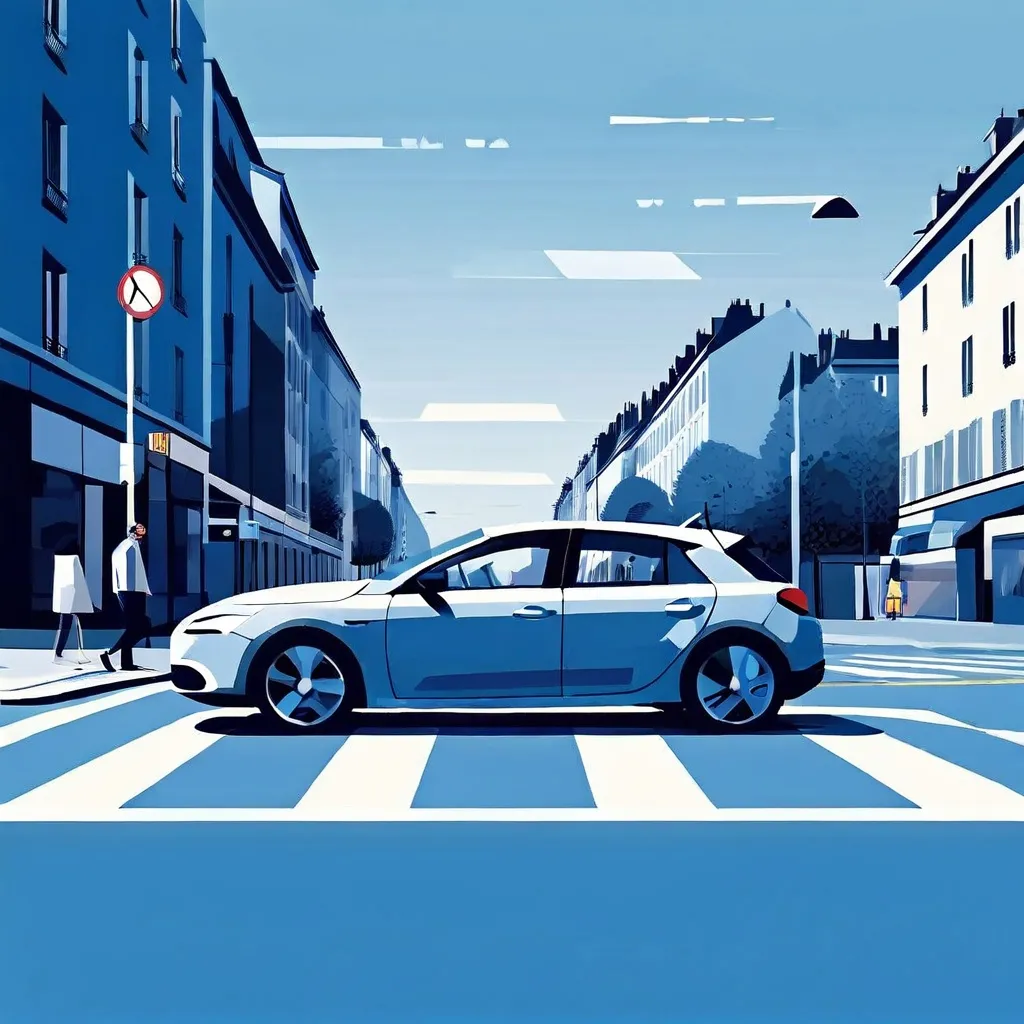
Article content overview
Understanding where to park your vehicle is a critical aspect of the French Code de la route. For candidates preparing for the Épreuve Théorique Générale (ETG), distinguishing between a simple inconvenience and a serious traffic violation is essential. Parking offenses are not merely administrative nuisances; they represent significant safety risks to other road users, particularly the most vulnerable ones such as pedestrians and cyclists.
In France, the law draws a firm line between parking that is simply "gênant" (obstructive) and parking that is "très gênant" (highly obstructive). This distinction is a frequent topic in the driving theory exam because it highlights the severity of the danger posed to others. When you park in a way that blocks the view of a pedestrian crossing or forces a vulnerable user into the middle of the road, you are creating a "stationnement très gênant."
Parking is classified as highly obstructive when it compromises the safety of others, such as blocking a sidewalk, a pedestrian crossing, or an area specifically designed for vulnerable road users. Such actions are subject to heavy fines and potential vehicle impoundment.
The primary reason for these strict regulations is visibility. Drivers approaching an intersection or a pedestrian crossing need clear lines of sight to anticipate the presence of people. If your vehicle obscures this view, you are significantly increasing the risk of a serious accident. During your theory test, pay close attention to questions describing vehicles parked near corners or on pedestrian crossings, as these are classic examples of behaviors that the Code de la route strictly prohibits.
To avoid penalties and ensure the safety of your local community, you must adhere to several fundamental rules. In urban areas, it is strictly forbidden to park on or within five meters of a pedestrian crossing, as this distance ensures that both drivers and pedestrians have sufficient time to react to one another.
When approaching an intersection, you must avoid parking close enough to the junction to obstruct the vision of other drivers trying to turn or emerge onto a busier road. Blocking the sightlines of other motorists can lead to collisions, and the authorities consider this a failure in your responsibility as a driver. Always look for official road markings, such as "zébras" (white diagonal lines painted on the road), which are specifically designed to keep these sensitive zones clear.
Failure to respect these parking rules leads to financial penalties and, in many cases, the loss of points on your license. The French authorities categorize offenses based on their impact on road safety. A "stationnement très gênant" is treated as a fourth-class contravention, carrying an immediate fixed fine of 135 euros.
Common Exam Trap: Some theory questions will suggest that parking with your hazard lights on makes it acceptable to block a pedestrian crossing or a sidewalk. This is completely false. Hazard lights do not grant you any legal exemption to park in prohibited areas; they are only for use in emergency situations or when your vehicle has broken down.
| Location Type | Rule Summary | Risk Level |
|---|---|---|
| Pedestrian Crossing | Strictly forbidden on and 5m before | High |
| Sidewalks | Strictly forbidden (to protect pedestrians) | High |
| Intersection Corners | Avoid blocking sightlines | Moderate/High |
| Bus Stops | Prohibited to ensure public transport access | Moderate |
When you encounter questions about parking in the exam, always put the safety of pedestrians and cyclists first. If an option involves obstructing a sidewalk or creating a blind spot, it is almost certainly the incorrect choice. Focus your revision on identifying scenarios where visibility is restricted and choose the action that keeps the road clear and safe for everyone.
The French Code de la route makes a critical distinction between standard obstructive parking ('gênant') and highly obstructive parking ('très gênant'), with the latter applying when visibility at pedestrian crossings or intersections is compromised. In urban areas, you must park at least 5 meters from any pedestrian crossing, and special road markings called 'zébras' indicate zones where parking is strictly forbidden. Parking that blocks sidewalks, crossings, or sight lines constitutes a 4th class contravention with a 135 euro fine. A frequent exam trap involves questions suggesting hazard lights permit illegal parking—these are false and designed to test your understanding that hazard lights grant no exemption.
A short set of high-value points that capture the most important ideas from this article.
Parking near pedestrian crossings is classified as 'très gênant' when it compromises visibility or forces vulnerable road users into the road
You must maintain at least 5 meters distance from a pedestrian crossing when parking in urban areas
The French Code de la route treats obstructive parking as a safety issue, not merely an administrative violation
Road markings called 'zébras' (white diagonal lines) are specifically designed to keep sight lines clear at intersections
When answering ETG exam questions, prioritize pedestrian and cyclist safety over driver convenience
'Stationnement très gênant' is a 4th class contravention with a fixed fine of 135 euros
The 5-meter rule applies specifically to parking before pedestrian crossings in urban areas
Hazard lights provide NO legal exemption to park in prohibited zones
'Zébras' are the white diagonal road markings that mark areas where parking is forbidden
Obstructing a sidewalk is classified as highly obstructive parking, not just inconvenient
Assuming hazard lights make it acceptable to park near pedestrian crossings or on sidewalks
Confusing the severity of 'gênant' (obstructive) vs 'très gênant' (highly obstructive) parking offenses
Parking within 5 meters of a pedestrian crossing believing a brief stop is acceptable
Thinking that blocking sight lines at an intersection is a minor offense when it is 'très gênant'
Believing visible parking (e.g., with lights on) near a crossing is legally permitted
Article content overview
A short set of high-value points that capture the most important ideas from this article.
Parking near pedestrian crossings is classified as 'très gênant' when it compromises visibility or forces vulnerable road users into the road
You must maintain at least 5 meters distance from a pedestrian crossing when parking in urban areas
The French Code de la route treats obstructive parking as a safety issue, not merely an administrative violation
Road markings called 'zébras' (white diagonal lines) are specifically designed to keep sight lines clear at intersections
When answering ETG exam questions, prioritize pedestrian and cyclist safety over driver convenience
'Stationnement très gênant' is a 4th class contravention with a fixed fine of 135 euros
The 5-meter rule applies specifically to parking before pedestrian crossings in urban areas
Hazard lights provide NO legal exemption to park in prohibited zones
'Zébras' are the white diagonal road markings that mark areas where parking is forbidden
Obstructing a sidewalk is classified as highly obstructive parking, not just inconvenient
Assuming hazard lights make it acceptable to park near pedestrian crossings or on sidewalks
Confusing the severity of 'gênant' (obstructive) vs 'très gênant' (highly obstructive) parking offenses
Parking within 5 meters of a pedestrian crossing believing a brief stop is acceptable
Thinking that blocking sight lines at an intersection is a minor offense when it is 'très gênant'
Believing visible parking (e.g., with lights on) near a crossing is legally permitted
Explore related topics, search based questions, and concepts that learners often look up when studying French Parking Rules and Restrictions. These themes reflect real search intent and help you understand how this topic connects to wider driving theory knowledge in France.
Find clear and practical answers to common questions learners often have about French Parking Rules and Restrictions. This section helps explain difficult points, remove confusion, and reinforce the key driving theory concepts that matter for learners in France.
It is a classification for parking that severely obstructs the view or path of vulnerable road users, such as pedestrians or cyclists, or blocks protected infrastructure like pedestrian crossings.
No, parking on or immediately before a pedestrian crossing is strictly prohibited and classified as a highly obstructive parking offense because it creates significant visibility hazards.
These rules are designed to maintain clear visibility for all road users, ensuring that drivers can spot oncoming traffic and pedestrians before entering or crossing an intersection.
Continue your preparation for the French permis de conduire exam. Dive deeper into specific Code de la route sections, practice scenarios, or review official procedures. Use our comprehensive article collection to master every aspect of driving theory.