
Navigating French urban areas requires a precise understanding of pedestrian rights and the specific obligations of drivers at various types of crossings. This article breaks down the legal priority rules for pedestrians in standard urban zones, 'zone 30', and shared 'zone de rencontre' environments, ensuring you are prepared for both the ETG theory test and real-world safety scenarios.
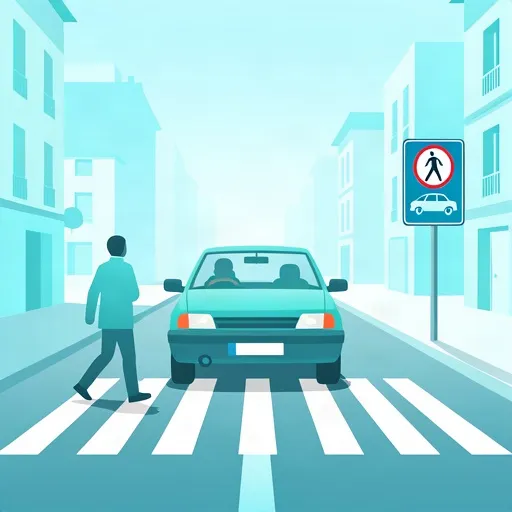
Article content overview
Mastering the rules of pedestrian interaction is a cornerstone of the French driving theory exam, or ETG (Épreuve Théorique Générale). In the dense, historic, and increasingly shared traffic environments of French cities, understanding exactly when a driver must yield to a vulnerable road user is not just a requirement for passing your test—it is a vital skill for accident prevention. This guide explores the legal expectations, signage nuances, and behavioral mandates you will encounter during your assessment.
In France, the Code de la route places a high level of responsibility on the driver, who is considered the operator of a potentially dangerous machine. Pedestrians, being the most vulnerable, enjoy a high level of legal protection. When a pedestrian is already engaged in crossing a road, or clearly signals an intention to do so—even if they have not yet stepped onto the carriageway—the driver must, if necessary, bring their vehicle to a complete stop to allow them to pass safely. Failure to yield in these situations is a major traffic violation that carries heavy fines and the potential loss of points on your license.
French urban planning has introduced several distinct zones that alter the traditional rules of the road. On the theory exam, it is common to see questions that present a specific sign, expecting you to identify the mandatory behavior for that zone. Understanding the hierarchy of priority in these areas is essential to avoid the "exam traps" that catch many candidates.
In a standard urban environment, priority is usually governed by marked pedestrian crossings, known as passages piétons. In a zone de rencontre, the entire street is designated as a shared space, effectively prioritizing the pedestrian over the vehicle in all instances.
| Zone Type | Speed Limit | Pedestrian Status | Driver Obligation |
|---|---|---|---|
| Standard Urban | 50 km/h | At marked crossings | Yield at crosswalks |
| Zone 30 | 30 km/h | Encouraged crossing | High vigilance |
| Zone de rencontre | 20 km/h | Priority everywhere | Absolute priority to pedestrians |
A frequent point of confusion on the ETG exam involves the difference between "yielding" and "stopping." You are not required to stop at every pedestrian crossing if there is no one waiting or crossing. However, you must adjust your speed and scanning pattern as you approach the crossing to ensure you have sufficient time to stop safely if someone steps out.
Hazard perception is tested heavily in the context of urban traffic. Always scan for movement beyond just the immediate crosswalk. Cyclists and users of personal mobility devices, such as electric scooters, often move faster than pedestrians and can appear in your path unexpectedly. By maintaining a speed appropriate for the environment—or even lower in high-density areas—you demonstrate to the examiner that you are a responsible driver who prioritizes the safety of all road users.
This article explains the Code de la route's legal framework for pedestrian priority in French urban environments, distinguishing three zone types with different speed limits and pedestrian rights. Key concepts include the legal definition of pedestrian 'engagement' and the exam-critical difference between yielding and stopping. Learners must understand that Zone de rencontre gives pedestrians absolute priority everywhere, while Zone 30 maintains standard crossing rules at a reduced speed. The content also covers hazard perception skills, emphasizing proactive scanning for all vulnerable road users beyond just the crosswalk itself.
A short set of high-value points that capture the most important ideas from this article.
Pedestrians already crossing or clearly signaling intent to cross have legal priority; drivers must stop if necessary.
Zone de rencontre grants pedestrians absolute priority everywhere at 20 km/h, while Zone 30 reduces speed to 30 km/h with standard crossing rules still applying.
A pedestrian is legally 'engaged' once they have begun crossing or clearly manifested intent, such as standing at a crosswalk facing the road.
You are not required to stop at every crossing if no pedestrian is present, but you must adjust speed and scanning to be ready to stop.
Beyond crosswalks, scan for faster vulnerable users like cyclists and e-scooter riders who can appear unexpectedly.
Standard urban zones: 50 km/h, pedestrians have priority at marked passages pietons only.
Zone 30: 30 km/h speed limit, standard crossing priority applies but requires higher vigilance.
Zone de rencontre: 20 km/h, pedestrians may walk anywhere and have absolute priority over vehicles.
Engagement definition: A pedestrian waiting at the curb is signaling intent and you must anticipate they will cross.
Maintain scanning and reduce speed before every crossing; stopping is only mandatory when a pedestrian is engaged or clearly about to cross.
Confusing the speed limits and pedestrian rights between Zone 30 and zone de rencontre.
Believing a pedestrian merely standing on the sidewalk does not require any driver action.
Thinking you must always stop at crossings regardless of whether anyone is present or crossing.
Failing to scan beyond the immediate crosswalk area for faster users like cyclists.
Not adjusting mirrors before braking at crossings, risking a rear-end collision.
Article content overview
A short set of high-value points that capture the most important ideas from this article.
Pedestrians already crossing or clearly signaling intent to cross have legal priority; drivers must stop if necessary.
Zone de rencontre grants pedestrians absolute priority everywhere at 20 km/h, while Zone 30 reduces speed to 30 km/h with standard crossing rules still applying.
A pedestrian is legally 'engaged' once they have begun crossing or clearly manifested intent, such as standing at a crosswalk facing the road.
You are not required to stop at every crossing if no pedestrian is present, but you must adjust speed and scanning to be ready to stop.
Beyond crosswalks, scan for faster vulnerable users like cyclists and e-scooter riders who can appear unexpectedly.
Standard urban zones: 50 km/h, pedestrians have priority at marked passages pietons only.
Zone 30: 30 km/h speed limit, standard crossing priority applies but requires higher vigilance.
Zone de rencontre: 20 km/h, pedestrians may walk anywhere and have absolute priority over vehicles.
Engagement definition: A pedestrian waiting at the curb is signaling intent and you must anticipate they will cross.
Maintain scanning and reduce speed before every crossing; stopping is only mandatory when a pedestrian is engaged or clearly about to cross.
Confusing the speed limits and pedestrian rights between Zone 30 and zone de rencontre.
Believing a pedestrian merely standing on the sidewalk does not require any driver action.
Thinking you must always stop at crossings regardless of whether anyone is present or crossing.
Failing to scan beyond the immediate crosswalk area for faster users like cyclists.
Not adjusting mirrors before braking at crossings, risking a rear-end collision.
Explore related topics, search based questions, and concepts that learners often look up when studying Pedestrian Priority in French Urban Zones. These themes reflect real search intent and help you understand how this topic connects to wider driving theory knowledge in France.
Find clear and practical answers to common questions learners often have about Pedestrian Priority in French Urban Zones. This section helps explain difficult points, remove confusion, and reinforce the key driving theory concepts that matter for learners in France.
Drivers must yield to any pedestrian who is clearly engaged in crossing or who indicates their intention to cross, provided it does not cause an immediate collision.
In a 'zone de rencontre', pedestrians have priority over vehicles on the entire roadway, and the speed limit is restricted to 20 km/h.
Yes, in a 'zone de rencontre', pedestrians are permitted to use the entire width of the road and have priority over all other vehicles, including cyclists.
The main risk is failing to anticipate a pedestrian who is 'about to cross' or ignoring a pedestrian hidden by another vehicle or stationary object near the crossing.
Continue your preparation for the French permis de conduire exam. Dive deeper into specific Code de la route sections, practice scenarios, or review official procedures. Use our comprehensive article collection to master every aspect of driving theory.