
Parking on an incline requires specific maneuvers that ensure your vehicle remains stationary, protecting you and other road users from potential hazards. By following the standard procedures dictated by the Code de la route, you ensure full compliance with safety regulations and avoid common errors often tested in the French driving theory exam. This guide explains the technical steps for gear and wheel positioning that every driver must know to operate safely in France.
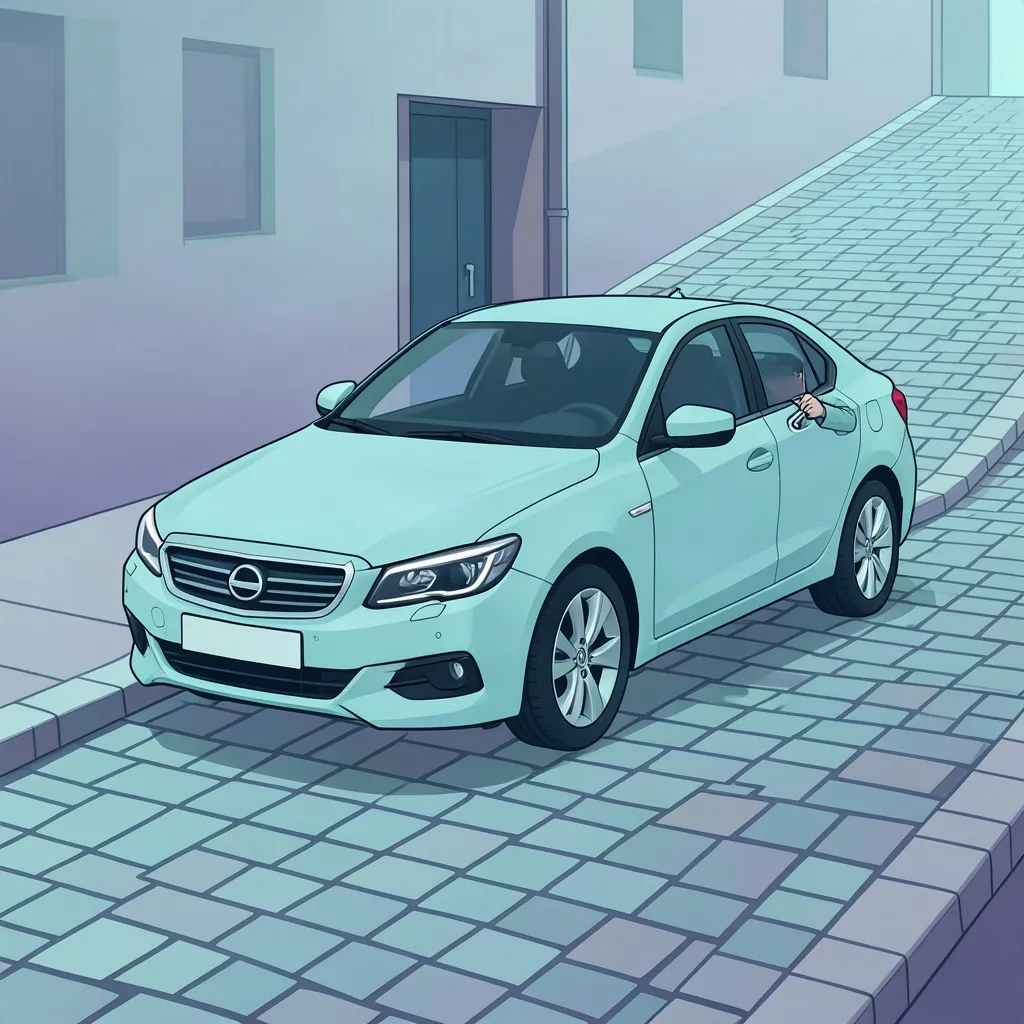
Article content overview
Parking on an incline is a fundamental skill that every driver in France must master, not only to ensure the safety of other road users but also to comply with the stringent requirements of the Code de la route. Whether you are navigating the steep streets of a historic hilltop village or simply parking on a slight gradient, the way you secure your vehicle can be the difference between a routine stop and a dangerous runaway incident.
In the French theory exam, questions regarding parking often focus on the interaction between the mechanical parking brake, gear selection, and the orientation of the wheels. Understanding these nuances is essential for passing your permis de conduire and developing safe, long-term driving habits.
According to French traffic regulations, a driver is legally obligated to take all necessary precautions to prevent a parked vehicle from moving once it is stationary. Relying solely on a single mechanism, such as the handbrake, is often considered insufficient, particularly on significant gradients where mechanical failure or human error could lead to a catastrophic accident.
When parking on a slope, you must treat the combination of the handbrake and the transmission as a two-layered safety system. If you fail to follow these standard protocols, you may not only face penalties during a practical exam but also increase the risk of your vehicle rolling into traffic or property.
The golden rule for parking on a slope in France is to always leave your vehicle in a position that actively resists gravity. For a manual transmission vehicle, the gear you choose depends entirely on the direction the vehicle is facing relative to the incline.
By engaging the transmission in this manner, the engine provides physical resistance against the wheels rotating, which serves as a secondary anchor should the handbrake cable slip over time.
Beyond the mechanical engagement of gears and the handbrake, the Code de la route emphasizes the importance of turning your front wheels to act as a physical block against the curb. This technique is designed to stop the car from rolling into the middle of the road should the vehicle's braking systems fail.
| Slope Direction | Curb Presence | Recommended Wheel Direction |
|---|---|---|
| Uphill | With Curb | Turn wheels away from the curb |
| Uphill | No Curb | Turn wheels toward the road edge |
| Downhill | With Curb | Turn wheels toward the curb |
| Downhill | No Curb | Turn wheels toward the road edge |
The logic here is simple: if the vehicle begins to roll, the curb acts as an immovable object, effectively stopping the tire and preventing the car from gathering momentum.
In the French theory exam, candidates are often tested on "hazard perception" regarding parking. You might see images showing a car parked on an incline with wheels pointing straight or in the wrong direction relative to the curb. Always look for these subtle details.
Never trust the parking brake alone. On very steep gradients, it is highly recommended to place a chock or a heavy object behind the wheels if you intend to leave the vehicle for an extended period, though this is not a substitute for the mandatory gear and wheel positioning.
Remember that the examiner is looking for defensive driving behaviors. Even if the slope appears minor, demonstrating the habit of turning your wheels and selecting the correct gear proves that you understand the physics of your vehicle and the safety requirements of the French road environment.
The French term for the handbrake or parking brake. In the context of the Code de la route, it must be fully engaged whenever the vehicle is parked on an incline to ensure the vehicle remains static.
Securing a vehicle on a slope in France involves three essential steps that work together as a safety system: fully engaging the parking brake (frein à main), selecting the correct gear (first gear uphill, reverse downhill for manual transmissions), and positioning the front wheels appropriately relative to any curb. The Code de la route treats handbrake use alone as insufficient, particularly on significant gradients, because mechanical failure or cable slippage could occur over time. Wheel orientation follows a clear logic: when a curb is present, wheels should be turned so the vehicle rolls into the curb if brakes fail; when no curb exists, wheels should be turned toward the road edge. These procedures are common exam topics where candidates must identify correct or incorrect parking configurations in hazard perception questions.
A short set of high-value points that capture the most important ideas from this article.
Parking on slopes requires combining the handbrake with gear selection as a two-layered safety system, not relying on either alone.
For manual transmission, shift into first gear (première) when facing uphill and reverse (marche arrière) when facing downhill.
Wheel orientation must account for both the slope direction and whether a curb is present on the road.
Turning front wheels toward the curb creates a physical barrier that stops the vehicle if brakes fail.
These specific procedures are directly tested in the French driving theory exam through hazard perception questions.
Uphill with curb: turn wheels away from the curb; downhill with curb: turn wheels toward the curb.
Uphill without curb: turn wheels toward the road edge; downhill without curb: turn wheels toward the road edge.
Always apply the parking brake (frein à main) to maximum tension when parking on any incline.
Automatic vehicles must have the lever firmly set in 'P' (Park) position.
The three safety layers are: handbrake, gear engagement, and wheel-to-curb positioning.
Assuming the parking brake alone is sufficient; the Code de la route requires complementary measures.
Turning wheels in the wrong direction for the slope type, such as leaving wheels straight on a steep incline.
Not checking whether a curb is present before deciding wheel orientation.
Failing to fully engage the parking brake, leaving the vehicle at risk of rolling.
Using first gear when parking downhill or reverse when parking uphill, which defeats the purpose of engine resistance.
Article content overview
A short set of high-value points that capture the most important ideas from this article.
Parking on slopes requires combining the handbrake with gear selection as a two-layered safety system, not relying on either alone.
For manual transmission, shift into first gear (première) when facing uphill and reverse (marche arrière) when facing downhill.
Wheel orientation must account for both the slope direction and whether a curb is present on the road.
Turning front wheels toward the curb creates a physical barrier that stops the vehicle if brakes fail.
These specific procedures are directly tested in the French driving theory exam through hazard perception questions.
Uphill with curb: turn wheels away from the curb; downhill with curb: turn wheels toward the curb.
Uphill without curb: turn wheels toward the road edge; downhill without curb: turn wheels toward the road edge.
Always apply the parking brake (frein à main) to maximum tension when parking on any incline.
Automatic vehicles must have the lever firmly set in 'P' (Park) position.
The three safety layers are: handbrake, gear engagement, and wheel-to-curb positioning.
Assuming the parking brake alone is sufficient; the Code de la route requires complementary measures.
Turning wheels in the wrong direction for the slope type, such as leaving wheels straight on a steep incline.
Not checking whether a curb is present before deciding wheel orientation.
Failing to fully engage the parking brake, leaving the vehicle at risk of rolling.
Using first gear when parking downhill or reverse when parking uphill, which defeats the purpose of engine resistance.
Explore related topics, search based questions, and concepts that learners often look up when studying Parking on Slopes in France. These themes reflect real search intent and help you understand how this topic connects to wider driving theory knowledge in France.
Find clear and practical answers to common questions learners often have about Parking on Slopes in France. This section helps explain difficult points, remove confusion, and reinforce the key driving theory concepts that matter for learners in France.
When parking uphill, you should generally select the first gear or reverse, depending on the incline, to provide maximum resistance against the vehicle rolling backward.
When parking downhill, you must turn your front wheels toward the curb or the side of the road so that if the vehicle moves, it is directed toward the edge rather than into traffic.
Yes, the parking brake (handbrake) must be fully engaged whenever you park, and it is absolutely essential on slopes to ensure the vehicle remains immobilized.
Continue your preparation for the French permis de conduire exam. Dive deeper into specific Code de la route sections, practice scenarios, or review official procedures. Use our comprehensive article collection to master every aspect of driving theory.