
Understanding how to interpret and react to traffic signals is a cornerstone of the French driving theory test and essential for daily road safety. This article clarifies the legal requirements for each light phase and the priority hierarchy, helping you navigate complex junctions with confidence. You will learn the specific legal obligations for steady and flashing signals, ensuring you are fully prepared for the scenarios encountered in the ETG exam.
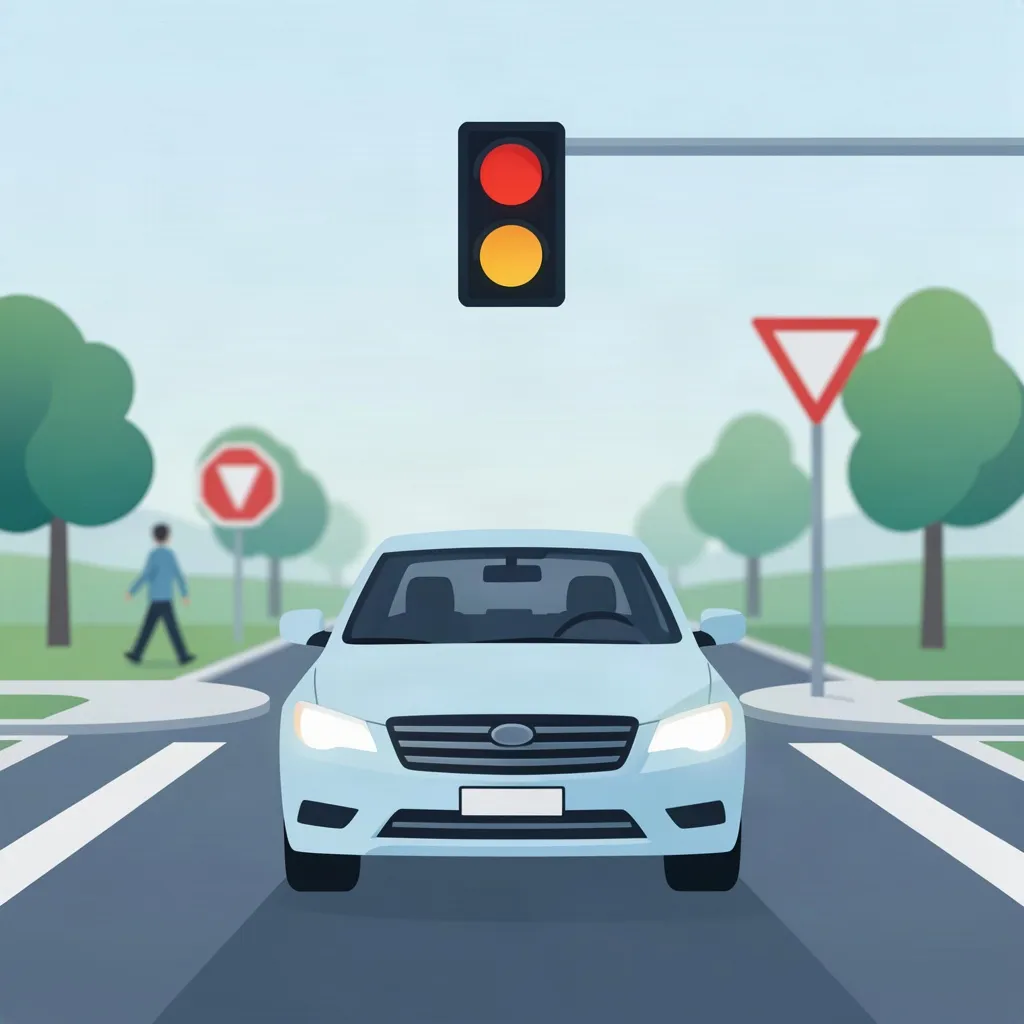
Article content overview
Interpreting traffic signals accurately is a fundamental skill for any driver on French roads. Within the context of the Code de la route and the ETG (Épreuve Théorique Générale) exam, traffic lights are not merely instructions to stop or go; they are complex regulatory devices that govern priority, safety, and flow. Understanding the precise legal requirements for each signal state is critical, as examiners frequently use these scenarios to test your ability to make safe, split-second decisions in urban and rural environments.
The standard traffic light in France follows a strict three-color cycle designed to regulate flow and minimize intersection conflicts. Every driver must understand that these signals define your legal right to enter an intersection.
The green light authorizes you to proceed, but it does not grant absolute, unconditional priority. Even when the signal is green, you must remain vigilant for pedestrians currently crossing, emergency vehicles with sirens, or other road users who may have failed to clear the intersection. The amber light, specifically the steady feu orange fixe, is often the most misunderstood signal in the Code de la route. Legally, a steady amber light means you must stop unless you cannot do so under safe conditions—for instance, if you are already too close to the intersection to brake without risking a rear-end collision from a vehicle behind you. Accelerating to "beat" an amber light is a common error that can lead to point deductions or failure on the practical test.
The steady amber light is not a "go" signal. It is a transition signal that mandates a stop. Only continue through the intersection if stopping would pose a greater danger than proceeding.
Beyond standard three-color cycles, French roads feature specialized signals that provide specific warnings or temporary modifications to traffic rules. One of the most important is the flashing amber light. Unlike the steady amber, which indicates a transition, a flashing amber light serves as a warning of increased hazard. It indicates that the intersection or crossing ahead requires extreme caution and that you must prepare to yield to other road users, such as pedestrians or cyclists who may have priority.
A flashing amber light warns the driver that they are approaching a potentially hazardous area or a crossing where they must reduce speed and yield if necessary, as the standard traffic light cycle is not currently regulating priority.
In the French driving theory exam, you will often be presented with scenarios where multiple signals appear to conflict. It is essential to remember the legal hierarchy of traffic control. Traffic police officers (agents de police) always have the highest authority; their gestures override all lights, signs, and road markings. Following the agent, traffic lights take precedence over road signs (like yield or stop signs) and road markings (like zebra crossings or solid lines). If a traffic light is functional, you must ignore any conflicting road signs or markings that might otherwise dictate priority.
| Signal Type | Priority Level |
|---|---|
| Traffic Police Agent | Highest (Overrides all) |
| Functional Traffic Lights | High (Overrides signs/markings) |
| Permanent/Temporary Signs | Moderate |
| Road Markings | Lowest |
The Code de la route emphasizes safety above all else. When you encounter a red light, the obligation is absolute: you must stop before the stop line or the pedestrian crossing. Failing to respect a red light is considered a major traffic offense, often resulting in heavy fines and significant point deductions. During the ETG exam, you will encounter many questions assessing your reaction to the feu orange fixe. The correct answer consistently prioritizes safety. If the question implies that you have sufficient distance to brake, the only correct legal action is to stop.
French traffic lights operate under a strict three-color system where green authorizes passage without guaranteeing priority, steady amber requires a stop unless it would be dangerous, and flashing amber serves as a hazard warning demanding caution. The signal hierarchy places police officers at the top, followed by functional traffic lights, then permanent or temporary signs, and finally road markings. Understanding the 'stop unless dangerous' principle for steady amber is essential for ETG exam success, as is knowing that functional traffic lights override any conflicting signs or markings at the same location.
A short set of high-value points that capture the most important ideas from this article.
Green light authorizes passage but does not guarantee unconditional priority; always watch for pedestrians, emergency vehicles, and others who may still have priority.
Steady amber light (feu orange fixe) legally requires you to stop unless doing so would itself be dangerous.
Flashing amber light (feu orange clignotant) warns of increased hazard and requires reduced speed and readiness to yield.
The signal hierarchy places traffic police gestures above functional lights, which override all signs and road markings.
Stopping at amber means braking smoothly to a complete halt at the stop line, not accelerating through the intersection.
Stop-line compliance: When stopping at a red or amber light, your vehicle must be fully behind the stop line or pedestrian crossing.
Police override rule: Any gesture from a traffic police officer (agent de circulation) takes precedence over every other signal or sign.
Amber distinction: Feu orange fixe = stop unless unsafe; Feu orange clignotant = warning and extreme caution, not a stop signal.
Light overrides signs: When traffic lights are operational, they supersede yield signs, stop signs, and road markings at the same location.
Emergency exceptions on green: Even with a green light, you must yield to emergency vehicles with sirens and anyone still clearing the intersection.
Treating steady amber as a 'go faster' signal and accelerating to clear the intersection before it turns red.
Failing to yield on green when pedestrians or cyclists are already crossing the intersection.
Confusing the flashing amber warning signal with the steady amber stop requirement.
Ignoring conflicting road signs when a traffic light is present, assuming signs always take precedence.
Stopping abruptly or unsafely at amber when already too close to the intersection, risking a rear-end collision.
Article content overview
A short set of high-value points that capture the most important ideas from this article.
Green light authorizes passage but does not guarantee unconditional priority; always watch for pedestrians, emergency vehicles, and others who may still have priority.
Steady amber light (feu orange fixe) legally requires you to stop unless doing so would itself be dangerous.
Flashing amber light (feu orange clignotant) warns of increased hazard and requires reduced speed and readiness to yield.
The signal hierarchy places traffic police gestures above functional lights, which override all signs and road markings.
Stopping at amber means braking smoothly to a complete halt at the stop line, not accelerating through the intersection.
Stop-line compliance: When stopping at a red or amber light, your vehicle must be fully behind the stop line or pedestrian crossing.
Police override rule: Any gesture from a traffic police officer (agent de circulation) takes precedence over every other signal or sign.
Amber distinction: Feu orange fixe = stop unless unsafe; Feu orange clignotant = warning and extreme caution, not a stop signal.
Light overrides signs: When traffic lights are operational, they supersede yield signs, stop signs, and road markings at the same location.
Emergency exceptions on green: Even with a green light, you must yield to emergency vehicles with sirens and anyone still clearing the intersection.
Treating steady amber as a 'go faster' signal and accelerating to clear the intersection before it turns red.
Failing to yield on green when pedestrians or cyclists are already crossing the intersection.
Confusing the flashing amber warning signal with the steady amber stop requirement.
Ignoring conflicting road signs when a traffic light is present, assuming signs always take precedence.
Stopping abruptly or unsafely at amber when already too close to the intersection, risking a rear-end collision.
Explore related topics, search based questions, and concepts that learners often look up when studying Understanding French Traffic Lights. These themes reflect real search intent and help you understand how this topic connects to wider driving theory knowledge in France.
Find clear and practical answers to common questions learners often have about Understanding French Traffic Lights. This section helps explain difficult points, remove confusion, and reinforce the key driving theory concepts that matter for learners in France.
A steady amber light means you must stop, unless you are so close to the intersection that stopping suddenly would create an immediate danger to yourself or other road users.
Traffic lights always take precedence over road signs and markings. However, if a traffic police agent is directing traffic, their instructions always override both traffic lights and signs.
A flashing amber light acts as a warning to proceed with increased caution, often indicating a hazard, a pedestrian crossing, or an intersection where standard priority rules apply because the lights are not functioning in their usual cycle.
Yes, if it is safe to stop and you fail to do so, you are violating the Code de la route. This is a common error in the theory exam and can lead to penalties, fines, and points deduction in real-world driving.
Continue your preparation for the French permis de conduire exam. Dive deeper into specific Code de la route sections, practice scenarios, or review official procedures. Use our comprehensive article collection to master every aspect of driving theory.