
Navigating French urban environments requires a solid grasp of Low Emission Zones, known as ZFE, and the associated Crit'Air sticker system. This guide clarifies how these environmental regulations dictate access to city centers and what you need to know to remain compliant. By mastering these concepts, you will be better prepared to handle theory exam questions regarding restricted traffic areas and environmental compliance.
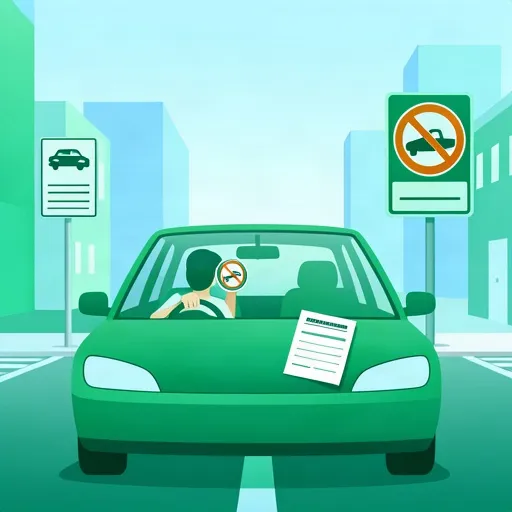
Article content overview
Understanding the environmental regulations currently in place across France is no longer optional for drivers. As part of the ongoing effort to improve air quality in urban centers, the French government has implemented "Zones à Faibles Émissions" (ZFE), which are low-emission zones where traffic is restricted based on a vehicle's pollution levels. For those preparing for the French driving theory exam, or Code de la route, mastering the interaction between ZFE signage and the Crit'Air classification system is a critical component of passing the test.
A ZFE is a specific geographical area—often encompassing the historical center or densely populated districts of a major city—where vehicle access is restricted to reduce atmospheric pollution. These zones are not merely suggestions; they are legally enforced perimeters established by local municipal or prefecture decrees. When you drive within these areas, you are subject to environmental traffic rules that are strictly monitored.
In the context of your driving theory exam, you should view ZFE regulations as a permanent extension of road safety and compliance. Failing to respect the signage associated with these zones or driving a non-compliant vehicle within a restricted perimeter can lead to financial penalties and potential vehicle immobilization.
The Crit'Air certificate, often called a "vignette," is a secure sticker that indicates your vehicle's level of environmental impact based on the European emission standards for nitrogen oxides and particulate matter. There are six distinct classes of stickers, ranging from "Crit'Air 0" (for electric or hydrogen vehicles) to "Crit'Air 5" (for the most polluting diesel vehicles).
During the exam, you may be presented with questions requiring you to identify whether a specific vehicle class is authorized to circulate within a certain zone. Always remember that the sticker must be affixed to the right side of the inner windshield to be clearly visible for traffic enforcement officials.
Signage is the most common way these zones appear in the theory exam. You must be able to recognize both the entry and exit signs for these zones. These signs often include the ZFE acronym and may display specific time-based restrictions or prohibited Crit'Air classes.
When planning a route through a French city, you must check if your vehicle category allows you to enter a designated ZFE. Many drivers erroneously believe these rules only apply to professional transporters, but they apply to all categories, including B (passenger cars).
The theory exam often tests your knowledge of how these zones influence your decisions as a driver. You might encounter questions about whether to enter a city center when a "pic de pollution" (pollution peak) is declared. In these instances, authorities may temporarily restrict traffic further, favoring vehicles with lower-numbered Crit'Air stickers regardless of standard daily ZFE rules.
ZFE (Zones à Faibles Émissions) are legally enforced urban areas where access depends on your vehicle's Crit'Air classification, a color-coded sticker system with six classes ranging from Crit'Air 0 (electric/hydrogen) to Crit'Air 5 (most polluting diesel). Drivers must check their vehicle's classification, obtain the corresponding vignette, and affix it to the right side of the windshield before entering restricted zones. The theory exam tests your ability to recognize ZFE entry and exit signs, understand how pollution peaks can tighten restrictions, and identify which vehicle classes are authorized in specific scenarios. Non-compliance results in financial penalties and potential vehicle immobilization.
A short set of high-value points that capture the most important ideas from this article.
ZFE (Zone à Faibles Émissions) are legally enforced low-emission zones where vehicle access depends on your vehicle's pollution classification
The Crit'Air system assigns vehicles to one of six classes (0 to 5) based on nitrogen oxide and particulate matter emissions
Crit'Air 0 stickers are for electric or hydrogen vehicles, while Crit'Air 5 covers the most polluting diesel vehicles
The sticker must be affixed to the right side of the inner windshield to be clearly visible to enforcement officials
During pollution peaks, authorities may impose additional temporary restrictions favoring lower-numbered Crit'Air classes
Entry and exit ZFE signs include the ZFE acronym and may display time-based restrictions or prohibited Crit'Air classes
During high pollution episodes, traffic restrictions can tighten beyond normal daily ZFE rules
Ignoring ZFE signage or entering without a valid sticker results in a fixed fine (amende forfaitaire) and possible vehicle immobilization
Vehicle category B (standard passenger car) drivers are subject to ZFE rules, not just professional transporters
Use official government portals or local municipal information to verify ZFE status before entering a city
Assuming ZFE rules only apply to commercial or professional vehicles when they affect all drivers including Category B license holders
Forgetting that temporary pollution peaks can impose stricter access rules than the standard daily ZFE restrictions
Entering a ZFE without first checking whether your specific Crit'Air class is authorized in that zone
Failing to affix the sticker visibly on the right side of the inner windshield, making enforcement identification difficult
Confusing Crit'Air classes or not knowing that Crit'Air 0 means fully electric/hydrogen while Crit'Air 5 means highest pollution
Article content overview
A short set of high-value points that capture the most important ideas from this article.
ZFE (Zone à Faibles Émissions) are legally enforced low-emission zones where vehicle access depends on your vehicle's pollution classification
The Crit'Air system assigns vehicles to one of six classes (0 to 5) based on nitrogen oxide and particulate matter emissions
Crit'Air 0 stickers are for electric or hydrogen vehicles, while Crit'Air 5 covers the most polluting diesel vehicles
The sticker must be affixed to the right side of the inner windshield to be clearly visible to enforcement officials
During pollution peaks, authorities may impose additional temporary restrictions favoring lower-numbered Crit'Air classes
Entry and exit ZFE signs include the ZFE acronym and may display time-based restrictions or prohibited Crit'Air classes
During high pollution episodes, traffic restrictions can tighten beyond normal daily ZFE rules
Ignoring ZFE signage or entering without a valid sticker results in a fixed fine (amende forfaitaire) and possible vehicle immobilization
Vehicle category B (standard passenger car) drivers are subject to ZFE rules, not just professional transporters
Use official government portals or local municipal information to verify ZFE status before entering a city
Assuming ZFE rules only apply to commercial or professional vehicles when they affect all drivers including Category B license holders
Forgetting that temporary pollution peaks can impose stricter access rules than the standard daily ZFE restrictions
Entering a ZFE without first checking whether your specific Crit'Air class is authorized in that zone
Failing to affix the sticker visibly on the right side of the inner windshield, making enforcement identification difficult
Confusing Crit'Air classes or not knowing that Crit'Air 0 means fully electric/hydrogen while Crit'Air 5 means highest pollution
Explore related topics, search based questions, and concepts that learners often look up when studying French ZFE and Crit'Air Rules. These themes reflect real search intent and help you understand how this topic connects to wider driving theory knowledge in France.
Find clear and practical answers to common questions learners often have about French ZFE and Crit'Air Rules. This section helps explain difficult points, remove confusion, and reinforce the key driving theory concepts that matter for learners in France.
A ZFE (Zone à Faibles Émissions) is a low-emission zone in a French city where access is restricted to certain vehicles based on their environmental impact to improve air quality.
The Crit'Air sticker is an air quality certificate that classifies vehicles based on their level of pollutant emissions, allowing authorities to manage access to ZFE zones.
Yes, environmental urban regulations, including ZFE signage and access rules, are part of the official Code de la route and appear in theory exam questions.
Ignoring ZFE signage or entering a restricted zone without the required Crit'Air sticker constitutes a traffic violation, which is subject to fines as defined in the French highway code.
Continue your preparation for the French permis de conduire exam. Dive deeper into specific Code de la route sections, practice scenarios, or review official procedures. Use our comprehensive article collection to master every aspect of driving theory.