Understanding priority rules concerning pedestrians and cyclists is a fundamental requirement for the French Code de la route. This guide clarifies your legal duties to 'céder le passage' and explains why proactive checking of blind spots is critical when turning. Applying these principles consistently will help you navigate urban intersections safely and correctly during your theory test.
Article content overview
Mastering the rules of the Code de la route is the most critical step toward obtaining your permis de conduire. Among the most essential skills tested in the ETG (Épreuve Théorique Générale) is the ability to identify and respond correctly to vulnerable road users at intersections. Whether you are driving in a dense urban center or a quiet residential area, the safety of pedestrians and cyclists is your legal and moral responsibility.
The obligation for a driver to let other road users pass before proceeding, ensuring they do not need to change speed or direction due to your actions.
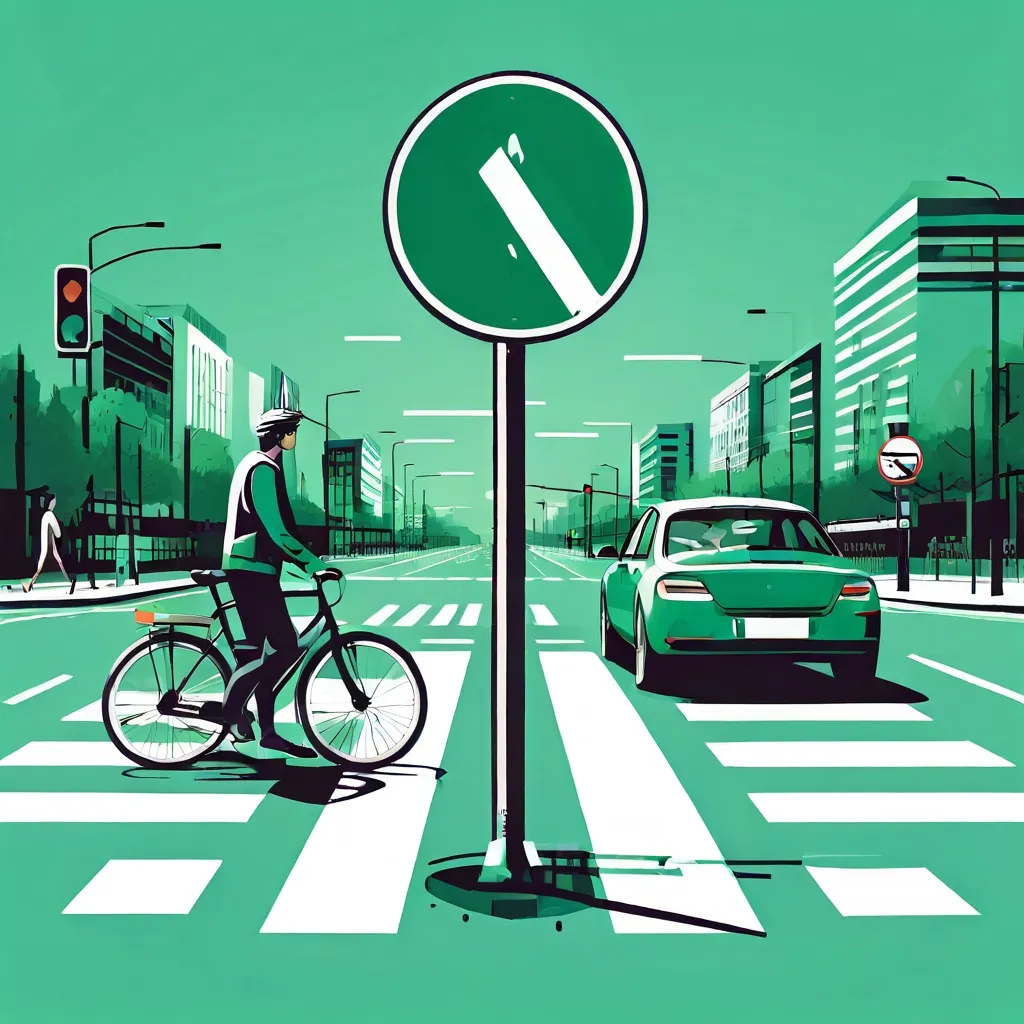
In France, the law is stringent regarding the protection of those who are not shielded by a vehicle's structure. When you approach an intersection or a junction, your primary duty is to remain vigilant for vulnerable road users who may be crossing your path. This is especially true when turning; as you steer your vehicle, your attention must be focused not just on other cars, but on the blind spots where a cyclist or pedestrian might be present.
Failure to yield to a pedestrian who is either crossing or has clearly expressed the intent to cross is considered a serious traffic violation. In the context of your theory exam, always remember that any pedestrian on the edge of the road, facing the crossing, or beginning their movement must be treated as a priority.
A common error among learner drivers is failing to perform a complete visual sweep before turning. When you prepare to turn at an intersection, you must verify your lateral blind spots. A cyclist riding along the right side of your vehicle is particularly vulnerable when you initiate a right-hand turn. If you fail to check your mirror and your shoulder, you risk cutting them off, which leads to immediate failure in a practical driving test and is a major safety hazard in real-world traffic.
The theory exam often presents complex scenarios to test your decision-making. You are not just required to know the rules; you must demonstrate "defensive driving"—the ability to anticipate potential hazards before they manifest into accidents.
If you are unsure whether a pedestrian is going to cross, the safest and most legally compliant action is always to slow down and be prepared to stop. Never assume that a cyclist will slow down or move out of your way; in the eyes of the French legal system, you are the one operating the heavier, more dangerous machinery.
Many candidates lose points by confusing "priority" with "the right to proceed." Even if you have the legal right of way, you do not have the right to collide with another road user. Always look for "piétons engagés" (pedestrians who have started crossing). Once a pedestrian has stepped off the curb, they effectively command the flow of traffic at that specific crossing point.
Do not use your horn to alert pedestrians or cyclists unless it is an absolute emergency. Honking can startle them and cause unpredictable, dangerous movements.
| Situation | Driver Action |
|---|---|
| Pedestrian waiting at crossing | Be ready to stop and yield |
| Pedestrian already crossing | Must stop and yield |
| Cyclist in a marked bike lane | Do not turn across their path |
| Intersection without signs | Always check for vulnerable users first |
This article covers the driver's legal duty to céder le passage (yield) to pedestrians and cyclists at French intersections, a core topic for the ETG theory exam. It emphasizes active vigilance, mandatory blind spot checks before turning, and the specific status of piétons engagés—pedestrians who have already stepped off the curb. The content outlines a step-by-step safe approach and clarifies that defensive driving and proactive hazard anticipation are required alongside knowledge of priority rules. Key terminology includes Code de la route, angle mort (blind spot), and the distinction between legal priority and the obligation to avoid collisions.
A short set of high-value points that capture the most important ideas from this article.
Pedestrians who are already crossing or have clearly expressed intent to cross must be treated as priority; you must yield to them before proceeding.
Blind spot checks are mandatory before any turn; cyclists on your right during a right-hand turn are particularly vulnerable.
Once a pedestrian steps off the curb (piétons engagés), they effectively command that crossing point regardless of your right of way.
Defensive driving means anticipating hazards before they occur, not just reacting to them.
You must stop for pedestrians even if you technically have priority; never assume a cyclist will move out of your path.
Vulnerable road users (piétons and cyclists) have special legal protection under the Code de la route.
A complete blind spot check includes mirrors plus a shoulder check before changing direction.
Never use your horn to alert pedestrians unless it is an absolute emergency; honking can cause unpredictable movements.
In any doubt about a pedestrian's intent, slow down and be prepared to stop.
The obligation to céder le passage means ensuring other users do not need to change speed or direction because of your actions.
Confusing legal priority with the right to proceed; you must never collide with another road user even if you have right of way.
Failing to check mirrors and shoulder for cyclists positioned in bike lanes before turning.
Assuming cyclists or pedestrians will yield or move out of the way rather than adjusting your own speed.
Not reducing speed early enough to signal intent and allow adequate reaction time.
Overlooking vulnerable users waiting on corners who may be about to cross.
Article content overview
A short set of high-value points that capture the most important ideas from this article.
Pedestrians who are already crossing or have clearly expressed intent to cross must be treated as priority; you must yield to them before proceeding.
Blind spot checks are mandatory before any turn; cyclists on your right during a right-hand turn are particularly vulnerable.
Once a pedestrian steps off the curb (piétons engagés), they effectively command that crossing point regardless of your right of way.
Defensive driving means anticipating hazards before they occur, not just reacting to them.
You must stop for pedestrians even if you technically have priority; never assume a cyclist will move out of your path.
Vulnerable road users (piétons and cyclists) have special legal protection under the Code de la route.
A complete blind spot check includes mirrors plus a shoulder check before changing direction.
Never use your horn to alert pedestrians unless it is an absolute emergency; honking can cause unpredictable movements.
In any doubt about a pedestrian's intent, slow down and be prepared to stop.
The obligation to céder le passage means ensuring other users do not need to change speed or direction because of your actions.
Confusing legal priority with the right to proceed; you must never collide with another road user even if you have right of way.
Failing to check mirrors and shoulder for cyclists positioned in bike lanes before turning.
Assuming cyclists or pedestrians will yield or move out of the way rather than adjusting your own speed.
Not reducing speed early enough to signal intent and allow adequate reaction time.
Overlooking vulnerable users waiting on corners who may be about to cross.
Explore related topics, search based questions, and concepts that learners often look up when studying Yielding to Pedestrians and Cyclists. These themes reflect real search intent and help you understand how this topic connects to wider driving theory knowledge in France.
Find clear and practical answers to common questions learners often have about Yielding to Pedestrians and Cyclists. This section helps explain difficult points, remove confusion, and reinforce the key driving theory concepts that matter for learners in France.
It means you must yield to pedestrians who are either already crossing or who are clearly indicating their intention to cross, especially at marked crossings.
While cyclists must follow traffic rules, they are considered vulnerable road users; you must be extra vigilant and check your blind spots before turning to ensure they are not caught in your path.
You must be prepared to stop if they show a clear intention to cross. Simply maintaining your speed or ignoring a pedestrian waiting at the edge of the road can be a serious safety error.
Cyclists are often positioned in your rear-view blind spot when you turn right; failing to check this area is a common cause of accidents and a major point of focus in the French driving theory exam.
Continue your preparation for the French permis de conduire exam. Dive deeper into specific Code de la route sections, practice scenarios, or review official procedures. Use our comprehensive article collection to master every aspect of driving theory.