
This lesson provides essential knowledge on how to react safely and legally at the scene of an accident. You will learn the correct procedure for securing the area, administering basic first aid, and calling emergency services while preparing for your German AM theory test.
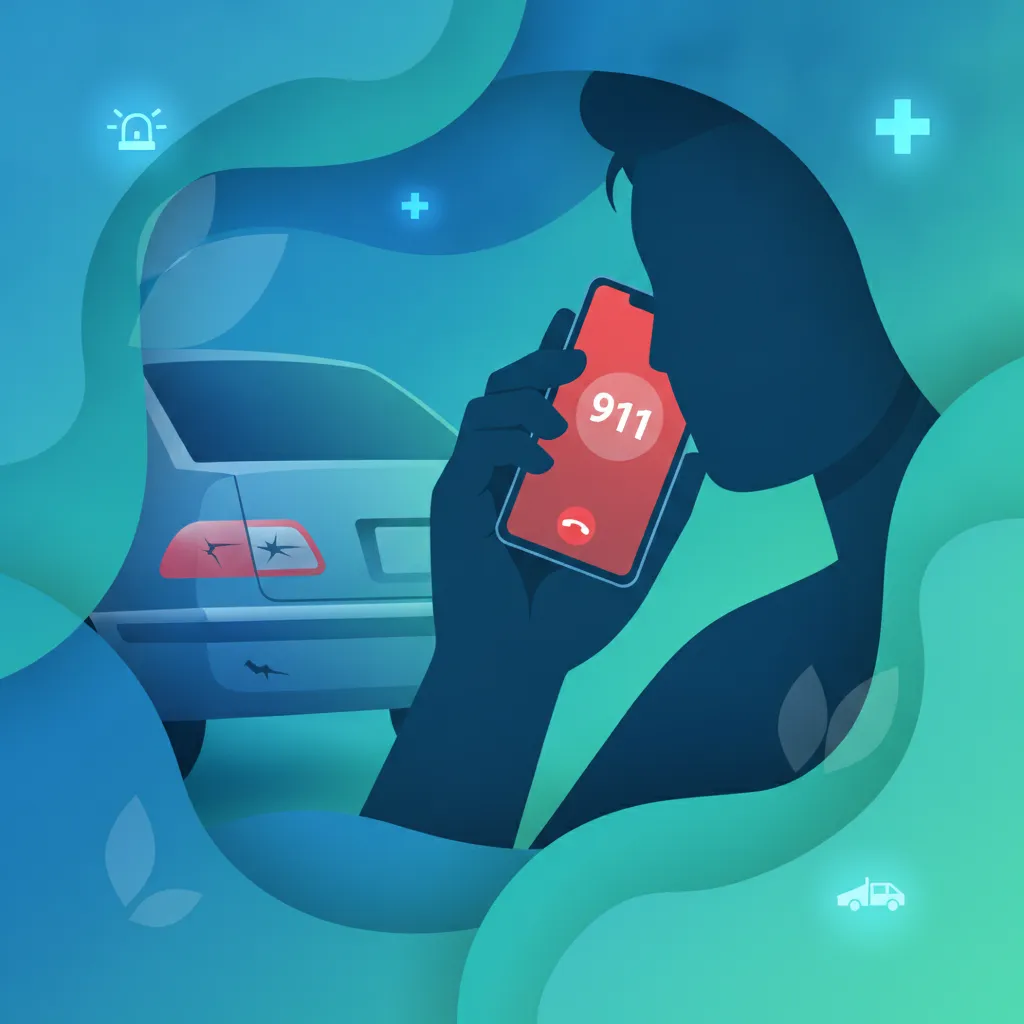
Lesson content overview
Navigating the roads safely is a primary responsibility for all drivers, especially those operating mopeds, scooters, and light quadricycles under the German Driving Theory Course for AM Licence. While adhering to traffic rules significantly reduces the risk of accidents, it is crucial to be prepared for unforeseen emergencies. This lesson equips you with the fundamental knowledge and procedures required to act effectively and responsibly at an accident scene, focusing on ensuring safety, providing basic first aid, making an emergency call, and fulfilling your legal reporting obligations. Understanding these steps is vital not only for the well-being of those involved but also for preventing secondary accidents and complying with German traffic law (StVO).
Your first and most critical responsibility at the scene of an accident is to ensure the safety of yourself, other road users, and any victims. A poorly secured accident site can lead to further collisions and injuries. This proactive approach, often termed "scene assessment and hazard mitigation," is paramount before you can even begin to offer assistance.
Upon encountering or being involved in an accident, your immediate actions should focus on creating a safe environment. This involves a rapid but thorough assessment of the situation to identify immediate dangers, such as ongoing traffic, fire, spilled fuel, or damaged power lines.
Never rush into an unsecured accident scene. Your safety is the priority, as an injured rescuer cannot help others.
1. Stop Safely: If you are involved in or witness an accident, stop your vehicle in a position that does not create additional hazards. This means pulling over to the side of the road, if possible, or stopping a safe distance behind the accident site.
2. Turn on Hazard Warning Lights: Immediately activate your vehicle's hazard warning lights (Warnblinkanlage). These lights alert other drivers to the potential danger ahead, giving them time to react and slow down.
3. Wear a High-Visibility Vest: Before exiting your vehicle, especially on busy roads or at night, put on a high-visibility warning vest (Warnweste). This significantly increases your visibility to other traffic, protecting you while you are outside your vehicle. In Germany, carrying a warning vest is mandatory for all vehicles.
Warning lights activated simultaneously on all four corners of a vehicle to signal that it is stopped, broken down, or moving slowly due to an emergency or hazard on the road.
Once you have secured your immediate vicinity, the next crucial step is to place a warning triangle (Warndreieck) to alert approaching traffic. The placement distance of the warning triangle is regulated by German law and varies depending on the type of road and location.
Exit your vehicle carefully, ensuring you are visible to other traffic.
Take the warning triangle and walk against the direction of approaching traffic, facing the oncoming vehicles. This allows you to see approaching cars and ensures your safety.
Place the warning triangle firmly on the road. Its reflective surface should face the approaching traffic.
Ensure the warning triangle is stable and visible.
The distances for placing a warning triangle are critical:
A reflective, triangular safety device placed on the road to warn approaching traffic of a stationary hazard or accident ahead.
By following these steps, you create a buffer zone that protects yourself, the accident victims, and other road users from further danger.
After securing the scene, your focus shifts to the injured. As an AM licence holder, you are not expected to perform advanced medical procedures, but you have a legal and moral obligation to provide basic first aid within your capabilities. This immediate care can be life-saving.
In Germany, the failure to render assistance (Unterlassene Hilfeleistung) in an emergency, especially after an accident, is a punishable offense. This means you must provide help to the best of your ability without endangering yourself or causing further harm. Your assistance should focus on life-preserving measures until professional help arrives.
You are legally obliged to render assistance. This includes calling for help and providing basic first aid within your competence. You are not expected to be a medical professional.
The initial assessment of a casualty is often referred to as a "primary assessment." It focuses on quickly identifying and addressing life-threatening conditions.
Check for Danger (D): Reconfirm the scene is safe for you and the casualty. Move victims only if they are in immediate danger (e.g., from fire, unstable vehicle).
Check for Responsiveness (R): Gently tap the person's shoulder and loudly ask, "Are you okay?" (Geht es Ihnen gut?).
Shout for Help (S): Alert anyone nearby that you need assistance.
Open Airway (A): If unresponsive, gently tilt the head back and lift the chin to open the airway. This prevents the tongue from blocking the airway.
Check for Breathing (B): Look, listen, and feel for normal breathing for no more than 10 seconds.
Check for Severe Bleeding (C - Circulation): Look for any obvious, severe bleeding. If found, apply direct pressure to the wound, ideally with a clean cloth or sterile dressing, to try and stop or slow the blood flow.
A specific body position used for an unconscious but breathing person, designed to maintain an open airway, prevent aspiration, and ensure fluids drain from the mouth.
Remember, your role is to provide immediate, basic assistance and support life until professional medical help arrives. Do not attempt procedures you are not trained for.
Once the scene is secure and basic first aid has been initiated, contacting emergency services is your next crucial step. In Germany and across the European Union, the universal emergency number is 112. This single number connects you to the police, fire brigade, and ambulance services. Making a clear, concise, and informative call can significantly speed up the response time and improve the outcome.
You should call 112 immediately if:
When you call 112, the emergency operator will ask for specific information. Be prepared to provide the "5 Ws" (the German equivalents are often used, but the principle is the same):
Where? (Wo?): Provide the exact location of the accident. This is the most critical piece of information.
What? (Was?): Describe the nature of the emergency.
How Many? (Wie viele?): State the number of people involved and, most importantly, the number of injured persons.
What Injuries? (Welche Verletzungen?): Describe any visible injuries or symptoms.
Wait! (Warten!): Do not hang up until the operator tells you to.
Stay calm and speak clearly. Even if you are distressed, try to focus on conveying the essential information accurately. The operator is trained to guide you.
Providing precise information allows emergency services to dispatch the appropriate units (ambulance, fire brigade, police) and helps them reach the scene quickly.
Beyond immediate safety and first aid, legal obligations for accident reporting in Germany are crucial. Failing to meet these duties can lead to significant legal consequences, including fines, penalty points, and issues with insurance claims.
You are legally required to report certain types of accidents to the police (Polizei) immediately. This is mandatory if:
Never leave the scene of an accident where personal injury or significant property damage has occurred without the permission of the police or other relevant authorities. Doing so can be considered a hit-and-run (Fahrerflucht) and carries severe penalties.
If the police do not attend the scene (e.g., in cases of very minor damage where parties agree to exchange details and no one is injured), it is still advisable to make a written report to the nearest police station within 24 hours if you have any doubts or want to safeguard your interests.
Regardless of whether the police are involved, you must inform your insurance company about any accident promptly. Most insurance policies require notification within a specific timeframe, often 24 hours, but always as soon as reasonably possible. Delaying this notification can jeopardize your claim.
When reporting to your insurance, provide:
Collecting evidence at the scene can be invaluable for police investigations and insurance claims. If it is safe to do so, and after attending to any injuries, try to:
Accidents rarely happen under ideal conditions. Various factors can influence how you respond and what specific actions are required. Being aware of these conditional variations and common mistakes can help you react more effectively.
Drivers often make mistakes during accident response due to panic, lack of knowledge, or incorrect assumptions.
By understanding these nuances and potential pitfalls, AM licence holders can respond to accidents with greater confidence and effectiveness, ultimately contributing to safer roads for everyone.
Mastering the theory of safe driving is about more than just understanding road signs and priority rules; it also encompasses the critical skills needed to respond effectively in an emergency. For AM licence holders, knowing how to secure an accident scene, provide basic first aid, make an accurate emergency call to 112, and fulfill legal reporting obligations is an indispensable part of responsible road participation. Your swift and correct actions can significantly mitigate injury severity, prevent secondary accidents, and ensure compliance with German law. Preparedness, clear communication, and adherence to legal duties are your most powerful tools when faced with an accident.
When encountering an accident, your first priority is securing the scene using hazard lights, a high-visibility vest, and warning triangle placed at correct distances (50m in towns, 100m on rural roads, 200-300m on motorways). After confirming the scene is safe, provide basic first aid using the primary assessment approach—checking danger, responsiveness, airway, breathing, and severe bleeding—while legally obligated to assist under German law. Call 112 and provide precise location and injury information using the 5 Ws structure, then document the scene with photos and witness details. Failure to report injuries or significant damage, or leaving the scene without permission, constitutes a criminal offense potentially classified as hit-and-run (Fahrerflucht).
A short set of high-value points that capture the most important learning from this lesson.
The rescue chain follows three steps: first secure the scene, then call 112, then provide basic first aid within your capabilities.
Calling 112 is mandatory when injuries occur, significant property damage exists, or anyone is trapped—even if injuries appear minor at first.
Under German law (StVO), failing to render assistance (Unterlassene Hilfeleistung) at an accident is a criminal offense.
Always remain at the scene until police explicitly permit you to leave, especially when personal injury or significant damage is involved.
Documenting an accident through photos, witness details, and a sketch protects you legally and simplifies insurance claims.
Explore all units and lessons included in this driving theory course.
Warning triangle distances: 50m innerorts, 100m außerorts, and 200-300m on Autobahnen.
The 5 Ws of an emergency call: Wo? (location), Was? (what happened), Wie viele? (how many injured), Welche Verletzungen? (type of injuries), then Warten! (stay on the line).
Put on hazard lights and a high-visibility vest before exiting your vehicle at an accident scene.
For an unconscious but breathing person, use the recovery position (stabile Seitenlage) to maintain an open airway.
Legal obligations apply when personal injury occurs, significant property damage exists, or there is any dispute about liability.
Leaving the scene prematurely after exchanging details, assuming this is sufficient when injuries or significant damage are present.
Providing vague location information like 'near the gas station' instead of street names, numbers, or motorway kilometer markers.
Placing the warning triangle too close to the accident, failing to account for the specific road type and required distance.
Not calling 112 because injuries seem minor—internal injuries may not be immediately apparent.
Attempting advanced medical procedures beyond basic first aid competence, which can cause additional harm.
Lesson content overview
A short set of high-value points that capture the most important learning from this lesson.
The rescue chain follows three steps: first secure the scene, then call 112, then provide basic first aid within your capabilities.
Calling 112 is mandatory when injuries occur, significant property damage exists, or anyone is trapped—even if injuries appear minor at first.
Under German law (StVO), failing to render assistance (Unterlassene Hilfeleistung) at an accident is a criminal offense.
Always remain at the scene until police explicitly permit you to leave, especially when personal injury or significant damage is involved.
Documenting an accident through photos, witness details, and a sketch protects you legally and simplifies insurance claims.
Explore all units and lessons included in this driving theory course.
Warning triangle distances: 50m innerorts, 100m außerorts, and 200-300m on Autobahnen.
The 5 Ws of an emergency call: Wo? (location), Was? (what happened), Wie viele? (how many injured), Welche Verletzungen? (type of injuries), then Warten! (stay on the line).
Put on hazard lights and a high-visibility vest before exiting your vehicle at an accident scene.
For an unconscious but breathing person, use the recovery position (stabile Seitenlage) to maintain an open airway.
Legal obligations apply when personal injury occurs, significant property damage exists, or there is any dispute about liability.
Leaving the scene prematurely after exchanging details, assuming this is sufficient when injuries or significant damage are present.
Providing vague location information like 'near the gas station' instead of street names, numbers, or motorway kilometer markers.
Placing the warning triangle too close to the accident, failing to account for the specific road type and required distance.
Not calling 112 because injuries seem minor—internal injuries may not be immediately apparent.
Attempting advanced medical procedures beyond basic first aid competence, which can cause additional harm.
Explore search topics learners often look for when studying First Aid Basics, Emergency Numbers, and Reporting Accidents. These topics reflect common questions about road rules, driving situations, safety guidance, and lesson level theory preparation for learners in Germany.
Browse additional driving theory lessons that cover connected traffic rules, road signs, and common driving situations related to this topic. Improve your understanding of how different rules interact across everyday traffic scenarios.
Understand the crucial steps for reporting traffic accidents according to German law (StVO). This lesson details legal requirements for documentation and insurance, building on essential first aid and emergency call knowledge.
This lesson outlines the proper response to an accident involving a heavy vehicle, including immediate actions and contacting emergency services. It details the legal obligations for reporting accidents and cooperating with police investigations. The content also covers documentation requirements for insurance claims and the importance of preserving the accident scene.
This lesson details the legal obligations every AM licence holder must follow. It emphasizes compliance with the Straßenverkehrs-Ordnung (StVO), including mandatory helmet use and maintaining vehicle roadworthiness. The content covers insurance requirements, accident reporting procedures, and the legal consequences of non-compliance.
This lesson informs riders about the legal ramifications of dangerous riding and traffic violations under German law. It outlines potential penalties, including fines, points, and license suspension, as well as the impact on insurance. The content also provides a step-by-step guide on the correct procedures for reporting an accident to the police and documenting the scene for legal and insurance purposes.
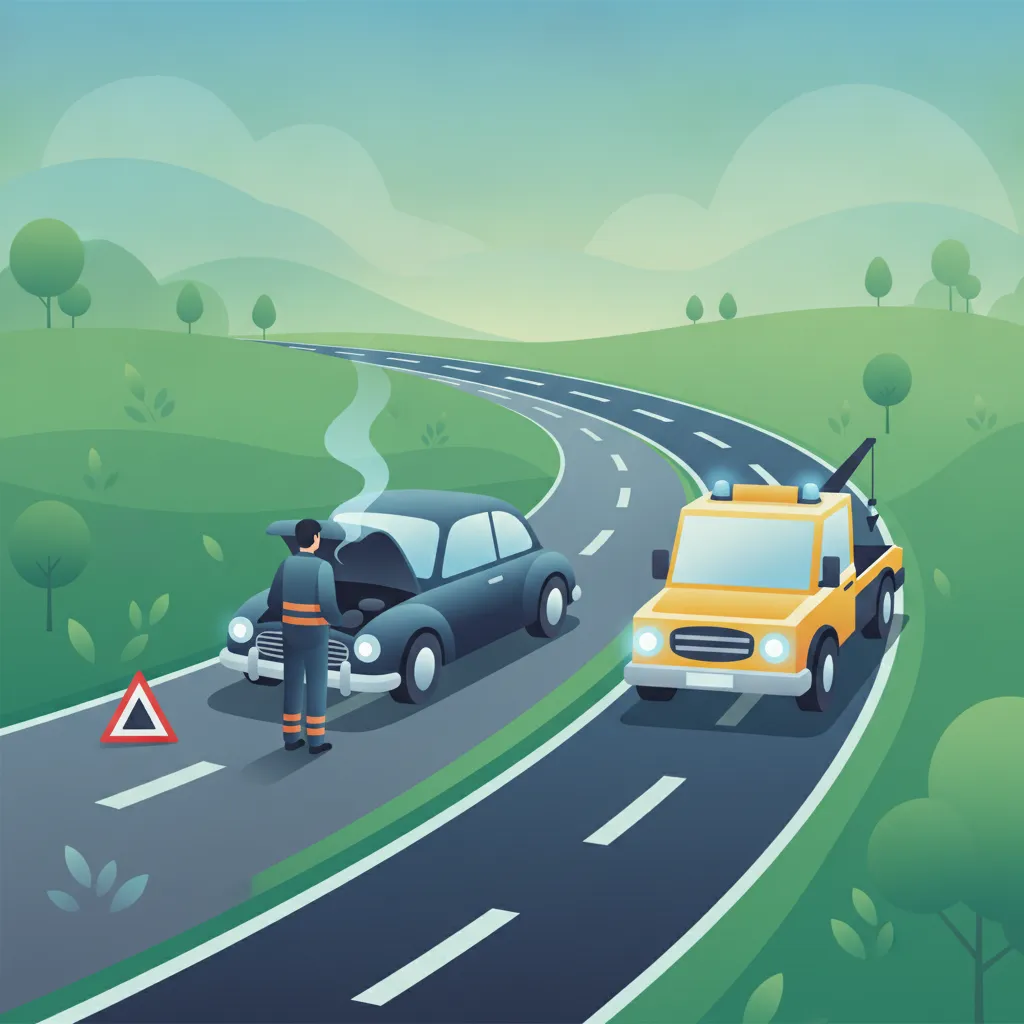
This lesson provides clear, actionable steps for managing a breakdown or being involved in an accident. It covers how to safely move the vehicle off the road, use warning signals, and secure the area. The procedure for contacting roadside assistance and the authorities is also explained in detail.

This lesson provides clear, step-by-step instructions on what to do at the scene of a traffic accident. It covers the immediate priorities: stopping, securing the area with a warning triangle, and putting on a high-visibility vest. The lesson details how to make an effective emergency call to '112' and what information to provide, as well as the procedure for exchanging insurance details with other parties involved.
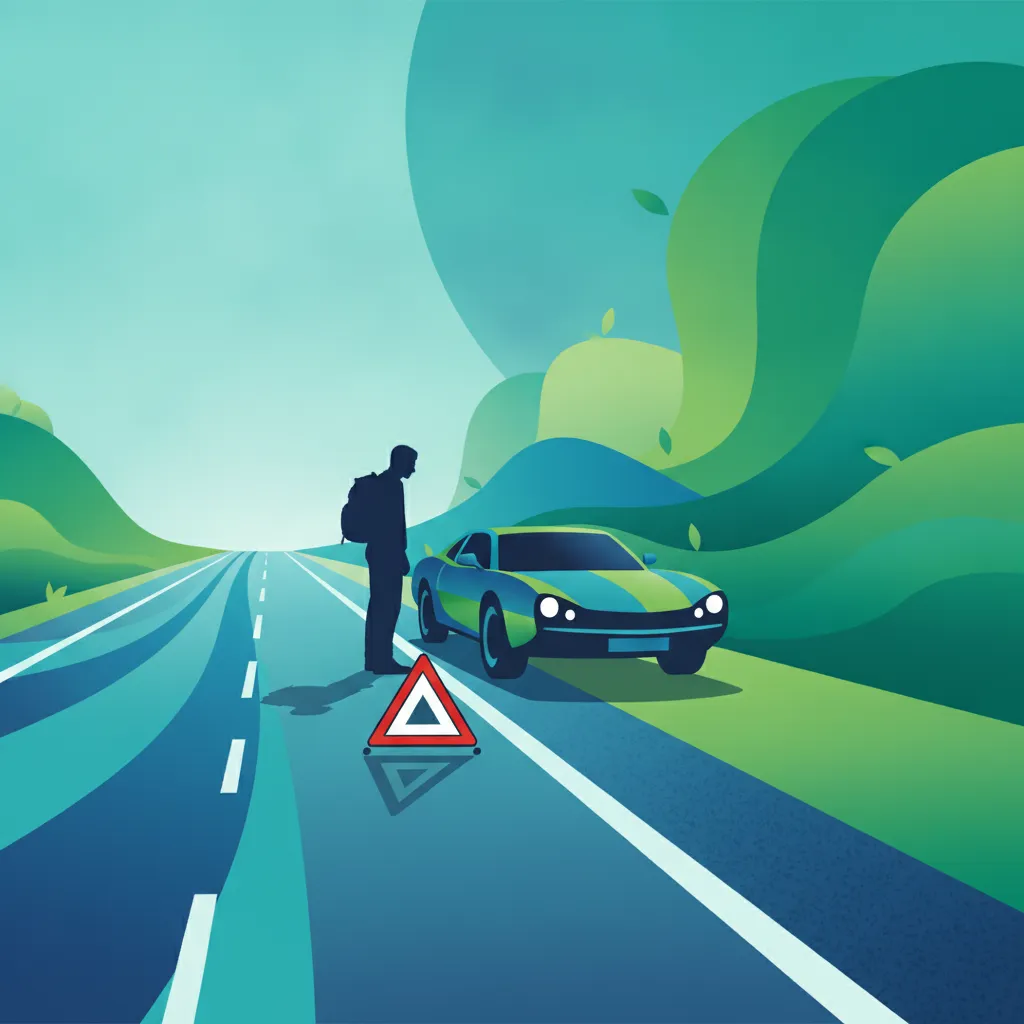
This lesson covers the appropriate steps to take in the event of a vehicle breakdown or an accident. It details procedures for safely moving the motorcycle out of traffic, making the area visible with hazard warnings, and contacting emergency services. The content emphasizes personal safety and the correct protocol for managing the scene until professional help arrives.
This lesson explains the German catalogue of fines (Bußgeldkatalog) and the points system for traffic violations. It details which offenses lead to fines, points in Flensburg, or even licence revocation. Understanding these consequences reinforces the importance of adhering to all traffic laws.
This lesson focuses on the legal responsibilities and duties of a vehicle operator according to German traffic law, primarily the StVO. It covers the obligation to drive safely, the rules of conduct at an accident scene, and the legal consequences of traffic violations. Understanding these principles is crucial for maintaining road safety and avoiding penalties such as fines, points, or driving bans.
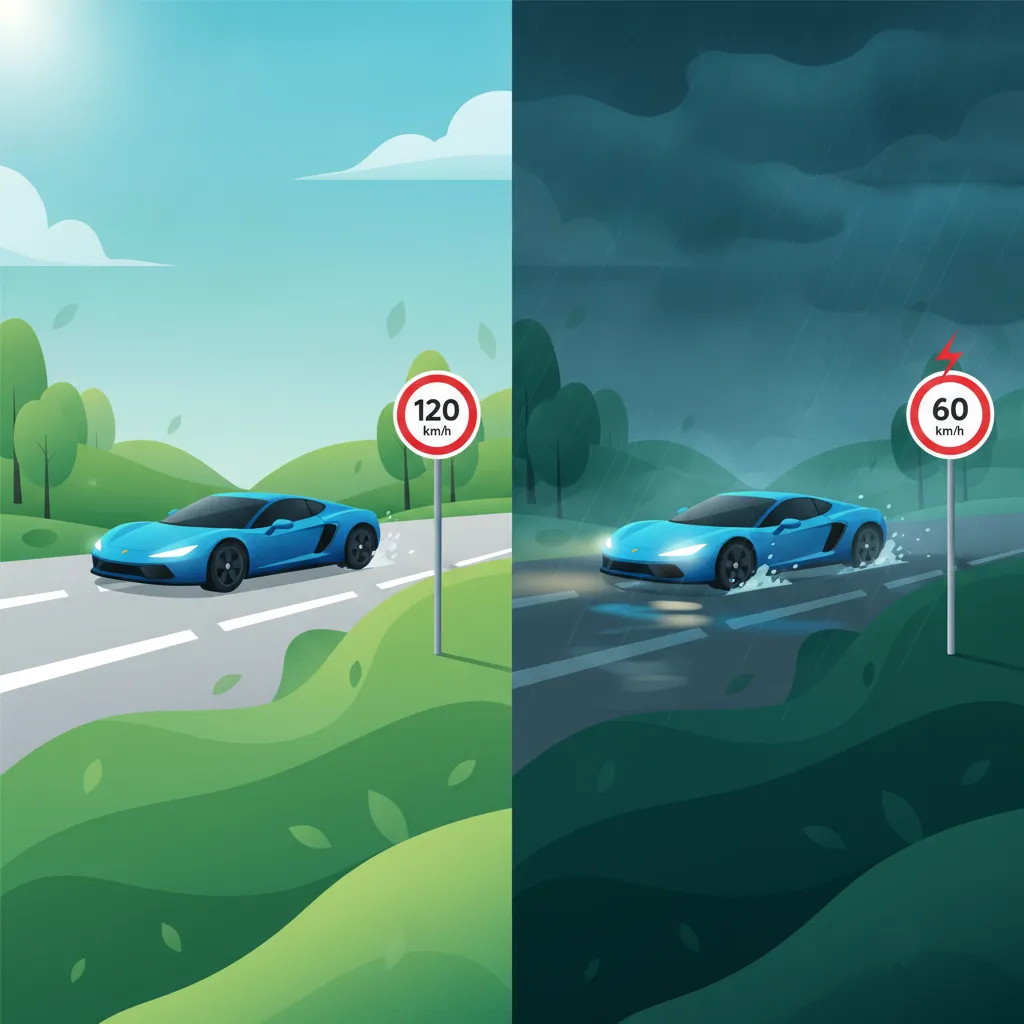
This lesson details the various speed limits applicable in Germany, from urban zones to rural roads. It emphasizes the critical skill of adapting speed to prevailing conditions such as rain, fog, or poor road surfaces. The content explains how external factors significantly impact vehicle handling and stopping distances.
Learn the vital procedures for making an emergency call (112) and securing an accident scene safely. This lesson focuses on immediate actions and the information needed in critical situations for AM licence holders in Germany.

This lesson introduces riders to fundamental first aid principles and the proper management of an accident scene to prevent further harm. It covers basic life-saving actions, such as checking for consciousness, controlling severe bleeding, and positioning a casualty safely. The lesson also addresses the critical decision of when and how to remove a helmet and how to effectively communicate with emergency services.
This lesson covers the appropriate steps to take in the event of a vehicle breakdown or an accident. It details procedures for safely moving the motorcycle out of traffic, making the area visible with hazard warnings, and contacting emergency services. The content emphasizes personal safety and the correct protocol for managing the scene until professional help arrives.
This lesson provides clear, actionable steps for managing a breakdown or being involved in an accident. It covers how to safely move the vehicle off the road, use warning signals, and secure the area. The procedure for contacting roadside assistance and the authorities is also explained in detail.
This lesson provides clear, step-by-step instructions on what to do at the scene of a traffic accident. It covers the immediate priorities: stopping, securing the area with a warning triangle, and putting on a high-visibility vest. The lesson details how to make an effective emergency call to '112' and what information to provide, as well as the procedure for exchanging insurance details with other parties involved.
This lesson informs riders about the legal ramifications of dangerous riding and traffic violations under German law. It outlines potential penalties, including fines, points, and license suspension, as well as the impact on insurance. The content also provides a step-by-step guide on the correct procedures for reporting an accident to the police and documenting the scene for legal and insurance purposes.
This lesson highlights the specific risks associated with motorcyclists, who are less visible and more vulnerable than car drivers. It teaches you to actively look for motorcycles, especially at intersections and during lane changes, as their smaller profile can be easily missed. You will learn about their potential for rapid acceleration and instability, emphasizing the need for extra following distance.

This lesson teaches crucial risk awareness and accident prevention strategies for motorcyclists. It examines common accident scenarios and teaches riders how to identify potential hazards in advance. Key concepts include defensive riding, maintaining situational awareness, and understanding how a proactive mindset contributes to a safer riding experience on the road.
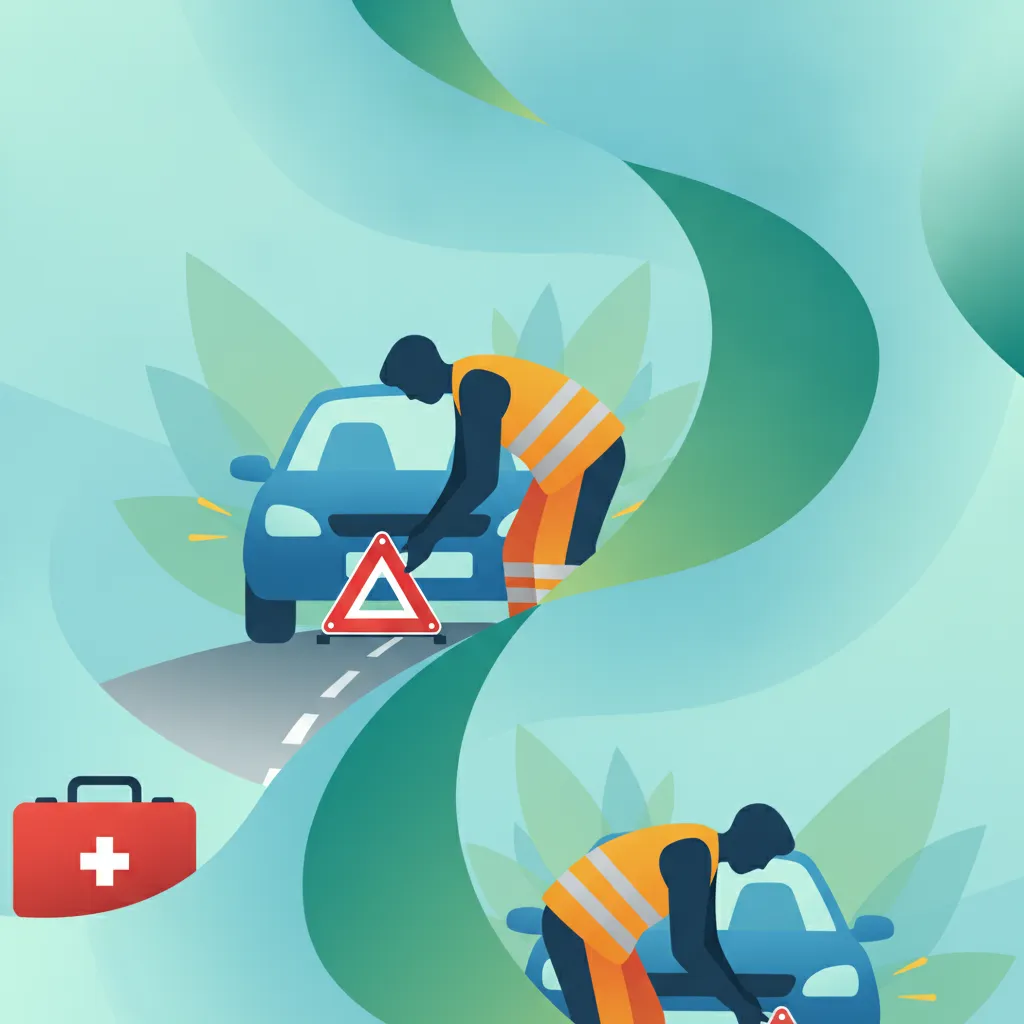
This lesson covers the legal and moral obligation to provide first aid at an accident scene. It outlines basic, life-saving measures such as assessing an injured person's condition, placing them in the recovery position, and the principles of controlling bleeding. The lesson also explains the correct placement of the warning triangle ('Warndreieck') to effectively warn oncoming traffic of the hazard ahead.

This lesson provides instruction on how to react and perform an emergency stop in a critical situation. It covers the technique of applying maximum braking force progressively and firmly without locking the wheels. For motorcycles equipped with an Anti-lock Braking System (ABS), the lesson explains how the system works and how the rider should respond when it activates to maintain steering control.
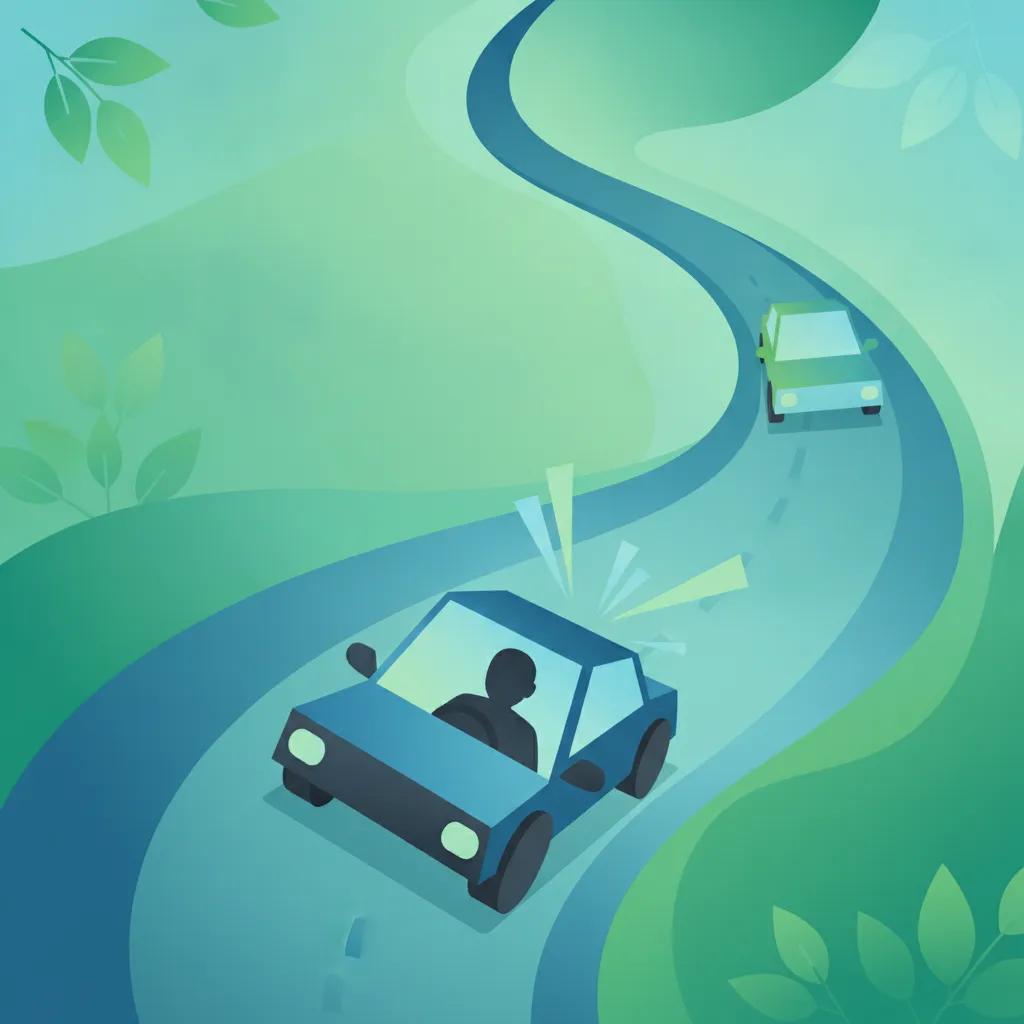
This lesson focuses on maintaining a safe buffer around the vehicle in traffic. It explains the 'two-second rule' as a simple method for ensuring adequate following distance and discusses how to adjust this for adverse conditions. A key focus is on developing hazard anticipation skills through continuous scanning and risk assessment.
Find clear answers to common questions learners have about First Aid Basics, Emergency Numbers, and Reporting Accidents. Learn how the lesson is structured, which driving theory objectives it supports, and how it fits into the overall learning path of units and curriculum progression in Germany. These explanations help you understand key concepts, lesson flow, and exam focused study goals.
The first priority is to secure the scene to prevent further accidents. This involves switching on your hazard lights, wearing your high-visibility vest if available, and placing a warning triangle at a safe distance before checking for injured persons.
You must follow the 5 Ws: Who is calling, Where did it happen, What happened, How many injured/affected, and Wait for questions from the dispatcher. Never hang up until the operator tells you to.
Yes, under German law, you have a duty to assist. Failing to render reasonable aid or leaving the scene of an accident where you were involved can result in severe legal consequences, including fines and the loss of your licence.
You cannot simply leave. You must wait a reasonable amount of time for the owner to return. If they do not appear, you must report the accident to the nearest police station immediately; leaving without doing so is considered hit-and-run.
Begin your targeted revision now. Use our practice search to quickly find specific German driving theory questions. Filter by StVO rules, road signs, or hazard perception to create your focused study plan. Master challenging areas and prepare confidently for your theoretical driving test.