
This lesson teaches you the critical safety procedures required when your moped or scooter breaks down or you are involved in a traffic accident. Understanding these steps is a vital part of your AM licence training, ensuring you can protect yourself and other road users in emergency situations. You will learn the correct legal and safety protocols mandated by German traffic regulations.
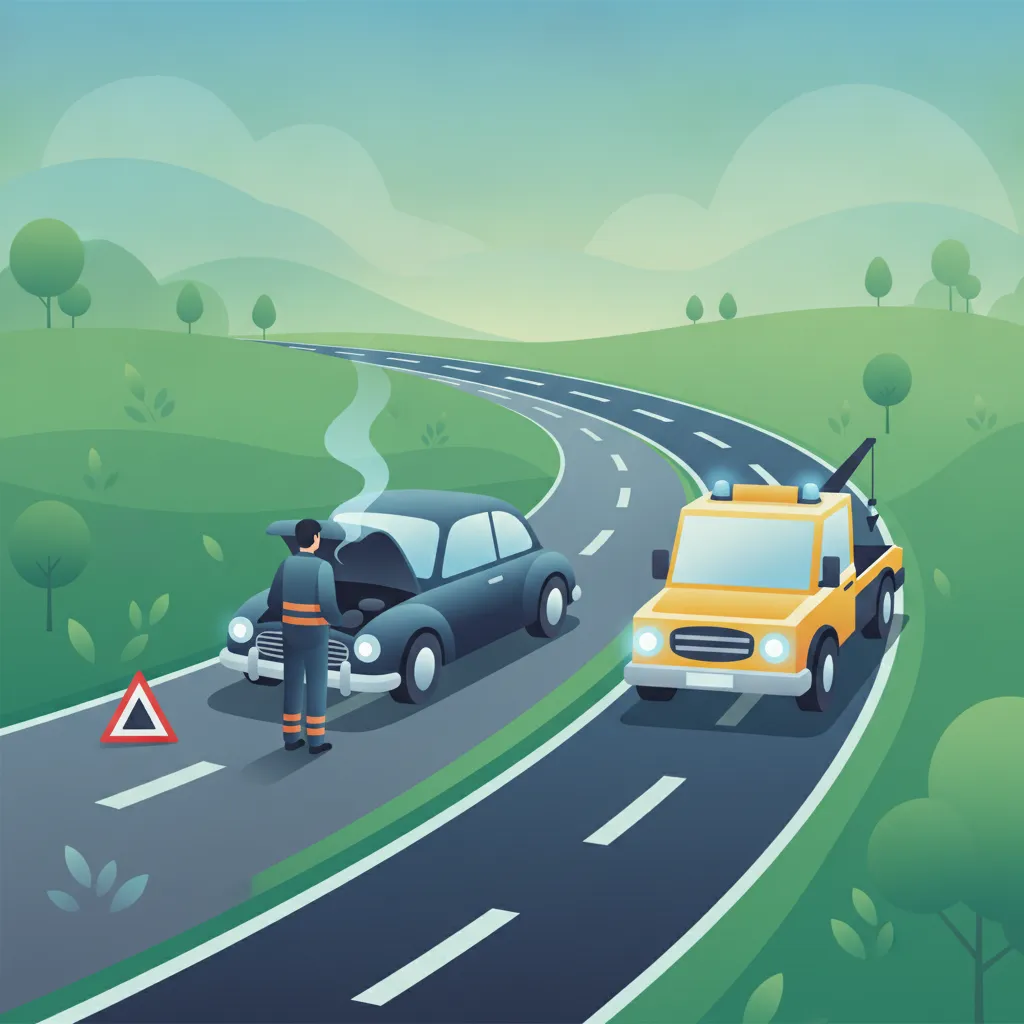
Lesson content overview
Operating a moped or scooter as an AM licence holder in Germany comes with the responsibility of knowing how to react safely and effectively during unexpected breakdowns or traffic accidents. This comprehensive lesson for the German Driving Theory Course for AM Licence will equip you with the essential knowledge and actionable steps to manage such emergencies, ensuring your safety and the safety of other road users. Understanding these procedures is not only crucial for personal security but also for fulfilling your legal obligations under the German Road Traffic Regulations (Straßenverkehrs-Ordnung – StVO).
When your vehicle suddenly stops working or you are involved in a collision, your immediate actions can significantly reduce risks and prevent further incidents. The first priority is always to ensure the safety of yourself and any passengers, followed by securing the scene.
In any emergency, your personal safety comes first. Assess the situation quickly to determine if it is safe to remain in or near your vehicle. If your moped or scooter breaks down in a dangerous spot, such as on a fast-moving road or in an area with poor visibility, consider moving yourself to a safer location, perhaps behind a crash barrier or further away from the immediate traffic flow.
Never attempt to repair your vehicle or recover items from it if doing so puts you directly in the path of oncoming traffic. Your life and safety are paramount.
If your moped or scooter can still be safely moved, even if it's just by pushing it, relocate it as far out of the flow of traffic as possible. This action significantly reduces the risk of secondary accidents. On motorways, this means moving onto the hard shoulder (Standstreifen); on other roads, push your vehicle to the very edge of the road or into a safe lay-by.
The emergency lane on a motorway or high-speed road, specifically designated for stopping in emergencies, breakdowns, or accidents, keeping vehicles out of the main traffic flow.
If it is impossible to move your vehicle without putting yourself at risk, or if the vehicle is immobilized due to an accident, you must stop it where it is and immediately proceed to secure the incident scene. This aligns with StVO § 45, which mandates that drivers move their vehicles out of the traffic flow if possible, or take appropriate warning measures if not.
Once personal safety is addressed and the vehicle is positioned as safely as possible, the next critical step is to make the incident site visible to other road users. This involves using specific warning devices as stipulated by German traffic law.
The very first warning device you should activate in case of a breakdown or accident is your vehicle's hazard warning lights (Gefahrwarnblinkanlage). These are typically activated by a button with a red triangle symbol. Hazard lights flash all turn indicators simultaneously, signaling to other drivers that your vehicle is stopped or moving unusually slowly due to a hazard.
A flashing light system on a vehicle that activates all turn indicators simultaneously to signal that the vehicle is stopped or moving unusually slowly due to an emergency or hazard.
According to StVO § 16, hazard lights must be used whenever your vehicle unexpectedly stops or moves at a reduced speed due to a technical issue or any other hazardous situation. This immediate visual cue is vital, especially on busy roads or in poor visibility, to give approaching drivers time to react and adjust their speed or lane position.
In addition to hazard lights, a warning triangle (Warntafel) is a mandatory safety device that must be carried in all vehicles in Germany, including mopeds and scooters (though scooters often have less space, it's a legal requirement to carry one). The warning triangle serves as an advance warning for approaching traffic, giving them ample time to recognize the hazard.
A reflective, portable safety device that must be placed on the road behind a stopped vehicle to warn approaching traffic of a hazard, especially during a breakdown or accident.
Placement Distances:
When placing the warning triangle, walk against the direction of oncoming traffic, facing the vehicles, to ensure you are visible and aware of approaching dangers. Hold the triangle unfolded in front of you to increase your visibility.
Visibility becomes even more critical during nighttime, in adverse weather conditions like fog, heavy rain, or snow, or on winding roads. In such situations, the effectiveness of hazard lights and warning triangles can be diminished.
If you must exit your vehicle, especially on a motorway or busy road, wearing a reflective safety vest (Warnweste) is highly recommended and in some vehicles, mandatory by law. A reflective vest significantly increases your personal visibility to other drivers, protecting you from becoming a secondary accident victim. Always consider carrying one as an AM licence holder.
German law requires a reflective safety vest to be carried in cars, trucks, and buses. While not explicitly mandated for mopeds/scooters, carrying and wearing one in an emergency is a wise safety measure and can save your life.
Once the scene is secured and your immediate safety is ensured, the next step is to call for help. Depending on the nature of the incident, this may involve contacting roadside assistance or the police.
For vehicle breakdowns where there are no injuries or significant property damage, contacting a roadside assistance service is usually the appropriate first step. Many AM licence holders have roadside assistance through their insurance provider, a motoring club (like ADAC in Germany), or directly from the vehicle manufacturer.
When you call, be prepared to provide:
Keep your roadside assistance contact information easily accessible, perhaps stored in your phone or written down in your vehicle's compartment.
Not every accident requires police involvement, especially minor incidents with only superficial vehicle damage and no injuries. However, German law has strict requirements for when an accident must be reported to the police. This is known as the Unfallanzeigepflicht (accident reporting obligation) under StVO § 34.
You must report an accident to the police immediately if:
For very minor incidents with no injuries and only slight damage where all parties agree on the facts and exchange contact/insurance details, police reporting is generally not mandatory but can be done if desired by any party for documentation purposes. Always err on the side of caution and call the police if you are unsure.
Knowing the correct emergency numbers is crucial:
Both 110 and 112 can be dialed from any phone, including mobile phones, without a SIM card and free of charge.
When calling emergency services, remain calm and provide:
In Germany, every road user has a legal duty to render assistance (StVO § 7: Pflicht zur Hilfeleistung) to injured persons at the scene of an accident. This duty applies even if you were not directly involved in the accident. Failing to provide assistance, when it is reasonable and safe to do so, is a criminal offense (Unterlassene Hilfeleistung).
Your duty to render assistance means:
It is important to remember that you are not expected to be a medical professional. Your obligation is to provide help within your capabilities without endangering yourself. Do not move injured persons unnecessarily, especially if there's suspicion of spinal injuries, unless their life is in immediate danger (e.g., from fire).
Several sections of the Straßenverkehrs-Ordnung (StVO) specifically govern behavior during breakdowns and accidents. Understanding these legal requirements is crucial for all drivers in Germany.
The German Road Traffic Regulations, which legally govern all aspects of road use, including traffic signs, rules, and procedures for emergencies.
This section outlines the primary responsibilities of drivers involved in a breakdown or accident.
This regulation specifies the use of warning devices.
This section covers when and how accidents must be reported.
This important rule dictates the moral and legal obligation to help others.
The steps you take during a breakdown or accident may need to be adjusted based on the specific circumstances of the road, traffic, and weather.
As an AM licence holder, you are driving lighter and often less visible vehicles.
Failing to follow proper procedures during breakdowns and accidents can have serious repercussions, ranging from fines to criminal charges, and increasing the risk of further accidents.
Failure to activate hazard lights: Increases the risk of rear-end collisions. Leads to fines and potentially higher liability in case of a secondary accident.
Leaving the vehicle on the travel lane without warning: Extremely dangerous on high-speed roads. Results in fines, and potential criminal liability if it causes other accidents.
Incorrect warning triangle placement: Placing it too close to the vehicle or not at all. Other drivers may not notice the hazard in time. Leads to fines and increased accident risk.
Not reporting an accident with injuries: A violation of legal duty. Constitutes a criminal offense, potentially leading to severe penalties and increased insurance premiums.
Attempting self-repair on a busy road without securing the site: Endangers yourself and others. Can cause secondary accidents and lead to fines.
Forgetting to provide assistance to injured persons: Violates the legal duty to render aid (Unterlassene Hilfeleistung). Leads to criminal liability and moral consequences.
Being prepared for a breakdown or accident is a crucial part of responsible driving. Remember these key steps to ensure safety and comply with German traffic laws:
Prioritize Personal Safety: Get yourself and any passengers to a safe location, away from immediate traffic, if possible.
Activate Hazard Lights: Immediately turn on your hazard warning lights (Gefahrwarnblinkanlage) to alert other drivers.
Move the Vehicle: If safe and possible, push your moped or scooter onto the hard shoulder or to the side of the road, out of the traffic flow.
Place Warning Triangle: Walk against traffic to place the warning triangle (Warntafel) at the correct distance: 150 meters on motorways, 100 meters on other roads.
Increase Visibility: Wear a reflective vest if you exit the vehicle, especially at night or in poor weather.
Contact Assistance: Call roadside assistance for breakdowns. Provide your exact location and vehicle details.
Report Accidents to Police: Immediately call 110 for accidents involving injuries, fatalities, or significant property damage, or if there's a dispute.
Render First Aid: Provide basic first aid (Erste Hilfe) to injured persons within your capabilities, and stay with them until professional help arrives (call 112 for medical emergencies).
Remain Calm: Stay composed to make rational decisions and communicate clearly with emergency services and others involved.
By following these procedures, you not only protect yourself and others but also fulfill your legal duties as a responsible driver in Germany.
This lesson covers essential emergency procedures for AM licence holders in Germany, including immediate actions after a breakdown or accident, proper use of hazard lights and warning triangles, and legal requirements under the StVO. Key regulations include StVO § 45 (vehicle positioning and warning), StVO § 16 (hazard light usage), StVO § 34 (accident reporting obligations), and StVO § 7 (duty to render assistance). Learners must know specific warning triangle distances, emergency numbers (110 for police, 112 for medical emergencies), and when police reporting is mandatory. The lesson also emphasizes personal safety, first aid obligations, and the serious legal consequences of failing to provide assistance.
A short set of high-value points that capture the most important learning from this lesson.
Activate hazard lights immediately when your vehicle stops unexpectedly or you are involved in an accident.
Place the warning triangle at 150m on motorways, 100m on rural roads, and at a safe distance in urban areas while walking against traffic.
Move your vehicle out of the traffic flow if possible; if not, secure the scene where it is and prioritize your personal safety.
You must report accidents to police (110) immediately if there are injuries, fatalities, significant property damage, disputes, or if a party leaves without providing details.
Under StVO § 7, you have a legal duty to render assistance at accident scenes, including securing the area, calling emergency services, and providing basic first aid within your capabilities.
Explore all units and lessons included in this driving theory course.
Hazard lights (Gefahrwarnblinkanlage) must be activated whenever your vehicle unexpectedly stops or moves at reduced speed due to a hazard.
Warning triangle (Warntafel) distances: 150m on Autobahn, 100m on other roads, approximately 50m in urban areas with dense traffic.
Call 112 for medical emergencies and fires; call 110 for police and accidents requiring documentation or dispute resolution.
StVO § 45 requires moving vehicles out of traffic flow if possible, activating hazard lights, and placing warning signs.
Unterlassene Hilfeleistung (failing to provide assistance) is a criminal offense in Germany, even for uninvolved bystanders.
Forgetting to activate hazard lights immediately after a breakdown or accident, increasing the risk of rear-end collisions.
Placing the warning triangle too close to the vehicle instead of the required minimum distance, giving approaching drivers insufficient reaction time.
Attempting to repair the vehicle or recover items on a busy road without first securing the scene with warning devices.
Leaving the scene of an accident without reporting it when injuries or significant property damage are present.
Moving injured persons unnecessarily without assessing for spinal injuries, potentially causing further harm.
Lesson content overview
A short set of high-value points that capture the most important learning from this lesson.
Activate hazard lights immediately when your vehicle stops unexpectedly or you are involved in an accident.
Place the warning triangle at 150m on motorways, 100m on rural roads, and at a safe distance in urban areas while walking against traffic.
Move your vehicle out of the traffic flow if possible; if not, secure the scene where it is and prioritize your personal safety.
You must report accidents to police (110) immediately if there are injuries, fatalities, significant property damage, disputes, or if a party leaves without providing details.
Under StVO § 7, you have a legal duty to render assistance at accident scenes, including securing the area, calling emergency services, and providing basic first aid within your capabilities.
Explore all units and lessons included in this driving theory course.
Hazard lights (Gefahrwarnblinkanlage) must be activated whenever your vehicle unexpectedly stops or moves at reduced speed due to a hazard.
Warning triangle (Warntafel) distances: 150m on Autobahn, 100m on other roads, approximately 50m in urban areas with dense traffic.
Call 112 for medical emergencies and fires; call 110 for police and accidents requiring documentation or dispute resolution.
StVO § 45 requires moving vehicles out of traffic flow if possible, activating hazard lights, and placing warning signs.
Unterlassene Hilfeleistung (failing to provide assistance) is a criminal offense in Germany, even for uninvolved bystanders.
Forgetting to activate hazard lights immediately after a breakdown or accident, increasing the risk of rear-end collisions.
Placing the warning triangle too close to the vehicle instead of the required minimum distance, giving approaching drivers insufficient reaction time.
Attempting to repair the vehicle or recover items on a busy road without first securing the scene with warning devices.
Leaving the scene of an accident without reporting it when injuries or significant property damage are present.
Moving injured persons unnecessarily without assessing for spinal injuries, potentially causing further harm.
Explore search topics learners often look for when studying Procedures for Breakdowns, Roadside Assistance, and Accident Response. These topics reflect common questions about road rules, driving situations, safety guidance, and lesson level theory preparation for learners in Germany.
Browse additional driving theory lessons that cover connected traffic rules, road signs, and common driving situations related to this topic. Improve your understanding of how different rules interact across everyday traffic scenarios.
Learn the essential steps for managing vehicle breakdowns and traffic accidents in Germany. This guide covers scene safety, calling for assistance, and understanding your legal obligations following an incident, crucial for your AM licence theory.
This lesson outlines a clear, systematic procedure for managing a vehicle breakdown safely and efficiently. It covers immediate actions such as activating hazard lights, placing a warning triangle, and moving the vehicle to a safe location if possible. Learners will understand how to communicate the situation to passengers, decide if an evacuation is necessary, and contact the appropriate breakdown services for assistance.
This lesson covers the appropriate steps to take in the event of a vehicle breakdown or an accident. It details procedures for safely moving the motorcycle out of traffic, making the area visible with hazard warnings, and contacting emergency services. The content emphasizes personal safety and the correct protocol for managing the scene until professional help arrives.
This lesson provides clear, step-by-step instructions on what to do at the scene of a traffic accident. It covers the immediate priorities: stopping, securing the area with a warning triangle, and putting on a high-visibility vest. The lesson details how to make an effective emergency call to '112' and what information to provide, as well as the procedure for exchanging insurance details with other parties involved.
This lesson provides a step-by-step guide for safely managing a vehicle breakdown on the road. It includes instructions on performing an emergency stop, deploying hazard lights and warning triangles, and contacting assistance. The content emphasizes maintaining safety for both the driver and other road users during the breakdown.
This lesson outlines the proper response to an accident involving a heavy vehicle, including immediate actions and contacting emergency services. It details the legal obligations for reporting accidents and cooperating with police investigations. The content also covers documentation requirements for insurance claims and the importance of preserving the accident scene.
This lesson provides a complete guide to driving on the German Autobahn. It covers the correct procedure for entering and exiting via acceleration and deceleration lanes, the strict lane discipline rule of keeping right ('Rechtsfahrgebot'), and the principle of overtaking only on the left. It also explains the recommended speed limit and the critical procedure for forming an emergency corridor ('Rettungsgasse') in a traffic jam.
This lesson covers the legal and moral obligation to provide first aid at an accident scene. It outlines basic, life-saving measures such as assessing an injured person's condition, placing them in the recovery position, and the principles of controlling bleeding. The lesson also explains the correct placement of the warning triangle ('Warndreieck') to effectively warn oncoming traffic of the hazard ahead.
This lesson provides a step-by-step guide to executing turns safely at intersections and other locations. It details the full observation sequence (mirrors, signal, blind spot check) required before initiating a turn. The lesson covers correct lane positioning for both left and right turns and explains the rules for performing U-turns or three-point turns where permitted.
This lesson covers the essential actions to take at an accident scene, focusing on personal safety and providing basic first aid. It explains how to make an effective emergency call to 112 and what information to provide. The lesson also details the legal requirements for documenting and reporting an accident for police and insurance purposes.
This lesson focuses on the legal responsibilities and duties of a vehicle operator according to German traffic law, primarily the StVO. It covers the obligation to drive safely, the rules of conduct at an accident scene, and the legal consequences of traffic violations. Understanding these principles is crucial for maintaining road safety and avoiding penalties such as fines, points, or driving bans.
Understand the legal consequences and penalties for traffic infractions according to German law. This lesson details responsibilities, fines, and points, providing essential knowledge for safe and lawful driving as an AM licence holder.
This lesson provides an overview of the German system for penalizing traffic offenses. It explains the catalogue of fines ('Bußgeldkatalog'), the system of demerit points ('Punkte in Flensburg') for more serious violations, and the conditions under which a temporary driving ban ('Fahrverbot') or a full revocation of the license can be imposed. Understanding these consequences reinforces the importance of lawful driving.
This lesson explains the German catalogue of fines (Bußgeldkatalog) and the points system for traffic violations. It details which offenses lead to fines, points in Flensburg, or even licence revocation. Understanding these consequences reinforces the importance of adhering to all traffic laws.
This lesson focuses on the legal responsibilities and duties of a vehicle operator according to German traffic law, primarily the StVO. It covers the obligation to drive safely, the rules of conduct at an accident scene, and the legal consequences of traffic violations. Understanding these principles is crucial for maintaining road safety and avoiding penalties such as fines, points, or driving bans.
This lesson informs riders about the legal ramifications of dangerous riding and traffic violations under German law. It outlines potential penalties, including fines, points, and license suspension, as well as the impact on insurance. The content also provides a step-by-step guide on the correct procedures for reporting an accident to the police and documenting the scene for legal and insurance purposes.
This lesson covers regulatory signs, which are legally enforceable and command specific actions from drivers. You will learn the meaning of critical signs such as the stop sign, yield sign, no-entry signs, and various parking and stopping prohibitions. The content also explains signs that establish speed limits, one-way streets, and restricted areas like environmental or pedestrian zones.
This lesson explains the specific regulations for novice drivers during their mandatory two-year probationary period ('Probezeit'). Key rules include a strict zero-percent alcohol limit. The lesson also describes the system of A- and B-level violations and the consequences of committing offenses during this time, which can include a mandatory advanced seminar ('Aufbauseminar') and an extension of the probationary period.
This lesson provides a thorough explanation of traffic light systems ('Lichtzeichenanlagen') used in Germany. It details the meaning of red, amber, and green lights and the correct response to each phase of the signal sequence. The lesson also covers special signals, such as the green arrow for turning right on red, pedestrian and cyclist signals, and the authority of signals given by a police officer, which override all other signs.
Find clear answers to common questions learners have about Procedures for Breakdowns, Roadside Assistance, and Accident Response. Learn how the lesson is structured, which driving theory objectives it supports, and how it fits into the overall learning path of units and curriculum progression in Germany. These explanations help you understand key concepts, lesson flow, and exam focused study goals.
Immediately move your moped to a safe location, such as the shoulder or a parking area, to avoid obstructing traffic. Turn on your hazard lights to warn other road users of your presence.
While you should always carry basic safety gear, the requirement to place a warning triangle depends on the specific vehicle and situation. It is crucial to be familiar with how to alert traffic effectively to prevent collisions.
You must inform the police if anyone is injured, if there is significant property damage, or if the other party involved in the accident refuses to provide their insurance or identification details.
Only if it is impossible to move it safely. If it must remain on the road, you must ensure it is clearly visible to other drivers, using lights and reflective clothing, and seek a position of safety off the road yourself.
Begin your targeted revision now. Use our practice search to quickly find specific German driving theory questions. Filter by StVO rules, road signs, or hazard perception to create your focused study plan. Master challenging areas and prepare confidently for your theoretical driving test.