
This lesson concludes your German motorcycle theory training by focusing on the legal weight of your decisions on the road. You will learn the implications of dangerous riding behaviors and the precise steps required for documenting and reporting traffic accidents according to German law.
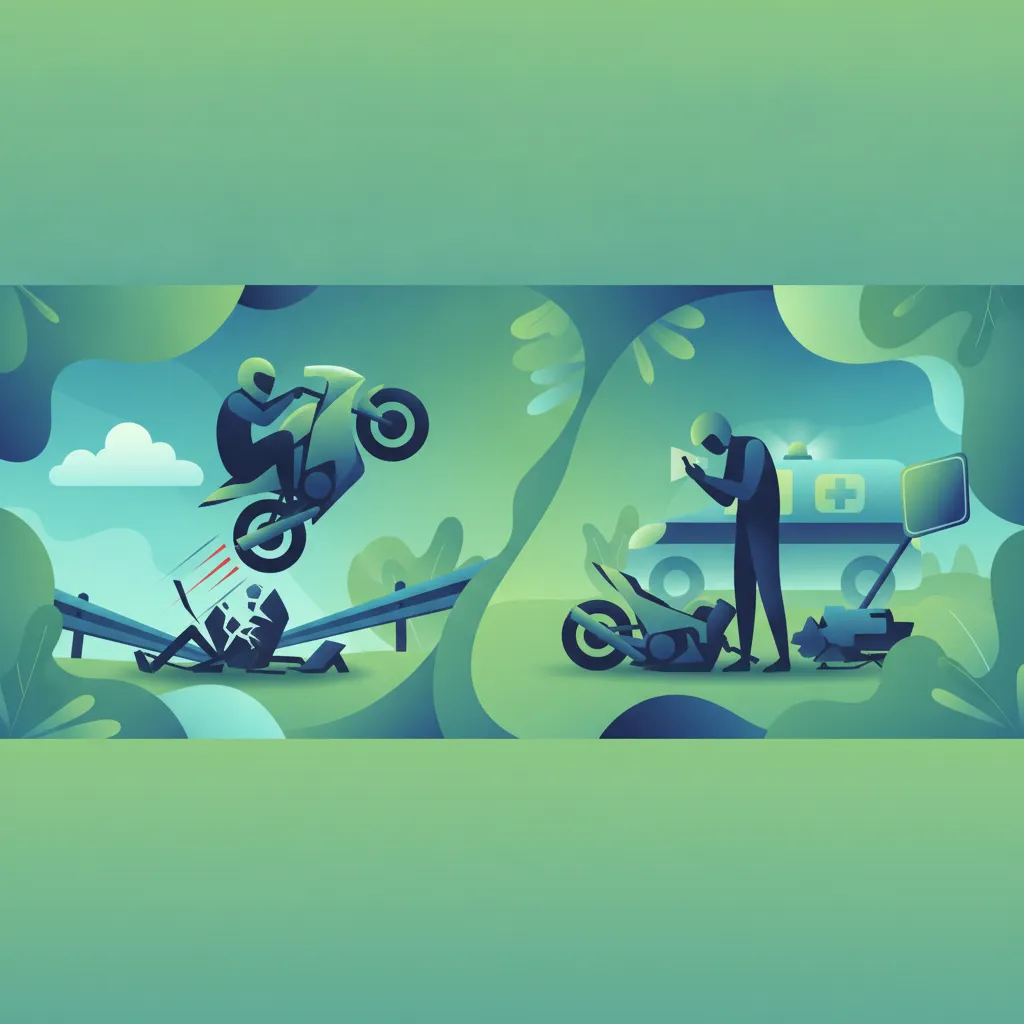
Lesson content overview
Understanding the legal ramifications of dangerous riding and knowing the correct procedures for accident reporting are fundamental for every motorcyclist in Germany. This lesson, part of your German Motorcycle Licence Theory Course (Classes A, A1, A2), will equip you with the essential knowledge to navigate German road traffic regulations, avoid severe penalties, and handle accident situations appropriately from a legal and insurance perspective. Riders are not only responsible for their own safety but also for adhering to strict legal frameworks designed to protect all road users.
In Germany, every road user, especially a motorcyclist operating a powerful vehicle, is legally accountable for their actions on the road. This principle, enshrined in German traffic law, aims to enforce compliance with regulations and prevent endangerment of oneself and others. Legal accountability means that your choices and behaviors while riding can have direct and significant consequences, ranging from minor fines to severe criminal penalties and loss of your driving privileges. Adherence to the Straßenverkehrs-Ordnung (StVO) – the German Road Traffic Regulations – and the Straßenverkehrsgesetz (StVG) – the German Road Traffic Act – is not merely a suggestion, but a mandatory requirement with serious implications for any violation.
Dangerous riding behaviors are actions that significantly increase the risk of accidents, endangering not only the rider but also other road users. These actions are often direct violations of German traffic law and are treated with varying degrees of severity depending on their potential for harm.
Motorcyclists must be particularly vigilant to avoid behaviors that are frequently categorized as dangerous:
One of the most severe forms of dangerous riding is operating a motorcycle under the influence of alcohol, drugs, or certain medications. German law has strict limits for Blood Alcohol Content (BAC) for drivers, with a zero-tolerance policy for new drivers and those under 21. Even for experienced riders, a BAC of 0.5 per mille (‰) or higher is an administrative offense, and 1.1 per mille (‰) or higher is a criminal offense, regardless of impairment shown. Riding while impaired drastically reduces a rider's ability to concentrate, perceive hazards, make sound judgments, and control the motorcycle, leading to a significantly higher risk of severe accidents. The consequences for such offenses are exceptionally harsh, often involving substantial fines, lengthy license suspensions, and even imprisonment.
Many dangerous riding behaviors fall under specific sections of the StVO and StVG. For instance, § 3 StVO governs speed, § 5 StVO covers overtaking rules, and § 23 StVO deals with other general driving duties. More severe violations, especially those involving alcohol or drugs, are also subject to criminal law penalties under the Strafgesetzbuch (StGB), such as § 315c StGB for endangering road traffic.
Violating traffic laws in Germany can lead to a range of legal consequences designed to deter dangerous behavior and ensure public safety. These typically include financial penalties, points on your driving record, and potentially the suspension or revocation of your riding license.
Fines, known as Geldbußen, are financial penalties imposed for most traffic violations. The amount of the fine depends on the severity of the offense and any previous violations. For minor infractions, a simple warning fine (Verwarnungsgeld) might be issued. For more serious offenses, a formal fine notice (Bußgeldbescheid) will be sent. The German fine catalog (Bußgeldkatalog) provides a detailed list of fines for various offenses. For example, speeding by 21-25 km/h in urban areas could lead to a fine of €115, while exceeding the limit by 51-60 km/h could result in a €480 fine, points, and a driving ban.
Fines are a direct consequence of breaking traffic rules. Always be aware that even seemingly minor violations can accumulate and lead to more significant penalties.
Germany operates a national points system, commonly known as Flensburger Punkte (Flensburg points), administered by the Federal Motor Transport Authority (Kraftfahrt-Bundesamt) in Flensburg. This system tracks serious traffic offenses, accumulating points against a driver's record.
The German points system where serious traffic offenses add points to a driver's record. Accumulating a certain number of points can lead to warnings, license suspension, or revocation.
Once your license is revoked due to reaching 8 points, a minimum waiting period (usually six months) must pass before you can reapply for a new license, which often requires a psychological-medical examination (Medizinisch-Psychologische Untersuchung - MPU). Points generally expire after certain periods (2.5, 5, or 10 years, depending on the severity of the offense) and cannot be removed prematurely except by attending an approved seminar.
Beyond fines and points, serious traffic offenses can lead to a temporary driving ban (Fahrverbot) or the permanent revocation of your driving license (Entzug der Fahrerlaubnis).
Certain dangerous riding behaviors are not just administrative offenses but criminal offenses under the StGB. Examples include:
Traffic violations and involvement in accidents can significantly impact your motorcycle insurance in Germany, affecting both your coverage and premium costs.
Motorcycle insurance in Germany is generally mandatory for liability (Haftpflichtversicherung), covering damages you cause to third parties. Additionally, many riders choose comprehensive insurance options (Teilkasko or Vollkasko) to cover damage to their own motorcycle.
Insurance premiums in Germany are often risk-based. Your claims history and driving record directly influence the cost of your insurance.
Do not assume all accidents are fully covered regardless of fault. Gross negligence or riding under the influence can lead to significant financial burdens, even with full insurance.
Knowing the correct accident reporting procedure is crucial for legal compliance, facilitating insurance claims, and protecting yourself from further legal repercussions.
The first steps after an accident are critical for safety and gathering evidence.
Secure the Accident Scene: First, ensure your own safety and the safety of others. Switch off your engine, turn on your hazard warning lights, and place a warning triangle (if available and safe to do so) at an appropriate distance (50m in urban areas, 100m on rural roads, 200m on Autobahns) to alert oncoming traffic. This prevents secondary accidents.
Render First Aid (§ 81 StVG): Check for injuries among all involved parties. Under German law, there is a legal duty to render immediate assistance to accident victims. Provide first aid to anyone injured and ensure they are made as comfortable as possible. Even if you are not medically trained, staying with an injured person and providing comfort is a form of assistance.
Call Emergency Services (112): If there are injuries, significant property damage, or hazardous situations (e.g., fuel spill, vehicle blocking traffic), immediately call the police and ambulance services using the emergency number 112. Provide a clear description of the location, number of injured persons, and nature of the accident.
Protect Evidence: Do not move vehicles or objects unless absolutely necessary for safety reasons or to free an injured person. If possible, take photographs of the scene before anything is moved.
It is often mandatory to notify the police after an accident in Germany, and it is almost always advisable.
The legal requirement to report certain accidents to the police, especially those involving personal injury, death, or significant property damage, under German law.
Thorough documentation of the accident scene is paramount for your insurance claim and any potential legal proceedings.
A standardized form or comprehensive documentation used to record the details of a traffic accident, essential for insurance claims and legal proceedings in Germany.
Take Photographs and Videos: Use your phone to take numerous photos and videos from different angles. Capture the overall scene, positions of vehicles, damage to all vehicles, skid marks, road conditions, traffic signs, and any relevant surroundings.
Collect Information from Involved Parties:
Gather Witness Information: If there are witnesses, politely ask for their names and contact details. Their unbiased statements can be crucial if there's a dispute over fault.
Sketch the Scene: Draw a simple diagram showing the position of vehicles, direction of travel, and any relevant landmarks or road features.
Note Down Details: Record the date, time, exact location of the accident, weather conditions, road conditions, and a brief description of what happened from your perspective.
Do Not Admit Fault: While exchanging information and being helpful, avoid admitting fault or making statements that could be interpreted as such. Stick to factual descriptions.
After the immediate aftermath, contacting your insurance company is the next crucial step.
The formal request to an insurer for compensation after an accident, requiring proper documentation and adherence to policy terms.
Several common errors can complicate or jeopardize your accident claim:
Understanding the specific legal articles reinforces the importance of correct procedures.
| Rule | Statement | Applicability | Legal Status | Rationale | Correct/Incorrect Examples |
|---|---|---|---|---|---|
| § 81 StVG | Duty to render assistance to accident victims and prevent further danger. | All traffic participants involved in or witnessing an an accident. | Mandatory | Moral and legal obligation to preserve life and prevent further harm. | Correct: Stopping immediately, providing first aid, calling emergency services, and securing the scene. Incorrect: Driving away from the scene without stopping or offering help, or failing to place a warning triangle. |
| § 142 StGB | Prohibition against leaving the scene of an accident (Unerlaubtes Entfernen vom Unfallort). | All traffic participants involved in an accident causing significant damage or injury. | Mandatory | Ensures accountability, allows for damage assessment and aid provision. | Correct: Remaining at the scene, exchanging details, or waiting for authorities. Incorrect: Driving off after a minor bump in a parking lot without leaving contact details, or fleeing after a collision causing injury. |
| § 7 StVZO | Requirement to report certain traffic violations or accidents. | Applies generally to traffic rule violations and accidents involving injuries, death, or significant property damage. | Mandatory | Ensures proper legal follow-up and record-keeping, especially for severe incidents. | Correct: Promptly reporting a major crash involving personal injury or extensive damage to the police. Incorrect: Not reporting an accident involving bodily injury, assuming the informal exchange of contact details is sufficient. |
| § 12 StVG | Obligation to file an insurance claim and report accidents to the insurer. | All insured parties must notify their insurer of covered events. | Mandatory | Enables compensation for losses and ensures adherence to insurance contracts. | Correct: Informing your insurance provider within the policy-stipulated timeframe (e.g., 1 week) after an accident, even if you are not at fault. Incorrect: Delaying informing the insurer for several months, or not informing them at all because the damage seems minor and you hope to avoid premium increases. |
| § 49 StVG | Regulations on license suspension/revocation for repeated or severe offenses, and the points system. | Applies after accumulation of points or severe traffic offenses. | Mandatory | Protects public by restricting dangerous drivers. | Correct: A rider with 8 points in Flensburg having their license revoked and undergoing an MPU for reapplication. Incorrect: A driver continuing to drive despite being issued a formal driving ban or having their license revoked, leading to criminal charges under § 21 StVG (driving without a license). |
| § 315c StGB | Endangering road traffic through gross negligence or reckless behavior (e.g., severe speeding, alcohol/drugs). | Applies when driving poses a concrete danger to life, limb, or significant property. | Mandatory | Prevents severe harm caused by extremely dangerous driving. | Correct: A rider receiving a prison sentence and immediate license revocation for causing a serious accident due to racing at excessive speeds in urban traffic. Incorrect: A rider who causes a minor fender-bender due to momentary inattention, as this would typically be an administrative offense rather than a criminal endangerment of traffic. |
Verify the maximum permissible fine amounts, point allocations, and specific timeframes for reporting under the latest StVO, StVG, and Bußgeldkatalog updates, as these can change.
The specifics of an accident, such as environmental conditions or the type of road user involved, can influence the urgency and method of reporting.
For motorcyclists in Germany, legal accountability is a core principle. Engaging in dangerous riding behaviors like speeding, reckless cornering, or riding under the influence carries significant legal consequences, including substantial fines (Geldbußen), penalty points (Flensburger Punkte), and potentially a driving ban (Fahrverbot) or permanent license revocation (Entzug der Fahrerlaubnis). These actions also critically impact your motorcycle insurance, leading to increased premiums and potential denial of coverage for your own damages.
In the unfortunate event of an accident, prompt and accurate reporting is paramount. This includes immediately securing the scene, rendering first aid (§ 81 StVG), notifying the police when necessary (§ 7 StVZO), and meticulously documenting all details for your insurance claim (§ 12 StVG). By adhering to these procedures, you protect yourself legally, ensure fair insurance settlements, and contribute to overall road safety in Germany.
This lesson covers the legal consequences motorcyclists face in Germany for dangerous riding behaviors and the correct accident reporting procedure. Key penalties include fines (Geldbußen), points on your Flensburg record, and potential license revocation at 8 points. Riding under the influence carries especially harsh consequences, with criminal liability at 1.1‰ BAC and potential insurance denial for your own damages. The accident reporting protocol requires securing the scene, rendering first aid under § 81 StVG, mandatory police notification for injuries or disputes, and thorough documentation for insurance claims. Understanding these procedures and legal thresholds is essential for both exam success and your legal protection on German roads.
A short set of high-value points that capture the most important learning from this lesson.
Dangerous riding behaviors in Germany—including speeding, reckless cornering, and impaired riding—carry serious legal consequences ranging from fines to criminal charges.
The Flensburger Punkte system tracks traffic offenses: reaching 8 points results in mandatory license revocation, with intermediate thresholds at 4-5 points (warning) and 6-7 points (seminar recommendation).
Germany enforces strict Blood Alcohol Content limits: 0.5‰ is an administrative offense, while 1.1‰ or higher is a criminal offense with potential imprisonment.
After any accident, you must secure the scene, render first aid, and notify police when injuries, significant damage, or disputes occur—notifying your insurer is mandatory under § 12 StVG.
Gross negligence (e.g., riding under influence) can void your own insurance coverage while still requiring you to pay third-party damages out of pocket.
Explore all units and lessons included in this driving theory course.
§ 81 StVG imposes a legal duty to render immediate assistance to accident victims and prevent further danger.
Leaving an accident scene—even for minor damage—is a criminal offense under § 142 StGB (Unerlaubtes Entfernen vom Unfallort) punishable by fines or up to three years imprisonment.
The difference between Fahrverbot (temporary driving ban, 1-3 months, license returned after) and Entzug der Fahrerlaubnis (permanent revocation requiring reapplication and MPU).
Your SF-Klasse (Schadenfreiheitsklasse) determines insurance premiums—a single at-fault accident can downgrade you several levels, substantially increasing costs.
When documenting an accident, always take photos from multiple angles, collect witness contact details, and never admit fault at the scene.
Leaving the scene of even a minor accident without exchanging details, which is a criminal offense regardless of damage severity.
Admitting fault or making statements at the scene that could be used against you in liability determination—let police and insurers determine fault.
Failing to report accidents involving injuries or significant damage to police, which can complicate insurance claims and lead to additional penalties.
Neglecting to document the scene thoroughly (photos, witness contacts, sketch) before vehicles are moved, weakening your insurance case.
Waiting too long to notify your insurance company—most policies require reporting within days, and delays can result in claim denial.
Lesson content overview
A short set of high-value points that capture the most important learning from this lesson.
Dangerous riding behaviors in Germany—including speeding, reckless cornering, and impaired riding—carry serious legal consequences ranging from fines to criminal charges.
The Flensburger Punkte system tracks traffic offenses: reaching 8 points results in mandatory license revocation, with intermediate thresholds at 4-5 points (warning) and 6-7 points (seminar recommendation).
Germany enforces strict Blood Alcohol Content limits: 0.5‰ is an administrative offense, while 1.1‰ or higher is a criminal offense with potential imprisonment.
After any accident, you must secure the scene, render first aid, and notify police when injuries, significant damage, or disputes occur—notifying your insurer is mandatory under § 12 StVG.
Gross negligence (e.g., riding under influence) can void your own insurance coverage while still requiring you to pay third-party damages out of pocket.
Explore all units and lessons included in this driving theory course.
§ 81 StVG imposes a legal duty to render immediate assistance to accident victims and prevent further danger.
Leaving an accident scene—even for minor damage—is a criminal offense under § 142 StGB (Unerlaubtes Entfernen vom Unfallort) punishable by fines or up to three years imprisonment.
The difference between Fahrverbot (temporary driving ban, 1-3 months, license returned after) and Entzug der Fahrerlaubnis (permanent revocation requiring reapplication and MPU).
Your SF-Klasse (Schadenfreiheitsklasse) determines insurance premiums—a single at-fault accident can downgrade you several levels, substantially increasing costs.
When documenting an accident, always take photos from multiple angles, collect witness contact details, and never admit fault at the scene.
Leaving the scene of even a minor accident without exchanging details, which is a criminal offense regardless of damage severity.
Admitting fault or making statements at the scene that could be used against you in liability determination—let police and insurers determine fault.
Failing to report accidents involving injuries or significant damage to police, which can complicate insurance claims and lead to additional penalties.
Neglecting to document the scene thoroughly (photos, witness contacts, sketch) before vehicles are moved, weakening your insurance case.
Waiting too long to notify your insurance company—most policies require reporting within days, and delays can result in claim denial.
Explore search topics learners often look for when studying Legal Consequences of Dangerous Riding Behaviors and Accident Reporting. These topics reflect common questions about road rules, driving situations, safety guidance, and lesson level theory preparation for learners in Germany.
Browse additional driving theory lessons that cover connected traffic rules, road signs, and common driving situations related to this topic. Improve your understanding of how different rules interact across everyday traffic scenarios.
Explore the legal ramifications of dangerous riding and traffic violations in Germany. This lesson details fines, points on your license, potential license suspension, and the impact on insurance coverage.
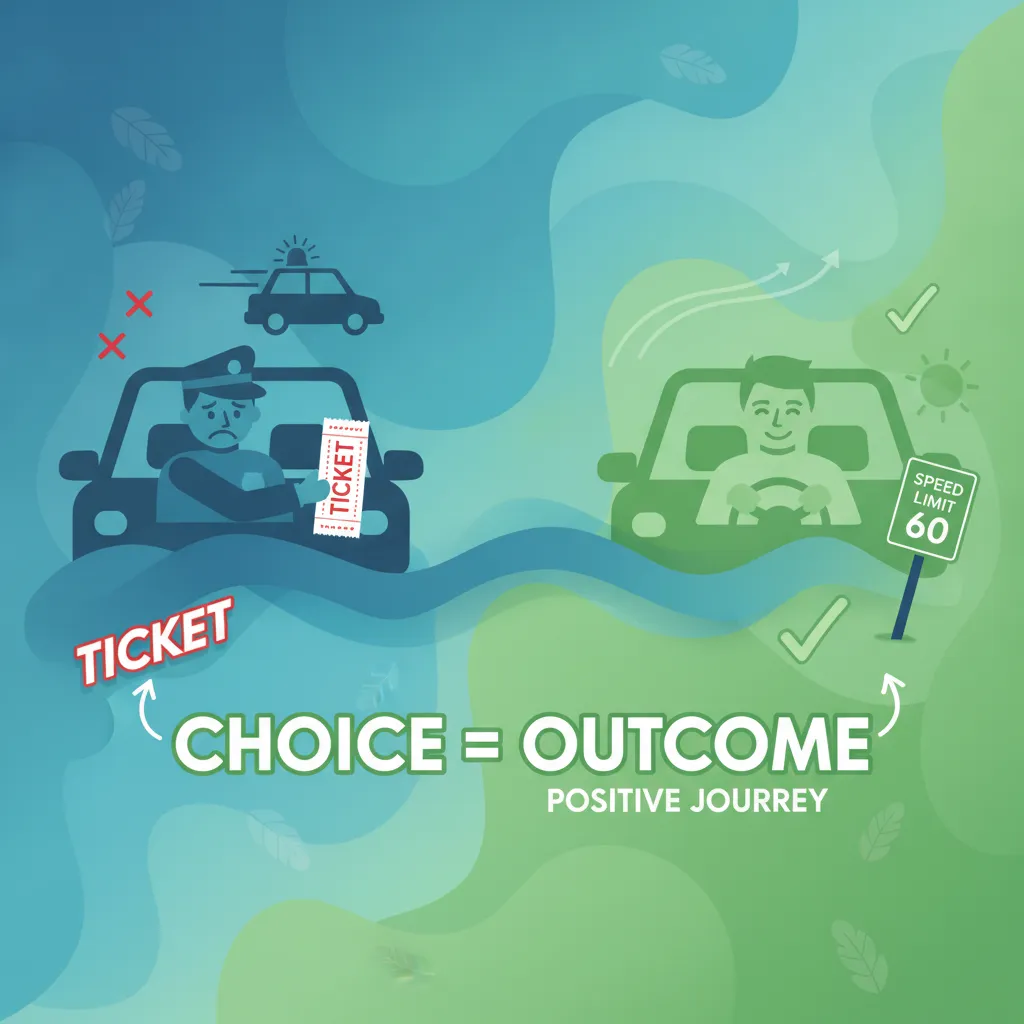
This lesson provides an overview of the German system for penalizing traffic offenses. It explains the catalogue of fines ('Bußgeldkatalog'), the system of demerit points ('Punkte in Flensburg') for more serious violations, and the conditions under which a temporary driving ban ('Fahrverbot') or a full revocation of the license can be imposed. Understanding these consequences reinforces the importance of lawful driving.
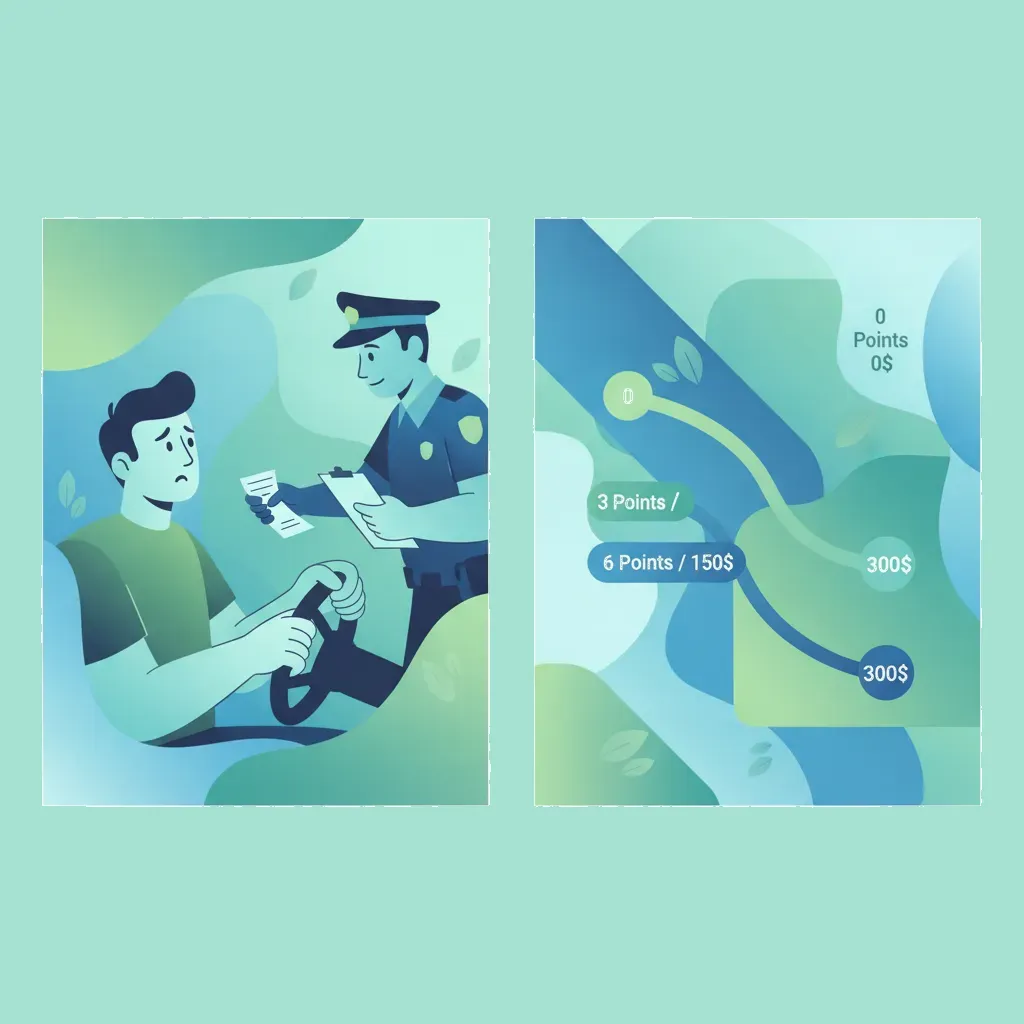
This lesson explains the German catalogue of fines (Bußgeldkatalog) and the points system for traffic violations. It details which offenses lead to fines, points in Flensburg, or even licence revocation. Understanding these consequences reinforces the importance of adhering to all traffic laws.

This lesson focuses on the legal responsibilities and duties of a vehicle operator according to German traffic law, primarily the StVO. It covers the obligation to drive safely, the rules of conduct at an accident scene, and the legal consequences of traffic violations. Understanding these principles is crucial for maintaining road safety and avoiding penalties such as fines, points, or driving bans.

This lesson covers the strict laws in Germany concerning driving under the influence of alcohol, drugs, or impairing medication. It details the legal blood alcohol concentration (BAC) limits for drivers, with a specific focus on the absolute zero-tolerance policy for drivers in their probationary period and those under 21. The severe legal penalties, including fines, license suspension, and the medical-psychological assessment (MPU), are also explained.
Understand the legal framework for motorcyclists in Germany, including penalties for violations and fines. Learn the correct official procedure for reporting traffic accidents, crucial for your theory exam success.
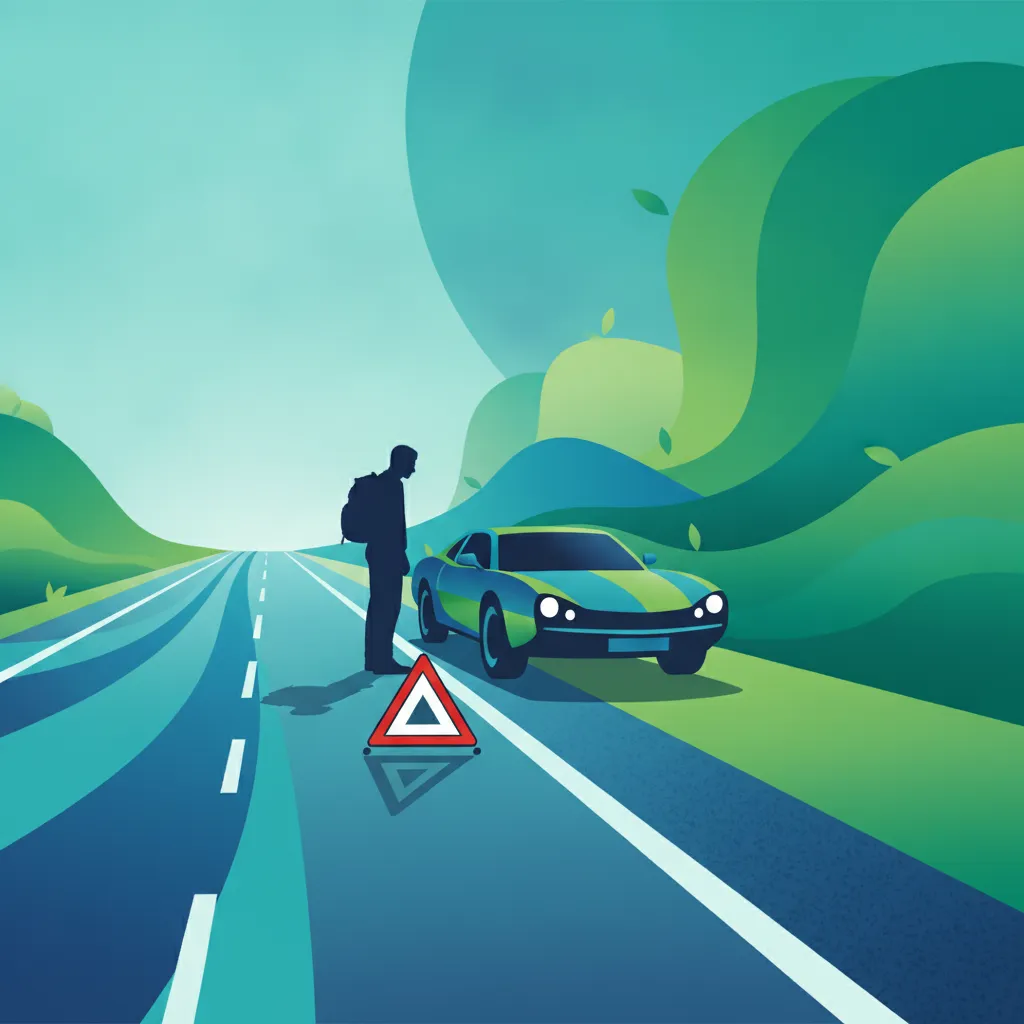
This lesson covers the appropriate steps to take in the event of a vehicle breakdown or an accident. It details procedures for safely moving the motorcycle out of traffic, making the area visible with hazard warnings, and contacting emergency services. The content emphasizes personal safety and the correct protocol for managing the scene until professional help arrives.
This lesson explains the German catalogue of fines (Bußgeldkatalog) and the points system for traffic violations. It details which offenses lead to fines, points in Flensburg, or even licence revocation. Understanding these consequences reinforces the importance of adhering to all traffic laws.

This lesson focuses on the legal duties every motorcycle rider must adhere to under German traffic law. It covers the concept of 'duty of care' towards other road users, mandatory insurance requirements, and the importance of maintaining a roadworthy vehicle. The lesson also details the rules of the probationary period and the potential legal and financial consequences of traffic violations.
This lesson highlights the specific risks associated with motorcyclists, who are less visible and more vulnerable than car drivers. It teaches you to actively look for motorcycles, especially at intersections and during lane changes, as their smaller profile can be easily missed. You will learn about their potential for rapid acceleration and instability, emphasizing the need for extra following distance.
This lesson covers the essential actions to take at an accident scene, focusing on personal safety and providing basic first aid. It explains how to make an effective emergency call to 112 and what information to provide. The lesson also details the legal requirements for documenting and reporting an accident for police and insurance purposes.
This lesson provides clear, actionable steps for managing a breakdown or being involved in an accident. It covers how to safely move the vehicle off the road, use warning signals, and secure the area. The procedure for contacting roadside assistance and the authorities is also explained in detail.

This lesson introduces riders to fundamental first aid principles and the proper management of an accident scene to prevent further harm. It covers basic life-saving actions, such as checking for consciousness, controlling severe bleeding, and positioning a casualty safely. The lesson also addresses the critical decision of when and how to remove a helmet and how to effectively communicate with emergency services.
This lesson outlines the proper response to an accident involving a heavy vehicle, including immediate actions and contacting emergency services. It details the legal obligations for reporting accidents and cooperating with police investigations. The content also covers documentation requirements for insurance claims and the importance of preserving the accident scene.
This lesson details the legal obligations every AM licence holder must follow. It emphasizes compliance with the Straßenverkehrs-Ordnung (StVO), including mandatory helmet use and maintaining vehicle roadworthiness. The content covers insurance requirements, accident reporting procedures, and the legal consequences of non-compliance.
This lesson provides an overview of the German system for penalizing traffic offenses. It explains the catalogue of fines ('Bußgeldkatalog'), the system of demerit points ('Punkte in Flensburg') for more serious violations, and the conditions under which a temporary driving ban ('Fahrverbot') or a full revocation of the license can be imposed. Understanding these consequences reinforces the importance of lawful driving.
Find clear answers to common questions learners have about Legal Consequences of Dangerous Riding Behaviors and Accident Reporting. Learn how the lesson is structured, which driving theory objectives it supports, and how it fits into the overall learning path of units and curriculum progression in Germany. These explanations help you understand key concepts, lesson flow, and exam focused study goals.
For learners and those in the probationary period (Probezeit), points often lead to mandatory remedial seminars or an extension of the probationary period. Repeated violations can result in the revocation of your motorcycle license.
In Germany, if there is personal injury, you must call the police immediately. If only property damage occurs, you may exchange information, but calling the police is strongly advised if there is any dispute or if the other party is unavailable.
Gross negligence or illegal maneuvers can lead to your insurance provider refusing to cover the damage or seeking recourse against you for the costs, even if you are insured.
You should always have an accident report form. You must document names, addresses, insurance details, license plate numbers, witness contact information, and take photographs of the scene and vehicle damage.
Begin your targeted revision now. Use our practice search to quickly find specific German driving theory questions. Filter by StVO rules, road signs, or hazard perception to create your focused study plan. Master challenging areas and prepare confidently for your theoretical driving test.