
Maintaining a safe distance and anticipating hazards are critical skills for any AM licence rider in Germany. This lesson guides you through the two-second rule and scanning techniques to help you stay safe and pass your theory exam.
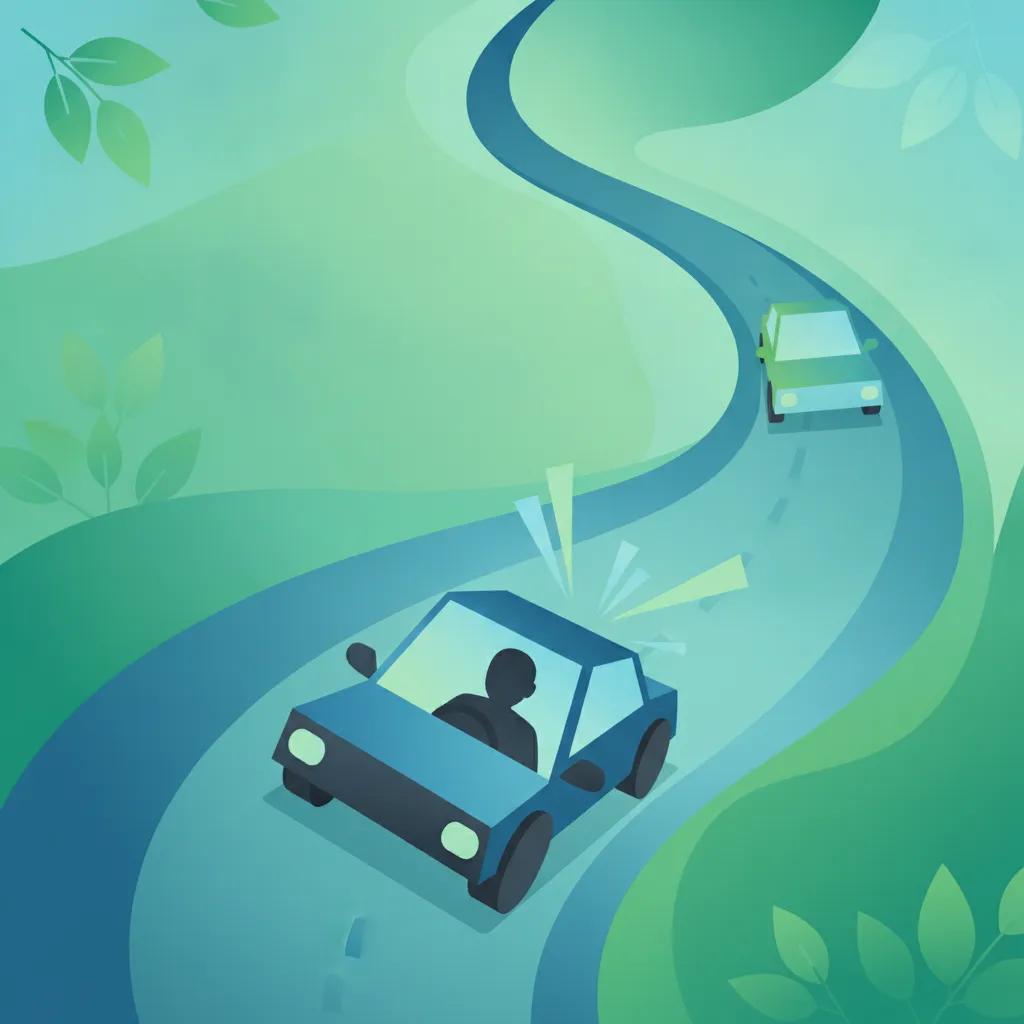
Lesson content overview
Das Fahren eines Mopeds oder Rollers im Straßenverkehr erfordert ständige Aufmerksamkeit und ein tiefes Verständnis für die dynamischen Interaktionen mit anderen Verkehrsteilnehmern. Eine der fundamentalsten Fähigkeiten, um Unfälle zu vermeiden und den Verkehrsfluss sicher zu gestalten, ist das Management des Raumes um Ihr Fahrzeug. Diese Lektion vertieft sich in die Konzepte des sicheren Folgeabstands, des aktiven Lückenmanagements und der vorausschauenden Gefahrenantizipation, die für alle Fahrer, insbesondere für jene mit einem AM-Führerschein in Deutschland, von entscheidender Bedeutung sind.
Der richtige Abstand zu vorausfahrenden Fahrzeugen und das Bewusstsein für potenzielle Gefahren sind nicht nur gesetzlich vorgeschrieben, sondern auch essenziell, um im Ernstfall ausreichend Reaktionszeit und Bremsweg zur Verfügung zu haben. Dieser Abschnitt baut auf Ihrem Wissen über Bremswege und Fahrzeugdynamik auf und vermittelt Ihnen die notwendigen Techniken, um stets einen sicheren Pufferbereich um sich herum zu gewährleisten.
Um sich sicher im Straßenverkehr zu bewegen, müssen drei zentrale Prinzipien verstanden und angewendet werden: der sichere Folgeabstand, das kontinuierliche Lückenmanagement und die Fähigkeit zur Gefahrenantizipation. Diese Konzepte sind eng miteinander verbunden und bilden das Rückgrat einer defensiven Fahrweise.
Die Zwei-Sekunden-Regel ist eine einfache und effektive Methode, um einen angemessenen Sicherheitsabstand zum vorausfahrenden Fahrzeug einzuschätzen. Sie besagt, dass Sie unter normalen Bedingungen mindestens zwei Sekunden benötigen sollten, um den gleichen Punkt auf der Fahrbahn zu erreichen, den das vorausfahrende Fahrzeug gerade passiert hat.
Eine Faustregel, die besagt, dass ein Fahrer einen Mindestabstand einhalten sollte, der es ihm ermöglicht, mindestens zwei Sekunden zu vergehen, bevor er den gleichen Punkt auf der Fahrbahn erreicht wie das vorausfahrende Fahrzeug.
Diese Regel berücksichtigt die durchschnittliche menschliche Reaktionszeit sowie den Bremsweg Ihres Fahrzeugs unter normalen Bedingungen. Um sie anzuwenden, wählen Sie einen festen Punkt am Straßenrand (z.B. ein Schild, einen Baum) aus. Sobald das vorausfahrende Fahrzeug diesen Punkt passiert, beginnen Sie zu zählen: "einundzwanzig, zweiundzwanzig". Erreichen Sie den Punkt nicht, bevor Sie "zweiundzwanzig" beendet haben, ist Ihr Abstand ausreichend. Passieren Sie den Punkt früher, fahren Sie zu dicht auf und müssen den Abstand vergrößern.
Die Einhaltung dieser Regel ist unter allen Fahrbedingungen wichtig, aber ihre Relevanz steigt drastisch bei erhöhter Geschwindigkeit, schlechten Wetterbedingungen oder hohem Verkehrsaufkommen. Eine Verkürzung des Abstands kann zu gefährlichen Auffahrunfällen führen.
Lückenmanagement ist die Fähigkeit, den Raum zwischen Ihrem Fahrzeug und dem umliegenden Verkehr kontinuierlich zu bewerten und anzupassen. Es geht nicht nur darum, den Abstand nach vorne zu halten, sondern auch die Seiten und den rückwärtigen Bereich zu berücksichtigen. Ein effektives Lückenmanagement sorgt für einen dynamischen Puffer, der sich an Änderungen in Geschwindigkeit, Verkehrsfluss und Straßenbedingungen anpasst.
Die fortlaufende Bewertung und Anpassung des Abstands zwischen dem eigenen Fahrzeug und dem umgebenden Verkehr, um einen dynamischen und sicheren Pufferbereich zu gewährleisten.
Als AM-Fahrer sind Sie in der Regel auf einem kleineren und wendigeren Fahrzeug unterwegs. Dies ermöglicht Ihnen oft eine flexiblere Positionierung, erfordert aber auch ein noch präziseres Lückenmanagement, da Sie von größeren Fahrzeugen leicht übersehen werden können. Sie müssen aktiv Lücken schaffen, pflegen und kontrolliert schließen, um sich sicher zu bewegen, Überholmanöver einzuleiten oder einfach nur eine stabile Fahrposition zu halten. Dies erfordert ständige Beobachtung der Spiegel und des gesamten Verkehrsraums.
Gefahrenantizipation ist die Fähigkeit, potenzielle Gefahren zu erkennen und zu bewerten, bevor sie sich zu einer akuten Bedrohung entwickeln. Es ist ein proaktiver Ansatz, der es Ihnen ermöglicht, auf unerwartete Ereignisse vorbereitet zu sein und rechtzeitig zu reagieren, wodurch die Wahrscheinlichkeit eines Unfalls erheblich reduziert wird.
Der mentale Prozess der Vorhersage potenzieller Gefahren auf der Grundlage von Umweltreizen, der es Fahrern ermöglicht, sich auf diese vorzubereiten und frühzeitig zu reagieren.
Für Moped- und Rollerfahrer ist Gefahrenantizipation besonders kritisch, da sie im Vergleich zu Autos weniger Schutz bieten. Sie müssen ständig das Verkehrsgeschehen vor sich, neben sich und hinter sich scannen. Dies beinhaltet die Beobachtung anderer Verkehrsteilnehmer auf Anzeichen unvorhersehbarer Manöver (z.B. plötzliches Bremsen, Spurwechsel ohne Blinken, Öffnen von Autotüren), aber auch die Bewertung der Straßenverhältnisse, der Sicht und des Wetters. Indem Sie Muster erkennen und mögliche Szenarien durchspielen, können Sie Gefahren frühzeitig begegnen, sei es durch Geschwindigkeitsanpassung, Richtungsänderung oder Bremsbereitschaft.
Der Abstand, den Sie zu anderen Fahrzeugen halten, ist Ihr wichtigster Sicherheitsfaktor. Er gibt Ihnen die Zeit zum Reagieren und den Raum zum Manövrieren, der in kritischen Situationen entscheidend sein kann.
Der Folgeabstand ist der Längsabstand zwischen Ihrem Fahrzeug und dem Fahrzeug, das direkt vor Ihnen fährt. Er bestimmt, wie viel Zeit Sie haben, um auf eine plötzliche Verlangsamung oder einen Stopp des vorausfahrenden Fahrzeugs zu reagieren. Man unterscheidet zwischen dem statischen Abstand (wenn Fahrzeuge stehen) und dem dynamischen Abstand (wenn Fahrzeuge in Bewegung sind).
Praktisch bedeutet ein ausreichender Folgeabstand, dass Sie jederzeit sicher anhalten können, ohne mit dem vorausfahrenden Fahrzeug zu kollidieren. Dies ist eine Kombination aus Ihrer Reaktionszeit und dem Bremsweg Ihres Fahrzeugs. Der Folgeabstand muss immer so gewählt werden, dass er diese Summe übersteigt.
Ein häufiges Missverständnis ist, dass in einem Stau oder bei dichtem Verkehr ein kürzerer Abstand erlaubt sei. Dies ist falsch. Auch bei langsamer Fahrt muss ein Mindestabstand eingehalten werden, der ein Anhalten ohne Auffahren ermöglicht. Bei 50 km/h entspricht ein Zwei-Sekunden-Abstand beispielsweise etwa 28 Metern. Dieser absolute Abstand ändert sich mit der Geschwindigkeit: Je schneller Sie fahren, desto größer muss der tatsächliche Meterabstand sein, um die Zwei-Sekunden-Regel zu erfüllen.
Der notwendige Folgeabstand ist keine feste Größe, sondern muss dynamisch an verschiedene Gegebenheiten angepasst werden:
Lückenmanagement ist eine aktive Fähigkeit, die über das einfache Abstandhalten hinausgeht. Es beinhaltet das bewusste Gestalten des Raumes um Ihr Fahrzeug herum.
Als Moped- oder Rollerfahrer sollten Sie stets versuchen, einen Pufferbereich um sich herum zu haben:
Besonders wichtig ist das Lückenmanagement beim Überholen oder beim Spurwechsel. Stellen Sie sicher, dass Sie nicht nur vor sich, sondern auch seitlich und hinter sich genügend Platz haben, bevor Sie einen solchen Vorgang einleiten. Nutzen Sie Ihre Spiegel und den Schulterblick, um den toten Winkel zu überprüfen.
Ein häufiger Fehler ist das schnelle Beschleunigen, um eine Lücke zu schließen, zum Beispiel wenn ein vorausfahrendes Fahrzeug die Spur wechselt. Dies kann für den nachfolgenden Verkehr irritierend sein und Sie selbst in eine gefährliche Situation bringen, da der Sicherheitsabstand schlagartig verringert wird. Fahren Sie vorausschauend und lassen Sie Lücken mit Bedacht entstehen und schließen Sie sie nur, wenn dies zur Sicherheit und zum Verkehrsfluss beiträgt, nicht aus Ungeduld.
Die Fähigkeit, Gefahren vorauszusehen, ist entscheidend, um als Moped- oder Rollerfahrer sicher zu bleiben. Es ist ein kontinuierlicher mentaler Prozess, der Sie vor potenziellen Risiken schützt.
Mit der Zeit entwickeln Sie ein Gefühl für typische Gefahrensituationen:
Als Moped- oder Rollerfahrer sollten Sie besonders aufmerksam sein, da Sie leicht übersehen werden können. Nehmen Sie Blickkontakt mit anderen Verkehrsteilnehmern auf, wenn möglich, um sicherzustellen, dass Sie bemerkt wurden.
Die Straßenverkehrs-Ordnung (StVO) in Deutschland schreibt klare Regeln für den Abstand vor. Die Nichteinhaltung kann nicht nur zu Unfällen führen, sondern auch Bußgelder und Punkte in Flensburg nach sich ziehen.
Grundsätzlich muss der Abstand zum vorausfahrenden Fahrzeug stets so groß sein, dass auch bei plötzlichem Bremsen gefahrlos dahinter angehalten werden kann.
Obwohl die StVO keine feste Meterangabe vorschreibt, hat sich die oben genannte Zwei-Sekunden-Regel als praxisnaher Mindestwert etabliert. Für Motorräder und somit auch für Mopeds und Roller gilt im Grundsatz, dass der Abstand zum vorausfahrenden Fahrzeug die halbe Tachometeranzeige in Metern betragen sollte. Dies ist eine Faustformel, die unter normalen Bedingungen einen sicheren Abstand gewährleistet (z.B. bei 50 km/h = 25 Meter Abstand). Für Moped- und Rollerfahrer, die oft bei niedrigeren Geschwindigkeiten unterwegs sind, ist die Zwei-Sekunden-Regel jedoch oft einfacher anzuwenden und mindestens ebenso effektiv.
Bei widrigen Wetterverhältnissen wie Regen, Nebel, Schnee oder Eis sowie bei Dunkelheit oder schlechter Sicht muss der Sicherheitsabstand zum Vorausfahrenden deutlich vergrößert werden.
Beim Folgen eines Fahrzeugs, das abbiegen will, ist es wichtig, einen sicheren Abstand zu halten, damit das vorausfahrende Fahrzeug sein Abbiegemanöver sicher abschließen kann.
Es ist untersagt, Lücken abrupt zu schließen oder zu drängeln, um den Verkehrsfluss zu erzwingen oder aufzuschließen.
Viele Unfälle mit Mopeds und Rollern resultieren aus unzureichendem Abstand oder mangelnder Voraussicht. Hier sind einige der häufigsten Fehler:
Ein sicherer Fahrer passt seinen Abstand und seine Antizipation ständig an die sich ändernden Bedingungen an.
Unterschätzen Sie niemals die Auswirkungen von Glatteis oder Aquaplaning. Bei diesen Bedingungen ist der Bremsweg extrem lang, und selbst ein großer Abstand kann dann kaum ausreichen. Fahren Sie besonders langsam und vorsichtig.
Das Konzept des Sicherheitsabstandes basiert auf physikalischen und psychologischen Grundlagen.
Ein tiefes Verständnis und die konsequente Anwendung der Prinzipien des sicheren Folgeabstands, des aktiven Lückenmanagements und der vorausschauenden Gefahrenantizipation sind für jeden AM-Fahrer unerlässlich. Diese Fähigkeiten ermöglichen es Ihnen, nicht nur Unfälle zu vermeiden, sondern auch entspannter und selbstbewusster am Straßenverkehr teilzunehmen.
Indem Sie diese Prinzipien in jeder Fahrt anwenden, tragen Sie maßgeblich zu Ihrer eigenen Sicherheit und der Sicherheit aller anderen Verkehrsteilnehmer bei.
This lesson teaches AM licence riders the essential skills of maintaining safe following distances using the two-second rule, actively managing gaps around their vehicle, and proactively anticipating hazards through continuous scanning. It explains how following distance must be dynamically adjusted based on speed, weather, road surface, and visibility conditions, with specific guidance aligned to German StVO requirements. Key dangers addressed include tailgating, aggressive gap closing, and failing to recognise that mopeds are particularly vulnerable because they offer less protection and are more easily missed by other road users. Regular mirror checks, looking far ahead, and developing mental scenario planning are practical techniques emphasised throughout the lesson.
A short set of high-value points that capture the most important learning from this lesson.
The two-second rule is a minimum baseline: at 50 km/h this equals approximately 28 metres in actual distance, and must be increased under adverse conditions.
Gap management requires continuous awareness of space around your vehicle in all directions, not just the distance ahead.
Hazard anticipation is a proactive mental process of scanning far ahead, checking mirrors, and mentally rehearsing potential scenarios.
Following distance must scale proportionally with speed, weather conditions, road surface, vehicle load, and reduced visibility.
Under German StVO, you must always maintain enough distance to stop safely behind the vehicle in front, even in slow traffic or queues.
Explore all units and lessons included in this driving theory course.
Use the two-second rule: pick a fixed point, count '21, 22' after the vehicle ahead passes it; if you reach the point before finishing, increase your distance.
Increase the two-second gap to four or six seconds in rain, fog, snow, on wet or slippery surfaces, or when visibility is reduced.
Always scan beyond the vehicle directly ahead—watch for brake lights, pedestrians, approaching intersections, and vehicles that may make unexpected manoeuvres.
The StVO 'half speedometer reading in metres' rule (e.g., 25 m at 50 km/h) is equivalent to the two-second rule under normal conditions.
As an AM rider, you are more vulnerable than car drivers; maintaining a larger buffer and establishing eye contact with other road users improves safety.
Following too closely (tailgating) believing that slow traffic permits a shorter gap, which eliminates reaction time and increases chain-reaction collision risk.
Failing to adjust following distance for weather—applying the same two-second gap in heavy rain or on icy roads where braking distance is dramatically longer.
Closing gaps aggressively by accelerating quickly, which suddenly reduces your safety buffer and can startle following traffic.
Not scanning far enough ahead or neglecting mirror checks, leading to late recognition of hazards such as vehicles entering from side streets or pedestrians stepping off kerbs.
Drifting into another vehicle's blind spot without maintaining awareness of surrounding traffic, especially important for smaller mopeds that are easily overlooked.
Lesson content overview
A short set of high-value points that capture the most important learning from this lesson.
The two-second rule is a minimum baseline: at 50 km/h this equals approximately 28 metres in actual distance, and must be increased under adverse conditions.
Gap management requires continuous awareness of space around your vehicle in all directions, not just the distance ahead.
Hazard anticipation is a proactive mental process of scanning far ahead, checking mirrors, and mentally rehearsing potential scenarios.
Following distance must scale proportionally with speed, weather conditions, road surface, vehicle load, and reduced visibility.
Under German StVO, you must always maintain enough distance to stop safely behind the vehicle in front, even in slow traffic or queues.
Explore all units and lessons included in this driving theory course.
Use the two-second rule: pick a fixed point, count '21, 22' after the vehicle ahead passes it; if you reach the point before finishing, increase your distance.
Increase the two-second gap to four or six seconds in rain, fog, snow, on wet or slippery surfaces, or when visibility is reduced.
Always scan beyond the vehicle directly ahead—watch for brake lights, pedestrians, approaching intersections, and vehicles that may make unexpected manoeuvres.
The StVO 'half speedometer reading in metres' rule (e.g., 25 m at 50 km/h) is equivalent to the two-second rule under normal conditions.
As an AM rider, you are more vulnerable than car drivers; maintaining a larger buffer and establishing eye contact with other road users improves safety.
Following too closely (tailgating) believing that slow traffic permits a shorter gap, which eliminates reaction time and increases chain-reaction collision risk.
Failing to adjust following distance for weather—applying the same two-second gap in heavy rain or on icy roads where braking distance is dramatically longer.
Closing gaps aggressively by accelerating quickly, which suddenly reduces your safety buffer and can startle following traffic.
Not scanning far enough ahead or neglecting mirror checks, leading to late recognition of hazards such as vehicles entering from side streets or pedestrians stepping off kerbs.
Drifting into another vehicle's blind spot without maintaining awareness of surrounding traffic, especially important for smaller mopeds that are easily overlooked.
Explore search topics learners often look for when studying Following Distance, Gap Management, and Hazard Anticipation. These topics reflect common questions about road rules, driving situations, safety guidance, and lesson level theory preparation for learners in Germany.
Browse additional driving theory lessons that cover connected traffic rules, road signs, and common driving situations related to this topic. Improve your understanding of how different rules interact across everyday traffic scenarios.
Develop advanced skills in anticipating road hazards and managing safe gaps. This lesson builds on following distance to ensure proactive and defensive riding in diverse German traffic situations for your AM licence.

This lesson builds on defensive driving by focusing specifically on hazard perception ('Gefahrenerkennung'). It teaches you how to actively scan the driving environment for potential risks, not just immediate dangers. You will learn to anticipate the likely actions of other road users and identify clues that signal a developing hazardous situation, allowing you to react early and safely.
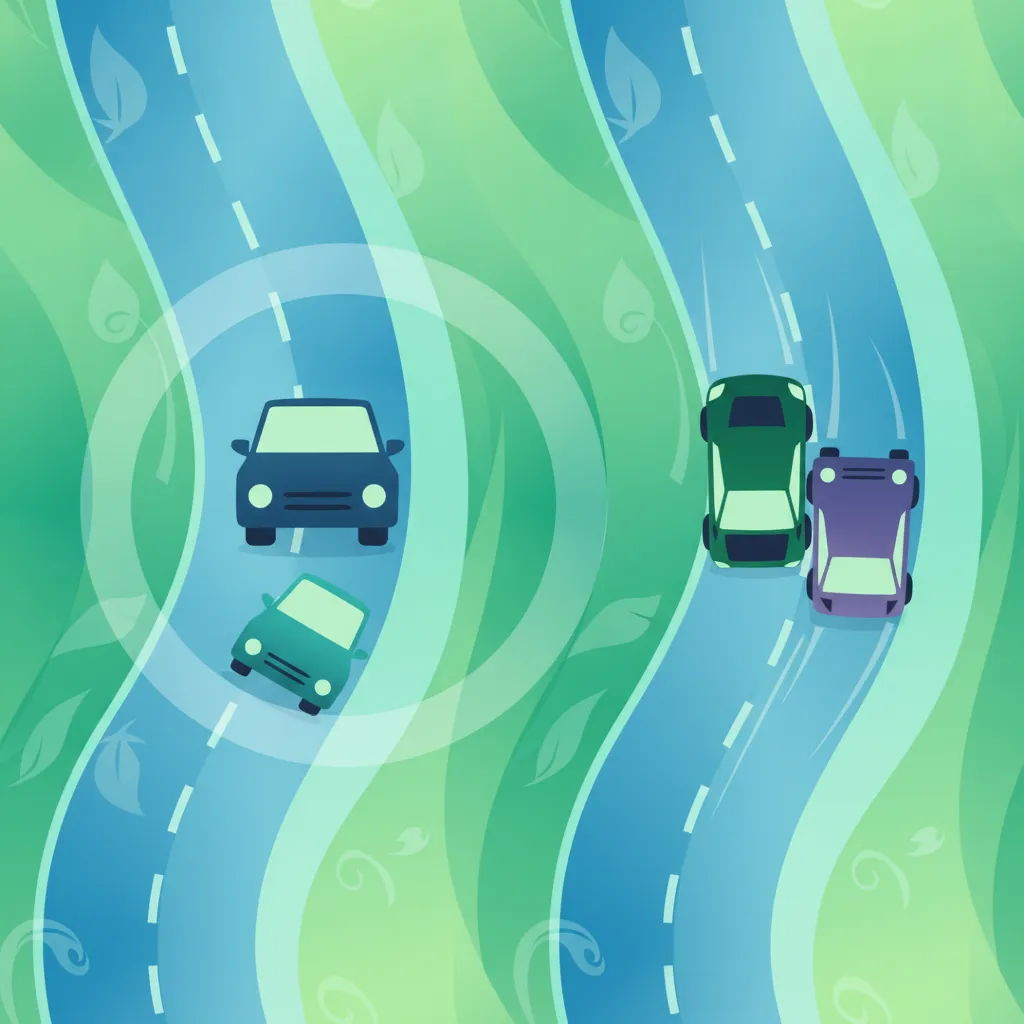
This lesson introduces the concept of defensive driving ('vorausschauendes Fahren'), a proactive approach focused on anticipating and mitigating potential risks. It teaches techniques for scanning the road ahead, identifying potential hazards early, and managing the space around your vehicle to create a safety buffer. The goal is to develop a mindset that prioritizes safety and collision avoidance above all else.

This lesson focuses on the importance of maintaining a safe following distance ('Sicherheitsabstand') to the vehicle ahead. It teaches practical methods for judging this distance, including the universally applicable two-second rule and the German 'halber Tacho' (half the speedometer reading in meters) rule. The lesson stresses the need to increase this distance in poor weather or when visibility is reduced.

This lesson explores the critical role of visibility in safe driving, covering topics such as sight distance, managing blind spots, and the correct use of mirrors. It provides guidance on how to adjust your driving in conditions of reduced visibility, such as at night, in fog, or during heavy rain, including the proper use of headlights. The importance of the over-the-shoulder check ('Schulterblick') is also a key focus.

This lesson focuses on the critical maneuver of changing lanes ('Fahrstreifenwechsel'), a common cause of accidents if done incorrectly. It teaches a systematic, safe procedure based on thorough observation, clear signaling, and a final blind spot check. You will learn how to assess traffic speed and identify a safe gap before smoothly moving into the adjacent lane.
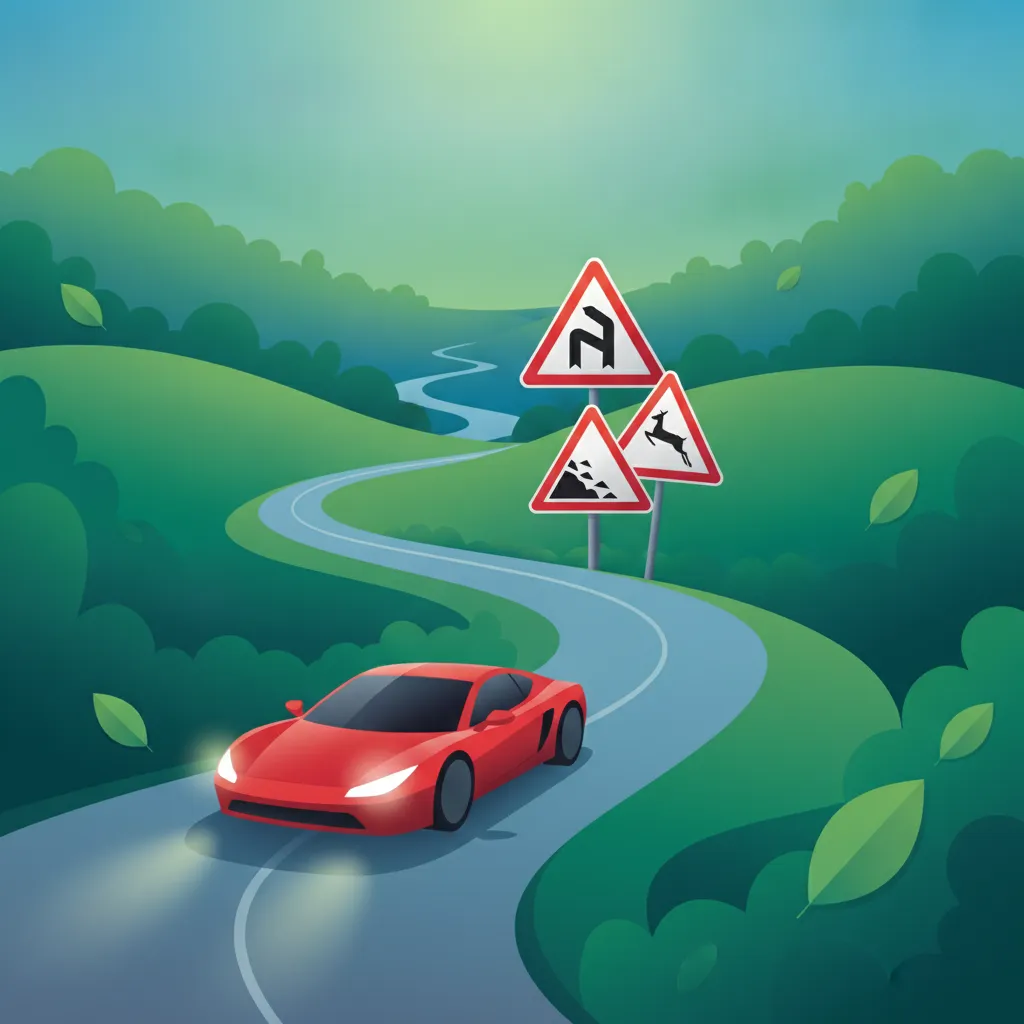
This lesson focuses on warning signs, which are designed to alert drivers to potential dangers or unusual conditions on the road ahead. You will learn to identify signs indicating sharp bends, upcoming intersections, railway crossings, road works, and risks like slippery surfaces or wildlife. Recognizing these signs allows you to anticipate hazards and adjust your driving proactively.
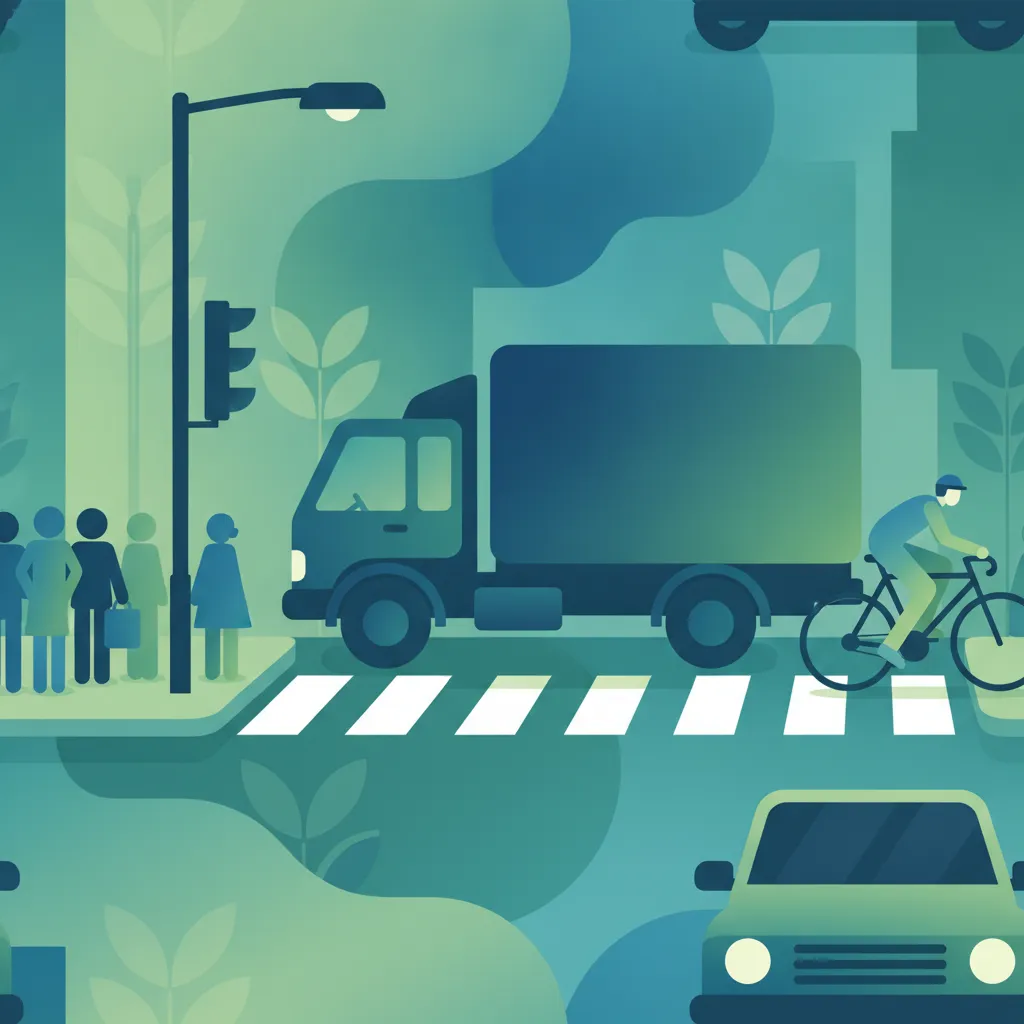
This lesson teaches drivers how to identify and assess stop locations that present elevated risks, such as those in dense residential areas, near schools, or with limited visibility. It provides strategies for mitigating these risks through careful vehicle positioning and heightened situational awareness. The goal is to ensure that passenger exchanges can be conducted safely even when the surrounding environment is challenging and unpredictable.

This lesson focuses on the particular care required when driving near pedestrians, with a special emphasis on children and the elderly, whose behavior can be unpredictable. It covers the rules for yielding at zebra crossings and the importance of reducing speed near schools, playgrounds, and residential areas. The goal is to instill a habit of constant vigilance and readiness to stop.

This lesson trains drivers to proactively identify vulnerable road users and anticipate their often unpredictable behavior. It highlights the specific risks posed by children, elderly pedestrians, cyclists, and e-scooter users, particularly near bus stops and crossings. The goal is to develop a heightened sense of risk perception and apply defensive driving techniques to protect those who are most at risk on the road.

This lesson teaches crucial risk awareness and accident prevention strategies for motorcyclists. It examines common accident scenarios and teaches riders how to identify potential hazards in advance. Key concepts include defensive riding, maintaining situational awareness, and understanding how a proactive mindset contributes to a safer riding experience on the road.
Explore practical scenarios demonstrating safe following distances and speed adjustments for various road conditions and traffic levels. Understand how to apply the two-second rule effectively in real-world German driving situations for the AM licence.
This lesson focuses on the importance of maintaining a safe following distance ('Sicherheitsabstand') to the vehicle ahead. It teaches practical methods for judging this distance, including the universally applicable two-second rule and the German 'halber Tacho' (half the speedometer reading in meters) rule. The lesson stresses the need to increase this distance in poor weather or when visibility is reduced.

This lesson covers the crucial skills of managing speed and maintaining a safe buffer from other vehicles. It teaches methods for calculating an appropriate following distance, such as the time-gap method, which adapts to different speeds and conditions. Learners will understand how to adjust their speed based on traffic flow, road surface, and weather to ensure they always have enough time and space to stop safely.
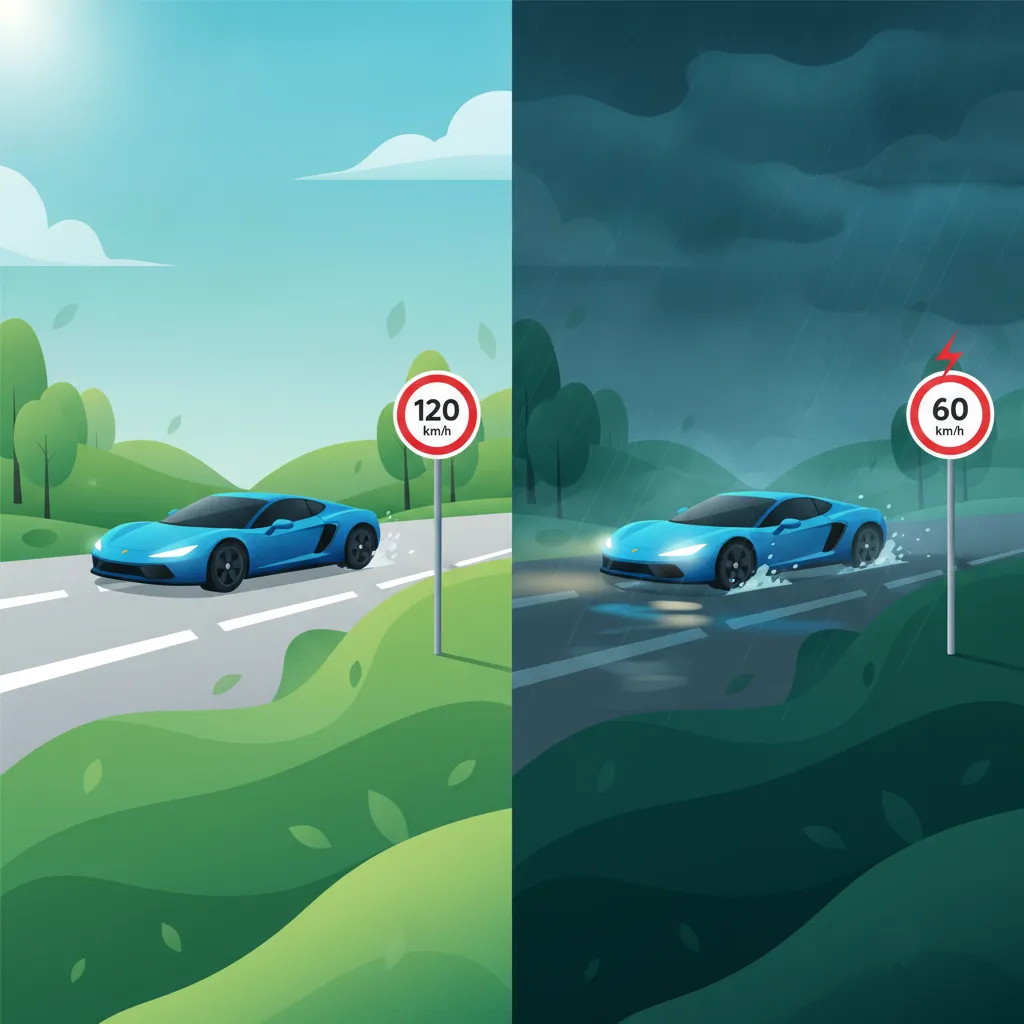
This lesson details the various speed limits applicable in Germany, from urban zones to rural roads. It emphasizes the critical skill of adapting speed to prevailing conditions such as rain, fog, or poor road surfaces. The content explains how external factors significantly impact vehicle handling and stopping distances.
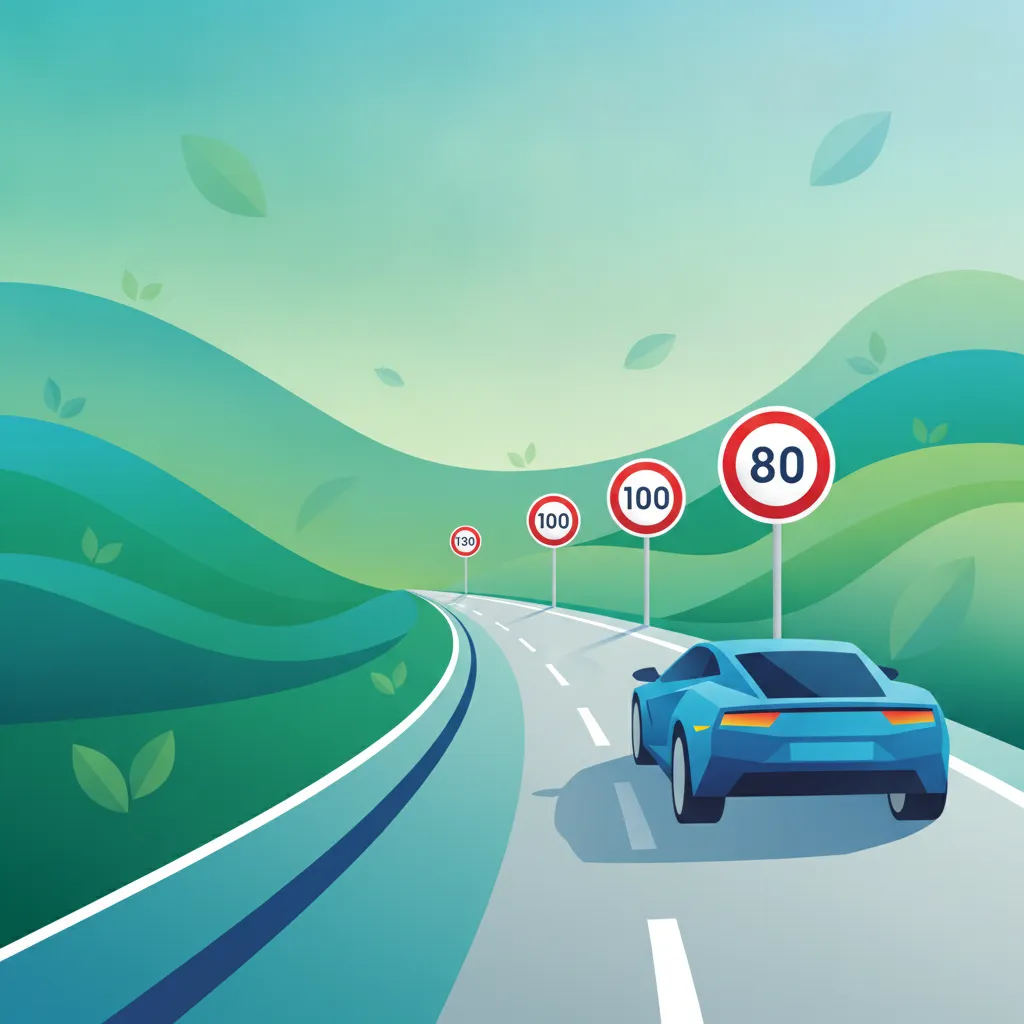
This lesson details the statutory speed limits in Germany, including the standard limits within built-up areas, on rural roads, and on the Autobahn. It emphasizes that the posted limit is a maximum and that drivers must always adapt their speed to traffic, weather, and visibility conditions. The concept of the recommended speed ('Richtgeschwindigkeit') on the Autobahn is also explained.
This lesson explores the critical role of visibility in safe driving, covering topics such as sight distance, managing blind spots, and the correct use of mirrors. It provides guidance on how to adjust your driving in conditions of reduced visibility, such as at night, in fog, or during heavy rain, including the proper use of headlights. The importance of the over-the-shoulder check ('Schulterblick') is also a key focus.
This lesson explains the physics behind stopping a vehicle, breaking down the total stopping distance ('Anhalteweg') into its two key components: reaction distance and braking distance. It provides formulas for estimating these distances at various speeds and discusses the critical factors that can increase them, such as driver fatigue, poor weather, and worn tires. Understanding this relationship is vital for appreciating the need for safe speeds and distances.
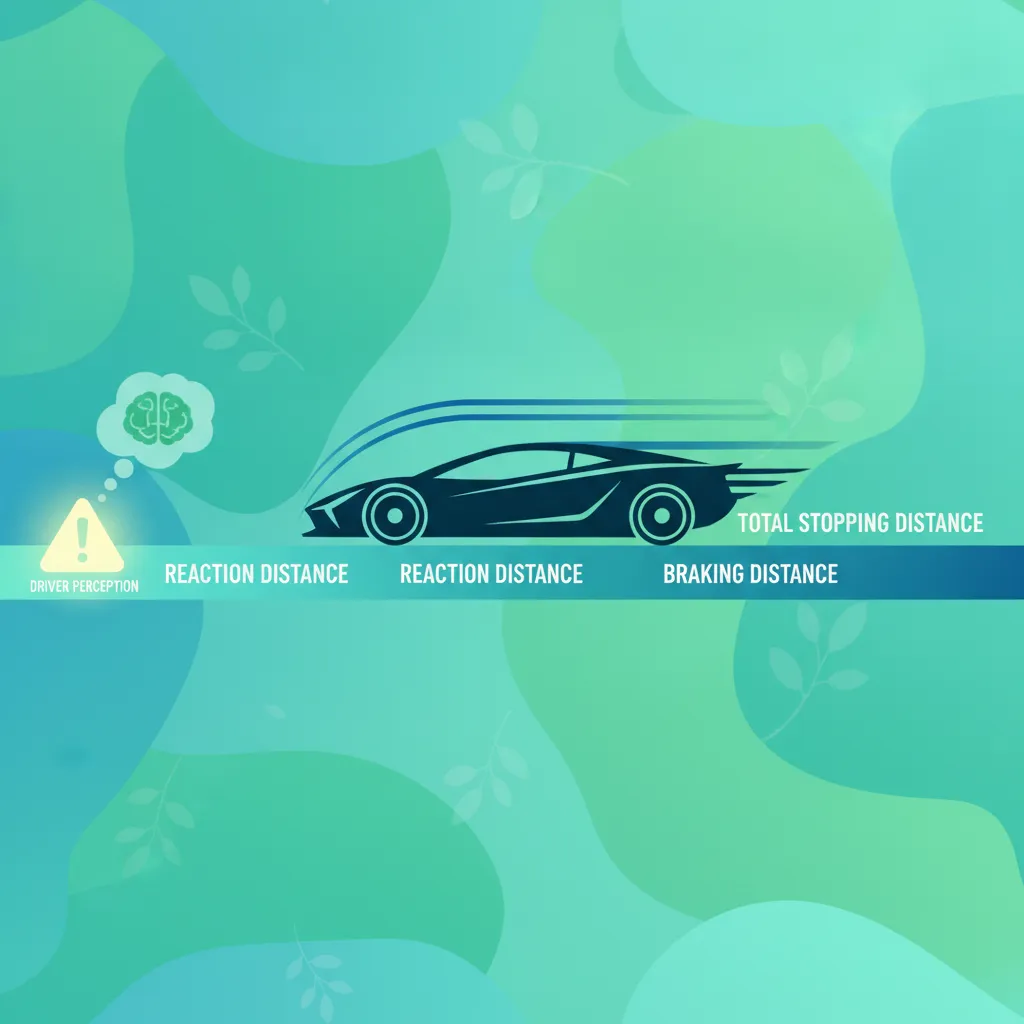
This lesson explains the two components of total stopping distance: reaction distance and braking distance. It teaches learners how factors like speed, road conditions, and rider attentiveness influence how far the motorcycle travels before coming to a complete stop. By understanding these principles, riders can make better decisions about safe speeds and following distances to ensure they can stop in time.

This lesson focuses on the critical safety practice of maintaining an adequate following distance from the vehicle ahead. It explains how to use the 'two-second rule' as a simple and effective method for judging a safe gap in ideal conditions. The content also covers why this distance must be increased significantly in adverse weather or poor visibility to allow for longer reaction and braking times.
This lesson provides a complete guide to driving on the German Autobahn. It covers the correct procedure for entering and exiting via acceleration and deceleration lanes, the strict lane discipline rule of keeping right ('Rechtsfahrgebot'), and the principle of overtaking only on the left. It also explains the recommended speed limit and the critical procedure for forming an emergency corridor ('Rettungsgasse') in a traffic jam.
Find clear answers to common questions learners have about Following Distance, Gap Management, and Hazard Anticipation. Learn how the lesson is structured, which driving theory objectives it supports, and how it fits into the overall learning path of units and curriculum progression in Germany. These explanations help you understand key concepts, lesson flow, and exam focused study goals.
The two-second rule is a simple way to maintain a safe distance. Pick a stationary object on the road and count two seconds from when the vehicle in front passes it until you pass the same spot. It applies to all vehicles, including mopeds, as it ensures you have enough time to react safely.
Yes, always increase your following distance in poor weather conditions. Rain, snow, or icy roads reduce your tyre grip and increase your stopping distance significantly.
The exam often presents complex traffic scenarios where you must decide which hazard to address first. By practising constant scanning, you will be better prepared to identify the most dangerous elements quickly.
Do not speed up to accommodate them. Maintain your safe speed, focus on the road ahead, and if it is safe to do so, let them pass you when you reach a suitable spot.
Begin your targeted revision now. Use our practice search to quickly find specific German driving theory questions. Filter by StVO rules, road signs, or hazard perception to create your focused study plan. Master challenging areas and prepare confidently for your theoretical driving test.