
Logo
German Driving Theory Courses

Lesson 4 of the Rural Roads, Autobahnen, Tunnels, Routes, Weather and Long-Distance Risks unit

German HGV Theory - C/CE: Weather Impacts: Crosswinds, Snow, Ice, and Rain

This lesson examines the specific risks heavy vehicle drivers face during adverse weather conditions. You will learn how to adapt your driving style and manage vehicle technology to maintain safety and compliance on German roads.
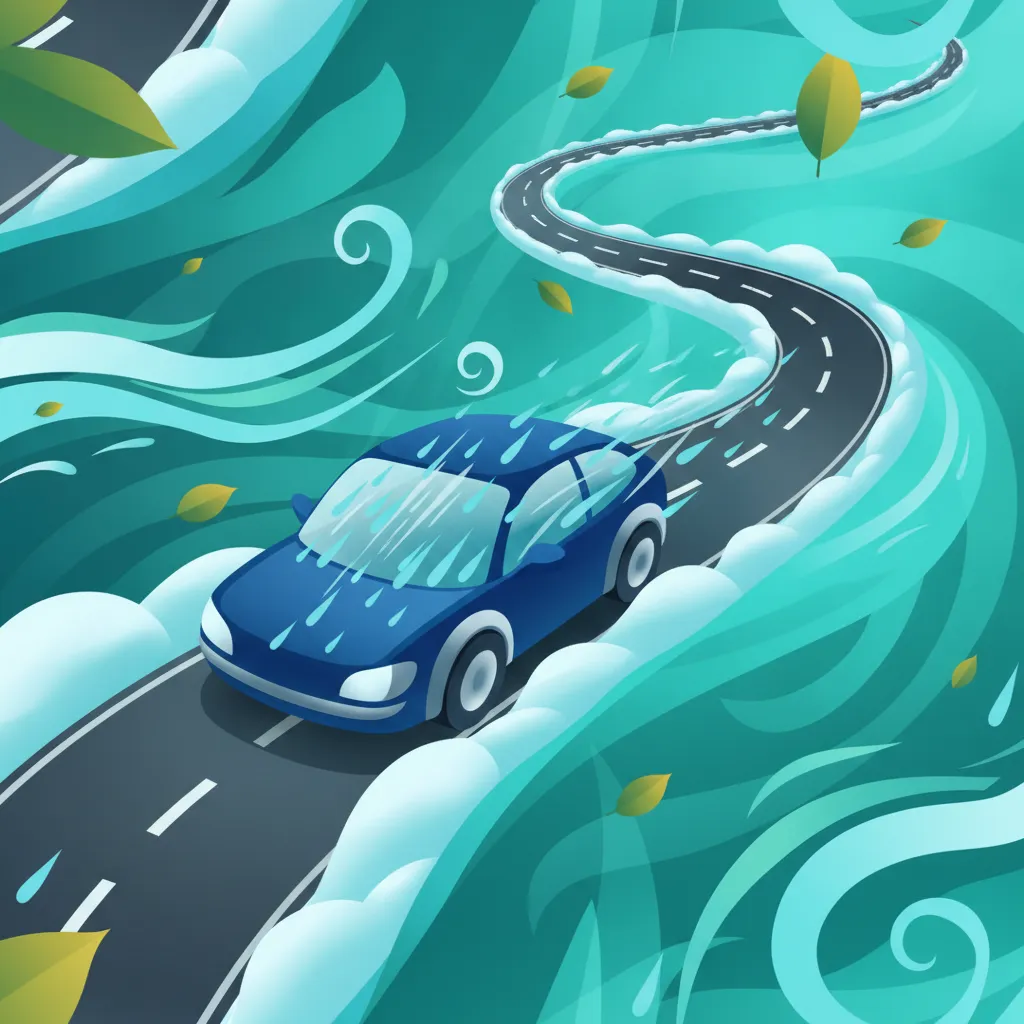
weather safetyheavy vehicletheory examtruck drivinghazard perception
German HGV Theory - C/CE: Weather Impacts: Crosswinds, Snow, Ice, and Rain

Lesson content overview

German HGV Theory - C/CE

Mastering Heavy Vehicle Operation in Adverse Weather: Crosswinds, Snow, Ice, and Rain

Understanding the Impact of Weather on German Heavy Vehicle Driving

Operating heavy vehicles in Germany, particularly for those pursuing C1, C1E, C, and CE licenses, demands exceptional skill and foresight, especially when confronted with adverse weather. Conditions like strong crosswinds, snow, ice, and heavy rain dramatically alter vehicle dynamics, increase stopping distances, and reduce a driver's ability to perceive hazards. This lesson provides a thorough understanding of these challenges, equipping professional drivers with the knowledge to maintain control and ensure safety.

The ability to accurately assess weather-related risks and adapt driving behavior accordingly is fundamental for all heavy vehicle operators. Ignoring these impacts can lead to severe accidents, endangering lives and cargo. Therefore, a deep understanding of how weather influences stability, traction, and visibility is not merely advisable, but absolutely critical for professional driving.

Core Principles of Weather-Affected Driving

Adverse weather conditions fundamentally change the physical forces acting upon a heavy vehicle, impacting its handling, braking, and stability. These changes arise from several core principles:

  • Reduced Friction: Water, snow, or ice on the road surface drastically decreases the friction between tires and the road. This leads to longer stopping distances, reduced acceleration capability, and a greater risk of skidding during cornering.
  • Aerodynamic Forces: Wind, especially strong crosswinds, exerts significant lateral pressure on large, high-profile vehicles such as trucks and trailers. This can cause the vehicle to drift, yaw, or even lose stability, particularly at higher speeds or in exposed areas.
  • Visibility Reduction: Rain, fog, or snow can severely diminish a driver's line of sight. This hinders the early detection of hazards, traffic signs, other vehicles, and vulnerable road users, significantly increasing the risk of collisions.
  • Altered Vehicle Dynamics: Under adverse conditions, the responsiveness of a heavy vehicle's steering, braking, and overall stability systems is compromised. Drivers must understand that their vehicle will behave differently, requiring smoother inputs and proactive adjustments.
  • Reliance on Vehicle Assistance Technologies: Modern heavy vehicles are equipped with sophisticated systems like Anti-lock Braking System (ABS) and Electronic Stability Program (ESP). Understanding how these technologies function and when to rely on them is crucial for enhancing safety in low-traction or low-visibility scenarios.

Crosswinds, defined as lateral wind forces acting perpendicular to the direction of travel, pose a unique and often underestimated challenge for heavy vehicle drivers. Due to their large surface area, trucks and trailers are highly susceptible to these aerodynamic forces, which can severely compromise stability.

What are Crosswinds?

Crosswinds can manifest as either steady, constant forces or as more dangerous, gusty winds that change speed and direction suddenly. Both types can push a vehicle sideways, requiring constant steering corrections and increasing driver fatigue.

  • Steady Crosswinds: A continuous lateral force that requires consistent counter-steering to maintain a straight line. The driver might feel a steady pull on the steering wheel.
  • Gusty Crosswinds: Sudden, unpredictable bursts of wind that can abruptly push the vehicle off its intended path. These gusts are particularly hazardous as they can catch a driver off guard, leading to overcorrection or loss of control.

Risk Factors for Heavy Vehicles

Heavy vehicles are inherently more vulnerable to crosswinds than smaller cars due to their significant lateral surface area and height. The risk is amplified under certain conditions:

  • Vehicle Profile: High-sided vehicles, especially empty or lightly loaded box trucks and curtain-sided trailers, present a larger area for the wind to push against.
  • Speed: The faster the vehicle travels, the more pronounced the effect of crosswinds. Aerodynamic forces increase exponentially with speed.
  • Exposure: Bridges, open stretches of road, highway exits, and areas where natural windbreaks end (e.g., exiting a forest onto an open field) are particularly prone to strong crosswinds. Tunnels provide temporary relief but exiting them can expose the vehicle to sudden gusts.
  • Load Distribution: An unevenly distributed or poorly secured load can exacerbate instability, making the vehicle more susceptible to swaying or tipping under lateral wind forces.

Safe Driving Strategies Against Crosswinds

Effectively managing crosswinds requires a combination of proactive planning and immediate defensive driving techniques:

Responding to Crosswinds

  1. Reduce Speed: This is the most critical measure. Lowering your speed significantly reduces the aerodynamic forces acting on the vehicle and provides more time to react to gusts.

  2. Maintain a Firm Grip on the Steering Wheel: Be prepared for sudden lateral movements and hold the steering wheel firmly with both hands to apply quick, controlled counter-steering.

  3. Adjust Lane Positioning: In a multi-lane scenario, consider moving to the middle or left lane (if legally permitted and safe) to create more space from the hard shoulder and potential hazards should the vehicle drift. However, always ensure this does not impede traffic or put others at risk. In Germany, heavy vehicles are often restricted to the right lanes.

  4. Anticipate Wind Changes: Be aware of your surroundings. Look for signs of wind (e.g., swaying trees, wind socks) and anticipate exposed areas like bridge crossings or gaps between buildings.

  5. Smooth Steering Inputs: Avoid sudden, jerky steering. Make small, continuous corrections to counteract the wind's push, keeping the vehicle centered in its lane.

Warning

Never underestimate the power of crosswinds, especially when driving an empty or lightly loaded high-profile heavy vehicle. A sudden gust can cause loss of control faster than you might expect.

Driving Heavy Vehicles in Snow Conditions

Driving heavy vehicles on snow-covered roads presents significant challenges, primarily due to reduced tire traction. Understanding the different types of snow and implementing appropriate driving techniques are crucial for maintaining control and preventing accidents.

Types of Snow and Their Traction Impact

Not all snow conditions are equal when it comes to road grip:

  • Fresh, Light Snow: Initially, light, fluffy snow can offer some traction, especially if it hasn't been compacted. However, it quickly becomes slippery as vehicles drive over it, packing it down.
  • Packed Snow: This is snow that has been driven over and compressed. It has a significantly lower friction coefficient than fresh snow, making braking and steering more difficult.
  • Slush: A mixture of snow and water, slush creates a viscous layer that can lead to a phenomenon similar to hydroplaning, where tires lose contact with the road surface. It also tends to build up under fenders and around wheels, potentially affecting steering.
  • Freezing Rain/Snow: This is extremely dangerous. Rain or snow that freezes upon contact with the road creates a layer of ice underneath or within the snow, turning a seemingly snowy road into an icy trap.

Preparing for Snow: Vehicle Checks and Equipment

Before embarking on a journey in snowy conditions, thorough preparation is vital for heavy vehicles:

  • Tires: Ensure tires are in excellent condition with adequate tread depth (German law specifies a minimum of 1.6 mm, but more is recommended for winter). Winter tires marked with the "Alpine symbol" (a snowflake within a three-peaked mountain) are mandatory for heavy vehicles in Germany during winter conditions.
  • Snow Chains (Schneeketten): In mountainous regions or during severe snowfall, snow chains may be legally required. Drivers must know how to properly fit and remove them. Always carry chains when traveling through areas known for heavy snowfall.
  • Lights and Wipers: Check that all lights (headlights, tail lights, indicators) are clean and fully functional. Ensure windshield wipers are effective and that the washer fluid reservoir is full and contains anti-freeze.
  • Visibility: Clear all snow and ice from windows, mirrors, lights, and the vehicle roof before starting. Snow falling from a vehicle roof can obscure vision for drivers behind.
  • Brakes: Perform a gentle brake check at a very low speed in a safe area to assess road grip.

Safe Driving Techniques on Snow-Covered Roads

Driving a heavy vehicle on snow requires significant adjustments to speed, following distance, and control inputs:

  • Reduce Speed Drastically: This is the most crucial adjustment. Reduced traction means increased stopping distances and a higher risk of skidding. Drive at a speed that allows you to stop safely within the visible distance ahead.
  • Increase Following Distance: Maintain a much greater distance from the vehicle in front – at least three to four times your normal dry-road following distance. This provides more time and space to react.
  • Smooth Inputs: Avoid sudden acceleration, hard braking, or sharp steering movements. These can easily cause the tires to lose traction and the vehicle to skid.
  • Gentle Braking: Apply brakes gently and progressively. If your vehicle has ABS, it will prevent wheel lock-up, allowing you to steer while braking. Do not pump the brakes if your vehicle has ABS.
  • Engine Braking: Utilize engine braking (downshifting to a lower gear) to slow down, especially when descending hills. This provides controlled deceleration without relying solely on the service brakes, which can overheat or cause skids.
  • Lane Changes: Avoid unnecessary lane changes. If you must change lanes, do so very slowly and smoothly, checking your mirrors thoroughly.
  • Uphill/Downhill: Approach hills with caution. Gain momentum before an uphill climb without excessive speed, to avoid getting stuck. Descend hills in a low gear, using engine braking to control speed.

Tip

When driving in fresh snow, try to drive in the tracks left by other vehicles. This can sometimes offer slightly better traction as the snow has been compacted.

Managing Extreme Hazards: Driving on Ice and Black Ice

Ice is arguably the most treacherous weather condition for heavy vehicles, presenting an extremely low-friction surface that can lead to immediate loss of control. Black ice is particularly dangerous because it is almost invisible.

The Danger of Ice: Reduced Friction Explained

Ice on the road surface creates a thin layer of water when slight pressure is applied (e.g., from tires), which dramatically reduces the coefficient of friction to near zero. This means that tires have very little grip for accelerating, braking, or steering.

  • Braking Distance: On ice, stopping distances can be ten times greater than on dry asphalt. Even with ABS, a heavy vehicle will take a very long time to stop.
  • Steering Control: Any attempt to turn sharply can result in the vehicle continuing in a straight line, as the tires lack the grip to change direction.
  • Acceleration: Even gentle acceleration can cause drive wheels to spin, leading to loss of directional control, especially on rear-wheel-drive heavy vehicles.

Identifying and Reacting to Black Ice

Definition

Black Ice

A thin, transparent layer of ice on the road surface that is extremely difficult to see. It often appears as a wet patch, deceiving drivers into thinking the road is merely damp.

Black ice typically forms when the air temperature is at or slightly above freezing, but the road surface temperature drops to freezing point or below. It is common on:

  • Bridges and Overpasses: Air circulates both above and below these structures, causing them to cool down faster than the surrounding road.
  • Shaded Areas: Parts of the road that don't receive direct sunlight, such as underpasses or tree-lined sections, can remain icy even when other areas have thawed.
  • Roads with Less Traffic: Less traffic means less heat generated by tires, allowing ice to persist.

How to Detect Black Ice: Look for subtle clues:

  • A sudden lack of tire noise.
  • The steering feeling unusually light.
  • A visible sheen on the road that looks "wet" but doesn't splash under tires.
  • Temperature gauges in the vehicle indicating outside air temperature is near or below freezing.

Reacting to Black Ice: If you encounter black ice:

  1. Do Not Panic: Maintain calm and avoid sudden reactions.
  2. Lift Off the Accelerator Gently: Slowly ease off the throttle. Do not brake sharply.
  3. Do Not Steer Abruptly: Make minimal, gentle steering corrections if absolutely necessary.
  4. Allow the Vehicle to Drift: Let the vehicle slowly regain traction on its own. If you have to brake, apply very light, progressive pressure, or rely on engine braking in a low gear.

Advanced Strategies for Icy Conditions

  • Drastically Reduced Speed: On ice, speeds should be almost at walking pace, especially if you suspect black ice.
  • Increased Following Distance: Double or triple your already increased snow-driving following distance. The goal is to avoid braking entirely if possible.
  • Use Low Gears: Employing the lowest possible gear for engine braking is paramount. This provides the most controlled deceleration without locking up wheels.
  • Avoid Cruise Control: Never use cruise control on icy or snowy roads. You need direct control over acceleration.
  • Emergency Braking: In a severe emergency, if your heavy vehicle has ABS, press the brake pedal firmly and continuously. The ABS will modulate brake pressure to prevent wheel lock-up, allowing some steering. Without ABS, pump the brakes gently, but this is less effective on heavy vehicles.
  • Listen to the Road: Pay attention to the sound of your tires. A sudden quietness can indicate you've hit an icy patch.

Safe Operation During Heavy Rain and Wet Roads

Heavy rain and wet roads significantly impact driving safety for heavy vehicles, primarily by reducing visibility and tire traction. Drivers must understand the specific risks to mitigate accident potential.

Visibility Challenges in Rain

Rainfall, especially heavy downpours, presents several visibility issues:

  • Direct Rain: The falling rain itself obscures the windshield, requiring efficient wipers.
  • Road Spray (Sprühnebel): Water thrown up by other vehicles, particularly heavy vehicles, creates a dense mist that can drastically reduce forward visibility, often to just a few meters. This is especially problematic when following other trucks.
  • Glare: Wet roads reflect light, causing glare from oncoming headlights or streetlights, which can be disorienting and further reduce visibility.
  • Fogging: High humidity combined with cooler outside temperatures can cause windshields and windows to fog up, both inside and out.

Reduced Traction and Hydroplaning Risk

Wet roads significantly reduce the friction between tires and the road surface, leading to increased stopping distances and a higher risk of skidding.

Definition

Hydroplaning

Occurs when a layer of water builds up between a vehicle's tires and the road surface, causing the tires to lose contact with the road and the driver to lose steering and braking control.

Heavy vehicles are particularly susceptible to hydroplaning due to their speed and the large flat contact patch of their tires, though their weight can sometimes provide some resistance. This risk increases with:

  • Speed: Higher speeds make it more difficult for tires to displace water, increasing hydroplaning risk.
  • Tire Tread Depth: Worn tires with insufficient tread cannot effectively channel water away, making hydroplaning more likely.
  • Water Depth: Standing water on the road surface poses the greatest risk.
  • Vehicle Weight: Lighter heavy vehicles (e.g., empty trucks) may be more prone to hydroplaning than fully loaded ones, as there is less downward pressure to push water out from under the tires.

Best Practices for Driving in Rain

  • Reduce Speed: This is the most effective way to counteract reduced traction and visibility. Slower speeds give tires more time to displace water and allow drivers more time to react.
  • Increase Following Distance: In heavy rain, extend your following distance significantly to allow for longer braking distances and reduced visibility from road spray.
  • Use Appropriate Lighting: Always switch on your low beam headlights (Abblendlicht) in rain, even during the day. This not only improves your visibility of the road but also makes your heavy vehicle more visible to other road users. Fog lights (Nebelscheinwerfer) can be used if visibility is severely restricted (below 50 meters), but they should be switched off as soon as conditions improve. High beams (Fernlicht) should generally be avoided in heavy rain as they can reflect off the water droplets and cause glare.
  • Maintain Wipers: Ensure your windshield wipers are in good condition and operating effectively. Use them at the appropriate speed setting for the rainfall intensity.
  • Avoid Standing Water: Whenever possible, steer clear of large puddles or standing water, especially at speed, to minimize the risk of hydroplaning.
  • Check Brakes After Deep Water: If you must drive through deep water, gently apply your brakes afterward to dry them out. Wet brakes are less effective.
  • Smooth Movements: As with snow and ice, avoid sudden braking, acceleration, or steering. Gentle, controlled inputs are essential.

General Driving Strategies for Adverse Weather Conditions

Beyond the specific advice for each weather type, several overarching strategies are critical for all heavy vehicle operations in challenging conditions.

Speed Adaptation and Following Distance

The fundamental rule for driving in any adverse weather is to adapt your speed and increase your following distance.

  • Rule Statement: According to German traffic law (StVO, § 3), drivers must adjust their speed to road, traffic, visibility, and weather conditions. This means driving no faster than you can safely stop within the visible distance ahead.
  • Rationale: Reduced traction, impaired visibility, and increased reaction times in bad weather necessitate significantly lower speeds and greater separation from other vehicles. This provides a crucial buffer for responding to unexpected events.
  • Practical Application: If visibility is reduced to 50 meters (e.g., in heavy fog or snow), your speed must not exceed 50 km/h, as your stopping distance should ideally be less than your visible range.

Using Vehicle Lighting Correctly

Proper use of lighting is vital for both seeing and being seen.

  • Low Beams (Abblendlicht): Always activate low beams in rain, snow, fog, or anytime visibility is poor. This ensures your vehicle is visible to others and illuminates the road ahead without causing excessive glare.
  • Fog Lights (Nebelscheinwerfer): Front fog lights can be used if visibility is significantly impaired by fog, heavy rain, or snow. However, they must be switched off as soon as conditions improve. Rear fog lights (Nebelschlussleuchte) are very bright and may only be used when visibility due to fog, rain, or snow is less than 50 meters. When the rear fog light is on, the maximum speed is 50 km/h.
  • Daytime Running Lights: While useful in normal conditions, daytime running lights (Tagfahrlicht) often only illuminate the front of the vehicle. In adverse weather, they are insufficient as they typically do not activate taillights, making the vehicle nearly invisible from the rear. Always use low beams instead.
  • Hazard Warning Lights (Warnblinkanlage): These should only be used to warn other road users of a temporary hazard, such as a breakdown, an accident scene, or the end of a traffic jam. They are not for driving in bad weather.

Proactive Route Planning

Professional drivers should always consider weather forecasts when planning routes, especially for long distances or routes through mountainous terrain.

  • Check Forecasts: Utilize reliable weather services to identify areas of potential heavy rain, snow, ice, or strong winds.
  • Alternative Routes: If severe weather is predicted, consider alternative routes that might be less exposed or avoid known trouble spots.
  • Timing: Adjust departure times to avoid the worst of the weather, if possible.
  • Equipment: Ensure your vehicle is equipped with necessary items like snow chains, extra washer fluid, and emergency supplies if traveling through areas prone to harsh winter weather.

Advanced Vehicle Assistance Systems for Challenging Weather

Modern heavy vehicles are equipped with sophisticated electronic systems designed to assist drivers in maintaining control, especially in adverse conditions. Understanding their function and limitations is crucial.

Anti-lock Braking System (ABS)

Definition

ABS (Anti-lock Braking System)

A safety anti-skid braking system used on heavy vehicles that prevents the wheels from locking up during braking, allowing the driver to maintain steering control.

  • Function: ABS monitors wheel speed. If it detects a wheel is about to lock up during braking, it rapidly modulates the brake pressure to that wheel, preventing it from skidding.
  • Benefit in Adverse Weather: On wet, snowy, or icy roads, ABS is invaluable. It allows the driver to apply full braking pressure while still being able to steer around an obstacle. Without ABS, a locked wheel would cause a skid and loss of directional control.
  • Limitations: ABS helps maintain steering, but it does not reduce stopping distance on extremely slippery surfaces like ice. Stopping distances will still be significantly longer. Drivers must still reduce speed.

Electronic Stability Program (ESP)

Definition

ESP (Electronic Stability Program)

An active safety system that detects and reduces loss of traction (skidding). ESP applies the brakes to individual wheels and/or reduces engine power to help the driver maintain control of the vehicle's intended path.

  • Function: ESP continuously compares the driver's steering input with the vehicle's actual direction of travel. If it detects a discrepancy (e.g., oversteer or understeer), it intervenes by selectively applying brakes to individual wheels and/or reducing engine power to help bring the vehicle back onto its intended path.
  • Benefit in Adverse Weather: ESP is particularly effective in preventing skids caused by sudden steering or braking on slippery surfaces, or when a heavy vehicle experiences trailer sway (pendelschlag) from crosswinds.
  • Limitations: ESP cannot defy the laws of physics. If the vehicle is driven too fast for the available traction, even ESP may not be able to prevent a loss of control. It is a driving aid, not a substitute for careful driving.

Traction Control Systems (TCS)

Definition

Traction Control System (TCS)

A system that prevents a heavy vehicle's drive wheels from spinning excessively when accelerating on slippery surfaces, ensuring maximum traction for forward movement.

  • Function: TCS works in conjunction with ABS and ESP. When it detects that a drive wheel is spinning (losing traction) during acceleration, it reduces engine power or applies brake pressure to that specific wheel, transferring power to the wheels with more grip.
  • Benefit in Adverse Weather: On snowy or icy roads, TCS helps heavy vehicles accelerate smoothly without excessive wheelspin, preventing the drive wheels from digging into the slippery surface or losing lateral stability.
  • Limitations: While TCS aids in controlled acceleration, it does not guarantee traction beyond the physical limits of the road surface. It's crucial to still accelerate very gently in low-traction conditions.

Note

While these systems are powerful safety aids, they are not infallible. The driver always remains responsible for adapting speed and driving style to prevailing conditions.

In Germany, the legal framework places a strong emphasis on a driver's responsibility to adapt to prevailing conditions. Failure to do so can result in significant penalties.

Duty to Adapt Speed and Driving Behavior

The core principle governing driving in adverse weather is enshrined in Section 3, Paragraph 1 of the Straßenverkehrs-Ordnung (StVO – Road Traffic Regulations), which states: "A vehicle may only be driven at such a speed that the driver can constantly control it. The speed must be adjusted in particular to the road, traffic, visibility and weather conditions..."

  • Applicability: This rule applies universally to all vehicles, including heavy vehicles, under any adverse weather scenario—crosswinds, snow, ice, rain, or fog.
  • Legal Status: This is a mandatory safety regulation. Violations can lead to fines, points in Flensburg, and even driving bans, especially if an accident occurs.
  • Rationale: The purpose is to ensure that drivers reduce risks by taking into account increased stopping distances, reduced visibility, and potential loss of control.
  • Correct Application Example: A heavy vehicle driver reduces speed from 80 km/h to 40 km/h on a country road during heavy snowfall, switches on low beams, and increases following distance to ensure a safe stopping distance.
  • Incorrect Application Example: A driver maintains highway speed during a rainstorm, resulting in hydroplaning and a loss of control.

Specific Requirements (e.g., Snow Chains)

Beyond general speed adaptation, German law has specific requirements for winter conditions:

  • Winter Tire Obligation (Winterreifenpflicht): Heavy vehicles operating in Germany during "winter conditions" (defined by black ice, slush, compacted snow, loose snow, or ice) must be fitted with appropriate winter tires on the drive axles. These tires must bear the Alpine symbol. Some regional exceptions or additional requirements may exist.
  • Snow Chain Usage (Schneekettenpflicht): Specific road signs indicate when snow chains are mandatory for all vehicles (including heavy vehicles). These signs are typically seen in mountainous areas or on routes prone to severe winter conditions. It is illegal to drive faster than 50 km/h with snow chains fitted.
  • Visibility Requirements: German law also stipulates that all vehicle windows, mirrors, lights, and registration plates must be clear of snow and ice before driving. Failure to clear snow from the vehicle roof, which could fall and obstruct other drivers, is also an offense.

Conclusion: Prioritizing Safety in All Weather

Operating a heavy vehicle requires a high degree of responsibility and professional judgment, particularly when facing adverse weather conditions. Crosswinds, snow, ice, and heavy rain each present unique challenges that can severely compromise vehicle stability, traction, and driver visibility.

The core principles of safe driving in these conditions revolve around drastically reducing speed, significantly increasing following distances, making smooth and controlled vehicle inputs, and correctly utilizing vehicle lighting and assistance systems. Proactive route planning and ensuring your vehicle is properly equipped (e.g., with appropriate winter tires and snow chains where necessary) are also vital.

By understanding the physics of how weather impacts vehicle dynamics and adhering to German traffic regulations, heavy vehicle drivers can mitigate risks, maintain control, and ensure safe passage for themselves and other road users. Continuous vigilance and a commitment to adapting driving behavior are the hallmarks of a professional driver navigating challenging weather.

Learn more with these articles

Learn more with these articles

Learn more with these articles

Check out these practice sets

Lesson recap

Quick summary before you move on

Fast revision

This lesson covers how adverse weather uniquely affects heavy vehicle operation in Germany, emphasizing that conditions like crosswinds, snow, ice, and heavy rain dramatically alter vehicle dynamics, braking distances, and driver visibility. Key strategies include drastically reducing speed, increasing following distances, using smooth control inputs, and properly employing vehicle technologies like ABS and ESP while understanding their limitations. German law under StVO § 3 mandates speed adaptation to conditions, and specific winter equipment requirements apply including winter tires with the Alpine symbol and snow chains where indicated by road signs. Professional drivers must combine proactive route planning with responsive driving techniques to maintain safety in challenging conditions.


Core takeaways

Main ideas from this lesson

A short set of high-value points that capture the most important learning from this lesson.

Adverse weather drastically reduces tire traction, increases stopping distances, and compromises stability for heavy vehicles compared to normal conditions.

Crosswinds pose unique risks to high-sided vehicles; empty or lightly loaded trucks are most vulnerable and require significant speed reduction.

Black ice forms on bridges, overpasses, and shaded areas when air temperature is near freezing; it appears as a wet road surface and causes near-zero friction.

Heavy vehicles must use winter tires with the Alpine symbol during winter conditions; snow chains are mandatory on roads marked with sign 264.

Vehicle assistance systems like ABS, ESP, and TCS help maintain control but cannot overcome physics—speed reduction remains the primary safety measure.

Remember this

Details worth keeping in mind

Point 1

Under StVO § 3, drivers must adjust speed to road, traffic, visibility, and weather conditions; speed must never exceed visible stopping distance.

Point 2

In heavy rain or snow, increase following distance to three to four times the normal distance to account for extended braking requirements.

Point 3

On icy roads, use engine braking in low gears rather than service brakes to avoid wheel lock-up and maintain steering control.

Point 4

Daytime running lights are insufficient in bad weather—always switch to low beams (Abblendlicht) to ensure rear visibility to other drivers.

Point 5

Road spray (Sprühnebel) from other vehicles can reduce forward visibility to just a few meters; maintain extra space when following other heavy vehicles.

Watch for this

Frequent learner mistakes

Assuming vehicle assistance systems like ABS significantly reduce stopping distances on ice—they maintain steering but do not shorten braking distance on extremely slippery surfaces.

Using high beams (Fernlicht) in heavy rain, which reflects off water droplets and causes dangerous glare rather than improving visibility.

Failing to clear snow from the vehicle roof before driving, which can slide onto the windshield or create hazards for vehicles behind.

Driving at normal highway speeds during rain or fog because the road appears dry, leading to hydroplaning or insufficient reaction time.

Overcorrecting steering when encountering sudden crosswind gusts, which can cause trailer sway or loss of control instead of maintaining a straight path.

Search topics related to Weather Impacts: Crosswinds, Snow, Ice, and Rain

Explore search topics learners often look for when studying Weather Impacts: Crosswinds, Snow, Ice, and Rain. These topics reflect common questions about road rules, driving situations, safety guidance, and lesson level theory preparation for learners in Germany.

heavy vehicle driving in crosswinds theory testGerman truck theory exam weather hazardsdriving C class vehicle on ice tipshow to drive heavy vehicles in rain safelycategory C theory test weather conditionsprofessional driver weather safety regulations Germanybraking distance for trucks in snow theory

Related driving theory lessons for Weather Impacts: Crosswinds, Snow, Ice, and Rain

Browse additional driving theory lessons that cover connected traffic rules, road signs, and common driving situations related to this topic. Improve your understanding of how different rules interact across everyday traffic scenarios.

Heavy Vehicle Driving in Crosswinds, Rain, and Ice Theory

Understand the specific challenges of driving heavy vehicles in adverse weather. This lesson covers managing crosswinds, maintaining traction on wet or icy roads, and improving visibility in fog for safe German theory exam preparation.
weather safetyheavy vehicletruck drivingroad safetyhazard perceptiondriving theory
Weather Conditions and Road Surface Effects lesson image

Weather Conditions and Road Surface Effects

This lesson explores how different weather conditions impact driving safety and vehicle performance. It discusses the risks of hydroplaning in heavy rain, reduced visibility in fog, and loss of traction on snow and ice. Drivers will learn how to adapt their speed, increase following distances, and make smooth control inputs to maintain vehicle stability and prevent skids in these challenging conditions.

German Bus & Coach Theory (D)Rural Routes, Autobahnen, Tunnels, Weather and Long-Distance Service
View lesson
Weather Conditions: Rain, Snow, Fog, Ice lesson image

Weather Conditions: Rain, Snow, Fog, Ice

This lesson teaches drivers how to safely manage their vehicle in challenging weather. It explains the dangers of aquaplaning in heavy rain, the loss of traction on snow and ice (including 'black ice'), and the severely reduced visibility in fog. You will learn to adjust your speed, increase following distances, and use lights correctly to suit these conditions.
German Driving Theory BRural Roads, Autobahnen, Tunnels, Weather and Environmental Driving
View lesson

Vehicle Stability and Control in Hazardous Weather Conditions

Learn how weather conditions like strong winds, rain, and ice affect heavy vehicle stability and control. This lesson explores techniques for adjusting speed and using vehicle systems to safely navigate these challenges, crucial for your German driving theory.

vehicle stabilityhazard perceptionroad conditionsdriving techniqueheavy vehicletheory exam
Weather Conditions and Road Surface Effects lesson image

Weather Conditions and Road Surface Effects

This lesson explores how different weather conditions impact driving safety and vehicle performance. It discusses the risks of hydroplaning in heavy rain, reduced visibility in fog, and loss of traction on snow and ice. Drivers will learn how to adapt their speed, increase following distances, and make smooth control inputs to maintain vehicle stability and prevent skids in these challenging conditions.

German Bus & Coach Theory (D)Rural Routes, Autobahnen, Tunnels, Weather and Long-Distance Service
View lesson
Weather Conditions: Rain, Snow, Fog, Ice lesson image

Weather Conditions: Rain, Snow, Fog, Ice

This lesson teaches drivers how to safely manage their vehicle in challenging weather. It explains the dangers of aquaplaning in heavy rain, the loss of traction on snow and ice (including 'black ice'), and the severely reduced visibility in fog. You will learn to adjust your speed, increase following distances, and use lights correctly to suit these conditions.

German Driving Theory BRural Roads, Autobahnen, Tunnels, Weather and Environmental Driving
View lesson
Weather Impact on Road Conditions and Riding Strategies lesson image

Weather Impact on Road Conditions and Riding Strategies

This lesson examines the specific hazards posed by different weather conditions. It explains how rain can lead to hydroplaning and reduced grip, how fog impairs visibility, and how strong winds can affect stability. Riders will learn practical strategies, such as reducing speed and increasing following distance, to mitigate these risks.

German Driving Theory AMWeather, Road Surfaces, Protective Equipment and Vehicle Safety
View lesson
Traction Management and Grip Optimization on Varying Surfaces lesson image

Traction Management and Grip Optimization on Varying Surfaces

This lesson examines how various road surfaces and conditions affect tyre grip and traction. It teaches riders to recognize and adapt to hazards like wet patches, loose gravel, or oil spills. The content covers techniques for maintaining control through smooth throttle and brake inputs, preventing traction loss while accelerating, braking, and cornering on compromised surfaces.

German Motorcycle Theory ABalance, Steering, Cornering, Traction and Road Position
View lesson
Weather Conditions and Their Effects on Road Grip and Rider Visibility lesson image

Weather Conditions and Their Effects on Road Grip and Rider Visibility

This lesson examines how different weather conditions, such as rain, strong winds, and fog, directly impact motorcycle safety. It explains how wet surfaces reduce tyre grip and increase braking distances, requiring smoother rider inputs. The content also provides strategies for managing reduced visibility and the physical effects of crosswinds on the motorcycle's stability.

German Motorcycle Theory AWeather, Road Surfaces, Passengers, Luggage and Group Riding
View lesson

Frequently asked questions about Weather Impacts: Crosswinds, Snow, Ice, and Rain

Find clear answers to common questions learners have about Weather Impacts: Crosswinds, Snow, Ice, and Rain. Learn how the lesson is structured, which driving theory objectives it supports, and how it fits into the overall learning path of units and curriculum progression in Germany. These explanations help you understand key concepts, lesson flow, and exam focused study goals.

Why is crosswind stability a specific concern for C and CE license holders?

Heavy vehicles often have large side surfaces, acting like sails in strong winds. This creates a significant risk of swerving or tipping, especially when the trailer is empty or partially loaded, requiring drivers to reduce speed and increase vigilance.

How does engine braking differ in slippery conditions compared to dry roads?

In icy or wet conditions, aggressive use of an engine brake or retarder can cause drive-wheel lockup or loss of traction. Drivers must be extremely cautious and use these systems smoothly to avoid losing control of the vehicle combination.

Will the theory exam ask about weather-related speed limits?

Yes, you may be tested on the general duty of care which requires professional drivers to adapt their speed significantly below the posted limit when visibility or road surface conditions are compromised by rain, snow, or fog.

What should I do if I encounter black ice in a heavy vehicle?

If you detect ice, reduce your speed immediately without abrupt braking or steering inputs. Increase your following distance significantly, as the stopping distance for a fully loaded heavy vehicle increases dramatically on slippery surfaces.

Ready to Target Your German Driving Theory Practice?

Begin your targeted revision now. Use our practice search to quickly find specific German driving theory questions. Filter by StVO rules, road signs, or hazard perception to create your focused study plan. Master challenging areas and prepare confidently for your theoretical driving test.

Search Theory Practice Sets

Continue your German driving theory learning journey

German road signsGerman article topicsSearch German road signsGerman driving theory homeGerman road sign categoriesGerman driving theory topicsSearch German theory articlesGerman driving theory coursesGerman Driving Theory B courseGerman driving theory articlesGerman driving theory practiceGerman practice set categoriesGerman Driving Theory AM courseGerman HGV Theory - C/CE courseGerman Motorcycle Theory A courseGerman driving licence proceduresGerman Bus & Coach Theory (D) courseSearch German driving theory practiceGerman driving theory terminology A–ZGerman driving theory terms and glossaryScope, Responsibilities and Professional Context unit in German HGV Theory - C/CEAM Licence, Vehicle Types and Rider Responsibility unit in German Driving Theory AMDimensions, Masses, Axle Loads and Operating Limits unit in German HGV Theory - C/CERoad Users, Core Behaviour Rules and Safe Communication unit in German Driving Theory BGerman Road Signs, Signals, Markings, and Priority Rules unit in German Driving Theory AMMotorcycle Construction, Controls, Equipment and Safety Checks unit in German Motorcycle Theory AA1, A2 and A Licence Scope, Progression and Rider Responsibility unit in German Motorcycle Theory ADriver's License Class B, Training, Examination and Driver Responsibility unit in German Driving Theory BPassenger Vehicle Construction, Controls, Safety Checks and Roadworthiness unit in German Bus & Coach Theory (D)D1, D1E, D and DE Scope, Passenger Duty of Care and Professional Responsibility unit in German Bus & Coach Theory (D)Tunnel and Bridge Transits, Clearance Checks lesson in Rural Roads, Autobahnen, Tunnels, Routes, Weather and Long-Distance RisksWeather Impacts: Crosswinds, Snow, Ice, and Rain lesson in Rural Roads, Autobahnen, Tunnels, Routes, Weather and Long-Distance RisksManaging Long Distances, Fatigue, and Rest Areas lesson in Rural Roads, Autobahnen, Tunnels, Routes, Weather and Long-Distance RisksRoute Planning Considering Height, Width, and Weight Limits lesson in Rural Roads, Autobahnen, Tunnels, Routes, Weather and Long-Distance RisksDriving on Autobahnen and Kraftfahrstraßen with Heavy Vehicles lesson in Rural Roads, Autobahnen, Tunnels, Routes, Weather and Long-Distance Risks