
This lesson details the specific traffic regulations and safe driving practices for operating heavy vehicles on German Autobahnen and Kraftfahrstraßen. It builds on your knowledge of general vehicle dimensions to ensure you can confidently handle high-speed roads and comply with specific professional driving standards. Understanding these rules is crucial for both passing your theory exam and ensuring safety during long-distance transport.
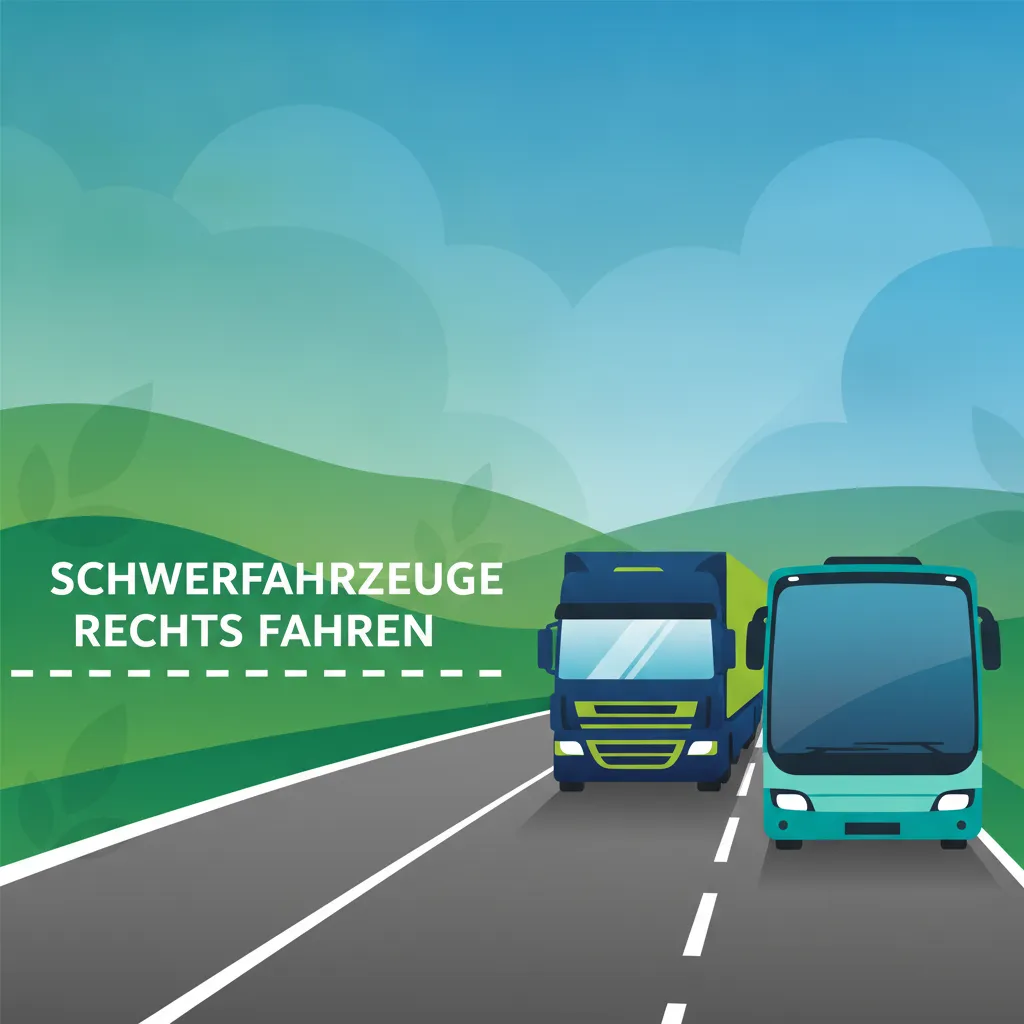
Lesson content overview
Operating heavy vehicles, such as trucks and buses, on Germany's high-speed road network requires specialized knowledge of traffic laws, vehicle dynamics, and safe driving practices. This lesson, part of your German Heavy Vehicle Driving License Theory – C1, C1E, C, CE course, outlines the critical regulations and principles for safe navigation on Autobahnen (motorways) and Kraftfahrstraßen (major highways). Understanding these rules is essential for minimizing risk, maintaining smooth traffic flow, and ensuring compliance with German traffic law (StVO).
The German Autobahn system is renowned for its high-speed design, but specific rules apply to heavy vehicles to account for their larger dimensions, greater mass, and longer braking distances. These regulations are meticulously crafted to manage the interaction between heavy vehicles and lighter traffic, thereby enhancing overall road safety. A solid grasp of these principles, building upon your knowledge of vehicle dimensions, braking systems, and load security, is fundamental.
Successful and safe driving of heavy vehicles on Autobahnen and Kraftfahrstraßen hinges on several core principles:
Lane discipline is a cornerstone of safe and efficient traffic flow on Autobahnen and Kraftfahrstraßen, particularly for heavy vehicles. The rules are designed to prevent congestion and reduce collision risks arising from the different speeds and accelerations of various vehicle types.
On multi-lane Autobahnen, the fundamental rule for all vehicles, especially heavy goods vehicles (HGVs) and buses, is to keep to the right (Rechtsfahrgebot). This means you should drive in the rightmost lane unless you are actively overtaking another vehicle or preparing to exit.
Overtaking is a critical maneuver that must be executed with extreme caution and in strict adherence to regulations, especially for heavy vehicles.
The act of passing a slower vehicle traveling in the same direction. On German Autobahnen, overtaking is generally permitted only on the left side of the vehicle being passed.
This sign indicates specific overtaking restrictions that heavy vehicle drivers must strictly observe.
On some segments of Autobahnen or Kraftfahrstraßen, you may encounter dedicated truck lanes. These are specifically reserved for heavy goods vehicles, often to separate them from lighter traffic and improve overall traffic flow.
A lane specifically designated for heavy vehicles, usually indicated by road signs or markings. Use may be mandatory for trucks over a certain weight.
Speed limits for heavy vehicles are critical safety measures designed to compensate for their inherent physical characteristics, primarily greater mass and longer stopping distances. Adhering to these limits is non-negotiable.
Unless otherwise posted, the general speed limit for heavy vehicles on German Autobahnen and Kraftfahrstraßen is significantly lower than for passenger cars.
Always be aware of your vehicle's specific classification and the corresponding legal speed limits. Assuming passenger car speed limits apply to heavy vehicles is a common and dangerous misunderstanding.
Even if the general limit is 80 km/h, various factors can necessitate a further reduction in speed:
Maintaining an adequate following distance is one of the most critical safety aspects for heavy vehicle drivers, directly impacting the ability to prevent rear-end collisions. Due to their greater mass and momentum, heavy vehicles require significantly longer braking distances than passenger cars.
While the general rule of thumb for passenger cars is often a 2-second gap, or a distance equivalent to half your speedometer reading in meters (the "half-tacho" rule), heavy vehicles require more.
Several conditions necessitate an even greater following distance:
When driving a heavy vehicle, always err on the side of caution. A larger following distance not only provides more time to react but also reduces driver stress and fuel consumption by allowing for smoother deceleration.
The transition onto and off Autobahnen and Kraftfahrstraßen is a common point of potential conflict. Correct use of acceleration and deceleration lanes is mandatory to integrate heavy vehicles into or out of the traffic flow smoothly and safely.
Safe driving is dynamic, requiring continuous adaptation to changing conditions. For heavy vehicle drivers, this vigilance is even more critical.
Every action a heavy vehicle driver takes has a direct consequence on safety and traffic flow. Understanding these cause-and-effect relationships is key to proactive and responsible driving.
Mastering the complexities of driving heavy vehicles on German Autobahnen and Kraftfahrstraßen is crucial for your professional driving career. It demands continuous awareness, strict adherence to regulations, and a proactive approach to safety.
To ensure safe and compliant operation:
By consistently applying these principles, you contribute not only to your own safety but also to the safety and efficiency of the entire German road network.
This lesson covers the essential regulations for driving heavy vehicles on German Autobahnen and Kraftfahrstraßen, with particular focus on trucks over 3.5t. Key regulations include the Rechtsfahrgebot (keep-right rule), specific speed limits (80 km/h standard for heavy trucks, 100 km/h for qualified buses), and mandatory minimum following distances. Overtaking must always occur on the left, with restrictions in designated zones. The lesson emphasizes that heavy vehicles require significantly longer braking distances than passenger cars, making the 3-second following gap essential. Drivers must also adapt to weather conditions, construction zones, and vehicle load status, while using dedicated truck lanes where indicated.
A short set of high-value points that capture the most important learning from this lesson.
Heavy vehicles over 3.5t permissible mass must primarily use the rightmost lane on Autobahnen, moving left only to overtake and returning promptly after.
The standard speed limit for trucks over 3.5t on German Autobahnen is 80 km/h unless otherwise posted; qualified buses with Tempo 100-Zulassung may travel at 100 km/h.
Heavy vehicles require a minimum 3-second following distance (approximately 50m at 80 km/h) due to their significantly longer braking distances.
Overtaking on German Autobahnen must always be performed on the left side; right-side overtaking is prohibited and dangerous.
Dedicated truck lanes (LKW-Spuren) indicated by signage must be used where mandatory, serving to separate heavy vehicles from lighter traffic.
Explore all units and lessons included in this driving theory course.
Trucks over 3.5t: 80 km/h max; buses with special permit: 100 km/h; vehicles under 3.5t follow passenger car limits.
Loaded heavy vehicles require longer braking distances than empty ones; adjust speed and following distance accordingly.
Adverse weather (rain, fog, snow, ice, crosswinds) demands substantial speed reductions beyond posted limits for safety.
Construction zones on Autobahnen always impose reduced speed limits, often 60 km/h or 40 km/h for all vehicles.
The Rechtsfahrgebot rule requires returning to the rightmost lane as soon as safely possible after completing an overtaking maneuver.
Assuming passenger car speed limits apply to heavy vehicles; the 80 km/h limit for trucks over 3.5t is often overlooked.
Failing to maintain adequate following distance; the half-tacho rule (40m at 80 km/h) is insufficient for heavy vehicles and illegal under StVO.
Occupying inner lanes unnecessarily, causing faster traffic to brake or swerve and creating dangerous congestion.
Elephant racing—driving side-by-side with another truck for extended periods—blocks multiple lanes and is subject to fines.
Merging onto the Autobahn without matching traffic speed, forcing other drivers to brake abruptly.
Lesson content overview
A short set of high-value points that capture the most important learning from this lesson.
Heavy vehicles over 3.5t permissible mass must primarily use the rightmost lane on Autobahnen, moving left only to overtake and returning promptly after.
The standard speed limit for trucks over 3.5t on German Autobahnen is 80 km/h unless otherwise posted; qualified buses with Tempo 100-Zulassung may travel at 100 km/h.
Heavy vehicles require a minimum 3-second following distance (approximately 50m at 80 km/h) due to their significantly longer braking distances.
Overtaking on German Autobahnen must always be performed on the left side; right-side overtaking is prohibited and dangerous.
Dedicated truck lanes (LKW-Spuren) indicated by signage must be used where mandatory, serving to separate heavy vehicles from lighter traffic.
Explore all units and lessons included in this driving theory course.
Trucks over 3.5t: 80 km/h max; buses with special permit: 100 km/h; vehicles under 3.5t follow passenger car limits.
Loaded heavy vehicles require longer braking distances than empty ones; adjust speed and following distance accordingly.
Adverse weather (rain, fog, snow, ice, crosswinds) demands substantial speed reductions beyond posted limits for safety.
Construction zones on Autobahnen always impose reduced speed limits, often 60 km/h or 40 km/h for all vehicles.
The Rechtsfahrgebot rule requires returning to the rightmost lane as soon as safely possible after completing an overtaking maneuver.
Assuming passenger car speed limits apply to heavy vehicles; the 80 km/h limit for trucks over 3.5t is often overlooked.
Failing to maintain adequate following distance; the half-tacho rule (40m at 80 km/h) is insufficient for heavy vehicles and illegal under StVO.
Occupying inner lanes unnecessarily, causing faster traffic to brake or swerve and creating dangerous congestion.
Elephant racing—driving side-by-side with another truck for extended periods—blocks multiple lanes and is subject to fines.
Merging onto the Autobahn without matching traffic speed, forcing other drivers to brake abruptly.
Explore search topics learners often look for when studying Driving on Autobahnen and Kraftfahrstraßen with Heavy Vehicles. These topics reflect common questions about road rules, driving situations, safety guidance, and lesson level theory preparation for learners in Germany.
Browse additional driving theory lessons that cover connected traffic rules, road signs, and common driving situations related to this topic. Improve your understanding of how different rules interact across everyday traffic scenarios.
Explore specific German traffic regulations for heavy vehicles on Autobahnen and expressways. This lesson covers essential rules for lane discipline, legal speed limits, safe overtaking, and merging procedures to ensure safe high-speed driving.
This lesson provides a complete guide to driving on the German Autobahn. It covers the correct procedure for entering and exiting via acceleration and deceleration lanes, the strict lane discipline rule of keeping right ('Rechtsfahrgebot'), and the principle of overtaking only on the left. It also explains the recommended speed limit and the critical procedure for forming an emergency corridor ('Rettungsgasse') in a traffic jam.

This lesson provides instruction on the rules and best practices for operating a large passenger vehicle on the Autobahn. It covers the principles of strict lane discipline, regulations for minimum speed, and correct procedures for overtaking and merging. The importance of maintaining significantly increased following distances at high speeds and planning for exits well in advance is a key focus.

This lesson covers the rules and safety considerations for overtaking ('Überholen'). It explains where overtaking is prohibited and how to assess whether it is safe and necessary to do so. The procedure for checking traffic, signaling, moving out, passing, and safely returning to the lane is detailed, with a strong focus on judging the speed and distance of oncoming traffic.

This lesson details the correct procedures for entering a motorway, using the acceleration lane to match traffic speed, and merging safely. It reinforces the strict lane discipline required, including keeping to the right lane except when overtaking. The content also provides guidance on maintaining increased following distances and performing safe lane changes at high speeds.
This lesson covers the principles of correct vehicle positioning and lane discipline, which are essential for predictable and safe driving. It reinforces the 'Rechtsfahrgebot' (drive on the right) principle and explains how to choose the appropriate lane on multi-lane roads and motorways. Proper positioning for turns and maintaining a safe space cushion around the vehicle are also key topics.

This lesson covers the dimensional limits for heavy vehicles, focusing on height, width, and length restrictions. It explains how to interpret clearance signage for bridges, tunnels, and overhead obstacles, and discusses the implications for route planning. The content also addresses the importance of understanding turning radii and swept paths to avoid collisions.

This lesson covers the regulations and safe techniques for overtaking other vehicles in urban environments. It emphasizes the importance of thorough observation, including mirror and blind spot checks, before committing to the maneuver. Learners will understand how to choose a safe gap, manage their speed differential, and maintain strict lane discipline throughout the overtaking process.
This lesson examines the specific hazards associated with driving on rural roads. It covers how to handle narrow lanes, sharp bends, and poor road surfaces, as well as how to anticipate and safely interact with slow-moving agricultural vehicles or livestock. Strategies for speed adaptation due to limited visibility and the risks associated with overtaking in these conditions are thoroughly discussed.
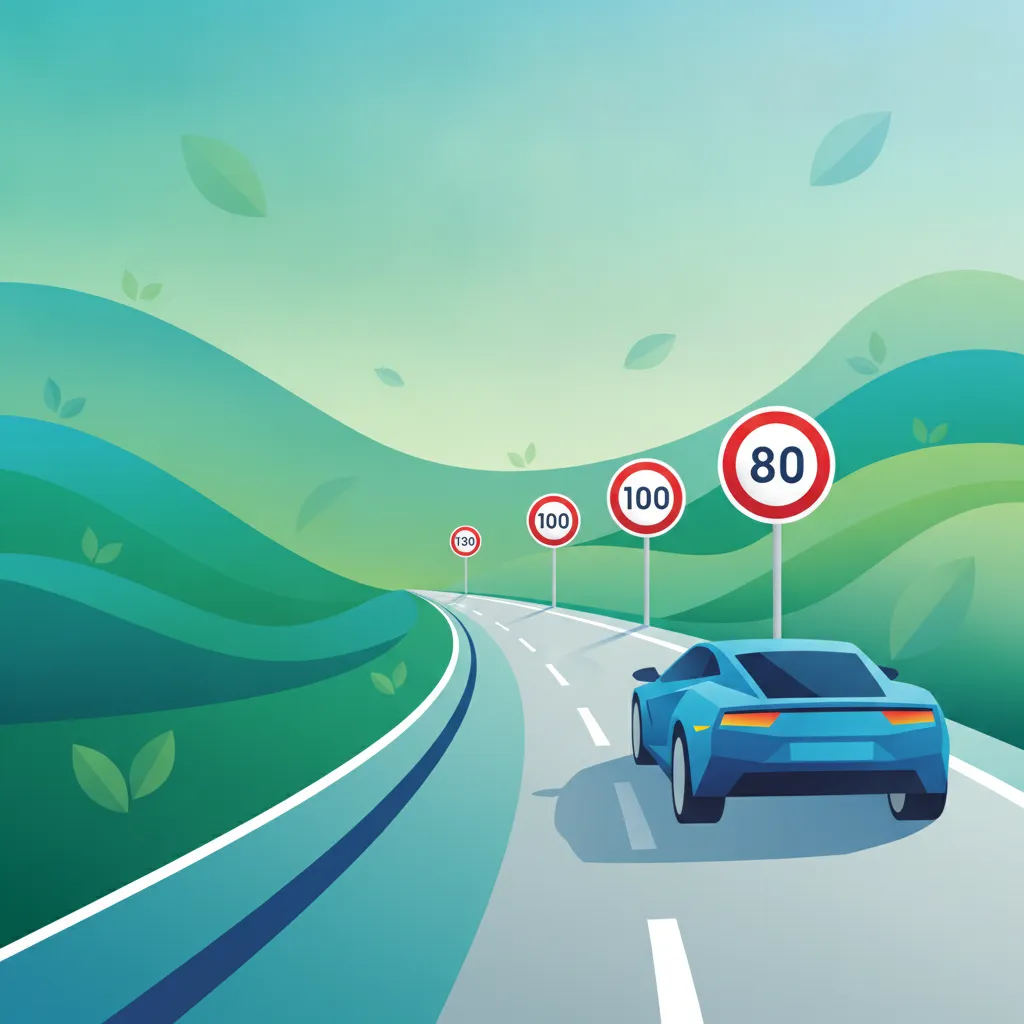
This lesson details the statutory speed limits in Germany, including the standard limits within built-up areas, on rural roads, and on the Autobahn. It emphasizes that the posted limit is a maximum and that drivers must always adapt their speed to traffic, weather, and visibility conditions. The concept of the recommended speed ('Richtgeschwindigkeit') on the Autobahn is also explained.
Understand critical safety aspects of driving heavy vehicles on German Autobahnen beyond basic rules. This lesson focuses on hazard perception, managing risks like crosswinds and fatigue, and emergency procedures specific to high-speed motorway driving.
This lesson provides a complete guide to driving on the German Autobahn. It covers the correct procedure for entering and exiting via acceleration and deceleration lanes, the strict lane discipline rule of keeping right ('Rechtsfahrgebot'), and the principle of overtaking only on the left. It also explains the recommended speed limit and the critical procedure for forming an emergency corridor ('Rettungsgasse') in a traffic jam.
This lesson provides instruction on the rules and best practices for operating a large passenger vehicle on the Autobahn. It covers the principles of strict lane discipline, regulations for minimum speed, and correct procedures for overtaking and merging. The importance of maintaining significantly increased following distances at high speeds and planning for exits well in advance is a key focus.
This lesson details the correct procedures for entering a motorway, using the acceleration lane to match traffic speed, and merging safely. It reinforces the strict lane discipline required, including keeping to the right lane except when overtaking. The content also provides guidance on maintaining increased following distances and performing safe lane changes at high speeds.
This lesson covers safe interaction with special vehicles. It details the challenges of driving near large trucks (LKW), including their extensive blind spots, longer stopping distances, and the effects of wind turbulence when overtaking them. A critical part of the lesson is explaining the correct procedure for reacting to emergency vehicles by creating an emergency corridor ('Rettungsgasse') on multi-lane roads.

This lesson introduces the concept of defensive driving ('vorausschauendes Fahren'), a proactive approach focused on anticipating and mitigating potential risks. It teaches techniques for scanning the road ahead, identifying potential hazards early, and managing the space around your vehicle to create a safety buffer. The goal is to develop a mindset that prioritizes safety and collision avoidance above all else.
This lesson examines the specific hazards associated with driving on rural roads. It covers how to handle narrow lanes, sharp bends, and poor road surfaces, as well as how to anticipate and safely interact with slow-moving agricultural vehicles or livestock. Strategies for speed adaptation due to limited visibility and the risks associated with overtaking in these conditions are thoroughly discussed.
This lesson details the statutory speed limits in Germany, including the standard limits within built-up areas, on rural roads, and on the Autobahn. It emphasizes that the posted limit is a maximum and that drivers must always adapt their speed to traffic, weather, and visibility conditions. The concept of the recommended speed ('Richtgeschwindigkeit') on the Autobahn is also explained.
Find clear answers to common questions learners have about Driving on Autobahnen and Kraftfahrstraßen with Heavy Vehicles. Learn how the lesson is structured, which driving theory objectives it supports, and how it fits into the overall learning path of units and curriculum progression in Germany. These explanations help you understand key concepts, lesson flow, and exam focused study goals.
No. Heavy vehicles are subject to stricter speed limits on the Autobahn and Kraftfahrstraßen. You must be aware of the specific limits based on your vehicle's permissible total mass to avoid penalties and exam errors.
Generally, no. Large vehicles are typically restricted from using the far-left lane on three-lane motorways, especially when other lanes are available. You must adhere to lane discipline rules to allow faster traffic to pass safely.
Construction zones on German motorways often have narrowed lanes. You must check your vehicle’s total width against lane restrictions and be prepared to take the lane designated for wider vehicles if required by signage.
When driving a CE combination, your acceleration is significantly lower than a car. You must time your merge carefully, ensuring you have enough distance to reach a safe speed before entering the flow of traffic without forcing other drivers to brake.
Begin your targeted revision now. Use our practice search to quickly find specific German driving theory questions. Filter by StVO rules, road signs, or hazard perception to create your focused study plan. Master challenging areas and prepare confidently for your theoretical driving test.