
This lesson provides an essential foundation by detailing the tiered motorcycle licence system in Germany. You will learn the specific legal definitions, power-to-weight restrictions, and eligibility criteria for classes A1, A2, and A, ensuring you fully understand your path to becoming a licensed rider.
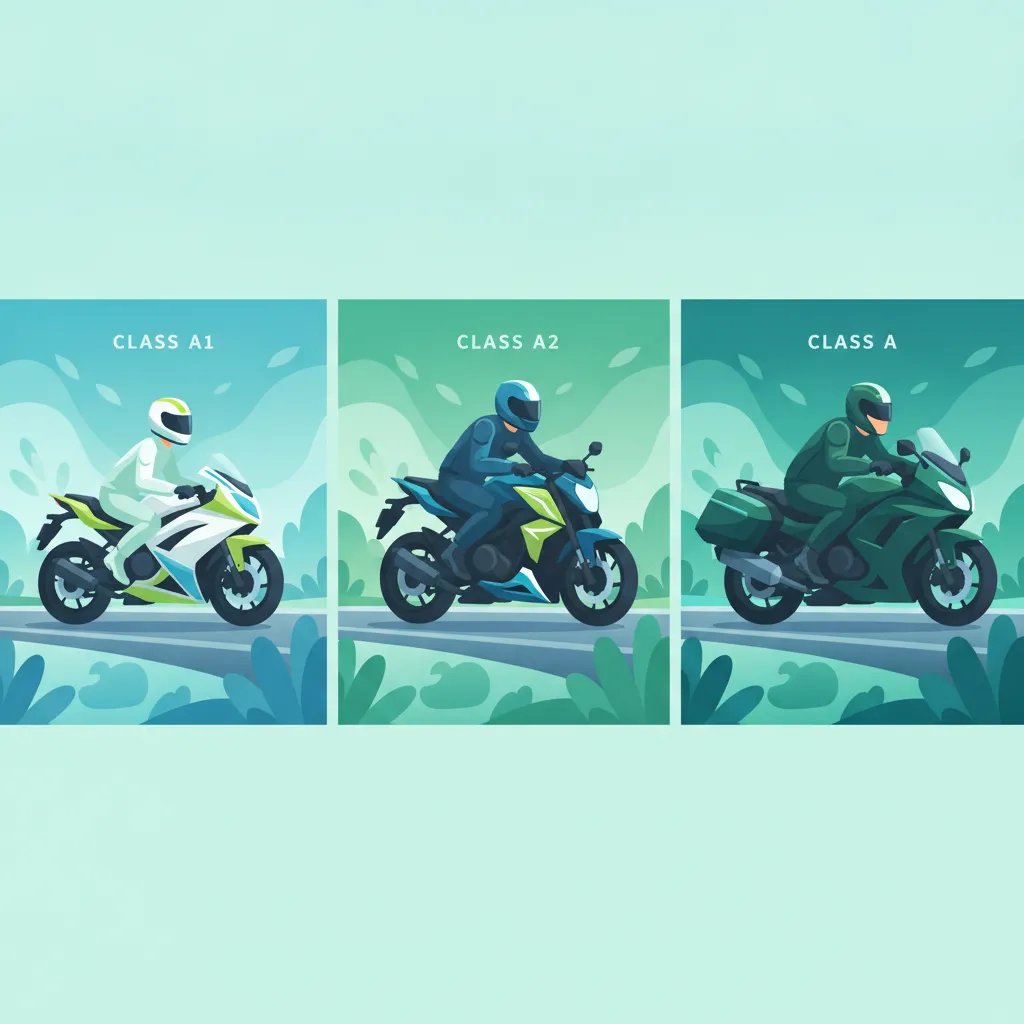
Lesson content overview
Welcome to the German Motorcycle Licence Theory Course. This lesson provides a comprehensive overview of Germany's tiered motorcycle licence system, a crucial framework designed to ensure rider safety and competence. Navigating the world of motorcycle licensing in Germany means understanding the distinct requirements and privileges associated with Licence Classes A1, A2, and A. These categories progressively allow access to more powerful motorcycles as riders gain experience and demonstrate increased skill.
This lesson will demystify the specific engine displacement, power output, and power-to-weight ratio restrictions for each category. We will also detail the mandatory theoretical and practical examinations that applicants must pass to obtain certification for each licence level, preparing you for a safe and legal journey on German roads.
Germany, like many European countries, employs a tiered motorcycle licence system. This structure is not arbitrary; it is meticulously designed to match a rider's experience and skill level with the increasing performance capabilities of motorcycles. This graduated approach is fundamental to road safety, significantly reducing the risks associated with inexperienced riders operating high-powered machines. By starting with less powerful motorcycles, new riders can develop essential skills and hazard perception without being overwhelmed by excessive speed or acceleration.
The legal restrictions, such as limits on engine displacement and power output, serve as critical safety measures. They limit a rider's exposure to high-performance scenarios until they have acquired sufficient practical experience and theoretical knowledge. This lesson forms the foundational understanding for all subsequent topics in motorcycle handling, rider responsibilities, and advanced safety practices.
The German system is built upon several core principles that guide its structure and regulations:
Structured categories (A1, A2, A) that specify the types of motorcycles a rider is legally permitted to operate.
This principle ensures that rider skill levels are progressively matched with motorcycle performance, a key factor in reducing accidents. Riders must typically progress through these categories, passing specific tests for each.
Maximum engine size and power output restrictions for each licence class.
These limits directly restrict the performance capabilities of motorcycles accessible to riders, ensuring they align with the rider's competence and experience. These restrictions dictate which motorcycles a rider can legally ride.
The ratio of an engine's power output to the vehicle's total weight, measured in kilowatts per kilogram (kW/kg).
This ratio is a critical factor in limiting performance relative to the motorcycle's mass, ensuring manageable acceleration and control, especially for less experienced riders. It significantly impacts which motorcycles are permissible within a given class.
A requirement to hold a lower class licence for a specified duration before being eligible to upgrade to a higher, more powerful class.
This path provides riders with invaluable real-world experience over time before they are permitted to handle higher-performance motorcycles. Riders must complete these required holding periods and pass subsequent examinations.
Both theoretical (written) and practical (riding) tests that are specific to each licence class.
These examinations are designed to verify a rider's comprehensive knowledge of road rules, safety protocols, and their practical competence in operating a motorcycle safely. Successful completion is mandatory for the legal issuance of any licence.
The Class A1 licence serves as the entry point into the world of motorcycling in Germany, specifically designed for younger and less experienced riders. It introduces fundamental riding skills and road awareness on relatively lower-powered machines, promoting a safe learning environment.
A Class A1 licence permits you to ride two-wheeled motor vehicles with an engine capacity of up to 125 cubic centimeters (cc). Critically, the maximum power output of these vehicles must not exceed 11 kilowatts (kW), and their power-to-weight ratio must not be greater than 0.1 kW per kilogram (kg). This combination of restrictions ensures that A1 motorcycles are lightweight and have manageable acceleration.
For practical purposes, this class primarily covers lightweight city motorcycles, scooters, and mopeds. These vehicles are ideal for commuting, urban exploration, and gaining initial experience with motorcycling dynamics.
To obtain a Class A1 licence, applicants must be at least 16 years old. There are no prerequisite motorcycle licences required. The primary associated rules include adhering strictly to the engine size and power output limitations.
Common Misunderstanding: Many mistakenly believe that any motorcycle under 125 cc automatically qualifies for an A1 licence. This is incorrect. The 11 kW power limit and the 0.1 kW/kg power-to-weight ratio are equally crucial and must not be exceeded, even if the displacement is below 125 cc. Always verify these specifications for any motorcycle you intend to ride with an A1 licence.
Example: You can ride a 125 cc scooter with a maximum power of 10 kW and a weight of 100 kg (power-to-weight ratio of 0.1 kW/kg). However, a 125 cc motorcycle with 12 kW of power would not be permissible for an A1 licence holder, as it exceeds the 11 kW power limit.
The Class A2 licence represents the next step in the German tiered system, allowing riders access to medium-power motorcycles. It bridges the gap between the introductory A1 class and the unrestricted Class A, providing an opportunity for riders to gain further experience on more capable machines.
With a Class A2 licence, you are permitted to ride motorcycles with a maximum power output of 35 kW. An additional crucial restriction is that the power-to-weight ratio must not exceed 0.2 kW/kg. It's also important to note that the motorcycle must not be derived from a vehicle with more than double its rated power. This means you cannot simply restrict a 100 kW motorcycle to 35 kW to make it A2 compliant; the original unrestricted power must not exceed 70 kW.
Practically, this class opens up a wide range of medium-power motorcycles, making it suitable for intermediate riders who have outgrown their A1 bikes. These can include larger scooters, naked bikes, and even some sport bikes that have been restricted to meet the power requirements.
There are two primary paths to obtaining a Class A2 licence:
Common Misunderstanding: A frequent misconception is that an A2 licence permits any motorcycle up to 35 kW, irrespective of its weight or original unrestricted power. The power-to-weight ratio of 0.2 kW/kg and the "double power" restriction are critical. A heavy motorcycle with 35 kW might still be permissible, but a light one could exceed the ratio even at 35 kW. Always calculate the power-to-weight ratio and check the original power output.
Example: You can ride a 600 cc motorcycle that originally produced 70 kW but has been technically restricted to 35 kW, provided its power-to-weight ratio is 0.2 kW/kg or less. You cannot, however, ride a 1000 cc motorcycle that originally produced 120 kW, even if it has been restricted to 35 kW, because its original power exceeds double the restricted power (70 kW).
The Class A licence is the pinnacle of motorcycle licensing in Germany, granting unrestricted access to all types of motorcycles, regardless of their engine size, power output, or power-to-weight ratio. This licence is for experienced riders who have demonstrated a high level of competence and responsibility.
With a Class A licence, you are permitted to ride any motorcycle currently manufactured or historically available. This includes high-performance superbikes, large touring motorcycles, powerful cruisers, and anything in between. There are no technical restrictions on the vehicle itself.
This practical meaning signifies full freedom to choose any motorcycle that suits your riding style, preferences, and intended use, from long-distance touring to track days.
Obtaining a Class A licence can be achieved through two main routes:
Common Misunderstanding: A common assumption is that after holding an A2 licence for two years, eligibility for Class A is automatic. This is incorrect. You must still undergo and pass a specific practical examination for the Class A licence to demonstrate your ability to safely handle high-performance motorcycles.
Example: An A2 licence holder who is 20 years old and has held their A2 licence for 2 years can take the practical exam to upgrade to Class A. A 24-year-old individual with no prior motorcycle licence can take both the theoretical and practical exams to obtain a Class A licence directly.
Regardless of the licence class you are pursuing, the German system mandates both theoretical and practical examinations. These tests are not mere formalities; they are rigorous assessments designed to ensure that every licensed rider possesses the necessary knowledge and skills to operate a motorcycle safely and responsibly on public roads.
The theoretical examination is a written or computer-based test covering a broad spectrum of topics essential for safe road participation. For motorcycle licences, it includes general traffic laws applicable to all vehicles, as well as specific questions pertinent to motorcycle operation, safety, and unique hazards.
Importance: This examination ensures that you have a deep understanding of traffic regulations, road signs, right-of-way rules, and specific motorcycle safety considerations such as protective gear, braking distances, and hazard perception. It's the bedrock of responsible riding.
Application: A theoretical test is required for the initial acquisition of any motorcycle licence (A1, A2, or A for direct access). If you are upgrading from A1 to A2, or A2 to A, and have already passed a theoretical test for a previous motorcycle class, you may not need to retake it, depending on the specifics of your progression path and the time elapsed. However, always confirm this with your driving school.
Preparation Tip: Do not rely solely on practical riding experience to pass the theoretical test. Thorough study of the official curriculum, often provided through driving school materials and practice apps, is essential.
The practical examination is a comprehensive road test conducted by a certified examiner. It assesses your real-world riding skills, ability to perform specific manoeuvres, and overall adherence to safety protocols in various traffic conditions.
Components: The practical test typically includes:
Requirements: The practical examination is specific to each licence class. For example, the A1 practical test will use a 125 cc motorcycle and focus on fundamental control, while the A2 and A tests will involve more powerful bikes and demand higher proficiency in speed, handling, and traffic management. Passing the practical exam is a non-negotiable requirement for obtaining any motorcycle licence.
Common Misunderstanding: Many assume practical exams are identical across classes, only differing in the bike's power. While the core skills are similar, the required proficiency, speed, and specific manoeuvres are tailored to the performance capabilities of the motorcycles in each class. For instance, emergency braking from higher speeds is tested for A2 and A.
Adhering to the specific rules and regulations associated with each motorcycle licence class is paramount for both legality and safety on German roads. Non-compliance can lead to severe penalties, including significant fines and licence withdrawal.
Licence Class A1:
Licence Class A2:
Licence Class A (Unlimited):
The progressive licensing path is a cornerstone of the German system, ensuring that riders gain sufficient experience before moving to more powerful motorcycles.
From A1 to A2: After holding a Class A1 licence for a minimum of two years, you can upgrade to Class A2 by passing only a practical examination.
From A2 to A: After holding a Class A2 licence for a minimum of two years, you can upgrade to Class A by passing only a practical examination.
Direct Access: It is possible to obtain A2 or A directly without holding a previous motorcycle licence, provided you meet the respective minimum age requirements (18 for A2, 24 for A) and pass both theoretical and practical examinations.
Both theoretical and practical examinations are mandatory for the initial acquisition of each licence class. For incremental upgrades (A1 to A2, A2 to A), usually only a practical examination is required, provided the necessary holding period has been met. This system verifies both your intellectual understanding of road safety and your physical competence in riding.
All rules and regulations related to motorcycle licence classes are legally binding in Germany. Non-compliance, such as riding a motorcycle that exceeds the limits of your licence class, is a serious offense. This can lead to:
It is crucial to verify your licence class and the specifications of any motorcycle before riding it.
Understanding the nuances of the licence categories helps avoid common pitfalls and unintentional violations. Riders sometimes overlook specific criteria, leading to serious legal consequences.
While licence classes define what you can ride, safe riding also depends heavily on how and where you ride, adapting to various conditions.
The tiered licensing system and its associated regulations are deeply rooted in principles of safety, driver development, and accident prevention.
This systematic approach fosters a culture of gradual skill development and ensures that only appropriately experienced and knowledgeable individuals are granted full access to the most powerful motorcycles.
Understanding Germany's tiered motorcycle licence system is the first critical step toward becoming a safe and legally compliant rider. Each class – A1, A2, and A – is meticulously designed with specific power, displacement, and power-to-weight ratio limits, tailored to match a rider's evolving skill and experience. The progressive licensing path, coupled with mandatory theoretical and practical examinations, ensures a systematic and safety-oriented development for all motorcyclists.
By adhering to these regulations and embracing the rationale behind them, you not only comply with German law but also contribute significantly to your own safety and the safety of others on the road. This foundational knowledge will serve you well as you progress through your German Motorcycle Licence Theory Course, preparing you for the responsibilities and joys of motorcycling.
Germany's motorcycle licence system progresses through three classes—A1 (125 cc, 11 kW max), A2 (35 kW max, 0.2 kW/kg ratio, original power ≤70 kW), and unrestricted Class A—with minimum ages of 16, 18/20, and 20/24 respectively. The system requires completing a 2-year holding period at each level before upgrading, with only practical exams needed for progression while direct access requires both theoretical and practical tests. Key exam pitfalls include confusing displacement limits with power limits, miscalculating power-to-weight ratios, and misunderstanding that restricted motorcycles derived from high-power bikes may not qualify for A2.
A short set of high-value points that capture the most important learning from this lesson.
Class A1 permits motorcycles up to 125 cc with maximum 11 kW power and a power-to-weight ratio not exceeding 0.1 kW/kg, minimum age 16.
Class A2 limits motorcycles to 35 kW power with a maximum 0.2 kW/kg power-to-weight ratio, and the original unrestricted power must not exceed 70 kW.
Class A provides unrestricted access to all motorcycles with no technical limits, available at age 24 via direct access or age 20 after holding A2 for 2 years.
Progression from A1 to A2 and A2 to A requires a minimum 2-year holding period and passing only a practical examination.
Both theoretical and practical examinations are mandatory for initial licence acquisition, with only practical exams required for incremental upgrades.
Explore all units and lessons included in this driving theory course.
A 125 cc motorcycle does not automatically qualify for A1 if its power output exceeds 11 kW.
The power-to-weight ratio (kW/kg) is equally important as the absolute power limit when determining A1 and A2 eligibility.
For A2, a motorcycle cannot be derived from one with more than double the restricted power (70 kW original max).
The 2-year holding period must be completed before being eligible to take the upgrade practical examination.
Heavy overloading a motorcycle changes its power-to-weight ratio and handling characteristics.
Assuming any motorcycle under 125 cc is A1 legal, ignoring the 11 kW power and 0.1 kW/kg ratio requirements.
Believing A2 permits any motorcycle up to 35 kW without checking the 0.2 kW/kg ratio or the double-power restriction.
Thinking the A2 practical exam can be taken after 1.5 years of holding A1 instead of the required full 2 years.
Assuming eligibility for Class A is automatic after 2 years of A2, without understanding the practical examination is still mandatory.
Overlooking that passing the A2 practical exam requires the test motorcycle to meet specific weight requirements for the exam itself.
Lesson content overview
A short set of high-value points that capture the most important learning from this lesson.
Class A1 permits motorcycles up to 125 cc with maximum 11 kW power and a power-to-weight ratio not exceeding 0.1 kW/kg, minimum age 16.
Class A2 limits motorcycles to 35 kW power with a maximum 0.2 kW/kg power-to-weight ratio, and the original unrestricted power must not exceed 70 kW.
Class A provides unrestricted access to all motorcycles with no technical limits, available at age 24 via direct access or age 20 after holding A2 for 2 years.
Progression from A1 to A2 and A2 to A requires a minimum 2-year holding period and passing only a practical examination.
Both theoretical and practical examinations are mandatory for initial licence acquisition, with only practical exams required for incremental upgrades.
Explore all units and lessons included in this driving theory course.
A 125 cc motorcycle does not automatically qualify for A1 if its power output exceeds 11 kW.
The power-to-weight ratio (kW/kg) is equally important as the absolute power limit when determining A1 and A2 eligibility.
For A2, a motorcycle cannot be derived from one with more than double the restricted power (70 kW original max).
The 2-year holding period must be completed before being eligible to take the upgrade practical examination.
Heavy overloading a motorcycle changes its power-to-weight ratio and handling characteristics.
Assuming any motorcycle under 125 cc is A1 legal, ignoring the 11 kW power and 0.1 kW/kg ratio requirements.
Believing A2 permits any motorcycle up to 35 kW without checking the 0.2 kW/kg ratio or the double-power restriction.
Thinking the A2 practical exam can be taken after 1.5 years of holding A1 instead of the required full 2 years.
Assuming eligibility for Class A is automatic after 2 years of A2, without understanding the practical examination is still mandatory.
Overlooking that passing the A2 practical exam requires the test motorcycle to meet specific weight requirements for the exam itself.
Explore search topics learners often look for when studying Overview of Licence Classes A1, A2, and A. These topics reflect common questions about road rules, driving situations, safety guidance, and lesson level theory preparation for learners in Germany.
Browse additional driving theory lessons that cover connected traffic rules, road signs, and common driving situations related to this topic. Improve your understanding of how different rules interact across everyday traffic scenarios.
Understand the distinctions between German motorcycle licence classes A1, A2, and A. This lesson details age, engine capacity, power output, and power-to-weight ratio limits for each category, essential for theory exam preparation.

This lesson clarifies the distinctions between AM-class vehicles and motorcycles in higher licence categories (A1, A2, A). It focuses on the specific limits related to engine capacity, maximum speed, and vehicle dimensions that define the AM category. Learners will also understand differences in training requirements and road usage restrictions.

This lesson provides a detailed overview of the legal framework governing the AM licence in Germany. It explains the classification of vehicles like mopeds and scooters based on engine displacement, power output, and weight. Learners will understand the official age requirements, licensing procedures, and fundamental StVO regulations.

This lesson examines the specific technical characteristics that define AM-class vehicles. It covers the design differences between mopeds, scooters, and light quadricycles, including their brake systems, lighting, and power-to-weight ratios. Understanding these technical aspects is crucial for safe handling and maintenance.
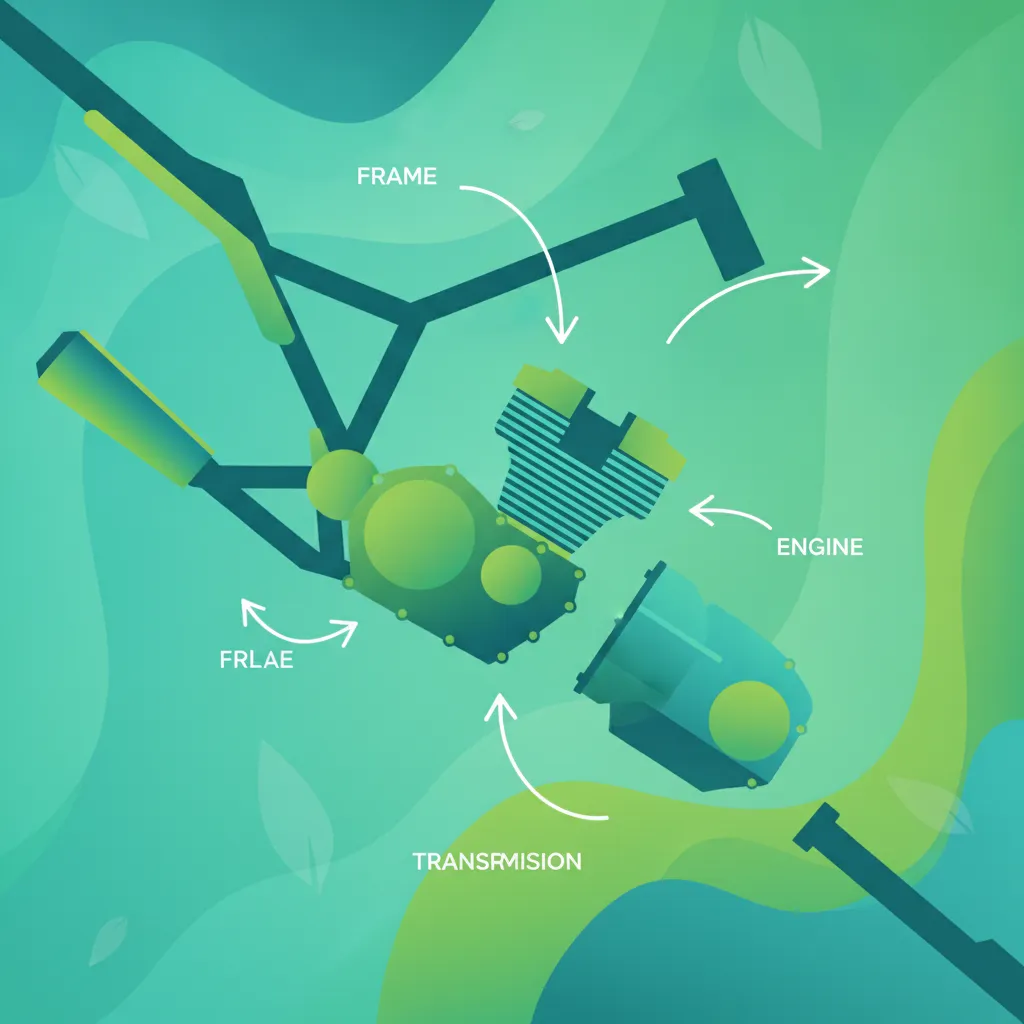
This lesson details the fundamental structure of a motorcycle, focusing on the frame, engine, and transmission. It explains how frame geometry influences handling and stability, while different engine types affect power delivery. Learners will also understand the mechanics of the transmission system, including clutch operation and gear shifting, and their role in controlling the motorcycle.

This lesson focuses on the legal duties every motorcycle rider must adhere to under German traffic law. It covers the concept of 'duty of care' towards other road users, mandatory insurance requirements, and the importance of maintaining a roadworthy vehicle. The lesson also details the rules of the probationary period and the potential legal and financial consequences of traffic violations.
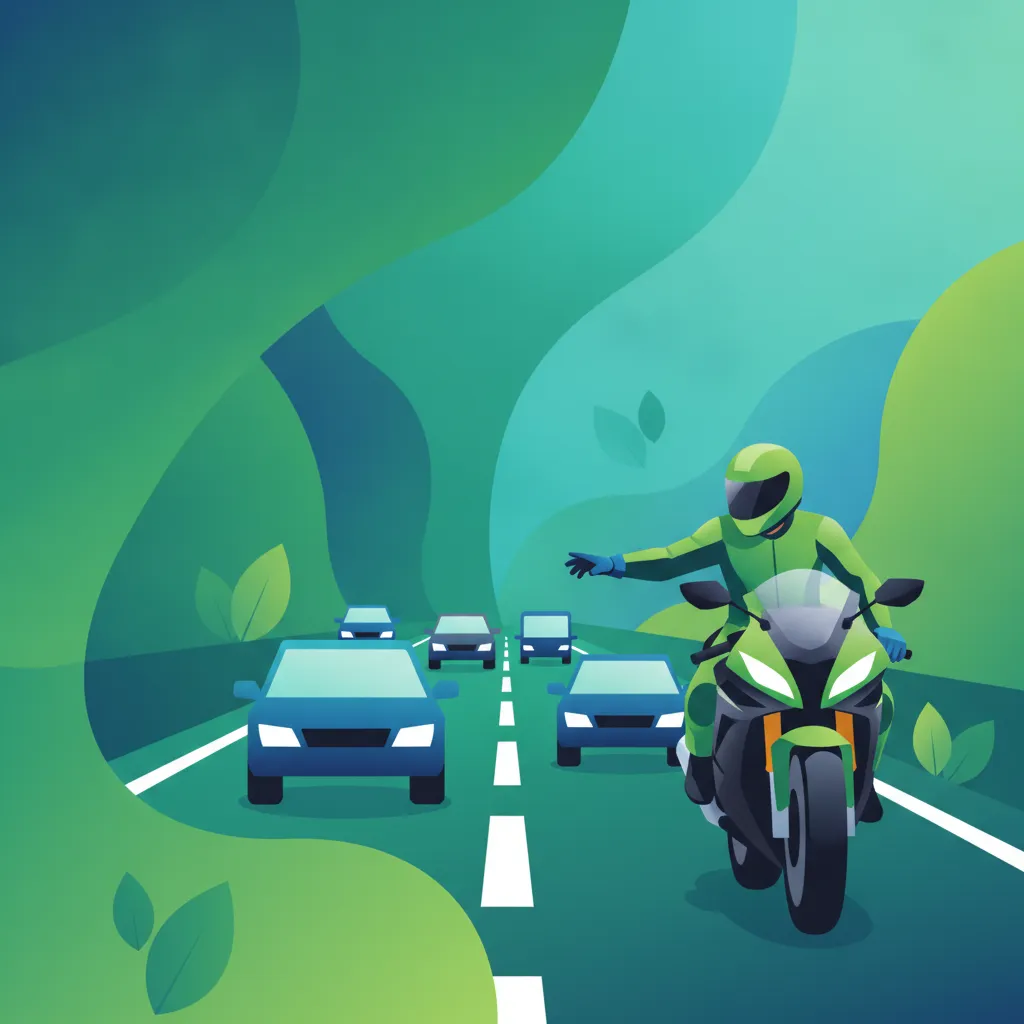
This lesson details the correct procedures for entering a motorway, using the acceleration lane to match traffic speed, and merging safely. It reinforces the strict lane discipline required, including keeping to the right lane except when overtaking. The content also provides guidance on maintaining increased following distances and performing safe lane changes at high speeds.

This lesson examines the various types of motorcycle helmets and emphasizes selecting a model that meets ECE safety standards. Learners are guided on how to achieve a proper, secure fit, which is critical for the helmet's protective function. The content also covers essential maintenance, such as cleaning the visor and inspecting the retention system to ensure continued safety and comfort.
Explore how German motorcycle licence classes A1, A2, and A progress and the legal obligations for riders. This lesson covers risk awareness and accident prevention strategies relevant to each licence level.
This lesson focuses on the legal duties every motorcycle rider must adhere to under German traffic law. It covers the concept of 'duty of care' towards other road users, mandatory insurance requirements, and the importance of maintaining a roadworthy vehicle. The lesson also details the rules of the probationary period and the potential legal and financial consequences of traffic violations.
This lesson details the legal obligations every AM licence holder must follow. It emphasizes compliance with the Straßenverkehrs-Ordnung (StVO), including mandatory helmet use and maintaining vehicle roadworthiness. The content covers insurance requirements, accident reporting procedures, and the legal consequences of non-compliance.
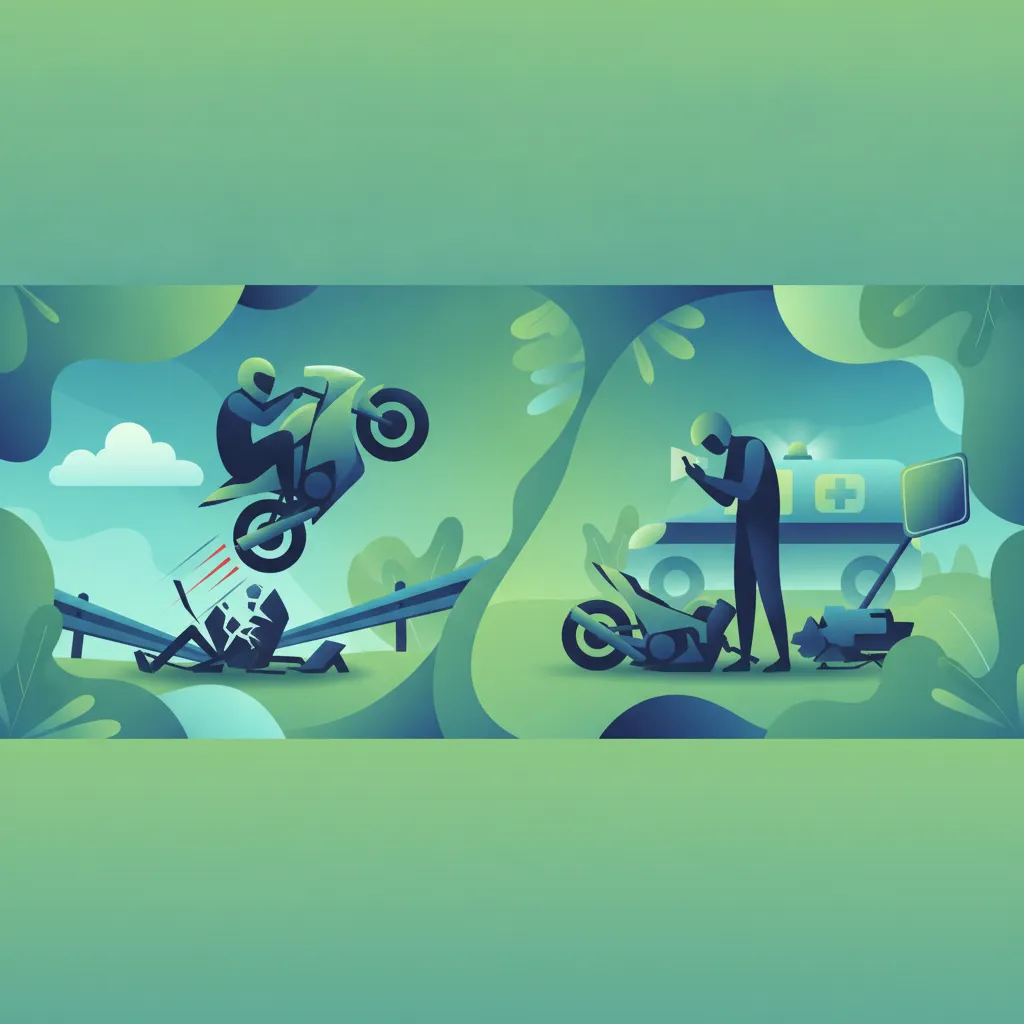
This lesson informs riders about the legal ramifications of dangerous riding and traffic violations under German law. It outlines potential penalties, including fines, points, and license suspension, as well as the impact on insurance. The content also provides a step-by-step guide on the correct procedures for reporting an accident to the police and documenting the scene for legal and insurance purposes.
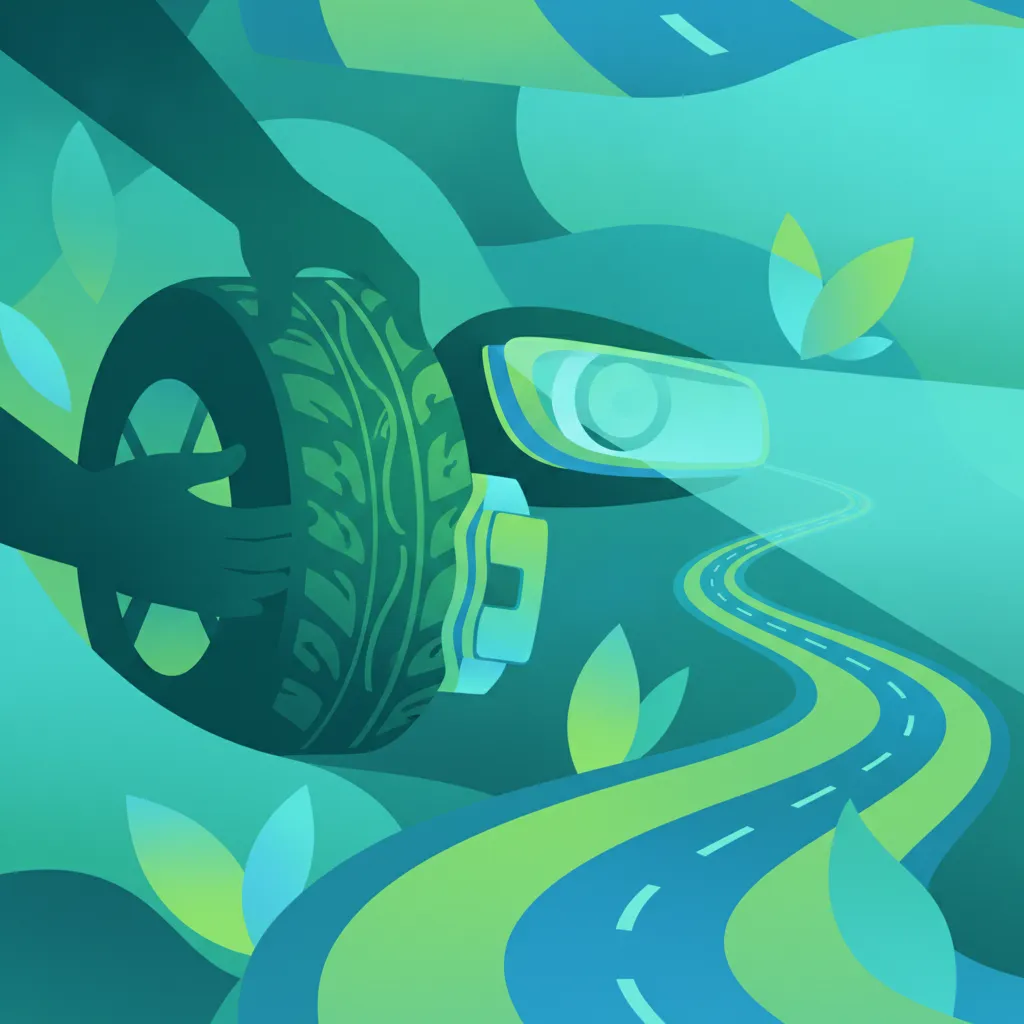
This lesson teaches riders how to conduct a simple but crucial pre-ride inspection of their vehicle. It provides step-by-step guidance on checking tyre pressure and tread depth, verifying brake function, and ensuring all lights are operational. Regular maintenance is presented as a fundamental responsibility for every rider.

This lesson teaches crucial risk awareness and accident prevention strategies for motorcyclists. It examines common accident scenarios and teaches riders how to identify potential hazards in advance. Key concepts include defensive riding, maintaining situational awareness, and understanding how a proactive mindset contributes to a safer riding experience on the road.
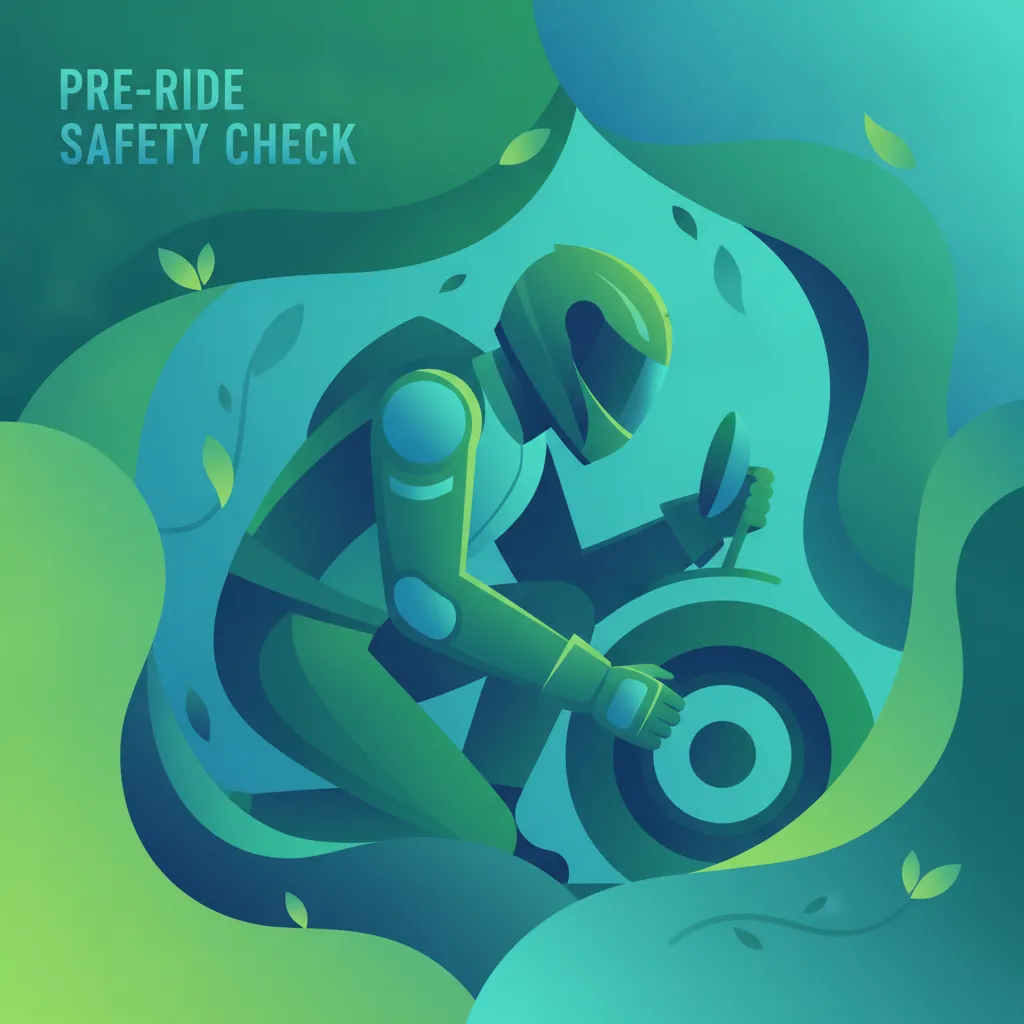
This lesson highlights the specific risks associated with motorcyclists, who are less visible and more vulnerable than car drivers. It teaches you to actively look for motorcycles, especially at intersections and during lane changes, as their smaller profile can be easily missed. You will learn about their potential for rapid acceleration and instability, emphasizing the need for extra following distance.
This lesson details the correct procedures for entering a motorway, using the acceleration lane to match traffic speed, and merging safely. It reinforces the strict lane discipline required, including keeping to the right lane except when overtaking. The content also provides guidance on maintaining increased following distances and performing safe lane changes at high speeds.

This lesson focuses on the legal responsibilities and duties of a vehicle operator according to German traffic law, primarily the StVO. It covers the obligation to drive safely, the rules of conduct at an accident scene, and the legal consequences of traffic violations. Understanding these principles is crucial for maintaining road safety and avoiding penalties such as fines, points, or driving bans.
This lesson provides a detailed overview of the legal framework governing the AM licence in Germany. It explains the classification of vehicles like mopeds and scooters based on engine displacement, power output, and weight. Learners will understand the official age requirements, licensing procedures, and fundamental StVO regulations.
Find clear answers to common questions learners have about Overview of Licence Classes A1, A2, and A. Learn how the lesson is structured, which driving theory objectives it supports, and how it fits into the overall learning path of units and curriculum progression in Germany. These explanations help you understand key concepts, lesson flow, and exam focused study goals.
The A1 licence is for light motorcycles up to 125cc and 11kW, whereas the A2 licence allows for more powerful motorcycles up to 35kW, provided the power-to-weight ratio does not exceed 0.2 kW/kg.
No, you cannot. An A2 licence restricts you to motorcycles within the specific A2 power limits. Riding a motorcycle that exceeds these limits is a violation of your licence terms.
If you are upgrading from an existing A2 licence after two years of experience, you typically only need a practical test. However, initial licensing requirements depend on your current status and prior experience.
The power-to-weight ratio is a critical legal metric for the A2 class. It ensures that the motorcycle is not too powerful for the rider's experience level, and you must verify this ratio in the registration documents of any bike you intend to ride.
Begin your targeted revision now. Use our practice search to quickly find specific German driving theory questions. Filter by StVO rules, road signs, or hazard perception to create your focused study plan. Master challenging areas and prepare confidently for your theoretical driving test.