
This lesson guides you through the complexities of motorway riding, a vital component for your German motorcycle theory exam. You will learn the correct protocols for using acceleration lanes, maintaining lane discipline, and navigating at high speeds safely.

Lesson content overview
Riding a motorcycle on Germany's motorways, known as Autobahnen, offers a unique experience, often involving higher speeds and demanding heightened vigilance. This comprehensive lesson, part of your German Motorcycle Licence Theory Course, delves into the critical procedures for entering an Autobahn safely, maintaining strict lane discipline, and adopting safe riding strategies at elevated speeds. Mastering these skills is not only essential for passing your theory and practical tests but, more importantly, for ensuring your safety and the smooth flow of traffic in a high-speed environment.
Navigating these roads requires a keen understanding of specific German traffic regulations and the physical demands of riding at high velocities. For motorcyclists, issues such as visibility, wind buffeting, and rapid reaction times become even more pronounced. This chapter will equip you with the knowledge to integrate seamlessly into motorway traffic, choose appropriate lanes, and manage your speed and distance effectively, all while minimising risk.
German motorways (Autobahnen) are high-speed, multi-lane roads designed for efficient long-distance travel. While famous for sections with no general speed limit, a significant portion does have advisory or mandatory limits, especially in urban areas, construction zones, or sections with heavy traffic. These roads are specifically for motor vehicles capable of exceeding 60 km/h, meaning you will encounter faster-moving traffic and require precise, confident maneuvers.
The design of Autobahnen, including acceleration lanes (Einschlussfahrstreifen), exit ramps, and clear signage, is geared towards maintaining continuous, high-speed traffic flow. Understanding this design and your role within it is fundamental to safe motorway riding.
Entering a motorway is a critical maneuver that demands precision, good judgment, and a clear understanding of traffic dynamics. The goal is to transition from a standstill or lower speed onto a road where traffic is already moving at significant velocity, often 100 km/h or more.
The acceleration lane (Einschlussfahrstreifen or Beschleunigungsspur) is specifically designed to allow you to increase your speed to match that of the traffic already on the motorway before you merge. It is not an extension of the motorway itself, but a dedicated segment to prepare your entry.
You must use the entire length of the acceleration lane to build up speed. This is crucial for avoiding a dangerous speed differential between your motorcycle and existing motorway traffic. Stopping in the acceleration lane is strictly prohibited, except in an emergency, as it creates an extreme hazard for merging traffic.
As you accelerate along the Einschlussfahrstreifen, continuously observe the motorway traffic, particularly in the far right lane. Use your mirrors and perform shoulder checks to identify a suitable gap in the traffic flow. A safe gap is one that allows you to merge without forcing the vehicles already on the motorway to brake or swerve.
Your speed should be as close as possible to that of the vehicles in the lane you intend to enter. This minimises the relative speed difference, making the merge smoother and safer. Do not attempt to merge if you have not reached sufficient speed or if there is no adequate gap; in such cases, you may need to adjust your acceleration or wait for a better opportunity, albeit still utilising the lane’s full length.
Once you have identified a safe gap and matched your speed, signal your intention to merge well in advance. Maintain your acceleration and steer smoothly into the far right lane of the motorway. After merging, immediately cancel your indicator. Do not abruptly slow down once on the motorway unless absolutely necessary due to traffic conditions.
Observe and Plan: As you approach the acceleration lane, observe the motorway traffic flow and density.
Accelerate Fully: Use the entire length of the Einschlussfahrstreifen to accelerate briskly, aiming to match the speed of motorway traffic in the rightmost lane.
Check Mirrors and Blind Spots: Continuously scan your mirrors and perform a critical shoulder check to identify a safe gap in traffic. Be particularly aware of your motorcycle's smaller profile and potential blind spots.
Signal Intention: Once a safe gap is identified, activate your turn signal (indicator) to communicate your intention to merge.
Smooth Merge: Steer smoothly and confidently into the chosen gap, maintaining your speed. Do not hesitate or brake unless absolutely necessary.
Cancel Signal: Once safely merged, switch off your turn signal.
Use the Full Lane: Remember, the Einschlussfahrstreifen is your tool to gain speed. Do not merge too early if you haven't reached sufficient speed, and do not stop unless it's an emergency.
Strict lane discipline is fundamental to safe and efficient traffic flow on German Autobahnen, especially for motorcyclists. The overarching principle is the Rechtsfahrgebot, meaning "keep right." This rule dictates that you must use the rightmost lane available for your direction of travel, unless you are overtaking or preparing to exit.
On a three-lane motorway, the far right lane is your default travel lane. You should remain in this lane unless there is a specific reason to move left. This ensures that the middle and left lanes remain clear for vehicles that need to overtake or are travelling at significantly higher speeds. Riding consistently in a lane further left than necessary is considered poor lane discipline and can lead to fines.
The middle lane is primarily designated for overtaking slower vehicles. If you need to overtake a vehicle in the far right lane, you should signal your intention, check your mirrors and blind spots, and move into the middle lane. Once you have safely passed the slower vehicle, and it is safe to do so, you must return to the far right lane. Staying in the middle lane after completing an overtake is a common violation.
The far left lane (often informally called the "fast lane") is reserved for vehicles travelling at higher speeds and for overtaking vehicles in the middle lane. This lane should only be used when necessary for overtaking or if traffic density dictates its use, such as during heavy traffic when all lanes are moving at a similar speed. You must return to the right or middle lane as soon as it is safe and practical after your maneuver.
Motorcyclists must adhere to the Rechtsfahrgebot just like car drivers. Your smaller profile does not grant you special dispensation to ride in the middle or left lanes unnecessarily. Always strive to ride in the far right lane when it is clear. This not only complies with regulations but also enhances safety by making your actions predictable to other road users. Riding within a lane, you should generally position yourself to maintain good visibility and allow space around you, often slightly to the left or right within your lane, rather than precisely in the centre, depending on conditions and visibility needs.
Ignoring lane discipline on Autobahnen can lead to several negative outcomes:
Rechtsfahrgebot can result in fines and points on your driving licence.Riding a motorcycle at high speeds on the Autobahn demands a refined approach to safety. The kinetic energy involved increases dramatically with speed, meaning reaction times shorten and stopping distances extend significantly.
Maintaining a sufficient following distance (Abstand) is perhaps the most critical safety practice at high speeds. The universally accepted "two-second rule" often needs to be extended to a "three-second rule" or even longer on motorways, especially for motorcycles and in adverse conditions.
To apply the three-second rule:
At speeds like 130 km/h, the combined reaction and braking distance can easily exceed 100 metres under ideal conditions. In rain, fog, or on wet roads, this distance can double or more. Always adjust your following distance based on your speed, road conditions, and the performance of your motorcycle.
Don't Tailgate: Following too closely (Drängeln) is not only dangerous but also a serious traffic offense in Germany, carrying significant penalties.
Lane changes on the Autobahn require even greater care due to the higher speeds and dynamic traffic. A safe lane change involves several steps, executed smoothly and decisively:
Check Mirrors: Use your rearview and side mirrors to assess traffic in the adjacent lane and behind you.
Signal Intention: Activate your turn signal well in advance (at least 2-3 seconds) to inform other drivers of your intention.
Perform Shoulder Check (Blind Spot Check): Crucially, turn your head to quickly check your blind spot. Motorcycles have significant blind spots, and a quick glance over your shoulder is vital to ensure no vehicle is hidden.
Identify a Safe Gap: Ensure there is a large enough gap in the target lane, both in front of and behind you, for your motorcycle to merge without causing others to brake.
Smooth Maneuver: Steer gently and smoothly into the new lane, maintaining your speed. Avoid sudden movements.
Cancel Signal: Once fully in the new lane, switch off your turn signal.
As a motorcyclist, you are smaller and less visible than cars or trucks. This makes constant observation and proactive blind spot checks even more critical. Your blind spot is the area to your side that is not visible in your mirrors. Before any lane change, merge, or even a slight lateral movement, a quick head check (shoulder check) is non-negotiable. Always assume other drivers might not see you.
High-speed riding reduces your time to react to hazards. Therefore, looking further ahead, anticipating potential problems, and maintaining a high level of hazard perception is paramount.
Motorway riding conditions are not always ideal. Adjusting your strategy based on environmental factors and your motorcycle's state is crucial for safety.
At night, your visibility to others decreases, and your ability to spot hazards is reduced.
Abblendlicht) at all times. Use high beam (Fernlicht) only when there is no oncoming traffic and no vehicle directly ahead of you, and switch back to dipped as soon as you see oncoming lights or tail lights.If your motorcycle is heavily loaded with luggage or carrying a passenger, its handling characteristics and braking performance will be altered.
Autobahnen.While motorways primarily consist of cars, trucks, and buses, you might encounter slow-moving vehicles or even agricultural vehicles on entry/exit ramps or within construction zones. Always be prepared for unexpected speed differentials. Large vehicles create significant air turbulence; be prepared for buffeting when passing or being passed by lorries.
The Autobahn falls under the general German Road Traffic Act (Straßenverkehrs-Ordnung, StVO). Several rules are particularly pertinent to motorway riding:
§ 2 Abs. 2 StVO mandates driving on the rightmost possible lane. Only move left to overtake.§ 5 StVO states that overtaking generally occurs on the left. Overtaking on the right is prohibited, except in specific situations like traffic jams where lanes are moving at significantly different speeds (but this is complex and often applies to multi-lane urban roads, not general Autobahn driving).§ 18 Abs. 8 StVO strictly prohibits stopping, parking, or turning on the Autobahn, including acceleration and deceleration lanes, except in emergencies.§ 18 Abs. 1 StVO stipulates that only vehicles capable of reaching more than 60 km/h are allowed on the Autobahn. You must not drive unnecessarily slowly.§ 9 Abs. 1 StVO requires signalling any change of direction or lane.Understanding common mistakes helps you avoid them:
Linksfahrertum) when the right lane is clear is a common violation of the Rechtsfahrgebot and can lead to frustration and dangerous situations.Drängeln): Following too closely at high speeds is extremely dangerous and heavily penalised.Rechtsüberholen): Generally forbidden and creates high collision risk due to unpredictable behavior.Autobahn can trigger chain-reaction collisions.Successful and safe motorway riding on your motorcycle in Germany boils down to a few core principles:
Einschlussfahrstreifen) to match motorway traffic speed, then merge smoothly and safely into a sufficient gap in the far right lane, always signalling your intention.Rechtsfahrgebot): Always ride in the far right lane unless you are actively overtaking a slower vehicle or preparing for an exit. Return to the right lane promptly after overtaking. Overtake exclusively on the left.Abstand): Maintain a significantly increased following distance, aiming for a three-second gap or more, especially at high speeds and in adverse conditions, to ensure adequate reaction and braking time.By internalising these principles, you will be well-prepared to ride safely and confidently on Germany's Autobahnen, complying with traffic regulations and contributing to overall road safety.
This lesson covers the essential procedures for riding motorcycles on German Autobahnen, including the correct use of acceleration lanes to match traffic speed before merging, strict adherence to the Rechtsfahrgebot (keep right rule) requiring riders to use the far right lane unless actively overtaking, and the critical importance of maintaining increased following distances using the three-second rule at high speeds. The content details safe lane change procedures emphasizing early signalling and mandatory blind spot checks via shoulder inspection, and explains how riders must adapt their speed, following distance, and vigilance based on weather conditions, visibility, and motorcycle load. Learners are also introduced to relevant StVO regulations governing motorway behaviour and common violations that result in fines and penalties.
A short set of high-value points that capture the most important learning from this lesson.
Use the entire acceleration lane (Einschlussfahrstreifen) to match motorway traffic speed before merging, never stop in it except in emergencies
The Rechtsfahrgebot requires riding in the far right lane at all times unless actively overtaking a slower vehicle
Maintain a three-second following distance at high speeds, extending further in adverse weather or poor visibility
Always perform a shoulder check for blind spots before any lane change, as motorcycles have significant blind spots not visible in mirrors
Anticipate hazards further ahead at high speeds and plan escape routes, as reaction and braking distances increase dramatically
Explore all units and lessons included in this driving theory course.
Rechtsfahrgebot: keep right except when overtaking; overtake only on the left lane
The acceleration lane is for gaining speed to match traffic, not for stopping or slow merging
Three-second rule for following distance, not the basic two-second rule used at lower speeds
Stoppings on acceleration lanes is prohibited under StVO §18 except in emergencies
Adverse weather doubles or triples braking distances and requires reduced speed and increased following distance
Stopping in the acceleration lane instead of using its full length to build speed
Riding in the middle or left lane unnecessarily when the right lane is clear (Linksfahrertum)
Failing to perform shoulder checks before lane changes, assuming mirrors cover all blind spots
Following too closely at high speeds (Drängeln), not accounting for extended braking distances
Merging without sufficient speed differential, forcing other vehicles to brake
Lesson content overview
A short set of high-value points that capture the most important learning from this lesson.
Use the entire acceleration lane (Einschlussfahrstreifen) to match motorway traffic speed before merging, never stop in it except in emergencies
The Rechtsfahrgebot requires riding in the far right lane at all times unless actively overtaking a slower vehicle
Maintain a three-second following distance at high speeds, extending further in adverse weather or poor visibility
Always perform a shoulder check for blind spots before any lane change, as motorcycles have significant blind spots not visible in mirrors
Anticipate hazards further ahead at high speeds and plan escape routes, as reaction and braking distances increase dramatically
Explore all units and lessons included in this driving theory course.
Rechtsfahrgebot: keep right except when overtaking; overtake only on the left lane
The acceleration lane is for gaining speed to match traffic, not for stopping or slow merging
Three-second rule for following distance, not the basic two-second rule used at lower speeds
Stoppings on acceleration lanes is prohibited under StVO §18 except in emergencies
Adverse weather doubles or triples braking distances and requires reduced speed and increased following distance
Stopping in the acceleration lane instead of using its full length to build speed
Riding in the middle or left lane unnecessarily when the right lane is clear (Linksfahrertum)
Failing to perform shoulder checks before lane changes, assuming mirrors cover all blind spots
Following too closely at high speeds (Drängeln), not accounting for extended braking distances
Merging without sufficient speed differential, forcing other vehicles to brake
Explore search topics learners often look for when studying Motorway Entry, Lane Discipline, and Safe Riding at High Speeds. These topics reflect common questions about road rules, driving situations, safety guidance, and lesson level theory preparation for learners in Germany.
Browse additional driving theory lessons that cover connected traffic rules, road signs, and common driving situations related to this topic. Improve your understanding of how different rules interact across everyday traffic scenarios.
Understand the specific rules and conventions for riding on German motorways (Autobahnen). This includes essential guidance on lane discipline, appropriate speeds, and safe merging procedures for motorcycle riders. Essential knowledge for your German theory test.

This lesson provides a complete guide to driving on the German Autobahn. It covers the correct procedure for entering and exiting via acceleration and deceleration lanes, the strict lane discipline rule of keeping right ('Rechtsfahrgebot'), and the principle of overtaking only on the left. It also explains the recommended speed limit and the critical procedure for forming an emergency corridor ('Rettungsgasse') in a traffic jam.

This lesson focuses on the importance of strategic road positioning for enhancing safety and visibility. Learners explore different lane positions and understand when to use them to see, be seen, and create a safety buffer. The content emphasizes maintaining a long visual focus down the road to anticipate hazards and avoid target fixation, particularly when cornering.
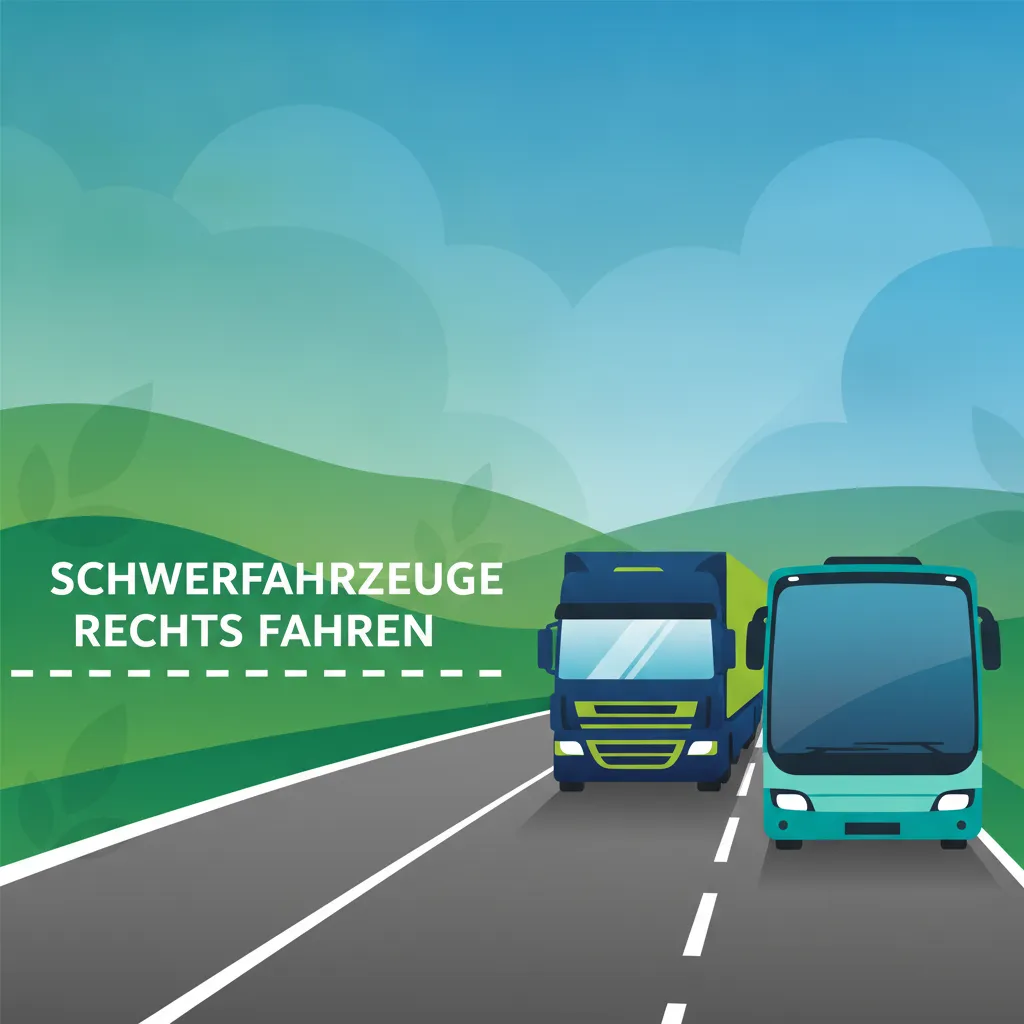
This lesson explains the specific regulations for operating heavy vehicles on Autobahnen, including speed limits, lane discipline, and overtaking rules. It discusses the use of dedicated truck lanes and the importance of maintaining appropriate following distances. The content also covers procedures for merging and exiting high-speed roads safely.

This lesson covers the regulations and safe techniques for overtaking other vehicles in urban environments. It emphasizes the importance of thorough observation, including mirror and blind spot checks, before committing to the maneuver. Learners will understand how to choose a safe gap, manage their speed differential, and maintain strict lane discipline throughout the overtaking process.

This lesson provides instruction on the rules and best practices for operating a large passenger vehicle on the Autobahn. It covers the principles of strict lane discipline, regulations for minimum speed, and correct procedures for overtaking and merging. The importance of maintaining significantly increased following distances at high speeds and planning for exits well in advance is a key focus.
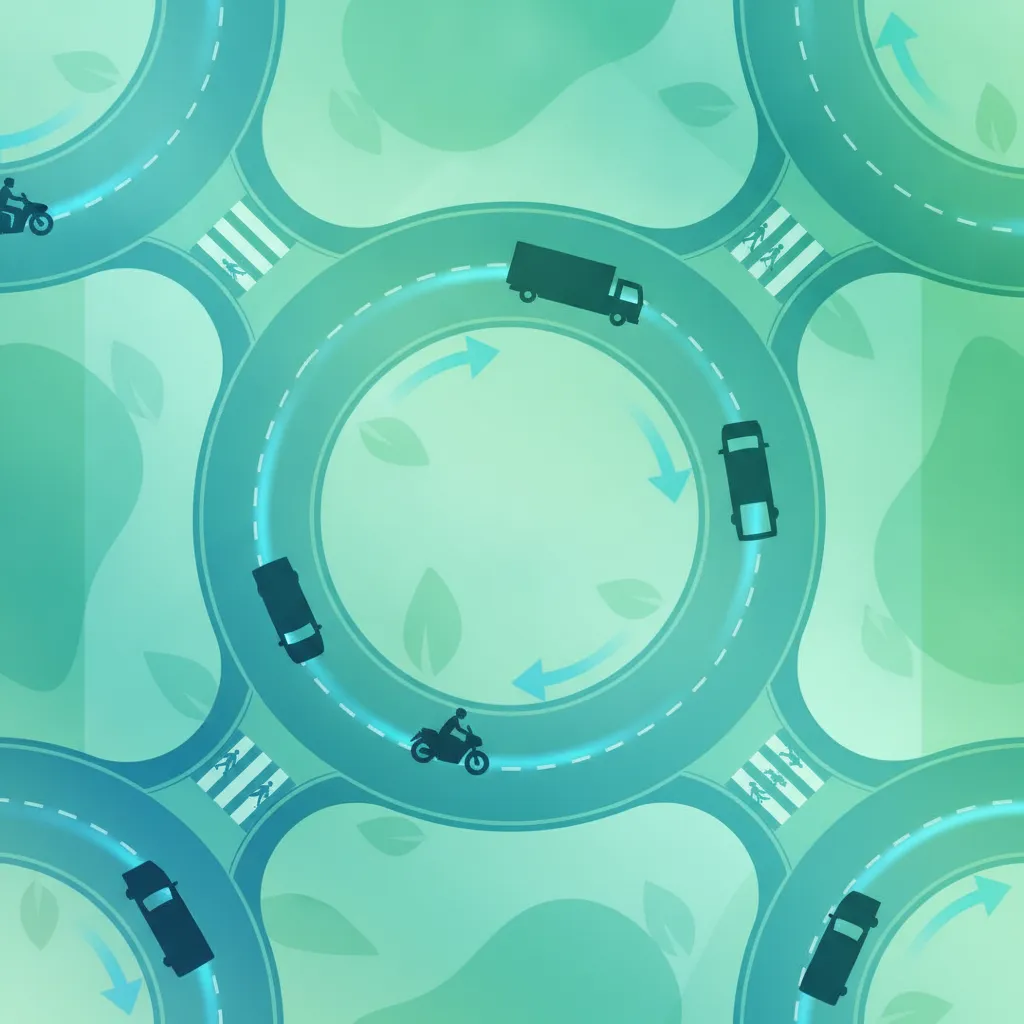
This lesson focuses on the specific techniques for safely navigating roundabouts, a common feature in urban traffic. Learners are taught the correct lane selection for their intended exit, the importance of proper signaling upon entry and exit, and maintaining an appropriate speed. The content highlights the need to yield to circulating traffic and to be aware of other vehicles changing lanes within the roundabout.

This lesson details the safe approach and navigation of various intersection types, including those controlled by traffic lights, stop signs, and give-way signs. Emphasis is placed on comprehensive observation of traffic flow, establishing eye contact with other road users, and ensuring clear visibility before proceeding. The lesson also covers correct lane positioning for turning and the importance of anticipating pedestrian movements.

This lesson provides a systematic approach to safely negotiating blind corners where visibility is limited. It teaches riders to control their entry speed, adopt a defensive lane position, and use visual scanning techniques to assess the road ahead. The content emphasizes adjusting lean angle and being prepared for unexpected hazards that may be hidden around the bend.
This lesson highlights the specific risks associated with motorcyclists, who are less visible and more vulnerable than car drivers. It teaches you to actively look for motorcycles, especially at intersections and during lane changes, as their smaller profile can be easily missed. You will learn about their potential for rapid acceleration and instability, emphasizing the need for extra following distance.
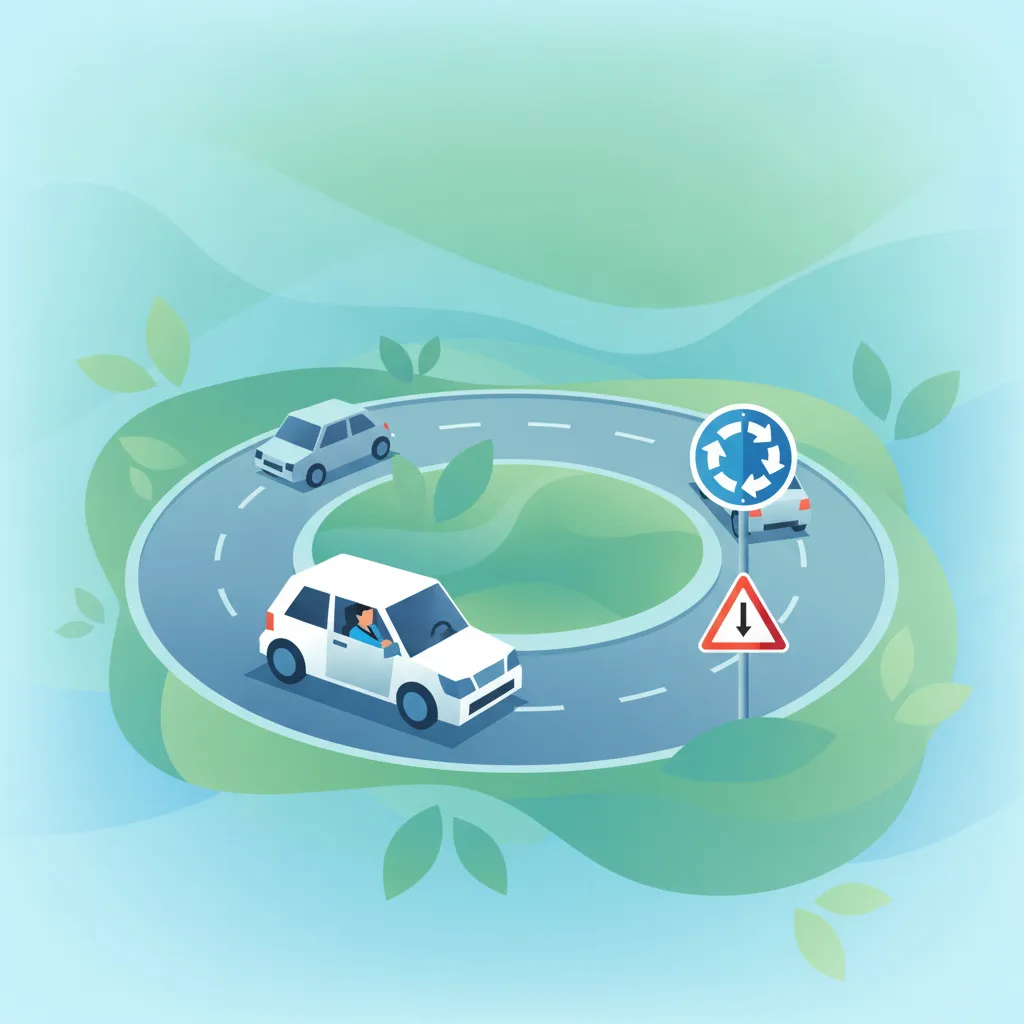
This lesson provides clear instructions on how to navigate roundabouts in Germany. It explains the crucial rule of yielding to traffic already inside the circle, proper lane choice for your intended exit, and the correct use of signals. Safe interaction with cyclists and pedestrians at roundabout exits is also covered.
Learn the critical techniques for safely entering motorways and performing lane changes in various traffic conditions. This lesson focuses on observation, speed management, and executing these maneuvers confidently, crucial for motorcycle riders in Germany.

This lesson focuses on the critical maneuver of changing lanes ('Fahrstreifenwechsel'), a common cause of accidents if done incorrectly. It teaches a systematic, safe procedure based on thorough observation, clear signaling, and a final blind spot check. You will learn how to assess traffic speed and identify a safe gap before smoothly moving into the adjacent lane.
This lesson focuses on the importance of strategic road positioning for enhancing safety and visibility. Learners explore different lane positions and understand when to use them to see, be seen, and create a safety buffer. The content emphasizes maintaining a long visual focus down the road to anticipate hazards and avoid target fixation, particularly when cornering.
This lesson covers the regulations and safe techniques for overtaking other vehicles in urban environments. It emphasizes the importance of thorough observation, including mirror and blind spot checks, before committing to the maneuver. Learners will understand how to choose a safe gap, manage their speed differential, and maintain strict lane discipline throughout the overtaking process.
This lesson details the safe approach and navigation of various intersection types, including those controlled by traffic lights, stop signs, and give-way signs. Emphasis is placed on comprehensive observation of traffic flow, establishing eye contact with other road users, and ensuring clear visibility before proceeding. The lesson also covers correct lane positioning for turning and the importance of anticipating pedestrian movements.
This lesson focuses on the specific techniques for safely navigating roundabouts, a common feature in urban traffic. Learners are taught the correct lane selection for their intended exit, the importance of proper signaling upon entry and exit, and maintaining an appropriate speed. The content highlights the need to yield to circulating traffic and to be aware of other vehicles changing lanes within the roundabout.

This lesson addresses the challenges of operating a small AM vehicle in dense, mixed traffic. It provides strategies for increasing visibility to other drivers, positioning oneself defensively, and safely sharing lanes with cyclists. The content emphasizes awareness of larger vehicles' blind spots and maintaining a safe space cushion.
This lesson provides a systematic approach to safely negotiating blind corners where visibility is limited. It teaches riders to control their entry speed, adopt a defensive lane position, and use visual scanning techniques to assess the road ahead. The content emphasizes adjusting lean angle and being prepared for unexpected hazards that may be hidden around the bend.
This lesson highlights the specific risks associated with motorcyclists, who are less visible and more vulnerable than car drivers. It teaches you to actively look for motorcycles, especially at intersections and during lane changes, as their smaller profile can be easily missed. You will learn about their potential for rapid acceleration and instability, emphasizing the need for extra following distance.

This lesson teaches riders how to interact safely and predictably with pedestrians, cyclists, and public transport vehicles. It highlights the importance of yielding at designated crossings, maintaining a safe passing distance, and anticipating the movements of buses and trams. The content emphasizes using eye contact and clear signaling to foster safe and respectful interactions with all road users.

This lesson teaches the essential observation techniques required for safe riding, focusing on the systematic use of mirrors and shoulder checks to manage blind spots. It emphasizes developing active scanning habits to maintain constant situational awareness of the surrounding traffic environment. Learners will understand how effective head movement and use of peripheral vision are critical for detecting potential hazards early.
Find clear answers to common questions learners have about Motorway Entry, Lane Discipline, and Safe Riding at High Speeds. Learn how the lesson is structured, which driving theory objectives it supports, and how it fits into the overall learning path of units and curriculum progression in Germany. These explanations help you understand key concepts, lesson flow, and exam focused study goals.
You must always drive in the right-most lane unless you are overtaking. Overtaking is only permitted on the left, and you must return to the right lane as soon as it is safe to do so.
Use the acceleration lane to match the speed of the traffic already on the motorway. Always observe surrounding traffic early and merge only when there is a safe gap, ensuring you do not force other drivers to brake.
Yes, the two-second rule is the absolute minimum distance, but at high motorway speeds, a larger gap is often necessary to account for the longer braking distance and the physical reaction time required.
No, motorcycles follow the same lane discipline rules as cars. You should keep right, and use the left lanes strictly for overtaking slower-moving traffic.
Begin your targeted revision now. Use our practice search to quickly find specific German driving theory questions. Filter by StVO rules, road signs, or hazard perception to create your focused study plan. Master challenging areas and prepare confidently for your theoretical driving test.