
This lesson focuses on the critical pre-ride inspection skills required for operating mopeds and scooters under the AM licence. You will learn how to maintain your vehicle according to German safety standards, ensuring that tyres, brakes, and lights are always in working order for your protection and legal compliance.
Lesson content overview
Operating a moped, scooter, or light quadricycle under the AM licence in Germany comes with significant responsibilities, not least among them ensuring your vehicle is always in a roadworthy condition. Regular maintenance and pre-ride inspections are not merely suggestions; they are fundamental duties that ensure your safety, the safety of other road users, and compliance with German traffic law. This lesson provides a systematic guide to conducting vital checks on your vehicle's tyres, brakes, and lighting system. By identifying potential issues early, you can prevent accidents, avoid legal penalties, and enjoy reliable rides.
Before every journey, a quick but thorough inspection of your AM licence vehicle is crucial. This proactive approach to vehicle care helps identify potential mechanical failures before they turn into dangerous situations on the road. From maintaining optimal grip and stability to ensuring you are seen by others, every check contributes directly to road safety. Neglecting these checks can lead to unpredictable vehicle behaviour, increased accident risk, and severe legal consequences under the Straßenverkehrs-Ordnung (StVO) and Straßenverkehrs-Zulassungs-Ordnung (StVZO).
Preventive Inspection Principle: Make it a habit to perform a systematic check of your vehicle before each ride. This helps in identifying potential failures early, ensuring your vehicle is safe and legal for road use, and ultimately reduces the probability of accidents, fines, and breakdowns.
Your vehicle's tyres are the only points of contact with the road. Their condition directly impacts grip, braking performance, handling, and fuel efficiency. A comprehensive check of your tyres involves examining their pressure, tread depth, and overall wear patterns.
Tyre pressure refers to the amount of air inside the tyre, typically measured in kilopascals (kPa) or bar. Maintaining the correct tyre pressure, as specified by the manufacturer, is paramount for safe riding.
The internal pressure of a tyre, measured in units like kilopascals (kPa) or bars, which ensures the tyre maintains its proper shape and contact patch with the road surface.
Locate the recommended tyre pressure values for your specific moped, scooter, or light quadricycle.
Use a reliable tyre pressure gauge. Check the pressure when the tyres are cold (before riding or after a long stop).
Remove the valve cap, press the gauge firmly onto the valve stem, and read the pressure.
If the pressure is too low, add air using an air compressor. If it's too high, gently press the valve pin to release air until the correct pressure is reached.
Replace the valve cap securely.
Common Misunderstanding: Never assume that a tyre looks "firm" enough. Visual inspection alone is insufficient. Always use a pressure gauge. Tyre pressure increases as tyres heat up during a ride, so always check them when cold for an accurate reading.
The tread is the patterned part of the tyre that makes contact with the road. Its grooves are designed to displace water, provide grip on various surfaces, and maintain traction.
The depth of the grooves on a tyre’s surface, measured in millimetres (mm), essential for water displacement, grip, and preventing aquaplaning.
Visually inspect the tyre for wear indicator bars, which are small raised bumps within the main grooves. When the tyre tread wears down to the level of these bars, it's at or near the legal limit.
Use a tread depth gauge (a small, inexpensive tool) for a precise measurement.
Insert the gauge into several main grooves across the width and circumference of the tyre. Take multiple readings to ensure you cover any uneven wear.
If any reading is below 1.6 mm, the tyre must be replaced immediately.
Beyond just checking pressure and tread depth, observing the overall wear pattern of your tyres can reveal underlying mechanical issues.
Addressing abnormal wear patterns promptly is essential not just for tyre longevity, but for maintaining safe vehicle control.
The braking system is your primary safety mechanism, allowing you to control your speed and stop effectively. Functional brakes are non-negotiable for safe riding. A basic pre-ride brake check is mandatory.
Before setting off, always test both your front and rear brakes. For most AM licence vehicles, you will have a hand lever for the front brake and either another hand lever or a foot pedal for the rear brake.
Front Brake Check: While stationary, firmly squeeze the front brake lever. The lever should feel firm and not spongy, and the front wheel should lock or offer significant resistance, preventing the vehicle from moving forward.
Rear Brake Check: Similarly, apply the rear brake (lever or pedal). The rear wheel should lock or offer strong resistance. Ensure the lever/pedal provides immediate and effective braking force.
Brake Light Check: With the ignition on, apply each brake individually (front and rear). Check in your mirrors or against a wall that the brake light at the rear illuminates brightly when either brake is applied. This confirms you are signalling your braking intentions to following traffic.
Parking Brake (if applicable): If your vehicle has a parking brake (common on light quadricycles or some scooters), ensure it engages and holds the vehicle securely.
Principle of Functional Redundancy: Your vehicle's essential safety systems, like brakes, often have primary and secondary functions. While you have front and rear brakes, both must be in perfect working order, as relying on just one drastically reduces stopping efficiency and safety.
While you don't need to be a mechanic, knowing the basic components can help you understand potential issues:
Properly functioning lights are critical for your visibility to other road users and for communicating your intentions, especially in low-light conditions or bad weather. A thorough light check is an integral part of your pre-ride routine.
Your headlights serve two main purposes: illuminating the road ahead and making you visible to oncoming traffic.
The low-intensity headlight, also known as "low beam," used for normal night driving and when other vehicles are present, to avoid dazzling them.
The high-intensity headlight, also known as "main beam," used in unlit areas with no oncoming or preceding traffic to provide maximum illumination.
The lights at the rear of your vehicle are just as important as those at the front.
Communicating your intentions clearly is vital for avoiding collisions.
Turn the ignition on.
Activate the dipped beam and check that the front headlight and rear taillight are working.
Switch to high beam and verify it illuminates. Remember to switch back to dipped beam.
Test each turn signal individually (left front, left rear, right front, right rear).
Apply the front brake and check the brake light. Repeat for the rear brake.
If your vehicle has hazard warning lights, activate them and confirm all indicators flash simultaneously.
Ensure all lenses are clean and free from cracks or damage.
Visibility Principle: Functional lights significantly increase your visibility to other road users, both day and night, drastically decreasing the risk of collisions. Regularly cleaning light lenses is also important to ensure maximum brightness.
In Germany, the legal requirements for vehicle maintenance are primarily outlined in the Straßenverkehrs-Zulassungs-Ordnung (StVZO) and the Straßenverkehrs-Ordnung (StVO). These regulations mandate that all vehicles, including mopeds and scooters, must be kept in a safe and roadworthy condition at all times.
Non-compliance with these regulations can lead to significant penalties, including fines, points on your driving licence, and even the vehicle being impounded until defects are rectified. In the event of an accident caused by a vehicle defect, you could also face criminal charges or civil liability.
Understanding common pitfalls can help you avoid them. Many violations stem from neglecting the simple pre-ride checks discussed:
Consequence: Ignoring these checks and riding with a defective vehicle not only endangers your life and the lives of others but also puts you at risk of severe legal penalties, including fines, points on your licence, and even the temporary or permanent revocation of your AM licence.
The importance of vehicle maintenance checks is amplified by various external factors:
Understanding these conditional variations reinforces why consistent maintenance is a cornerstone of responsible riding within the German driving theory course for AM licence holders.
In summary, regular maintenance checks are about more than just avoiding fines; they are about embracing a proactive safety mindset. They ensure:
By consistently performing these simple yet crucial pre-ride inspections, you become a more responsible, safer, and more confident rider on German roads.
This lesson teaches AM licence riders how to perform essential pre-ride maintenance checks on their mopeds and scooters, covering tyre pressure (checked cold with a gauge), tread depth (1.6 mm legal minimum in Germany), brake functionality (both front and rear tested daily with brake light verification), and lighting systems (headlights, taillights, indicators, and hazard lights). Regular inspection prevents mechanical failures, ensures legal compliance under StVZO and StVO, and significantly reduces accident risk by keeping the vehicle roadworthy and predictable in traffic.
A short set of high-value points that capture the most important learning from this lesson.
Tyres are the only contact points between your vehicle and the road, making their pressure, tread depth, and condition fundamental to grip, braking, and handling safety.
The legal minimum tread depth in Germany is 1.6 mm, but grip deteriorates significantly below 3 mm, especially on wet roads where aquaplaning becomes a risk.
Both front and rear brakes must be tested before every ride; any sponginess, excessive travel, or unusual noises require professional inspection before riding.
All vehicle lights must be fully operational, clean, and correctly adjusted, as they are critical for visibility and communicating your intentions to other road users.
Operating a vehicle with defects violates StVZO and StVO, exposing riders to fines, licence points, and potential criminal liability if an accident results.
Explore all units and lessons included in this driving theory course.
Always check tyre pressure with a gauge when tyres are cold; visual inspection alone is insufficient because pressure increases as tyres heat during riding.
Tyre wear patterns reveal problems: centre wear means over-inflation, shoulder wear means under-inflation, and one-sided wear indicates alignment or suspension issues.
A rapidly flashing turn signal often indicates a blown bulb, which must be replaced immediately for safe lane changes and turns.
Hazard warning lights (Warnblinkanlage) are for stationary vehicles only; using them while moving confuses other road users about your intentions.
Dipped beam (Abblendlicht) must be used from half an hour after sunset until half an hour before sunrise and whenever visibility is significantly reduced.
Assuming tyres are adequately inflated simply because they look firm, without using a pressure gauge for an accurate reading.
Riding with tread depth at or below the 1.6 mm legal minimum, which drastically reduces wet-road grip and increases aquaplaning risk.
Testing only one brake (typically the front) and assuming the rear brake is functional, when both must engage properly for safe stopping.
Neglecting to verify that the brake light activates when the rear brake is applied, leaving following traffic unaware of your deceleration.
Using high beam when other vehicles are present, dazzling oncoming drivers and creating a hazard instead of improving visibility.
Lesson content overview
A short set of high-value points that capture the most important learning from this lesson.
Tyres are the only contact points between your vehicle and the road, making their pressure, tread depth, and condition fundamental to grip, braking, and handling safety.
The legal minimum tread depth in Germany is 1.6 mm, but grip deteriorates significantly below 3 mm, especially on wet roads where aquaplaning becomes a risk.
Both front and rear brakes must be tested before every ride; any sponginess, excessive travel, or unusual noises require professional inspection before riding.
All vehicle lights must be fully operational, clean, and correctly adjusted, as they are critical for visibility and communicating your intentions to other road users.
Operating a vehicle with defects violates StVZO and StVO, exposing riders to fines, licence points, and potential criminal liability if an accident results.
Explore all units and lessons included in this driving theory course.
Always check tyre pressure with a gauge when tyres are cold; visual inspection alone is insufficient because pressure increases as tyres heat during riding.
Tyre wear patterns reveal problems: centre wear means over-inflation, shoulder wear means under-inflation, and one-sided wear indicates alignment or suspension issues.
A rapidly flashing turn signal often indicates a blown bulb, which must be replaced immediately for safe lane changes and turns.
Hazard warning lights (Warnblinkanlage) are for stationary vehicles only; using them while moving confuses other road users about your intentions.
Dipped beam (Abblendlicht) must be used from half an hour after sunset until half an hour before sunrise and whenever visibility is significantly reduced.
Assuming tyres are adequately inflated simply because they look firm, without using a pressure gauge for an accurate reading.
Riding with tread depth at or below the 1.6 mm legal minimum, which drastically reduces wet-road grip and increases aquaplaning risk.
Testing only one brake (typically the front) and assuming the rear brake is functional, when both must engage properly for safe stopping.
Neglecting to verify that the brake light activates when the rear brake is applied, leaving following traffic unaware of your deceleration.
Using high beam when other vehicles are present, dazzling oncoming drivers and creating a hazard instead of improving visibility.
Explore search topics learners often look for when studying Vehicle Maintenance, Tyre Condition, Brake Checks, and Lights. These topics reflect common questions about road rules, driving situations, safety guidance, and lesson level theory preparation for learners in Germany.
Browse additional driving theory lessons that cover connected traffic rules, road signs, and common driving situations related to this topic. Improve your understanding of how different rules interact across everyday traffic scenarios.
Understand the legal requirements and practical steps for ensuring your AM licence vehicle is roadworthy. Covers detailed explanations of checks for tyres, brakes, lights, and other critical safety components as per German traffic law.
This lesson outlines the driver's legal responsibility to ensure their vehicle is in a safe and roadworthy condition before every journey. It covers essential pre-drive checks, such as verifying lights, tyres, and fluid levels (oil, coolant, washer fluid). The lesson also explains the mandatory equipment that must be carried in the vehicle, including a warning triangle, high-visibility vest, and first-aid kit.

This lesson outlines the legal requirements for vehicle roadworthiness, including mandatory periodic inspections (TÜV) and the issuance of safety certificates. It explains the standards for emissions, safety devices, and the proper documentation of defects. The content underscores the importance of complying with inspection intervals and addressing repair obligations promptly.

This lesson provides a systematic approach to pre-drive inspection, outlining a comprehensive checklist to verify fluid levels, brake functionality, and tyre condition. It emphasizes the importance of checking lighting, mirror adjustments, and load securement before every journey. The content highlights safety protocols to ensure the vehicle is roadworthy.

This lesson teaches the systematic pre-trip inspection routine that every professional driver must perform. It covers a comprehensive checklist of visual and functional checks, including lights, tires, mirrors, and wipers. The lesson also emphasizes verifying the presence and condition of mandatory safety equipment, such as emergency exits, the fire extinguisher, and the first-aid kit, to ensure the vehicle is safe to operate.

This lesson explains the legal framework for ensuring a passenger vehicle's roadworthiness, focusing on periodic technical inspections (TÜV) and scheduled maintenance. It identifies critical wear components, such as brakes and tires, that require regular monitoring and replacement. The importance of adhering to service intervals and maintaining accurate maintenance logs for regulatory compliance is also thoroughly covered.

This lesson provides a detailed overview of the legal framework governing the AM licence in Germany. It explains the classification of vehicles like mopeds and scooters based on engine displacement, power output, and weight. Learners will understand the official age requirements, licensing procedures, and fundamental StVO regulations.
This lesson details the importance of personal protective equipment for rider safety. It covers the legal standards for helmets in Germany, the benefits of wearing abrasion-resistant jackets and gloves, and the value of high-visibility clothing. It also explains the proper use of vehicle lighting systems to ensure visibility to others.
This lesson emphasizes the crucial role tyres play in vehicle safety, as they are the only point of contact with the road. It covers how to check and maintain correct tyre pressure and explains the legal minimum requirement for tread depth. The lesson also details Germany's situational winter tyre requirement ('Winterreifenpflicht') and how to identify appropriate tyres.
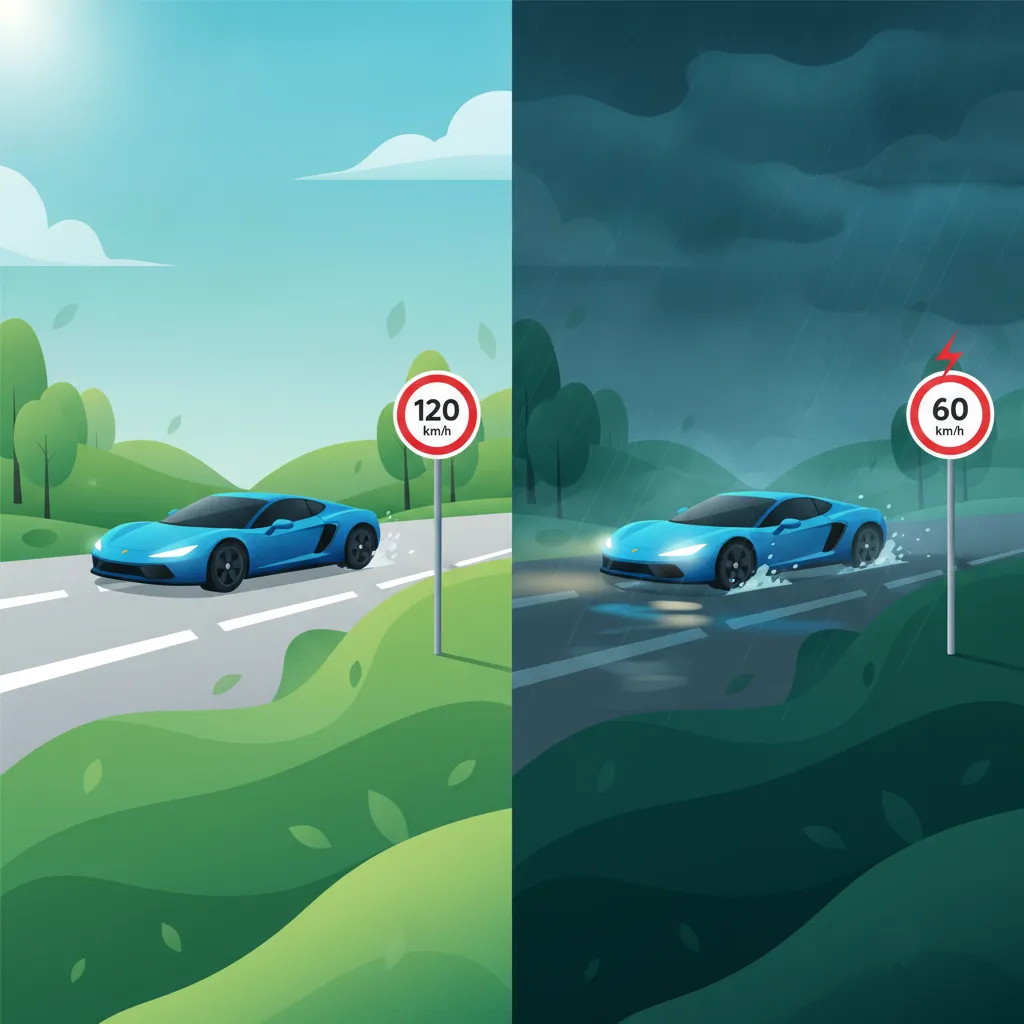
This lesson details the various speed limits applicable in Germany, from urban zones to rural roads. It emphasizes the critical skill of adapting speed to prevailing conditions such as rain, fog, or poor road surfaces. The content explains how external factors significantly impact vehicle handling and stopping distances.

This lesson covers the lighting and reflector requirements for heavy vehicles, including headlamps, side markers, and brake lights. It explains the function of these systems and the necessity of underrun protection to safeguard other road users. The content also discusses regulations governing lighting systems and their importance for safety in all conditions.
Explore the essential responsibilities of AM licence riders regarding vehicle safety and legal compliance in Germany. This includes understanding maintenance obligations, the impact of vehicle condition on safety, and potential legal consequences of non-compliance.
This lesson details the legal obligations every AM licence holder must follow. It emphasizes compliance with the Straßenverkehrs-Ordnung (StVO), including mandatory helmet use and maintaining vehicle roadworthiness. The content covers insurance requirements, accident reporting procedures, and the legal consequences of non-compliance.

This lesson focuses on the legal duties every motorcycle rider must adhere to under German traffic law. It covers the concept of 'duty of care' towards other road users, mandatory insurance requirements, and the importance of maintaining a roadworthy vehicle. The lesson also details the rules of the probationary period and the potential legal and financial consequences of traffic violations.
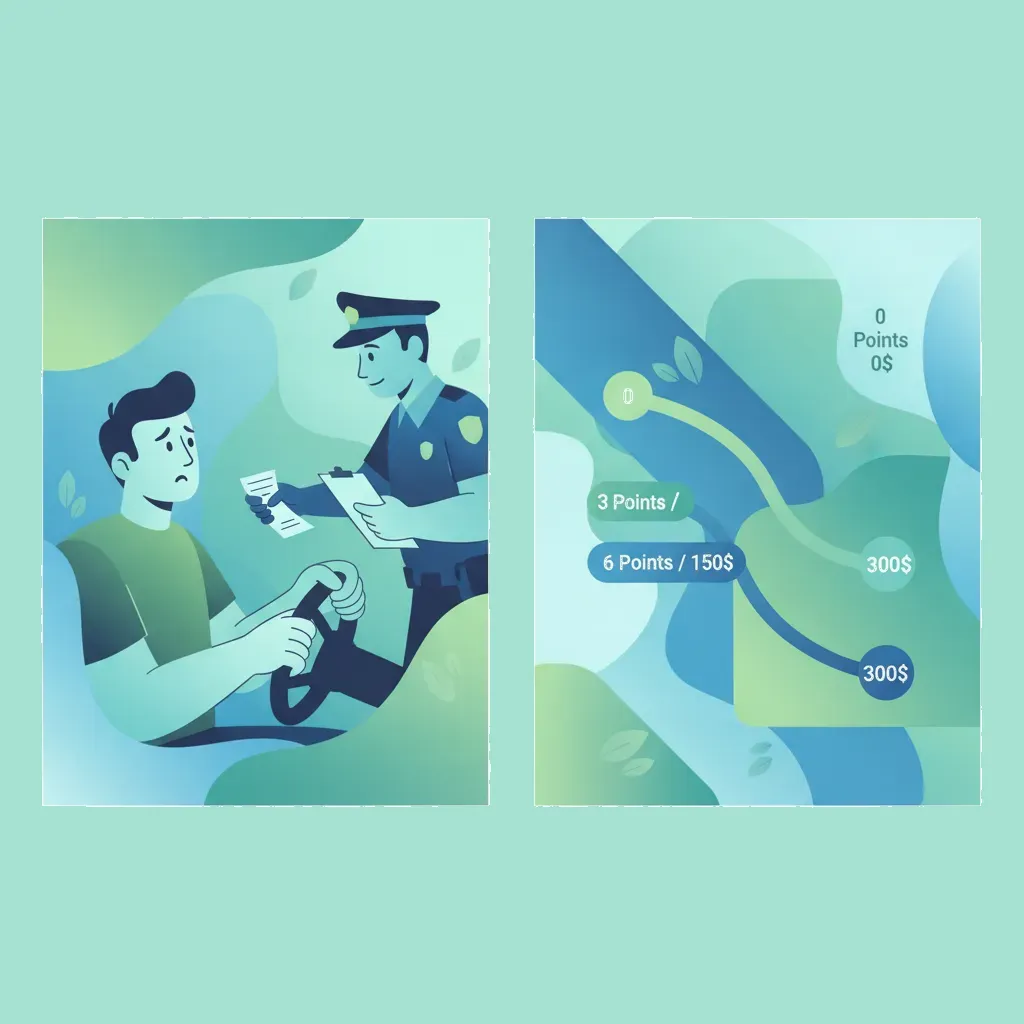
This lesson explains the German catalogue of fines (Bußgeldkatalog) and the points system for traffic violations. It details which offenses lead to fines, points in Flensburg, or even licence revocation. Understanding these consequences reinforces the importance of adhering to all traffic laws.
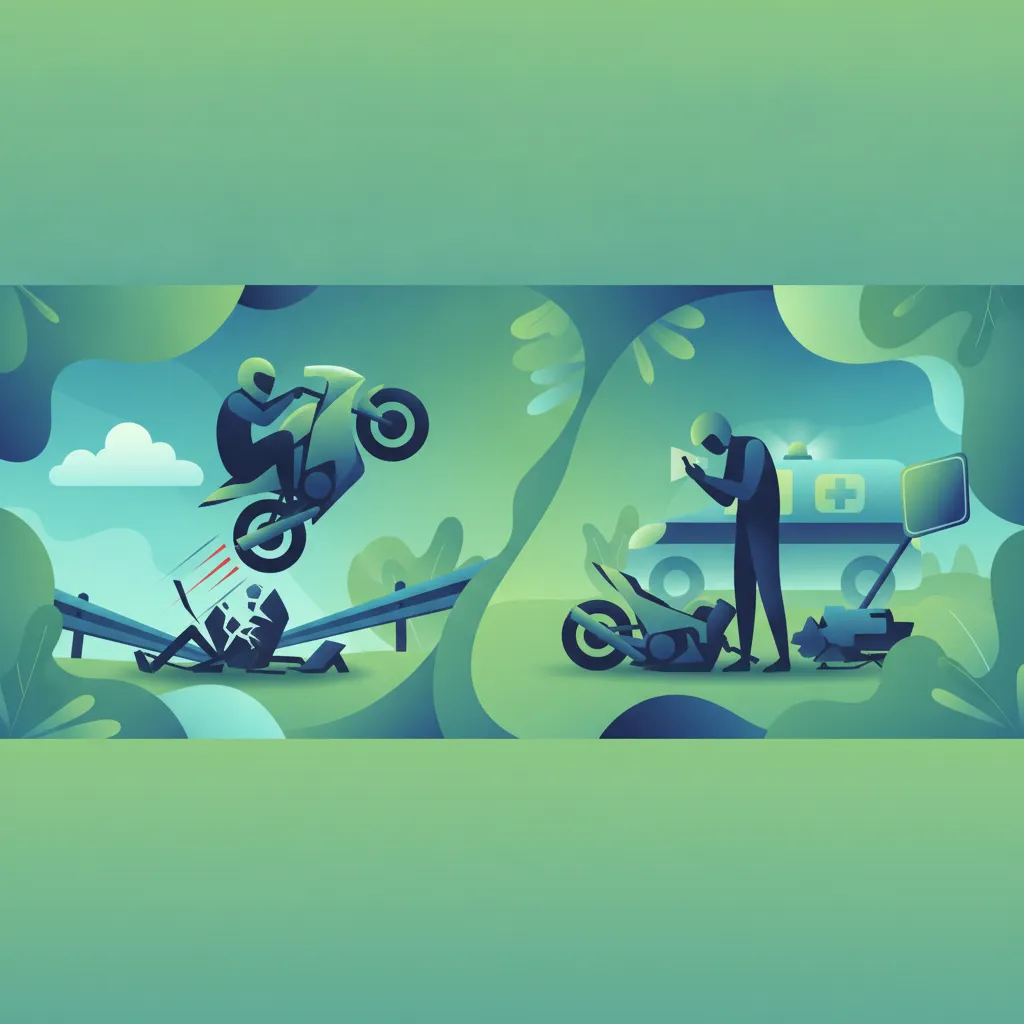
This lesson informs riders about the legal ramifications of dangerous riding and traffic violations under German law. It outlines potential penalties, including fines, points, and license suspension, as well as the impact on insurance. The content also provides a step-by-step guide on the correct procedures for reporting an accident to the police and documenting the scene for legal and insurance purposes.
This lesson provides a detailed overview of the legal framework governing the AM licence in Germany. It explains the classification of vehicles like mopeds and scooters based on engine displacement, power output, and weight. Learners will understand the official age requirements, licensing procedures, and fundamental StVO regulations.

This lesson focuses on the legal responsibilities and duties of a vehicle operator according to German traffic law, primarily the StVO. It covers the obligation to drive safely, the rules of conduct at an accident scene, and the legal consequences of traffic violations. Understanding these principles is crucial for maintaining road safety and avoiding penalties such as fines, points, or driving bans.

This lesson focuses on identifying and managing internal and external risk factors. It discusses the dangers of distractions like mobile phones, the influence of peer pressure in group riding scenarios, and the impairing effects of fatigue, alcohol, and drugs. The goal is to foster a mature and responsible attitude towards riding.
This lesson details the various speed limits applicable in Germany, from urban zones to rural roads. It emphasizes the critical skill of adapting speed to prevailing conditions such as rain, fog, or poor road surfaces. The content explains how external factors significantly impact vehicle handling and stopping distances.

This lesson addresses the critical skill of safely interacting with other road users, particularly vulnerable ones like pedestrians and cyclists. It covers rules for yielding at crosswalks, maintaining a safe passing distance, and being aware of the limited visibility of a moped to car drivers. The focus is on fostering a defensive and cooperative mindset in mixed traffic.
This lesson provides clear, actionable steps for managing a breakdown or being involved in an accident. It covers how to safely move the vehicle off the road, use warning signals, and secure the area. The procedure for contacting roadside assistance and the authorities is also explained in detail.
Find clear answers to common questions learners have about Vehicle Maintenance, Tyre Condition, Brake Checks, and Lights. Learn how the lesson is structured, which driving theory objectives it supports, and how it fits into the overall learning path of units and curriculum progression in Germany. These explanations help you understand key concepts, lesson flow, and exam focused study goals.
Although the legal minimum is 1.6 mm, it is highly recommended to replace your tyres well before they reach this limit to ensure adequate grip, especially on wet road surfaces.
Visibility is your primary defense on the road. If your indicators, brake lights, or headlamps fail, other road users will not be able to predict your intentions, which significantly increases the risk of an accident.
You should check your tyre pressure at least once every two weeks or before every long journey. Correct pressure is vital for vehicle balance, steering control, and fuel efficiency.
Check that the brake levers have firm resistance and do not touch the handlebars when fully pulled. Additionally, listen for grinding sounds and ensure there is no visible leakage from hydraulic systems.
Begin your targeted revision now. Use our practice search to quickly find specific German driving theory questions. Filter by StVO rules, road signs, or hazard perception to create your focused study plan. Master challenging areas and prepare confidently for your theoretical driving test.