
This lesson explores the fundamental construction of motorcycles, providing essential knowledge for your A, A1, or A2 licence. You will learn how the frame, engine, and transmission work together to ensure stability and power, forming the technical foundation required for both the theory exam and safe road use.
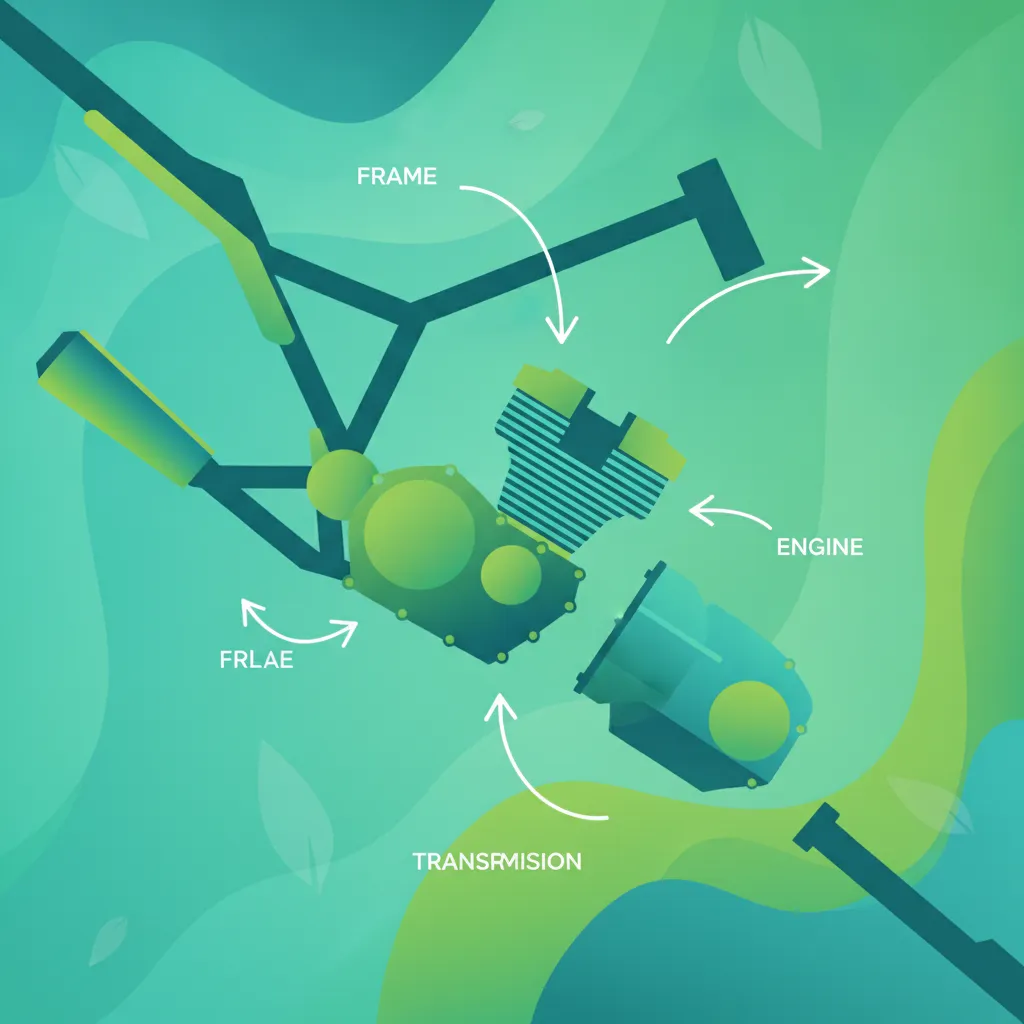
Lesson content overview
The motorcycle is a complex machine, and a deep understanding of its fundamental components is essential for every rider, especially when preparing for the German Motorcycle Licence Theory Course (Classes A, A1, A2). This lesson explores the frame, engine, and transmission system – the core anatomy that dictates a motorcycle's handling, stability, and performance. By grasping how these elements work together, you will be better equipped for safe operation, informed maintenance decisions, and precise control on German roads.
The frame is the structural backbone of any motorcycle. It is the central component to which all other parts – the engine, wheels, suspension, fuel tank, and rider's seat – are attached. Its primary purpose is to provide structural integrity, bear all operational loads, and crucially, determine the motorcycle's handling dynamics, stability, and the rider's ergonomic posture. A well-designed frame is fundamental to how a motorcycle feels and performs.
At its simplest, the frame is a rigid structure, typically made from steel or aluminium alloys, that connects the front and rear wheels, housing the engine and transmission in between. It must withstand significant forces, including those from acceleration, braking, cornering, and impacts from road irregularities. The materials and construction methods chosen for a frame directly influence its strength, weight, and stiffness, all of which contribute to the motorcycle's overall character.
Motorcycle manufacturers employ various frame designs, each offering distinct advantages in terms of strength, weight, cost, and most importantly, handling characteristics.
The choice of frame significantly impacts how a motorcycle handles. A stiffer frame generally leads to more precise steering and better feedback to the rider, which is crucial for spirited riding and high speeds. Conversely, a frame that is too rigid can transmit excessive road vibrations, leading to rider fatigue.
The frame also dictates the motorcycle's ground clearance, which is important for cornering lean angles and navigating uneven terrain. Furthermore, the frame determines the position of the rider, influencing comfort, control, and visibility. For instance, the stretched-out ergonomics of a cruiser are directly a result of its frame geometry, while a sport bike’s frame encourages a forward, aggressive riding posture. Understanding these differences helps riders choose a motorcycle that aligns with their intended use and riding style.
Beyond the type of frame, its specific geometry plays a critical role in defining a motorcycle's steering and stability characteristics. Three key measurements – rake, trail, and wheelbase – determine how a bike responds to steering inputs, how stable it feels in a straight line, and its agility in corners.
The angle, measured in degrees, of the front fork relative to a vertical line perpendicular to the ground.
A larger rake angle (more reclined forks) generally increases straight-line stability, making the motorcycle feel more planted at higher speeds. This is why cruiser motorcycles, designed for comfortable long-distance travel, often feature a larger rake (e.g., 30-40 degrees). However, a larger rake can also make the steering feel heavier and slower to respond, requiring more effort to initiate turns. Conversely, a smaller rake angle (more upright forks), typically found on sport bikes (e.g., 23-26 degrees), results in quicker, more responsive steering and greater agility, which is ideal for rapidly changing direction and aggressive cornering.
The horizontal distance on the ground between the point where the steering axis (an imaginary line through the headstock) intersects the ground and the centre of the front tyre's contact patch.
Trail works in conjunction with rake to provide self-centring steering. A larger trail measurement contributes significantly to straight-line stability, similar to the caster wheels on a shopping trolley or office chair. Motorcycles with greater trail tend to track straight with less rider input, making them feel very stable on highways. However, excessive trail can make a motorcycle resistant to turning and can cause it to "fall" into corners once initiated, making precise steering more challenging. Sport bikes typically have less trail to maximise their agility.
The horizontal distance measured between the centre of the front wheel axle and the centre of the rear wheel axle.
The wheelbase directly impacts a motorcycle's stability and maneuverability. A longer wheelbase generally provides greater stability, particularly at high speeds and over uneven surfaces. This is because a longer distance between the axles creates a larger footprint, making the motorcycle less susceptible to sudden shifts in weight or external forces. Conversely, a shorter wheelbase enhances agility and quick steering response, making the motorcycle easier to flick into corners and navigate tight spaces. Scooters and smaller displacement urban bikes often feature shorter wheelbases for improved city maneuverability.
Manufacturers carefully balance these geometric factors to achieve the desired handling characteristics for a specific motorcycle type. For example, a cruiser motorcycle prioritises straight-line stability for comfortable highway cruising, thus featuring a larger rake and trail, and often a longer wheelbase. In contrast, a sport bike is engineered for maximum agility and rapid direction changes, leading to a steeper rake, shorter trail, and a more compact wheelbase. Understanding these fundamental differences helps riders appreciate why different motorcycles handle the way they do and informs their choice of vehicle for specific riding purposes.
The engine is the heart of the motorcycle, responsible for converting fuel into the mechanical energy that propels the vehicle. Its design significantly influences the motorcycle's power delivery, sound, weight, and environmental impact. For riders in Germany, understanding engine types is also crucial due to varying emissions regulations and their effect on vehicle registration and usage.
At its core, a motorcycle engine generates power through the combustion of a fuel-air mixture. This combustion pushes a piston, which turns a crankshaft, ultimately transferring rotational energy to the transmission and then to the rear wheel. The efficiency and characteristics of this process depend heavily on the engine's design.
An internal combustion engine design where the entire power cycle (intake, compression, power, exhaust) is completed in just two strokes of the piston (one up, one down) and one revolution of the crankshaft.
Two-stroke engines are known for their simplicity, lightweight design, and high power output relative to their displacement. They typically deliver power in a narrower, higher RPM range, often referred to as a "power band," which can make them feel very responsive but sometimes less tractable at lower speeds. Historically, two-stroke engines were common in smaller motorcycles, particularly off-road and racing bikes, due to their performance advantages and manufacturing simplicity. However, due to higher emissions of unburnt fuel and oil, modern environmental regulations, especially stringent ones in Germany and the EU, have largely phased out their use in new road-legal motorcycles, making them rarer today.
An internal combustion engine design where the power cycle is completed in four distinct strokes of the piston (intake, compression, power, exhaust) and two revolutions of the crankshaft.
The four-stroke engine is the most prevalent engine type in modern motorcycles. It offers a broader, more linear power delivery and a wider torque curve, making it more flexible and easier to ride across a range of speeds. Four-stroke engines are generally more fuel-efficient and produce significantly lower emissions than their two-stroke counterparts, allowing them to meet current environmental standards. They are available in various configurations, such as single-cylinder, parallel-twin, V-twin, inline-three, and inline-four, each offering a unique balance of power, torque, smoothness, and character. For instance, an inline-four engine is common in sport motorcycles for its high-revving power, while a V-twin often provides strong low-to-mid range torque, preferred by cruisers.
While rare, rotary engines (specifically Wankel engines) have occasionally been experimented with in motorcycles. They use a triangular rotor instead of traditional pistons to convert pressure into rotational motion. Rotary engines are known for their compact size, smoothness, and high power-to-weight ratio. However, their complex sealing requirements, higher fuel consumption, and challenges in meeting emissions standards have prevented widespread adoption in the motorcycle industry. They remain largely a historical curiosity in this context.
Understanding engine torque and its curve is critical for any motorcyclist. It's not just about raw horsepower; how that power is delivered across the engine's RPM (revolutions per minute) range dictates a motorcycle's real-world usability and performance, especially when navigating diverse German road conditions.
A graphical representation showing the engine's torque output at different engine speeds (RPM). It illustrates how much rotational force the engine can produce at any given moment.
Torque is essentially the "twisting force" or pulling power of the engine. A high torque value means strong acceleration and the ability to climb hills easily, even with a passenger or luggage. The torque curve visually depicts this relationship. A broad, flat torque curve indicates an engine that produces substantial pulling power across a wide range of RPMs, making the motorcycle tractable and forgiving. A peaky curve, on the other hand, means the engine delivers its maximum power within a narrow RPM band, requiring more frequent gear changes to stay in that "sweet spot."
The maximum amount of torque an engine can produce.
The engine speed (RPM) at which the peak torque is achieved.
Knowing where your motorcycle's engine produces its peak torque is vital. Operating the engine within its optimal torque band ensures efficient acceleration and power delivery. For instance, if your motorcycle's peak torque occurs at 6,000 RPM, you will experience the strongest acceleration when the engine is revving around that speed. Riding significantly below this RPM can lead to "lugging" the engine – a state where the engine struggles to accelerate, potentially causing strain and inefficiency. Conversely, exceeding the redline or constantly riding far above the peak torque RPM might be inefficient or even damaging, even if it produces more horsepower (which is a function of torque and RPM).
The torque curve is your guide to appropriate gear selection. When you need strong acceleration, such as overtaking or climbing a steep incline, you should select a gear that places the engine within its optimal torque range. For cruising on a flat highway, a higher gear will keep the engine RPM lower, improving fuel efficiency and reducing engine wear, even if it's below peak torque.
Always listen to your engine and feel its response. If the engine sounds strained or the acceleration is sluggish, you are likely in too high a gear for the given speed and load. Downshifting will bring the RPMs into the optimal torque band, improving performance and efficiency.
The transmission system is the crucial link between the engine and the rear wheel. While the engine generates power, the transmission is responsible for delivering that power effectively to the drive wheel, allowing the rider to control speed, acceleration, and maintain optimal engine performance across varying riding conditions.
The primary purpose of a motorcycle transmission is to convert the engine's rotational speed and torque into the appropriate speed and torque for the rear wheel. An engine has a relatively narrow optimal operating range, but a motorcycle needs to operate at a wide range of road speeds and power demands – from standstill to high-speed cruising, and climbing steep hills to accelerating rapidly. The transmission, through its various gear ratios, allows the engine to remain within its efficient power band regardless of the road speed or load.
Most modern motorcycles feature a manual transmission, giving the rider full control over gear selection. This system typically consists of a gearbox with multiple gears (usually 5 or 6 speeds), a clutch, and a shift lever. The rider uses the clutch lever (located on the left handlebar) to temporarily disconnect the engine from the transmission, allowing for smooth gear changes using the foot-operated shift lever. Learning to coordinate the clutch, throttle, and shift lever smoothly is a fundamental skill for operating a manual transmission motorcycle.
Semi-automatic transmissions simplify the gear-changing process by automating some aspects, primarily clutch operation. While the rider still manually selects gears using a shift lever (or buttons), there is no clutch lever to operate; the clutch engagement/disengagement is handled electronically or mechanically by the system. This can reduce rider fatigue, especially in heavy traffic, and can be found on some touring motorcycles or models designed for ease of use.
A type of automatic transmission that can smoothly change through an infinite range of effective gear ratios, rather than fixed gear steps.
Continuously Variable Transmissions (CVTs) provide a completely clutch-free and gear-free riding experience. Instead of fixed gears, a CVT uses a system of pulleys and a belt or chain to continuously adjust the gear ratio, maintaining the engine at its optimal RPM for the given speed and throttle input. This results in incredibly smooth acceleration with no discernible shifts. CVTs are most commonly found in scooters and some commuter motorcycles, prized for their simplicity and ease of use in urban environments.
Gear ratios are fundamental to how a motorcycle translates engine power into motion. They dictate the relationship between engine revolutions and rear wheel revolutions, ultimately determining effective wheel torque and speed for any given gear. Mastering the concept of gear ratios is key to riding efficiently and safely.
The journey of power from the engine to the rear wheel begins with the primary drive. This is the first gear reduction stage, typically located within the engine casing, connecting the crankshaft to the transmission's input shaft. The primary drive ratio is a fixed reduction that prepares the engine's raw power for the variable ratios of the gearbox.
The gearbox contains a set of individual gear ratios, each designed for a specific purpose.
The final stage of power transmission is the final drive, which connects the gearbox output to the rear wheel. This usually takes the form of a chain and sprockets, a drive belt, or a shaft drive. The final drive ratio is another fixed reduction that further influences the overall torque delivered to the wheel and the motorcycle's top speed capabilities. Changing the final drive ratio (e.g., by fitting different sized sprockets on a chain-driven bike) is a common modification to fine-tune a motorcycle's acceleration or top speed.
Using the correct gear ratio for the current speed, road conditions, and load is paramount.
Choosing the right gear ensures the engine operates within its optimal torque band, providing efficient power delivery, good fuel economy, and smooth, responsive acceleration. This skill is continually developed through practice and by understanding your motorcycle's characteristics.
The clutch is a vital component of any manual transmission motorcycle, acting as the interface between the engine and the gearbox. Its proper operation is fundamental to smooth gear changes, efficient power delivery, and safe control of the motorcycle, especially during starting and stopping.
The clutch's primary function is to connect or disconnect the engine's rotating crankshaft from the transmission's input shaft. When the clutch is engaged (lever fully released), the engine's power is transmitted directly to the gearbox. When the clutch is disengaged (lever pulled in), the connection is broken, allowing the engine to run freely while the transmission remains stationary or shifts gears without interruption.
The clutch achieves this through a series of friction plates and steel plates, pressed together by springs. When the lever is pulled, these plates are separated, breaking the power transfer. When the lever is slowly released, the plates gradually come into contact, allowing for a smooth, controlled transfer of power. This "friction zone" is crucial for smooth starts and low-speed maneuvering.
Motorcycle clutches typically come in two main types:
Smooth and precise clutch operation is a fundamental skill for riding a manual motorcycle.
Improper clutch use can lead to several problems:
Always ensure the clutch is fully engaged before applying significant throttle to avoid drivetrain wear. Likewise, ensure it's fully disengaged when shifting to protect the gearbox.
While the German Straßenverkehrs-Ordnung (StVO) does not explicitly detail how to operate a clutch or select gears, its principles of safe and predictable riding implicitly demand proper gear and clutch management. Understanding these practices is crucial for both passing your theory test and ensuring safety on German roads.
Although not codified as specific "clutch rules," the StVO emphasizes maintaining control over your vehicle and ensuring smooth, predictable movements. This directly translates to:
Engine braking, where the engine's internal resistance is used to slow the motorcycle when the throttle is closed and the clutch is engaged, is a valid and effective way to manage speed. It reduces reliance on the mechanical brakes, particularly on long descents. However, German riding safety principles advise against relying solely on engine braking in certain situations.
On steep downhill grades, especially with a heavy load or in slippery conditions, relying only on engine braking can lead to:
The correct and safest practice on steep descents in Germany is to use a combination of engine braking (by selecting an appropriate low gear) and controlled, gentle application of the mechanical brakes (both front and rear). This approach ensures optimal speed control and maintains stability and traction.
Effective gear and clutch management is not a one-size-fits-all skill. It must be dynamically adapted to various external factors, from weather conditions to the type of road you are on and the presence of other road users. This contextual awareness is a hallmark of a skilled and safe motorcyclist.
On wet, icy, or gravelly surfaces, smooth and gentle power delivery is paramount to prevent wheel spin and maintain traction.
In slippery conditions, avoid aggressive downshifts that could cause the rear wheel to lock up due to sudden engine braking. Similarly, accelerating in too low a gear can easily overwhelm the available grip, leading to wheel spin. It is often safer to select a slightly higher gear (lower torque at the wheel) to ensure a gentler application of power, and to use the clutch more slowly and deliberately to smooth out power transitions.
Additional weight from a passenger or luggage significantly increases the demands on the engine. When carrying extra load:
Proper gear and clutch use contribute directly to the safety of vulnerable road users such as pedestrians and cyclists. Smooth acceleration and deceleration, achieved through appropriate gear selection and gentle clutch operation, make your motorcycle's movements predictable. This predictability helps prevent sudden, unexpected actions that could startle or endanger others, allowing for safer distances and clearer communication in traffic.
This lesson covers the fundamental mechanical anatomy of motorcycles essential for German licence theory, including frame types and geometry (rake, trail, wheelbase) that determine handling, engine designs with four-stroke being the modern standard, and the transmission system with its gear ratios that translate engine power to the rear wheel. The clutch serves as the critical interface between engine and transmission, requiring smooth operation to avoid wear and ensure control. Understanding the torque curve guides optimal gear selection, while StVO principles emphasize smooth, predictable power delivery for safe interaction with other road users on German roads.
A short set of high-value points that capture the most important learning from this lesson.
The motorcycle frame is its structural backbone, and frame geometry (rake, trail, wheelbase) directly determines handling characteristics and stability.
Four-stroke engines are the modern standard due to their broader torque curve, better fuel efficiency, and lower emissions compared to two-stroke engines.
The torque curve shows how engine pulling power varies with RPM; staying within the optimal torque band ensures efficient acceleration and prevents engine strain.
The clutch connects or disconnects the engine from the transmission, allowing smooth gear changes and controlled power delivery.
Gear ratios progressively translate engine power into wheel motion, with lower gears providing maximum torque for acceleration and higher gears enabling efficient cruising.
Explore all units and lessons included in this driving theory course.
A larger rake angle increases straight-line stability but slows steering response, while a smaller rake makes the bike more agile but less stable at high speeds.
Four-stroke engines complete their power cycle in four piston strokes (two crankshaft revolutions), producing lower emissions than two-stroke engines which complete the cycle in two strokes.
Wet clutches operate immersed in oil for cooling and smoother engagement, while dry clutches offer more direct power transfer but wear faster with improper use.
The friction zone is the gradual engagement point of the clutch where power transfer begins; mastering its feel is essential for smooth starts.
Engine braking alone on steep descents can cause rear wheel lockup or insufficient speed control; combine engine braking with mechanical brakes for safe downhill riding.
Riding the clutch by keeping the lever partially engaged in traffic causes excessive heat, friction plate wear, and eventual clutch failure.
Releasing the clutch too abruptly can stall the engine or cause rear wheel traction loss, especially on slippery surfaces.
Operating in too high a gear for the current speed causes engine lugging, where the engine struggles and strains without sufficient torque.
Excessive over-revving by staying in too low a gear at high speeds wastes fuel, creates unnecessary noise, and accelerates engine wear.
Relying solely on engine braking on steep downhill grades can be dangerous, particularly with additional load or in wet conditions where rear wheel lockup may occur.
Lesson content overview
A short set of high-value points that capture the most important learning from this lesson.
The motorcycle frame is its structural backbone, and frame geometry (rake, trail, wheelbase) directly determines handling characteristics and stability.
Four-stroke engines are the modern standard due to their broader torque curve, better fuel efficiency, and lower emissions compared to two-stroke engines.
The torque curve shows how engine pulling power varies with RPM; staying within the optimal torque band ensures efficient acceleration and prevents engine strain.
The clutch connects or disconnects the engine from the transmission, allowing smooth gear changes and controlled power delivery.
Gear ratios progressively translate engine power into wheel motion, with lower gears providing maximum torque for acceleration and higher gears enabling efficient cruising.
Explore all units and lessons included in this driving theory course.
A larger rake angle increases straight-line stability but slows steering response, while a smaller rake makes the bike more agile but less stable at high speeds.
Four-stroke engines complete their power cycle in four piston strokes (two crankshaft revolutions), producing lower emissions than two-stroke engines which complete the cycle in two strokes.
Wet clutches operate immersed in oil for cooling and smoother engagement, while dry clutches offer more direct power transfer but wear faster with improper use.
The friction zone is the gradual engagement point of the clutch where power transfer begins; mastering its feel is essential for smooth starts.
Engine braking alone on steep descents can cause rear wheel lockup or insufficient speed control; combine engine braking with mechanical brakes for safe downhill riding.
Riding the clutch by keeping the lever partially engaged in traffic causes excessive heat, friction plate wear, and eventual clutch failure.
Releasing the clutch too abruptly can stall the engine or cause rear wheel traction loss, especially on slippery surfaces.
Operating in too high a gear for the current speed causes engine lugging, where the engine struggles and strains without sufficient torque.
Excessive over-revving by staying in too low a gear at high speeds wastes fuel, creates unnecessary noise, and accelerates engine wear.
Relying solely on engine braking on steep downhill grades can be dangerous, particularly with additional load or in wet conditions where rear wheel lockup may occur.
Explore search topics learners often look for when studying Anatomy of a Motorcycle: Frame, Engine, and Transmission. These topics reflect common questions about road rules, driving situations, safety guidance, and lesson level theory preparation for learners in Germany.
Browse additional driving theory lessons that cover connected traffic rules, road signs, and common driving situations related to this topic. Improve your understanding of how different rules interact across everyday traffic scenarios.
Explore the intricate details of a motorcycle's frame, engine power delivery, and transmission system. Understand how these core mechanical components critically influence handling, stability, and safe riding performance in German traffic.

This lesson provides a comprehensive overview of Germany's tiered motorcycle licence system, including classes A1, A2, and A. It explains the specific restrictions on engine displacement, power output, and power-to-weight ratios for each category. The content also outlines the mandatory theoretical and practical examinations that applicants must pass to obtain certification for each licence level.

This lesson introduces the fundamental principles of motorcycle balance, explaining the role of the gyroscopic effect in creating stability at speed. It demystifies the concept of countersteering, teaching learners how a push on the handlebar initiates a lean and turns the motorcycle. The lesson also covers how rider body positioning and weight transfer influence balance during both low-speed and high-speed maneuvers.

This lesson details the correct procedures for entering a motorway, using the acceleration lane to match traffic speed, and merging safely. It reinforces the strict lane discipline required, including keeping to the right lane except when overtaking. The content also provides guidance on maintaining increased following distances and performing safe lane changes at high speeds.
This lesson explains the crucial role of the suspension system in motorcycle handling and ride quality. It describes how front forks and rear shock absorbers work to absorb road imperfections and maintain stability. Learners are introduced to fundamental setup principles, such as preload and damping adjustments, to optimize the bike's response to different loads and road conditions.

This lesson clarifies the distinctions between AM-class vehicles and motorcycles in higher licence categories (A1, A2, A). It focuses on the specific limits related to engine capacity, maximum speed, and vehicle dimensions that define the AM category. Learners will also understand differences in training requirements and road usage restrictions.

This lesson examines the specific technical characteristics that define AM-class vehicles. It covers the design differences between mopeds, scooters, and light quadricycles, including their brake systems, lighting, and power-to-weight ratios. Understanding these technical aspects is crucial for safe handling and maintenance.
This lesson introduces the fundamentals of a motorcycle's braking system, emphasizing the dominant role of the front brake due to forward weight transfer during deceleration. It explains how to apply both front and rear brakes in a coordinated manner to achieve maximum, stable stopping power. The content also covers how to modulate brake pressure smoothly and progressively to avoid losing traction and locking a wheel.

This lesson focuses on how motorcyclists can clearly communicate their intentions to other road users to prevent misunderstandings and collisions. It covers the correct use of indicators, brake lights, and standardized hand signals for turning and stopping. The importance of making eye contact with other drivers to confirm they have seen you is also a key topic for enhancing safety.
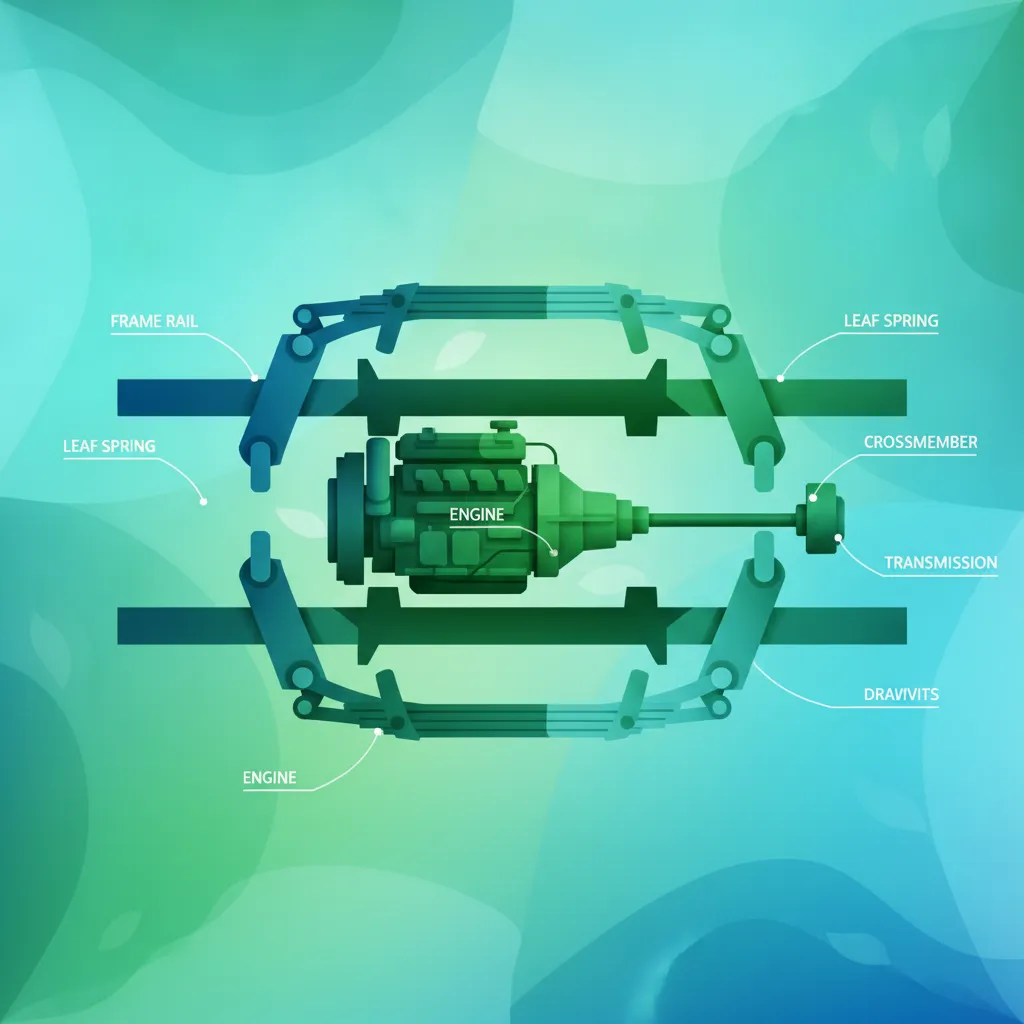
This lesson introduces the fundamental structural components of heavy vehicles, focusing on the frame and chassis design. It explains the role of different suspension types, such as leaf springs and air suspension, in load distribution and ride comfort. The content also discusses how chassis rigidity and material fatigue affect vehicle safety and longevity.

This lesson details the safe approach and navigation of various intersection types, including those controlled by traffic lights, stop signs, and give-way signs. Emphasis is placed on comprehensive observation of traffic flow, establishing eye contact with other road users, and ensuring clear visibility before proceeding. The lesson also covers correct lane positioning for turning and the importance of anticipating pedestrian movements.
Learn about the essential controls, including handles, levers, and pedals, and understand the critical safety checks for tyres, brakes, and suspension. This lesson prepares you for understanding vehicle safety aspects relevant to the German theory exam.
This lesson teaches riders how to conduct a simple but crucial pre-ride inspection of their vehicle. It provides step-by-step guidance on checking tyre pressure and tread depth, verifying brake function, and ensuring all lights are operational. Regular maintenance is presented as a fundamental responsibility for every rider.
This lesson outlines the driver's legal responsibility to ensure their vehicle is in a safe and roadworthy condition before every journey. It covers essential pre-drive checks, such as verifying lights, tyres, and fluid levels (oil, coolant, washer fluid). The lesson also explains the mandatory equipment that must be carried in the vehicle, including a warning triangle, high-visibility vest, and first-aid kit.
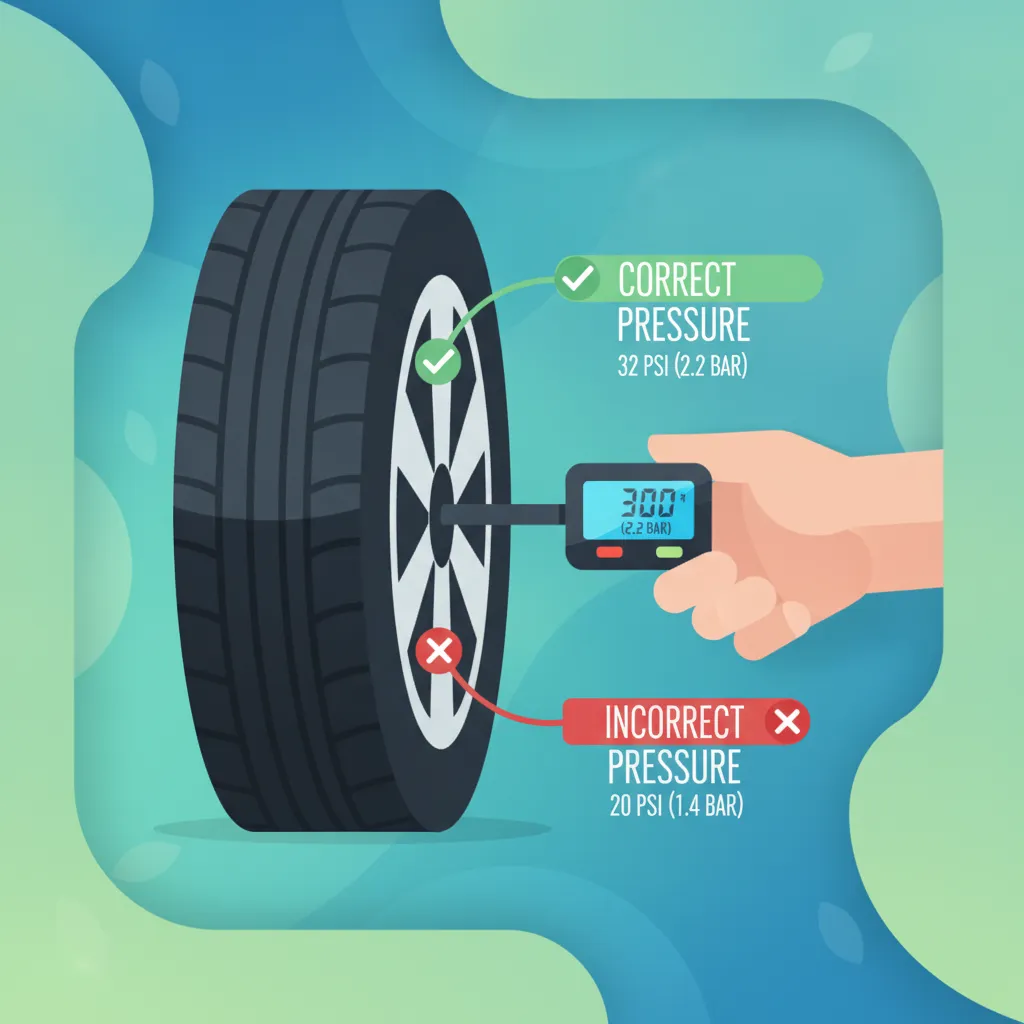
This lesson focuses on the importance of tyres and wheels for motorcycle safety and performance. It explains how to select appropriate tyres and the significance of maintaining correct tyre pressure, load rating, and tread depth. Detailed instructions are provided for conducting regular inspections to recognize signs of wear or damage and ensure optimal grip in various conditions.
This lesson focuses on how motorcyclists can clearly communicate their intentions to other road users to prevent misunderstandings and collisions. It covers the correct use of indicators, brake lights, and standardized hand signals for turning and stopping. The importance of making eye contact with other drivers to confirm they have seen you is also a key topic for enhancing safety.

This lesson teaches the essential observation techniques required for safe riding, focusing on the systematic use of mirrors and shoulder checks to manage blind spots. It emphasizes developing active scanning habits to maintain constant situational awareness of the surrounding traffic environment. Learners will understand how effective head movement and use of peripheral vision are critical for detecting potential hazards early.
This lesson details the safe approach and navigation of various intersection types, including those controlled by traffic lights, stop signs, and give-way signs. Emphasis is placed on comprehensive observation of traffic flow, establishing eye contact with other road users, and ensuring clear visibility before proceeding. The lesson also covers correct lane positioning for turning and the importance of anticipating pedestrian movements.

This lesson teaches crucial risk awareness and accident prevention strategies for motorcyclists. It examines common accident scenarios and teaches riders how to identify potential hazards in advance. Key concepts include defensive riding, maintaining situational awareness, and understanding how a proactive mindset contributes to a safer riding experience on the road.
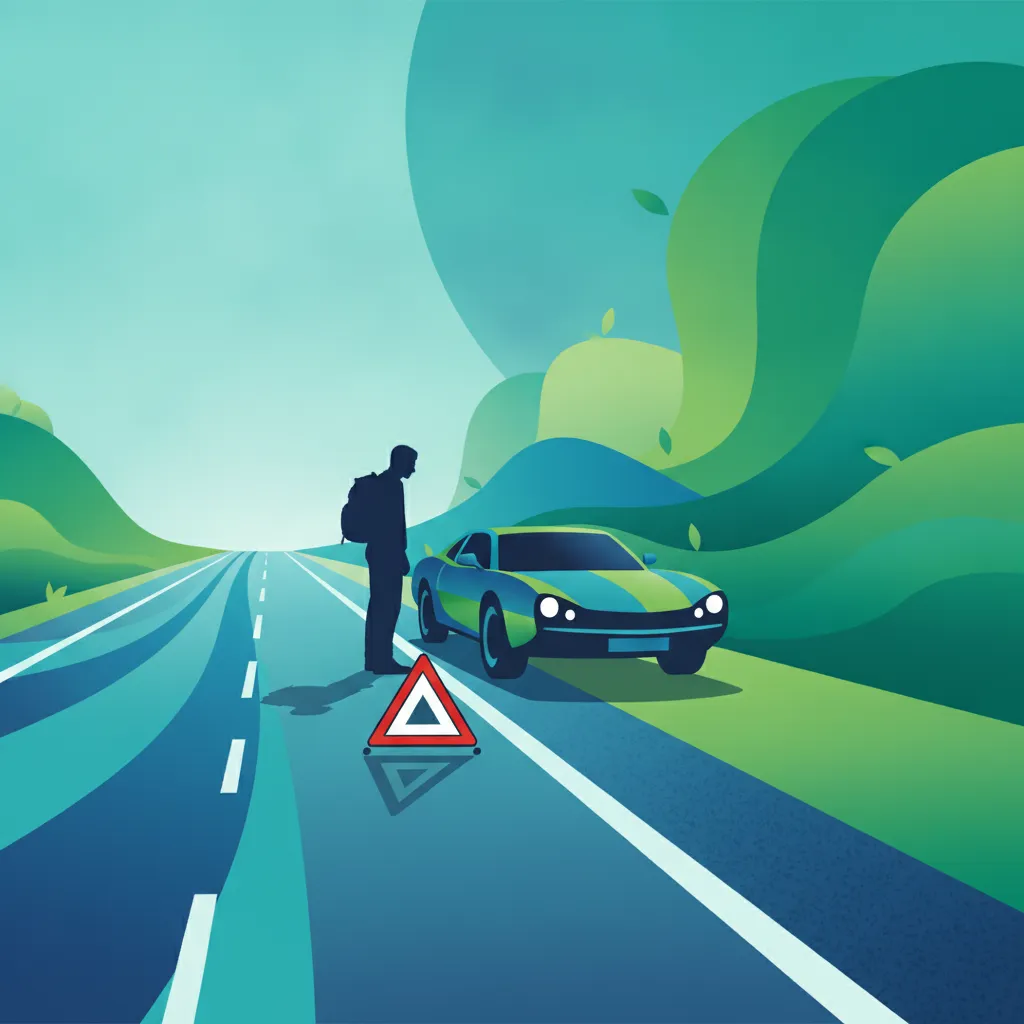
This lesson covers the appropriate steps to take in the event of a vehicle breakdown or an accident. It details procedures for safely moving the motorcycle out of traffic, making the area visible with hazard warnings, and contacting emergency services. The content emphasizes personal safety and the correct protocol for managing the scene until professional help arrives.

This lesson examines how different weather conditions, such as rain, strong winds, and fog, directly impact motorcycle safety. It explains how wet surfaces reduce tyre grip and increase braking distances, requiring smoother rider inputs. The content also provides strategies for managing reduced visibility and the physical effects of crosswinds on the motorcycle's stability.

This lesson provides a detailed guide to the functional layout of a motorcycle's primary controls. It covers the purpose and correct operation of the handlebars, throttle, clutch, brake levers, and foot pedals. The content emphasizes proper hand and foot positioning to ensure precise manipulation and reduce rider fatigue for enhanced safety and response times.
Find clear answers to common questions learners have about Anatomy of a Motorcycle: Frame, Engine, and Transmission. Learn how the lesson is structured, which driving theory objectives it supports, and how it fits into the overall learning path of units and curriculum progression in Germany. These explanations help you understand key concepts, lesson flow, and exam focused study goals.
Understanding how the engine, frame, and transmission function is vital for recognizing why a motorcycle reacts the way it does in various situations. The theory exam often tests your ability to relate these mechanical principles to real-world safety, such as weight distribution during braking or power management.
Yes, understanding the mechanics of your clutch and transmission helps you manage gear shifting effectively. Efficient gear management ensures you always have the right amount of power available for overtaking or maintaining safe speeds in dense urban areas, which is a key assessment criteria.
No, you do not need to be a mechanic. The test focuses on understanding the function of safety-critical components—like the frame and transmission—to ensure you can perform effective pre-ride checks and recognize when a motorcycle's handling might be compromised.
Begin your targeted revision now. Use our practice search to quickly find specific German driving theory questions. Filter by StVO rules, road signs, or hazard perception to create your focused study plan. Master challenging areas and prepare confidently for your theoretical driving test.