
This lesson explores the essential safety requirements for passenger seating and restraint systems in large vehicles. You will learn the legal obligations for seat belt usage, the correct application of various restraints, and strategies to ensure passenger compliance, which is vital for the professional passenger transport categories D1, D1E, D, and DE.

Lesson content overview
The safe transport of passengers is a paramount responsibility for professional drivers operating vehicles under Licence Categories D1, D1E, D, and DE in Germany. A foundational aspect of this responsibility involves understanding and correctly applying seating arrangements and restraint systems. This lesson provides a comprehensive overview of seat belt types, child safety requirements, and the legal obligations drivers face to ensure every passenger is securely restrained, minimizing the risk of injury in unforeseen circumstances.
In any vehicle, passengers are subjected to the laws of physics. During a collision or sudden braking, inertia causes occupants to continue moving at the vehicle's previous speed until an external force acts upon them. Restraint systems, such as seat belts and child safety seats, are engineered to apply this necessary force in a controlled manner, preventing occupants from impacting the vehicle's interior or being ejected. For professional drivers in Germany, mastering the principles and regulations surrounding these systems is not just good practice; it is a legal and ethical imperative, central to the Professional German Passenger-Vehicle Theory curriculum.
Passenger vehicles, especially those used for professional transport, are equipped with various seating configurations designed to accommodate multiple occupants safely. Integral to each seating position is a restraint system, primarily seat belts, which vary in design and application.
Modern passenger vehicles primarily use two types of seat belts, each offering different levels of protection. Professional drivers must understand the distinctions and ensure appropriate usage.
The three-point seat belt is the most common and effective type of restraint system found in most modern vehicles, particularly in front seats and many rear seating positions. It consists of a single continuous strap that secures the occupant across three points: over one shoulder and across the lap. This design distributes the forces of a collision across the strongest parts of the body – the shoulder, chest, and pelvis – significantly reducing the risk of severe injury.
The proper routing of a three-point belt is crucial. The lap portion must sit low across the hips, not over the abdomen, while the shoulder portion should cross the collarbone and chest, not the neck or off the shoulder. Incorrect positioning can lead to severe internal injuries or reduced effectiveness in a crash.
A two-point seat belt, also known as a lap belt, secures the occupant only across the hips. These belts are less common in modern passenger vehicles, typically found in older models, specific middle rear seats, or certain commercial vehicles where space or design constraints prevent the installation of a three-point system. While they prevent an occupant from being ejected, lap belts are less effective than three-point belts as they do not restrain the upper torso. This can lead to increased risk of head, neck, and internal abdominal injuries in a collision. Professional drivers should be aware of these limitations and ensure passengers understand the reduced protection.
Many vehicles include seat belt adjusters, mechanisms that allow the height of the shoulder belt anchor point to be raised or lowered. The primary purpose of a seat belt adjuster is to ensure the shoulder belt sits correctly across the occupant's collarbone and chest, preventing it from riding up onto the neck or falling off the shoulder. An improperly adjusted shoulder belt can cause serious injury in a crash, either through direct impact to the neck or by allowing excessive upper body movement. Drivers should always encourage passengers to adjust their belts for optimal fit and comfort.
Modern seat belt systems often incorporate advanced safety features that enhance their effectiveness during a collision.
Seat belt pretensioners are designed to tighten the seat belt instantaneously when a crash is detected, removing any slack and firmly securing the occupant against the seat. This action minimizes the occupant's forward movement before the main impact occurs, significantly reducing the forces experienced.
Load limiters work in conjunction with pretensioners. After the belt has pretensioned, a load limiter allows a controlled amount of belt webbing to spool out, or "give," once a certain force threshold is reached. This mechanism prevents excessive force from being exerted on the occupant's chest, reducing the risk of rib fractures and internal injuries while still effectively restraining them. These features activate automatically and do not require driver or passenger intervention.
Children, due to their smaller size and developing physiology, cannot be safely restrained by adult seat belts alone. They require specialized Child Restraint Systems (CRS) to provide adequate protection. Professional drivers transporting children, especially in vehicles for hire, must be well-versed in the types of CRS, their correct installation, and the legal requirements in Germany.
In Germany, the use of appropriate child restraint systems is mandatory for children up to 12 years of age or until they reach a height of 150 cm, whichever comes first. This regulation, known as Kinder-Rückhaltesystem-Pflicht, is crucial for their safety. The specific type of CRS required depends on the child's age, weight, and height, following European ECE R44 or ECE R129 (i-Size) standards.
These seats are designed for infants and very young children, typically from birth up to at least 12-15 months, or until they exceed the seat's height or weight limit. Rear-facing seats provide superior protection for a child's vulnerable head, neck, and spine by distributing crash forces across the entire back of the child's body. They must always be installed in the rear of the vehicle. If placed in the front passenger seat, the airbag MUST be deactivated.
Once a child has outgrown their rear-facing seat (based on height and weight limits, not just age), they transition to a forward-facing child seat equipped with an internal five-point harness. These seats protect children until they reach approximately four to six years of age or meet the height/weight limits specified by the manufacturer. The harness distributes impact forces over the child's shoulders, chest, and hips.
For older children who have outgrown forward-facing seats but are still too small for an adult seat belt to fit correctly, booster seats are used. Booster seats elevate the child so that the vehicle's standard three-point seat belt can fit properly across their shoulder and lap. The shoulder strap should lie across the middle of the collarbone and chest, and the lap belt should fit low across the hips, not the stomach. Booster seats are used until the child meets the 12 years or 150 cm height requirement. Some booster seats also have a high back for additional head and side impact protection.
Proper installation is critical for the effectiveness of any child restraint system. Drivers must meticulously follow the manufacturer's instructions for the specific child seat being used.
Installation Methods:
As a professional driver, you carry significant legal and moral responsibility for the safety of your passengers. This extends directly to ensuring all occupants are correctly restrained according to German road traffic law (Straßenverkehrs-Ordnung - StVO).
Gurtpflicht)In Germany, the Gurtpflicht (seat belt obligation) dictates that the driver and all passengers, regardless of their position in the vehicle, must wear a seat belt if one is fitted. This applies to all vehicles, including buses and coaches, where seat belts are installed. Non-compliance is a violation of the StVO and carries penalties.
Even if a passenger is only traveling a short distance or within city limits, the seat belt obligation applies. There are very few exemptions, and they are usually specific and require documented medical reasons or apply to certain operational duties (e.g., mail delivery during frequent stops).
The driver of a passenger vehicle has a direct and legally binding responsibility to ensure that all passengers are properly restrained before the vehicle moves. This includes checking that:
Failure to fulfill this duty can result in fines (Bußgeld), penalty points (Punkte in Flensburg) for the driver, and significantly increased liability in the event of an accident where unrestrained passengers are injured. This emphasizes the critical importance of a pre-trip safety check.
Ignoring seat belt regulations has serious consequences:
Professional drivers must proactively manage passenger safety regarding restraint systems. This involves communication, pre-trip checks, and addressing non-compliance respectfully but firmly.
Before commencing any journey, especially when transporting unfamiliar passengers or children, conduct a quick visual check.
Visually confirm all adult passengers have fastened their seat belts.
For children, ensure they are in the correct child restraint system and that the system is properly installed and secured.
Politely remind passengers to fasten their seat belts if you observe non-compliance. A simple, "Please fasten your seat belt for your safety," is often sufficient.
If a passenger refuses to wear a seat belt, the driver has a duty to insist. You should explain the legal requirement (Gurtpflicht) and the safety implications. If a passenger still refuses, a professional driver should refuse to commence the journey. The safety of all occupants, and your legal responsibility, must take precedence.
Drivers should be aware of and actively correct common errors in seat belt usage:
Understanding the underlying physics of a collision reinforces the importance of restraint systems. During a crash, a vehicle undergoes rapid deceleration. Due to inertia, occupants continue to move forward at the vehicle's previous speed until restrained.
Statistical evidence consistently demonstrates that the correct use of seat belts drastically reduces the risk of fatal and serious injuries in traffic accidents. This principle is fundamental to professional passenger transport safety.
The knowledge and practical application of seating and restraint systems are not isolated concepts. They are intrinsically linked to other modules within the Professional German Passenger-Vehicle Theory curriculum:
For professional drivers operating passenger vehicles in Germany, understanding and correctly applying seating and restraint systems is non-negotiable. This lesson has covered:
By mastering these concepts, professional drivers not only comply with German traffic law (StVO) but also uphold their primary duty of care, ensuring the highest possible level of safety for all passengers under their transport.
This lesson covers the essential restraint systems for professional German passenger transport drivers, detailing the superior protection of three-point belts over lap belts, and explaining advanced features like pretensioners and load limiters that activate automatically during collisions. It specifies Germany's child restraint requirements (up to 12 years or 150 cm) and the three main CRS types: rear-facing seats for infants, forward-facing seats with harnesses for toddlers, and booster seats for older children. The lesson emphasizes the driver's legal duty under Gurtpflicht to ensure all passengers are correctly restrained, with associated penalties including Bußgeld and Punkte in Flensburg for non-compliance. Professional drivers must also master pre-trip restraint checks, proper communication strategies for passenger compliance, and correction of common misuse patterns such as belts placed behind the back or under the arm.
A short set of high-value points that capture the most important learning from this lesson.
Three-point seat belts distribute collision forces across the shoulder, chest, and pelvis, while lap belts only restrain the lower body and offer significantly less protection
Seat belt pretensioners remove slack instantly during a crash and load limiters allow controlled belt extension to reduce chest injury forces
In Germany, children must use appropriate child restraints until age 12 or 150 cm height, following ECE R44/R129 (i-Size) standards
The driver bears direct legal responsibility to ensure all passengers are properly restrained before the vehicle moves
ISOFIX provides a rigid, foolproof connection for child seats directly to vehicle chassis anchor points, reducing installation errors
Explore all units and lessons included in this driving theory course.
Gurtpflicht applies to all vehicle occupants in Germany whenever a seat belt is fitted, including short urban journeys
The lap portion of a seat belt must sit low across hip bones, never over the abdomen, and the shoulder portion must cross the collarbone, never the neck
Rear-facing child seats must never be placed in front of an active airbag; the airbag must be deactivated first
Driver penalties for unrestrained child passengers include higher fines than for adult passengers and potential penalty points in Flensburg
ISOFIX anchors are built into the vehicle chassis, whereas seat belt installation requires careful routing through designated paths on the child seat
Routing the shoulder belt under the arm instead of across the shoulder, which can cause severe internal organ injuries in a crash
Placing the lap belt over the abdomen rather than low across the hips, distributing forces incorrectly to vulnerable organs
Using a rear-facing child seat in the front passenger seat without deactivating the airbag, creating a critical danger for the child
Failing to tighten seat belt installation when using the vehicle's three-point belt to secure a child restraint, leaving dangerous movement slack
Assuming a child has outgrown a restraint based on age alone rather than checking height and weight manufacturer limits
Lesson content overview
A short set of high-value points that capture the most important learning from this lesson.
Three-point seat belts distribute collision forces across the shoulder, chest, and pelvis, while lap belts only restrain the lower body and offer significantly less protection
Seat belt pretensioners remove slack instantly during a crash and load limiters allow controlled belt extension to reduce chest injury forces
In Germany, children must use appropriate child restraints until age 12 or 150 cm height, following ECE R44/R129 (i-Size) standards
The driver bears direct legal responsibility to ensure all passengers are properly restrained before the vehicle moves
ISOFIX provides a rigid, foolproof connection for child seats directly to vehicle chassis anchor points, reducing installation errors
Explore all units and lessons included in this driving theory course.
Gurtpflicht applies to all vehicle occupants in Germany whenever a seat belt is fitted, including short urban journeys
The lap portion of a seat belt must sit low across hip bones, never over the abdomen, and the shoulder portion must cross the collarbone, never the neck
Rear-facing child seats must never be placed in front of an active airbag; the airbag must be deactivated first
Driver penalties for unrestrained child passengers include higher fines than for adult passengers and potential penalty points in Flensburg
ISOFIX anchors are built into the vehicle chassis, whereas seat belt installation requires careful routing through designated paths on the child seat
Routing the shoulder belt under the arm instead of across the shoulder, which can cause severe internal organ injuries in a crash
Placing the lap belt over the abdomen rather than low across the hips, distributing forces incorrectly to vulnerable organs
Using a rear-facing child seat in the front passenger seat without deactivating the airbag, creating a critical danger for the child
Failing to tighten seat belt installation when using the vehicle's three-point belt to secure a child restraint, leaving dangerous movement slack
Assuming a child has outgrown a restraint based on age alone rather than checking height and weight manufacturer limits
Explore search topics learners often look for when studying Seating, Seat Belts, and Restraint Systems. These topics reflect common questions about road rules, driving situations, safety guidance, and lesson level theory preparation for learners in Germany.
Browse additional driving theory lessons that cover connected traffic rules, road signs, and common driving situations related to this topic. Improve your understanding of how different rules interact across everyday traffic scenarios.
Learn the specific German regulations for ensuring all passengers use approved seating and restraint systems. Understand driver responsibilities and common compliance challenges for D1E category vehicles in professional passenger transport.
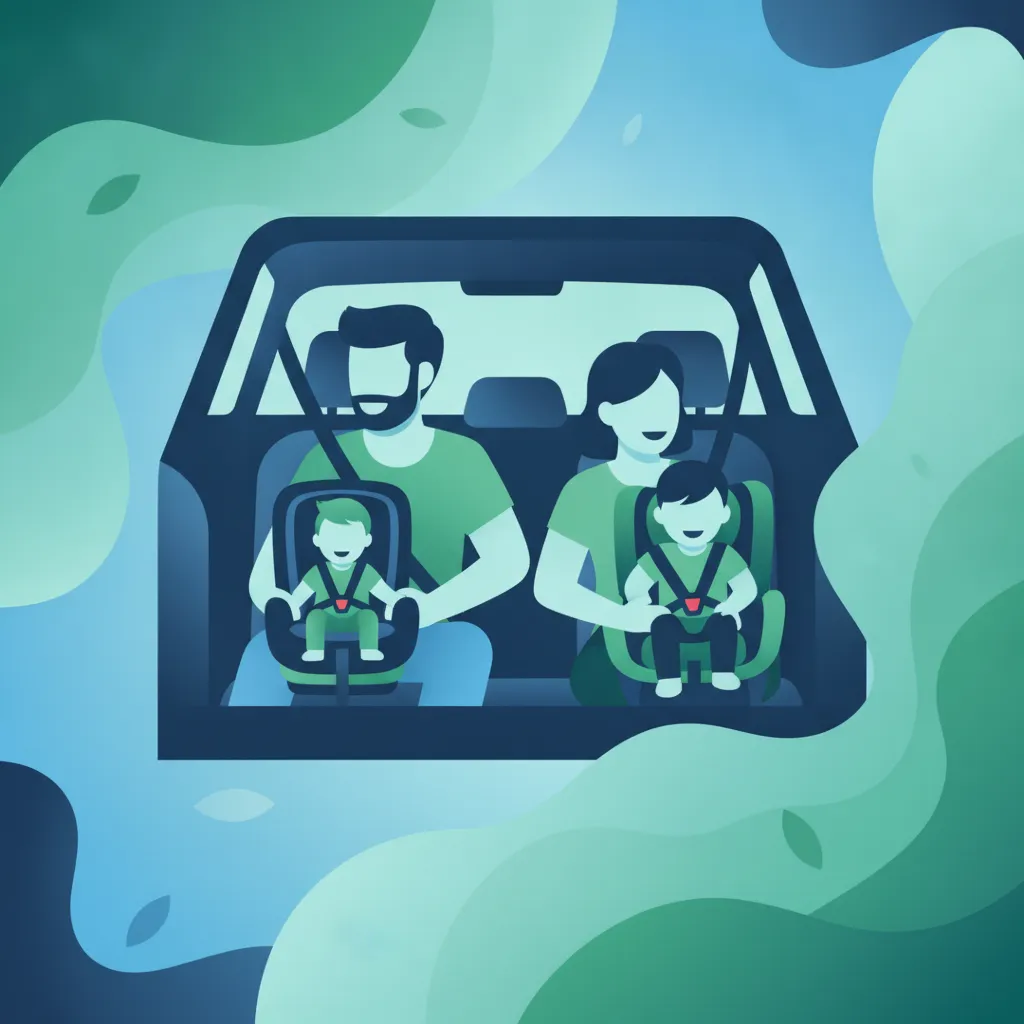
This lesson details the driver's legal responsibility for the safety of all passengers. It reinforces the mandatory use of seat belts for everyone in the vehicle. A significant focus is placed on the strict regulations for child safety, explaining the types of child restraint systems required based on a child's age, height, and weight, and how to install them correctly.

This lesson focuses on the passive safety features designed to protect occupants in the event of a crash. It explains the vital importance of seat belts and the legal requirement for all passengers to wear them. The function of airbags, head restraints, and the vehicle's structural safety features are also discussed, along with the specific legal requirements for using appropriate child restraint systems.

This lesson covers the proper management of items brought on board by passengers, including luggage, prams, and mobility aids. It teaches how to use designated storage areas and racks correctly to prevent items from becoming hazards. The procedures for securing wheelchairs and other mobility devices are detailed to ensure they are stable and do not move during transit, complying with safety and accessibility standards.

This lesson focuses on the factors contributing to passenger comfort during a journey. It explains how to effectively operate climate control and ventilation systems to maintain a pleasant temperature and air quality. Additionally, it discusses strategies for minimizing noise and vibration and the importance of smooth driving techniques to enhance the overall ride experience for passengers.
This lesson addresses the specific safety protocols required when transporting standing passengers. It explains the importance of ensuring passengers have access to handholds and are distributed evenly to maintain vehicle stability. Learners will understand their responsibility to drive smoothly, make announcements about sudden stops, and adhere to legal capacity limits for standing passengers.

This lesson provides an overview of the various types of bus stops, such as scheduled, request, and marked station stops. It explains the legal regulations governing stopping procedures, including how to interpret official signage and the importance of adhering to the route timetable. Learners will understand their obligations and the correct procedures for each type of stop to ensure legal compliance and efficient service.

This lesson examines the professional standards expected of passenger-vehicle drivers. It covers the importance of maintaining public trust through reliability, punctuality, and a professional demeanor. Key skills such as effective passenger communication, conflict resolution, and stress management are discussed as vital components of a driver's accountability and adherence to regulations.
This lesson provides strategies for proactively managing passenger behavior to maintain a safe environment for everyone. It covers techniques for supervising passengers, enforcing rules on seat belt use, smoking, and alcohol, and managing luggage placement. The lesson also addresses how to handle disruptive behavior and the driver's role in assisting passengers during an emergency evacuation to ensure an orderly process.

This lesson provides instruction on the rules and best practices for operating a large passenger vehicle on the Autobahn. It covers the principles of strict lane discipline, regulations for minimum speed, and correct procedures for overtaking and merging. The importance of maintaining significantly increased following distances at high speeds and planning for exits well in advance is a key focus.
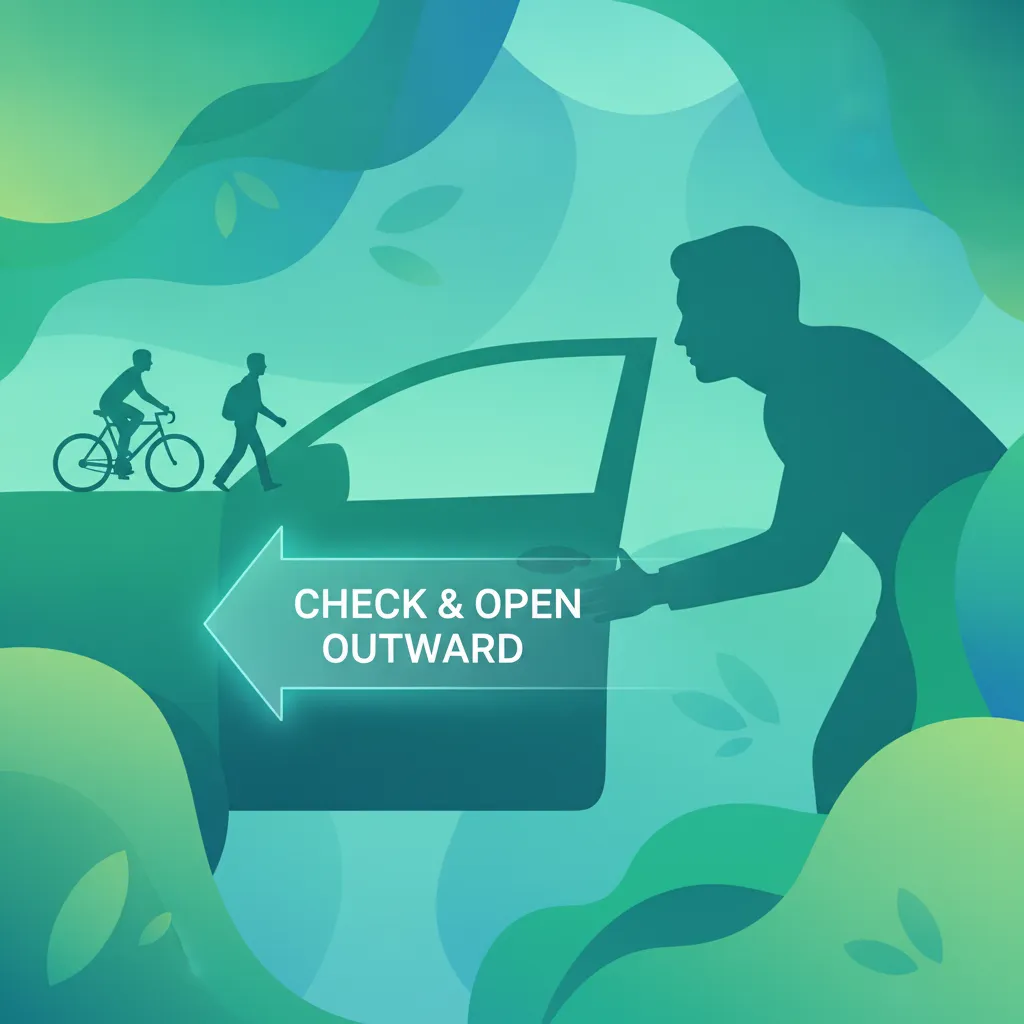
This lesson focuses on the safe operation of passenger doors, a critical aspect of daily duties. It explains the function of safety interlocks that prevent the vehicle from moving while doors are open and the importance of visually monitoring passengers. Learners will master the sequence of checking for obstructions, confirming all passengers are clear, and securely closing doors before departure.
Understand the specific requirements and proper installation procedures for child safety seats in professional passenger vehicles according to German road law. This lesson covers legal obligations and best practices for ensuring child passenger safety.
This lesson details the driver's legal responsibility for the safety of all passengers. It reinforces the mandatory use of seat belts for everyone in the vehicle. A significant focus is placed on the strict regulations for child safety, explaining the types of child restraint systems required based on a child's age, height, and weight, and how to install them correctly.
This lesson focuses on the passive safety features designed to protect occupants in the event of a crash. It explains the vital importance of seat belts and the legal requirement for all passengers to wear them. The function of airbags, head restraints, and the vehicle's structural safety features are also discussed, along with the specific legal requirements for using appropriate child restraint systems.
This lesson covers the proper management of items brought on board by passengers, including luggage, prams, and mobility aids. It teaches how to use designated storage areas and racks correctly to prevent items from becoming hazards. The procedures for securing wheelchairs and other mobility devices are detailed to ensure they are stable and do not move during transit, complying with safety and accessibility standards.

This lesson explains the legal framework for ensuring a passenger vehicle's roadworthiness, focusing on periodic technical inspections (TÜV) and scheduled maintenance. It identifies critical wear components, such as brakes and tires, that require regular monitoring and replacement. The importance of adhering to service intervals and maintaining accurate maintenance logs for regulatory compliance is also thoroughly covered.
This lesson details the specific legal obligations and safety protocols required for transporting schoolchildren. It covers the correct procedures for pick-up and drop-off, the use of warning lights, and the importance of supervised boarding and alighting. The lesson also explains how to interact with school crossing guards and navigate school zones safely to ensure the highest level of protection for children.
This lesson examines the professional standards expected of passenger-vehicle drivers. It covers the importance of maintaining public trust through reliability, punctuality, and a professional demeanor. Key skills such as effective passenger communication, conflict resolution, and stress management are discussed as vital components of a driver's accountability and adherence to regulations.
This lesson focuses on the safe operation of passenger doors, a critical aspect of daily duties. It explains the function of safety interlocks that prevent the vehicle from moving while doors are open and the importance of visually monitoring passengers. Learners will master the sequence of checking for obstructions, confirming all passengers are clear, and securely closing doors before departure.
Find clear answers to common questions learners have about Seating, Seat Belts, and Restraint Systems. Learn how the lesson is structured, which driving theory objectives it supports, and how it fits into the overall learning path of units and curriculum progression in Germany. These explanations help you understand key concepts, lesson flow, and exam focused study goals.
Yes, where seats are equipped with seat belts, passengers are legally required to use them. Professional drivers have a duty of care to ensure passengers are informed of this requirement and encourage compliance before the journey commences.
Professional conduct requires you to communicate the safety risks and legal requirements clearly. If a passenger refuses, you must follow your company's safety policy, which may include refusing to start the journey or reporting the incident, as your primary responsibility is passenger safety.
The principles of safety remain similar, but the application in large vehicles involves specific mounting standards and compatibility with professional seating configurations. You must ensure that any child seat used is appropriate for the vehicle's seating system.
The test focuses on your knowledge of the legal requirement, the responsibility of the driver to ensure safety, and the correct operation of systems provided in the vehicle to protect passengers of all ages.
Begin your targeted revision now. Use our practice search to quickly find specific German driving theory questions. Filter by StVO rules, road signs, or hazard perception to create your focused study plan. Master challenging areas and prepare confidently for your theoretical driving test.