
This lesson covers your critical legal responsibilities as a driver regarding the safety of all passengers. You will learn the mandatory requirements for seat belt usage and the specific, strict regulations governing child restraint systems in Germany. Understanding these rules is vital for both passing your Category B theory exam and ensuring safety on the road.
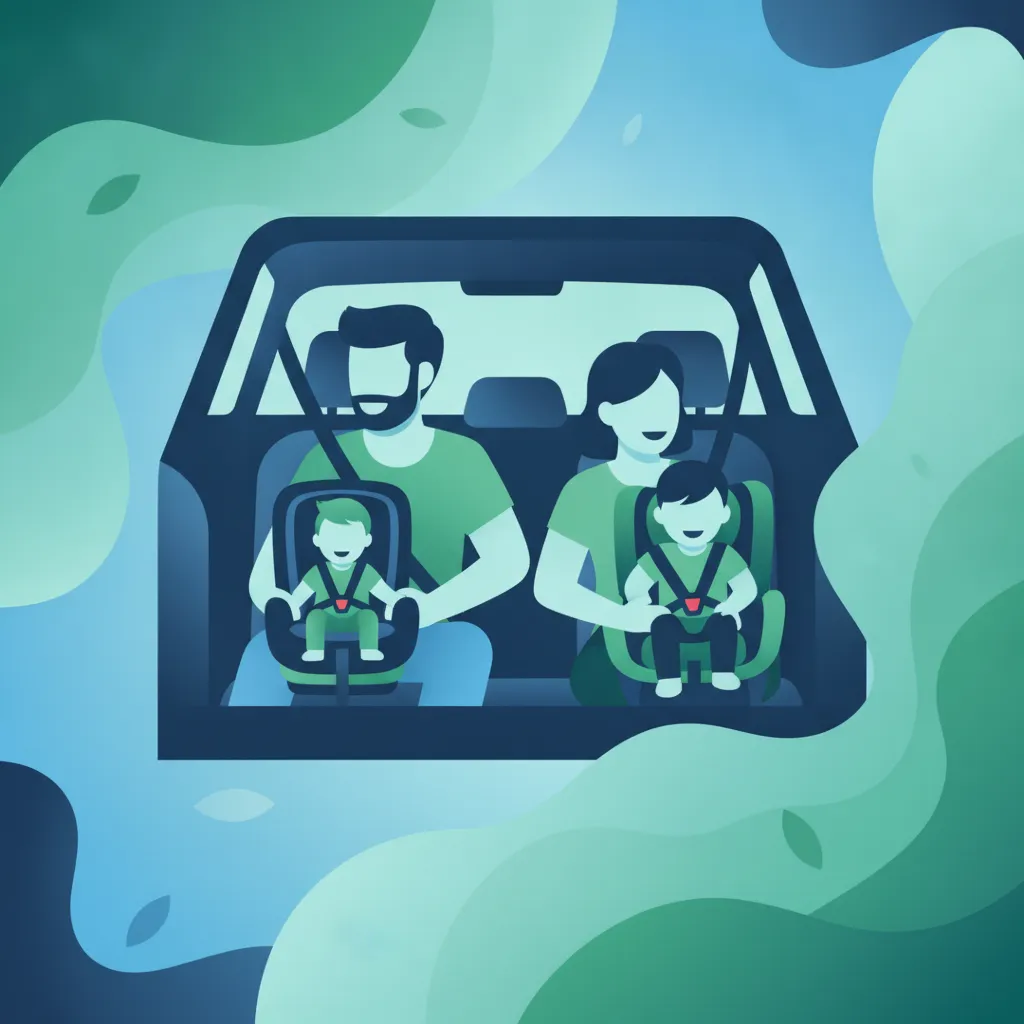
Lesson content overview
Ensuring the safety of all occupants within your vehicle is a fundamental responsibility for every driver in Germany. This includes adhering to strict regulations regarding seat belt use for adults and specialized child restraint systems for younger passengers. This lesson provides a detailed overview of these vital safety requirements, focusing on the legal mandates, the correct selection of child seats, and proper installation techniques. Mastering these principles is crucial not only for passing your German Category B driving license theory exam but, more importantly, for safeguarding lives on the road.
As a driver, you are legally and morally accountable for the well-being of everyone travelling in your vehicle. This responsibility extends beyond merely operating the vehicle safely; it encompasses ensuring that all passengers are properly secured according to traffic laws. In Germany, the Straßenverkehrs-Ordnung (StVO) – the Road Traffic Act – explicitly outlines these obligations, making compliance non-negotiable. The primary goal of these regulations is to minimize the risk of injury or fatality in the event of a collision or sudden braking.
The universal seat belt obligation (Anschnallpflicht) is a cornerstone of vehicle safety in Germany. It mandates that every person in a moving vehicle must be restrained by an approved seat belt, regardless of their seating position. This rule applies equally to passengers in the front and rear seats.
Every seat in a car that is equipped with a seat belt must have its belt fastened by the occupant while the vehicle is in motion. This seemingly simple rule is vital because seat belts are designed to distribute the forces of an impact across the strongest parts of the body, preventing occupants from being ejected from the vehicle or colliding with interior surfaces. Even at low speeds, the forces involved in a collision can be devastating to an unrestrained individual.
Failing to wear a seat belt, even as a rear passenger, is a legal offense in Germany and can result in fines for both the passenger and potentially the driver.
Modern vehicles are typically equipped with three-point seat belts that offer optimal protection. Always ensure the belt lies snugly across your shoulder and lap, without twists, and that the buckle is fully engaged. Adjustable belts should be positioned to fit comfortably without cutting into the neck.
While the seat belt obligation is nearly universal, there are very specific and rare exemptions. These typically include:
It is crucial to understand that these exemptions are highly specific and do not apply to the vast majority of drivers or passengers. Always assume the seat belt obligation applies to you.
Children are particularly vulnerable in vehicle collisions due to their developing bodies. Therefore, German law (StVO) has stringent regulations concerning child restraint systems (Kindersitze) to ensure their maximum safety. The choice of restraint system depends on the child's age, weight, and height, following a clear hierarchy of protection.
The child restraint hierarchy ensures that children are protected by the most appropriate and effective device for their stage of development. Using the wrong type of seat or an improperly fitted one significantly increases the risk of serious injury.
For newborns and infants, a rear-facing infant car seat, often referred to as a "Babyschale," is mandatory. These seats are designed to protect a baby's fragile head, neck, and spine by cradling them and distributing crash forces across the entire back of their body. In a frontal collision, which is the most common and often most severe type of crash, a rear-facing seat absorbs the impact over a larger area, reducing strain on the neck and head.
An infant car seat designed to face the rear of the vehicle, offering superior protection for a baby's head, neck, and spine in the event of a frontal collision by distributing impact forces over the child's back.
Children must remain in a rear-facing seat for as long as possible, ideally until they reach the maximum height or weight limit specified by the manufacturer, or at least until they are about 15 months old according to newer ECE R129 (i-Size) regulations.
Once a child has outgrown their rear-facing infant seat (typically around 15 months of age and a specific height/weight, depending on the seat and regulation), they can transition to a forward-facing child car seat (Kindersitz). These seats come with an integrated five-point harness system that secures the child.
A child car seat that faces the front of the vehicle, typically used for toddlers and younger children who have outgrown rear-facing seats. It features an integrated harness system.
It is crucial that the harness straps are always snug against the child's body, with no slack. The chest clip should be at armpit level. Ensure the seat is securely installed in the vehicle, either using ISOFIX or the vehicle's seat belt.
When a child outgrows their forward-facing car seat (usually around 4 years of age, or once they exceed the weight/height limits for the internal harness), they can move to a booster seat (Sitzerhöhung). Booster seats do not have their own harnesses; instead, they elevate the child so that the vehicle's adult seat belt fits correctly over their shoulder and lap.
Booster seats are available with or without a high back. High-back boosters offer better head and side-impact protection and are generally recommended. The adult seat belt must sit snugly across the child's shoulder (not on the neck) and low across their hips (not on the stomach).
A child may use the vehicle's adult seat belt without a booster seat only when they meet specific criteria, which ensures the adult belt fits them properly and safely. In Germany, this generally means the child is at least 12 years old OR at least 150 cm (approximately 4 feet 11 inches) tall.
A good rule of thumb is the "5-step test": Can the child sit all the way back against the vehicle seat? Do their knees bend comfortably at the edge of the seat? Does the lap belt fit low on the hips, touching the thighs? Does the shoulder belt rest across the middle of the shoulder and chest, not on the neck or arm? Can they stay in this position for the entire trip? If the answer is no to any of these, they likely still need a booster.
Even the safest child seat cannot protect a child if it is not installed correctly. Improper installation is a leading cause of child injury in crashes. Always follow the specific instructions provided in both the car seat manufacturer's manual and your vehicle's owner's manual.
ISOFIX (International Standards Organisation FIX) is a standardized system for securely attaching child seats directly to the vehicle's chassis. It significantly reduces the risk of incorrect installation compared to using seat belts, providing a rigid, secure connection.
A standardized international system of rigid anchorage points built into vehicles, designed for secure and easy installation of compatible child car seats without using the vehicle's seat belts.
Most modern vehicles and child seats are ISOFIX compatible. Look for the ISOFIX labels or symbols in your car (usually between the backrest and seat cushion).
Locate the ISOFIX anchor points in your vehicle. These are typically metal bars recessed into the gap between the seat back and seat cushion.
Extend the ISOFIX connectors from the child seat and push them firmly onto the vehicle's anchor points until you hear a "click" and the indicators (if present) turn green.
If your seat has a top tether, attach it to the designated anchor point behind the vehicle seat and tighten it to remove slack. If it has a support leg, extend it to the floor of the vehicle, ensuring it is firmly planted.
Perform a final check: vigorously shake the child seat. It should not move more than 2-3 cm (1 inch) side-to-side or front-to-back at the belt path.
For child seats without ISOFIX, or in older vehicles, the child seat is secured using the vehicle's own seat belt. This method requires careful attention to detail.
Place the child seat firmly on the vehicle's seat.
Route the vehicle's lap and shoulder belt through the designated belt paths on the child seat. These paths are usually colored or clearly marked in the car seat manual.
Buckle the seat belt and pull all slack out of both the lap and shoulder portions of the belt to achieve a tight fit. You may need to press down on the child seat while pulling the belt.
If your vehicle's seat belt system allows, lock the seat belt by pulling it all the way out until it retracts and locks in place (ratcheting sound). If not, use a locking clip if provided with the child seat.
Perform a final check: grasp the child seat at the belt path and try to move it. It should not move more than 2-3 cm (1 inch) in any direction.
Once the child seat is installed, the child must be correctly secured within it.
In Germany, non-compliance with passenger and child restraint laws carries significant legal consequences. These are outlined in the StVO and can result in:
Always verify the current exact fines and penalty points for specific violations through official German driving license resources or the Kraftfahrt-Bundesamt (KBA).
Even well-intentioned drivers can make mistakes when it comes to passenger and child safety. Awareness of these common errors is key to avoiding them:
The importance of proper restraint systems is magnified under certain driving conditions:
The design and legal requirements for child restraint systems are rooted in extensive scientific research and crash test data. Children's bodies are not simply miniature adult bodies; their bones are softer, their heads are proportionally larger and heavier, and their necks are weaker. These physiological differences make them highly susceptible to severe head and spinal cord injuries in a crash if not properly supported.
By following the prescribed child restraint hierarchy and ensuring correct installation, drivers actively leverage decades of safety engineering to protect their youngest passengers.
This lesson covers Germany's strict passenger safety regulations under the StVO, emphasizing that all vehicle occupants must wear seat belts regardless of seating position. For child passengers, Germany follows a clear restraint hierarchy: rear-facing Babyschalen for infants, forward-facing Kindersitze for toddlers, and booster Sitzerhöhungen until the child reaches 12 years of age or 150 cm in height. Proper installation methods are critical—both ISOFIX anchoring and seat belt installation procedures are explained in detail, with a maximum allowable movement of 2–3 cm at the belt path. The driver's legal liability extends to all unsecured passengers, and non-compliance can result in fines, penalty points in Flensburg, and increased accident liability. Understanding these rules is essential for passing the Class B theory exam and ensuring the safety of all vehicle occupants.
A short set of high-value points that capture the most important learning from this lesson.
Germany's universal seat belt obligation (Anschnallpflicht) requires ALL occupants—front and rear—to wear seat belts whenever the vehicle is in motion
Children must use rear-facing infant seats (Babyschalen) until at least 15 months, as rear-facing provides superior neck and head protection in frontal collisions
Children may only use the vehicle's adult seat belt without a booster when they are at least 12 years old OR at least 150 cm tall
ISOFIX provides a rigid, secure connection to the vehicle chassis and significantly reduces installation errors compared to seat belt installation
The driver bears legal liability for ensuring all passengers are properly secured, including rear seat occupants and children in restraint systems
Explore all units and lessons included in this driving theory course.
The two-part rule for adult seat belt use: 12 years old AND/OR 150 cm in height—either condition allows transition from a booster seat
Rear-facing seats must be used as long as possible, ideally until the child reaches the manufacturer's height/weight limit or around 15 months
ISOFIX installation: listen for the click, check green indicators, use top tether or support leg if required, and the seat should move no more than 2–3 cm when tugged
Harness straps must be snug with no slack pinchable at the collarbone, and the chest clip must sit at armpit level
Bulky clothing under harness straps creates dangerous slack—dress children in lighter layers and cover with blankets over the secured harness if needed
Rear seat belt neglect: assuming rear passengers are exempt from seat belt requirements—they are not under German law
Installing forward-facing seats too early: infants must remain rear-facing until they outgrow the seat's limits, not just until a certain age
Loose harness straps: leaving slack in the child seat's harness increases injury risk—you should not be able to pinch excess strap material at the collarbone
Incorrect chest clip positioning: placing the clip too high on the neck or too low on the stomach instead of at armpit level
Routing seat belts through wrong paths on child seats: always follow the car seat manual's color-coded guides for belt routing
Lesson content overview
A short set of high-value points that capture the most important learning from this lesson.
Germany's universal seat belt obligation (Anschnallpflicht) requires ALL occupants—front and rear—to wear seat belts whenever the vehicle is in motion
Children must use rear-facing infant seats (Babyschalen) until at least 15 months, as rear-facing provides superior neck and head protection in frontal collisions
Children may only use the vehicle's adult seat belt without a booster when they are at least 12 years old OR at least 150 cm tall
ISOFIX provides a rigid, secure connection to the vehicle chassis and significantly reduces installation errors compared to seat belt installation
The driver bears legal liability for ensuring all passengers are properly secured, including rear seat occupants and children in restraint systems
Explore all units and lessons included in this driving theory course.
The two-part rule for adult seat belt use: 12 years old AND/OR 150 cm in height—either condition allows transition from a booster seat
Rear-facing seats must be used as long as possible, ideally until the child reaches the manufacturer's height/weight limit or around 15 months
ISOFIX installation: listen for the click, check green indicators, use top tether or support leg if required, and the seat should move no more than 2–3 cm when tugged
Harness straps must be snug with no slack pinchable at the collarbone, and the chest clip must sit at armpit level
Bulky clothing under harness straps creates dangerous slack—dress children in lighter layers and cover with blankets over the secured harness if needed
Rear seat belt neglect: assuming rear passengers are exempt from seat belt requirements—they are not under German law
Installing forward-facing seats too early: infants must remain rear-facing until they outgrow the seat's limits, not just until a certain age
Loose harness straps: leaving slack in the child seat's harness increases injury risk—you should not be able to pinch excess strap material at the collarbone
Incorrect chest clip positioning: placing the clip too high on the neck or too low on the stomach instead of at armpit level
Routing seat belts through wrong paths on child seats: always follow the car seat manual's color-coded guides for belt routing
Explore search topics learners often look for when studying Passenger Safety and Child Restraints. These topics reflect common questions about road rules, driving situations, safety guidance, and lesson level theory preparation for learners in Germany.
Browse additional driving theory lessons that cover connected traffic rules, road signs, and common driving situations related to this topic. Improve your understanding of how different rules interact across everyday traffic scenarios.
Understand the driver's legal responsibility for passenger safety in Germany. Learn the mandatory seat belt requirements for all occupants and the specific regulations for child safety seats based on age, height, and weight.

This lesson focuses on the passive safety features designed to protect occupants in the event of a crash. It explains the vital importance of seat belts and the legal requirement for all passengers to wear them. The function of airbags, head restraints, and the vehicle's structural safety features are also discussed, along with the specific legal requirements for using appropriate child restraint systems.

This lesson details the various seating configurations and restraint systems found in passenger vehicles, including three-point and lap belts. It explains the legal regulations surrounding seat belt usage and provides strategies to ensure passenger compliance for maximum safety. The correct application of child safety seats and the importance of secure fastening for all restraint systems are also emphasized to prevent injuries.

This lesson covers the proper management of items brought on board by passengers, including luggage, prams, and mobility aids. It teaches how to use designated storage areas and racks correctly to prevent items from becoming hazards. The procedures for securing wheelchairs and other mobility devices are detailed to ensure they are stable and do not move during transit, complying with safety and accessibility standards.

This lesson focuses on identifying road users who require special attention and caution, such as children, the elderly, and individuals with disabilities. It details the appropriate behavior when encountering school buses and public transport, which often involve unpredictable pedestrian movement. A critical topic covered is the legal requirement to form an emergency corridor ('Rettungsgasse') for responding emergency vehicles.

This lesson outlines the legal requirements for vehicle roadworthiness, including mandatory periodic inspections (TÜV) and the issuance of safety certificates. It explains the standards for emissions, safety devices, and the proper documentation of defects. The content underscores the importance of complying with inspection intervals and addressing repair obligations promptly.

This lesson details the specific legal obligations and safety protocols required for transporting schoolchildren. It covers the correct procedures for pick-up and drop-off, the use of warning lights, and the importance of supervised boarding and alighting. The lesson also explains how to interact with school crossing guards and navigate school zones safely to ensure the highest level of protection for children.

This lesson focuses on the particular care required when driving near pedestrians, with a special emphasis on children and the elderly, whose behavior can be unpredictable. It covers the rules for yielding at zebra crossings and the importance of reducing speed near schools, playgrounds, and residential areas. The goal is to instill a habit of constant vigilance and readiness to stop.

This lesson explains the legal and safety requirements for transporting goods and cargo. It covers the importance of proper load distribution to maintain vehicle stability and the methods for securely fastening items to prevent them from shifting or falling. The regulations concerning maximum vehicle weight, roof loads, and the correct marking of loads that overhang the vehicle are also detailed.
Explore essential vehicle safety systems, with a focus on seat belts and legally mandated child restraint systems. This lesson details driver obligations and the importance of compliance with German traffic regulations (StVO) for passenger safety.
This lesson focuses on the passive safety features designed to protect occupants in the event of a crash. It explains the vital importance of seat belts and the legal requirement for all passengers to wear them. The function of airbags, head restraints, and the vehicle's structural safety features are also discussed, along with the specific legal requirements for using appropriate child restraint systems.

This lesson focuses on the legal responsibilities and duties of a vehicle operator according to German traffic law, primarily the StVO. It covers the obligation to drive safely, the rules of conduct at an accident scene, and the legal consequences of traffic violations. Understanding these principles is crucial for maintaining road safety and avoiding penalties such as fines, points, or driving bans.
This lesson details the various seating configurations and restraint systems found in passenger vehicles, including three-point and lap belts. It explains the legal regulations surrounding seat belt usage and provides strategies to ensure passenger compliance for maximum safety. The correct application of child safety seats and the importance of secure fastening for all restraint systems are also emphasized to prevent injuries.
This lesson details the specific legal obligations and safety protocols required for transporting schoolchildren. It covers the correct procedures for pick-up and drop-off, the use of warning lights, and the importance of supervised boarding and alighting. The lesson also explains how to interact with school crossing guards and navigate school zones safely to ensure the highest level of protection for children.
This lesson focuses on identifying road users who require special attention and caution, such as children, the elderly, and individuals with disabilities. It details the appropriate behavior when encountering school buses and public transport, which often involve unpredictable pedestrian movement. A critical topic covered is the legal requirement to form an emergency corridor ('Rettungsgasse') for responding emergency vehicles.

This lesson focuses on the legal duties every motorcycle rider must adhere to under German traffic law. It covers the concept of 'duty of care' towards other road users, mandatory insurance requirements, and the importance of maintaining a roadworthy vehicle. The lesson also details the rules of the probationary period and the potential legal and financial consequences of traffic violations.
This lesson provides an overview of the German system for penalizing traffic offenses. It explains the catalogue of fines ('Bußgeldkatalog'), the system of demerit points ('Punkte in Flensburg') for more serious violations, and the conditions under which a temporary driving ban ('Fahrverbot') or a full revocation of the license can be imposed. Understanding these consequences reinforces the importance of lawful driving.
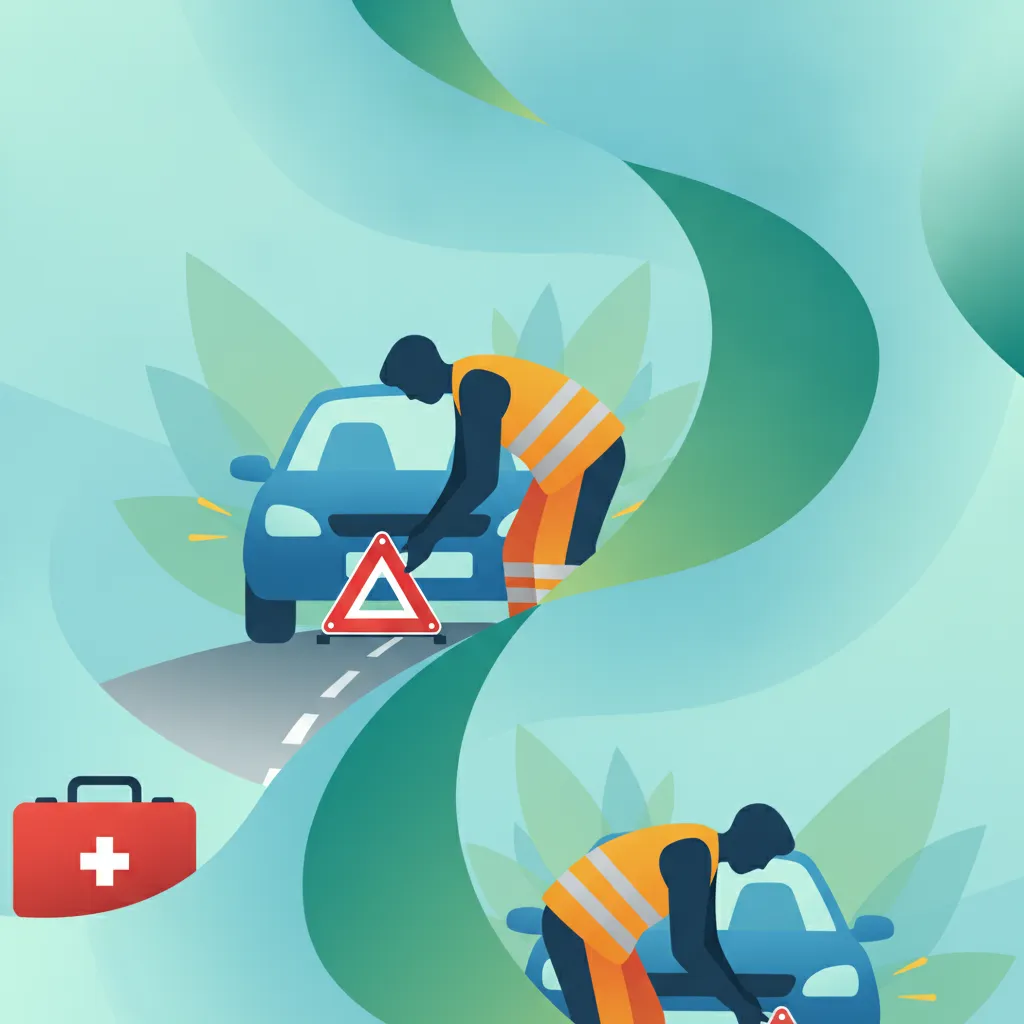
This lesson covers the legal and moral obligation to provide first aid at an accident scene. It outlines basic, life-saving measures such as assessing an injured person's condition, placing them in the recovery position, and the principles of controlling bleeding. The lesson also explains the correct placement of the warning triangle ('Warndreieck') to effectively warn oncoming traffic of the hazard ahead.
Find clear answers to common questions learners have about Passenger Safety and Child Restraints. Learn how the lesson is structured, which driving theory objectives it supports, and how it fits into the overall learning path of units and curriculum progression in Germany. These explanations help you understand key concepts, lesson flow, and exam focused study goals.
In Germany, children up to the age of 12 or with a height of less than 150 cm must be secured using an approved child restraint system. Once they exceed 150 cm or turn 12, they may use the standard vehicle seat belt.
You may only place a rear-facing child seat on the front passenger seat if the front airbag is deactivated. If the airbag cannot be turned off, it is strictly forbidden due to the risk of fatal injury during deployment.
As the driver, you are legally responsible for ensuring that all passengers, especially minors, are properly buckled up. You have the right and duty to refuse to drive until everyone is safely secured.
Using a non-compliant or expired child restraint system can lead to significant fines and points in Flensburg. More importantly, it fails to provide the necessary protection in the event of an accident, which is a key focus of the theory exam.
Begin your targeted revision now. Use our practice search to quickly find specific German driving theory questions. Filter by StVO rules, road signs, or hazard perception to create your focused study plan. Master challenging areas and prepare confidently for your theoretical driving test.