
This lesson covers the vital passive safety features in your vehicle, including seat belts, airbags, and head restraints. You will learn how these systems protect you in a collision and understand the specific legal requirements for child safety seats in Germany. Understanding these components is essential for both your theory exam and your responsibility as a driver to ensure all passengers are secure.

Lesson content overview
Navigating the complexities of the German road network safely requires a deep understanding of not just traffic rules, but also the safety mechanisms built into your vehicle. This lesson, part of your German Driving License Theory – Comprehensive Category B Course, focuses on passive safety features. These systems are designed to protect vehicle occupants during a collision, minimizing the severity of injuries. We will explore the critical roles of seat belts, airbags, head restraints, and specialized child restraint systems, alongside their legal implications and proper usage according to German traffic law.
Passive safety systems are those that activate automatically or are continuously present to protect occupants in the event of a crash. Unlike active safety systems (such as ABS or ESP, which help prevent accidents), passive systems are your last line of defense when an accident becomes unavoidable. Their primary goal is to absorb crash energy, keep occupants securely inside the vehicle, and distribute impact forces over the strongest parts of the body, thereby reducing the risk of severe injury or fatality.
The design of modern vehicles incorporates sophisticated engineering, blending these systems seamlessly to create a protective environment. Understanding how each component functions and, crucially, how to use them correctly, is fundamental to ensuring the safety of yourself and your passengers.
The seat belt is arguably the most fundamental and effective safety device in any vehicle. Its primary function is to secure an occupant firmly to the seat, preventing them from being thrown forward, sideways, or ejected from the vehicle during a sudden stop or collision. This helps distribute the forces of impact over the strongest bones of the body, such as the pelvis and rib cage, reducing localized trauma.
In Germany, the use of seat belts is mandatory for all occupants of a vehicle, regardless of whether they are drivers or passengers, and irrespective of their seating position. This is stipulated in § 21 of the Straßenverkehrs-Ordnung (StVO), the German Road Traffic Act. Failing to wear a seat belt is not only a significant safety risk but also a legal infraction that can result in penalties.
While various types of seat belts exist, the three-point lap-and-shoulder belt is the standard in almost all modern passenger vehicles. This design provides superior restraint compared to older two-point (lap only) belts. For optimal protection, a seat belt must be worn correctly:
Common misunderstandings include believing that airbags can replace seat belts or that seat belts are unnecessary for short trips or at low speeds. These beliefs are dangerous, as airbags are designed to supplement seat belts, not replace them, and accidents can occur at any speed and on any journey length.
Airbags are sophisticated safety devices designed to inflate rapidly during a collision, creating a cushion between the occupant and parts of the vehicle interior. They work in conjunction with seat belts to provide additional protection, absorbing energy and spreading impact forces over a larger area of the body.
Modern vehicles are equipped with various types of airbags, each strategically placed to protect different parts of the body:
It is critically important to understand the interaction between airbags and child restraint systems. Due to the force of airbag deployment, an active front passenger airbag can cause severe or fatal injuries to a child, especially if they are in a rear-facing child seat.
Even for forward-facing child seats or older children, it is generally safest to place them in the rear seats. Drivers must be aware of their vehicle's airbag deactivation capabilities and understand when and how to use them. Intentional deactivation of an airbag without a valid reason, such as installing a child seat, is not recommended as it compromises occupant safety.
Often overlooked, head restraints are vital components of vehicle safety, primarily designed to protect occupants from whiplash injuries in rear-end collisions. Whiplash occurs when the head is violently thrown backward and then forward, causing significant strain and damage to the neck's soft tissues.
Head restraints, whether fixed or adjustable, minimize this excessive neck movement by providing a firm support for the head during impact. For them to be effective, they must be adjusted correctly for each occupant:
It is the driver's responsibility to ensure that all passengers, including children in appropriate seats, have their head restraints properly adjusted. This simple adjustment significantly reduces the risk and severity of neck injuries in a rear-end collision.
Children, due to their smaller stature, developing skeletal structure, and different body proportions, require specialized safety systems. Standard adult seat belts are not designed to fit children correctly and can even cause severe injury in a crash. Therefore, child restraint systems are legally mandatory in Germany for young passengers.
According to German law (StVO), children must be secured in an appropriate child restraint system if they are under 12 years old OR less than 150 cm tall, whichever comes first. This means that even a 13-year-old child must use a child restraint if they are under 150 cm.
The selection and correct installation of a child restraint system are paramount. These systems are categorized based on a child's age, weight, and height, ensuring they offer the best protection. All approved child seats in Germany (and the EU) bear an ECE R44/04 or ECE R129 ("i-Size") approval label.
Regardless of the type, correct installation is crucial. Whether using ISOFIX anchor points (a standardized international system) or securing with the vehicle's seat belt, the child restraint must be firmly anchored with minimal movement. Always follow the manufacturer's instructions for installation and securing the child.
Beyond the individual restraint systems, the very structure of the vehicle plays a significant role in occupant safety. Automotive engineers design vehicles with integrated passive safety features that manage and absorb the immense energies involved in a collision.
These structural elements work in concert with seat belts and airbags. For example, crumple zones extend the time over which the deceleration occurs, allowing airbags to deploy and inflate fully and giving seat belts more time to restrain the occupant effectively. Maintaining your vehicle's structural integrity through proper maintenance and repair after any damage is vital to ensure these safety features perform as intended.
In Germany, adherence to safety system regulations is not just good practice; it's a legal obligation with direct consequences for non-compliance. The driver bears the primary responsibility for ensuring that all occupants are correctly secured.
These regulations are in place to save lives and prevent injuries. Ignoring them not only puts yourself and your passengers at risk but can also lead to legal penalties that impact your driving record.
Despite clear regulations and extensive safety information, certain misunderstandings persist regarding vehicle safety systems. Adopting best practices can significantly enhance protection.
The effectiveness of passive safety systems is rooted in fundamental principles of physics, particularly inertia and the management of kinetic energy.
When a vehicle is involved in a collision, it rapidly decelerates. However, due to inertia, the occupants inside continue to move forward at the vehicle's initial speed. Without restraints, they would strike the dashboard, steering wheel, or windshield, or be ejected.
By combining these principles, modern vehicle safety systems create a synergistic effect, working together to protect occupants during the violence of a collision.
The comprehensive array of passive safety systems in your vehicle—seat belts, airbags, head restraints, and child restraint systems—are engineered to provide vital protection in the unfortunate event of an accident. As a driver in Germany, understanding their function, ensuring their correct use, and adhering to the legal mandates (StVO) is not merely about compliance; it's about safeguarding lives. Always make it a priority to check that all occupants, especially children, are properly secured before every journey. Your responsibility extends beyond driving skill to include a thorough commitment to occupant safety.
Passive safety systems—including seat belts, airbags, head restraints, and child restraint systems—are engineered to protect occupants during collisions by managing impact forces and preventing ejection. German law mandates seat belt use for all vehicle occupants under StVO § 21, with the driver bearing responsibility for compliance. Children must use appropriate child restraints until they reach 12 years of age or 150 cm in height, with rear-facing infant carriers requiring either deactivation of the front passenger airbag or placement in the rear seats. Understanding how these systems work together and ensuring correct adjustment and installation for all passengers is essential for both the theory exam and real-world driving safety.
A short set of high-value points that capture the most important learning from this lesson.
Passive safety systems like seat belts, airbags, and head restraints automatically protect vehicle occupants during collisions
In Germany, seat belt use is legally required for all passengers under StVO § 21, with non-compliance resulting in fines and penalty points
Child passengers require specialized restraint systems based on their age, weight, and height until they reach 12 years old or 150 cm tall
Airbags supplement seat belts rather than replace them, and rear-facing child seats must never be placed in front of an active passenger airbag
Proper head restraint adjustment—aligned with the top of the head and positioned close to it—significantly reduces whiplash injury risk
Explore all units and lessons included in this driving theory course.
Seat belt regulations are mandatory under StVO § 21, applying to all vehicle occupants regardless of seating position
Child restraint requirements apply to passengers under 12 years old or under 150 cm tall
Never position a rear-facing child seat in the front passenger seat if the vehicle has an active front airbag—deactivate it first
Head restraints must be adjusted so the top is level with the top of the head and positioned close to the back of the head
Airbags are supplemental restraint systems designed to work together with seat belts, not replace them
Assuming airbags eliminate the need for seat belt use—airbags are supplemental restraints only
Wearing seat belts loosely or with the lap section positioned over the stomach instead of across the hips
Failing to adjust head restraints for each passenger, leaving them vulnerable to whiplash in rear-end collisions
Believing that short trips or low speeds exempt occupants from using safety systems
Using rear-facing child seats in the front passenger seat without deactivating the front airbag, creating a severe injury risk to the child
Lesson content overview
A short set of high-value points that capture the most important learning from this lesson.
Passive safety systems like seat belts, airbags, and head restraints automatically protect vehicle occupants during collisions
In Germany, seat belt use is legally required for all passengers under StVO § 21, with non-compliance resulting in fines and penalty points
Child passengers require specialized restraint systems based on their age, weight, and height until they reach 12 years old or 150 cm tall
Airbags supplement seat belts rather than replace them, and rear-facing child seats must never be placed in front of an active passenger airbag
Proper head restraint adjustment—aligned with the top of the head and positioned close to it—significantly reduces whiplash injury risk
Explore all units and lessons included in this driving theory course.
Seat belt regulations are mandatory under StVO § 21, applying to all vehicle occupants regardless of seating position
Child restraint requirements apply to passengers under 12 years old or under 150 cm tall
Never position a rear-facing child seat in the front passenger seat if the vehicle has an active front airbag—deactivate it first
Head restraints must be adjusted so the top is level with the top of the head and positioned close to the back of the head
Airbags are supplemental restraint systems designed to work together with seat belts, not replace them
Assuming airbags eliminate the need for seat belt use—airbags are supplemental restraints only
Wearing seat belts loosely or with the lap section positioned over the stomach instead of across the hips
Failing to adjust head restraints for each passenger, leaving them vulnerable to whiplash in rear-end collisions
Believing that short trips or low speeds exempt occupants from using safety systems
Using rear-facing child seats in the front passenger seat without deactivating the front airbag, creating a severe injury risk to the child
Explore search topics learners often look for when studying Safety Systems (Seat Belts, Airbags, Child Restraints). These topics reflect common questions about road rules, driving situations, safety guidance, and lesson level theory preparation for learners in Germany.
Browse additional driving theory lessons that cover connected traffic rules, road signs, and common driving situations related to this topic. Improve your understanding of how different rules interact across everyday traffic scenarios.
Understand the specific legal requirements for child restraint systems in Germany. Learn about different types of child seats, correct usage, and passenger safety laws to ensure compliance and protect young passengers.
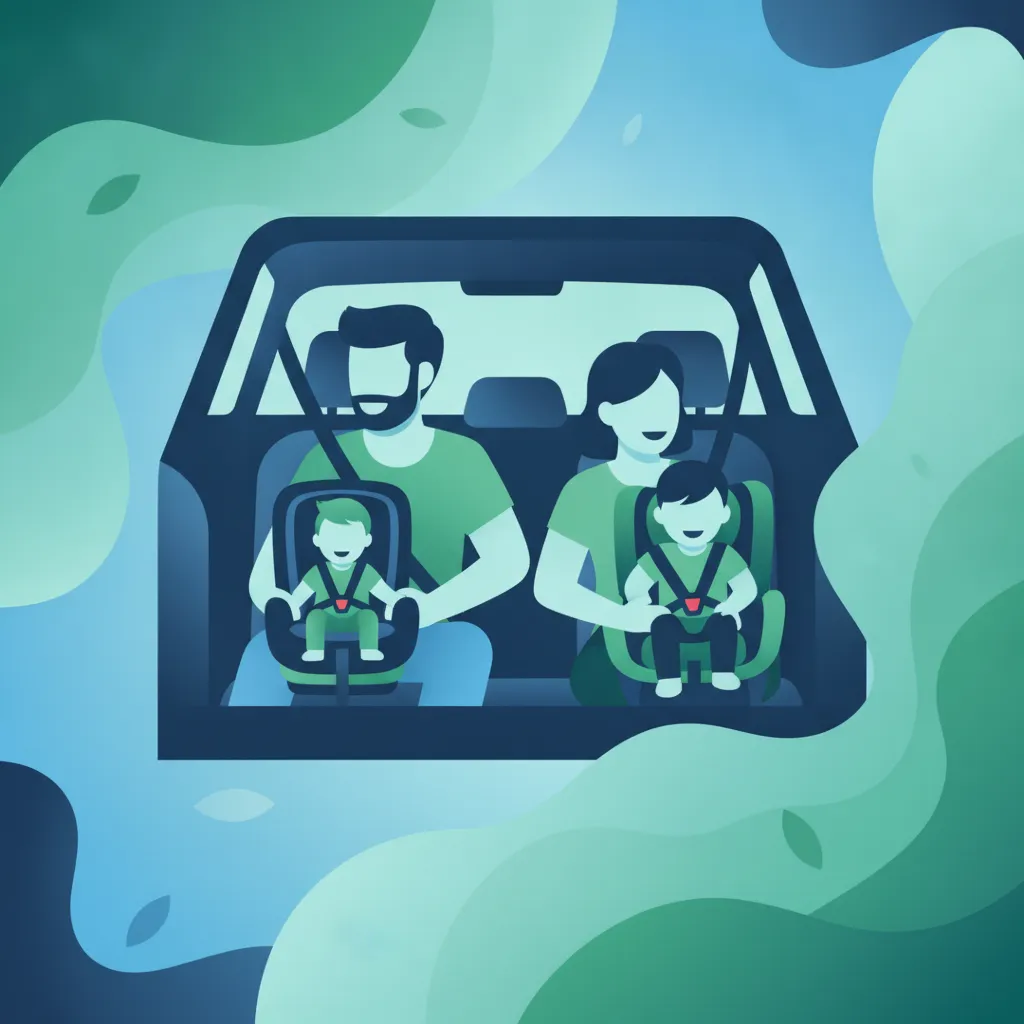
This lesson details the driver's legal responsibility for the safety of all passengers. It reinforces the mandatory use of seat belts for everyone in the vehicle. A significant focus is placed on the strict regulations for child safety, explaining the types of child restraint systems required based on a child's age, height, and weight, and how to install them correctly.

This lesson details the various seating configurations and restraint systems found in passenger vehicles, including three-point and lap belts. It explains the legal regulations surrounding seat belt usage and provides strategies to ensure passenger compliance for maximum safety. The correct application of child safety seats and the importance of secure fastening for all restraint systems are also emphasized to prevent injuries.

This lesson covers the proper management of items brought on board by passengers, including luggage, prams, and mobility aids. It teaches how to use designated storage areas and racks correctly to prevent items from becoming hazards. The procedures for securing wheelchairs and other mobility devices are detailed to ensure they are stable and do not move during transit, complying with safety and accessibility standards.

This lesson details the specific legal obligations and safety protocols required for transporting schoolchildren. It covers the correct procedures for pick-up and drop-off, the use of warning lights, and the importance of supervised boarding and alighting. The lesson also explains how to interact with school crossing guards and navigate school zones safely to ensure the highest level of protection for children.

This lesson focuses on identifying road users who require special attention and caution, such as children, the elderly, and individuals with disabilities. It details the appropriate behavior when encountering school buses and public transport, which often involve unpredictable pedestrian movement. A critical topic covered is the legal requirement to form an emergency corridor ('Rettungsgasse') for responding emergency vehicles.

This lesson explains the legal and safety requirements for transporting goods and cargo. It covers the importance of proper load distribution to maintain vehicle stability and the methods for securely fastening items to prevent them from shifting or falling. The regulations concerning maximum vehicle weight, roof loads, and the correct marking of loads that overhang the vehicle are also detailed.
Explore the essential passive safety systems in cars beyond seat belts and airbags. This includes how vehicle structure, head restraints, and other built-in features contribute to occupant protection during collisions according to German theory.
This lesson details the driver's legal responsibility for the safety of all passengers. It reinforces the mandatory use of seat belts for everyone in the vehicle. A significant focus is placed on the strict regulations for child safety, explaining the types of child restraint systems required based on a child's age, height, and weight, and how to install them correctly.
This lesson outlines the driver's legal responsibility to ensure their vehicle is in a safe and roadworthy condition before every journey. It covers essential pre-drive checks, such as verifying lights, tyres, and fluid levels (oil, coolant, washer fluid). The lesson also explains the mandatory equipment that must be carried in the vehicle, including a warning triangle, high-visibility vest, and first-aid kit.
This lesson focuses on identifying road users who require special attention and caution, such as children, the elderly, and individuals with disabilities. It details the appropriate behavior when encountering school buses and public transport, which often involve unpredictable pedestrian movement. A critical topic covered is the legal requirement to form an emergency corridor ('Rettungsgasse') for responding emergency vehicles.
This lesson teaches riders how to conduct a simple but crucial pre-ride inspection of their vehicle. It provides step-by-step guidance on checking tyre pressure and tread depth, verifying brake function, and ensuring all lights are operational. Regular maintenance is presented as a fundamental responsibility for every rider.

This lesson focuses on the particular care required when driving near pedestrians, with a special emphasis on children and the elderly, whose behavior can be unpredictable. It covers the rules for yielding at zebra crossings and the importance of reducing speed near schools, playgrounds, and residential areas. The goal is to instill a habit of constant vigilance and readiness to stop.

This lesson covers the lighting and reflector requirements for heavy vehicles, including headlamps, side markers, and brake lights. It explains the function of these systems and the necessity of underrun protection to safeguard other road users. The content also discusses regulations governing lighting systems and their importance for safety in all conditions.

This lesson explains the legal framework for ensuring a passenger vehicle's roadworthiness, focusing on periodic technical inspections (TÜV) and scheduled maintenance. It identifies critical wear components, such as brakes and tires, that require regular monitoring and replacement. The importance of adhering to service intervals and maintaining accurate maintenance logs for regulatory compliance is also thoroughly covered.
This lesson introduces the concept of defensive driving ('vorausschauendes Fahren'), a proactive approach focused on anticipating and mitigating potential risks. It teaches techniques for scanning the road ahead, identifying potential hazards early, and managing the space around your vehicle to create a safety buffer. The goal is to develop a mindset that prioritizes safety and collision avoidance above all else.

This lesson outlines the legal requirements for vehicle roadworthiness, including mandatory periodic inspections (TÜV) and the issuance of safety certificates. It explains the standards for emissions, safety devices, and the proper documentation of defects. The content underscores the importance of complying with inspection intervals and addressing repair obligations promptly.

This lesson details the importance of personal protective equipment for rider safety. It covers the legal standards for helmets in Germany, the benefits of wearing abrasion-resistant jackets and gloves, and the value of high-visibility clothing. It also explains the proper use of vehicle lighting systems to ensure visibility to others.
Find clear answers to common questions learners have about Safety Systems (Seat Belts, Airbags, Child Restraints). Learn how the lesson is structured, which driving theory objectives it supports, and how it fits into the overall learning path of units and curriculum progression in Germany. These explanations help you understand key concepts, lesson flow, and exam focused study goals.
Yes, it is a legal requirement in Germany for the driver and all passengers to wear seat belts at all times when the vehicle is in motion, provided seat belts are fitted.
Children under 150 cm in height or under 12 years of age must use an approved child restraint system. Failure to use the correct seat is a violation of traffic law and compromises the child's safety in an accident.
You may only deactivate the passenger-side airbag if you are installing a rear-facing child restraint system in the front seat. Otherwise, it must remain active to provide protection in a collision.
The top of the head restraint should be level with the top of your head to effectively prevent whiplash in the event of a rear-end collision.
Begin your targeted revision now. Use our practice search to quickly find specific German driving theory questions. Filter by StVO rules, road signs, or hazard perception to create your focused study plan. Master challenging areas and prepare confidently for your theoretical driving test.