
In Germany, certain vehicles, such as ambulances, police, and fire trucks, are granted special priority when responding to emergencies. This priority is indicated by specific signals, and all other road users have a strict legal obligation to react appropriately to ensure their unhindered passage. Understanding these rules is vital for safe driving and passing your German theory exam.
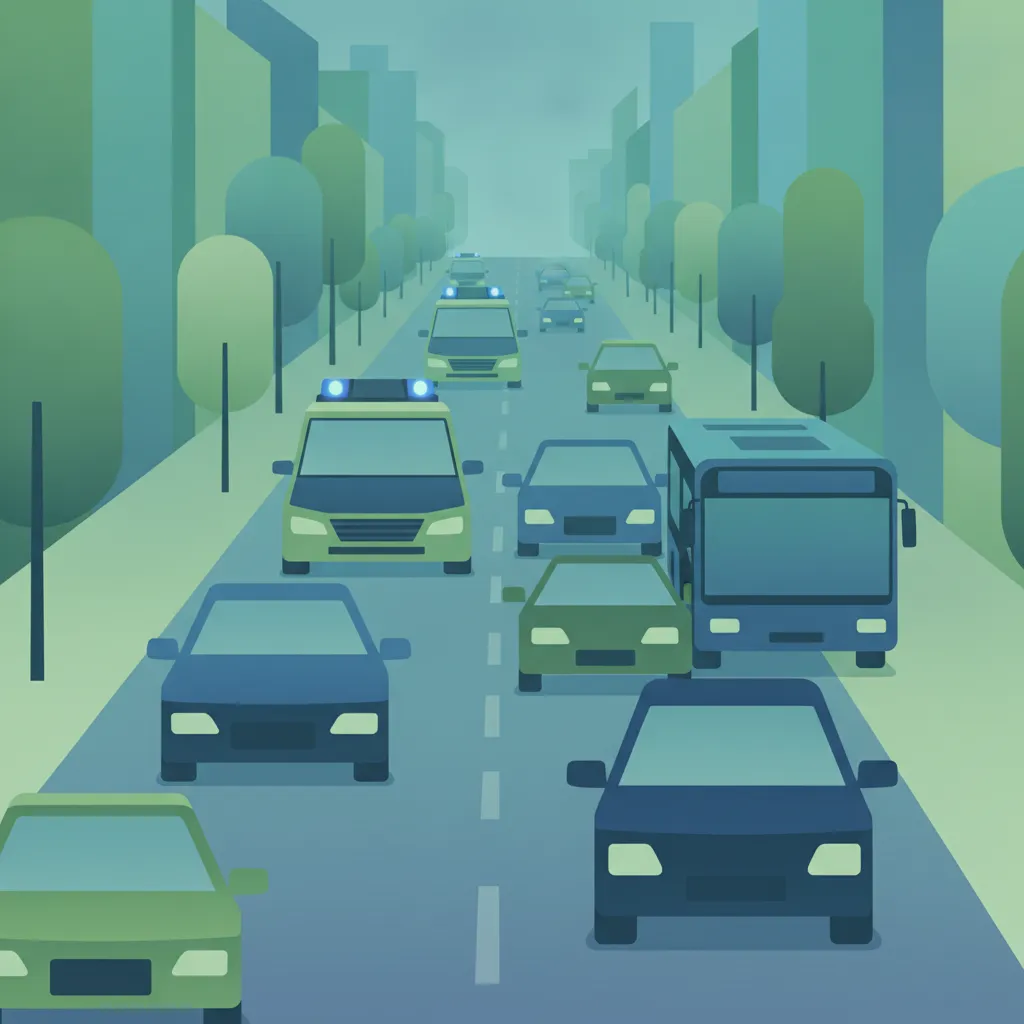
Theory topic content overview
Read the full theory topic guide for Emergency Vehicle Priority with structured, easy-to-scan content built for learners in Germany. This detailed section explains the exact rule, meaning, traffic context, comparison points, and exam logic behind this German driving theory topic so you can study faster, understand the concept more clearly, and avoid common interpretation mistakes on the theory test.
In Germany, the concept of emergency vehicle priority is not just a courtesy; it's a strict legal obligation. When vehicles such as ambulances, police cars, or fire trucks are on an urgent mission – an Einsatzfahrt – every other road user has a clear duty to ensure their unhindered passage. This crucial principle, often summarised as "freie Bahn schaffen" (creating a clear path), is fundamental to road safety, legally enshrined in the German Straßenverkehrs-Ordnung (StVO), and a frequent topic in the German driving theory exam.
"Freie Bahn schaffen" means you must immediately provide a clear and unobstructed path for emergency vehicles. This obligation arises under specific conditions, primarily when an emergency vehicle is using both its blue flashing lights (blaues Blinklicht) AND its emergency siren (Einsatzhorn). These combined signals are the legal command to all other traffic participants to yield without delay.
The legal basis for this is StVO § 38 (1), which states: "Blue flashing light together with the emergency siren may only be used when highest urgency is required... It orders: 'All other road users must immediately create a clear path.'"
Understanding and correctly applying emergency vehicle priority rules is vital for several reasons:
Rettungsgasse (emergency corridor) are common in the German driving theory test (Theorieprüfung).Your response to an approaching emergency vehicle depends critically on the signals it is using:
Blue Flashing Lights (blaues Blinklicht) AND Emergency Siren (Einsatzhorn): This combination signifies an Einsatzfahrt where immediate priority is legally mandated. You must:
Blue Flashing Lights (blaues Blinklicht) ALONE:
According to StVO § 38 (2), blue flashing lights alone are used to warn of dangers at accident scenes, during escort duties (e.g., a heavy transport), or during certain operational drives. While still indicating a special situation, blue lights alone do not automatically grant the immediate "freie Bahn schaffen" priority in the same way as lights and siren. You should still exercise increased caution, be prepared to react, and show consideration, but the absolute legal demand to give way immediately is only triggered by the combination with the Einsatzhorn. This is a very common exam trap in Germany!
A critical German rule is the Rettungsgasse (emergency corridor), which must be formed on multi-lane roads like the Autobahn or außerorts (outside built-up areas) whenever traffic slows to a crawl or comes to a stop.
Rettungsgasse correctly and proactively is a significant aspect of the German driving test. Failure to do so can result in substantial fines and penalty points.Theorieprüfung.Einsatzfahrt. You must yield.Autobahn and traffic comes to a standstill. Even before you see an emergency vehicle, you immediately begin forming a Rettungsgasse. If you're in the left lane, you move left; if you're in the middle or right lane, you move right.Kreuzung with a green light. As you prepare to enter, you hear an Einsatzhorn and see blue flashing lights approaching from your left. Instead of entering the intersection, you stop safely before the stop line, allowing the emergency vehicle to pass, even if it means missing your green light.Bundesstraße: You are driving on a two-lane Bundesstraße and hear a siren approaching from behind. You check your mirrors, signal right, and move as far to the right as safely possible, potentially slowing down or briefly stopping on the hard shoulder if available, to create ample space.For safe driving in Germany, cultivate an "eyes and ears" mindset:
By mastering the German rules for emergency vehicle priority and the concept of "freie Bahn schaffen", you ensure your safety, contribute to public welfare, and demonstrate your competence in the German driving test.
Start with a short, direct summary of Emergency Vehicle Priority before reading the full explanation below.
When an emergency vehicle in Germany approaches with both blue flashing lights (blaues Blinklicht) and an emergency siren (Einsatzhorn), all other road users must immediately create a clear path ('freie Bahn schaffen'). This typically means slowing down, moving to the side of the road, or stopping safely to allow the emergency vehicle to pass without obstruction. Your primary goal is to ensure the emergency vehicle can proceed as quickly and safely as possible.
Review the most important terms, rule signals, and traffic concepts linked to Emergency Vehicle Priority.
Explore related theory topic pages connected to Emergency Vehicle Priority and continue with the next useful rule explanation.
See the common search queries learners use when trying to understand Emergency Vehicle Priority in Germany.

Solidify your understanding of German road rules. Explore specific theory topics in detail, from priority rules to complex Autobahn situations. Review key concepts and prepare thoroughly for every aspect of your official driving license theory examination.
German Driving Theory TopicsTheory topic content overview
Start with a short, direct summary of Emergency Vehicle Priority before reading the full explanation below.
When an emergency vehicle in Germany approaches with both blue flashing lights (blaues Blinklicht) and an emergency siren (Einsatzhorn), all other road users must immediately create a clear path ('freie Bahn schaffen'). This typically means slowing down, moving to the side of the road, or stopping safely to allow the emergency vehicle to pass without obstruction. Your primary goal is to ensure the emergency vehicle can proceed as quickly and safely as possible.
Review the most important terms, rule signals, and traffic concepts linked to Emergency Vehicle Priority.
Explore related theory topic pages connected to Emergency Vehicle Priority and continue with the next useful rule explanation.
See the common search queries learners use when trying to understand Emergency Vehicle Priority in Germany.
Solidify your understanding of German road rules. Explore specific theory topics in detail, from priority rules to complex Autobahn situations. Review key concepts and prepare thoroughly for every aspect of your official driving license theory examination.
German Driving Theory TopicsUse this exam-focused revision tip to understand how Emergency Vehicle Priority is likely to appear in theory questions for learners in Germany. This section helps you identify the most testable part of the rule, avoid common traps, and remember the concept more effectively during German driving theory exam preparation.
A common mistake in the German theory exam is not distinguishing between blue flashing lights alone and blue lights combined with the siren (Einsatzhorn). Remember that the siren is crucial for demanding immediate priority and the 'freie Bahn schaffen' obligation. Also, be prepared for questions on forming a 'Rettungsgasse' on the Autobahn – the correct formation is a frequent exam trap.
Read direct answers to the most common learner questions about Emergency Vehicle Priority in Germany. This FAQ focuses on rule confusion, practical meaning, comparison with similar concepts, and the exact uncertainties that appear most often in German driving theory revision and exam preparation.
In Germany, emergency vehicles demand priority by using both blue flashing lights (blaues Blinklicht) and an acoustic signal, the emergency siren (Einsatzhorn), together. This combination legally obligates other drivers to create a clear path.
Freie Bahn schaffen means 'to create a clear path'. It is the legal duty of all road users to immediately make way for emergency vehicles using blue flashing lights and sirens, allowing them to pass without any delay or obstruction.
If an emergency vehicle approaches from behind with blue lights and siren, you should signal, move to the right (or left if you are in the far right lane on a multi-lane road), and slow down or stop safely to allow them to pass. Do not make sudden movements.
Yes, creating an emergency corridor (Rettungsgasse) is mandatory on German motorways (Autobahns) and multi-lane roads with at least two lanes in one direction whenever traffic is stopped or moving slowly. Drivers must move to the far left or far right to form a clear lane between the leftmost and second-leftmost lanes.
Yes, emergency vehicles ('Einsatzfahrzeuge') are granted special rights ('Sonderrechte') under StVO § 35 (1) that allow them to deviate from normal traffic rules (e.g., speed limits, right-of-way) when on urgent emergency calls, provided public safety and order are not endangered.
Even if you have a green light, you must yield to an emergency vehicle using blue lights and siren. You may need to wait at the intersection or carefully move aside to allow them to pass safely before proceeding, always prioritizing the emergency vehicle.
No, according to StVO § 38 (1) in Germany, the obligation for other road users to create a clear path ('freie Bahn schaffen') only applies when an emergency vehicle uses both blue flashing lights (blaues Blinklicht) AND the emergency siren (Einsatzhorn) together. Blue lights alone are typically used for warning at accident sites or escorting, not to demand immediate right of way from other traffic.
Begin your targeted revision now. Use our practice search to quickly find specific German driving theory questions. Filter by StVO rules, road signs, or hazard perception to create your focused study plan. Master challenging areas and prepare confidently for your theoretical driving test.