
In Germany, an uncontrolled intersection is any crossroads or junction lacking traffic lights, stop signs, give-way signs, or priority road signs. In these situations, drivers must apply general right-of-way principles, primarily the 'Rechts vor Links' rule. Understanding this rule and exercising caution is vital, as these intersections test your awareness and decision-making skills in traffic.
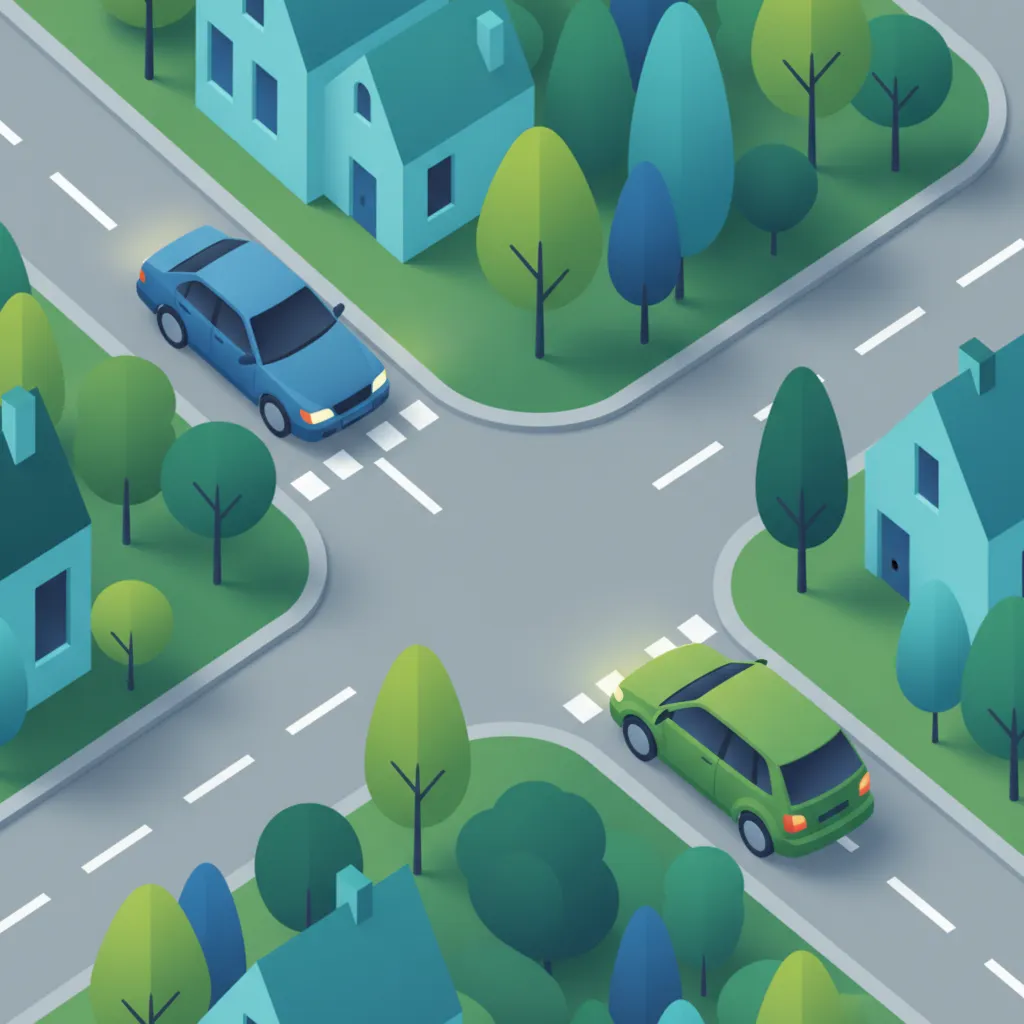
Theory topic content overview
Read the full theory topic guide for German 'Rechts vor Links' with structured, easy-to-scan content built for learners in Germany. This detailed section explains the exact rule, meaning, traffic context, comparison points, and exam logic behind this German driving theory topic so you can study faster, understand the concept more clearly, and avoid common interpretation mistakes on the theory test.
An uncontrolled intersection in Germany is any crossroads, junction, or Einmündung (joining road) where the right-of-way is not regulated by specific traffic signs (like 'Vorfahrt gewähren' (Give Way) or 'Halt' (Stop)), traffic lights, or road markings that clearly designate a priority road.
In these situations, German traffic law (specifically § 8 StVO, Vorfahrt - Right of Way) mandates the application of the fundamental "Rechts vor Links" rule, which translates to "right before left". This means that drivers approaching an uncontrolled intersection must yield priority to any vehicle approaching from their right side. This rule is a cornerstone of safe driving and the German driving theory exam, ensuring predictability where explicit guidance is absent.
Mastering the "Rechts vor Links" rule is critical for several reasons:
Navigating an uncontrolled intersection safely requires a systematic approach:
While "Rechts vor Links" is the default, several factors and exceptions can influence its application or demand extra caution:
To truly master priority at uncontrolled intersections, it's vital to differentiate it from other rules:
Let's illustrate with some typical German scenarios:
examTip specifically highlights this. Never assume priority based on road appearance.In Germany, the "Rechts vor Links" rule is your default guide at any intersection not explicitly regulated by signs, lights, or markings. Always approach such junctions with reduced speed and a defensive mindset. Your top priority is to scan deeply to your right, be prepared to yield to any traffic approaching from that direction, and only proceed when you are absolutely certain it is safe and clear. When turning left, remember to yield to oncoming traffic first. When in doubt, always yield – it’s the safest approach and aligns with the general duty of care (Rücksichtnahme) in German traffic law.
In Germany, uncontrolled intersections (those without signs, traffic lights, or road markings) are governed by the 'Rechts vor Links' (right before left) rule under § 8 StVO, which requires drivers to yield to traffic approaching from their right. Road appearance, width, or surface type never grants priority without explicit signage. Key exceptions include vehicles emerging from private properties (who must always yield), left-turning traffic (which must yield to oncoming vehicles), and tramways (which always have priority). When visibility is limited, drivers must approach at extremely slow speed and inch forward cautiously until the right side is clear. Always verify other drivers' intentions and yield when in doubt rather than assuming priority.
A short set of high-value points that capture the most important ideas from this theory explanation.
At uncontrolled intersections in Germany, 'Rechts vor Links' (right before left) applies when no signs, lights, or markings indicate otherwise
The rule requires yielding to traffic approaching from your right regardless of how important your road appears
When turning left at any intersection, you must always yield to oncoming traffic going straight or turning right
Vehicles emerging from private properties, driveways, dirt tracks, or pedestrian zones must always yield to all main road traffic
Tramways always have priority at uncontrolled intersections unless specific signs dictate otherwise
'Rechts vor Links' only applies when no traffic signs, lights, or road markings are present – signs always override it
Road width, surface type, or appearance never grant priority without explicit signage in Germany
At blind or limited-visibility intersections, slow to walking pace and inch forward until you can see traffic from your right
When both vehicles are turning simultaneously at an uncontrolled intersection, they generally pass each other on their respective right sides
Even after yielding, always check left-right-left again before proceeding into any intersection
Assuming priority based on a wider or more prominent-looking road without checking for signs
Not scanning far enough to the right for vehicles that are still approaching but not yet at the junction
Incorrectly applying 'Rechts vor Links' when turning left instead of yielding to oncoming traffic
Proceeding into an intersection without making eye contact or confirming the other driver will actually yield
Approaching blind intersections too quickly when visibility is restricted by parked cars, hedges, or weather
Start with a short, direct summary of German 'Rechts vor Links' before reading the full explanation below.
In Germany, at uncontrolled intersections, the 'Rechts vor Links' (right before left) rule applies, meaning drivers must yield to traffic approaching from their right. This principle governs priority when no signs, traffic lights, or road markings indicate otherwise, requiring drivers to be extra vigilant and prepared to yield, especially where visibility is limited.
Review the most important terms, rule signals, and traffic concepts linked to German 'Rechts vor Links'.
Explore related theory topic pages connected to German 'Rechts vor Links' and continue with the next useful rule explanation.
See the common search queries learners use when trying to understand German 'Rechts vor Links' in Germany.

Solidify your understanding of German road rules. Explore specific theory topics in detail, from priority rules to complex Autobahn situations. Review key concepts and prepare thoroughly for every aspect of your official driving license theory examination.
German Driving Theory TopicsTheory topic content overview
A short set of high-value points that capture the most important ideas from this theory explanation.
At uncontrolled intersections in Germany, 'Rechts vor Links' (right before left) applies when no signs, lights, or markings indicate otherwise
The rule requires yielding to traffic approaching from your right regardless of how important your road appears
When turning left at any intersection, you must always yield to oncoming traffic going straight or turning right
Vehicles emerging from private properties, driveways, dirt tracks, or pedestrian zones must always yield to all main road traffic
Tramways always have priority at uncontrolled intersections unless specific signs dictate otherwise
'Rechts vor Links' only applies when no traffic signs, lights, or road markings are present – signs always override it
Road width, surface type, or appearance never grant priority without explicit signage in Germany
At blind or limited-visibility intersections, slow to walking pace and inch forward until you can see traffic from your right
When both vehicles are turning simultaneously at an uncontrolled intersection, they generally pass each other on their respective right sides
Even after yielding, always check left-right-left again before proceeding into any intersection
Assuming priority based on a wider or more prominent-looking road without checking for signs
Not scanning far enough to the right for vehicles that are still approaching but not yet at the junction
Incorrectly applying 'Rechts vor Links' when turning left instead of yielding to oncoming traffic
Proceeding into an intersection without making eye contact or confirming the other driver will actually yield
Approaching blind intersections too quickly when visibility is restricted by parked cars, hedges, or weather
Start with a short, direct summary of German 'Rechts vor Links' before reading the full explanation below.
In Germany, at uncontrolled intersections, the 'Rechts vor Links' (right before left) rule applies, meaning drivers must yield to traffic approaching from their right. This principle governs priority when no signs, traffic lights, or road markings indicate otherwise, requiring drivers to be extra vigilant and prepared to yield, especially where visibility is limited.
Review the most important terms, rule signals, and traffic concepts linked to German 'Rechts vor Links'.
Explore related theory topic pages connected to German 'Rechts vor Links' and continue with the next useful rule explanation.
See the common search queries learners use when trying to understand German 'Rechts vor Links' in Germany.
Solidify your understanding of German road rules. Explore specific theory topics in detail, from priority rules to complex Autobahn situations. Review key concepts and prepare thoroughly for every aspect of your official driving license theory examination.
German Driving Theory TopicsUse this exam-focused revision tip to understand how German 'Rechts vor Links' is likely to appear in theory questions for learners in Germany. This section helps you identify the most testable part of the rule, avoid common traps, and remember the concept more effectively during German driving theory exam preparation.
A common mistake in the German theory exam is assuming priority based on how wide or straight your road appears. Always remember: if there are no signs or lights, the 'Rechts vor Links' rule applies. Scan carefully, especially to your right, and be ready to yield even if you think your road looks 'more important'.
Read direct answers to the most common learner questions about German 'Rechts vor Links' in Germany. This FAQ focuses on rule confusion, practical meaning, comparison with similar concepts, and the exact uncertainties that appear most often in German driving theory revision and exam preparation.
An uncontrolled intersection in Germany is any junction where no traffic lights, road signs (like stop signs, give-way signs, or priority road signs), or clear road markings specify who has the right-of-way.
The 'Rechts vor Links' rule (right before left) is a fundamental principle in German traffic law. At uncontrolled intersections, it means you must yield to any vehicle approaching from your immediate right.
No. In Germany, the size or apparent importance of a road does not automatically grant priority at an uncontrolled intersection. The 'Rechts vor Links' rule still applies unless overridden by signs or signals.
When visibility is poor due to obstacles, weather, or other factors, you must approach the intersection with extreme caution. Significantly reduce your speed and be prepared to stop immediately if another road user enters the intersection.
The 'Rechts vor Links' rule primarily applies to vehicles. While drivers must always be especially cautious and yield to pedestrians and cyclists when required, these vulnerable road users have specific protections, and their interactions are also governed by additional rules.
This rule does not apply when traffic signs (e.g., 'Vorfahrt gewähren' - give way), traffic lights, or road markings (like 'Haifischzähne' - shark teeth lines) clearly indicate different priority rules. It also doesn't apply when leaving a private property or an unpaved road.
The 'Rechts vor Links' rule is a core component of the German theory exam, often tested through scenario-based questions. You will need to accurately identify the correct right-of-way in diagrams of various uncontrolled intersection situations.
Begin your targeted revision now. Use our practice search to quickly find specific German driving theory questions. Filter by StVO rules, road signs, or hazard perception to create your focused study plan. Master challenging areas and prepare confidently for your theoretical driving test.