
In Germany, 'Vorfahrt gewähren' (to give way or yield priority) is a core principle of road safety. It means allowing other road users to proceed first to prevent conflicts and collisions. This concept is fundamental to navigating intersections, roundabouts, and pedestrian crossings correctly, as defined by the Straßenverkehrs-Ordnung (StVO).
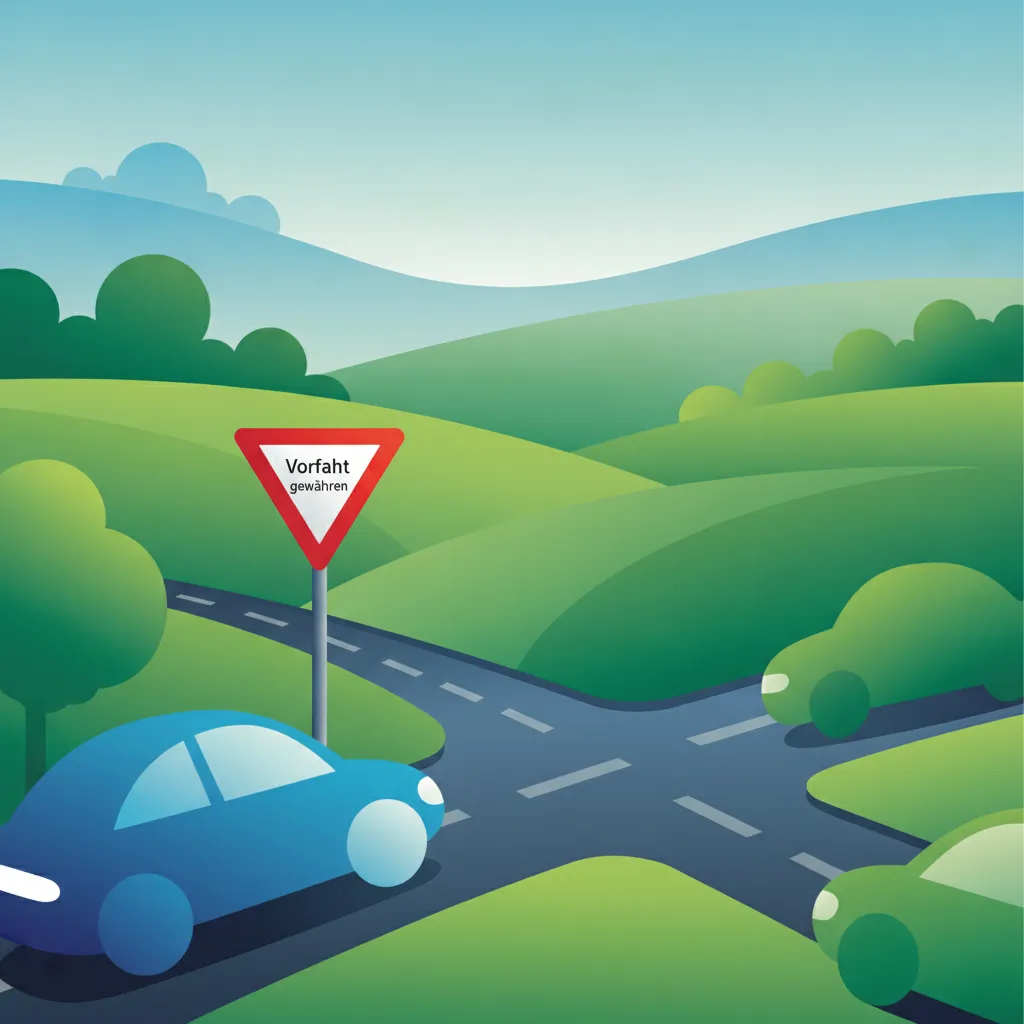
Theory topic content overview
Read the full theory topic guide for Give Way Rules (Germany) with structured, easy-to-scan content built for learners in Germany. This detailed section explains the exact rule, meaning, traffic context, comparison points, and exam logic behind this German driving theory topic so you can study faster, understand the concept more clearly, and avoid common interpretation mistakes on the theory test.
In German road traffic, "Vorfahrt gewähren" (literally "to grant priority") is the fundamental principle of giving way or yielding. It means that you, as a driver, must allow other road users who have priority ("Vorfahrt") to proceed first. Your actions must not impede, obstruct, or endanger them. This often requires you to slow down significantly, be prepared to stop, and only proceed when it is safe and clear to do so without affecting the priority traffic.
This core concept is enshrined in the German Road Traffic Act (Straßenverkehrs-Ordnung, StVO) and is crucial for preventing collisions and ensuring a smooth, predictable flow of traffic on German roads.
Mastering the German give way rules, or "Vorfahrt gewähren," is not just about passing your theory exam; it's vital for daily driving safety in Germany. Misunderstanding these rules is a leading cause of accidents at intersections and other conflict points. The German driving theory exam places significant emphasis on identifying priority situations correctly, often testing your ability to apply complex rules or distinguish between similar scenarios.
Properly yielding ensures that traffic moves predictably, reducing confusion and the risk of dangerous situations, especially at busy junctions, roundabouts, and pedestrian crossings.
To understand when you must "Vorfahrt gewähren," it's essential to know the strict hierarchy of priority on German roads. This order dictates which rule applies first in a conflict situation:
To master "Vorfahrt gewähren" for your German driving license theory exam and for safe driving, always remember this mental framework:
German give way rules follow a strict priority hierarchy: police signals first, then traffic lights, then road signs (Zeichen 205, 206, 306), and finally 'Rechts vor Links' at unmarked intersections. Yield signs require slowing and stopping only if necessary, while stop signs demand a complete halt. The 'Rechts vor Links' rule applies only when no other priority indicators are present, and signs always override it. Common errors include misapplying right-before-left when signs exist, failing to stop fully at stop signs, and overlooking cyclists or pedestrians when turning.
A short set of high-value points that capture the most important ideas from this theory explanation.
'Vorfahrt gewähren' means you must not impede or endanger other road users who have priority - often requiring you to slow down or stop completely
The priority hierarchy is strict: police signals override all, then traffic lights, then signs, and only then 'Rechts vor Links' applies
Traffic signs always override the general 'Rechts vor Links' rule - always look for Zeichen 205, 206, or 306 before applying right-before-left
At a yield sign you stop only if necessary; at a stop sign you must come to a complete stop regardless of traffic conditions
You may be required to waive your priority ('Verzicht auf Vorfahrt') if entering an intersection would cause gridlock blocking cross-traffic
Police officer signals (Anhaltzeichen) are supreme and override all other priority rules including traffic lights and signs
Haifischzähne (shark's teeth) are white triangular road markings that reinforce a yielding obligation at Zeichen 205 intersections
At unmarked intersections, 'Rechts vor Links' means vehicles from your right always have priority, regardless of road size or appearance
Vehicles already in a roundabout have priority over those entering - yield at entry unless signs state otherwise
When turning left, you must yield to oncoming traffic going straight or turning right, plus any pedestrians or cyclists crossing
Applying 'Rechts vor Links' at intersections where yield or stop signs are present - signs always take priority over the general rule
Rolling through a stop sign without coming to a complete stop, even when the intersection appears clear
Failing to check for cyclists and pedestrians when turning right, as they may be proceeding alongside in parallel
Entering a roundabout without yielding to vehicles already inside, due to assuming priority based on road position
Blocking an intersection when traffic is backed up on the other side - you must not enter even with priority or a green light
Start with a short, direct summary of Give Way Rules (Germany) before reading the full explanation below.
Giving way in Germany means that you must yield to other road users who have priority, ensuring your actions do not impede or endanger them. This often requires you to slow down or stop completely, allowing the priority traffic to pass safely. Situations requiring you to give way are typically indicated by specific traffic signs, road markings, or the general 'Rechts vor Links' (right before left) rule at unmarked intersections.
Review the most important terms, rule signals, and traffic concepts linked to Give Way Rules (Germany).
Explore related theory topic pages connected to Give Way Rules (Germany) and continue with the next useful rule explanation.
See the common search queries learners use when trying to understand Give Way Rules (Germany) in Germany.

Solidify your understanding of German road rules. Explore specific theory topics in detail, from priority rules to complex Autobahn situations. Review key concepts and prepare thoroughly for every aspect of your official driving license theory examination.
German Driving Theory TopicsTheory topic content overview
A short set of high-value points that capture the most important ideas from this theory explanation.
'Vorfahrt gewähren' means you must not impede or endanger other road users who have priority - often requiring you to slow down or stop completely
The priority hierarchy is strict: police signals override all, then traffic lights, then signs, and only then 'Rechts vor Links' applies
Traffic signs always override the general 'Rechts vor Links' rule - always look for Zeichen 205, 206, or 306 before applying right-before-left
At a yield sign you stop only if necessary; at a stop sign you must come to a complete stop regardless of traffic conditions
You may be required to waive your priority ('Verzicht auf Vorfahrt') if entering an intersection would cause gridlock blocking cross-traffic
Police officer signals (Anhaltzeichen) are supreme and override all other priority rules including traffic lights and signs
Haifischzähne (shark's teeth) are white triangular road markings that reinforce a yielding obligation at Zeichen 205 intersections
At unmarked intersections, 'Rechts vor Links' means vehicles from your right always have priority, regardless of road size or appearance
Vehicles already in a roundabout have priority over those entering - yield at entry unless signs state otherwise
When turning left, you must yield to oncoming traffic going straight or turning right, plus any pedestrians or cyclists crossing
Applying 'Rechts vor Links' at intersections where yield or stop signs are present - signs always take priority over the general rule
Rolling through a stop sign without coming to a complete stop, even when the intersection appears clear
Failing to check for cyclists and pedestrians when turning right, as they may be proceeding alongside in parallel
Entering a roundabout without yielding to vehicles already inside, due to assuming priority based on road position
Blocking an intersection when traffic is backed up on the other side - you must not enter even with priority or a green light
Start with a short, direct summary of Give Way Rules (Germany) before reading the full explanation below.
Giving way in Germany means that you must yield to other road users who have priority, ensuring your actions do not impede or endanger them. This often requires you to slow down or stop completely, allowing the priority traffic to pass safely. Situations requiring you to give way are typically indicated by specific traffic signs, road markings, or the general 'Rechts vor Links' (right before left) rule at unmarked intersections.
Review the most important terms, rule signals, and traffic concepts linked to Give Way Rules (Germany).
Explore related theory topic pages connected to Give Way Rules (Germany) and continue with the next useful rule explanation.
See the common search queries learners use when trying to understand Give Way Rules (Germany) in Germany.
Solidify your understanding of German road rules. Explore specific theory topics in detail, from priority rules to complex Autobahn situations. Review key concepts and prepare thoroughly for every aspect of your official driving license theory examination.
German Driving Theory TopicsUse this exam-focused revision tip to understand how Give Way Rules (Germany) is likely to appear in theory questions for learners in Germany. This section helps you identify the most testable part of the rule, avoid common traps, and remember the concept more effectively during German driving theory exam preparation.
A common mistake in the German theory exam is confusing 'Rechts vor Links' with situations where a 'Vorfahrt gewähren' sign is present. Remember: signs always override the general 'Rechts vor Links' rule. Pay close attention to all signage at intersections, as well as specific markings like 'Haifischzähne' (shark's teeth) which indicate a yielding obligation.
Read direct answers to the most common learner questions about Give Way Rules (Germany) in Germany. This FAQ focuses on rule confusion, practical meaning, comparison with similar concepts, and the exact uncertainties that appear most often in German driving theory revision and exam preparation.
In German traffic, "Vorfahrt gewähren" means to give way or yield priority. It obligates you to allow other road users to proceed first, ensuring you do not obstruct or endanger them.
You must give way at intersections when indicated by a "Vorfahrt gewähren" sign (inverted triangle), a "Stop" sign, or when turning left. At unmarked intersections, the "Rechts vor Links" rule generally applies, meaning you must give way to traffic coming from your right.
A "Vorfahrt gewähren" (Give Way) sign requires you to yield to priority traffic, slowing down or stopping as necessary. A "Stop" sign (Halt. Vorfahrt gewähren) is more stringent, requiring you to come to a complete stop before the stop line, even if no traffic is visible, and then give way.
You must give way to pedestrians at marked pedestrian crossings (Zebrastreifen) if they intend to cross or are already crossing. At intersections without specific markings, general priority rules apply, but drivers should always exercise caution.
In most German roundabouts, vehicles already circulating within the roundabout have priority. You must give way to them when entering unless specific signs or signals indicate otherwise.
Yes, according to StVO § 11 (3), you can waive your right of way if the traffic situation requires it or if you communicate with the other driver. However, you should only rely on someone else waiving their right of way if there's clear communication.
According to StVO § 11 (1), you must not enter an intersection, even if you have priority or a green light, if traffic is backed up and you would have to stop within the intersection.
Police officers' instructions take precedence over all other traffic rules, signs, and signals, including give way rules (StVO § 36). Always follow the directions of a police officer first.
Begin your targeted revision now. Use our practice search to quickly find specific German driving theory questions. Filter by StVO rules, road signs, or hazard perception to create your focused study plan. Master challenging areas and prepare confidently for your theoretical driving test.