
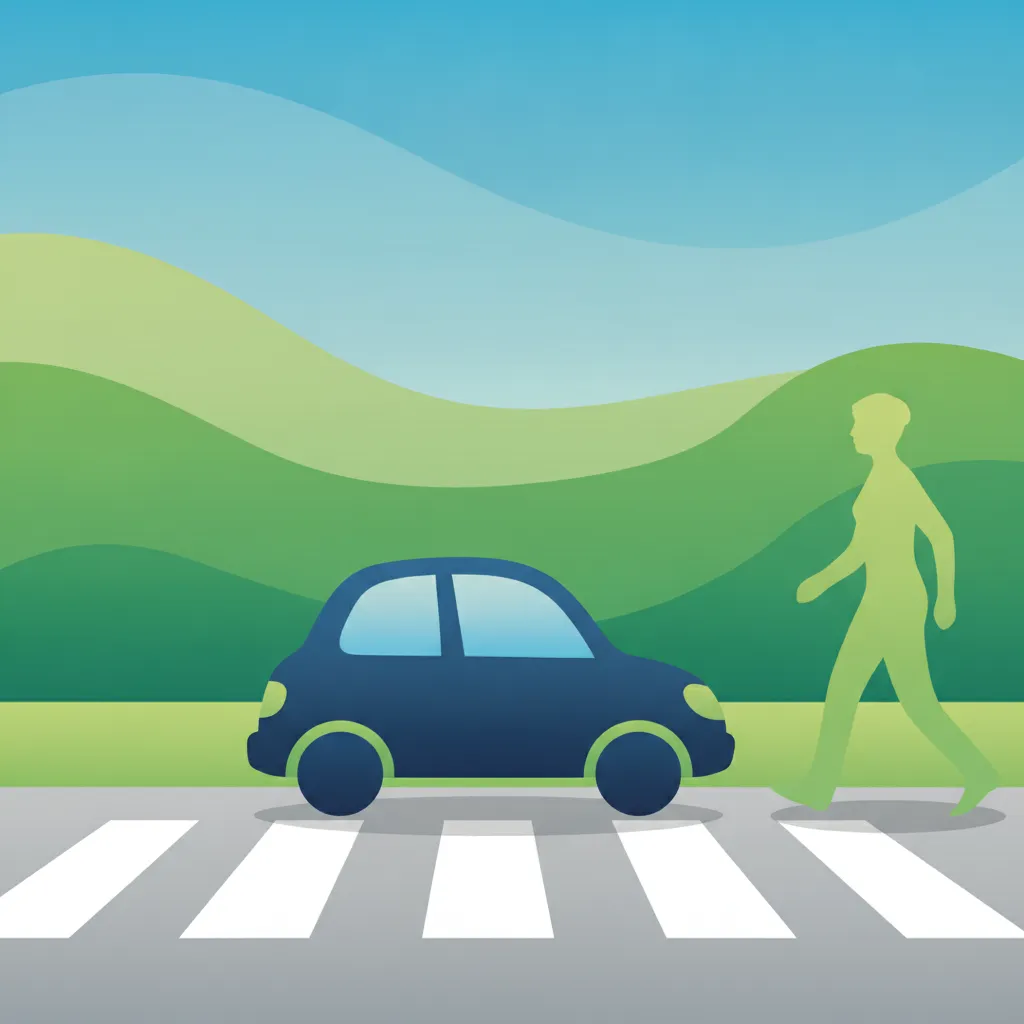
In Germany, traffic laws place a strong emphasis on protecting vulnerable road users, especially pedestrians. This guide explains the specific situations where drivers must grant priority to pedestrians, such as at designated crossings or when making turns. Proper understanding ensures safety, prevents accidents, and is frequently tested in the German theory exam.
Theory topic content overview
Read the full theory topic guide for Pedestrian Priority in Germany with structured, easy-to-scan content built for learners in Germany. This detailed section explains the exact rule, meaning, traffic context, comparison points, and exam logic behind this German driving theory topic so you can study faster, understand the concept more clearly, and avoid common interpretation mistakes on the theory test.
In Germany, understanding Pedestrian Priority Rules is fundamental not only for road safety but also for successfully passing your driving theory exam. German traffic law, primarily outlined in the Straßenverkehrs-Ordnung (StVO), places a strong emphasis on protecting vulnerable road users, with specific provisions detailing when drivers must yield to pedestrians.
Vorrang für Fußgänger)?Pedestrian priority refers to specific situations where pedestrians have the right to cross the road, and drivers are legally obligated to stop or slow down to let them pass safely. While the term Vorfahrt typically applies to vehicles, for pedestrians, we often speak of Vorrang (precedence) or the driver's duty to Vorfahrt gewähren (yield) to pedestrians. This principle is deeply rooted in the concept of Rücksichtnahme (consideration) and the general duty of care towards those without the protection of a vehicle.
StVO): Failing to yield when required is a serious traffic offense in Germany, leading to fines, penalty points (Punkte in Flensburg), and potentially even a driving ban (Fahrverbot) in severe cases.Fußgängerüberwege (zebra crossings) and turning maneuvers, are very common in the German driving theory test (Theorieprüfung). Misunderstanding these rules is a frequent source of errors.Drivers must be particularly vigilant and prepared to yield in the following situations:
Fußgängerüberwege / Zebra Crossings)This is the most well-known scenario for pedestrian priority in Germany.
Fußgängerüberwege are marked by broad white stripes on the road (zebra stripes) and typically indicated by the Zeichen 293 road sign (blue square with a white triangle depicting a pedestrian).Fußgängerüberweg, drivers must slow down and be prepared to stop. You must yield to any pedestrian who is already on the crossing or clearly intending to cross it. This means stopping well before the crossing, not on it.Überholen) any vehicle that has stopped at a Fußgängerüberweg to allow pedestrians to cross is strictly forbidden. It is also forbidden to overtake directly on the crossing itself.Abbiegen)This is a critical rule often misunderstood by learners in Germany.
StVO § 9 Abs. 3): When turning right or left at an intersection or into an alleyway, drivers must yield to pedestrians already crossing the road you are turning into, or who are about to cross. This applies even if there is no marked pedestrian crossing.Verkehrsberuhigter Bereich)Indicated by the Zeichen 325.1 sign (blue square with car, child, house, and pedestrian symbols).
Schrittgeschwindigkeit), typically 5-7 km/h, and must not endanger or obstruct pedestrians. Pedestrians always have priority here.Bushaltestellen)Warnblinklicht): When a bus stops and activates its hazard warning lights (Warnblinklichtanlage), drivers approaching from either direction must proceed with extreme caution and at walking pace.Fußgängerüberweg vs. Unmarked Crossings: Pedestrians do not automatically have priority everywhere. At unmarked spots, pedestrians generally must wait for a safe gap in traffic unless other rules (like turning at an intersection) grant them priority. Always be prepared to stop regardless.Fußgängerüberweg. This can tragically conceal a pedestrian from the overtaking driver's view.Fußgängerüberwege and forget the crucial rule about yielding to pedestrians when turning. This is a common exam trap and a real-world hazard.Fußgängerüberweg: You see the Zeichen 293 sign. A group of school children is gathered at the edge, looking towards the crossing. You must slow down significantly, be prepared to stop, and only proceed when it is clear they are not entering the crossing or have safely crossed.Verkehrsberuhigter Bereich: You are driving out of a residential zone marked with Zeichen 325.1. Children are playing on the designated play area, which extends onto the road. You must maintain walking pace and be ready to stop for any child that moves onto the carriageway.In German traffic, adopt a mindset of anticipation and defensive driving when it comes to pedestrians. Always assume a pedestrian might step onto the road, especially near crossings, intersections, bus stops, or parked cars. Your primary goal is to ensure their safety. Look for visual cues, adapt your speed, and always be prepared to stop. Remembering the specific German rules for Fußgängerüberwege and turning maneuvers will keep you safe and help you pass your Theorieprüfung.
German pedestrian priority rules are rooted in the duty of Rücksichtnahme (consideration) toward vulnerable road users and are tested extensively in the Theorieprüfung. The four critical situations where drivers must yield are: at marked Fußgängerüberwege (zebra crossings), when turning at any intersection, in traffic-calmed zones where pedestrians may use the full road, and near bus stops with activated hazard lights. Drivers bear heightened responsibility and must anticipate pedestrians appearing unexpectedly, check blind spots carefully, and never overtake stopped vehicles at crossings. Failure to yield carries serious penalties including fines, points in Flensburg, and potential driving bans.
A short set of high-value points that capture the most important ideas from this theory explanation.
Drivers must yield to pedestrians at marked crossings (Fußgängerüberwege) indicated by Zeichen 293, stopping well before the crossing if needed
When turning at any intersection, drivers must yield to pedestrians already crossing the road being entered, per StVO § 9 Abs. 3
In traffic-calmed zones (Verkehrsberuhigter Bereich, Zeichen 325.1), pedestrians may use the full road width and drivers must proceed at walking pace
Drivers carry heightened responsibility for pedestrian safety regardless of pedestrian behaviour, and must always be prepared to stop
Overtaking a vehicle stopped at a pedestrian crossing is strictly forbidden and extremely dangerous
Zebra crossings are identified by Zeichen 293 (blue square, white triangle with pedestrian) and broad white stripes on the road
Turning pedestrians apply even at unmarked intersections—you must yield if a pedestrian is crossing the road you're entering
At bus stops, activate hazard lights mean you must proceed at walking pace and yield to passengers entering or exiting
Pedestrians do not automatically have priority at unmarked crossings—only where specific rules apply
The driver's duty is to prevent collisions; never assume a pedestrian has seen you or will wait
Believing pedestrian priority only applies at marked crossings—turning situations are equally important and frequently tested
Overtaking a vehicle that has stopped at a Fußgängerüberweg to let pedestrians cross, which hides pedestrians from view
Failing to check A-pillar and mirror blind spots when turning, as pedestrians can easily be hidden from view
Assuming unmarked crossings give pedestrians automatic priority—they do not, but drivers must still be prepared to stop
Relying on eye contact with pedestrians before proceeding, especially with children or distracted individuals
Start with a short, direct summary of Pedestrian Priority in Germany before reading the full explanation below.
Pedestrian priority in Germany means drivers must yield to people on foot in specific situations. This primarily applies at marked pedestrian crossings (Fußgängerüberweg), where drivers must stop if a pedestrian intends to cross. Additionally, drivers turning at intersections often have to give way to pedestrians already crossing the road they are turning into. This emphasizes the heightened responsibility of drivers for pedestrian safety.
Review the most important terms, rule signals, and traffic concepts linked to Pedestrian Priority in Germany.
Explore related theory topic pages connected to Pedestrian Priority in Germany and continue with the next useful rule explanation.
See the common search queries learners use when trying to understand Pedestrian Priority in Germany in Germany.

Solidify your understanding of German road rules. Explore specific theory topics in detail, from priority rules to complex Autobahn situations. Review key concepts and prepare thoroughly for every aspect of your official driving license theory examination.
German Driving Theory TopicsTheory topic content overview
A short set of high-value points that capture the most important ideas from this theory explanation.
Drivers must yield to pedestrians at marked crossings (Fußgängerüberwege) indicated by Zeichen 293, stopping well before the crossing if needed
When turning at any intersection, drivers must yield to pedestrians already crossing the road being entered, per StVO § 9 Abs. 3
In traffic-calmed zones (Verkehrsberuhigter Bereich, Zeichen 325.1), pedestrians may use the full road width and drivers must proceed at walking pace
Drivers carry heightened responsibility for pedestrian safety regardless of pedestrian behaviour, and must always be prepared to stop
Overtaking a vehicle stopped at a pedestrian crossing is strictly forbidden and extremely dangerous
Zebra crossings are identified by Zeichen 293 (blue square, white triangle with pedestrian) and broad white stripes on the road
Turning pedestrians apply even at unmarked intersections—you must yield if a pedestrian is crossing the road you're entering
At bus stops, activate hazard lights mean you must proceed at walking pace and yield to passengers entering or exiting
Pedestrians do not automatically have priority at unmarked crossings—only where specific rules apply
The driver's duty is to prevent collisions; never assume a pedestrian has seen you or will wait
Believing pedestrian priority only applies at marked crossings—turning situations are equally important and frequently tested
Overtaking a vehicle that has stopped at a Fußgängerüberweg to let pedestrians cross, which hides pedestrians from view
Failing to check A-pillar and mirror blind spots when turning, as pedestrians can easily be hidden from view
Assuming unmarked crossings give pedestrians automatic priority—they do not, but drivers must still be prepared to stop
Relying on eye contact with pedestrians before proceeding, especially with children or distracted individuals
Start with a short, direct summary of Pedestrian Priority in Germany before reading the full explanation below.
Pedestrian priority in Germany means drivers must yield to people on foot in specific situations. This primarily applies at marked pedestrian crossings (Fußgängerüberweg), where drivers must stop if a pedestrian intends to cross. Additionally, drivers turning at intersections often have to give way to pedestrians already crossing the road they are turning into. This emphasizes the heightened responsibility of drivers for pedestrian safety.
Review the most important terms, rule signals, and traffic concepts linked to Pedestrian Priority in Germany.
Explore related theory topic pages connected to Pedestrian Priority in Germany and continue with the next useful rule explanation.
See the common search queries learners use when trying to understand Pedestrian Priority in Germany in Germany.
Solidify your understanding of German road rules. Explore specific theory topics in detail, from priority rules to complex Autobahn situations. Review key concepts and prepare thoroughly for every aspect of your official driving license theory examination.
German Driving Theory TopicsUse this exam-focused revision tip to understand how Pedestrian Priority in Germany is likely to appear in theory questions for learners in Germany. This section helps you identify the most testable part of the rule, avoid common traps, and remember the concept more effectively during German driving theory exam preparation.
The German theory exam often presents scenarios involving pedestrians unexpectedly stepping onto the road or appearing from behind obstacles. Always assume pedestrians might not see you or wait, especially near schools, bus stops, or parked cars. Anticipate and be prepared to stop instantly to avoid critical mistakes.
Read direct answers to the most common learner questions about Pedestrian Priority in Germany in Germany. This FAQ focuses on rule confusion, practical meaning, comparison with similar concepts, and the exact uncertainties that appear most often in German driving theory revision and exam preparation.
In German traffic, pedestrian priority means that drivers are legally required to yield to pedestrians in certain situations, allowing them to cross the road safely before vehicles proceed. This rule prioritizes the safety of those on foot.
At a marked pedestrian crossing (Fußgängerüberweg), drivers must slow down and stop if a pedestrian is on the crossing or clearly intends to cross. Drivers must wait until the pedestrian has safely cleared their path before continuing.
Yes, in Germany, vehicles turning right or left at an intersection must always yield to pedestrians who are already crossing or clearly intending to cross the road that the vehicle is turning into. This applies even if there is no explicit pedestrian crossing marking.
According to §1 StVO (German Road Traffic Act), all road users must exercise constant caution and mutual consideration. Drivers have an increased responsibility towards pedestrians due to their vulnerability, meaning they should always drive defensively, anticipate pedestrians, and adapt their speed even when pedestrians don't have formal priority.
The official German term for a pedestrian crossing that gives pedestrians priority is 'Fußgängerüberweg'. It is commonly referred to as a 'Zebrastreifen' due to its distinct white stripes.
No, at a designated Fußgängerüberweg, pedestrians always have priority over vehicles. However, pedestrians should still ensure it's safe to cross and not unnecessarily impede traffic, though drivers remain responsible for yielding.
Begin your targeted revision now. Use our practice search to quickly find specific German driving theory questions. Filter by StVO rules, road signs, or hazard perception to create your focused study plan. Master challenging areas and prepare confidently for your theoretical driving test.