
This lesson provides a foundational overview of the motorcycle licence categories in Italy, covering the legal requirements for A1, A2, and the unrestricted A licence. By understanding these classifications, you will be prepared to identify which vehicle specifications apply to your specific permit and fulfill your legal obligations on the road.
Lesson content overview
Welcome to the foundational lesson of the Italian Driving License Theory Course for Motorcycle Categories A1, A2, & A. Understanding the distinct motorcycle licence categories is crucial for aspiring riders in Italy. This comprehensive guide will detail the technical limits, age requirements, and progression pathways for the A1, A2, and unrestricted A licences, ensuring you select the correct vehicle and comply with Italian traffic law.
The Italian motorcycle licensing system operates on a graduated approach, designed to introduce riders to motorcycles of increasing power and complexity as their experience and skills develop. This structure is a fundamental aspect of road safety, ensuring that riders are equipped to handle the performance characteristics of their chosen machine. The system acknowledges the varying demands of different motorcycle types, from lightweight scooters to high-performance superbikes.
The rationale behind Italy's progressive motorcycle licensing is rooted in physics and safety research. By setting limits on engine displacement, power output, and power-to-weight ratios, the system aims to reduce the risk of accidents, especially for novice riders. It allows individuals to gain confidence and hone their riding skills on less powerful machines before transitioning to more potent motorcycles. This systematic progression underpins safe vehicle selection, compliance with the Codice della Strada (Italian Road Code), and strategic planning for future licence upgrades.
The A1 licence serves as the entry point for young riders into the world of motorcycling in Italy. It permits the operation of light motorcycles, providing an accessible pathway for individuals to gain initial riding experience under controlled conditions. Adhering to these limits is paramount for legal and safe riding.
To qualify for an A1 licence, a motorcycle must meet specific technical thresholds. Its engine displacement must not exceed 125 cubic centimeters (cc). Furthermore, the net power output of the motorcycle must be 11 kilowatts (kW) or less. This power limit is approximately equivalent to 15 horsepower (hp). Crucially, the power-to-weight ratio of the motorcycle, calculated as net power divided by its mass, must not exceed 0.1 kW/kg. These combined limits ensure that A1-compliant motorcycles offer manageable performance suitable for new riders.
To obtain an Italian A1 motorcycle licence, a candidate must be at least 16 years old. The licensing process involves successfully passing two distinct examinations: a dedicated A1 theory exam and a practical riding test. The theory exam, typically comprising 25 questions to be completed within 30 minutes, assesses the candidate's knowledge of general traffic rules and motorcycle-specific regulations. Upon passing the theory, candidates proceed to a practical test, performed on a motorcycle that meets the A1 category specifications.
One frequent misunderstanding regarding the A1 licence is that merely having a 125 cc engine automatically qualifies a motorcycle. However, both the power output (11 kW) and the power-to-weight ratio (0.1 kW/kg) are equally restrictive and must be met. For instance, a 125 cc motorcycle that has been tuned to produce 13 kW of power would not be permissible for an A1 licence holder, as it exceeds the power limit. Similarly, a 125 cc bike might be too light for its power, pushing its power-to-weight ratio above the 0.1 kW/kg threshold. It is essential to verify all three technical criteria before riding.
The A2 licence represents the next step in Italy's graduated licensing system, allowing riders to operate motorcycles with increased power after demonstrating initial proficiency. This category bridges the gap between the entry-level A1 and the unrestricted A licence.
Motorcycles ridden with an A2 licence must adhere to a maximum net power output of 35 kW (approximately 48 hp). In addition to the power limit, the power-to-weight ratio must not exceed 0.2 kW/kg. These limits ensure that while A2 motorcycles are more powerful than A1 vehicles, they remain within a controllable performance bracket for riders developing their intermediate skills. This balance is critical for maintaining safety as riders progress.
A pivotal and often misunderstood regulation for the A2 licence concerns motorcycles "derived from" higher-power models. An A2-compliant motorcycle, even if it meets the 35 kW power output and 0.2 kW/kg power-to-weight ratio, must not have been originally manufactured with a net power exceeding 70 kW (approximately 95 hp). This rule prevents riders from operating heavily derated, larger-capacity motorcycles that might still possess handling characteristics or weight distributions designed for significantly higher speeds and power. The intent is to ensure that A2 riders are not managing a bike fundamentally designed for capabilities far beyond their licence category.
It is a common error to believe any motorcycle can be derated to 35 kW for A2 use. Always verify the original factory power output; if it was above 70 kW, the motorcycle is ineligible for the A2 licence, even after derating.
To be eligible for the Italian A2 motorcycle licence, a candidate must be at least 18 years old. Similar to the A1 licence, obtaining an A2 requires passing both a specific theory exam and a practical riding test. The theory exam may cover more advanced topics relevant to larger motorcycles and increased speeds, while the practical test must be conducted on a motorcycle that meets the A2 category specifications, ensuring the rider can competently handle an intermediate-power machine.
A term used to describe a motorcycle that was originally manufactured with a higher power output (e.g., 90 kW) but has been electronically or mechanically limited (derated) to meet the 35 kW requirement for an A2 licence. The "derived from >70 kW" rule restricts such bikes if their original power exceeded 70 kW.
The unrestricted A licence is the pinnacle of motorcycle licensing in Italy, granting holders the freedom to operate any motorcycle regardless of its engine displacement, power output, or power-to-weight ratio. This licence is intended for experienced riders who have demonstrated a high level of skill and maturity.
There are two primary pathways to obtaining the Italian unrestricted A licence, each with specific age and experience criteria. The first, known as "direct access," allows individuals to take the A licence theory and practical exams once they reach the age of 24. This pathway assumes a level of maturity and life experience that can compensate for a lack of prior motorcycle licence progression.
The second pathway is "progressive access," designed for riders who have already gained experience through the A2 category. If a rider has held an A2 licence for at least two years, they can take the unrestricted A practical test as early as 20 years old. This route acknowledges and rewards accumulated riding experience.
The choice between direct and progressive access depends on the rider's age and existing licence status. Direct access at 24 years old bypasses the need for an A2 licence, making it suitable for older individuals new to motorcycling who wish to immediately pursue the full A category. Progressive access, on the other hand, encourages a structured learning journey, building on the skills acquired with an A2 licence. Both pathways culminate in the same unrestricted riding privileges, but they cater to different rider profiles and timelines.
Direct Access:
Progressive Access:
The power-to-weight ratio is a critical safety metric for A1 and A2 licence holders, as it directly influences a motorcycle's acceleration and overall performance. A higher ratio indicates quicker acceleration, which demands greater skill and experience from the rider. Understanding how to calculate this ratio is essential for ensuring compliance with licence restrictions.
The calculation for the power-to-weight ratio is straightforward:
Power-to-Weight Ratio (kW/kg) = Net Power (kW) / Total Mass (kg)
The "total mass" includes the dry weight of the motorcycle, all fluids (fuel, oil, coolant), and the assumed weight of the rider and any typical riding gear. For official calculations in Italy, a rider's weight is often assumed to be 75 kg. Therefore, when determining if a motorcycle is compliant, you must add the rider's weight and any expected luggage or passenger weight to the vehicle's unladen mass.
When considering a motorcycle for an A1 or A2 licence, always check the official manufacturer's specifications for net power (kW) and the vehicle's curb weight. Remember to factor in your own weight (and any passenger/luggage) to calculate the accurate power-to-weight ratio.
Consider a motorcycle with a net power output of 35 kW. The motorcycle's curb weight (including fluids) is 150 kg. Assuming a rider weight of 75 kg.
Total Mass = 150 kg (motorcycle) + 75 kg (rider) = 225 kg
Power-to-Weight Ratio = 35 kW / 225 kg = 0.155 kW/kg
Since 0.155 kW/kg is less than or equal to the A2 limit of 0.2 kW/kg, this motorcycle would be compliant for an A2 licence holder, assuming its original power was not above 70 kW. If the ratio had been, for example, 0.23 kW/kg, the motorcycle would not be compliant, even if its power was exactly 35 kW.
Operating a motorcycle that exceeds the technical limitations of your Italian licence category is a serious offence under the Codice della Strada. Non-compliance can lead to significant legal penalties, impacting your driving privileges, finances, and even your insurance coverage. It is vital for all riders to understand these potential repercussions.
Violations can include:
Always carry your valid motorcycle licence (patente di guida) when riding in Italy. Law enforcement can request it at any time, and failing to produce it, or operating outside its scope, can result in immediate penalties.
The structured, graduated system of motorcycle licences in Italy is fundamentally designed to enhance road safety for all users. The technical limits and age requirements for A1, A2, and A licences are not arbitrary; they are based on extensive research into accident statistics, human factors, and vehicle dynamics.
Ultimately, the Italian motorcycle licence categories foster a culture of responsible riding, promoting continuous learning and ensuring that riders are appropriately matched with their vehicles, thereby making Italian roads safer for everyone.
Understanding the theoretical limits is one thing, but applying them in real-world situations is crucial. Here are some practical scenarios to solidify your understanding of Italian motorcycle licence categories.
Situation: An 18-year-old rider, holding an Italian A1 licence, is looking to buy a motorcycle for urban commuting. They find a 125 cc scooter advertised with a net power of 10 kW and a curb weight of 105 kg.
Analysis:
Outcome: This scooter is fully compliant with the A1 licence requirements. The rider can legally purchase and operate it. If the scooter's engine was tuned to 12 kW, it would exceed the A1 power limit and be illegal for the A1 licence holder.
Situation: A 19-year-old rider with an A2 licence is considering buying a used 750 cc motorcycle that has been professionally derated to 35 kW. The bike's original factory specification was 85 kW. Its current power-to-weight ratio is 0.18 kW/kg.
Analysis:
Outcome: Despite meeting the current power and power-to-weight ratio limits, this motorcycle is not compliant for an A2 licence holder due to the "derived from >70 kW" rule. Operating it would be a licence violation. The rider should look for a motorcycle whose original factory power did not exceed 70 kW, even if derated.
Situation: A 20-year-old rider obtained their A2 licence at 18 and has held it for exactly two years. They now wish to ride any motorcycle without restrictions.
Analysis:
Outcome: The rider meets the criteria for progressive access to the unrestricted A licence. They can now take the practical test for the A licence. If successful, they will be permitted to ride any motorcycle. If they were only 19 years old, or had held their A2 licence for only one year, they would not yet be eligible.
To deepen your understanding of Italian traffic laws and prepare thoroughly for your motorcycle theory examination, explore related topics and practice questions specifically tailored to the nuances of Italian road regulations.
This lesson explains Italy's graduated motorcycle licence system, covering three categories with distinct technical requirements. The A1 licence permits light motorcycles up to 125cc and 11kW with a 0.1 kW/kg power-to-weight limit, obtainable at age 16. The A2 licence allows intermediate motorcycles up to 35kW and 0.2 kW/kg, but crucially excludes bikes originally exceeding 70kW, obtainable at age 18. The unrestricted A licence offers full riding freedom through either direct access at 24 or progressive access at 20 after two years with A2. Understanding these technical specifications, the critical 'derived from' rule, and power-to-weight calculations is essential for exam success and legal compliance on Italian roads.
A short set of high-value points that capture the most important learning from this lesson.
A1 licence permits motorcycles with engine displacement up to 125cc, maximum 11kW, and power-to-weight ratio not exceeding 0.1 kW/kg; minimum age is 16.
A2 licence allows motorcycles up to 35kW with a power-to-weight ratio capped at 0.2 kW/kg; the motorcycle must not have been originally manufactured with power exceeding 70kW.
The unrestricted A licence can be obtained via direct access at age 24 or progressive access at age 20 after holding A2 for at least 2 years.
Power-to-weight ratio is calculated as net power (kW) divided by total mass (motorcycle weight plus rider weight, typically 75kg).
Operating a motorcycle outside your licence category results in fines, licence points, potential suspension, vehicle seizure, and insurance invalidity.
Explore all units and lessons included in this driving theory course.
A1 limit: ≤125cc, ≤11kW, ≤0.1 kW/kg; A2 limit: ≤35kW, ≤0.2 kW/kg; no 'derived from >70kW' restriction for A2.
The 'derived from >70kW' rule means even a derated high-performance bike is illegal for A2 if its original factory power exceeded 70kW.
A1 requires 16+ years; A2 requires 18+ years; unrestricted A requires 24+ (direct) or 20+ with 2 years A2 (progressive).
When calculating power-to-weight ratio, always include your own weight (assumed 75kg) plus the motorcycle's curb weight.
All three technical criteria—engine displacement, power output, and power-to-weight ratio—must be satisfied simultaneously.
Assuming a 125cc motorcycle automatically qualifies for A1 without verifying the power output and power-to-weight ratio.
Believing any motorcycle can be electronically derated to 35kW for A2 use; the original factory power must not exceed 70kW.
Failing to factor in the rider's weight when calculating power-to-weight ratio, leading to incorrect compliance assessment.
Confusing direct access (age 24) with progressive access (age 20 with 2 years A2) requirements for the unrestricted A licence.
Overlooking that the power-to-weight ratio must not exceed the limit even when the power output is exactly at the category maximum.
Lesson content overview
A short set of high-value points that capture the most important learning from this lesson.
A1 licence permits motorcycles with engine displacement up to 125cc, maximum 11kW, and power-to-weight ratio not exceeding 0.1 kW/kg; minimum age is 16.
A2 licence allows motorcycles up to 35kW with a power-to-weight ratio capped at 0.2 kW/kg; the motorcycle must not have been originally manufactured with power exceeding 70kW.
The unrestricted A licence can be obtained via direct access at age 24 or progressive access at age 20 after holding A2 for at least 2 years.
Power-to-weight ratio is calculated as net power (kW) divided by total mass (motorcycle weight plus rider weight, typically 75kg).
Operating a motorcycle outside your licence category results in fines, licence points, potential suspension, vehicle seizure, and insurance invalidity.
Explore all units and lessons included in this driving theory course.
A1 limit: ≤125cc, ≤11kW, ≤0.1 kW/kg; A2 limit: ≤35kW, ≤0.2 kW/kg; no 'derived from >70kW' restriction for A2.
The 'derived from >70kW' rule means even a derated high-performance bike is illegal for A2 if its original factory power exceeded 70kW.
A1 requires 16+ years; A2 requires 18+ years; unrestricted A requires 24+ (direct) or 20+ with 2 years A2 (progressive).
When calculating power-to-weight ratio, always include your own weight (assumed 75kg) plus the motorcycle's curb weight.
All three technical criteria—engine displacement, power output, and power-to-weight ratio—must be satisfied simultaneously.
Assuming a 125cc motorcycle automatically qualifies for A1 without verifying the power output and power-to-weight ratio.
Believing any motorcycle can be electronically derated to 35kW for A2 use; the original factory power must not exceed 70kW.
Failing to factor in the rider's weight when calculating power-to-weight ratio, leading to incorrect compliance assessment.
Confusing direct access (age 24) with progressive access (age 20 with 2 years A2) requirements for the unrestricted A licence.
Overlooking that the power-to-weight ratio must not exceed the limit even when the power output is exactly at the category maximum.
Explore search topics learners often look for when studying Licence Categories Overview. These topics reflect common questions about road rules, driving situations, safety guidance, and lesson level theory preparation for learners in Italy.
Browse additional driving theory lessons that cover connected traffic rules, road signs, and common driving situations related to this topic. Improve your understanding of how different rules interact across everyday traffic scenarios.
Understand the specific engine displacement, power output (kW), and power-to-weight ratio limits for Italian A1, A2, and unrestricted A motorcycle licences. Learn age requirements and progression pathways for each category.

This lesson explores the practical, on-road consequences of the different motorcycle license categories. It analyzes how power and weight restrictions directly affect a motorcycle's handling, acceleration, and braking capabilities. Learners will understand how these factors shape riding strategies and safety considerations, highlighting the competency development needed for each successive license level.

This lesson outlines the legal age thresholds and structured pathways for progressing through the Italian motorcycle license system. It details the minimum age for acquiring each license type and the specific procedures for upgrading from A1 to A2 and from A2 to the full A license. The content clarifies the legal framework governing these transitions, including any training or examination requirements for each step.
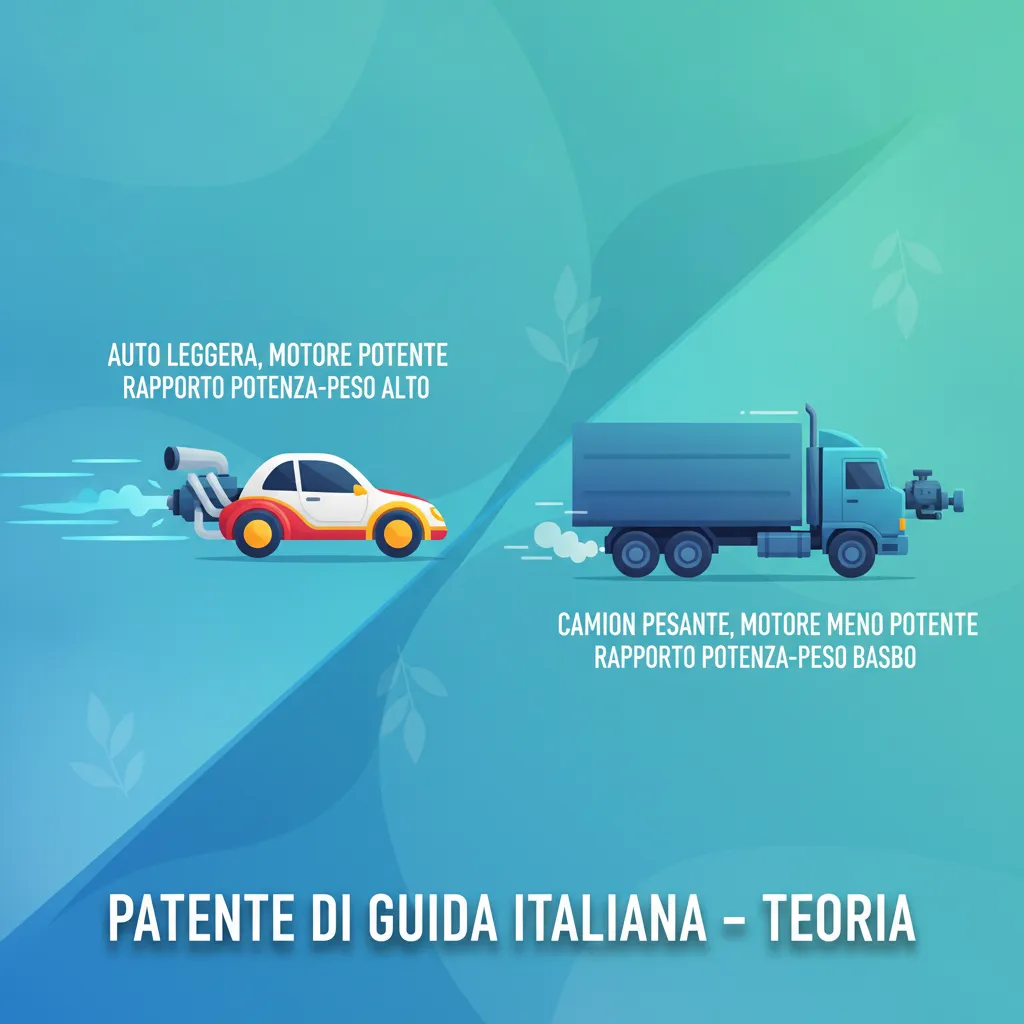
This lesson explains the core principles of motorcycle engines, focusing on key metrics like displacement, power, and the power-to-weight ratio. It details how these characteristics influence a motorcycle's acceleration, handling, and adherence to the specific limits of each license category. The content also covers different engine types and cooling systems, relating them to overall performance and reliability.

This lesson provides a thorough examination of the Italian motorcycle theory test's structure and content. It details the number of questions, the multiple-choice format, and the minimum score required to pass for the A1, A2, and A license categories. The content is designed to prepare learners for the specific knowledge areas and administrative procedures involved in taking the official exam.
This lesson provides a detailed breakdown of the vehicle types authorized under the Patente AM license. You will learn to distinguish between ciclomotori, scooters, three-wheeled mopeds, and light quadricycles by their specific characteristics. Key topics include engine displacement limits, power output, and mandatory equipment like lights, mirrors, and brakes as required by Italian law.
This lesson focuses on the comprehensive duties of a motorcyclist, from ensuring vehicle and equipment legality to following traffic regulations. It covers key obligations mandated by the Codice della Strada, such as mandatory insurance coverage and adherence to environmental rules. The material reinforces the importance of responsible road conduct and the legal consequences of non-compliance.
Learn how to calculate the power-to-weight ratio for Italian A1 and A2 motorcycle licences. Understand the critical 'derived from >70 kW' rule and its implications for vehicle compliance.
This lesson explains the core principles of motorcycle engines, focusing on key metrics like displacement, power, and the power-to-weight ratio. It details how these characteristics influence a motorcycle's acceleration, handling, and adherence to the specific limits of each license category. The content also covers different engine types and cooling systems, relating them to overall performance and reliability.
This lesson explores the practical, on-road consequences of the different motorcycle license categories. It analyzes how power and weight restrictions directly affect a motorcycle's handling, acceleration, and braking capabilities. Learners will understand how these factors shape riding strategies and safety considerations, highlighting the competency development needed for each successive license level.
This lesson focuses on the rider's active role in controlling the motorcycle through body positioning and weight shifts. It explains how to maintain a relaxed yet engaged posture to absorb road imperfections and provide precise inputs to the handlebars and footpegs. The content covers how leaning with the bike in corners and shifting weight during braking and acceleration significantly impacts the vehicle's stability and performance.
This lesson provides a thorough examination of the Italian motorcycle theory test's structure and content. It details the number of questions, the multiple-choice format, and the minimum score required to pass for the A1, A2, and A license categories. The content is designed to prepare learners for the specific knowledge areas and administrative procedures involved in taking the official exam.
This lesson provides a comprehensive guide to riding on high-speed motorways, or autostrade. It details the correct procedures for safely merging into traffic from an entry ramp and exiting via a deceleration lane. The content reinforces strict lane discipline, rules for overtaking, and the importance of maintaining a significantly larger following distance to compensate for higher speeds and potential wind gusts.
This lesson outlines the legal age thresholds and structured pathways for progressing through the Italian motorcycle license system. It details the minimum age for acquiring each license type and the specific procedures for upgrading from A1 to A2 and from A2 to the full A license. The content clarifies the legal framework governing these transitions, including any training or examination requirements for each step.
This lesson focuses on the factors that determine a motorcycle's total stopping distance: perception time, reaction time, and braking distance. It provides a clear understanding of how speed exponentially increases the distance required to come to a complete stop. Learners will be able to apply principles like the two-second rule to maintain a safe and appropriate following distance in various traffic situations.
This lesson focuses on the unique demands of mountain riding, from handling steep inclines and declines to understanding the impact of altitude on the motorcycle's engine performance. It covers the effective use of engine braking on descents to prevent brake overheating. The content also prepares riders for the rapidly changing weather conditions, such as wind and fog, that are common at higher elevations.
Find clear answers to common questions learners have about Licence Categories Overview. Learn how the lesson is structured, which driving theory objectives it supports, and how it fits into the overall learning path of units and curriculum progression in Italy. These explanations help you understand key concepts, lesson flow, and exam focused study goals.
The A1 licence is for light motorcycles with a maximum engine power of 11 kW and a power-to-weight ratio not exceeding 0.1 kW/kg, whereas the A2 licence allows for motorcycles with a maximum power of 35 kW and a power-to-weight ratio not exceeding 0.2 kW/kg.
Yes, the unrestricted A licence allows you to ride motorcycles of any power or displacement, provided you meet the minimum age requirement of 24, or 20 if you have held an A2 licence for at least two years.
Yes, the Italian theory exam frequently includes questions regarding the technical specifications and legal limits of your specific licence category to ensure you understand what you are legally allowed to ride.
Operating a vehicle outside your licence category is a serious legal violation in Italy, leading to heavy fines, potential suspension of your licence, and significant insurance complications in the event of an accident.
Start searching now to pinpoint exactly which Italian driving theory topics, road signs, or traffic rules you need to master. Use our advanced filters to build a custom practice session and ensure you're fully prepared for every aspect of your official driving licence exam.