
This lesson clarifies the vital differences between car category B and professional goods vehicle categories C1, C1E, C, and CE. By defining these boundaries, you will understand the specific legal, technical, and operational requirements mandated by the Italian Codice della Strada.
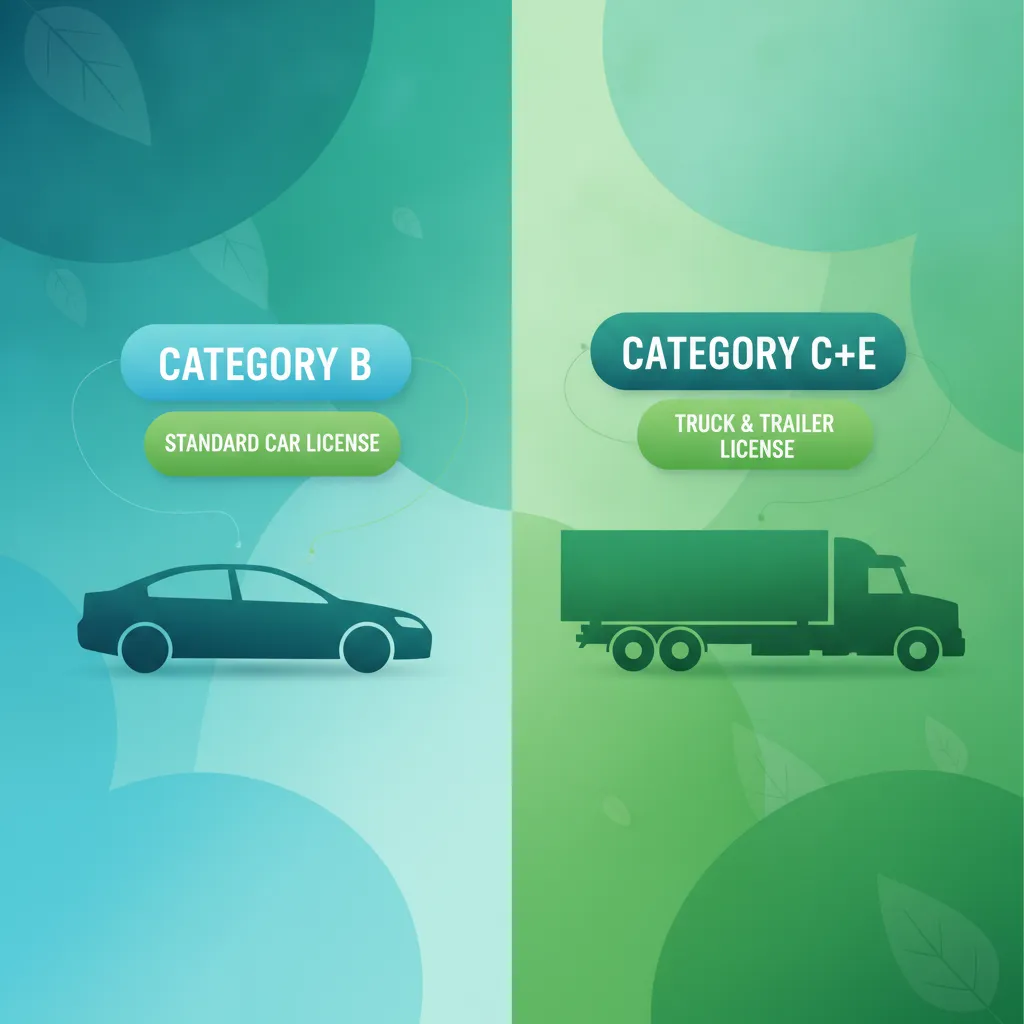
Lesson content overview
Navigating the various driving license categories in Italy is crucial for anyone aspiring to operate different types of vehicles, particularly those moving from personal cars to goods vehicles. This lesson provides a detailed comparison of the Category B license with the C1, C1E, C, and CE categories, highlighting the progressive increase in vehicle mass, dimensions, and operational complexities. Understanding these distinctions is fundamental for ensuring legal compliance, road safety, and professional competence in the Italian Goods Vehicle License Theory Course.
The Italian Codice della Strada (Highway Code) establishes a hierarchical system of driving licenses, reflecting the incremental skills and knowledge required to operate increasingly larger and more complex vehicles. This graduated licensing system ensures that drivers possess the necessary competencies to manage the higher risks associated with greater vehicle mass, dimensions, and handling characteristics. Each category is designed to match a driver's training and proficiency with the specific demands of the vehicles they are authorized to operate.
This progression from light vehicles (Category B) to heavy goods vehicles (Categories C1, C1E, C, CE) is not merely about weight capacity. It encompasses specialized knowledge of advanced braking systems, load securing techniques, vehicle stability dynamics, and the specific legal framework governing commercial transport. A thorough grasp of these differences is essential for professional drivers to operate safely and legally on public roads, protecting both themselves and other road users.
The Category B driving license is the most common license, primarily authorizing the operation of passenger cars and light commercial vehicles. It is the foundational license upon which all higher categories are built, requiring a basic understanding of general traffic rules, vehicle control fundamentals, and road safety.
A Category B license permits the driving of motor vehicles with a Massa in Movimento (MiM), or maximum authorized mass, not exceeding 3,500 kg. These vehicles are designed to carry no more than eight passengers in addition to the driver. This definition covers a wide range of vehicles, from typical family sedans and SUVs to small vans and light trucks used for personal or light commercial purposes. The standard maximum vehicle width permitted is 2.55 meters, maximum height is 4 meters, and length up to 6 meters for standard single vehicles.
To accommodate specific towing needs, the Category B license includes two important subcategories:
In practical terms, a Category B license enables tasks such as driving to work, moving household goods with a small van, or towing a small caravan within specified limits. A common misunderstanding is assuming that a Category B license covers all light vans regardless of their maximum authorized mass; it's vital to check the vehicle's registration document (libretto di circolazione) for its exact MiM. Another frequent point of confusion lies in differentiating between the B96 and B+E categories, particularly regarding the permissible combined mass and the need for a separate practical test.
Stepping up from Category B, the Category C1 driving license introduces drivers to medium-sized goods vehicles, significantly increasing the permissible mass and operational demands. This category bridges the gap between light commercial vehicles and full-sized heavy goods vehicles.
The Category C1 license authorizes the driving of motor vehicles, other than those in categories D1 or D, with a MiM exceeding 3,500 kg but not exceeding 7,500 kg. These vehicles are designed for the transport of goods and may tow a light trailer with a MiM not exceeding 750 kg. The length limit for vehicles in Category C1 is generally 12 meters.
Drivers with a C1 license are typically employed in regional distribution, moving services, or operating specialized vehicles such as small refrigerated trucks, utility vehicles, or larger moving company vans. The transition to C1 vehicles brings new operational considerations. These vehicles, being heavier, require longer braking distances and exhibit different handling characteristics compared to Category B vehicles. Drivers must develop a greater awareness of load distribution, axle loads, and overall vehicle stability. Many C1 vehicles are equipped with more advanced braking systems, often incorporating Anti-lock Braking Systems (ABS) and Electronic Brakeforce Distribution (EBD), and in some cases, dual-circuit hydraulic or partial air braking systems.
The most significant difference from Category B is the increase in permissible MiM from 3,500 kg to 7,500 kg. This mass increase profoundly impacts vehicle dynamics, maneuverability, and safety protocols. Drivers must adjust their driving style to account for greater momentum, wider turning circles, and the need for more careful load management. Unlike Category B, which often involves personal use, C1 generally signifies entry into professional driving, requiring a deeper understanding of vehicle mechanics and commercial transport regulations.
The Category C1E driving license extends the capabilities of the C1 license by permitting the operation of medium goods vehicles in combination with a heavier trailer. This category focuses on managing articulated combinations, introducing further complexities related to coupling, stability, and combined mass.
A Category C1E license permits the driving of vehicle combinations consisting of a Category C1 towing vehicle and a trailer or semi-trailer with a MiM exceeding 750 kg, provided the combined MiM of the entire combination does not exceed 12,000 kg. The trailer itself may have a length of up to 12 meters, though the total length of the combination must adhere to specific national limits (e.g., typically 18.75 meters in Italy for articulated vehicles, but specific limits apply for C1E combinations).
For drivers, C1E signifies a substantial leap in operational responsibility. Managing a combination of vehicles means understanding articulation dynamics – how the trailer behaves relative to the towing vehicle, especially during turns, braking, and reversing. Coupling safety is paramount; drivers must be proficient in correctly and securely attaching and detaching trailers, checking braking and lighting connections. Load securing procedures become more critical, as weight distribution across multiple axles (those of the towing vehicle and the trailer) directly impacts stability and compliance with axle load regulations.
Common misunderstandings include believing that any trailer can be attached as long as the total combined mass is below 12,000 kg. Drivers must always consider the towing capacity of the specific C1 vehicle and the maximum authorized mass of the trailer itself. Neglecting combined MiM restrictions can lead to severe safety hazards, such as compromised braking performance, increased risk of jackknifing, or even structural failure of the towing hitch. It is crucial for C1E drivers to undergo specific training that addresses the unique challenges of operating articulated vehicles.
The Category C driving license is a significant qualification for professional drivers, authorizing the operation of large, rigid heavy goods vehicles without upper weight restrictions (for a single vehicle, typically up to 44,000 kg MiM under specific configurations in Italy) and without a trailer exceeding 750 kg. This category marks the entry into operating the heaviest types of single-unit trucks.
The Category C license allows the driving of motor vehicles, other than those in categories D1 or D, with a MiM exceeding 3,500 kg, without any upper limit on the MiM for a single vehicle (e.g., a rigid truck). Similar to C1, these vehicles may tow a light trailer with a MiM not exceeding 750 kg. This category essentially covers all large, single-unit trucks, regardless of how heavy they are, provided they remain within the legal maximum MiM for a single vehicle type, which can be up to 44,000 kg for specific configurations in Italy (e.g., multi-axle rigid trucks).
A defining characteristic of Category C vehicles is the mandatory requirement for advanced braking systems, most notably air brakes. Unlike hydraulic systems, air brakes use compressed air to actuate the braking mechanism, offering greater stopping power and reliability for heavy loads. Drivers must possess in-depth knowledge of air brake operation, maintenance, and daily pre-trip checks, including checking air pressure, compressor function, and system leaks. Furthermore, these vehicles often feature sophisticated suspension systems, power steering, and other controls designed to manage their substantial mass and dimensions.
Category C drivers are integral to national and international logistics, operating large lorries for long-haul transport, construction site deliveries, or specialized industrial applications. The responsibilities are extensive, encompassing not only safe driving but also meticulous load securing, compliance with working hours regulations (tachograph usage for commercial purposes), and a deep understanding of vehicle dynamics. There is a common misunderstanding that a Category C license permits the operation of any heavy truck, including articulated lorries; however, this requires the separate CE category.
The pinnacle of goods vehicle licensing, the Category CE driving license, authorizes the operation of the heaviest and most complex vehicle combinations: a Category C towing vehicle coupled with a heavy trailer or semi-trailer. This is the license typically required for articulated lorries (tractor-trailer combinations) used in long-distance freight transport.
A Category CE license permits the driving of vehicle combinations consisting of a Category C towing vehicle and a trailer or semi-trailer with a MiM exceeding 750 kg. The combined MiM of the entire combination can be up to 44,000 kg, which is the standard maximum for articulated lorries in Italy. The length of semi-trailers can be up to 18.75 meters.
Operating a CE combination requires advanced skills in handling, maneuvering, and understanding complex vehicle dynamics. The articulation angle between the tractor and trailer profoundly influences turning radius and stability, necessitating careful route planning, especially in urban or confined environments. Drivers must master reversing articulated vehicles, a skill demanding precision and spatial awareness. The braking systems on CE combinations are highly sophisticated, often involving coordinated air brakes between the tractor and trailer, which must be meticulously checked before every journey.
For commercial operations, tachograph usage is mandatory for CE drivers. This device records driving hours, rest periods, speed, and distance, ensuring compliance with strict European regulations on drivers' working time to combat fatigue and enhance road safety. The CE license signifies the highest level of professional responsibility in goods transport. Drivers must possess expertise in advanced load securing techniques, considering the unique challenges of distributing weight across multiple axles of both the tractor and trailer. A common misconception is that a C1E license is a prerequisite for CE; while C1E provides valuable experience with combinations, the formal path to CE typically requires first obtaining Category C.
The progression from a Category B license to the C, C1, C1E, and CE categories represents a fundamental shift in the type of vehicles a driver is authorized to operate and the level of skill and responsibility required. These differences are multifaceted, impacting vehicle handling, safety protocols, and legal obligations.
Beyond the physical operation of the vehicle, higher license categories, particularly C and CE, come with stringent professional responsibilities:
Operating any vehicle on Italian roads requires strict adherence to the Codice della Strada (Italian Highway Code). For goods vehicle licenses (C1, C1E, C, CE), these regulations are particularly stringent due to the potential risks associated with larger, heavier vehicles. Compliance ensures road safety, protects infrastructure, and upholds professional standards.
Each license category explicitly defines:
Operating a vehicle or combination that exceeds the limits of one's licensed category is a serious offense. Such actions are prohibited and carry significant penalties, including heavy fines, accumulation of penalty points on the license, and potential license suspension or revocation.
The rationale behind these strict regulations is multifaceted:
Drivers must be acutely aware of situations that lead to violations:
Understanding the theoretical differences between license categories is best solidified through practical application. These scenarios illustrate how license knowledge translates to real-world driving situations, emphasizing correct procedures and potential pitfalls.
Operating heavy goods vehicles under Category C1, C1E, C, or CE is a profession that carries immense responsibility. The principles of physics, human psychology, and rigorous safety protocols converge to minimize risks on the road.
The fundamental principles governing vehicle dynamics become critically important with increased mass:
Professional drivers must also be aware of psychological factors that can influence their performance:
The graduated licensing system (B to C1, C1E, C, CE) is fundamentally a safety measure. It ensures that drivers acquire progressively more complex skills and theoretical knowledge proportionate to the demands of heavier, larger vehicles. This structured approach:
By understanding these principles and maintaining a high level of vigilance and professionalism, goods vehicle drivers contribute significantly to road safety for everyone.
The progression from the Category B license for light vehicles (up to 3,500 kg MiM, including B96 and B+E subcategories for specific towing) to the heavy goods vehicle licenses – C1 (3,500 kg – 7,500 kg MiM), C1E (C1 vehicle + trailer, combined MiM up to 12,000 kg), C (heavy rigid vehicles over 3,500 kg MiM), and CE (C vehicle + heavy trailer, combined MiM up to 44,000 kg) – represents a clear hierarchy of increasing complexity and responsibility. Key requirements across these advanced categories include mastering air braking systems (mandatory for C and CE), understanding precise load distribution and axle load limits, ensuring safe trailer coupling, and utilizing tachographs for commercial operations. Adherence to these specific regulations is paramount not only for legal compliance under the Italian Codice della Strada but, more importantly, for ensuring the safety of the driver, the cargo, and all other road users.
This lesson systematically explains the graduated Italian license categories from Category B (3,500 kg MiM max) through C1 (3,500-7,500 kg), C1E (medium combinations up to 12,000 kg), C (heavy rigid vehicles without upper limit), and CE (articulated lorries up to 44,000 kg). Each category introduces progressively advanced requirements including mandatory air braking systems for C and CE, specific trailer towing rights, and professional responsibilities such as tachograph compliance. Understanding these distinctions is essential for passing Italian goods vehicle theory exams and operating legally on Italian roads under the Codice della Strada.
A short set of high-value points that capture the most important learning from this lesson.
Category B permits vehicles up to 3,500 kg MiM; C1 extends to 7,500 kg; Category C has no upper MiM limit for single rigid vehicles.
C1E allows combined vehicle-trailer MiM up to 12,000 kg, while CE permits combinations up to 44,000 kg for articulated lorries.
Air brakes are mandatory for Categories C and CE vehicles, requiring specialized knowledge for operation and daily checks.
The B96 subcategory permits combined MiM up to 4,250 kg, while B+E extends towing rights with combined MiM up to 7,000 kg.
Higher license categories require understanding of tachograph usage, axle load limits, and professional load securing standards.
Explore all units and lessons included in this driving theory course.
MiM (Massa in Movimento) is the total mass of vehicle, load, passengers, and driver when in motion.
C1 and C licenses permit towing trailers up to 750 kg MiM only; C1E and CE permits heavier trailers with combined mass limits.
Air brakes use compressed air and require pre-trip checks including pressure levels and system leak inspections.
Articulated vehicles (C1E, CE) require awareness of articulation dynamics, off-tracking, and larger turning radii.
C and CE categories mandate tachograph usage for commercial transport to record driving hours and rest periods.
Confusing B96 (combined MiM up to 4,250 kg) with B+E (up to 7,000 kg) and their different testing requirements.
Assuming a C license covers articulated lorries, which actually requires the separate CE category.
Incorrectly calculating combined MiM for trailer combinations, exceeding category limits (e.g., 12,000 kg for C1E).
Neglecting to perform air brake pressure checks before driving C or CE vehicles, risking brake failure.
Believing C1E is a prerequisite for CE; the formal path requires obtaining Category C first.
Lesson content overview
A short set of high-value points that capture the most important learning from this lesson.
Category B permits vehicles up to 3,500 kg MiM; C1 extends to 7,500 kg; Category C has no upper MiM limit for single rigid vehicles.
C1E allows combined vehicle-trailer MiM up to 12,000 kg, while CE permits combinations up to 44,000 kg for articulated lorries.
Air brakes are mandatory for Categories C and CE vehicles, requiring specialized knowledge for operation and daily checks.
The B96 subcategory permits combined MiM up to 4,250 kg, while B+E extends towing rights with combined MiM up to 7,000 kg.
Higher license categories require understanding of tachograph usage, axle load limits, and professional load securing standards.
Explore all units and lessons included in this driving theory course.
MiM (Massa in Movimento) is the total mass of vehicle, load, passengers, and driver when in motion.
C1 and C licenses permit towing trailers up to 750 kg MiM only; C1E and CE permits heavier trailers with combined mass limits.
Air brakes use compressed air and require pre-trip checks including pressure levels and system leak inspections.
Articulated vehicles (C1E, CE) require awareness of articulation dynamics, off-tracking, and larger turning radii.
C and CE categories mandate tachograph usage for commercial transport to record driving hours and rest periods.
Confusing B96 (combined MiM up to 4,250 kg) with B+E (up to 7,000 kg) and their different testing requirements.
Assuming a C license covers articulated lorries, which actually requires the separate CE category.
Incorrectly calculating combined MiM for trailer combinations, exceeding category limits (e.g., 12,000 kg for C1E).
Neglecting to perform air brake pressure checks before driving C or CE vehicles, risking brake failure.
Believing C1E is a prerequisite for CE; the formal path requires obtaining Category C first.
Explore search topics learners often look for when studying Differences between B, C1, C1E, C, and CE. These topics reflect common questions about road rules, driving situations, safety guidance, and lesson level theory preparation for learners in Italy.
Browse additional driving theory lessons that cover connected traffic rules, road signs, and common driving situations related to this topic. Improve your understanding of how different rules interact across everyday traffic scenarios.
Understand the legal distinctions and operational differences between Italian Category B licenses and the professional C1, C1E, C, and CE goods vehicle licenses. Essential theory covering vehicle mass, dimensions, and handling complexities.
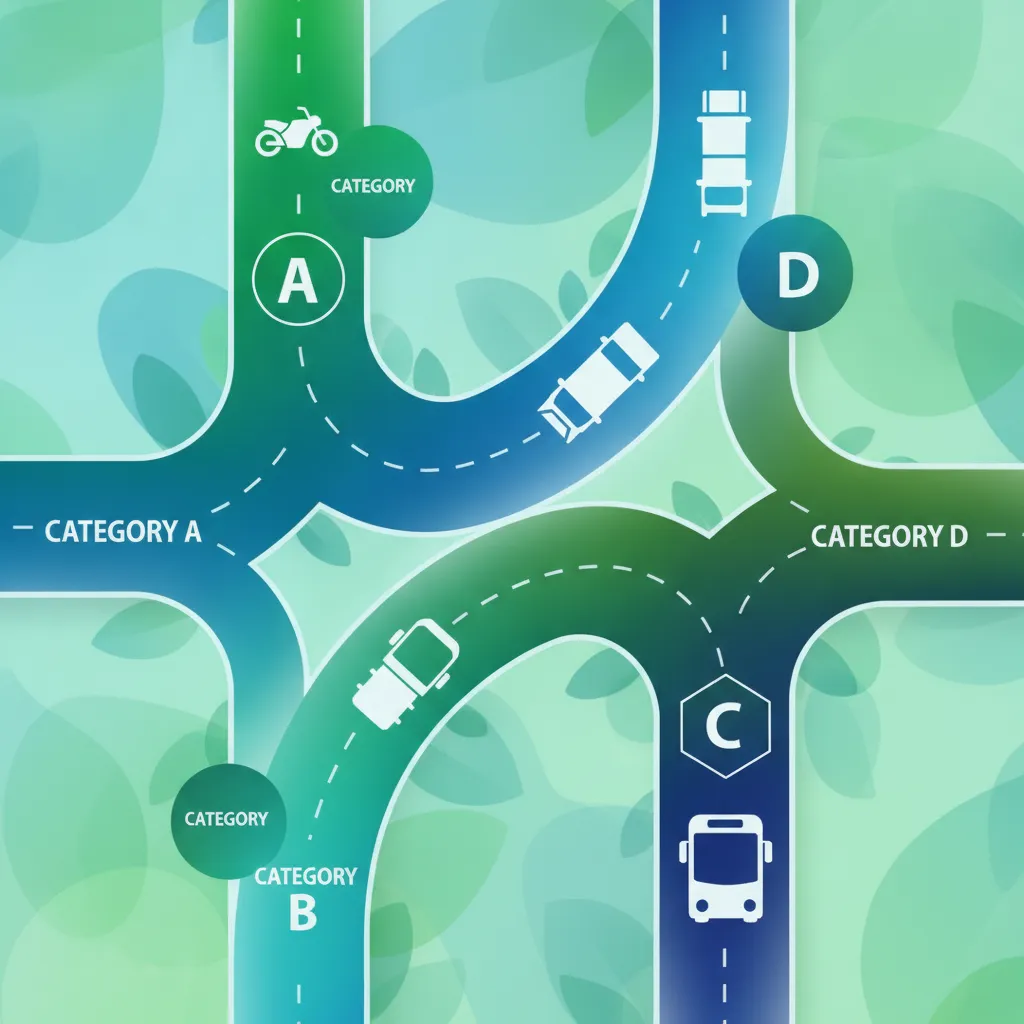
This lesson provides a detailed breakdown of the Italian goods vehicle licence categories, explaining the criteria that define each one. It covers the maximum authorized mass (MAM), vehicle configurations such as rigid trucks and articulated combinations, and the specific permissions granted by the C1, C1E, C, and CE licenses. Understanding these distinctions is fundamental to ensuring legal operation and choosing the correct qualification for specific transport tasks and vehicle types.
This lesson defines the scope of the Italian Patente B license according to the Codice della Strada. It clarifies the specific types of vehicles, including maximum weight and passenger capacity, that can be operated. The content also details the official requirements for applicants, such as minimum age, necessary health certifications, and vision standards needed to qualify for the license.
This lesson provides a detailed breakdown of the Italian motorcycle licence categories: A1, A2, and the unrestricted A. It explains the specific technical limits for engine displacement, power output in kW, and the power-to-weight ratio that define each category. Understanding these distinctions is fundamental for selecting a compliant vehicle and recognizing the legal scope of each license.
This lesson explores the practical, on-road consequences of the different motorcycle license categories. It analyzes how power and weight restrictions directly affect a motorcycle's handling, acceleration, and braking capabilities. Learners will understand how these factors shape riding strategies and safety considerations, highlighting the competency development needed for each successive license level.

This lesson outlines the legal age thresholds and structured pathways for progressing through the Italian motorcycle license system. It details the minimum age for acquiring each license type and the specific procedures for upgrading from A1 to A2 and from A2 to the full A license. The content clarifies the legal framework governing these transitions, including any training or examination requirements for each step.

This lesson provides an in-depth focus on sharing the road with the most vulnerable users. It teaches drivers to be acutely aware of pedestrians at crossings, cyclists filtering through traffic, and motorcyclists who may be in blind spots. The lesson emphasizes the importance of leaving extra space, signaling intentions clearly, and exercising extreme caution at junctions, where the majority of serious incidents occur.

This lesson provides a comprehensive overview of the essential documentation required for both the driver and the vehicle. It covers the driver's license (patente), CQC card, vehicle registration (carta di circolazione), insurance certificate, and transport-specific documents like the cargo manifest. Learners will understand the importance of ensuring all documents are valid and readily available for inspection by authorities to avoid legal penalties and operational delays.

This lesson examines the set of legal obligations for all drivers holding a Patente B license under the Codice della Strada. It covers mandatory responsibilities such as maintaining valid vehicle insurance, ensuring proper registration, and adhering to periodic technical inspection (revisione) schedules. The content also emphasizes the legal requirement to carry necessary documents while driving and the penalties for non-compliance.

This lesson focuses on the specific regulations and techniques for operating a heavy vehicle on high-speed motorways. It covers mandatory lane discipline for trucks, the rules governing overtaking other heavy vehicles, and the specific speed limits that apply. Best practices for merging onto and exiting the motorway, maintaining safe following distances, and using the hard shoulder only in genuine emergencies are also detailed.
Explore the specific requirements, legal framework, and compliance obligations for operating heavy goods vehicles in Italy under categories C1, C1E, C, and CE. Focuses on mass limits, braking systems, and driver responsibilities.
This lesson provides a detailed breakdown of the Italian goods vehicle licence categories, explaining the criteria that define each one. It covers the maximum authorized mass (MAM), vehicle configurations such as rigid trucks and articulated combinations, and the specific permissions granted by the C1, C1E, C, and CE licenses. Understanding these distinctions is fundamental to ensuring legal operation and choosing the correct qualification for specific transport tasks and vehicle types.
This lesson focuses on the specific regulations and techniques for operating a heavy vehicle on high-speed motorways. It covers mandatory lane discipline for trucks, the rules governing overtaking other heavy vehicles, and the specific speed limits that apply. Best practices for merging onto and exiting the motorway, maintaining safe following distances, and using the hard shoulder only in genuine emergencies are also detailed.

This lesson bridges the gap between general traffic laws and their specific application to heavy goods vehicles. It examines how rules regarding speed limits, lane discipline, overtaking, and priority are modified or have special considerations for trucks due to their size, weight, and reduced maneuverability. Drivers will learn to correctly interpret road signs and signals within the context of operating a large vehicle, ensuring safe and compliant integration with other traffic.
This lesson provides a comprehensive overview of the essential documentation required for both the driver and the vehicle. It covers the driver's license (patente), CQC card, vehicle registration (carta di circolazione), insurance certificate, and transport-specific documents like the cargo manifest. Learners will understand the importance of ensuring all documents are valid and readily available for inspection by authorities to avoid legal penalties and operational delays.
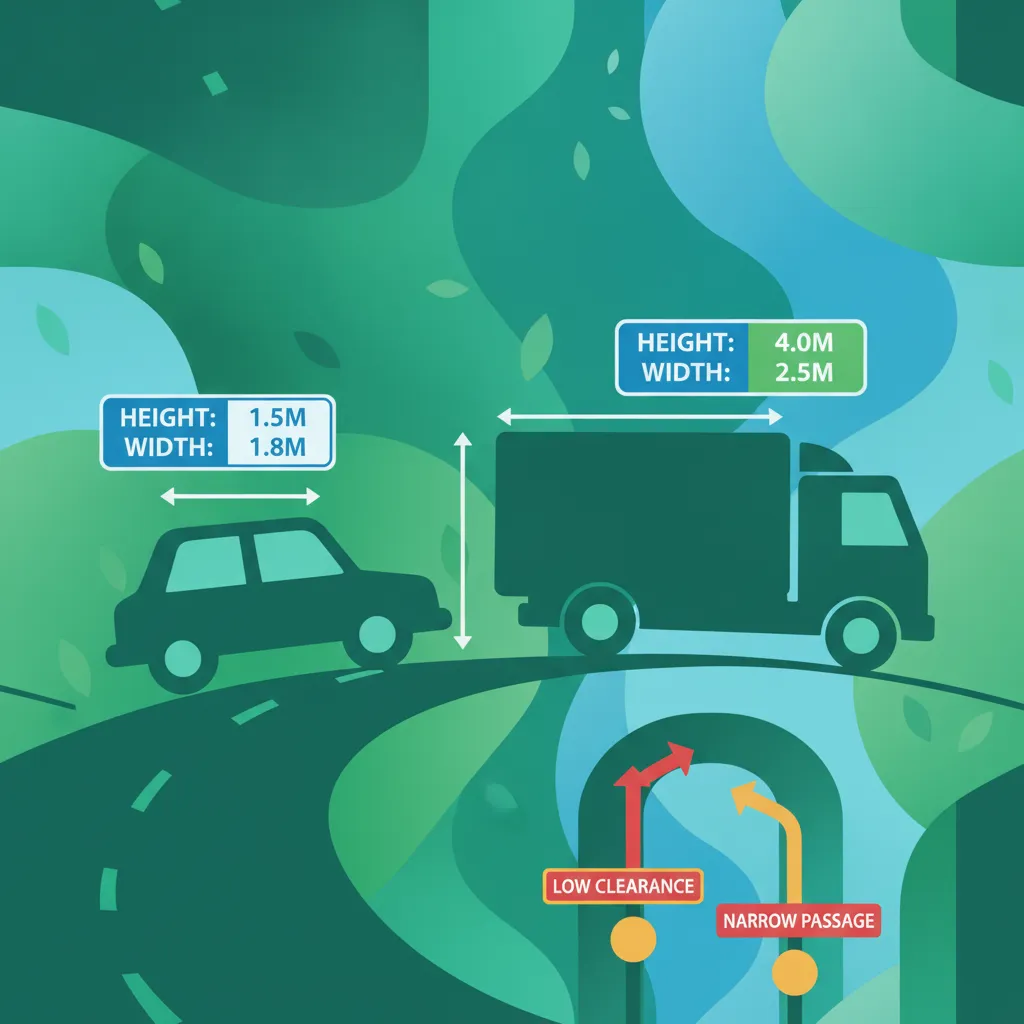
This lesson focuses on the specific dimensional limits that heavy goods vehicles must adhere to on Italian roads, as stipulated by the Codice della Strada. It covers the maximum permissible length, width, and height, explaining how these restrictions impact navigation through tunnels, under bridges, and within urban environments. Learners will also understand the conditions under which special permits for exceptional or oversized transport are required.
This lesson covers the complete set of lighting, reflective equipment, and protective guards mandated for heavy vehicles. It explains the function of each light, from headlights to side markers, and the importance of keeping them clean and operational to ensure the vehicle is visible to others. The lesson also details the legal requirements and safety purpose of side guards and rear underrun protection, which are designed to protect vulnerable road users in a collision.

This lesson delves into the specific articles of the Italian Codice della Strada that apply to heavy goods vehicles. It outlines the core legal and professional obligations of a driver, including the heightened duty of care owed to other road users and the responsibility for the vehicle's roadworthiness and load. Learners will understand the legal consequences of non-compliance, such as fines and sanctions, reinforcing the importance of adhering to all traffic regulations.
This lesson provides a clear overview of the legal consequences for failing to comply with road transport regulations in Italy. It covers the system of fines for common offenses like speeding, overloading, and violations of driving hours. The lesson also explains the penalty point system that can lead to license suspension and touches upon the responsibilities and potential liability of the transport company.
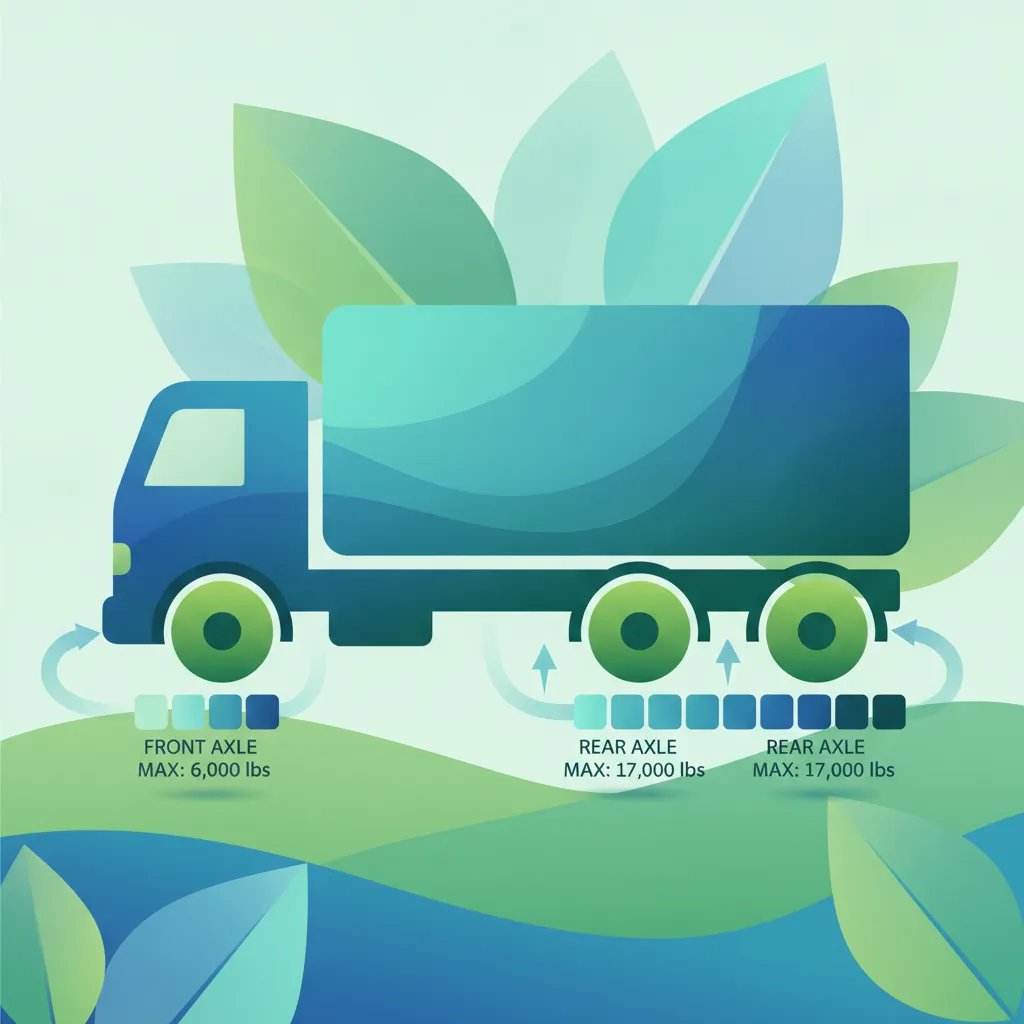
This lesson details the legal restrictions on the weight that can be supported by a single axle or a group of axles. It explains the importance of distributing the load correctly across the vehicle's length to prevent exceeding these limits, which can cause significant road damage and compromise vehicle safety. Learners will understand the relationship between load placement, axle pressure, and overall stability, particularly during braking and cornering.

This lesson provides a detailed overview of the legal framework for load securing in Italy, focusing on the relevant articles of the Codice della Strada. It outlines the driver's legal responsibility for ensuring the load is secure and covers the standards that securing equipment must meet. Learners will be made aware of the significant fines and other penalties that can be imposed for violations, reinforcing the importance of diligent compliance.
Find clear answers to common questions learners have about Differences between B, C1, C1E, C, and CE. Learn how the lesson is structured, which driving theory objectives it supports, and how it fits into the overall learning path of units and curriculum progression in Italy. These explanations help you understand key concepts, lesson flow, and exam focused study goals.
A C1 license is for vehicles with a maximum authorized mass between 3,500 kg and 7,500 kg, while a C license allows for vehicles exceeding 3,500 kg without an upper limit on mass.
The E suffix denotes that the license holder is authorized to drive the respective rigid vehicle (C1 or C) coupled with a trailer or semitrailer exceeding 750 kg, provided the combination remains within legal limits.
No, a standard category B license is restricted to vehicles with a maximum authorized mass not exceeding 3,500 kg and designed for the carriage of no more than 8 passengers plus the driver.
While general traffic rules apply to all, professional drivers of C category vehicles face stricter regulations regarding speed limits, motorway access, and mandatory rest periods that do not apply to category B drivers.
Start searching now to pinpoint exactly which Italian driving theory topics, road signs, or traffic rules you need to master. Use our advanced filters to build a custom practice session and ensure you're fully prepared for every aspect of your official driving licence exam.