
This lesson introduces the foundational regulations for the Italian Patente B driving license, as defined by the Codice della Strada. You will learn the specific legal requirements for applicants, including age and health standards, as well as the classifications of vehicles you are permitted to drive. This knowledge is essential for understanding your role and responsibilities as a new driver on Italian roads.
Lesson content overview
The Italian Patente B, or Category B driving license, is the most common driving authorization in Italy, primarily covering standard passenger cars and light commercial vehicles. This comprehensive guide delves into the specifics of what a Patente B holder is legally permitted to drive, the essential criteria for obtaining this license, and the ongoing responsibilities required to maintain its validity, all in accordance with the Codice della Strada (Italian Road Traffic Code). Understanding these regulations is paramount for aspiring drivers and current license holders to ensure legal compliance, enhance road safety, and prevent potential penalties.
The Patente B license grants you the authority to operate a specific range of motor vehicles. These categories are clearly defined to match vehicle characteristics with driver qualifications, ensuring safety on Italian roads.
The core of the Patente B allows for the operation of vehicles primarily designed for personal transport and light goods.
Category B: This is the primary classification. With a Patente B, you are authorized to drive motor vehicles with a Massa Massima Autorizzata (MMA), or maximum authorized mass, that does not exceed 3,500 kg. These vehicles must be designed for the transport of no more than eight passengers in addition to the driver. This covers most standard passenger cars, many SUVs, and smaller vans used for personal or light commercial purposes.
Category B1: The Patente B also encompasses light quadricycles. These vehicles have a maximum unladen mass not exceeding 400 kg (for passenger transport vehicles) or 550 kg (for goods transport vehicles), excluding the mass of the batteries in electric vehicles. Their maximum net power must not exceed 15 kW. This category includes vehicles commonly referred to as "microcars" or "quad bikes" within specific power and weight limits.
The maximum authorized mass (MMA) is the total permissible weight of a vehicle when fully loaded, including the vehicle itself, its passengers, and any cargo. For Patente B, this limit is 3,500 kg.
While the Patente B primarily covers single vehicles, it also allows for towing trailers, subject to strict weight limitations.
It is a common misunderstanding that a Patente B allows driving any vehicle with a driver's seat. Always verify the vehicle's maximum authorized mass (MMA) and passenger capacity, as exceeding these limits constitutes a serious violation of the Codice della Strada.
To qualify for an Italian Patente B, applicants must meet specific age, health, and vision requirements. These standards are in place to ensure that all drivers possess the necessary physical and mental capabilities for safe driving.
The standard minimum age for applying for a Patente B is 18 years old. However, Italy offers a pathway for younger applicants under specific conditions.
All applicants for a Patente B must undergo a mandatory medical examination to confirm their physical and mental fitness to drive. This assessment covers several key areas:
Believing a simple glasses prescription is sufficient for the medical certificate is a common mistake. A full medical examination by an authorized medical professional is mandatory to verify overall fitness and ensure compliance with all vision standards.
The medical certificate must be presented during the licensing process and typically has a validity period (usually five years for drivers under 50 years of age), requiring periodic renewal.
Meet the minimum age requirement (18 years, or 17 with specific training).
Undergo a mandatory medical examination, including vision tests, to obtain a health certificate.
Enroll in a driving school (optional but highly recommended) and study the Codice della Strada.
Pass the theoretical knowledge exam.
Complete supervised practical driving lessons.
Pass the practical driving exam.
Obtaining a Patente B involves successfully passing two distinct examinations: a theoretical test to assess your knowledge of traffic laws and a practical test to evaluate your driving skills.
The theoretical exam is designed to validate an applicant's understanding of the Codice della Strada, road signs, traffic regulations, and fundamental safety principles.
The practical exam assesses your ability to safely and competently operate a vehicle under various real-world conditions.
Obtaining the Patente B is not a one-time event; it entails ongoing legal obligations to ensure continued road safety and compliance with the Codice della Strada.
Driving licenses in Italy are not indefinite. They have validity periods and require periodic renewal.
Beyond renewal, Patente B holders have several daily and administrative responsibilities.
Understanding the specific limitations and requirements of the Patente B is essential to avoid common violations that can lead to fines, license points, or even license suspension.
While the Patente B defines what you can drive, how you drive must adapt to various situations:
The Patente B is Italy's standard driving license for vehicles up to 3,500 kg MMA carrying no more than 8 passengers plus the driver, covering most passenger cars and light commercial vehicles. Applicants must be at least 18 years old (17 with supervised training), pass a mandatory medical examination including vision standards of 0.5 acuity and 120-degree horizontal field, and successfully complete both the 40-question theoretical exam and practical driving test. Towing rules distinguish between light trailers (under 750 kg, unrestricted) and heavier trailers requiring combined MMA compliance or a B+E endorsement. License holders must renew periodically based on age, carry their license at all times, report address changes within 20 days, and maintain vehicle roadworthiness through regular revisions.
A short set of high-value points that capture the most important learning from this lesson.
Patente B covers vehicles up to 3,500 kg MMA (Massa Massima Autorizzata) with maximum 8 passengers plus the driver, including standard cars, SUVs, and light vans.
Category B1 sub-licence permits light quadricycles with unladen mass up to 400 kg (passenger) or 550 kg (goods) and maximum net power of 15 kW.
Standard minimum age is 18 years; applicants aged 17 can begin with supervised training leading to a provisional license.
Vision requirements include minimum visual acuity of 0.5 in each eye (correctable) and horizontal field of vision of at least 120 degrees.
Trailers up to 750 kg MMA can be towed freely; heavier trailers require the combined MMA to stay under 3,500 kg and the trailer MMA cannot exceed the towing vehicle's unladen mass, otherwise B+E endorsement is needed.
Explore all units and lessons included in this driving theory course.
MMA (Massa Massima Autorizzata) is the maximum authorized mass including vehicle, passengers, and cargo—not just the vehicle weight.
License validity decreases with age: 10 years (under 50), 5 years (50-70), 3 years (70-80), 2 years (over 80), each requiring medical renewal.
If corrective lenses are required, this restriction is printed on the license and lenses must always be worn while driving.
Address changes must be reported to the Motorizzazione Civile within 20 days to avoid fines.
The theoretical exam requires 40 multiple-choice questions with a maximum of 4 errors allowed to pass.
Assuming any vehicle with a driver's seat qualifies under Patente B without checking the MMA plate and passenger capacity.
Believing a glasses prescription alone is sufficient for the medical certificate—full examination by an authorized professional is mandatory.
Towing a trailer heavier than 750 kg without verifying the combined MMA stays under 3,500 kg or obtaining the B+E endorsement.
Continuing to drive after the medical certificate expires, which invalidates the license and carries penalties equivalent to driving without a license.
Not carrying the license physically or having a valid digital equivalent when operating a vehicle.
Lesson content overview
A short set of high-value points that capture the most important learning from this lesson.
Patente B covers vehicles up to 3,500 kg MMA (Massa Massima Autorizzata) with maximum 8 passengers plus the driver, including standard cars, SUVs, and light vans.
Category B1 sub-licence permits light quadricycles with unladen mass up to 400 kg (passenger) or 550 kg (goods) and maximum net power of 15 kW.
Standard minimum age is 18 years; applicants aged 17 can begin with supervised training leading to a provisional license.
Vision requirements include minimum visual acuity of 0.5 in each eye (correctable) and horizontal field of vision of at least 120 degrees.
Trailers up to 750 kg MMA can be towed freely; heavier trailers require the combined MMA to stay under 3,500 kg and the trailer MMA cannot exceed the towing vehicle's unladen mass, otherwise B+E endorsement is needed.
Explore all units and lessons included in this driving theory course.
MMA (Massa Massima Autorizzata) is the maximum authorized mass including vehicle, passengers, and cargo—not just the vehicle weight.
License validity decreases with age: 10 years (under 50), 5 years (50-70), 3 years (70-80), 2 years (over 80), each requiring medical renewal.
If corrective lenses are required, this restriction is printed on the license and lenses must always be worn while driving.
Address changes must be reported to the Motorizzazione Civile within 20 days to avoid fines.
The theoretical exam requires 40 multiple-choice questions with a maximum of 4 errors allowed to pass.
Assuming any vehicle with a driver's seat qualifies under Patente B without checking the MMA plate and passenger capacity.
Believing a glasses prescription alone is sufficient for the medical certificate—full examination by an authorized professional is mandatory.
Towing a trailer heavier than 750 kg without verifying the combined MMA stays under 3,500 kg or obtaining the B+E endorsement.
Continuing to drive after the medical certificate expires, which invalidates the license and carries penalties equivalent to driving without a license.
Not carrying the license physically or having a valid digital equivalent when operating a vehicle.
Explore search topics learners often look for when studying Overview of Patente B Regulations. These topics reflect common questions about road rules, driving situations, safety guidance, and lesson level theory preparation for learners in Italy.
Browse additional driving theory lessons that cover connected traffic rules, road signs, and common driving situations related to this topic. Improve your understanding of how different rules interact across everyday traffic scenarios.
Understand the specific vehicle types, weight limits (MMA), and passenger capacities allowed under the Italian Patente B. Learn the essential age, health, and vision standards required to obtain your license in Italy.
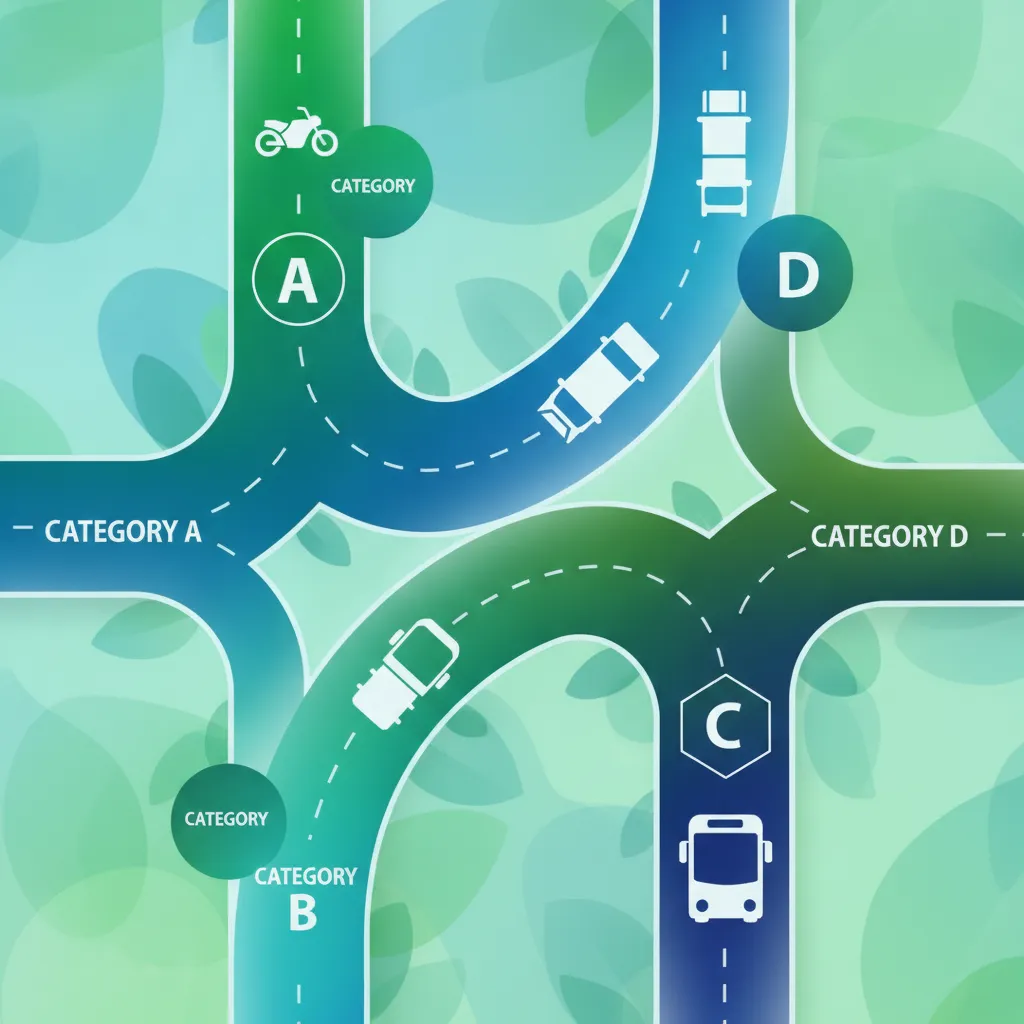
This lesson provides a detailed breakdown of the Italian goods vehicle licence categories, explaining the criteria that define each one. It covers the maximum authorized mass (MAM), vehicle configurations such as rigid trucks and articulated combinations, and the specific permissions granted by the C1, C1E, C, and CE licenses. Understanding these distinctions is fundamental to ensuring legal operation and choosing the correct qualification for specific transport tasks and vehicle types.
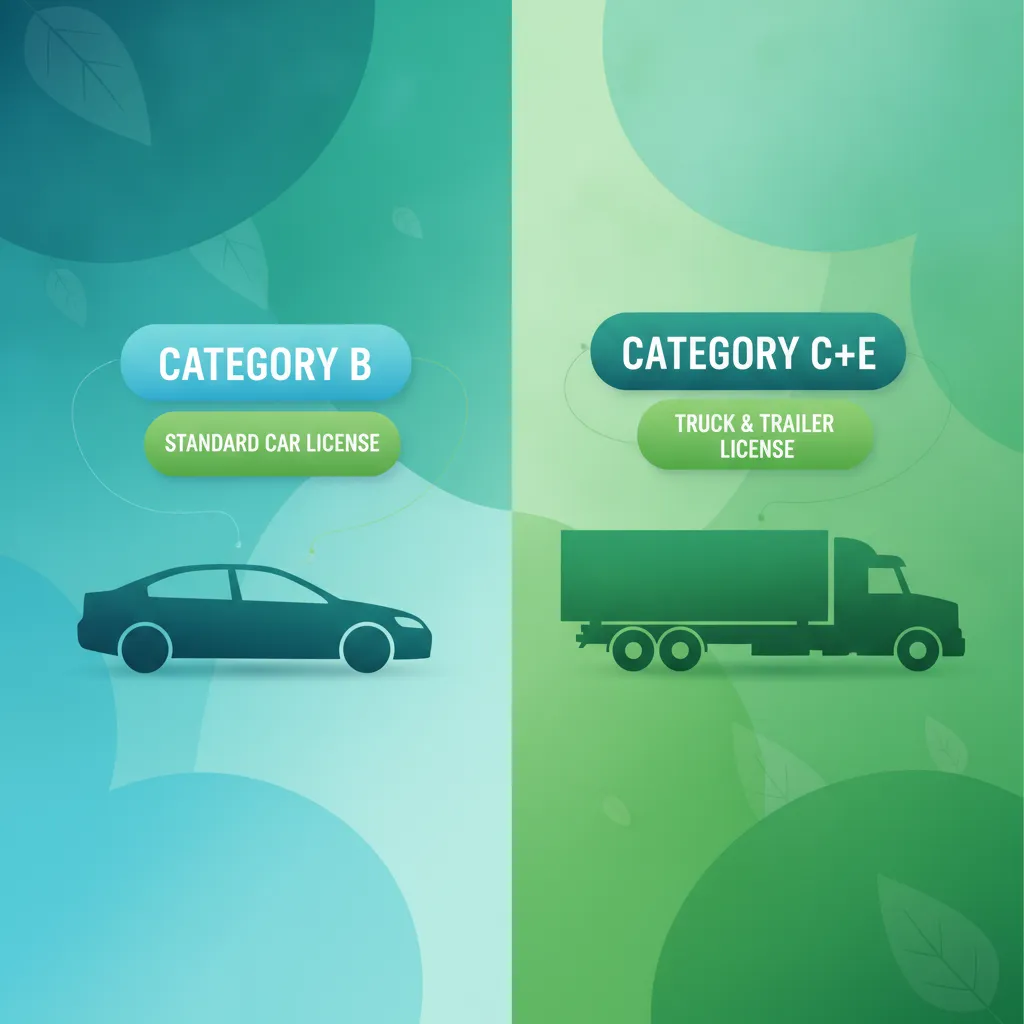
This lesson clearly contrasts the Category B license with the C1, C1E, C, and CE categories, focusing on the significant increases in vehicle mass, dimensions, and operational complexity. It explains the differences in braking systems, vehicle controls, and handling characteristics that necessitate specialized knowledge and skills. Understanding this progression helps learners appreciate the advanced responsibilities and technical competencies required for professional goods vehicle driving.
This lesson focuses on the specific regulations applicable to beginner drivers (neopatentati) during their first three years of holding a Patente B. It outlines the stricter speed limits on motorways and main roads, as well as the restrictions on vehicle power-to-weight ratios. Furthermore, it details the absolute zero-tolerance policy for alcohol consumption and the increased penalties for traffic violations during this probationary period.
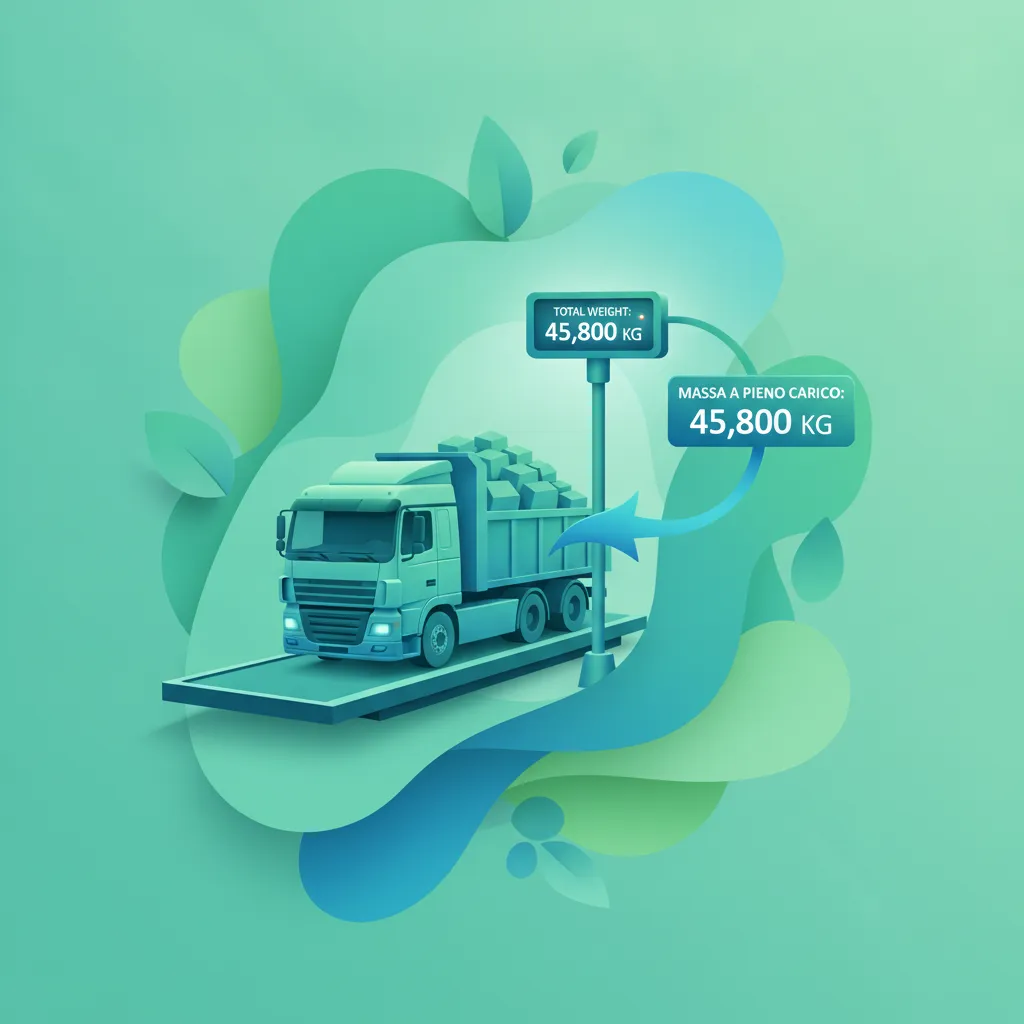
This lesson clarifies two fundamental weight concepts in Italian transport law: 'massa complessiva a pieno carico' (gross vehicle mass) and the vehicle's unladen mass. Learners will understand how to interpret these values from the vehicle's registration documents and use them to determine the maximum legal operating weight. This knowledge is crucial for calculating payload and ensuring compliance with the weight limits associated with the driver's license category.

This lesson examines the set of legal obligations for all drivers holding a Patente B license under the Codice della Strada. It covers mandatory responsibilities such as maintaining valid vehicle insurance, ensuring proper registration, and adhering to periodic technical inspection (revisione) schedules. The content also emphasizes the legal requirement to carry necessary documents while driving and the penalties for non-compliance.

This lesson provides the practical knowledge needed to calculate the maximum permissible payload ('portata') for a goods vehicle. It explains how to subtract the vehicle's unladen weight (tare) from its maximum authorized mass to determine the available capacity for cargo. Mastering this calculation is essential for planning loads, ensuring legal compliance, and avoiding the risks associated with exceeding the vehicle's design limits.
This lesson provides a detailed breakdown of the vehicle types authorized under the Patente AM license. You will learn to distinguish between ciclomotori, scooters, three-wheeled mopeds, and light quadricycles by their specific characteristics. Key topics include engine displacement limits, power output, and mandatory equipment like lights, mirrors, and brakes as required by Italian law.

This lesson covers the driver's legal responsibility for ensuring the safety of all passengers. It details the mandatory use of seat belts (cinture di sicurezza) for all occupants in both front and rear seats. The content provides a thorough explanation of the laws regarding child restraint systems, covering the different types of car seats required based on a child's age, weight, and height, and how to install them correctly.
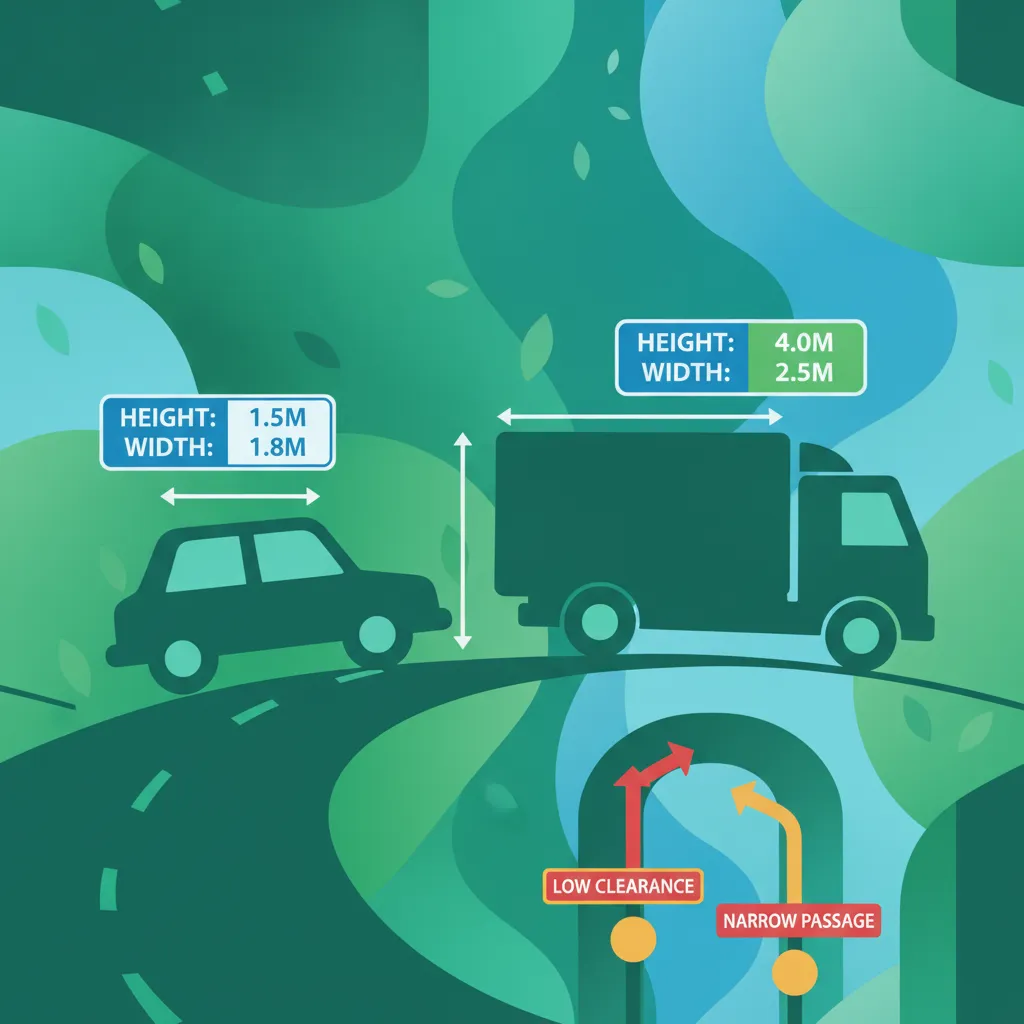
This lesson focuses on the specific dimensional limits that heavy goods vehicles must adhere to on Italian roads, as stipulated by the Codice della Strada. It covers the maximum permissible length, width, and height, explaining how these restrictions impact navigation through tunnels, under bridges, and within urban environments. Learners will also understand the conditions under which special permits for exceptional or oversized transport are required.
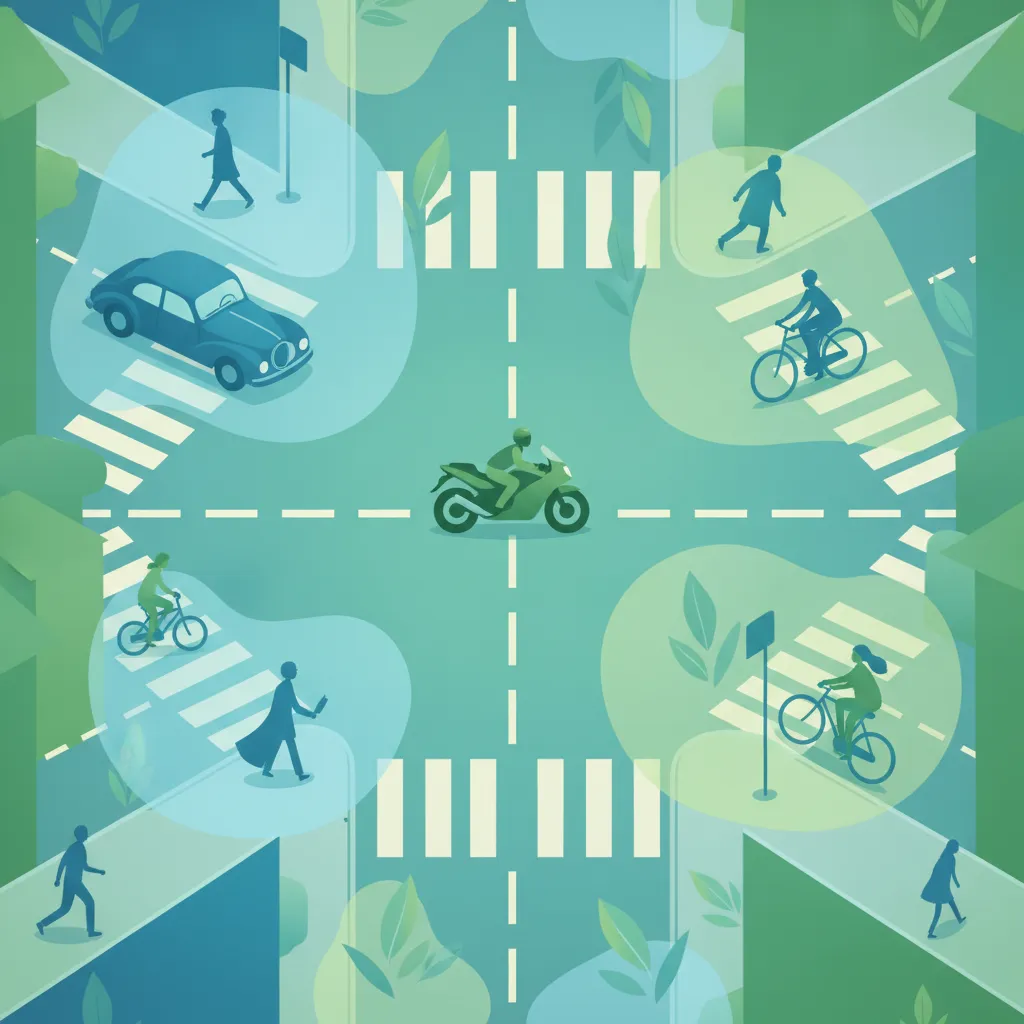
This lesson introduces the official classification of road users as defined by the Italian Codice della Strada. It distinguishes between various categories, including pedestrians, two-wheeled vehicles, passenger cars, public transport, and heavy goods vehicles. Understanding these classifications is crucial for anticipating behavior and applying the correct traffic rules and safety precautions for each group, especially for vulnerable road users.
Explore the essential legal obligations for Patente B license holders in Italy, including renewal procedures, medical checks, and updates. Learn about common traffic violations, their consequences, and best practices for legal compliance.
This lesson examines the set of legal obligations for all drivers holding a Patente B license under the Codice della Strada. It covers mandatory responsibilities such as maintaining valid vehicle insurance, ensuring proper registration, and adhering to periodic technical inspection (revisione) schedules. The content also emphasizes the legal requirement to carry necessary documents while driving and the penalties for non-compliance.
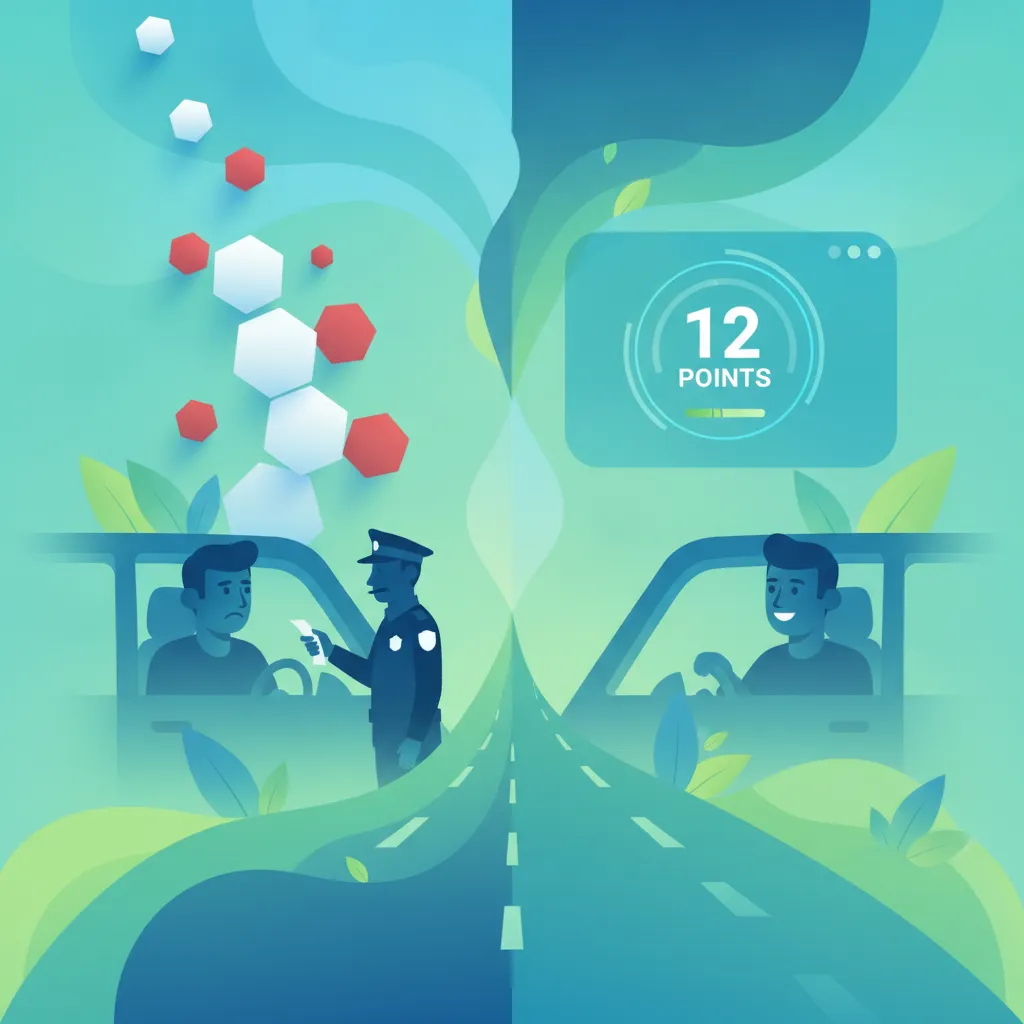
This lesson provides a comprehensive review of the legal consequences for violating traffic laws in Italy. It reinforces the workings of the points system, explaining how different offenses lead to deductions and how a total loss of points results in license revocation. The content also covers the scale of monetary fines for various infractions and the conditions under which a driver's license may be temporarily suspended.
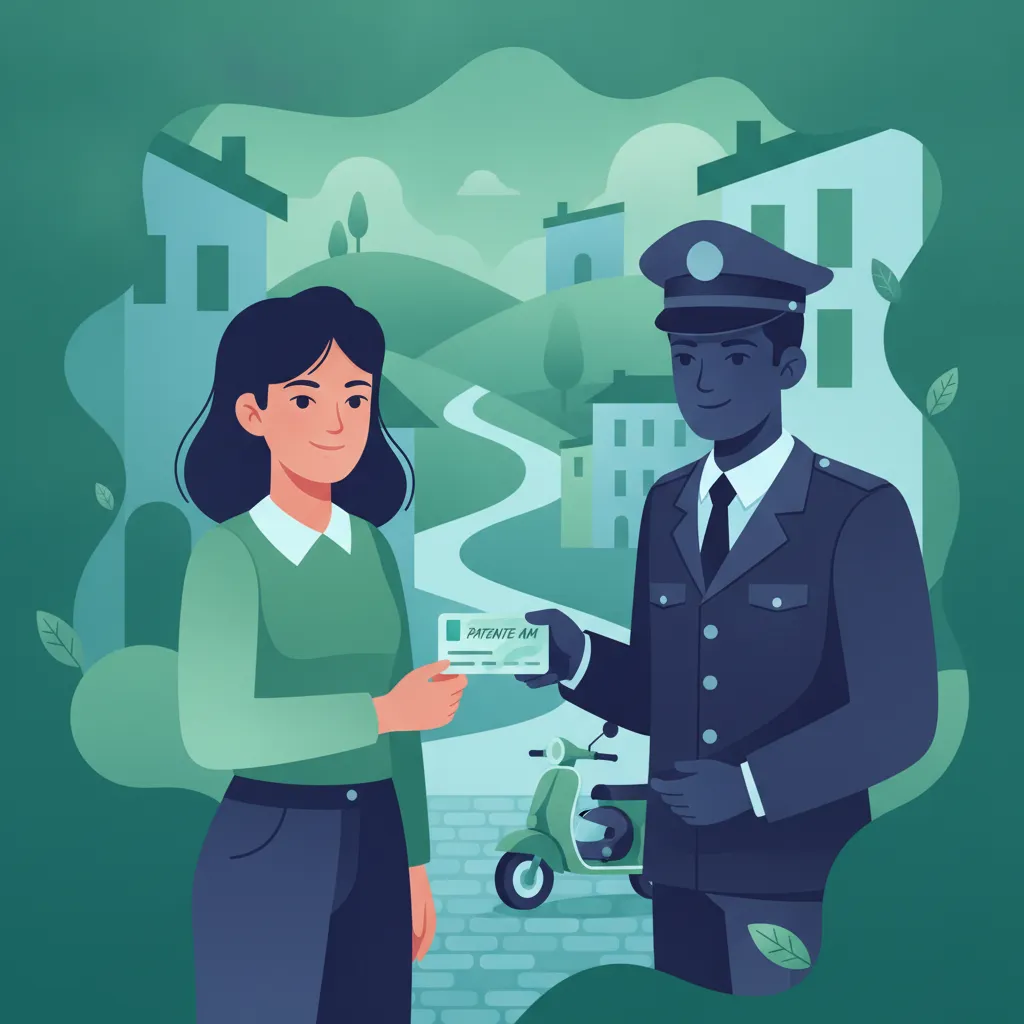
This lesson details the continuous duties of a Patente AM license holder beyond passing the exam. It covers the importance of regular vehicle maintenance, including checks on tires, brakes, and lights. The lesson also reinforces the legal obligation to maintain valid insurance and registration while adhering to all traffic laws for personal and public safety.
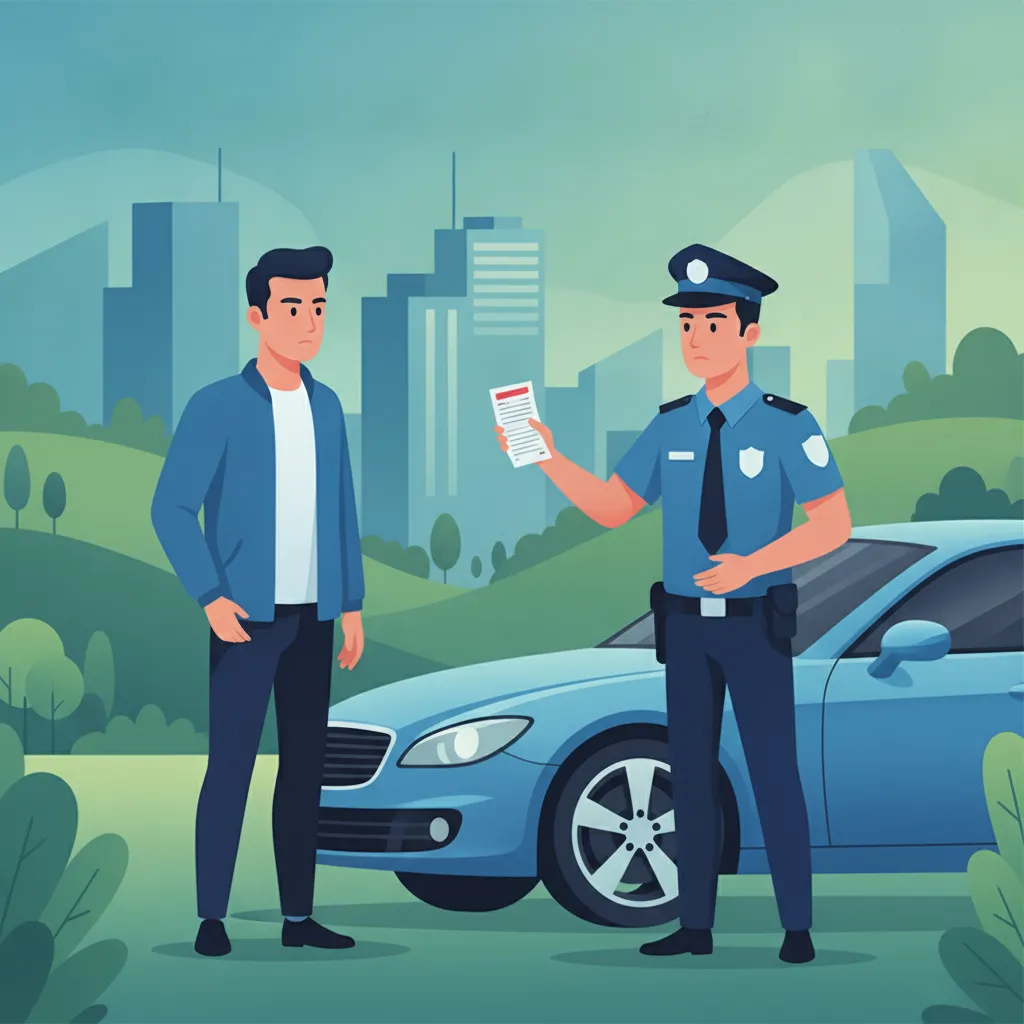
This lesson provides a clear overview of the legal penalties for traffic violations in Italy. It explains the structure of fines and the penalty point system that can lead to license suspension or revocation. The content also touches on more severe consequences, including criminal liability for incidents causing injury, to emphasize the importance of lawful riding.
This lesson focuses on the specific regulations applicable to beginner drivers (neopatentati) during their first three years of holding a Patente B. It outlines the stricter speed limits on motorways and main roads, as well as the restrictions on vehicle power-to-weight ratios. Furthermore, it details the absolute zero-tolerance policy for alcohol consumption and the increased penalties for traffic violations during this probationary period.
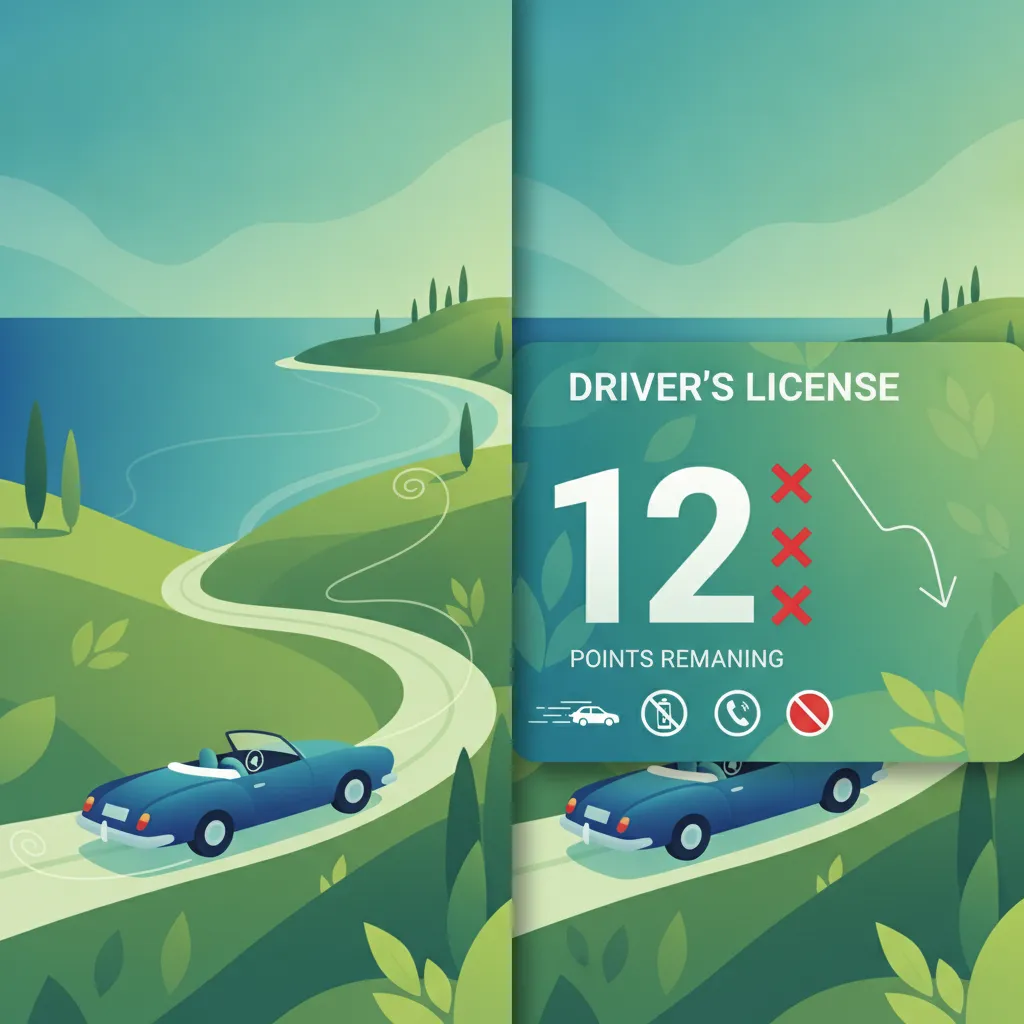
This lesson provides a detailed explanation of the Italian driver's license points system (decurtazione punti). It covers how various traffic infractions lead to specific point deductions and the cumulative effect on a driver's license status. Learners will understand the thresholds that trigger license suspension or revocation, the associated monetary fines, and the official procedures for recovering lost points.
This lesson provides a clear overview of the legal consequences for failing to comply with road transport regulations in Italy. It covers the system of fines for common offenses like speeding, overloading, and violations of driving hours. The lesson also explains the penalty point system that can lead to license suspension and touches upon the responsibilities and potential liability of the transport company.
This lesson details the profound and dangerous effects of alcohol and drugs on driving ability, including impaired coordination, slowed reaction time, and poor judgment. It specifies the legal blood alcohol concentration (BAC) limits in Italy, including the strict zero-tolerance policy for beginner drivers. The content also outlines the severe legal consequences of a DUI conviction, which can include heavy fines, license revocation, and imprisonment.
Find clear answers to common questions learners have about Overview of Patente B Regulations. Learn how the lesson is structured, which driving theory objectives it supports, and how it fits into the overall learning path of units and curriculum progression in Italy. These explanations help you understand key concepts, lesson flow, and exam focused study goals.
A standard Patente B license allows you to drive vehicles with a maximum of 8 passengers, plus the driver.
You must be at least 18 years old to obtain a full Patente B license in Italy, though the administrative process can begin slightly earlier.
Yes, you may tow a light trailer with a Patente B, provided the total combined weight of the vehicle and trailer does not exceed specific legal limits defined by the Codice della Strada.
Yes, you must pass a medical examination to certify your physical and mental fitness, including specific vision standards, before you can obtain or renew your license.
Start searching now to pinpoint exactly which Italian driving theory topics, road signs, or traffic rules you need to master. Use our advanced filters to build a custom practice session and ensure you're fully prepared for every aspect of your official driving licence exam.