Understanding dashboard warning lights is a fundamental skill for every driver, as they serve as the primary communication link between your car's computer and the operator. In this guide, we break down how the OBD system monitors engine performance and why ignoring a warning can lead to expensive repairs, particularly regarding catalytic converters. This knowledge is essential for both your driving theory exam success and for maintaining a safe, compliant vehicle on Polish roads.
Article content overview
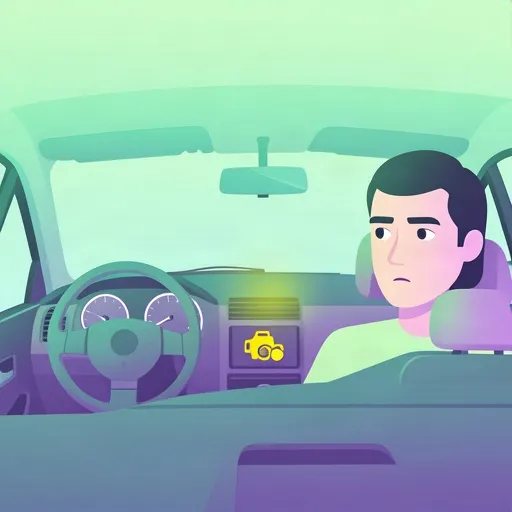
For every learner driver in Poland, mastering the dashboard is more than just passing a theory exam; it is a fundamental safety requirement for operating a motor vehicle on public roads. Among the various warning indicators, the "Check Engine" light, often represented by an engine-shaped icon, is perhaps the most misunderstood. Understanding this light is essential for vehicle longevity and ensuring you do not encounter unexpected failures during the mandatory periodic technical inspection (badanie techniczne) at a vehicle inspection station.
The "Check Engine" light is the primary alert mechanism for your vehicle’s On-Board Diagnostics (OBD) system. This electronic network continuously monitors the performance of your engine, ignition system, fuel delivery, and emissions control equipment. When the computer detects a parameter that falls outside of the manufacturer’s specified range, it triggers a fault code and illuminates the warning light on your dashboard to notify you that the vehicle's computer has identified a potential issue.
The behavior of the indicator provides critical clues regarding the urgency of the situation. A solid, steadily illuminated light generally suggests a non-emergency issue. While your car may remain drivable, it is vital to have the vehicle diagnosed by a professional as soon as possible. Driving with a persistent light can negatively affect your fuel economy, lead to increased emissions, or cause secondary damage to components that would otherwise have remained healthy.
Conversely, a flashing "Check Engine" light signals a critical engine misfire. This is a severe condition that poses an immediate risk of permanent damage to your engine and, crucially, your catalytic converter. A malfunctioning catalytic converter is not only a massive financial burden—often exceeding 4,000 PLN for replacement—but it will also lead to an automatic failure during your annual vehicle technical inspection. If you notice a flashing light, you should pull over safely, stop the engine, and seek professional assistance immediately to avoid catastrophic damage.
Learners often ask why the light turns on even when the car seems to run perfectly. The OBD system is highly sensitive; a faulty lambda sensor, an ignition coil failure, an issue with the airflow meter, or a clogged EGR valve can all trigger the warning. A common mistake among inexperienced drivers is using low-cost OBD2 adapters to simply "clear" or reset the fault code. While this turns off the light, it does not resolve the underlying mechanical or electrical failure.
When you clear a code without fixing the root cause, the light will almost certainly return. Furthermore, some modern vehicles will not pass the emissions portion of a technical inspection if the diagnostic memory has been recently cleared, as the system requires a "drive cycle" to verify that all monitors are functioning correctly. Attempting to hide a fault rather than repairing it is both a safety risk and a false economy.
As a driver in Poland, you are responsible for the technical condition of your vehicle. Ignoring dashboard warnings can lead to situations where your car loses power in traffic or fails to meet the safety standards required by local road regulations. If you are preparing for your theory exam, remember that questions regarding dashboard indicators and vehicle maintenance test your ability to recognize when a vehicle is unfit for use. Safe driving starts with proactive maintenance and an informed understanding of your vehicle's communication systems.
| Light Behavior | Implication | Required Action |
|---|---|---|
| Solid Light | Potential emission or performance issue | Schedule diagnostics promptly |
| Flashing Light | Serious engine misfire | Stop immediately; seek professional help |
| Light Cleared Manually | Underlying fault remains | Professional repair is still required |
Article content overview
Explore related topics, search based questions, and concepts that learners often look up when studying Understanding the Check Engine Light. These themes reflect real search intent and help you understand how this topic connects to wider driving theory knowledge in Poland.
Find clear and practical answers to common questions learners often have about Understanding the Check Engine Light. This section helps explain difficult points, remove confusion, and reinforce the key driving theory concepts that matter for learners in Poland.
A solid light indicates a non-critical issue that requires diagnostic attention soon, while a flashing light indicates an active engine misfire that can cause immediate and severe damage to the catalytic converter, requiring you to stop the vehicle safely.
No, clearing a code does not fix the underlying mechanical or electrical fault. If the system detects a recurring error related to emissions, the light will return, and the vehicle may fail its mandatory technical inspection.
The On-Board Diagnostics (OBD) system monitors various engine sensors and components to ensure the vehicle is operating efficiently and within environmental emission standards. When it detects a deviation from these parameters, it triggers the check engine light.
Understanding vehicle dashboard indicators is part of the essential knowledge required for safe and responsible vehicle operation, which is a core component of the driving theory curriculum in Poland.
After finding your specific article, continue your targeted learning by exploring related topics or diving deeper into practice questions. Our extensive library ensures you have all the resources needed to confidently prepare for your Polish driving license theory exam. Discover more guides and solidify your understanding of Polish road rules.