
Understanding the precise circumstances under which authorities suspend driving privileges is fundamental for every learner driver. This guide breaks down the legal impact of exceeding the speed limit by more than 50 km/h on single-carriageway roads, differentiating these rules from standard urban or motorway penalties. You will learn the specific conditions of this administrative measure and how it integrates into the broader system of penalty points and fines within the Polish Kodeks drogowy.
Article content overview
For every learner driver in Poland, grasping the legal consequences of exceeding speed limits is not just about passing the theory exam—it is a fundamental requirement for responsible driving. Recent regulatory updates have significantly tightened the rules regarding administrative suspension of driving licences, moving beyond urban areas to include specific road types outside built-up zones. Understanding these changes is critical to avoiding heavy fines, penalty points, and the temporary loss of your driving privileges.
In Poland, the Kodeks drogowy (Road Traffic Act) establishes a strict system of penalties for drivers who pose a serious threat to road safety. One of the most severe administrative measures is the automatic, three-month suspension of a driving licence. Historically, this rule was primarily associated with driving over 50 km/h above the limit within a obszar zabudowany (built-up area). However, current regulations have expanded this scope to include single-carriageway, two-way roads outside built-up areas.
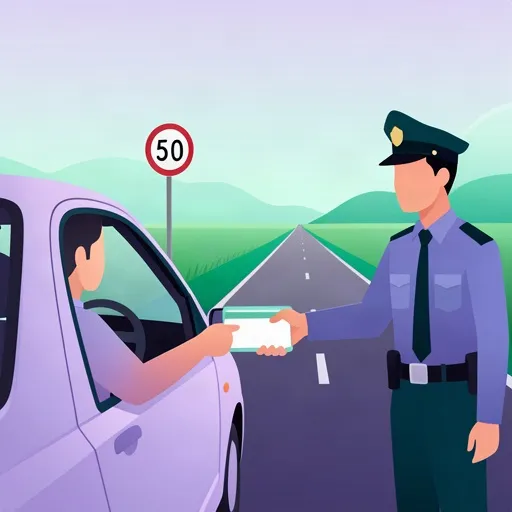
This expansion reflects a concerted effort by authorities to combat high-speed driving in areas where physical separation between opposing lanes is absent. If you are caught exceeding the speed limit by more than 50 km/h on such a road, the police are legally required to confiscate your driving licence on the spot for three months. This administrative sanction applies regardless of the time of day, weather conditions, or the presence of other traffic.
Driving during the three-month suspension period is a serious offense. If caught, the police will extend the suspension period by an additional three months, and any further violations can lead to a permanent loss of your driving licence.
A common trap in both theory exams and real-world driving is failing to correctly identify the road type. The distinction between a single-carriageway and a dual-carriageway is vital for understanding when the automatic three-month suspension applies.
On a single-carriageway road with two-way traffic, the standard speed limit outside a built-up area is usually 90 km/h. If you exceed this by more than 50 km/h—meaning you are clocked at 141 km/h or faster—you face the immediate loss of your licence. Conversely, on dual-carriageways such as expressways or motorways, the rules are governed by higher speed limits, and while speeding there remains a severe offense subject to heavy fines and penalty points, the automatic administrative suspension does not apply in the same capacity.
Exceeding the speed limit is categorized under a strict taryfikator (penalty schedule). Beyond the potential loss of your licence, every infraction adds penalty points to your record. Once you reach the threshold of 24 points—or 21 points for drivers with less than a year of experience—your driving credentials are subject to a mandatory review and possible revocation.
The current financial penalties for speeding are significant, and they double in the event of recydywa (recidivism). If you are caught repeating the same speeding offense within a two-year period, the fine is doubled. This dual-threat system of financial strain and administrative point accumulation is designed to ensure compliance with speed limits at all times.
A designated area within which specific traffic rules apply, generally indicated by a white rectangular sign with a black silhouette of buildings, marking the start of a reduced speed zone of 50 km/h.
The following table summarizes the relationship between speed violations and the resulting administrative consequences in the Polish legal system.
| Exceeding limit by | Penalty Points | Administrative Consequence |
|---|---|---|
| Up to 10 km/h | 1 | Fine |
| 21–25 km/h | 5 | Fine |
| 31–40 km/h | 9 | Fine |
| 51–60 km/h | 13 | Fine + 3-month suspension |
| 71 km/h and more | 15 | Fine + 3-month suspension |
This article explains the strict administrative consequences for speeding in Poland, focusing on the three-month licence suspension rule that now applies to single-carriageway roads outside built-up areas when exceeding the limit by more than 50 km/h. Learners must understand the distinction between road types, as automatic suspension triggers only on two-way single-carriageway roads where opposing traffic shares no physical barrier. The penalty point system ranges from 1 to 15 points depending on severity, with 24 points (or 21 for novice drivers) leading to mandatory licence review. Repeated speeding offenses within two years constitute recidivism, doubling fines, and driving during suspension can extend the ban and ultimately result in permanent licence loss.
A short set of high-value points that capture the most important ideas from this article.
Exceeding the speed limit by more than 50 km/h on a single-carriageway road outside a built-up area triggers an automatic three-month administrative licence suspension under the Kodeks drogowy
Police must confiscate your driving licence on the spot if you are caught at 141 km/h or faster on a road with a 90 km/h limit
Single-carriageway two-way roads outside built-up areas now fall under the same three-month suspension rule as built-up areas
The three-month suspension applies regardless of weather, traffic density, or time of day
Reaching 24 penalty points (or 21 for drivers with less than one year of experience) triggers mandatory licence review and possible revocation
The trigger point for administrative suspension on a 90 km/h single-carriageway road is 141 km/h (exceeding the limit by more than 50 km/h)
Penalty points range from 1 point for exceeding by up to 10 km/h up to 15 points for exceeding by 71 km/h or more
Recydywa (recidivism) means doubled fines if caught repeating the same speeding offense within two years
Driving during suspension extends the ban by another three months and further violations can result in permanent licence loss
Droga jednojezdniowa (single-carriageway) refers to a road with one lane in each direction, which is distinct from dual-carriageway roads where different rules apply
Confusing single-carriageway roads with dual-carriageways—automatic suspension applies only to single-carriageway roads outside built-up areas
Assuming the 50 km/h threshold means exactly 50 km/h over when it actually means more than 50 km/h
Forgetting that reaching 21 points (not 24) triggers review for drivers with less than one year of experience
Believing weather or traffic conditions can excuse speeding when the administrative suspension is automatic
Not understanding that dual-carriageways and motorways have different penalty structures despite also having heavy fines and points
Article content overview
A short set of high-value points that capture the most important ideas from this article.
Exceeding the speed limit by more than 50 km/h on a single-carriageway road outside a built-up area triggers an automatic three-month administrative licence suspension under the Kodeks drogowy
Police must confiscate your driving licence on the spot if you are caught at 141 km/h or faster on a road with a 90 km/h limit
Single-carriageway two-way roads outside built-up areas now fall under the same three-month suspension rule as built-up areas
The three-month suspension applies regardless of weather, traffic density, or time of day
Reaching 24 penalty points (or 21 for drivers with less than one year of experience) triggers mandatory licence review and possible revocation
The trigger point for administrative suspension on a 90 km/h single-carriageway road is 141 km/h (exceeding the limit by more than 50 km/h)
Penalty points range from 1 point for exceeding by up to 10 km/h up to 15 points for exceeding by 71 km/h or more
Recydywa (recidivism) means doubled fines if caught repeating the same speeding offense within two years
Driving during suspension extends the ban by another three months and further violations can result in permanent licence loss
Droga jednojezdniowa (single-carriageway) refers to a road with one lane in each direction, which is distinct from dual-carriageway roads where different rules apply
Confusing single-carriageway roads with dual-carriageways—automatic suspension applies only to single-carriageway roads outside built-up areas
Assuming the 50 km/h threshold means exactly 50 km/h over when it actually means more than 50 km/h
Forgetting that reaching 21 points (not 24) triggers review for drivers with less than one year of experience
Believing weather or traffic conditions can excuse speeding when the administrative suspension is automatic
Not understanding that dual-carriageways and motorways have different penalty structures despite also having heavy fines and points
Explore related topics, search based questions, and concepts that learners often look up when studying Licence Suspension Rules for Speeding. These themes reflect real search intent and help you understand how this topic connects to wider driving theory knowledge in Poland.
Find clear and practical answers to common questions learners often have about Licence Suspension Rules for Speeding. This section helps explain difficult points, remove confusion, and reinforce the key driving theory concepts that matter for learners in Poland.
Under current Polish regulations, you can lose your driving licence for three months if you exceed the speed limit by more than 50 km/h in built-up areas and on single-carriageway, two-way roads outside built-up areas.
No, the automatic administrative suspension of the driving licence for exceeding the speed limit by more than 50 km/h primarily targets built-up areas and single-carriageway roads, not motorways or dual-carriageway expressways.
If a driver is caught operating a vehicle during the three-month suspension period, the suspension is typically extended and may lead to the permanent loss of driving privileges, requiring a re-examination.
The administrative suspension is mandatory based on the recorded speed violation regardless of traffic intensity, the time of day, or the presence of other vehicles.
After finding your specific article, continue your targeted learning by exploring related topics or diving deeper into practice questions. Our extensive library ensures you have all the resources needed to confidently prepare for your Polish driving license theory exam. Discover more guides and solidify your understanding of Polish road rules.