
Learn why the Polish traffic police emphasize specific skills like manual traffic direction and emergency protocols, and how these directly impact your responsibilities as a new driver. This guide provides insight into the professional expectations set by the authorities, helping you internalize the logic behind traffic rules and safety compliance needed to pass your state theory exam. By understanding the enforcement standards in Poland, you will be better prepared to make safe, legal, and responsible decisions on the road.
Article content overview
Understanding the role and professional standards of the Polish traffic police is a cornerstone of becoming a safe and responsible driver. In Poland, traffic enforcement is not merely about issuing tickets; it is a comprehensive system designed to ensure the safety of all road users through strict adherence to traffic law and the maintenance of orderly traffic flow. For a student preparing for the state-level driving theory exam, grasping why police officers hold authority on the road—and how they operate—is essential for interpreting complex intersection scenarios and road safety protocols correctly.
The Polish traffic police act as the final authority on the road, often superseding existing signage during traffic incidents or emergency situations. Their operational standards are rigorously tested through national events, such as the prestigious annual 'Road Traffic Policeman' competition held at the School of Traffic Police in Sieradz. These competitions highlight the high level of professional training officers must possess, including expert knowledge of the Prawo o ruchu drogowym (Traffic Law), advanced vehicle handling, and the ability to perform life-saving first aid under immense pressure.
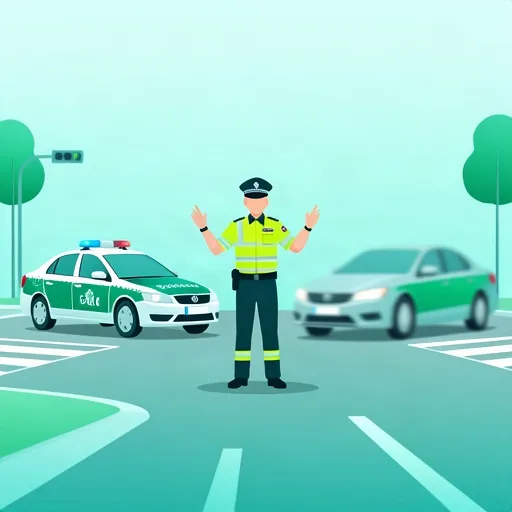
When you are on the road, you must recognize that an officer’s signals are the primary regulatory mechanism. If a police officer is directing traffic at an intersection, their gestures override both traffic lights and road signs. Misunderstanding these signals is a common cause of errors in the theory exam and a significant safety risk in real-world driving.
In the Polish theory exam, you will likely encounter questions regarding the hierarchy of traffic control. The fundamental principle is that the instructions of a police officer always take precedence. Even if you see a green traffic light, if an officer’s body position or hand signal directs you to stop, you must comply immediately.
Poland is deeply committed to the 'Vision Zero' approach, aiming to eliminate road fatalities through collaborative efforts between law enforcement and road users. The police perform extensive preventive actions, such as the 'Speed' and 'Truck&Bus' operations, to ensure that drivers maintain safe habits. As a learner, internalizing these standards is not just about passing the exam; it is about adopting a culture of safety.
When officers conduct sobriety checks or speed enforcement, their focus is on reducing the likelihood of high-consequence accidents. By understanding the logic behind these enforcement practices, you can better appreciate the importance of obeying speed limits and maintaining distance, even in challenging seasonal conditions.
Beyond the theory exam, new drivers should be prepared for the reality of being first at the scene of an accident. The training standards for police officers emphasize first aid, and while you are not expected to be a medical professional, the Polish driving curriculum mandates basic knowledge of how to secure an accident site and provide initial assistance. Knowing how to use an emergency triangle and when to call 112 are standard requirements that reflect the professional safety culture in Poland.
The state theory exam often presents "traps" where multiple regulatory elements conflict. For instance, a question might show a scenario where a road sign says one thing, but a police officer is signaling another. The correct answer is always to follow the officer. Mastering these distinctions will save you from common pitfalls and ensure you are well-prepared for the nuances of Polish road conditions.
This article explains why Polish traffic police hold authority that supersedes all other traffic control devices, establishing a clear hierarchy where officer instructions come first, followed by traffic lights, road signs, road markings, and general road rules. Understanding this hierarchy is essential for both passing the theory exam and driving safely, as questions often present scenarios where signals conflict. The content also connects to Poland's Vision Zero goal and emphasizes that drivers must be prepared to follow police directions during emergencies, secure accident scenes, and contact emergency services. Professional police training standards and specialized units like Grupa SPEED demonstrate the seriousness with which traffic enforcement supports road safety culture in Poland.
A short set of high-value points that capture the most important ideas from this article.
Police officer hand signals always override traffic lights, road signs, and road markings at any intersection
The official hierarchy of traffic control is: police instructions > traffic lights > road signs > road markings > general right-of-way rules
Poland's Vision Zero strategy aims to eliminate road fatalities through combined enforcement and driver compliance efforts
During emergencies or power outages, police manually directing traffic are the sole authority and must be obeyed immediately
Polish traffic police undergo rigorous training including first aid and annual professional competitions at the School of Traffic Police in Sieradz
When a police officer is directing traffic, you must follow their signals regardless of what traffic lights or signs indicate
The annual 'Road Traffic Policeman' competition tests officers on the Prawo o ruchu drogowym, vehicle handling, and first aid skills
In the theory exam, questions showing conflicting signals between police and signs require you to choose the officer's instructions as correct
Grupa SPEED is the specialized police unit dedicated to preventing aggressive driving and speeding violations
Drivers must know how to secure an accident scene and call emergency services at number 112
Assuming a green traffic light gives absolute right-of-way when a police officer is present directing traffic
Misinterpreting or failing to recognize police hand signals at intersections with power outages or incidents
Believing that road signs take priority over a police officer's manual directions
Overlooking that police can supersede signage not only at intersections but throughout any traffic incident
Forgetting that non-compliance with police directions carries both safety risks and legal penalties
Article content overview
A short set of high-value points that capture the most important ideas from this article.
Police officer hand signals always override traffic lights, road signs, and road markings at any intersection
The official hierarchy of traffic control is: police instructions > traffic lights > road signs > road markings > general right-of-way rules
Poland's Vision Zero strategy aims to eliminate road fatalities through combined enforcement and driver compliance efforts
During emergencies or power outages, police manually directing traffic are the sole authority and must be obeyed immediately
Polish traffic police undergo rigorous training including first aid and annual professional competitions at the School of Traffic Police in Sieradz
When a police officer is directing traffic, you must follow their signals regardless of what traffic lights or signs indicate
The annual 'Road Traffic Policeman' competition tests officers on the Prawo o ruchu drogowym, vehicle handling, and first aid skills
In the theory exam, questions showing conflicting signals between police and signs require you to choose the officer's instructions as correct
Grupa SPEED is the specialized police unit dedicated to preventing aggressive driving and speeding violations
Drivers must know how to secure an accident scene and call emergency services at number 112
Assuming a green traffic light gives absolute right-of-way when a police officer is present directing traffic
Misinterpreting or failing to recognize police hand signals at intersections with power outages or incidents
Believing that road signs take priority over a police officer's manual directions
Overlooking that police can supersede signage not only at intersections but throughout any traffic incident
Forgetting that non-compliance with police directions carries both safety risks and legal penalties
Explore related topics, search based questions, and concepts that learners often look up when studying Polish Traffic Police Standards. These themes reflect real search intent and help you understand how this topic connects to wider driving theory knowledge in Poland.
Find clear and practical answers to common questions learners often have about Polish Traffic Police Standards. This section helps explain difficult points, remove confusion, and reinforce the key driving theory concepts that matter for learners in Poland.
Understanding these procedures helps you correctly interpret manual traffic signals at intersections and reinforces the necessity of immediate compliance with law enforcement, which is a critical element of safe and legal driving in Poland.
Officers are trained in manual traffic control at intersections, first aid provision, vehicle handling techniques, and thorough knowledge of traffic regulations to ensure they can maintain road safety under various conditions.
'Vision Zero' aims to eliminate road traffic fatalities by 2050, requiring all road users to strictly adhere to traffic laws, maintain high situational awareness, and act responsibly to prevent accidents on the road.
Yes, instructions given by an authorized person, such as a police officer directing traffic, always take precedence over traffic lights, road signs, and markings.
After finding your specific article, continue your targeted learning by exploring related topics or diving deeper into practice questions. Our extensive library ensures you have all the resources needed to confidently prepare for your Polish driving license theory exam. Discover more guides and solidify your understanding of Polish road rules.