
Understanding the legal nuances of stopping and parking is a fundamental requirement for every driver in Poland and a common topic in state theory exams. This guide breaks down the specific regulations, mandatory distances, and sign-related restrictions that determine where you can safely leave your vehicle. You will learn how to avoid common pitfalls that often lead to traffic penalties and exam errors.
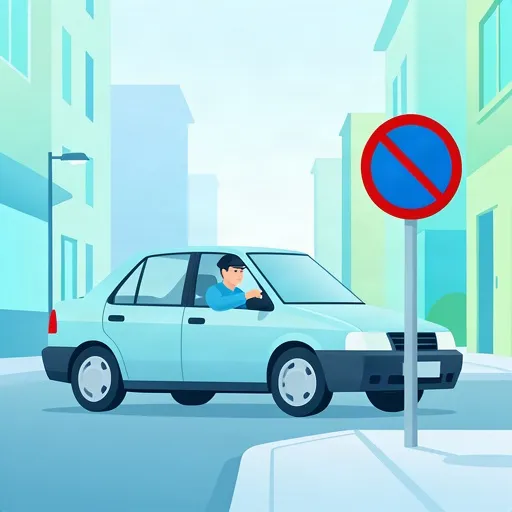
Article content overview
Mastering the rules governing where you can leave your vehicle is a cornerstone of the Polish driving theory exam. Many learners find themselves confused by the legal definitions of stopping and parking, often leading to avoidable mistakes in both the exam room and real-world traffic. In Poland, the Prawo o ruchu drogowym (Road Traffic Act) strictly regulates these maneuvers, and failing to adhere to them can result in significant fines, penalty points, or even the towing of your vehicle.
In the context of Polish road rules, the distinction between stopping (zatrzymanie) and parking (postój) is based primarily on time and the intent of the driver. Understanding this difference is essential because some prohibitions apply to both, while others specifically target one or the other.
An intentional immobilization of a vehicle lasting no longer than one minute, or any immobilization resulting from traffic conditions or regulations (e.g., waiting at a red light or in a traffic jam).
An intentional immobilization of a vehicle lasting longer than one minute, not resulting from traffic conditions or regulations.
Always remember that if you are forced to stop due to a technical failure or traffic congestion, this does not count as "parking" in the legal sense. However, if you are stopped due to a breakdown, you are required to secure the vehicle and alert other road users according to safety protocols.
Polish law establishes specific zones where you are strictly forbidden from stopping or parking. These rules are designed to ensure traffic flow and visibility at critical junctions.
The theory exam frequently tests your knowledge of mandatory distances near infrastructure. You should memorize these figures to avoid "trick" questions:
| Scenario | Minimum Distance |
|---|---|
| Pedestrian Crossing | 10 meters |
| Intersection | 10 meters |
| Bus/Tram Stop | 15 meters |
| Railway Crossing | Up to the indicator post |
One of the most common exam traps involves the "Residential Zone" (marked by the blue D-40 sign). In this zone, the rules for parking are much more restrictive than on standard public roads.
If you enter a D-40 zone, assume that parking anywhere other than a clearly marked parking bay is an offense. This is a favorite topic for theory exam questions, as learners often assume standard road rules regarding the edge of the road apply here.
Many candidates lose points by failing to account for road markings or specific local conditions. For instance, the P-21 "excluded area" (diagonal lines) is not just a warning; it is a space you cannot enter or stop upon under any circumstances. Additionally, always check the weight of your vehicle in your registration document (field F.2) when considering parking on a sidewalk, as restrictions often depend on the permissible total weight of the vehicle.
Polish traffic law draws a critical legal distinction between stopping (zatrzymanie, up to 1 minute) and parking (postój, longer than 1 minute), with different prohibitions applying to each. Specific mandatory distances govern where vehicles cannot stop or park: 10 meters from pedestrian crossings and intersections, and 15 meters from bus and tram stops. Road signs B-35 (no parking) and B-36 (no stopping) have different meanings, and in residential zones marked D-40, parking is restricted exclusively to designated bays. These rules are frequently tested in the Polish driving theory exam and carry real-world penalties including fines and vehicle towing.
A short set of high-value points that capture the most important ideas from this article.
The legal distinction between stopping (zatrzymanie, up to 1 minute) and parking (postój, longer than 1 minute) is fundamental and affects which prohibitions apply
B-35 prohibits parking but allows brief stopping under 1 minute if safe; B-36 prohibits both stopping and parking entirely
A 10-meter minimum distance must be maintained from pedestrian crossings and intersections, while bus/tram stops require 15 meters
In Residential Zones (D-40), parking is only permitted in designated bays—standard roadside parking is not allowed
The P-21 excluded area marking creates an absolute prohibition where no stopping or entry is permitted
Stopping = immobilization ≤1 minute; Parking = immobilization >1 minute not caused by traffic conditions
Distance rules: 10m from crossings and intersections, 15m from bus/tram stops
B-35 = no parking; B-36 = no stopping (stricter prohibition)
D-40 residential zones require parking only in marked bays, not along road edges
Vehicle weight (field F.2 in registration) may affect sidewalk parking permissions
Assuming that a brief stop under a B-35 sign is always allowed—safety and traffic conditions must also be considered
Confusing the two prohibition signs: B-35 allows stopping but B-36 prohibits all immobilization
Forgetting that in a one-way street, parking directly after a crossing may be permitted if visibility is not blocked
Believing standard roadside parking rules apply in D-40 residential zones when only marked bays are permitted
Overlooking that the P-21 excluded area is an absolute prohibition not subject to time-based exceptions
Article content overview
A short set of high-value points that capture the most important ideas from this article.
The legal distinction between stopping (zatrzymanie, up to 1 minute) and parking (postój, longer than 1 minute) is fundamental and affects which prohibitions apply
B-35 prohibits parking but allows brief stopping under 1 minute if safe; B-36 prohibits both stopping and parking entirely
A 10-meter minimum distance must be maintained from pedestrian crossings and intersections, while bus/tram stops require 15 meters
In Residential Zones (D-40), parking is only permitted in designated bays—standard roadside parking is not allowed
The P-21 excluded area marking creates an absolute prohibition where no stopping or entry is permitted
Stopping = immobilization ≤1 minute; Parking = immobilization >1 minute not caused by traffic conditions
Distance rules: 10m from crossings and intersections, 15m from bus/tram stops
B-35 = no parking; B-36 = no stopping (stricter prohibition)
D-40 residential zones require parking only in marked bays, not along road edges
Vehicle weight (field F.2 in registration) may affect sidewalk parking permissions
Assuming that a brief stop under a B-35 sign is always allowed—safety and traffic conditions must also be considered
Confusing the two prohibition signs: B-35 allows stopping but B-36 prohibits all immobilization
Forgetting that in a one-way street, parking directly after a crossing may be permitted if visibility is not blocked
Believing standard roadside parking rules apply in D-40 residential zones when only marked bays are permitted
Overlooking that the P-21 excluded area is an absolute prohibition not subject to time-based exceptions
Explore related topics, search based questions, and concepts that learners often look up when studying Stopping vs. Parking Rules. These themes reflect real search intent and help you understand how this topic connects to wider driving theory knowledge in Poland.
Find clear and practical answers to common questions learners often have about Stopping vs. Parking Rules. This section helps explain difficult points, remove confusion, and reinforce the key driving theory concepts that matter for learners in Poland.
Stopping (zatrzymanie) is any intentional immobilization of a vehicle lasting no longer than one minute, or longer if it results from traffic conditions. Parking (postój) is any immobilization of a vehicle not resulting from traffic conditions that lasts longer than one minute.
Sign B-35 indicates a 'no parking' (zakaz postoju) zone, meaning you cannot park your vehicle, but you are permitted to stop for less than one minute.
Sign B-36 indicates a 'no stopping' (zakaz zatrzymywania się) zone, which strictly prohibits both parking and stopping your vehicle.
You are prohibited from stopping or parking on a pedestrian crossing and within 10 meters before it. On two-way roads with one lane in each direction, this restriction also applies to the area directly behind the crossing.
No, in a residential zone (marked by sign D-40), you may only park in spaces specifically designated and marked for parking.
After finding your specific article, continue your targeted learning by exploring related topics or diving deeper into practice questions. Our extensive library ensures you have all the resources needed to confidently prepare for your Polish driving license theory exam. Discover more guides and solidify your understanding of Polish road rules.