
On Polish roads, adhering to posted speed limits isn't always enough. This lesson is vital for your Category B theory preparation, teaching you how to dynamically adjust your speed based on weather, traffic, and visibility. Understanding this principle is key to anticipating hazards and maintaining safety in diverse driving conditions.
Lesson content overview
Driving safely and responsibly requires more than just knowing the posted speed limits. It demands a constant assessment of your surroundings and a willingness to adjust your vehicle's speed to the prevailing conditions. This lesson, crucial for your Polish Category B license preparation, delves into the essential principles of adapting your speed to ensure safety for yourself and other road users. Understanding these dynamics is fundamental to defensive driving and preventing accidents in challenging situations.
This comprehensive guide will explain how various factors like weather, road surface, traffic density, and even your vehicle's load can drastically alter the appropriate driving speed, often necessitating a speed far below the legal maximum.
Effective speed management is a cornerstone of safe driving. It involves more than just adhering to signs; it's about making informed decisions based on the immediate environment.
Speed adaptation is the conscious act of selecting a driving speed that is lower than the posted limit when current conditions demand it. This ensures that you can always bring your vehicle to a safe stop within the available distance and maintain full control. Drivers in Poland are legally obliged to adapt their speed to the circumstances, not merely to the maximum allowed by signs. This means constantly re-evaluating your speed in response to changes in the road, weather, traffic, and your vehicle's state.
A safety margin is the additional distance or time you keep between your vehicle and potential hazards, exceeding the absolute minimum stopping distance. This crucial buffer allows for unexpected events, delayed reactions, or sudden changes in conditions. A larger safety margin is vital in poor weather, at night, when visibility is reduced, or when carrying a heavy load, providing a critical extra moment to react and avoid a collision.
Beyond the explicit speed limits posted on signs, environmental factors like rain, fog, or ice impose implicit, condition-based speed restrictions. These de-facto limits bridge the gap between fixed legal maximums and the real-world safety needs of a driving situation. A driver must recognize when these conditions supersede the posted limits and understand that failure to adjust is a legal transgression and a significant safety risk.
The maximum safe speed is the highest speed at which you can maintain complete control of your vehicle and stop within the visible road ahead. This speed is highly variable, influenced by the road type, prevailing weather conditions, traffic density, and the condition of your vehicle. It is never simply the highest legally permitted speed, especially when conditions are less than ideal.
Under Polish law (specifically Article 82 § 1 of the Road Traffic Act), every driver has a legal duty of care to travel at a speed that is appropriate to the circumstances and does not endanger other road users. This obligation forms the legal basis for the enforcement of speed adaptation and assigns liability in the event of an accident caused by inappropriate speed. Non-compliance can lead to significant fines, penalty points, and legal repercussions.
A multitude of factors interact to determine the appropriate and safe speed at any given moment. Understanding these influences is paramount for any driver.
The posted speed limit signifies the maximum speed permissible under ideal driving conditions. It is a legal ceiling, not a recommendation for all circumstances. The safe speed, however, is the actual speed you should be traveling, which may be considerably lower than the posted limit, depending on current conditions. For example, driving at 50 km/h in a built-up area is the absolute limit, but in heavy rain, a safe speed might be 30 km/h to maintain control and ensure adequate stopping distance. Ignoring this distinction is a common misunderstanding that leads to accidents.
Stopping distance is the total distance your vehicle travels from the moment you perceive a hazard until it comes to a complete halt. This distance is composed of three critical components:
Each of these components, and therefore the total stopping distance, increases significantly with speed. Doubling your speed roughly quadruples your braking distance. This physics principle underlies the necessity of speed adaptation. Drivers often mistakenly assume only braking distance is relevant, overlooking the crucial impact of perception and reaction time.
The physical state of the road surface profoundly affects the grip (traction) between your tires and the road, directly influencing braking efficiency and vehicle control.
Drivers must be alert to these changes and adjust speed accordingly. Under Polish law (Article 82 § 2), mandatory speed reduction is required under adverse conditions.
Visibility refers to the distance over which you can clearly see road markings, other vehicles, and potential obstacles. It is heavily influenced by:
Your speed must always allow you to stop within the distance you can clearly see ahead. Article 84 of the Polish Road Traffic Act mandates the use of appropriate lighting, such as low-beam headlights at night and fog lights in conditions of reduced visibility.
Using high-beam headlights in fog or heavy rain can worsen visibility due to increased light reflection, creating a "white wall" effect. Always use low-beam or fog lights in such conditions.
The number and speed of surrounding vehicles significantly impact your ability to maneuver and stop safely.
Article 73 of the Polish Road Traffic Act explicitly states the obligation to maintain a safe distance from the vehicle ahead.
The mass of your vehicle, including passengers, cargo, and any towed trailer, directly affects its inertia and braking performance.
Polish Vehicle Regulations mandate that cargo must be properly secured, and the maximum permissible total weight must not be exceeded. Drivers of heavy-goods vehicles (over 3.5 tonnes) with trailers face specific speed restrictions in reduced visibility (Article 93), highlighting the impact of load on safety.
The physical design of the road, including curves, gradients, and intersections, imposes its own implicit speed requirements.
Ignoring road geometry, such as taking a sharp curve at the posted straight-road limit, is a frequent cause of single-vehicle accidents.
Your ability to perceive a hazard, process information, and initiate a response (reaction time) is a critical component of safe driving. The average human reaction time is approximately 1 second. However, this can be significantly degraded by:
Higher speeds mean you cover more ground during your reaction time. Therefore, any factor that lengthens your reaction time necessitates a further reduction in speed to maintain safety.
Polish road law places a strong emphasis on drivers adjusting their speed to the prevailing circumstances. Compliance with these regulations is not only a legal requirement but a fundamental aspect of safe driving.
This crucial article states that a driver must travel at a speed that is appropriate to the conditions, traffic, state of the vehicle, and road characteristics. This overriding principle applies at all times and means that even if you are below the maximum posted speed limit, you could still be driving too fast if conditions warrant a lower speed. Its rationale is to align a driver's speed with the safety margin needed under current conditions, preventing incidents. For example, reducing your speed to 60 km/h on a wet motorway, even though the limit is 80 km/h, is compliant. Maintaining 80 km/h in such conditions, leading to a loss of control, would be a violation.
This article mandates that a minimum safe distance must be kept between vehicles. This distance must be sufficient to allow for safe stopping in all traffic conditions. It is a critical rule designed to prevent rear-end collisions. In heavy rain, keeping at least a 2-second gap (or more) is essential. Tail-gating in low visibility, even at low speeds, is a violation of this rule.
This regulation specifies that headlights must be used from sunset to sunrise and whenever visibility is insufficient. This typically means low-beam headlights at night and full-beam where there is no oncoming traffic. Fog lights are to be used only in conditions of reduced visibility (e.g., fog, heavy rain, or snow) when visibility falls below 50 meters. Proper lighting ensures your vehicle is visible to others and that you can see the road ahead adequately. Using low-beam headlights on a rural road at night is correct; driving with high beams into oncoming traffic is not.
This specific article states that the maximum speed of heavy-goods vehicles (those over 3.5 tonnes with a trailer) must be reduced by 10 km/h when visibility falls below 100 meters due to fog, heavy rain, or snow. This rule acknowledges the longer stopping distances and reduced maneuverability of heavier vehicles, requiring them to take extra precautions. For example, if the limit is 80 km/h, such a vehicle must reduce to 70 km/h in conditions where visibility is less than 100 meters.
This ordinance sets out specific speed limits for different road categories across Poland: typically 50 km/h in built-up areas, 90 km/h on rural roads, 100 km/h on express roads (single carriageway), and 140 km/h on motorways. These are baseline limits that may be further reduced by supplementary signs or, more importantly, by the condition-based requirements outlined in Article 82. For instance, driving at 45 km/h in an urban area during heavy rain is correct adaptation, whereas maintaining 70 km/h in the same conditions (above the absolute limit) would be a severe violation.
Many accidents occur not because drivers are unaware of speed limits, but because they fail to adapt their speed to changing conditions. Here are common pitfalls:
Safe driving requires dynamic decision-making. Here's how speed adaptation principles apply in various real-world contexts:
Adhering to the principles of speed adaptation has profound implications for road safety and your legal standing as a driver.
The kinetic energy of a moving vehicle increases quadratically with speed (Kinetic Energy = ½ * mass * velocity²). This means that doubling your speed quadruples the kinetic energy, and therefore roughly quadruples the distance and force required to bring the vehicle to a stop. Modest speed reductions, especially from higher speeds, dramatically shorten stopping distances and reduce the impact force in a collision.
Your reaction time is a relatively constant factor (around 1 second). At 100 km/h, you cover approximately 28 meters in that one second before you even begin to brake. If you reduce your speed to 50 km/h, you cover only 14 meters in the same time. This simple physics demonstrates how higher speeds directly increase the distance traveled before any braking occurs, leaving less room for error.
Your eyes can only detect objects and contrasts up to a certain distance, which is severely limited by factors like fog, heavy rain, or the reach of your headlights at night. Your speed must be low enough to ensure you can stop well within that visible range, giving you time to react to any unseen obstacles.
A heavier vehicle has more inertia, meaning it is more resistant to changes in motion. This requires greater braking effort and longer distances to decelerate. Drivers must compensate for this increased mass by reducing their speed, especially in challenging conditions.
Police data in Poland consistently show that excessive speed relative to prevailing weather or visibility conditions is a significant contributing factor in fatal collisions. Drivers who actively practice speed adaptation reduce their risk of involvement in such accidents substantially. By following these principles, you are not only complying with the law but actively participating in making roads safer for everyone.
To solidify your understanding, let's explore how to apply these principles in common Polish driving scenarios.
Setting: You are on a dual-carriageway motorway with a posted speed limit of 140 km/h. Heavy rain has created standing water on the road.
Relevant Rule: Article 82 § 1 (Speed appropriate to conditions).
Correct Behavior: You recognize the reduced friction and increased hydroplaning risk. You reduce your speed to approximately 100-110 km/h, activate your low-beam headlights if not already on, increase your following distance to at least 4 seconds, and avoid sudden steering or braking.
Incorrect Behavior: You maintain 140 km/h, assuming the posted limit is always safe. This significantly increases your risk of hydroplaning, losing control, and being unable to stop safely if traffic ahead slows down.
Setting: You are driving on an unlit country road with a posted limit of 90 km/h. It's night, and your low-beam headlights provide effective illumination for about 50-70 meters ahead.
Relevant Rule: Article 84 § 1 (Use of appropriate lighting), and Article 82 § 1 (Speed appropriate to visibility).
Correct Behavior: You drive at a speed that allows you to stop within the range of your headlights, perhaps 60-70 km/h, even though the limit is 90 km/h. You maintain a generous following distance and are prepared for unexpected hazards like animals or unlit vehicles.
Incorrect Behavior: You use high-beam headlights constantly, dazzling oncoming drivers, or you drive at 90 km/h, overdriving your headlights, meaning you cannot stop within the visible distance.
Setting: You are approaching an urban intersection with a stop sign. Dense fog has reduced visibility to a mere 20-30 meters. The urban speed limit is 50 km/h.
Relevant Rule: Article 82 § 1 (Speed appropriate to visibility and circumstances).
Correct Behavior: You drastically reduce your speed to 20 km/h or even slower, using your low-beam headlights and front fog lights (if fitted). You approach the stop sign very cautiously, stopping completely, and only proceed when you can clearly see that the cross-traffic lanes are clear.
Incorrect Behavior: You approach at 50 km/h, relying on the urban speed limit, and fail to see cross-traffic or pedestrians until it's too late, risking a severe collision.
Setting: You are driving a 3.5-tonne delivery truck with a trailer on a road covered in compacted snow. The posted limit for the road is 80 km/h.
Relevant Rule: Article 93 (Speed reduction for heavy vehicles in reduced visibility/adverse conditions) and Article 82 § 1 (Speed appropriate to conditions).
Correct Behavior: You understand that snow severely reduces traction and that your heavy, loaded vehicle requires much longer to stop. You reduce your speed significantly, perhaps to 40-50 km/h, maintain a very long following distance, and use gentle inputs for steering, acceleration, and braking.
Incorrect Behavior: You attempt to maintain 80 km/h, resulting in a loss of traction, difficulty steering, and an inability to stop, potentially causing a jackknife or collision.
Setting: You are on a residential street with a general speed limit of 50 km/h. You approach a sharp, 90-degree curve with no specific advisory speed sign.
Relevant Rule: Safe speed based on road geometry and vehicle handling (implicit under Article 82 § 1).
Correct Behavior: You recognize the sharpness of the curve and reduce your speed to approximately 25-30 km/h before entering it. You maintain a centered lane position and anticipate potential oncoming traffic or hazards around the bend.
Incorrect Behavior: You maintain 50 km/h through the curve, risking understeer, where your vehicle pushes wide, potentially crossing into the oncoming lane or striking the curb.
Adjusting your speed to conditions and visibility is not merely a suggestion; it is a fundamental and legally mandated aspect of safe driving in Poland. Mastering this skill involves a continuous cycle of observation, assessment, and appropriate action.
Identify Current Conditions: Assess the weather (rain, fog, snow, sun glare), road surface (dry, wet, icy, gravel), visibility (day, night, fog), traffic density, your vehicle's load, and the road's geometry (curves, hills).
Recall Posted Speed Limit: Know the maximum legal speed for the specific road type you are on.
Estimate Required Stopping Distance: Mentally calculate how far your vehicle would travel during your reaction time and then while braking in the current conditions.
Adjust Speed for Safety: Reduce your speed so that your estimated total stopping distance is significantly less than the distance you can see clearly ahead, providing a comfortable safety margin.
Continuously Re-evaluate: Conditions can change rapidly. Constantly observe your surroundings and be ready to modify your speed again.
This lesson explains that Polish drivers must always adjust their speed to match current conditions, not just follow posted limits. Key legal requirements include Article 82 § 1 mandating speed appropriate to conditions, Article 73 requiring safe following distances, and Article 93 specifying speed reductions for heavy vehicles in poor visibility. The three components of stopping distance—perception, reaction, and braking—all increase with speed, meaning modest reductions dramatically improve safety margins. Learners should understand that factors like rain, fog, ice, night driving, heavy loads, and road geometry all necessitate speed reductions, and violating these principles carries both legal consequences and safety risks.
A short set of high-value points that capture the most important learning from this lesson.
The posted speed limit is a legal maximum under ideal conditions, not a recommendation for all situations
Safe speed is determined by weather, road surface, visibility, traffic density, vehicle load, and road geometry combined
Stopping distance consists of three components: perception distance, reaction distance, and braking distance, all of which increase with speed
Under Polish law (Article 82 § 1), drivers must always travel at a speed appropriate to conditions, even below the posted limit
Your speed must always allow you to stop within the distance you can clearly see ahead
Explore all units and lessons included in this driving theory course.
Wet asphalt requires approximately 30% speed reduction; ice and snow require 40-50% reduction due to drastically reduced friction
Maintain at least a 2-second following gap in normal conditions, extending to 3-4 seconds in rain, fog, or at night
Use low-beam headlights or fog lights in reduced visibility; high-beam headlights create dangerous glare in fog
Heavy vehicles over 3.5 tonnes with trailers must reduce speed by 10 km/h when visibility falls below 100 metres
Doubling your speed roughly quadruples braking distance due to the physics of kinetic energy
Driving at the posted speed limit in heavy rain without adjusting for reduced traction and hydroplaning risk
Tail-gating (following too closely) in congested traffic, which eliminates safe stopping distance
Using high-beam headlights in fog, which reflects light back and worsens visibility instead of improving it
Maintaining the straight-road speed limit through curves without assessing the curve's radius and grip
Neglecting to reduce speed when carrying a heavy load, which significantly increases stopping distance
Lesson content overview
A short set of high-value points that capture the most important learning from this lesson.
The posted speed limit is a legal maximum under ideal conditions, not a recommendation for all situations
Safe speed is determined by weather, road surface, visibility, traffic density, vehicle load, and road geometry combined
Stopping distance consists of three components: perception distance, reaction distance, and braking distance, all of which increase with speed
Under Polish law (Article 82 § 1), drivers must always travel at a speed appropriate to conditions, even below the posted limit
Your speed must always allow you to stop within the distance you can clearly see ahead
Explore all units and lessons included in this driving theory course.
Wet asphalt requires approximately 30% speed reduction; ice and snow require 40-50% reduction due to drastically reduced friction
Maintain at least a 2-second following gap in normal conditions, extending to 3-4 seconds in rain, fog, or at night
Use low-beam headlights or fog lights in reduced visibility; high-beam headlights create dangerous glare in fog
Heavy vehicles over 3.5 tonnes with trailers must reduce speed by 10 km/h when visibility falls below 100 metres
Doubling your speed roughly quadruples braking distance due to the physics of kinetic energy
Driving at the posted speed limit in heavy rain without adjusting for reduced traction and hydroplaning risk
Tail-gating (following too closely) in congested traffic, which eliminates safe stopping distance
Using high-beam headlights in fog, which reflects light back and worsens visibility instead of improving it
Maintaining the straight-road speed limit through curves without assessing the curve's radius and grip
Neglecting to reduce speed when carrying a heavy load, which significantly increases stopping distance
Explore search topics learners often look for when studying Adjusting Speed to Conditions and Visibility. These topics reflect common questions about road rules, driving situations, safety guidance, and lesson level theory preparation for learners in Poland.
Browse additional driving theory lessons that cover connected traffic rules, road signs, and common driving situations related to this topic. Improve your understanding of how different rules interact across everyday traffic scenarios.
Explore the legal basis (Article 82 § 1) for adjusting your speed in Poland. Understand your obligation to match speed with conditions, not just posted limits, to ensure road safety and legal compliance.
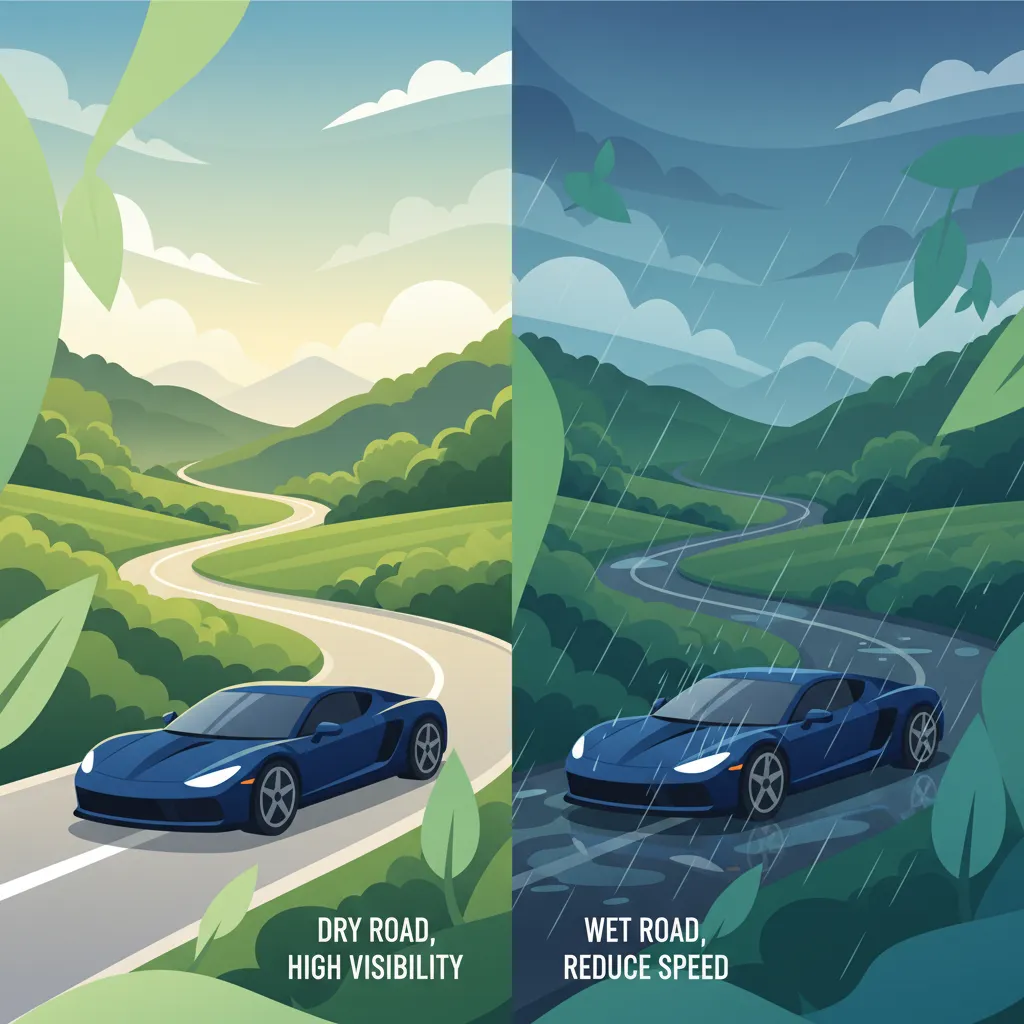
In this lesson, learners examine how environmental conditions such as rain, wind, ice, and reduced visibility necessitate adjustments in riding speed. The content provides guidelines for assessing road surfaces, judging appropriate cornering speeds, and reducing speed proactively in adverse weather. Learners will understand the impact of temperature on tyre performance and the need to increase safety margins, mastering adaptive speed management to maintain control.
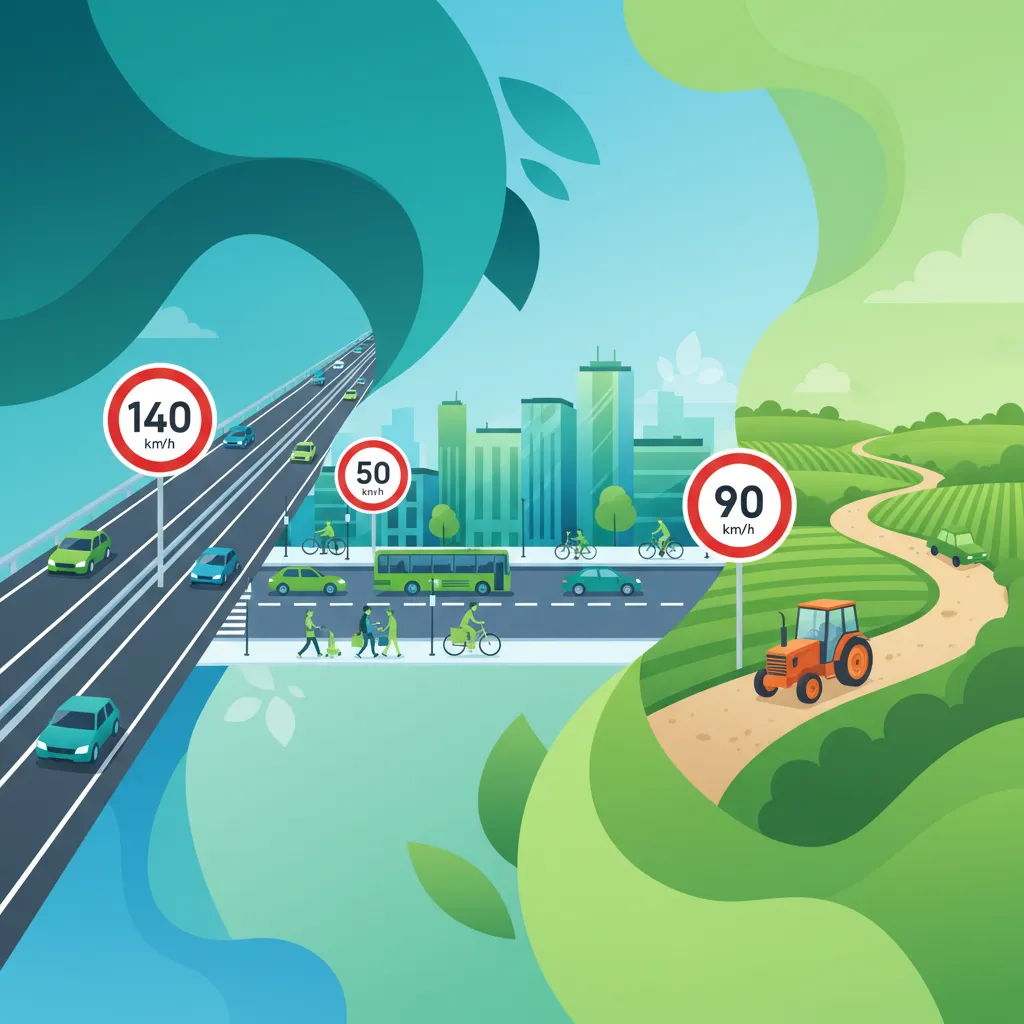
This lesson provides a comprehensive overview of the statutory speed limits applicable to different categories of Polish roads, including urban areas, residential zones, rural roads, highways, and motorways. Learners will examine the visual cues of speed limit signs and learn how speed limit transitions affect rider behavior. The content also covers how enforcement mechanisms impact compliance and the importance of real-time speed adaptation to remain within legal thresholds.
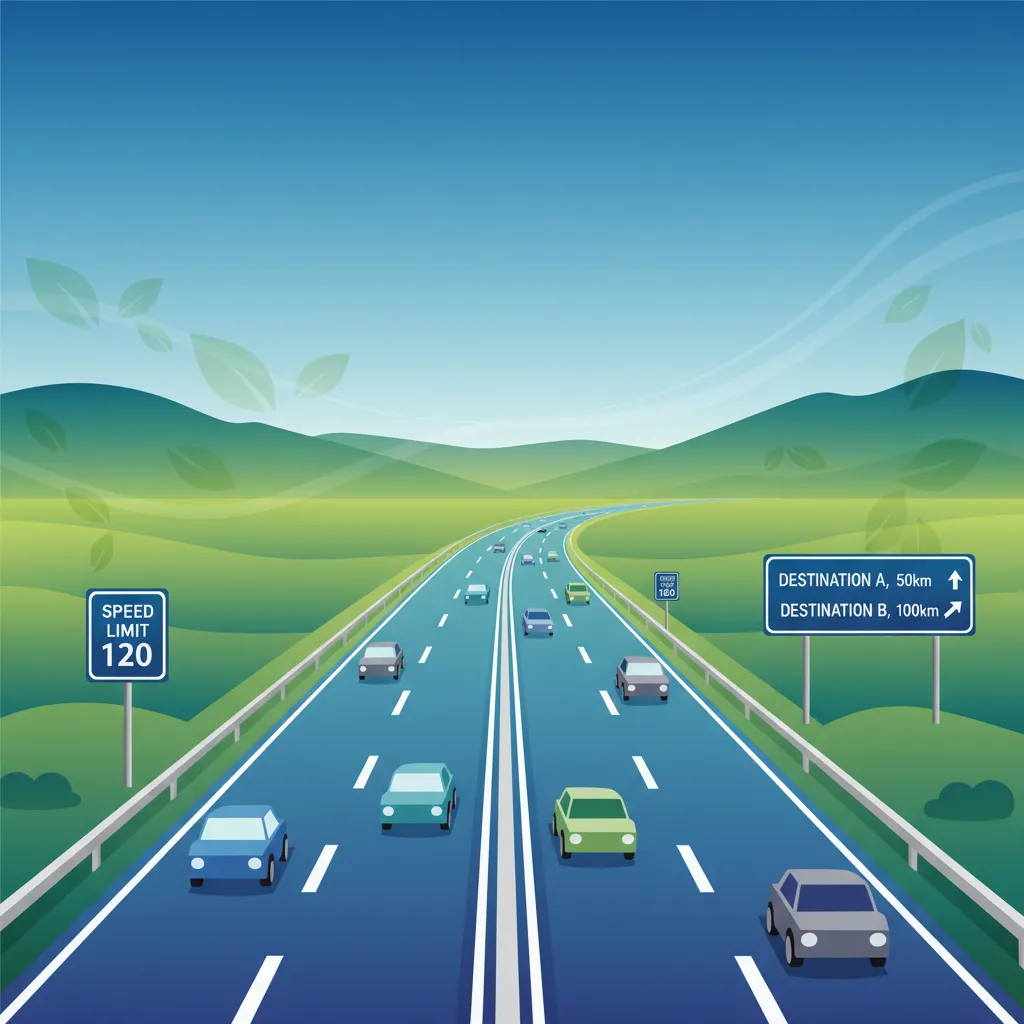
This lesson details the rules and best practices for driving on Poland's fastest roads. It covers the higher speed limits, the strict lane discipline of keeping right except to overtake, and prohibitions on stopping. The aim is to ensure drivers can handle the demands of sustained high-speed travel safely and efficiently.
This lesson provides practical methods for maintaining a safe buffer zone behind the vehicle in front. It explains the 'two-second rule' as a minimum following distance in good conditions and how to increase it to three or more seconds in adverse weather. This skill is critical for allowing enough time to react and brake safely to avoid rear-end collisions.
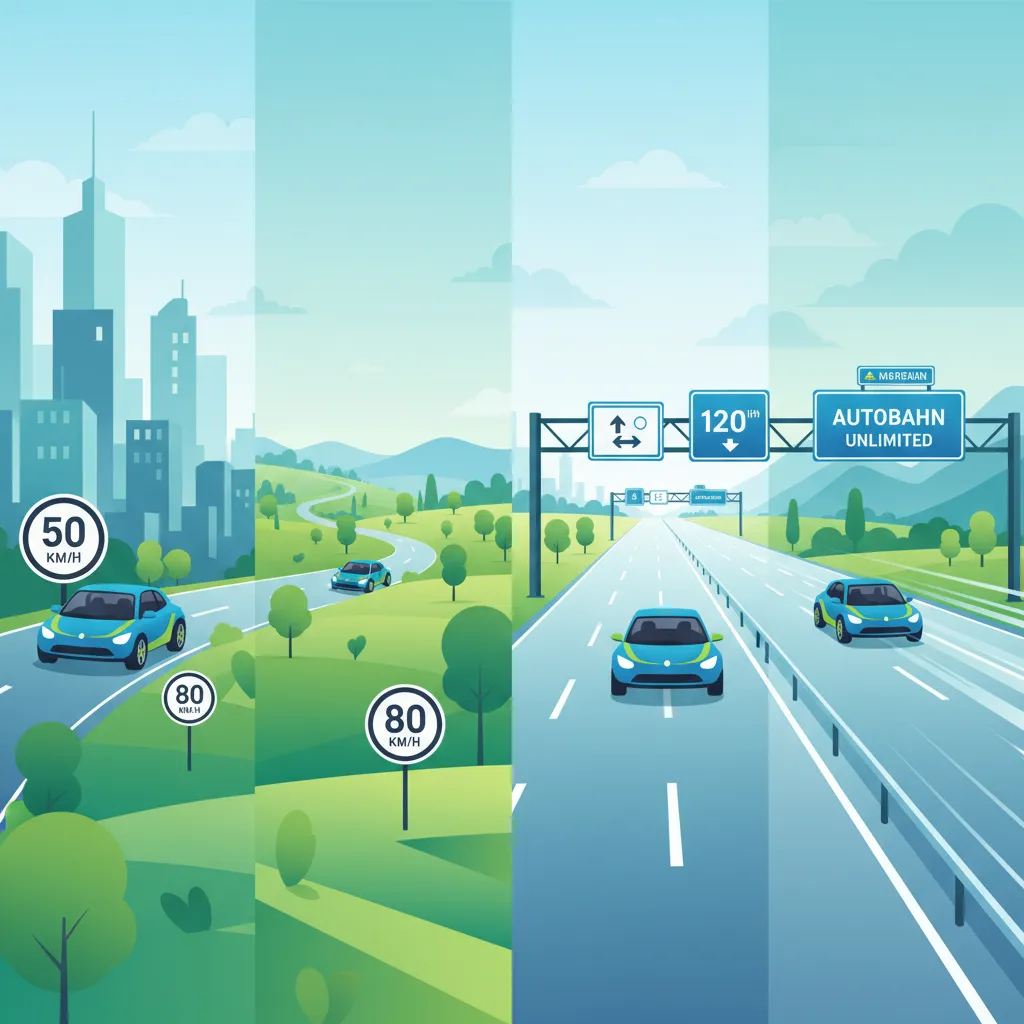
This lesson details the statutory speed limits for different road environments in Poland. It covers the 50 km/h limit in built-up areas (obszar zabudowany), as well as the higher limits for rural roads, expressways, and motorways. Understanding these default limits is fundamental for legal and safe driving across the country.
This lesson details the speed limits applicable to buses in Poland across urban, rural, and motorway settings. It emphasizes how vehicle size and passenger load influence safe operating speeds and required stopping distances. The content also covers speed-control device usage and practical techniques for maintaining consistent speed while ensuring passenger comfort.
This lesson defines what constitutes a 'built-up area' in Poland, marked by specific informational signs. It explains the default speed limit of 50 km/h that applies within these zones unless otherwise indicated. The content highlights the need for increased vigilance due to higher traffic density and the frequent presence of pedestrians.
This lesson outlines the statutory speed limits that professional drivers of Category C vehicles must adhere to on Polish roads. It clearly distinguishes the maximum permitted speeds in built-up areas, on single carriageways, and on motorways. The content also explains how to interpret road signs that may indicate temporary or vehicle-specific speed restrictions, ensuring drivers remain compliant with the law and avoid penalties from speed enforcement measures.
This lesson provides a focused guide on the techniques for entering and exiting high-speed roads. It explains the purpose of acceleration lanes for getting up to speed and deceleration lanes for slowing down safely away from the main traffic flow. Correct observation, signaling, and speed adjustment are emphasized for seamless transitions.
This lesson examines the internal factors that can impact a driver's performance. It explains how fatigue, distractions (like mobile phones), and the influence of alcohol or drugs significantly increase reaction time and impair judgment. Understanding these risks is fundamental to making responsible decisions before and during every journey.
Learn how fog, rain, snow, and night driving reduce visibility and necessitate lower speeds. This lesson explains the critical link between sight distance and safe travel speeds according to Polish driving rules.
This lesson provides essential guidance for driving in fog, one of the most dangerous conditions. It instructs on the correct use of low-beam headlights and fog lights to maximize visibility without causing glare. The core advice is to significantly reduce speed and use the edge of the road or markings as a guide.
This lesson addresses environmental factors that impact rider visibility, such as low light, night conditions, fog, and glare from headlights. Learners will explore strategies for riding safely in reduced visibility, including the use of reflective gear, proper headlamp settings, and appropriate eye protection. The content also covers hazard detection techniques in adverse weather and how to adjust speed to maintain safety, enhancing rider safety across all conditions.
This lesson details the specific driving adjustments needed for adverse weather. It focuses on how rain, snow, and ice affect vehicle dynamics and driver perception. Learners will study techniques to prevent hydroplaning, use winter tires effectively, and increase following distances on slippery surfaces while using safety systems like fog lights.
In this lesson, learners examine how environmental conditions such as rain, wind, ice, and reduced visibility necessitate adjustments in riding speed. The content provides guidelines for assessing road surfaces, judging appropriate cornering speeds, and reducing speed proactively in adverse weather. Learners will understand the impact of temperature on tyre performance and the need to increase safety margins, mastering adaptive speed management to maintain control.
This lesson focuses on the specific challenges of driving in rainy conditions. It explains the phenomenon of hydroplaning, where tires lose contact with the road surface, and how to prevent it by reducing speed. The importance of good tire condition, effective windscreen wipers, and extending following distances is also covered in detail.

This lesson addresses the challenges of driving after dark. It covers the correct use of high and low beam headlights to see and be seen, and techniques to avoid being dazzled by oncoming traffic. The content also touches on the increased risk of fatigue and reduced ability to judge speed and distance at night.
This lesson explores the unique characteristics of driving on rural roads. It highlights potential hazards such as sharp, unbanked curves, poor road surfaces, and limited visibility due to hills and vegetation. The content teaches drivers to anticipate these conditions and adjust their speed and position to navigate safely.
This lesson focuses on the specific hazards introduced by seasonal weather, such as mud, snow, ice, fog, and heavy rain. It explains how these conditions affect traction, braking, and driver visibility, and provides guidance on adjusting speed and using appropriate tires. The lesson also covers the proper use of lights and reflectors to improve visibility in low-light conditions.
This lesson provides practical methods for maintaining a safe buffer zone behind the vehicle in front. It explains the 'two-second rule' as a minimum following distance in good conditions and how to increase it to three or more seconds in adverse weather. This skill is critical for allowing enough time to react and brake safely to avoid rear-end collisions.

This lesson teaches drivers how to adapt their speed, following distance, and control inputs to safely navigate adverse conditions. It covers the challenges posed by rain, snow, and ice, explaining the loss of traction and the increased risk of skidding or aquaplaning. The content provides specific strategies for driving in fog, which reduces visibility, and strong crosswinds, which can affect the stability of a high-sided vehicle, promoting a proactive and defensive driving mindset.
Find clear answers to common questions learners have about Adjusting Speed to Conditions and Visibility. Learn how the lesson is structured, which driving theory objectives it supports, and how it fits into the overall learning path of units and curriculum progression in Poland. These explanations help you understand key concepts, lesson flow, and exam focused study goals.
The most important rule is that safety always comes first. The posted speed limit is the maximum allowed speed under ideal conditions. You must always reduce your speed to a level that allows you to safely control your vehicle and stop if necessary, given the current weather, traffic, and road surface conditions.
There's no single fixed amount, as it depends on the severity of the conditions. In heavy rain or fog, visibility is significantly reduced, and the road surface becomes slippery. You should reduce your speed substantially, often by half or more, to ensure you can see hazards and react in time. Focus on maintaining a safe distance from the vehicle ahead.
Yes, driving on ice requires extreme caution. Posted speed limits are generally too high for icy conditions. You must drive at a very low speed, using gentle acceleration and braking to avoid skidding. Maintaining a much larger following distance is crucial, as braking distances increase dramatically.
In heavy traffic, you need to be prepared for sudden stops. This means driving at a speed that allows you to react to the braking of the vehicle in front of you. You should maintain a safe following distance, which often means driving slower than the posted limit, especially in urban areas or on busy motorways.
Even if the road is clear, poor visibility from fog, heavy rain, snow, or even strong sunlight glare demands a reduction in speed. Your ability to see potential hazards, other road users, or changes in the road ahead is compromised. Drive slower and use your headlights as required by Polish regulations to improve your visibility to others.
Build custom practice sessions tailored precisely to your needs. Focus on areas requiring improvement, review specific Polish road signs, or master complex traffic rules to ensure full preparation for your official driving license exam.