
Welcome to the lesson on Polish speed limits! Understanding the correct speed for different road types is crucial for both safety and passing your theory test. This lesson, part of the 'Speed Management and Stopping Distances' unit in your Category B preparation, will guide you through the statutory limits across various environments in Poland.
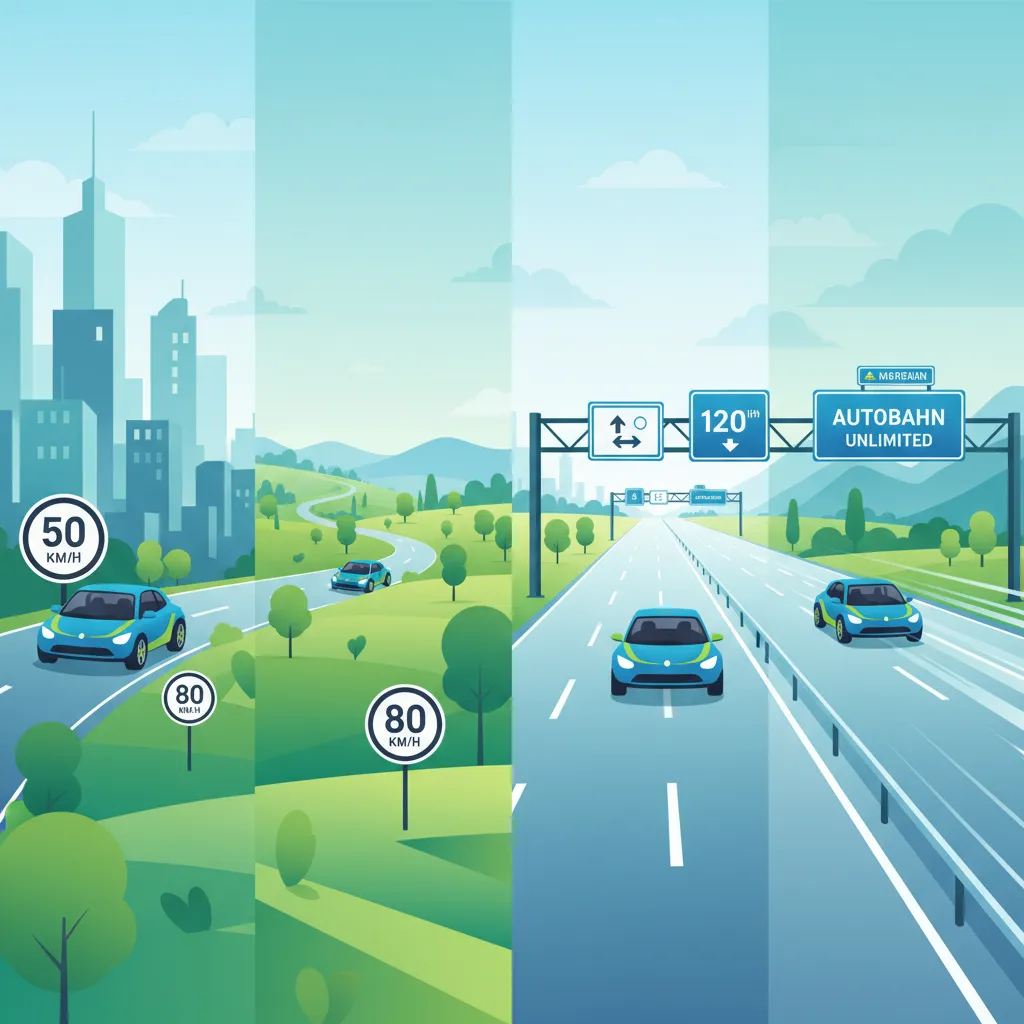
Lesson content overview
Navigating the roads of Poland safely and legally requires a thorough understanding of the various speed limits that apply across different road environments. This lesson, designed for the Polish Driving Theory – Comprehensive Category B License Preparation, will detail the statutory speed limits for built-up (urban) areas, rural roads, expressways (drogi ekspresowe), and motorways (autostrady). Mastering these limits is not only crucial for legal compliance and passing your Category B theory exam but also fundamental for safe vehicle operation.
We will explore the default limits, the legal basis for their implementation, and the critical circumstances under which speeds must be adjusted to ensure safety for all road users. By the end of this lesson, you will possess a solid foundation for effective speed management throughout your driving career.
Speed limits are not arbitrary numbers; they are carefully determined maximum permissible speeds under ideal driving conditions. These limits are derived from extensive safety-related risk assessments, taking into account factors like stopping distance requirements, road geometry, typical traffic density, and the potential severity of collisions. Adhering to these limits is a cornerstone of safe and responsible driving.
In Poland, speed limits are primarily codified in the Polish Road Traffic Act (Ustawa Prawo o ruchu drogowym) and its related regulations (Rozporządzenie Ministra Infrastruktury). They are mandatory unless explicitly overridden by temporary signage, such as those found in construction zones or during adverse weather. Understanding these default limits and their legal basis is essential for preventing traffic violations and promoting overall road safety.
Built-up areas, known in Poland as obszar zabudowany, represent zones where residential buildings, commercial structures, and streets are designed for dense traffic and a significant presence of pedestrians and cyclists. These environments necessitate lower speed limits to enhance safety for vulnerable road users and minimize the severity of potential collisions.
The default maximum speed limit within a built-up area in Poland is 50 km/h. This limit applies unless explicit signage indicates otherwise. The beginning of a built-up area is marked by a specific traffic sign, which every driver must be able to recognize instantly.
Once you pass the D-42 sign, the 50 km/h limit comes into effect. This limit remains until you encounter the D-43 sign, indicating the end of the built-up area.
While 50 km/h is the default, it's common to encounter areas within built-up zones where lower limits are imposed. These often occur near schools, hospitals, residential streets with high pedestrian activity, or particularly narrow/winding roads. These reductions are always indicated by supplementary speed limit signs. For example, a "30 km/h" sign near a school temporarily reduces the speed limit for that specific stretch of road.
When driving through towns, cities, or residential neighborhoods, you must constantly scan for D-42 signs and any subsequent speed limit signs. The 50 km/h limit demands greater vigilance, as sudden stops are more frequent due to pedestrians, cyclists, parked cars, and turning vehicles. Always assume a higher risk of encountering vulnerable road users in these environments.
Roads outside built-up areas, commonly referred to as rural roads, typically feature less dense traffic and fewer vulnerable road users. These roads are generally two-lane undivided carriageways, and their design allows for higher speeds than urban environments.
The default maximum speed limit on rural roads in Poland is 90 km/h. This limit applies immediately upon passing the D-43 sign (end of built-up area) or if there is no D-42 sign at the start of your journey, indicating you are already outside a built-up zone. The 90 km/h limit remains in effect unless specific signage dictates a different speed.
Even on rural roads, temporary or permanent speed reductions may be implemented. It is common to see "70 km/h" or "50 km/h" signs when approaching villages, sharp curves, or areas with specific hazards. These signs always take precedence over the default 90 km/h limit.
While rural roads allow higher speeds, they also present unique challenges. Variable road geometry, narrower lanes, poor visibility around bends, and the presence of slow-moving agricultural vehicles or wildlife necessitate constant alertness. Always anticipate unexpected obstacles and be prepared to adjust your speed, even if it means driving below the posted limit.
Expressways, known as drogi ekspresowe in Poland, are high-capacity roads designed for faster travel between cities and regions. They feature controlled access, usually at least two lanes in each direction, and generally have divided carriageways, though not always to the full standard of a motorway.
The default maximum speed limit on expressways is 120 km/h. This limit applies to passenger cars, motorcycles, and light commercial vehicles (up to 3.5 tonnes). You will recognize an expressway by its characteristic blue sign with a white car symbol.
It is critical to remember that not all vehicles can travel at 120 km/h on expressways. Heavy vehicles (with a total weight exceeding 3.5 tonnes), including trucks, buses, and vehicles towing trailers, are subject to lower maximum speed limits. For these categories, the limit is typically 80 km/h on expressways.
Expressways are designed for continuous, higher-speed travel. Due to their controlled access and separated traffic flows, they offer a safer environment for faster driving. However, vigilance is still paramount, especially when navigating junctions, merging with traffic, or encountering adverse weather conditions. Temporary speed limits due to roadworks or specific hazards are also common and must be strictly observed.
Motorways, or autostrady, represent the highest standard of road infrastructure in Poland. They are fully controlled-access highways with multiple lanes per direction, physical separation between carriageways, and no level crossings. Their advanced design standards allow for the highest legal speeds.
For passenger cars, motorcycles, and light commercial vehicles (up to 3.5 tonnes), the default maximum speed limit on motorways in Poland is 140 km/h. Motorways are identified by a specific blue sign.
Similar to expressways, heavy vehicles (over 3.5 tonnes), buses, and vehicles towing trailers are subject to a lower maximum speed limit of 80 km/h on motorways. This is due to their greater mass, longer braking distances, and different handling characteristics compared to lighter vehicles.
While 140 km/h is the maximum, it is crucial to understand that this speed is only permissible under ideal conditions: clear weather, good visibility, light traffic, and a well-maintained vehicle. Drivers must always maintain a safe following distance and be prepared to reduce speed significantly in response to changing conditions, such as heavy rain, fog, or increased traffic density. Temporary signs indicating lower speeds, for example, 110 km/h during rain or 80 km/h in construction zones, must be obeyed without exception.
Beyond the default limits, drivers must constantly adapt their speed to prevailing road and traffic conditions. Conditional speed reductions are legally binding and often indicated by specific signage. However, even without explicit signs, the principle of "reasonable speed" applies, obligating drivers to adjust their speed for safety.
Adverse weather conditions significantly reduce visibility and traction, thereby increasing stopping distances and reaction times.
Roadworks pose increased risks due to the presence of workers, narrower lanes, uneven surfaces, and potential debris. Speed limits in these areas are always reduced by temporary signs, which often have an orange or yellow background or frame to draw attention. These temporary limits are legally binding and must be strictly adhered to.
Certain road features naturally restrict visibility or require lower speeds due to their design:
As discussed, heavy vehicles (over 3.5 tonnes) and buses have specific, lower speed limits on expressways and motorways (typically 80 km/h). Drivers of these vehicles must always adhere to these limits, regardless of what is posted for passenger cars. Furthermore, vehicles towing trailers often have their own specific limits, which can vary depending on the trailer's weight and type.
The speed limits discussed are not merely recommendations; they are enshrined in Polish law. Exceeding these limits constitutes a traffic violation with potentially severe consequences, ranging from fines and penalty points to driving license suspension, depending on the severity of the offense.
Article 43 of the Polish Road Traffic Act (Ustawa Prawo o ruchu drogowym) outlines the default maximum speeds:
Article 68-3 further specifies the lower limits for heavy vehicles and buses. Speed limit signs (B-33 and its variants) always override these default limits for the section of road they cover.
Even in the absence of explicit temporary speed limit signs, Polish law mandates that drivers must always maintain a "reasonable speed" (prędkość adekwatna). This means that your speed must be appropriate for the prevailing conditions, including visibility, road surface, weather, traffic density, and your vehicle's condition. If these conditions make the default or posted limit unsafe, you are legally obliged to drive slower. For instance, driving at 80 km/h in dense fog on a rural road, even if no explicit 50 km/h sign is present, could still be deemed unsafe and subject to penalty if it leads to an incident.
Navigating Poland's diverse road network requires a clear understanding of where each speed limit applies and how various factors can modify them. Here are some common pitfalls and best practices:
D-7 (Expressway) or D-9 (Motorway) signs. Without them, even a divided road outside a built-up area might still be subject to the 90 km/h rural road limit.D-42 (Built-up Area) and D-43 (End of Built-up Area) signs.Understanding and adhering to speed limits by area is a cornerstone of safe driving and a critical component of the Polish Category B driving theory exam. From the restrictive 50 km/h in bustling urban centers (obszar zabudowany) to the more open 140 km/h on modern motorways (autostrady), each limit is designed to optimize safety for specific road environments.
Beyond merely knowing the numbers, responsible drivers recognize the dynamic nature of speed management. This involves continuous assessment of road conditions, traffic density, and vehicle characteristics, ensuring that the chosen speed is always "reasonable" and safe. By consistently applying these principles, you contribute significantly to your own safety and the safety of all road users.
This lesson covers Poland's statutory speed limits across different road environments: 50 km/h in built-up areas, 90 km/h on rural roads, 120 km/h on expressways, and 140 km/h on motorways for passenger cars. Key road signs D-42 (built-up area entry) and D-43 (built-up area end) determine when urban limits apply, while D-7 and D-9 identify expressways and motorways respectively. Heavy vehicles over 3.5 tonnes face lower limits of 80 km/h on high-speed roads. Beyond these defaults, temporary signs and the 'reasonable speed' doctrine require constant adaptation to weather, visibility, traffic density, and road conditions.
A short set of high-value points that capture the most important learning from this lesson.
Built-up areas (obszar zabudowany) enforce a 50 km/h default limit, recognized by the D-42 sign
Rural roads outside built-up zones default to 90 km/h upon passing the D-43 sign
Expressways (droga ekspresowa) marked by D-7 allow 120 km/h for passenger cars
Motorways (autostrada) marked by D-9 permit 140 km/h for passenger cars under ideal conditions
Speed limits are maximums only; 'reasonable speed' doctrine requires driving slower when conditions demand it
Explore all units and lessons included in this driving theory course.
D-42 marks entry into a built-up area; D-43 marks its end and reverts to the 90 km/h rural limit
Heavy vehicles over 3.5 tonnes and buses are limited to 80 km/h on both expressways and motorways
Temporary signs (often orange/yellow) always override default limits for that specific stretch
Expressway limits apply only when the D-7 sign is present; a divided road without it may still be subject to rural limits
The 'reasonable speed' principle obligates you to drive below posted limits when weather, visibility, or traffic conditions are poor
Assuming any dual-carriageway is an expressway or motorway without looking for the official D-7 or D-9 sign
Treating speed limits as targets or minimums rather than maximum permissible speeds
Failing to notice temporary speed reductions in construction zones or adverse weather conditions
Ignoring vehicle-specific lower limits when driving heavy vehicles or towing trailers
Assuming built-up area status based on appearance rather than confirming with the D-42 or D-43 signs
Lesson content overview
A short set of high-value points that capture the most important learning from this lesson.
Built-up areas (obszar zabudowany) enforce a 50 km/h default limit, recognized by the D-42 sign
Rural roads outside built-up zones default to 90 km/h upon passing the D-43 sign
Expressways (droga ekspresowa) marked by D-7 allow 120 km/h for passenger cars
Motorways (autostrada) marked by D-9 permit 140 km/h for passenger cars under ideal conditions
Speed limits are maximums only; 'reasonable speed' doctrine requires driving slower when conditions demand it
Explore all units and lessons included in this driving theory course.
D-42 marks entry into a built-up area; D-43 marks its end and reverts to the 90 km/h rural limit
Heavy vehicles over 3.5 tonnes and buses are limited to 80 km/h on both expressways and motorways
Temporary signs (often orange/yellow) always override default limits for that specific stretch
Expressway limits apply only when the D-7 sign is present; a divided road without it may still be subject to rural limits
The 'reasonable speed' principle obligates you to drive below posted limits when weather, visibility, or traffic conditions are poor
Assuming any dual-carriageway is an expressway or motorway without looking for the official D-7 or D-9 sign
Treating speed limits as targets or minimums rather than maximum permissible speeds
Failing to notice temporary speed reductions in construction zones or adverse weather conditions
Ignoring vehicle-specific lower limits when driving heavy vehicles or towing trailers
Assuming built-up area status based on appearance rather than confirming with the D-42 or D-43 signs
Explore search topics learners often look for when studying Speed Limits by Area (urban, rural, expressway, motorway). These topics reflect common questions about road rules, driving situations, safety guidance, and lesson level theory preparation for learners in Poland.
Browse additional driving theory lessons that cover connected traffic rules, road signs, and common driving situations related to this topic. Improve your understanding of how different rules interact across everyday traffic scenarios.
Learn the specific speed limits for roads outside built-up areas in Poland, including rural roads (90 km/h), expressways (120 km/h), and motorways (140 km/h). Essential theory for safe and legal driving.
This lesson details the rules and best practices for driving on Poland's fastest roads. It covers the higher speed limits, the strict lane discipline of keeping right except to overtake, and prohibitions on stopping. The aim is to ensure drivers can handle the demands of sustained high-speed travel safely and efficiently.
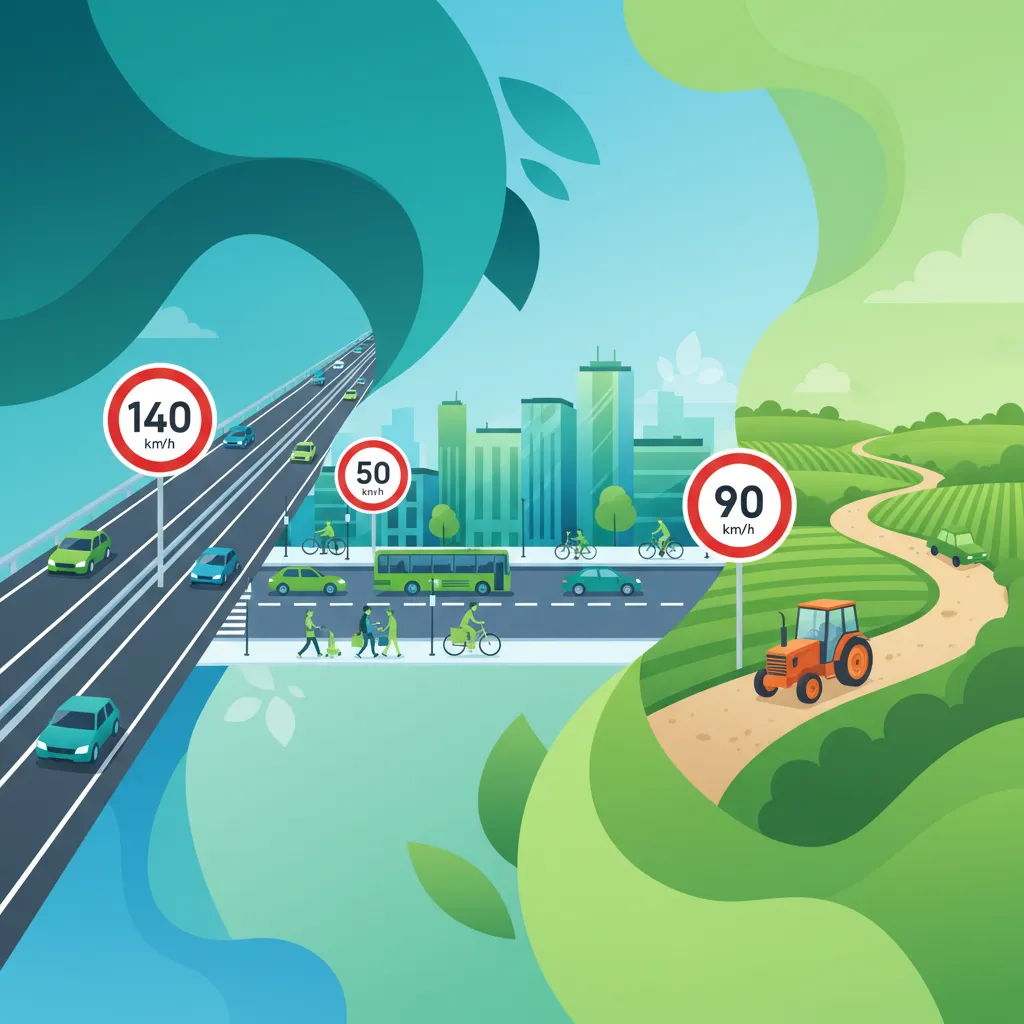
This lesson provides a comprehensive overview of the statutory speed limits applicable to different categories of Polish roads, including urban areas, residential zones, rural roads, highways, and motorways. Learners will examine the visual cues of speed limit signs and learn how speed limit transitions affect rider behavior. The content also covers how enforcement mechanisms impact compliance and the importance of real-time speed adaptation to remain within legal thresholds.

This lesson defines what constitutes a 'built-up area' in Poland, marked by specific informational signs. It explains the default speed limit of 50 km/h that applies within these zones unless otherwise indicated. The content highlights the need for increased vigilance due to higher traffic density and the frequent presence of pedestrians.

This lesson explores the unique characteristics of driving on rural roads. It highlights potential hazards such as sharp, unbanked curves, poor road surfaces, and limited visibility due to hills and vegetation. The content teaches drivers to anticipate these conditions and adjust their speed and position to navigate safely.
This lesson outlines the statutory speed limits that professional drivers of Category C vehicles must adhere to on Polish roads. It clearly distinguishes the maximum permitted speeds in built-up areas, on single carriageways, and on motorways. The content also explains how to interpret road signs that may indicate temporary or vehicle-specific speed restrictions, ensuring drivers remain compliant with the law and avoid penalties from speed enforcement measures.
In this lesson, learners explore riding on rural and countryside roads, where road markings may be sparse and surface conditions varied. The content covers safe overtaking in single-lane sections, interaction with agricultural vehicles and animals, and the handling of gravel or uneven surfaces. Learners will also study the importance of anticipating curves and adjusting speed to light conditions, equipping them with the skills needed for safe countryside travel.

This lesson teaches the crucial concept that drivers must always adapt their speed to the current conditions. It explains how factors like rain, fog, ice, heavy traffic, and poor visibility reduce safety margins and require a lower speed than the posted limit. This principle of defensive driving is essential for preventing accidents in challenging situations.
This lesson examines the specific rules and etiquette for riding on Polish motorways and high-speed highways, focusing on proper lane positioning, entry via acceleration lanes, and maintaining appropriate following distances. Learners will study overtaking protocols at high speeds, proper use of deceleration lanes for exits, and techniques for aerodynamic positioning. The content also covers safe lane changes and emergency lane usage to ensure efficient travel.
This lesson details the speed limits applicable to buses in Poland across urban, rural, and motorway settings. It emphasizes how vehicle size and passenger load influence safe operating speeds and required stopping distances. The content also covers speed-control device usage and practical techniques for maintaining consistent speed while ensuring passenger comfort.
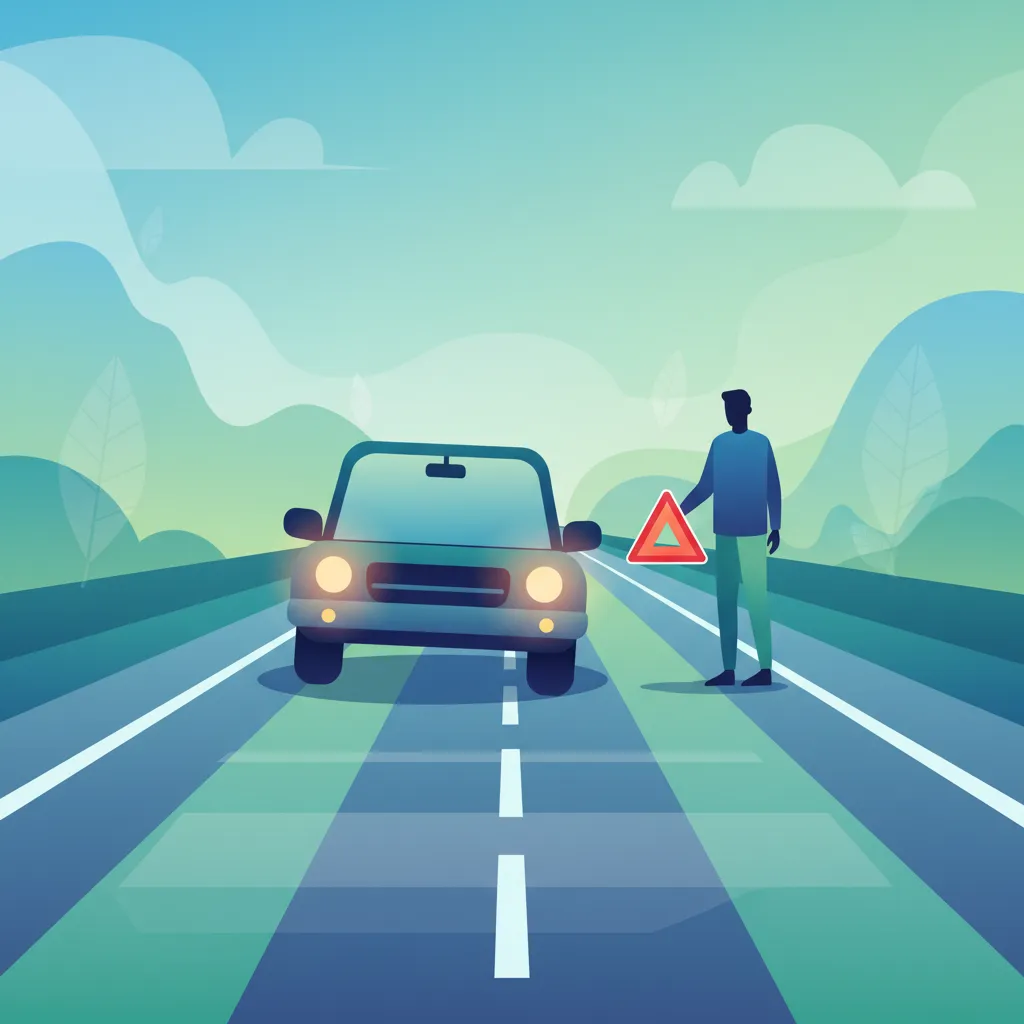
This lesson prepares drivers for the event of a vehicle breakdown on a motorway or expressway. It details the correct procedure: pulling over to the emergency lane, activating hazard lights, and placing the warning triangle at the legally required distance. The importance of wearing a reflective vest when outside the vehicle is also a key safety point.
Understand when and why to reduce speed below posted limits in Poland. Covers driving in rain, fog, snow, and adverse visibility, plus the principle of 'reasonable speed'.
This lesson teaches the crucial concept that drivers must always adapt their speed to the current conditions. It explains how factors like rain, fog, ice, heavy traffic, and poor visibility reduce safety margins and require a lower speed than the posted limit. This principle of defensive driving is essential for preventing accidents in challenging situations.
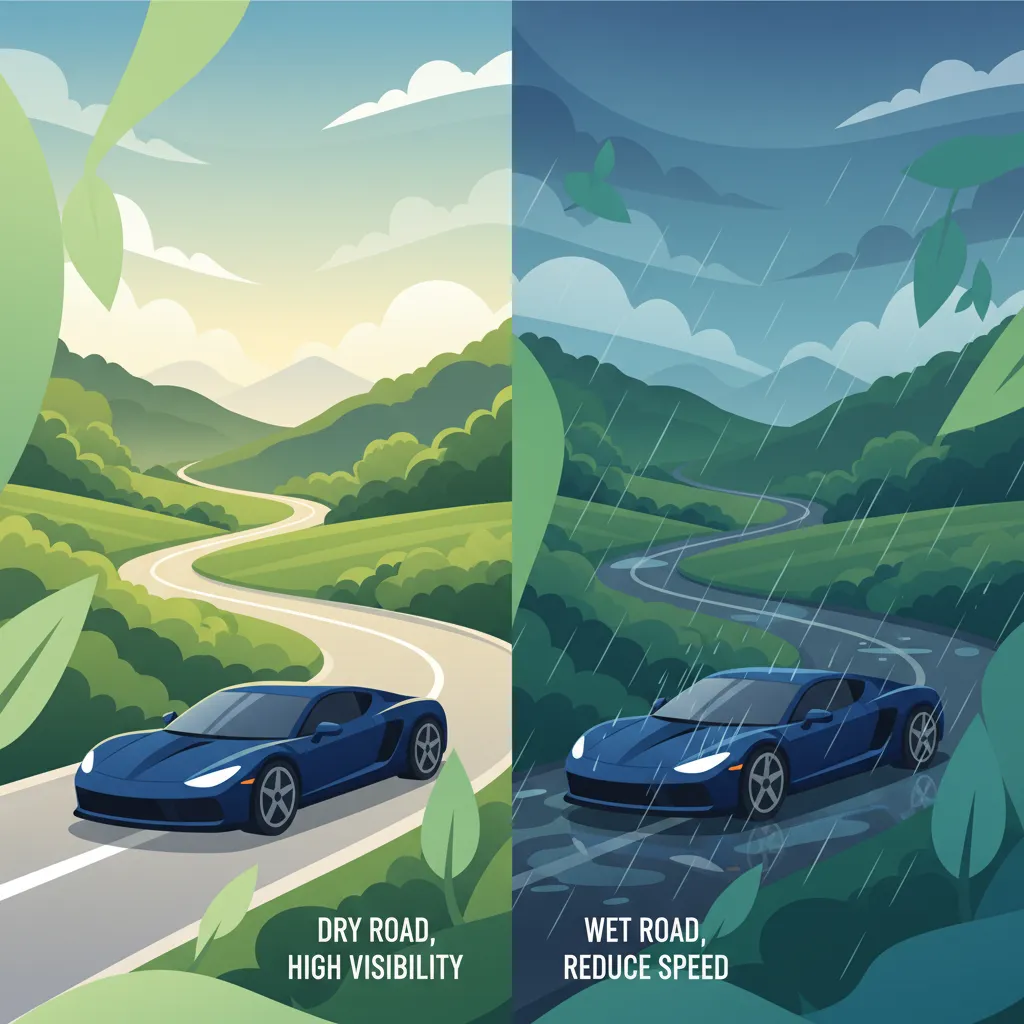
In this lesson, learners examine how environmental conditions such as rain, wind, ice, and reduced visibility necessitate adjustments in riding speed. The content provides guidelines for assessing road surfaces, judging appropriate cornering speeds, and reducing speed proactively in adverse weather. Learners will understand the impact of temperature on tyre performance and the need to increase safety margins, mastering adaptive speed management to maintain control.
This lesson explores the unique characteristics of driving on rural roads. It highlights potential hazards such as sharp, unbanked curves, poor road surfaces, and limited visibility due to hills and vegetation. The content teaches drivers to anticipate these conditions and adjust their speed and position to navigate safely.
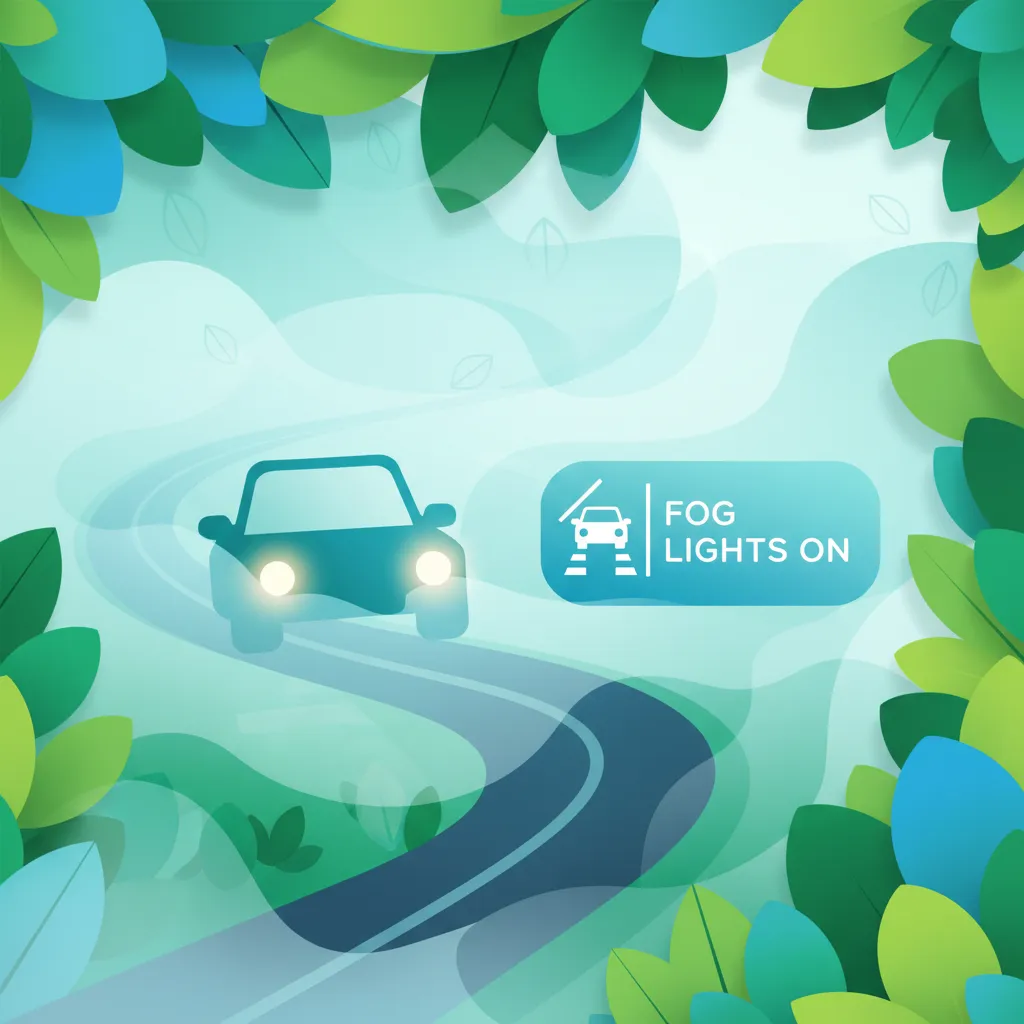
This lesson provides essential guidance for driving in fog, one of the most dangerous conditions. It instructs on the correct use of low-beam headlights and fog lights to maximize visibility without causing glare. The core advice is to significantly reduce speed and use the edge of the road or markings as a guide.
This lesson details the specific driving adjustments needed for adverse weather. It focuses on how rain, snow, and ice affect vehicle dynamics and driver perception. Learners will study techniques to prevent hydroplaning, use winter tires effectively, and increase following distances on slippery surfaces while using safety systems like fog lights.

This lesson teaches drivers how to adapt their speed, following distance, and control inputs to safely navigate adverse conditions. It covers the challenges posed by rain, snow, and ice, explaining the loss of traction and the increased risk of skidding or aquaplaning. The content provides specific strategies for driving in fog, which reduces visibility, and strong crosswinds, which can affect the stability of a high-sided vehicle, promoting a proactive and defensive driving mindset.
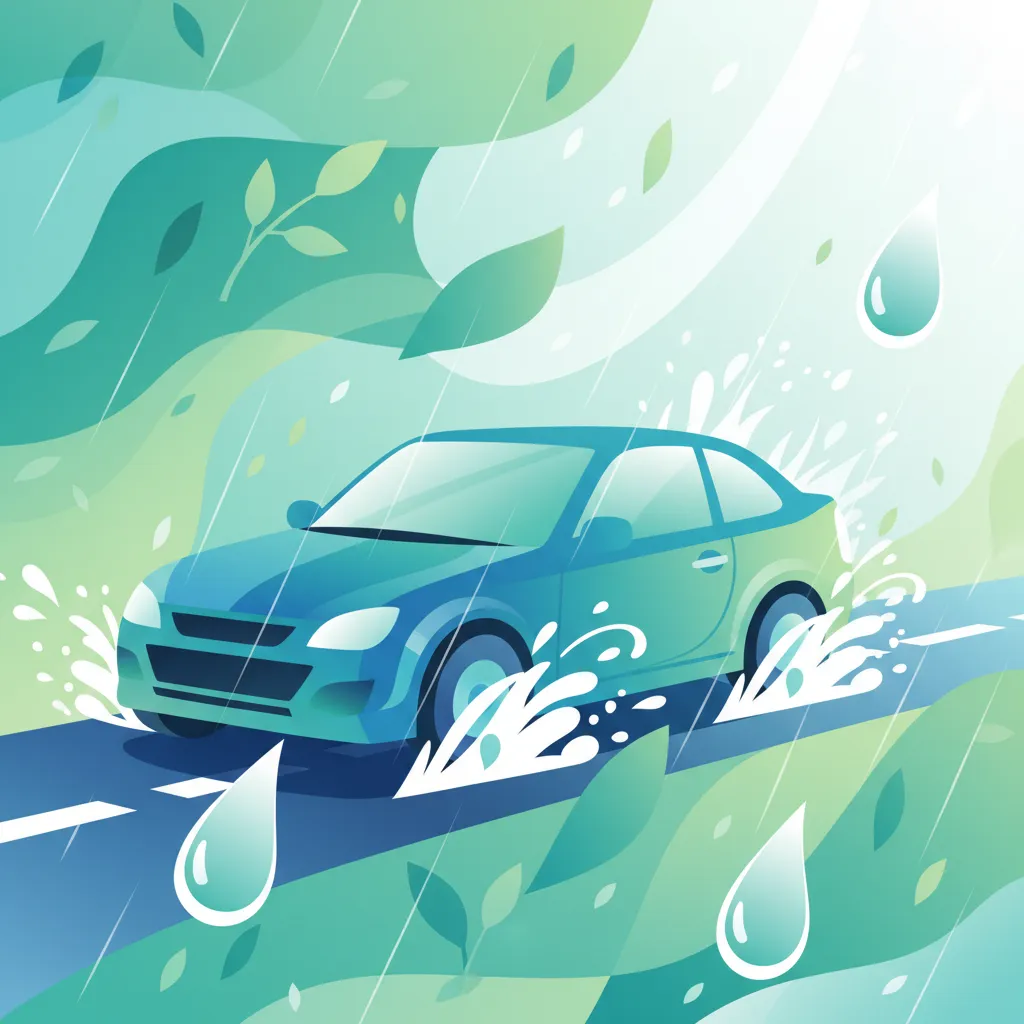
This lesson focuses on the specific challenges of driving in rainy conditions. It explains the phenomenon of hydroplaning, where tires lose contact with the road surface, and how to prevent it by reducing speed. The importance of good tire condition, effective windscreen wipers, and extending following distances is also covered in detail.

This lesson focuses on the specific hazards introduced by seasonal weather, such as mud, snow, ice, fog, and heavy rain. It explains how these conditions affect traction, braking, and driver visibility, and provides guidance on adjusting speed and using appropriate tires. The lesson also covers the proper use of lights and reflectors to improve visibility in low-light conditions.
This lesson focuses on the skills needed for safe winter driving. It explains how to use gentle acceleration, steering, and braking to avoid losing traction on snow and ice. The lesson also discusses how to recognize and handle a skid, and the critical role that appropriate winter tires play in maintaining vehicle control.
This lesson details the rules and best practices for driving on Poland's fastest roads. It covers the higher speed limits, the strict lane discipline of keeping right except to overtake, and prohibitions on stopping. The aim is to ensure drivers can handle the demands of sustained high-speed travel safely and efficiently.
Find clear answers to common questions learners have about Speed Limits by Area (urban, rural, expressway, motorway). Learn how the lesson is structured, which driving theory objectives it supports, and how it fits into the overall learning path of units and curriculum progression in Poland. These explanations help you understand key concepts, lesson flow, and exam focused study goals.
The standard speed limit in built-up areas (obszar zabudowany) in Poland is 50 km/h. This applies from the moment you enter the area indicated by a 'built-up area' sign until you reach the 'end of built-up area' sign. However, during nighttime hours (11 PM to 5 AM), this limit can be increased to 60 km/h, provided there are no other signs indicating a lower limit. Always pay attention to road signs.
Yes, there are. For single carriageway expressways (droga ekspresowa jednojezdniowa) and roads of expressway standard, the limit is 100 km/h for cars. For dual carriageway expressways (droga ekspresowa dwujezdniowa) and motorways (autostrada), the limit for cars is 120 km/h and 140 km/h respectively. Always check for specific signage as these are default limits.
Outside of built-up areas, the default speed limit for cars on single carriageway roads is 90 km/h. On dual carriageway roads (roads with separate carriageways for each direction), the limit increases to 100 km/h. These limits can be superseded by specific signs.
No, speed limits can vary depending on the vehicle type. For example, buses, trucks, and vehicles with trailers often have lower speed limits than cars in the same zones. It's crucial to be aware of the vehicle you are driving and its specific regulations, especially during your theory test preparation.
If you encounter conflicting speed limit signs, always adhere to the sign that indicates the lower or more restrictive speed. For instance, if you are in a built-up area where the general limit is 50 km/h but you see a sign for 40 km/h, you must drive at 40 km/h. Signs always take precedence over general rules.
Build custom practice sessions tailored precisely to your needs. Focus on areas requiring improvement, review specific Polish road signs, or master complex traffic rules to ensure full preparation for your official driving license exam.