
Understanding how to stop your vehicle safely is crucial for both passing your Category B theory test and for everyday driving. This lesson breaks down the physics of stopping, explaining reaction distance and braking distance. You’ll learn how factors like speed and road conditions impact your ability to stop, preparing you for real-world scenarios and exam questions.
Lesson content overview
Navigating Polish roads safely requires a deep understanding of how a vehicle stops. This lesson, crucial for your Polish Category B driving theory preparation, delves into the physics and practicalities behind bringing a vehicle to a halt. We will explore the components of total stopping distance, the techniques drivers use to brake effectively, and how various factors, from road conditions to vehicle type, influence the space and time needed to stop. Mastering these concepts is fundamental for safe speed management, maintaining adequate following distances, and complying with Polish traffic regulations.
Every time you decide to stop your vehicle, a series of events unfolds that dictates the total distance traveled before you come to a complete halt. This total stopping distance is not a single, instantaneous event, but rather a combination of two distinct phases: the reaction distance and the braking distance. Ignoring either component can lead to misjudgments and dangerous situations on the road.
Reaction distance is the length your vehicle travels from the precise moment you perceive a hazard or decide to stop until your foot fully depresses the brake pedal. This phase is governed by human factors, primarily your reaction time. An attentive driver typically has a reaction time between 0.7 and 1.5 seconds, but this can significantly extend due to factors like distraction, fatigue, alcohol, or poor visibility.
The formula for calculating reaction distance is straightforward:
Where:
To illustrate, if you are driving at 90 km/h (which is approximately 25 m/s) and your reaction time is 1 second, your vehicle will travel approximately 25 metres before you even begin to apply the brakes. This often underestimated distance is a critical component of total stopping distance, emphasizing the importance of focused driving and anticipation.
Always assume a minimum reaction time of 1 second for calculations unless specific conditions (like fatigue or distraction) suggest a longer period.
Once the brake pedal is applied, the vehicle enters the braking distance phase. This is the distance covered while your vehicle actively decelerates from its initial speed to a complete stop. Unlike reaction distance, braking distance is primarily determined by the vehicle's physical capabilities and the interaction between its tires and the road surface.
The formula for braking distance is:
Where:
Deceleration is a crucial factor here. It represents how quickly the vehicle sheds its kinetic energy. Higher deceleration means a shorter braking distance. The maximum achievable deceleration is limited by the friction coefficient (µ) between the tires and the road surface, as well as the vehicle's braking system efficiency. For instance, on dry asphalt, a typical deceleration might be around 7 m/s², while on wet roads, it could drop to 4-5 m/s², and on snow or ice, it might be as low as 2-3 m/s².
Notice that braking distance is proportional to the square of the speed. This means if you double your speed, your braking distance will quadruple. This non-linear relationship is why speed management is paramount for safety.
The total stopping distance is simply the sum of the reaction distance and the braking distance. It represents the full length of road required from the moment a driver identifies a need to stop until the vehicle is stationary.
This combined distance is the metric you must always consider when evaluating safe following distances, judging whether to proceed or stop at an intersection, or adapting your speed to visibility conditions. For example, at 90 km/h (25 m/s) on dry asphalt with a 1-second reaction time and 7 m/s² deceleration:
Understanding the formulas is only part of the equation; knowing how to apply the brakes effectively is equally vital. Proper braking techniques maximize your vehicle's deceleration potential while maintaining stability and control.
Progressive braking involves gradually increasing brake pressure rather than slamming the pedal. This technique helps to prevent sudden weight transfer, which can upset the vehicle's balance, especially on slippery surfaces or when cornering. By gently increasing pressure, you allow the vehicle's suspension to compress smoothly, distributing weight to the front wheels and maximizing their grip without causing the rear wheels to lose traction.
This method is particularly useful in everyday driving, when approaching curves, or preparing for a stop at a traffic light. It ensures a comfortable stop for passengers and minimizes wear on your braking system.
Threshold braking is an advanced technique used in emergency situations, particularly in vehicles without an Anti-lock Braking System (ABS). It involves applying brake pressure to the precise point just before the wheels lock up. At this "threshold," the tires achieve their maximum possible friction with the road surface, providing the shortest possible braking distance while still allowing some degree of steering control.
Mastering threshold braking requires practice and a keen sense of feel for the vehicle. If the wheels begin to lock (indicated by a loss of steering and a screeching sound), the driver must slightly reduce brake pressure until grip is restored.
Most modern vehicles are equipped with an Anti-Lock Braking System (ABS). This electronic system is designed to prevent wheel lock-up during hard braking. When ABS detects that a wheel is about to lock, it rapidly pulses the brake pressure to that specific wheel, maintaining optimal traction.
The primary benefit of ABS is that it allows the driver to steer while braking hard, which is crucial for avoiding obstacles in an emergency. On some surfaces, such as wet or icy roads, ABS can also significantly reduce stopping distances by preventing skidding. However, on loose surfaces like gravel or fresh snow, ABS might sometimes slightly increase stopping distance compared to a skilled threshold brake, though it still maintains steering control.
Even with ABS, it's vital to press the brake pedal firmly and hold it down during an emergency stop. The system will manage the pulsing; "pumping" the brakes is counterproductive with ABS.
The distinction between an emergency stop and a normal stop lies in their intensity and purpose. A normal stop is a routine deceleration for planned situations (e.g., stopping at a traffic light). It typically involves progressive braking to ensure a smooth, comfortable stop.
An emergency stop, conversely, is a sudden, maximum-deceleration maneuver performed to avoid an imminent collision. It requires the driver to apply the brakes with maximum force immediately. In vehicles with ABS, this means pressing the pedal firmly and holding it. In non-ABS vehicles, it demands threshold braking. The goal is to achieve the shortest possible stopping distance.
Many variables beyond driver technique can significantly alter a vehicle's stopping distance. Awareness of these factors is critical for adapting your driving and maintaining safety, as stipulated by Polish traffic law.
As previously noted, speed has a quadratic effect on braking distance. Doubling your speed quadruples the braking distance. This mathematical reality underscores why speed adaptation (Art. 65 of the Polish Road Traffic Act) is paramount. Driving even slightly above the safe limit for conditions can exponentially increase the space needed to stop.
The condition of the road surface profoundly impacts the friction coefficient (µ) between your tires and the road.
Your tires are the sole point of contact with the road. Their condition directly affects the friction coefficient:
Adverse weather conditions often combine multiple factors that increase stopping distances:
The health of your vehicle's braking system is paramount:
Polish traffic law places significant emphasis on a driver's responsibility to manage speed and stopping distances safely. Adhering to these regulations is not just about avoiding fines, but about ensuring the safety of all road users.
The Polish Road Traffic Act (Prawo o ruchu drogowym), Article 65, mandates that drivers must adapt their speed to the prevailing road, traffic, weather, and visibility conditions. Crucially, this article implies that drivers must always be able to stop their vehicle within the distance they can see ahead. This is a fundamental principle for preventing collisions, especially in conditions of reduced visibility.
Article 45 of the Polish Road Traffic Act requires drivers to maintain a distance from the vehicle ahead that allows them to stop safely if the lead vehicle brakes abruptly. While the law doesn't always specify a precise numerical distance in meters, the generally accepted best practice in dry conditions is a minimum of 2 seconds of following distance. This should be increased to 3-4 seconds or more in wet, icy, or other adverse conditions, as well as when towing a trailer or driving a heavy vehicle.
Article 30 states that drivers must operate vehicle controls in a manner that does not endanger others. This includes applying brakes smoothly and avoiding abrupt, uncontrolled deceleration that could lead to a loss of control or create a hazard for following vehicles. This reinforces the importance of techniques like progressive braking.
For vehicles equipped with ABS, Article 108 implies that the system must remain operational. Disabling or tampering with essential safety systems like ABS is prohibited on public roads, as it compromises the vehicle's designed safety features.
Article 63 requires vehicles to come to a complete stop at designated stop lines, traffic lights, and zebra crossings. Drivers must calculate their total stopping distance to ensure they can stop safely and completely before these lines or crossings, thereby protecting pedestrians and preventing intersection collisions.
Even experienced drivers can make mistakes when it comes to braking and stopping distances. Recognizing these common pitfalls is a crucial step towards safer driving.
Effective braking and stopping distance management require dynamic adjustments based on the driving environment and prevailing conditions.
When interacting with pedestrians, cyclists, or motorcyclists, always allow for increased reaction distance. These users can be less predictable, harder to see, and offer no protection in a collision. Anticipate their movements, reduce speed, and be prepared to stop.
Understanding braking techniques and stopping distances is more than just a theoretical exercise for your Polish Category B driving exam; it's a life skill that directly impacts your safety and the safety of others on the road. By applying these principles, you contribute to a safer driving environment for everyone.
This lesson breaks down the physics of vehicle stopping into two components: reaction distance, which depends on driver perception and reaction time, and braking distance, which depends on vehicle deceleration and road friction. The formulas show that braking distance grows with the square of speed, making speed management the single most impactful factor on stopping ability. Different braking techniques serve different purposes—progressive braking for comfort and control, threshold braking for maximum grip without ABS, and firm, held braking with ABS during emergencies. Factors including road surface condition, tire state, vehicle load, and gradient all significantly alter the friction coefficient and therefore the space needed to stop safely.
A short set of high-value points that capture the most important learning from this lesson.
Total stopping distance is the sum of reaction distance and braking distance, not just braking distance alone.
Braking distance increases with the square of speed, meaning doubling your speed quadruples the distance needed to stop.
Progressive braking provides smooth deceleration for normal stops, while threshold braking maximizes grip just before wheel lock-up in non-ABS vehicles.
ABS prevents wheel lock-up during emergency braking, allowing you to steer while braking hard, but you should press the pedal firmly and hold it.
The friction coefficient between tires and road varies dramatically: dry asphalt (~0.7-0.9) versus ice (~0.1-0.3), drastically changing braking performance.
Explore all units and lessons included in this driving theory course.
Use the two-second rule for safe following distance in dry conditions, increasing to 3-4 seconds or more in wet, icy, or low-visibility conditions.
On wet roads, stopping distance increases by 30-50%; on snow or ice, it can double or triple compared to dry conditions.
Always calculate your stopping distance to ensure you can stop within the distance you can see ahead, as required by Polish traffic law.
When descending hills, use lower gears for engine braking to prevent brake fade from overheated friction brakes.
Worn tires, incorrect tire pressure, and heavy loads all increase total stopping distance and require proactive speed reduction.
Assuming braking distance doubles linearly with speed instead of understanding the quadratic relationship, leading to dangerous miscalculations at higher speeds.
Following too closely behind other vehicles (tailgating) without maintaining the minimum safe following distance, causing rear-end collisions when the lead vehicle brakes.
Attempting to 'pump' the brakes when driving a vehicle equipped with ABS, which is counterproductive as the system manages the pulsing automatically.
Braking sharply while already in a turn, which transfers weight away from the rear wheels and can cause loss of traction and control.
Underestimating how much longer stopping distances become on slippery surfaces, maintaining speeds appropriate only for dry road conditions.
Lesson content overview
A short set of high-value points that capture the most important learning from this lesson.
Total stopping distance is the sum of reaction distance and braking distance, not just braking distance alone.
Braking distance increases with the square of speed, meaning doubling your speed quadruples the distance needed to stop.
Progressive braking provides smooth deceleration for normal stops, while threshold braking maximizes grip just before wheel lock-up in non-ABS vehicles.
ABS prevents wheel lock-up during emergency braking, allowing you to steer while braking hard, but you should press the pedal firmly and hold it.
The friction coefficient between tires and road varies dramatically: dry asphalt (~0.7-0.9) versus ice (~0.1-0.3), drastically changing braking performance.
Explore all units and lessons included in this driving theory course.
Use the two-second rule for safe following distance in dry conditions, increasing to 3-4 seconds or more in wet, icy, or low-visibility conditions.
On wet roads, stopping distance increases by 30-50%; on snow or ice, it can double or triple compared to dry conditions.
Always calculate your stopping distance to ensure you can stop within the distance you can see ahead, as required by Polish traffic law.
When descending hills, use lower gears for engine braking to prevent brake fade from overheated friction brakes.
Worn tires, incorrect tire pressure, and heavy loads all increase total stopping distance and require proactive speed reduction.
Assuming braking distance doubles linearly with speed instead of understanding the quadratic relationship, leading to dangerous miscalculations at higher speeds.
Following too closely behind other vehicles (tailgating) without maintaining the minimum safe following distance, causing rear-end collisions when the lead vehicle brakes.
Attempting to 'pump' the brakes when driving a vehicle equipped with ABS, which is counterproductive as the system manages the pulsing automatically.
Braking sharply while already in a turn, which transfers weight away from the rear wheels and can cause loss of traction and control.
Underestimating how much longer stopping distances become on slippery surfaces, maintaining speeds appropriate only for dry road conditions.
Explore search topics learners often look for when studying Braking Techniques and Stopping Distance Formulas. These topics reflect common questions about road rules, driving situations, safety guidance, and lesson level theory preparation for learners in Poland.
Browse additional driving theory lessons that cover connected traffic rules, road signs, and common driving situations related to this topic. Improve your understanding of how different rules interact across everyday traffic scenarios.
Learn the core components of total stopping distance: reaction distance and braking distance. This lesson details how speed, road conditions, and vehicle factors influence your ability to stop safely on Polish roads.
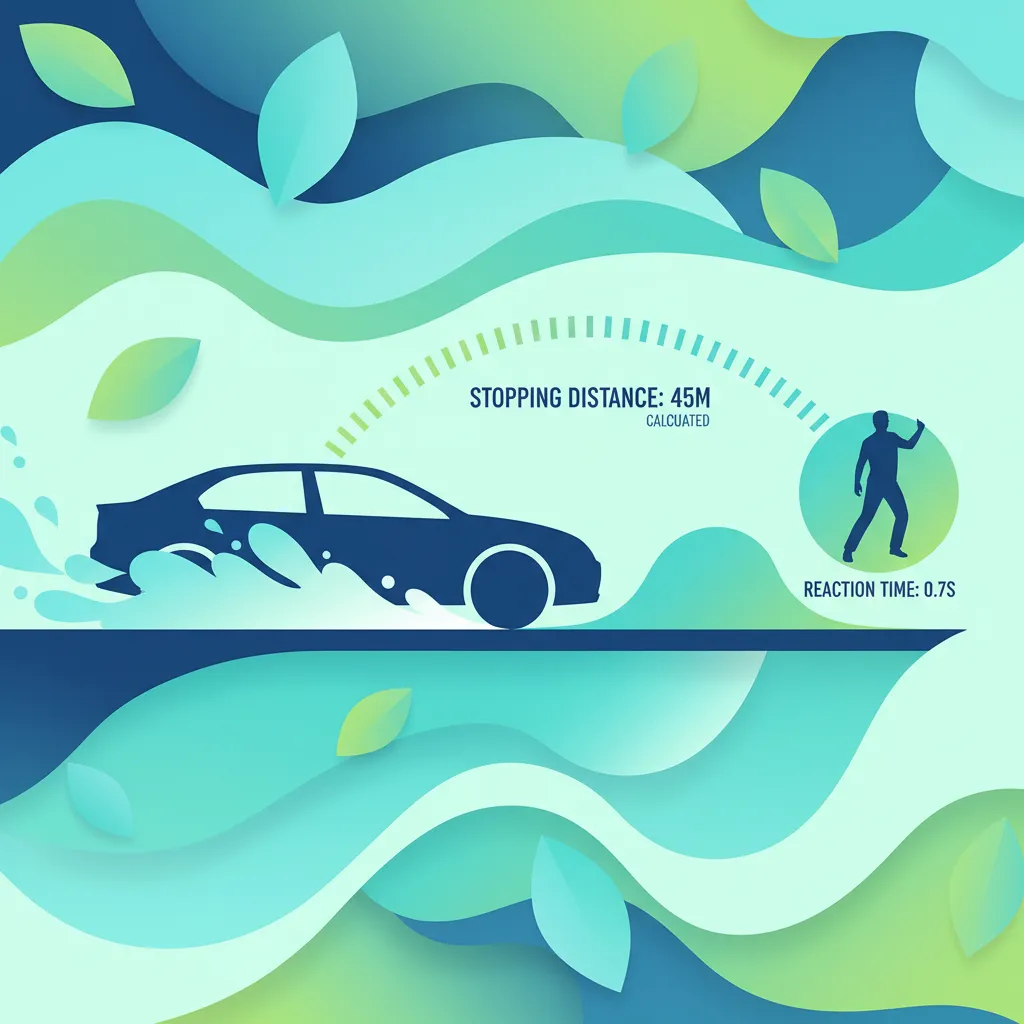
In this lesson, learners study the physics behind stopping distances, breaking it down into perception-reaction time and braking distance components. The content explains how speed, vehicle mass, and road surface friction influence the total stopping distance. Learners will practice calculating stopping distances under different conditions and understand the importance of maintaining a safety margin by improving hazard perception and rider response.
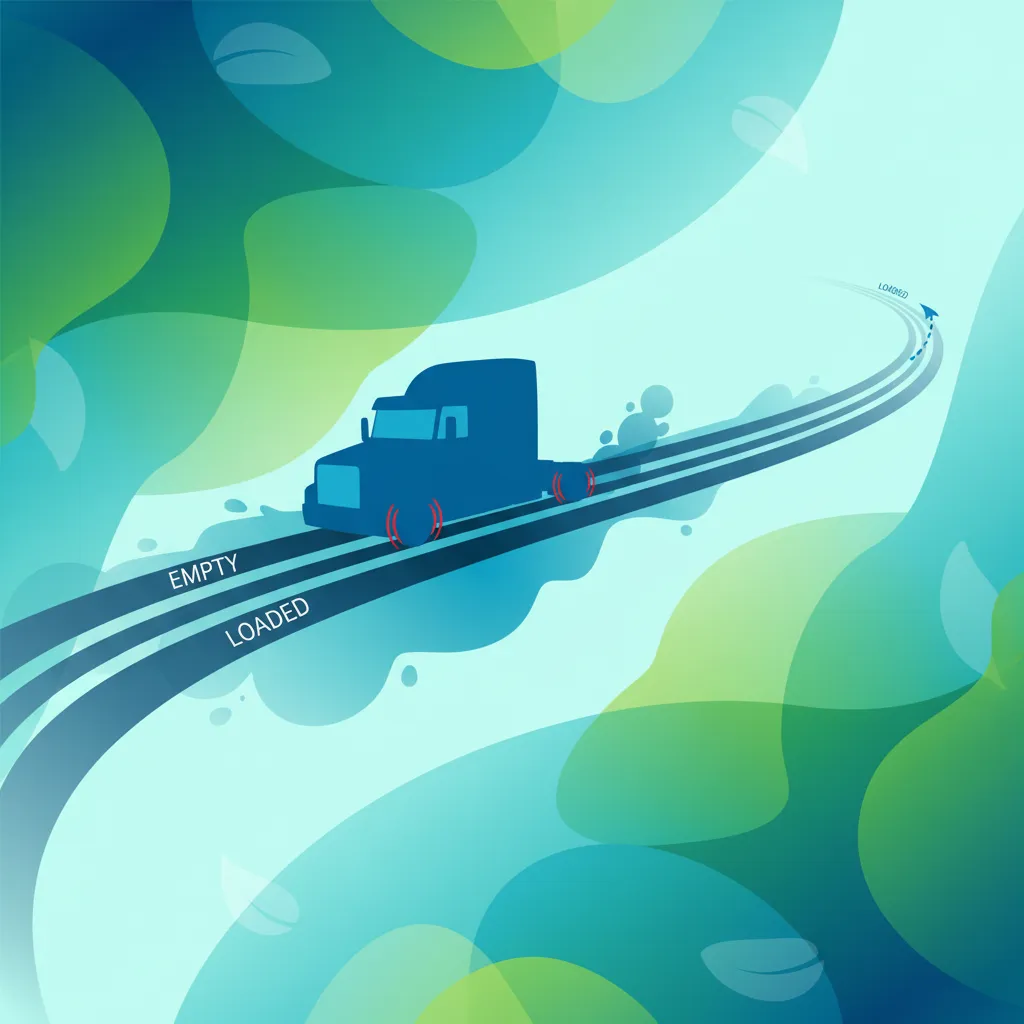
This lesson teaches the essential skill of calculating a heavy vehicle's total stopping distance. It breaks the calculation into two key parts: the driver's perception-reaction distance and the vehicle's braking distance. Learners will understand how factors such as vehicle mass, speed, road gradient, and the friction coefficient of the road surface dramatically influence the distance required to come to a complete and safe stop, emphasizing the need for large safety margins.
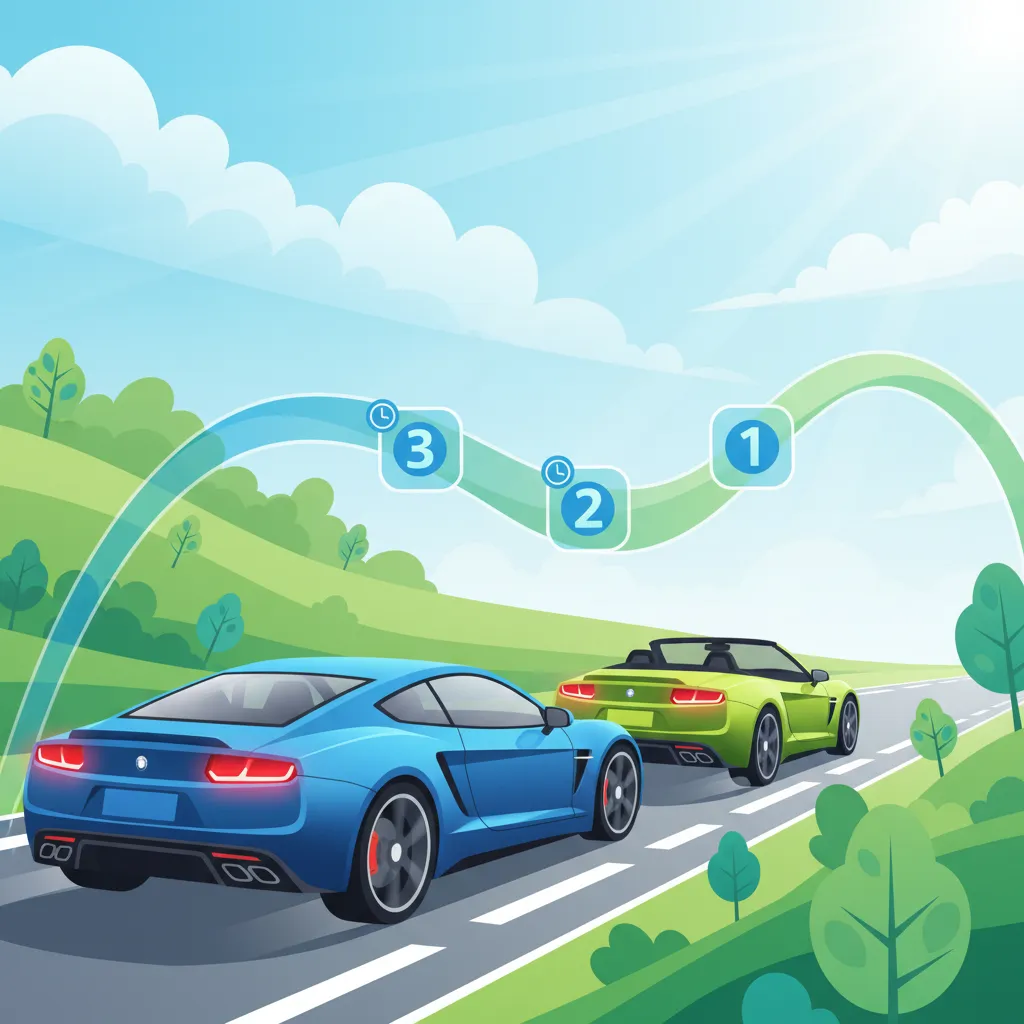
This lesson provides practical methods for maintaining a safe buffer zone behind the vehicle in front. It explains the 'two-second rule' as a minimum following distance in good conditions and how to increase it to three or more seconds in adverse weather. This skill is critical for allowing enough time to react and brake safely to avoid rear-end collisions.
This lesson examines the internal factors that can impact a driver's performance. It explains how fatigue, distractions (like mobile phones), and the influence of alcohol or drugs significantly increase reaction time and impair judgment. Understanding these risks is fundamental to making responsible decisions before and during every journey.
This lesson explores the dynamic relationship between cargo weight and a vehicle's performance. It explains how increased mass raises kinetic energy, significantly lengthening braking distances and requiring earlier, more gradual brake application. Learners will also analyze how a heavy or poorly distributed load alters the vehicle's handling characteristics, particularly during cornering, and understand the necessity of adjusting speed and driving style to compensate for these effects.
This lesson covers the principles of motorcycle braking, differentiating between the front and rear brake systems and their respective contributions to stopping power. It explains how anti-lock braking system (ABS) works to prevent wheel lock-up and improve control on slippery surfaces. Learners will explore the optimal brake balance, techniques for progressive deceleration, and the factors influencing stopping distances under various road conditions, ensuring riders can maintain reliable braking performance.
This lesson clarifies the legal distinction between 'stopping' and 'parking' and the rules that apply to each. It teaches how to read and understand a variety of parking signs, including those that indicate time limits, paid parking zones, and areas where stopping is completely forbidden. This knowledge is essential for avoiding fines and ensuring traffic flow is not obstructed.
This lesson focuses on the critical procedures for executing an emergency stop with an air-braked vehicle. It explains how to apply firm, steady pressure to the brake pedal to achieve maximum braking force without locking the wheels, which could lead to a loss of control. The content also discusses the response time of air brake systems and how to manage the significant forces of deceleration when the vehicle is fully loaded, ensuring the quickest possible stop in a crisis situation.
This lesson explores how increasing speed amplifies kinetic energy, thereby affecting braking efficiency and required stopping distances. Learners will learn about brake fade due to heat, the differing contributions of front and rear brakes, and how ABS assists in maintaining stability on slippery surfaces. The lesson covers techniques for proper brake modulation, especially when decelerating from high speeds, to help riders apply appropriate braking techniques for safety.
This lesson covers the braking mechanisms specific to large passenger vehicles, focusing on air brake systems and retarders. Learners will understand the components and operation of service and parking brakes, as well as the function of ABS and ESC. It also addresses strategies for emergency braking and the importance of regular maintenance for optimal performance.
Master essential braking techniques like progressive and threshold braking, and understand how vehicle condition, weather, and road type impact stopping distances. Essential for safe driving and compliance with Polish traffic law.
This lesson covers the principles of motorcycle braking, differentiating between the front and rear brake systems and their respective contributions to stopping power. It explains how anti-lock braking system (ABS) works to prevent wheel lock-up and improve control on slippery surfaces. Learners will explore the optimal brake balance, techniques for progressive deceleration, and the factors influencing stopping distances under various road conditions, ensuring riders can maintain reliable braking performance.
This lesson covers the braking mechanisms specific to large passenger vehicles, focusing on air brake systems and retarders. Learners will understand the components and operation of service and parking brakes, as well as the function of ABS and ESC. It also addresses strategies for emergency braking and the importance of regular maintenance for optimal performance.
This lesson focuses on the critical procedures for executing an emergency stop with an air-braked vehicle. It explains how to apply firm, steady pressure to the brake pedal to achieve maximum braking force without locking the wheels, which could lead to a loss of control. The content also discusses the response time of air brake systems and how to manage the significant forces of deceleration when the vehicle is fully loaded, ensuring the quickest possible stop in a crisis situation.
This lesson focuses on the skills needed for safe winter driving. It explains how to use gentle acceleration, steering, and braking to avoid losing traction on snow and ice. The lesson also discusses how to recognize and handle a skid, and the critical role that appropriate winter tires play in maintaining vehicle control.

This lesson covers the fundamental procedures for vehicle operation, from starting the engine to securing the vehicle after a journey. It explains the correct use of the ignition system, handbrake, and techniques for smooth starts, including on an incline. The content also addresses fuel-efficient idling and proper engine shutdown protocols to protect the vehicle and the environment.
This lesson explores how increasing speed amplifies kinetic energy, thereby affecting braking efficiency and required stopping distances. Learners will learn about brake fade due to heat, the differing contributions of front and rear brakes, and how ABS assists in maintaining stability on slippery surfaces. The lesson covers techniques for proper brake modulation, especially when decelerating from high speeds, to help riders apply appropriate braking techniques for safety.
This lesson focuses on the specific challenges of driving in rainy conditions. It explains the phenomenon of hydroplaning, where tires lose contact with the road surface, and how to prevent it by reducing speed. The importance of good tire condition, effective windscreen wipers, and extending following distances is also covered in detail.
This lesson is dedicated to the critical braking systems of heavy goods vehicles. It provides a detailed explanation of the air brake system, including the compressor, air tanks, and brake chambers, and highlights the safety function of the dual-circuit design. Learners will also differentiate between various types of auxiliary braking systems, such as engine brakes and retarders, and understand their role in managing speed and preventing service brake overheating on steep gradients.
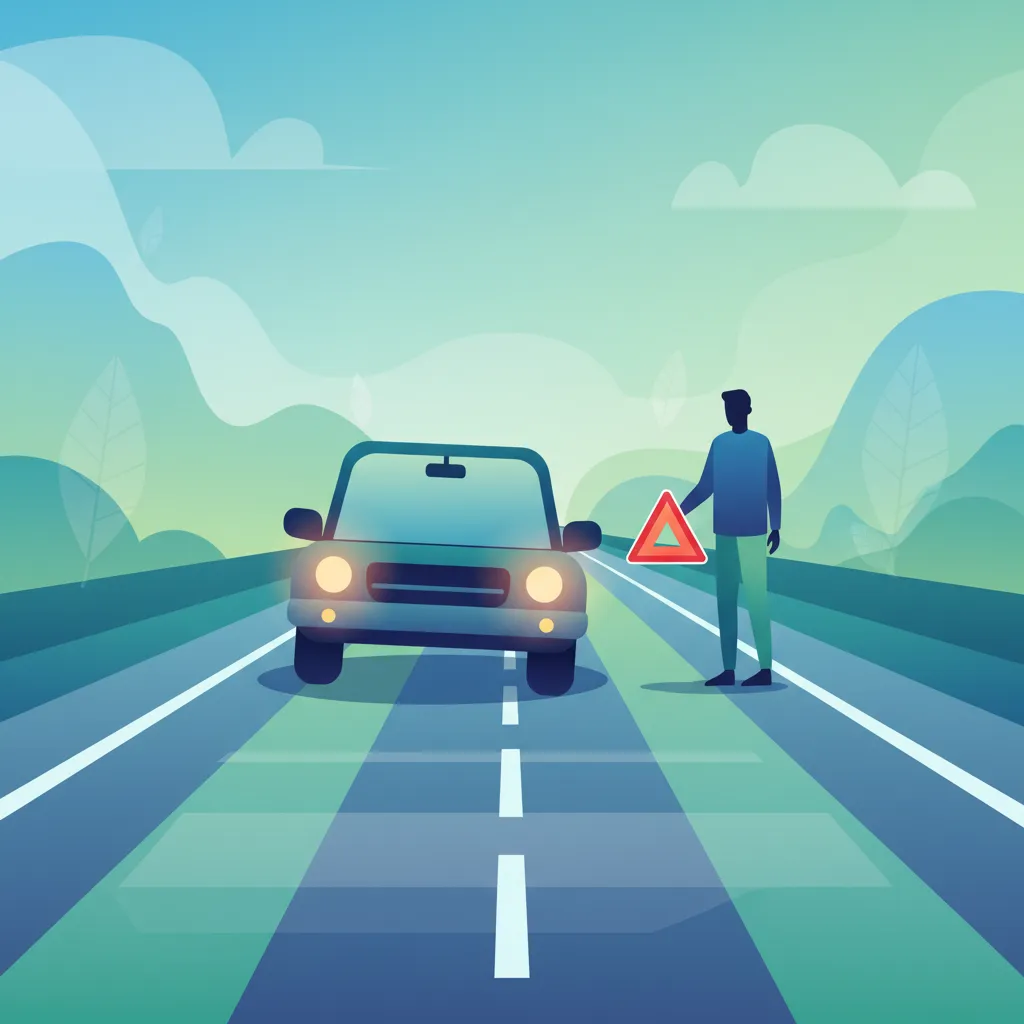
This lesson prepares drivers for the event of a vehicle breakdown on a motorway or expressway. It details the correct procedure: pulling over to the emergency lane, activating hazard lights, and placing the warning triangle at the legally required distance. The importance of wearing a reflective vest when outside the vehicle is also a key safety point.
In this lesson, learners study the physics behind stopping distances, breaking it down into perception-reaction time and braking distance components. The content explains how speed, vehicle mass, and road surface friction influence the total stopping distance. Learners will practice calculating stopping distances under different conditions and understand the importance of maintaining a safety margin by improving hazard perception and rider response.
Find clear answers to common questions learners have about Braking Techniques and Stopping Distance Formulas. Learn how the lesson is structured, which driving theory objectives it supports, and how it fits into the overall learning path of units and curriculum progression in Poland. These explanations help you understand key concepts, lesson flow, and exam focused study goals.
Reaction distance is the distance your vehicle travels from the moment you perceive a hazard to the moment you apply the brakes. Braking distance is the distance your vehicle travels from when you apply the brakes until it comes to a complete stop. Total stopping distance is the sum of these two.
Speed has a significant impact on total stopping distance. Reaction distance increases linearly with speed, meaning if you double your speed, you double your reaction distance. Braking distance increases with the square of your speed, so doubling your speed quadruples your braking distance. Therefore, higher speeds dramatically increase the distance needed to stop.
Several factors influence braking distance: road conditions (e.g., wet, icy, or dry), tire condition and tread depth, brake system efficiency, and the vehicle's weight. For example, on a wet road, your braking distance will be significantly longer than on a dry road because of reduced tire grip.
The basic principle of total stopping distance (reaction + braking) applies to all vehicles. However, the specific braking distance can vary based on the vehicle's weight, braking system, and tire type. The formulas provide a good estimation for typical passenger cars (Category B), but factors like heavy loads can alter these distances.
The Polish theory exam frequently includes questions testing your understanding of stopping distances, reaction times, and the impact of various factors like speed and road conditions. Knowing these principles helps you answer questions correctly about safe following distances, appropriate speed adjustments, and hazard perception.
Build custom practice sessions tailored precisely to your needs. Focus on areas requiring improvement, review specific Polish road signs, or master complex traffic rules to ensure full preparation for your official driving license exam.