
This lesson prepares you for a critical scenario: a vehicle breakdown on a Polish motorway or expressway. You will learn the correct, legally compliant procedures, from safely pulling over to the emergency lane and activating hazard lights, to placing the warning triangle at the required distance. Understanding these steps is crucial for your Category B theory exam and ensuring safety on Polish roads, building directly on your knowledge of expressway driving.
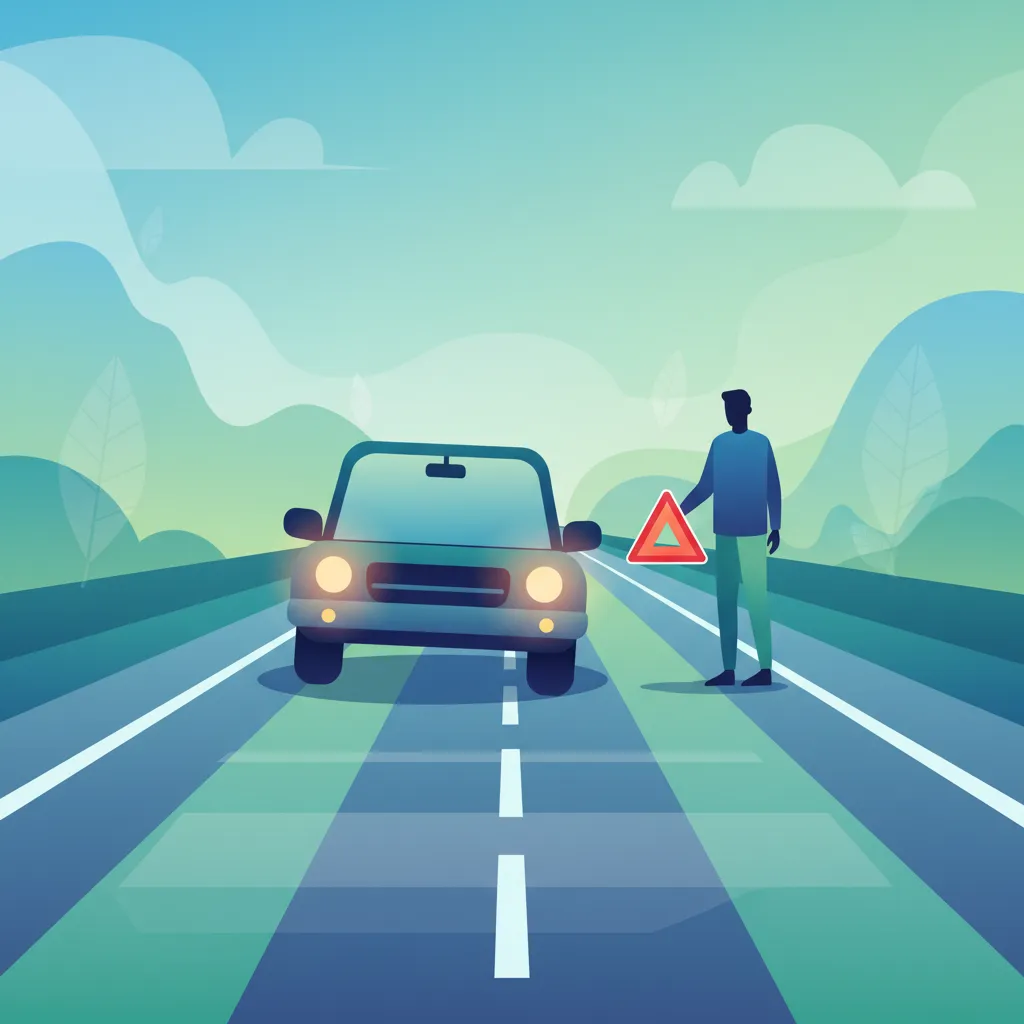
Lesson content overview
Encountering a vehicle breakdown on a high-speed road like a motorway (autostrada) or expressway (droga ekspresowa) in Poland can be a stressful and dangerous situation. However, understanding and strictly adhering to the correct procedures is paramount for the safety of yourself, your passengers, and other road users. This lesson will provide comprehensive guidance on how to manage such an event, covering the proper use of emergency lanes, activation of warning signals, and essential personal safety measures, all in accordance with Polish road traffic regulations. Correctly executing these steps can significantly reduce the risk of secondary accidents, which are often more severe than the initial breakdown.
The emergency lane, known in Polish as pas awaryjny, is a crucial safety feature on motorways and expressways. Its primary purpose is to provide a designated space for vehicles that are unable to continue driving due to a breakdown or other emergency, and for emergency services to access incident sites. Recognizing and utilizing this lane correctly is the first critical step when your vehicle experiences trouble.
The pas awaryjny is typically the rightmost lane, separated from the main traffic flow by a continuous solid white line. It is not intended for regular driving, overtaking, or even for brief stops to check a map or make a phone call. Its use is strictly regulated under Polish law to ensure it remains clear for genuine emergencies.
A dedicated lane on motorways and expressways, clearly marked by a continuous solid white line, reserved solely for vehicles that are immobilised due to a breakdown, for emergency services, or, in specific circumstances, for low-speed travel towards a safe exit.
Permitted uses of the emergency lane include:
Any use of the pas awaryjny outside of the strictly defined emergency situations is prohibited. This includes using it as a regular driving lane to bypass traffic, for overtaking other vehicles, or for non-emergency stops. Such misuse not only carries legal penalties but also dangerously obstructs a vital pathway for genuine emergencies. Impeding emergency services can have severe consequences, potentially delaying life-saving assistance.
Never use the emergency lane for routine driving, overtaking, or non-emergency stops. This can result in significant fines and points on your license, and more importantly, it endangers yourself and obstructs critical access for emergency responders.
In some breakdown scenarios, your vehicle might still be operational enough to move a short distance, but not safely at normal speeds. Polish regulations allow for low-speed travel within the emergency lane, but only under specific conditions. If your vehicle can still be driven safely, but at a significantly reduced speed, you may move it at no more than 20 km/h towards the nearest exit or a designated safe stopping area.
This option is primarily for situations where stopping immediately would be more dangerous, or where a safe, easily accessible exit is very close. It is crucial to remain vigilant, keep your hazard lights on, and be prepared to stop if the lane becomes obstructed or if your vehicle's condition deteriorates further.
When a breakdown occurs on a high-speed road, every second counts. A rapid and correct response is vital to protect yourself and other road users. Follow these steps meticulously to ensure maximum safety.
The moment you realize your vehicle has an issue and you must stop, your first action must be to activate your hazard warning lights, known as światła awaryjne in Polish. These are amber flashing lights that signal to all surrounding traffic that your vehicle is stationary, moving unusually slowly, or otherwise posing a hazard. They are critical for making your vehicle visible, especially at high speeds where drivers have less time to react to unexpected obstacles.
A vehicle's amber flashing lights, activated by a dashboard switch, designed to signal to other road users that the vehicle is stopped, unexpectedly slow, or otherwise presents a hazard.
Hazard lights should be activated without delay, even before you manage to pull completely into the emergency lane. They must remain on for the entire duration your vehicle is stopped and posing a danger on the motorway or expressway.
After safely stopping in the emergency lane and activating your hazard lights, the next crucial step is to deploy your warning triangle (trójkąt ostrzegawczy). This reflective, orange-red triangle serves as an additional, crucial visual warning for approaching drivers, giving them more time to react to your stationary vehicle.
A mandatory piece of vehicle safety equipment in Poland, consisting of an orange-red reflective triangle used to mark a stationary or broken-down vehicle on the roadway, providing an early visual warning to approaching traffic.
The distance at which you must place the warning triangle behind your vehicle is legally mandated and varies depending on the type of high-speed road:
These distances are designed to provide sufficient warning time for drivers traveling at high speeds. It is always better to place the triangle further back if conditions such as hills or bends obscure visibility.
When placing the trójkąt ostrzegawczy, aim to position it on the side of the carriageway opposite to the traffic flow, if possible and safe to do so. This means if you are on the right hard shoulder, place the triangle on the grass verge or behind any barrier if available, to avoid placing yourself in the path of oncoming traffic while doing so. The goal is to maximize its visibility without putting yourself in undue danger.
When deploying the warning triangle, hold it folded against your body as you walk. Once you reach the correct distance, unfold it and place it down quickly. Stay facing oncoming traffic as much as possible while walking back to your vehicle.
Before you even step out of your vehicle on a motorway or expressway, you must put on a reflective vest (kamizelka odblaskowa). This high-visibility garment, typically fluorescent yellow, orange, or green with reflective strips, dramatically increases your visibility to other drivers, particularly in low light conditions or at night.
A mandatory high-visibility safety garment (typically fluorescent with reflective strips) that drivers in Poland must wear before exiting a vehicle on a motorway or expressway.
The requirement to wear a reflective vest is a critical safety measure. Even in daylight, a person standing on the shoulder of a high-speed road can be surprisingly difficult to see against the complex background. Wearing the vest ensures you are visible from a much greater distance, significantly reducing the risk of being struck by passing vehicles. Always keep a reflective vest easily accessible inside the vehicle, not in the boot, so you can put it on before opening the door and stepping out.
Once the hazard lights are on, the warning triangle is placed, and you are wearing your reflective vest, the next step is to secure your vehicle and ensure your personal safety.
Pull Over Safely: If possible, steer your vehicle completely into the emergency lane (pas awaryjny) or off the main carriageway.
Activate Hazard Lights: Immediately turn on your hazard warning lights (światła awaryjne).
Put on Reflective Vest: Don your reflective vest (kamizelka odblaskowa) before exiting the vehicle.
Place Warning Triangle: Place the warning triangle (trójkąt ostrzegawczy) at least 50m behind on a motorway or 30m on an expressway.
Evacuate Passengers Safely: If there are passengers, especially children, direct them to exit the vehicle from the side away from traffic and move behind a safety barrier if present, or as far away from the road as possible.
Wait in a Safe Location: Return to a safe spot, preferably behind a safety barrier, away from the vehicle and the flow of traffic. Do not stand in front of your vehicle or between your vehicle and oncoming traffic.
Call for Assistance: Contact roadside assistance or emergency services. Provide your exact location (motorway/expressway name/number, kilometre marker, direction of travel).
If you cannot move your vehicle entirely out of a travel lane, activate your hazard lights immediately, and then follow the steps above, exercising extreme caution. Prioritize personal safety over attempting to move the vehicle further if it means risking exposure to fast-moving traffic.
Adherence to specific Polish laws (Prawo o ruchu drogowym) is not just about avoiding penalties; it's about following a nationally recognized framework designed for maximum safety. Understanding these legal mandates is a core part of your Polish Driving Theory preparation.
Under Polish law, the emergency lane (pas awaryjny) is explicitly designated for emergency stops and authorized emergency vehicle passage. Using it for any other purpose is a violation. This includes driving in it at normal speed, using it as an overtaking lane, or stopping there for non-emergency reasons such as resting or using a mobile phone.
The specific distances for placing the trójkąt ostrzegawczy are non-negotiable legal requirements:
Failure to comply with these distances can result in fines and, more critically, an increased risk of a collision.
The use of światła awaryjne is mandatory whenever a vehicle is stopped in conditions that may endanger other traffic, particularly on high-speed roads. The kamizelka odblaskowa is also legally required for any driver or passenger exiting a vehicle on a motorway or expressway. Both are fundamental safety items that must be carried in your vehicle at all times and used without hesitation during a breakdown.
Polish law imposes fines and penalty points for failing to follow breakdown procedures. These can range from penalties for improper use of the emergency lane to fines for not using hazard lights, incorrectly placing the warning triangle, or failing to wear a reflective vest. The specific amounts and points can vary, but the emphasis is on deterring dangerous practices that compromise road safety.
While the core procedures remain constant, certain environmental or situational factors require adjustments to maximize safety.
Adverse weather significantly reduces visibility and increases stopping distances for other drivers.
Breakdowns at night present unique challenges due to reduced visibility.
kamizelka odblaskowa is absolutely essential at night. Its reflective strips will catch headlights and make you visible from a much greater distance.trójkąt ostrzegawczy is clean and fully reflective. Its primary function at night is to reflect light from approaching vehicles.pas awaryjny or a hard shoulder. In such cases, if a breakdown occurs and you cannot reach a designated safe stopping bay, activate hazard lights immediately and remain inside your vehicle with your seatbelt on, if it is safer than exiting. Call for assistance immediately.Awareness of common errors can help you avoid dangerous situations and legal infractions.
Why it's wrong: This is arguably the most dangerous mistake. Stopping in an active travel lane, even for a moment, turns your vehicle into an unexpected, immobile obstacle for high-speed traffic, drastically increasing the risk of a catastrophic rear-end collision.
Correct behavior: Always attempt to reach the pas awaryjny or a designated stopping area, even if it means driving a short distance slowly. If moving is impossible, activate hazard lights immediately and seek shelter outside the vehicle (behind a barrier).
Why it's wrong: Placing the trójkąt ostrzegawczy too close to your vehicle, or not at all, negates its purpose. It fails to provide sufficient warning time for other drivers, especially at high speeds or in poor visibility. Placing it on the wrong side (e.g., in the middle of the emergency lane) can also reduce its effectiveness or create an additional obstacle.
Correct behavior: Adhere strictly to the 50 m (motorway) or 30 m (expressway) rule. Place it on the side of the carriageway away from traffic, if safe. Increase the distance in adverse weather.
Why it's wrong: Stepping out of your vehicle on a high-speed road without a reflective vest makes you virtually invisible to other drivers, particularly at dusk, night, or in poor weather. This dramatically elevates your personal risk of being struck.
Correct behavior: Keep your kamizelka odblaskowa within arm's reach (e.g., glove compartment), and put it on before opening the door and exiting the vehicle.
Why it's wrong: Driving faster than 20 km/h in the emergency lane, or using it for non-emergency reasons, creates confusion, impedes genuine emergency traffic, and can lead to dangerous situations. Similarly, obstructing the pas awaryjny with items or by standing in it also poses a risk.
Correct behavior: Use the emergency lane only for genuine emergencies, maintain ≤ 20 km/h if moving towards an exit, and keep the lane clear for emergency services.
The procedures for handling breakdowns on high-speed roads are not arbitrary rules; they are meticulously designed based on principles of physics, human perception, and accident statistics to maximize safety for everyone.
At motorway speeds (e.g., 140 km/h in Poland for certain sections), a vehicle covers approximately 39 metres per second. This means a driver needs significant distance and time to perceive a hazard, process the information, decide on an action, and then execute that action (braking or steering). The mandated distances for warning triangles (30m, 50m) are minimums to provide this crucial lead time, taking into account driver reaction time, braking distance, and environmental factors. Reflective materials and flashing lights exploit the physics of light and human visual processing to draw attention quickly and effectively.
A stationary vehicle on a high-speed road is an unexpected obstacle. Without proper warnings, following traffic might not detect it in time, leading to abrupt braking, swerving, or a direct collision. These initial collisions often lead to more complex and dangerous multi-vehicle secondary accidents. The światła awaryjne and trójkąt ostrzegawczy are your primary tools to provide early warning, allowing other drivers to adjust their speed and lane position safely, thereby preventing these potentially fatal secondary incidents.
As a driver preparing for your Polish Category B license, you are expected to understand and uphold your legal responsibilities. Ignoring breakdown procedures is not just a regulatory infraction; it is a serious breach of your duty of care towards other road users. In the event of a secondary accident caused by inadequate breakdown warnings, the driver of the broken-down vehicle could face severe legal consequences, including fines, penalty points, and criminal charges, in addition to civil liability.
Mastering breakdown procedures is a vital aspect of safe driving, particularly on high-speed roads. Review these key actions and principles:
pas awaryjny.światła awaryjne immediately.kamizelka odblaskowa before exiting the vehicle.trójkąt ostrzegawczy at least 50 m on motorways or 30 m on expressways behind your vehicle.This comprehensive knowledge of emergency lane rules, breakdown procedures, and safety equipment use is critical for passing your Polish Category B theory test and, more importantly, for ensuring your safety and the safety of others on the road.
This lesson covers the critical procedure for handling vehicle breakdowns on Polish motorways and expressways, emphasizing the emergency lane (Pas Awaryjny), hazard lights (Światła Awaryjne), warning triangle (Trójkąt Ostrzegawczy) placement distances (50m for motorways, 30m for expressways), and mandatory reflective vest (Kamizelka Odblaskowa) use. The content explains the step-by-step safety sequence, legal requirements under Polish law, and the physics rationale behind warning distances based on reaction times at high speeds. Common mistakes include stopping in travel lanes, incorrect triangle placement, and failing to wear high-visibility clothing before exiting the vehicle.
A short set of high-value points that capture the most important learning from this lesson.
Immediately activate hazard warning lights (Światła Awaryjne) upon realizing a breakdown, even before fully pulling over
Place the warning triangle (Trójkąt Ostrzegawczy) at least 50 metres behind on motorways or 30 metres on expressways
Put on your reflective vest (Kamizelka Odblaskowa) before exiting the vehicle, keeping it within arm's reach inside the car
Move to the emergency lane (Pas Awaryjny) immediately and, if the vehicle can still move, travel at no more than 20 km/h toward an exit
After setting warnings, evacuate passengers and wait behind a safety barrier away from traffic flow
Explore all units and lessons included in this driving theory course.
Motorway triangle distance: ≥50 m; Expressway triangle distance: ≥30 m; Built-up area: ≤1 m behind vehicle
Emergency lane use is strictly prohibited except for genuine breakdowns, medical emergencies, or emergency services access
Low-speed travel in the emergency lane is permitted only up to 20 km/h when directed by road signs toward an exit
The reflective vest must be worn before opening any door on a high-speed road in Poland
Provide exact location (road name, kilometre marker, direction) when calling roadside assistance
Stopping in a travel lane instead of reaching the emergency lane, creating a severe hazard for high-speed traffic
Placing the warning triangle too close to the vehicle or not placing it at all, reducing reaction time for approaching drivers
Exiting the vehicle without wearing the reflective vest, making the driver nearly invisible especially at night or in poor weather
Using the emergency lane for non-emergency stops, overtaking, or driving at normal speeds, obstructing genuine emergency access
Standing between the vehicle and oncoming traffic while waiting for assistance instead of moving behind a barrier
Lesson content overview
A short set of high-value points that capture the most important learning from this lesson.
Immediately activate hazard warning lights (Światła Awaryjne) upon realizing a breakdown, even before fully pulling over
Place the warning triangle (Trójkąt Ostrzegawczy) at least 50 metres behind on motorways or 30 metres on expressways
Put on your reflective vest (Kamizelka Odblaskowa) before exiting the vehicle, keeping it within arm's reach inside the car
Move to the emergency lane (Pas Awaryjny) immediately and, if the vehicle can still move, travel at no more than 20 km/h toward an exit
After setting warnings, evacuate passengers and wait behind a safety barrier away from traffic flow
Explore all units and lessons included in this driving theory course.
Motorway triangle distance: ≥50 m; Expressway triangle distance: ≥30 m; Built-up area: ≤1 m behind vehicle
Emergency lane use is strictly prohibited except for genuine breakdowns, medical emergencies, or emergency services access
Low-speed travel in the emergency lane is permitted only up to 20 km/h when directed by road signs toward an exit
The reflective vest must be worn before opening any door on a high-speed road in Poland
Provide exact location (road name, kilometre marker, direction) when calling roadside assistance
Stopping in a travel lane instead of reaching the emergency lane, creating a severe hazard for high-speed traffic
Placing the warning triangle too close to the vehicle or not placing it at all, reducing reaction time for approaching drivers
Exiting the vehicle without wearing the reflective vest, making the driver nearly invisible especially at night or in poor weather
Using the emergency lane for non-emergency stops, overtaking, or driving at normal speeds, obstructing genuine emergency access
Standing between the vehicle and oncoming traffic while waiting for assistance instead of moving behind a barrier
Explore search topics learners often look for when studying Emergency Lanes, Breakdown Procedures, and Triangle Use. These topics reflect common questions about road rules, driving situations, safety guidance, and lesson level theory preparation for learners in Poland.
Browse additional driving theory lessons that cover connected traffic rules, road signs, and common driving situations related to this topic. Improve your understanding of how different rules interact across everyday traffic scenarios.
Learn the essential steps for handling vehicle breakdowns on high-speed Polish roads. This lesson covers correct emergency lane use, hazard light activation, warning triangle placement, and personal safety measures as required by Polish traffic law.
This lesson outlines the emergency procedures a tractor driver must follow in case of a breakdown, trailer detachment, or accident. It covers immediate actions such as pulling over safely, deploying warning triangles, and using hazard lights to alert other road users. The lesson details the steps for reporting the incident, providing first aid, and securing the scene to prevent further hazards.
This lesson provides essential knowledge for responding to sudden and dangerous vehicle malfunctions. It outlines step-by-step procedures for handling a catastrophic tire blowout, managing a loss of braking power, and reacting to a shift in cargo that destabilizes the vehicle. The focus is on maintaining as much control as possible, bringing the vehicle to a safe stop away from traffic, and activating hazard warnings to protect the scene and other road users.
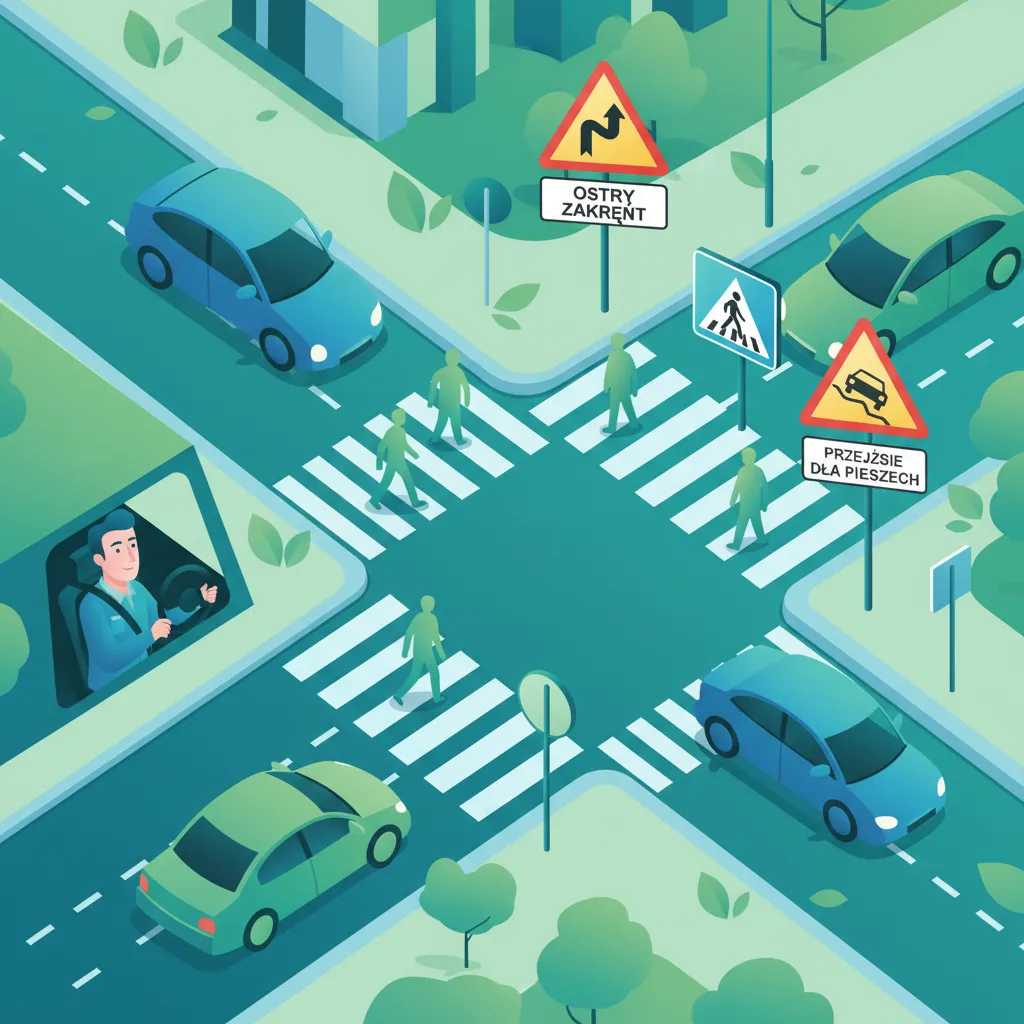
This lesson focuses on triangular warning signs, which are designed to alert drivers to upcoming hazards on the road. It covers the interpretation of various pictograms that indicate dangers like sharp turns, animal crossings, or road construction. Understanding these signs allows a driver to anticipate conditions and adjust their driving proactively.
This lesson details the rules and best practices for driving on Poland's fastest roads. It covers the higher speed limits, the strict lane discipline of keeping right except to overtake, and prohibitions on stopping. The aim is to ensure drivers can handle the demands of sustained high-speed travel safely and efficiently.
This lesson enumerates the mandatory safety equipment every vehicle must carry in Poland, such as a warning triangle and a fire extinguisher. It explains their proper use and storage, alongside routine pre-journey inspections that a driver should perform. These checks include verifying lights, tire pressure, and fluid levels to ensure the vehicle is roadworthy and compliant with safety regulations.
This lesson provides a focused guide on the techniques for entering and exiting high-speed roads. It explains the purpose of acceleration lanes for getting up to speed and deceleration lanes for slowing down safely away from the main traffic flow. Correct observation, signaling, and speed adjustment are emphasized for seamless transitions.
This lesson focuses on navigating intersections that are not controlled by traffic signals. It covers the interpretation of the 'Yield' sign (ustąp pierwszeństwa) and the application of the 'priority to the right' rule at junctions of equal roads. Safe decision-making and proper observation techniques are emphasized for these common scenarios.
This lesson equips drivers with knowledge of emergency procedures, including how to conduct a rapid evacuation. Learners will identify the location and use of fire extinguishers and first-aid kits and learn to guide passengers to emergency exits. The content also covers legal reporting obligations and coordination with emergency services following an incident.
This lesson provides practical methods for maintaining a safe buffer zone behind the vehicle in front. It explains the 'two-second rule' as a minimum following distance in good conditions and how to increase it to three or more seconds in adverse weather. This skill is critical for allowing enough time to react and brake safely to avoid rear-end collisions.
This lesson provides a guide to safely entering high-speed roads. It explains the function of the acceleration lane, where drivers must increase their speed to match the flow of traffic on the main carriageway. The importance of signaling, checking mirrors, and looking over the shoulder for blind spots before merging is heavily emphasized.
Understand the legal obligations and penalties related to vehicle breakdowns in Poland. This lesson details mandatory equipment like reflective vests and warning triangles, and the legal rules for using emergency lanes and signaling hazards.
This lesson enumerates the mandatory safety equipment every vehicle must carry in Poland, such as a warning triangle and a fire extinguisher. It explains their proper use and storage, alongside routine pre-journey inspections that a driver should perform. These checks include verifying lights, tire pressure, and fluid levels to ensure the vehicle is roadworthy and compliant with safety regulations.

This lesson details the documentation required for a Category B licence application and vehicle operation. It explains the function of the vehicle registration certificate (dowód rejestracyjny), the mandatory civil liability insurance (OC), and the certificate of technical inspection. Learners will understand the verification process and the importance of keeping these documents current and accessible.
This lesson outlines the emergency procedures a tractor driver must follow in case of a breakdown, trailer detachment, or accident. It covers immediate actions such as pulling over safely, deploying warning triangles, and using hazard lights to alert other road users. The lesson details the steps for reporting the incident, providing first aid, and securing the scene to prevent further hazards.
This lesson outlines the legal responsibilities of tractor drivers as stipulated by Polish traffic law, emphasizing the duty to comply with all rules of the road. It discusses the liability framework for accidents involving agricultural vehicles, including the need for appropriate insurance and potential penalties. The lesson also explains the importance of maintaining accurate documentation, such as registration papers and a driver’s licence.
In this lesson, learners examine the core legal obligations that apply to motorcyclists operating on Polish roads, including the mandatory use of helmets, periodic vehicle inspections, and the necessity of valid insurance and registration. The content details the classification of traffic offences and explains the associated penalty system, including fines, demerit points, and potential licence suspension. Additionally, the lesson outlines procedural requirements for accident reporting and interaction with law enforcement, providing a comprehensive view of a rider’s legal responsibilities.
This lesson details the critical pre-trip inspection routine that every professional driver must perform. It provides a step-by-step checklist for visually inspecting essential components such as tires, brakes, lights, and fluid levels to identify potential safety hazards. Learners will understand the importance of verifying that mirrors are correctly adjusted, emergency equipment is present, and cargo securing points are intact, thereby ensuring the vehicle's roadworthiness and preventing roadside failures.
This lesson outlines the statutory speed limits that professional drivers of Category C vehicles must adhere to on Polish roads. It clearly distinguishes the maximum permitted speeds in built-up areas, on single carriageways, and on motorways. The content also explains how to interpret road signs that may indicate temporary or vehicle-specific speed restrictions, ensuring drivers remain compliant with the law and avoid penalties from speed enforcement measures.

This lesson outlines the essential legal paperwork associated with freight transport. It details the purpose and content of key documents like the load manifest, cargo declaration, and official weight certificates. Learners will understand their legal responsibility to verify that all documentation is accurate and complete before departure, and the importance of maintaining proper records for potential inspections by transport authorities or for cross-border customs procedures.
This lesson examines the compulsory training structure for professional Category C drivers. It outlines the required components of certified training programs, including both theoretical instruction and practical driving experience. Learners will understand the standards for competence assessment, the structure of the official licensing examinations, and the legal obligation to maintain accurate training records to demonstrate compliance with professional driver qualifications.
Find clear answers to common questions learners have about Emergency Lanes, Breakdown Procedures, and Triangle Use. Learn how the lesson is structured, which driving theory objectives it supports, and how it fits into the overall learning path of units and curriculum progression in Poland. These explanations help you understand key concepts, lesson flow, and exam focused study goals.
On motorways (autostrady) and expressways (drogi ekspresowe) in Poland, the warning triangle (trójkąt ostrzegawczy) must be placed 100 metres behind the broken-down vehicle. In built-up areas, the distance is typically 1 metre behind or at a distance that warns effectively, but not more than 100 metres. For Category B learners, focus on the motorway/expressway rule.
Yes, Polish law requires all drivers to carry a reflective vest (kamizelka odblaskowa) and wear it when exiting their vehicle on the roadside, especially during a breakdown on motorways or expressways. This significantly increases your visibility to other drivers and is crucial for your safety and compliance with Category B regulations.
The emergency lane (pas awaryjny) on Polish motorways and expressways should only be used in genuine emergency situations, such as a vehicle breakdown, medical emergency, or to allow emergency services to pass. It is strictly prohibited for normal driving, stopping for rests, or making phone calls, as this can lead to fines and demerit points for Category B drivers.
Your first priority is safety. If possible, move your vehicle immediately to the emergency lane. Turn on your hazard warning lights (światła awaryjne) to alert other drivers. Once safely stopped, everyone should exit the vehicle via the passenger side, away from traffic, and put on reflective vests before placing the warning triangle.
Build custom practice sessions tailored precisely to your needs. Focus on areas requiring improvement, review specific Polish road signs, or master complex traffic rules to ensure full preparation for your official driving license exam.