
Welcome to this crucial lesson on driving on Poland's expressways (droga ekspresowa) and motorways (autostrada). As part of the 'Rural Roads and Expressways' unit, this topic builds on your understanding of general traffic rules to cover the unique demands of high-speed roads, preparing you for specific exam sections and confident real-world driving.
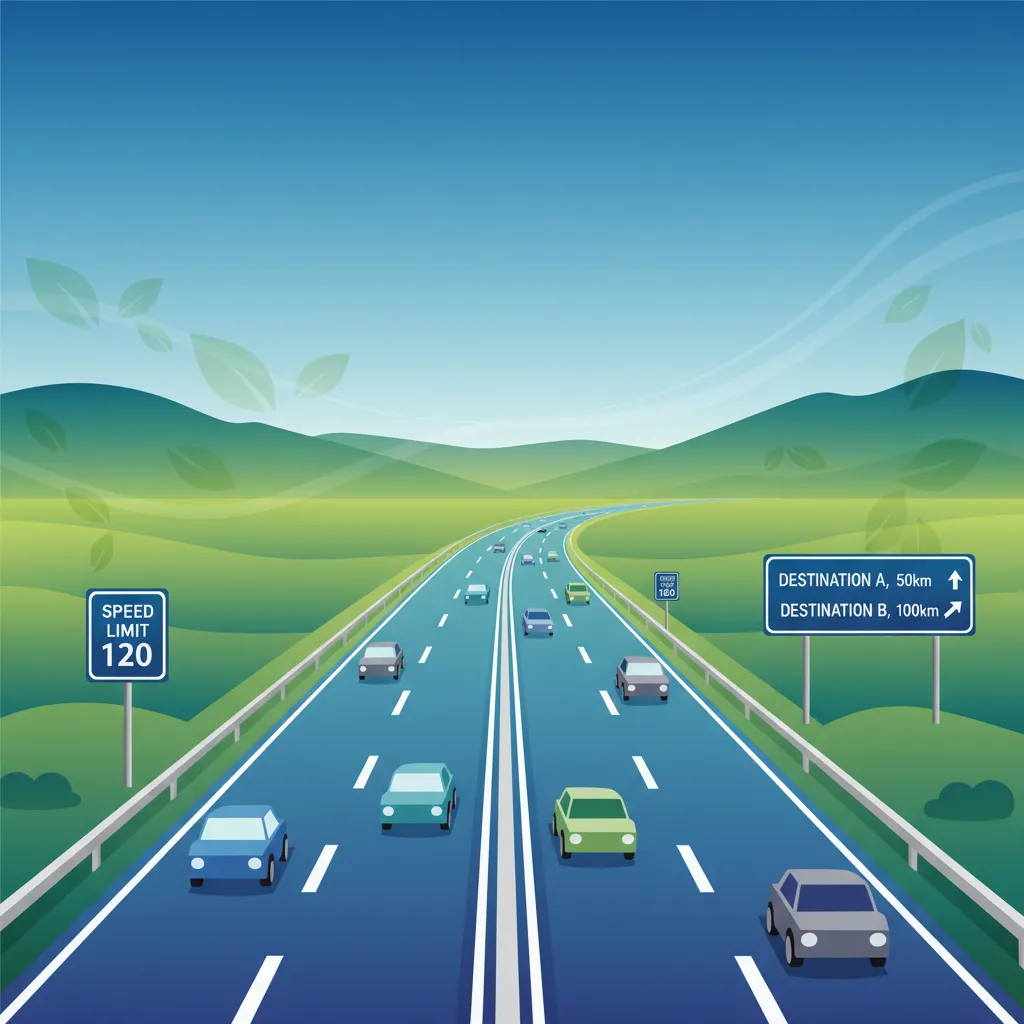
Lesson content overview
Navigating Poland's network of expressways (droga ekspresowa) and motorways (autostrada) is a fundamental skill for any driver, especially those aiming for a Polish Category B driving license. These roads are designed for high-speed, uninterrupted travel, offering efficient routes across the country. However, their unique design and higher speeds demand a strict adherence to specific rules and safety protocols. This lesson will provide a comprehensive guide to mastering these roads, covering everything from speed limits and lane discipline to safe merging, exiting, and emergency procedures. Understanding these principles is crucial for ensuring not only your safety but also the smooth flow of traffic for all road users.
Poland distinguishes between two primary types of high-speed, limited-access roads: expressways and motorways. While both facilitate fast travel, they have distinct characteristics, primarily in their design speed and corresponding speed limits. Recognizing these differences is the first step towards safe and compliant driving.
An expressway, known in Polish as a "droga ekspresowa" and typically identified by the letter "S" on road signs, is a limited-access road designed for efficient travel at moderate high speeds. These roads feature at least two lanes in each direction, separated by a median barrier, ensuring no direct access from properties alongside the road. They are built for traffic to flow continuously, minimizing interruptions.
The primary purpose of an expressway is to connect major urban areas and provide faster alternatives to national roads. While generally free of at-grade intersections, older or partially completed sections might have them, which will always be clearly signposted, requiring extra vigilance from drivers.
A motorway, or "autostrada" in Polish, is the highest class of road designed for continuous, high-speed travel. Identified by the letter "A" on road signs, motorways feature full separation of traffic directions, multiple lanes in each direction (at least two), and rigorously controlled entry and exit points. Unlike expressways, motorways are completely free of at-grade intersections, ensuring an uninterrupted flow of traffic.
Motorways form the backbone of Poland's national and international transport infrastructure, facilitating rapid transit between large cities and across borders. Due to their design for sustained high speeds, the rules governing behavior on motorways are particularly stringent to minimize the risk of accidents.
Driving on high-speed roads requires a disciplined approach and a thorough understanding of core principles that govern traffic flow and safety. These rules are designed to manage the increased kinetic energy associated with higher speeds and the potential severity of collisions.
Both expressways and motorways are "controlled-access" roads. This means vehicles can only join or leave the main carriageway at designated entry and exit points, typically via acceleration and deceleration lanes. This design prevents unexpected interruptions to high-speed traffic flow, which could lead to dangerous situations.
Drivers must meticulously plan their routes, paying close attention to upcoming exit signs. Missing an exit often means traveling several kilometers to the next one, as U-turns or reversing on these roads are strictly forbidden and extremely dangerous.
One of the most critical rules on Polish expressways and motorways is strict lane discipline. Drivers must always keep to the right-most lane available, unless they are actively overtaking slower traffic. This rule applies regardless of how many lanes there are in a single direction.
The purpose of this "keep right" rule is to reduce lane-changing conflicts and ensure that the left lanes remain free for overtaking maneuvers. Once an overtaking maneuver is safely completed, the driver must return to the right-most available lane as soon as it is safe to do so. Remaining in the left lane unnecessarily, often referred to as "lane hogging," is illegal and can lead to frustration, tailgating, and dangerous overtaking attempts by other drivers, including illegal "undertaking" (overtaking on the right).
Overtaking on the right (undertaking) on Polish expressways and motorways is strictly forbidden and highly dangerous. It disrupts predictable traffic flow and significantly increases the risk of collision.
Adhering to speed limits is paramount for safety on high-speed roads. The maximum speed limits for Category B vehicles (cars) in Poland are:
These limits are maximums for ideal conditions. Drivers must always adjust their speed according to current traffic density, weather conditions (e.g., rain, snow, fog), vehicle load, and the condition of their vehicle. There is also a minimum speed requirement of 40 km/h on both expressways and motorways, unless traffic conditions or an emergency forces a slower speed. This minimum speed prevents slow-moving vehicles from becoming dangerous obstacles to high-speed traffic.
For vehicles towing trailers or heavy loads, specific lower speed limits apply. On expressways, the maximum is typically 90 km/h, and on motorways, it is 100 km/h. Always check specific regulations for your vehicle type and load.
Stopping, parking, or leaving a stationary vehicle on the carriageway of an expressway or motorway is strictly forbidden. This prohibition extends to the hard shoulder (emergency lane) unless there is a genuine emergency, such as a breakdown, or if directed by law enforcement. These rules are in place to prevent sudden obstructions to high-speed traffic, which can lead to severe accidents.
If you need to stop for rest, fuel, or any non-emergency reason, you must exit the main carriageway and use a designated service area (Miejsca Obsługi Podróżnych – MOP). These areas are safely separated from the flow of traffic and provide facilities for drivers and passengers.
The hard shoulder, or emergency lane, is the far-right lane adjacent to the main carriageway. Its sole purpose is to provide a safe refuge for vehicles experiencing a breakdown or other genuine emergency. It is not for general travel, overtaking, or stopping for non-emergency breaks.
In case of a breakdown or emergency stop:
Signal your intention to move to the hard shoulder.
Carefully steer your vehicle as far to the left as possible within the hard shoulder, away from the flow of traffic.
Activate your hazard warning lights immediately to alert other drivers.
Ensure all occupants exit the vehicle on the side furthest from the traffic (passenger side), if safe, and wait behind a safety barrier.
Place a reflective warning triangle at an appropriate distance behind your vehicle (typically 30 meters on expressways/motorways).
Contact roadside assistance and remain in a safe location until help arrives.
Maintaining a safe following distance is paramount for preventing rear-end collisions, which are particularly dangerous at high speeds. The recommended minimum safe following distance on expressways and motorways is the "2-second rule." This means you should keep a distance from the vehicle in front that allows you to count "one thousand one, one thousand two" from when the vehicle ahead passes a fixed point until your vehicle reaches the same point.
This rule provides sufficient time for you to react and brake safely if the vehicle in front suddenly stops or slows down. In adverse conditions such as rain, snow, fog, or when driving a heavier vehicle, this distance should be significantly increased to at least 3 seconds, or even more. At 120 km/h, a 2-second gap translates to approximately 66 meters of distance.
Correct use of vehicle lighting is vital for visibility and safety, especially on high-speed roads where reaction times are shorter.
Using high-beam headlights in fog is counterproductive. The light reflects off the fog particles, creating glare and reducing your own visibility. Always use low-beam headlights and, if available, front fog lights in foggy conditions.
Road signs provide crucial information for safe navigation on high-speed roads. Drivers must be proficient in recognizing and instantly reacting to signs specific to expressways and motorways. These include:
Merging onto and exiting from expressways and motorways requires precision and cooperation with other drivers. These maneuvers are critical points where traffic flows intersect, and errors can lead to serious collisions.
Acceleration lanes are dedicated strips on the right side of the road, designed to allow vehicles to gain speed before merging onto the main carriageway.
Correct Use of an Acceleration Lane:
Deceleration lanes (or exit lanes) allow drivers to safely reduce speed once they have left the main carriageway.
Correct Use of a Deceleration Lane:
Never cross a solid white line to enter or leave an acceleration or deceleration lane. These lines mark mandatory boundaries for safety. Also, avoid suddenly braking on the main carriageway before entering a deceleration lane, as this can cause rear-end collisions.
Overtaking on Polish expressways and motorways must always be performed on the left. Overtaking on the right (undertaking) is strictly prohibited and extremely dangerous.
Safe Overtaking Procedure:
Driving on high-speed roads demands constant vigilance and the ability to adapt your driving style to various external factors. Ignoring these conditions can dramatically increase crash risk.
Adverse weather significantly impacts road conditions and visibility, necessitating immediate adjustments to your driving:
Night driving reduces overall visibility, especially in poorly lit areas of expressways and motorways.
Vehicles towing trailers or carrying exceptionally heavy loads have different dynamics and require adjusted driving techniques:
Understanding common mistakes and the underlying safety reasoning can help you avoid dangerous situations and legal penalties.
The rules on expressways and motorways are not arbitrary; they are based on fundamental physics and human limitations.
These scientific principles underscore why speed limits, safe following distances, and disciplined driving are not just rules but essential safety measures designed to prevent and mitigate the severity of accidents.
This lesson covers the essential rules for driving on Poland's expressways (droga ekspresowa, up to 100 km/h) and motorways (autostrada, up to 120 km/h), including strict lane discipline requiring drivers to keep right except when overtaking. Key procedures include using acceleration lanes to merge at matching speed, deceleration lanes for safe exits, and the hard shoulder exclusively for emergencies. Learners must remember that overtaking on the right is prohibited, stopping is forbidden except at designated MOP service areas, and that 2-second following distances are critical given stopping distances exceeding 100 meters at motorway speeds. Weather adaptation, proper lighting use, and understanding why speed limits exist based on kinetic energy physics are essential for both exam success and safe real-world driving.
A short set of high-value points that capture the most important learning from this lesson.
Expressways (droga ekspresowa, marked 'S') have a maximum speed limit of 100 km/h, while motorways (autostrada, marked 'A') allow up to 120 km/h for Category B vehicles.
Lane discipline on Polish high-speed roads is absolute: keep to the right lane at all times unless actively overtaking, then return to the right as soon as safely possible.
Acceleration lanes allow you to match main carriageway speed before merging; deceleration lanes allow you to slow after exiting—never brake on the main carriageway before an exit.
Stopping on the hard shoulder is only for genuine emergencies; use Service Areas (MOP) for rest stops, fuel, or any non-emergency stops.
The 2-second following distance rule translates to approximately 66 meters at 120 km/h, providing critical reaction time given that total stopping distance often exceeds 100 meters.
Explore all units and lessons included in this driving theory course.
Minimum speed on both expressways and motorways is 40 km/h unless traffic conditions require otherwise, preventing slow vehicles from becoming hazards.
Overtaking must always be done on the left; overtaking on the right (undertaking) is strictly prohibited and dangerous.
Use low-beam headlights in fog, tunnels, and rain; high-beam headlights in fog create glare and reduce visibility.
If you break down, signal, pull onto hard shoulder, activate hazard lights, place warning triangle 30 meters behind, and wait behind a safety barrier.
Vehicles towing trailers have reduced speed limits (90 km/h on expressways, 100 km/h on motorways) and require increased following distances.
Driving in the left lane without overtaking (lane hogging), which creates congestion and encourages dangerous overtaking attempts from behind.
Merging onto the motorway at too low a speed, forcing other drivers to brake suddenly and risking rear-end collisions.
Using hazard warning lights while driving in rain or fog, confusing other drivers about whether you are moving or stationary.
Stopping on the hard shoulder for rest breaks or to use a phone, which is only permitted for genuine emergencies.
Not adjusting speed for weather conditions—braking distances on wet roads can double, and at 120 km/h, kinetic energy is four times greater than at 60 km/h.
Lesson content overview
A short set of high-value points that capture the most important learning from this lesson.
Expressways (droga ekspresowa, marked 'S') have a maximum speed limit of 100 km/h, while motorways (autostrada, marked 'A') allow up to 120 km/h for Category B vehicles.
Lane discipline on Polish high-speed roads is absolute: keep to the right lane at all times unless actively overtaking, then return to the right as soon as safely possible.
Acceleration lanes allow you to match main carriageway speed before merging; deceleration lanes allow you to slow after exiting—never brake on the main carriageway before an exit.
Stopping on the hard shoulder is only for genuine emergencies; use Service Areas (MOP) for rest stops, fuel, or any non-emergency stops.
The 2-second following distance rule translates to approximately 66 meters at 120 km/h, providing critical reaction time given that total stopping distance often exceeds 100 meters.
Explore all units and lessons included in this driving theory course.
Minimum speed on both expressways and motorways is 40 km/h unless traffic conditions require otherwise, preventing slow vehicles from becoming hazards.
Overtaking must always be done on the left; overtaking on the right (undertaking) is strictly prohibited and dangerous.
Use low-beam headlights in fog, tunnels, and rain; high-beam headlights in fog create glare and reduce visibility.
If you break down, signal, pull onto hard shoulder, activate hazard lights, place warning triangle 30 meters behind, and wait behind a safety barrier.
Vehicles towing trailers have reduced speed limits (90 km/h on expressways, 100 km/h on motorways) and require increased following distances.
Driving in the left lane without overtaking (lane hogging), which creates congestion and encourages dangerous overtaking attempts from behind.
Merging onto the motorway at too low a speed, forcing other drivers to brake suddenly and risking rear-end collisions.
Using hazard warning lights while driving in rain or fog, confusing other drivers about whether you are moving or stationary.
Stopping on the hard shoulder for rest breaks or to use a phone, which is only permitted for genuine emergencies.
Not adjusting speed for weather conditions—braking distances on wet roads can double, and at 120 km/h, kinetic energy is four times greater than at 60 km/h.
Explore search topics learners often look for when studying Driving on Expressways (droga ekspresowa) and Motorways (autostrada). These topics reflect common questions about road rules, driving situations, safety guidance, and lesson level theory preparation for learners in Poland.
Browse additional driving theory lessons that cover connected traffic rules, road signs, and common driving situations related to this topic. Improve your understanding of how different rules interact across everyday traffic scenarios.
Learn detailed regulations for driving on Polish expressways (droga ekspresowa) and motorways (autostrada). Covers advanced overtaking, merging techniques, and emergency stop protocols to enhance safety and compliance on high-speed roads.
This lesson provides a guide to safely entering high-speed roads. It explains the function of the acceleration lane, where drivers must increase their speed to match the flow of traffic on the main carriageway. The importance of signaling, checking mirrors, and looking over the shoulder for blind spots before merging is heavily emphasized.
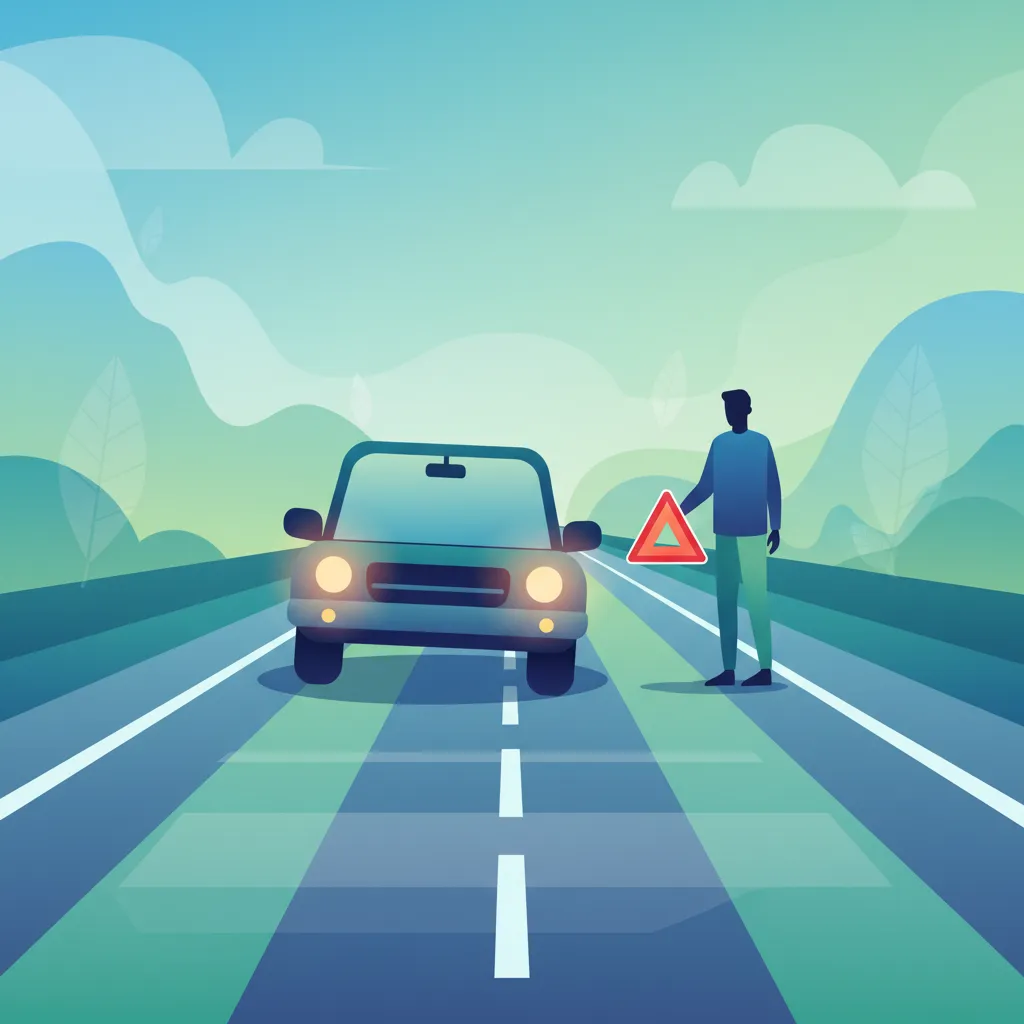
This lesson prepares drivers for the event of a vehicle breakdown on a motorway or expressway. It details the correct procedure: pulling over to the emergency lane, activating hazard lights, and placing the warning triangle at the legally required distance. The importance of wearing a reflective vest when outside the vehicle is also a key safety point.
This lesson provides a focused guide on the techniques for entering and exiting high-speed roads. It explains the purpose of acceleration lanes for getting up to speed and deceleration lanes for slowing down safely away from the main traffic flow. Correct observation, signaling, and speed adjustment are emphasized for seamless transitions.
This lesson examines the specific rules and etiquette for riding on Polish motorways and high-speed highways, focusing on proper lane positioning, entry via acceleration lanes, and maintaining appropriate following distances. Learners will study overtaking protocols at high speeds, proper use of deceleration lanes for exits, and techniques for aerodynamic positioning. The content also covers safe lane changes and emergency lane usage to ensure efficient travel.
This lesson provides a comprehensive breakdown of the right-of-way rules that govern intersections. It explains the clear directives given by traffic lights, stop signs, and yield signs, and clarifies the procedures at unmarked or uncontrolled intersections, where the 'priority to the right' rule often applies. Learners will understand the legal hierarchy of these rules to make correct, safe, and predictable decisions when navigating through any junction, reducing the risk of conflict with other traffic.
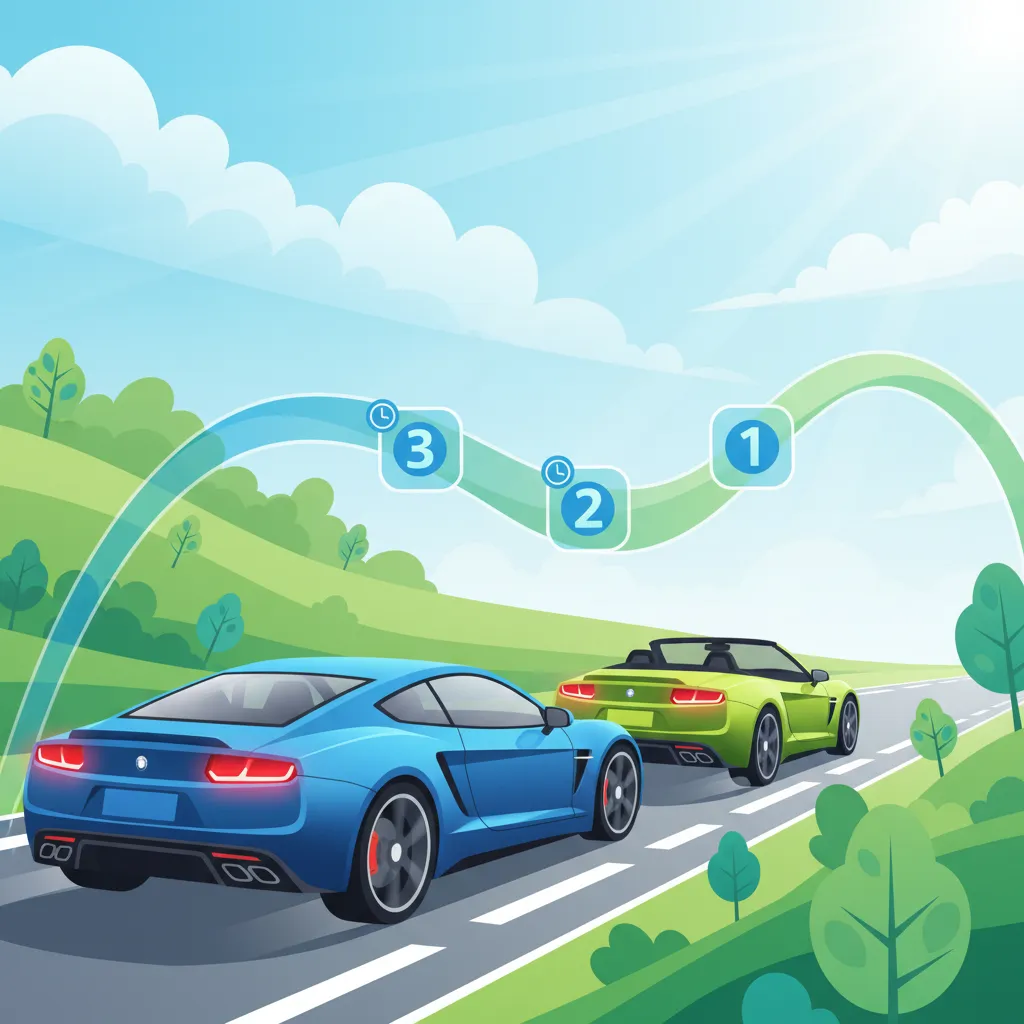
This lesson provides practical methods for maintaining a safe buffer zone behind the vehicle in front. It explains the 'two-second rule' as a minimum following distance in good conditions and how to increase it to three or more seconds in adverse weather. This skill is critical for allowing enough time to react and brake safely to avoid rear-end collisions.
This lesson details the legal framework for overtaking in Poland. It explains how to interpret road markings, such as solid and double solid lines, and prohibition signs that forbid passing. The content emphasizes the critical need for sufficient sight distance and a clear path before initiating an overtaking maneuver to ensure safety.
This lesson details the critical process of merging onto a high-speed motorway. It explains how to use the full length of the acceleration lane to build up to the speed of the flowing traffic, which is essential for a smooth and safe entry. Learners will study techniques for judging gaps in traffic, signaling intentions clearly, and performing thorough mirror and blind spot checks before executing the merge, ensuring a seamless integration into the highway environment.
Understand critical speed limits, safe following distances, and essential safety practices for Polish expressways (droga ekspresowa) and motorways (autostrada). This lesson focuses on the physics of speed and how to adapt to conditions.
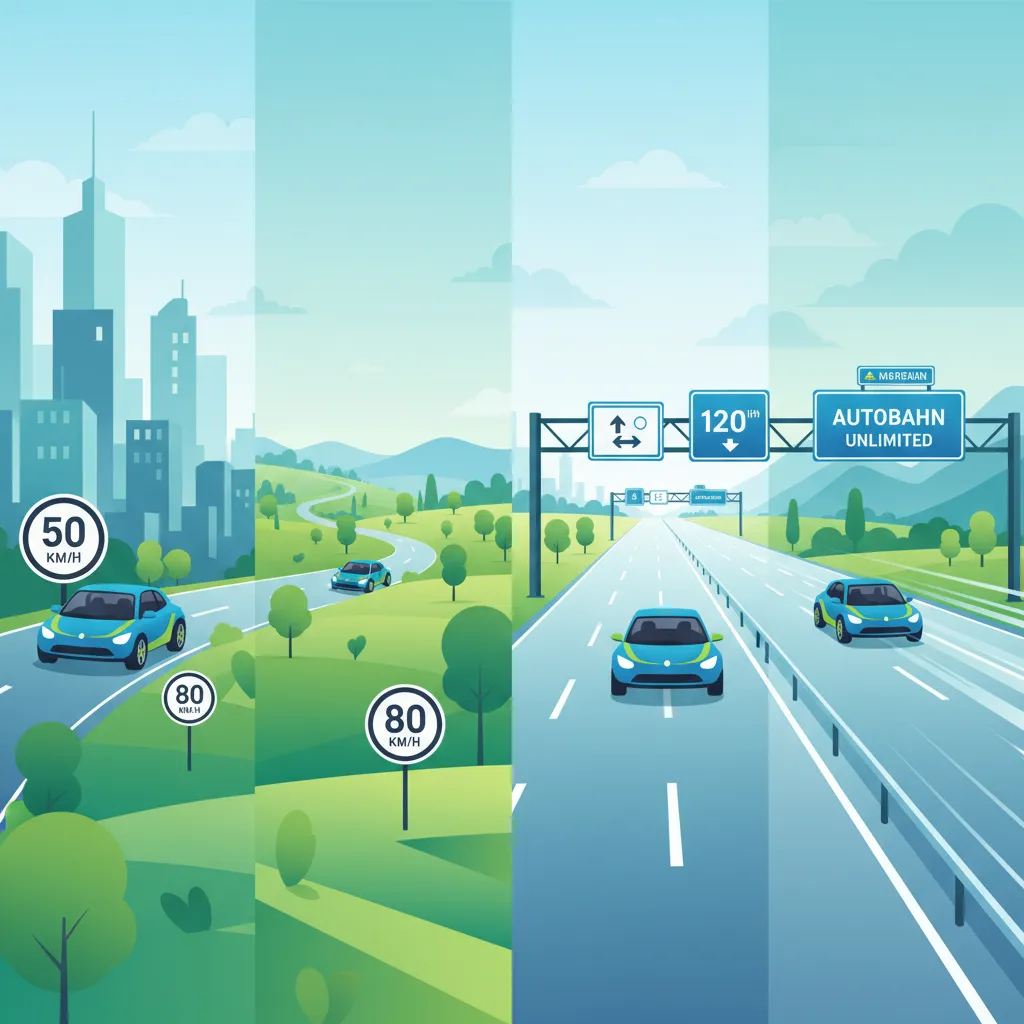
This lesson details the statutory speed limits for different road environments in Poland. It covers the 50 km/h limit in built-up areas (obszar zabudowany), as well as the higher limits for rural roads, expressways, and motorways. Understanding these default limits is fundamental for legal and safe driving across the country.
This lesson provides a guide to safely entering high-speed roads. It explains the function of the acceleration lane, where drivers must increase their speed to match the flow of traffic on the main carriageway. The importance of signaling, checking mirrors, and looking over the shoulder for blind spots before merging is heavily emphasized.
This lesson prepares drivers for the event of a vehicle breakdown on a motorway or expressway. It details the correct procedure: pulling over to the emergency lane, activating hazard lights, and placing the warning triangle at the legally required distance. The importance of wearing a reflective vest when outside the vehicle is also a key safety point.
This lesson provides a focused guide on the techniques for entering and exiting high-speed roads. It explains the purpose of acceleration lanes for getting up to speed and deceleration lanes for slowing down safely away from the main traffic flow. Correct observation, signaling, and speed adjustment are emphasized for seamless transitions.
This lesson examines the specific rules and etiquette for riding on Polish motorways and high-speed highways, focusing on proper lane positioning, entry via acceleration lanes, and maintaining appropriate following distances. Learners will study overtaking protocols at high speeds, proper use of deceleration lanes for exits, and techniques for aerodynamic positioning. The content also covers safe lane changes and emergency lane usage to ensure efficient travel.
This lesson provides practical methods for maintaining a safe buffer zone behind the vehicle in front. It explains the 'two-second rule' as a minimum following distance in good conditions and how to increase it to three or more seconds in adverse weather. This skill is critical for allowing enough time to react and brake safely to avoid rear-end collisions.
This lesson details the speed limits applicable to buses in Poland across urban, rural, and motorway settings. It emphasizes how vehicle size and passenger load influence safe operating speeds and required stopping distances. The content also covers speed-control device usage and practical techniques for maintaining consistent speed while ensuring passenger comfort.
This lesson teaches the crucial concept that drivers must always adapt their speed to the current conditions. It explains how factors like rain, fog, ice, heavy traffic, and poor visibility reduce safety margins and require a lower speed than the posted limit. This principle of defensive driving is essential for preventing accidents in challenging situations.
This lesson defines what constitutes a 'built-up area' in Poland, marked by specific informational signs. It explains the default speed limit of 50 km/h that applies within these zones unless otherwise indicated. The content highlights the need for increased vigilance due to higher traffic density and the frequent presence of pedestrians.

This lesson explores the unique characteristics of driving on rural roads. It highlights potential hazards such as sharp, unbanked curves, poor road surfaces, and limited visibility due to hills and vegetation. The content teaches drivers to anticipate these conditions and adjust their speed and position to navigate safely.
Find clear answers to common questions learners have about Driving on Expressways (droga ekspresowa) and Motorways (autostrada). Learn how the lesson is structured, which driving theory objectives it supports, and how it fits into the overall learning path of units and curriculum progression in Poland. These explanations help you understand key concepts, lesson flow, and exam focused study goals.
Both are high-speed roads. An autostrada (motorway) is typically dual carriageway with at least two lanes in each direction and is designed for high-speed traffic, with very strict entry/exit controls. A droga ekspresowa (expressway) is also usually dual carriageway but may sometimes be single carriageway; it also has higher speed limits than other roads but might have slightly less stringent design standards than a full autostrada. For drivers, the core rules regarding speed, lane discipline, and prohibited actions are largely the same.
For Category B drivers, the speed limit on a single-carriageway expressway is 100 km/h, on a dual-carriageway expressway it's 120 km/h, and on an autostrada (motorway) it's 140 km/h. Always be mindful of specific signs that might indicate lower limits.
No, stopping on the motorway (autostrada) or expressway (droga ekspresowa) is strictly prohibited, except in designated emergency areas or parking zones. Stopping on the carriageway, shoulder, or emergency lane is extremely dangerous and carries heavy penalties.
Lane discipline on Polish expressways and motorways means you must drive in the rightmost lane available. You should only use lanes to the left for overtaking. Once you have finished overtaking, you must return to the rightmost lane. This rule ensures smooth traffic flow and prevents dangerous obstructions.
If your vehicle breaks down on an autostrada, turn on your hazard warning lights immediately. If possible, move your vehicle to the emergency lane (pobocze). Switch off the engine and hazard lights if stationary for a long time, exit the vehicle from the right side (passenger side), and stand behind the safety barrier, away from traffic. Place your warning triangle at an appropriate distance behind your vehicle (about 100m on an autostrada) and call for assistance.
Yes, you should pay attention to signs indicating the start and end of expressways/motorways, speed limits, mandatory lane usage, prohibited actions (like stopping, U-turns, reversing), and directions to exits, service areas, and emergency zones. Recognizing these signs is vital for safe navigation and compliance with Polish regulations.
Build custom practice sessions tailored precisely to your needs. Focus on areas requiring improvement, review specific Polish road signs, or master complex traffic rules to ensure full preparation for your official driving license exam.