
Welcome to the lesson on rural roads! Building on your understanding of basic road types, this lesson dives into the specific challenges of country lanes and open roads in Poland. We'll focus on how poor visibility and unique road features require careful anticipation and speed adjustment to ensure your safety and exam success.

Lesson content overview
Navigating rural roads presents a unique set of challenges for drivers, distinct from those encountered in urban environments or on expressways. For those preparing for the Polish Category B theory test, understanding these characteristics and adapting driving techniques accordingly is crucial for safety. This comprehensive lesson, part of your Polish Driving Theory – Comprehensive Category B License Preparation, delves into the specific geometry, surface conditions, visibility limitations, and regulatory requirements associated with driving on Polish country roads. Mastering these principles will equip you to anticipate hazards, make informed decisions, and ensure a safe journey for yourself and others.
Rural roads, often referred to as country roads, differ significantly from their urban or highway counterparts in several key aspects. Their design is frequently influenced by natural terrain, historical development, and lower traffic volumes, leading to specific features that demand heightened driver awareness.
The physical layout of rural roads, or their road geometry, can be less predictable and more demanding than other road types. Unlike modern highways engineered for high-speed travel, rural roads often follow the natural contours of the landscape, resulting in various turns, dips, and rises.
One of the most significant geometric features on rural roads is the prevalence of unbanked curves. These are turns where the road surface does not tilt or 'bank' inwards (superelevation) to counteract the centrifugal force that pushes a vehicle outwards during a turn.
When driving on an unbanked curve, drivers must reduce their speed significantly to maintain stability and prevent the vehicle from drifting out of its lane. Failing to do so can lead to a loss of control, especially at higher speeds. Additionally, many rural roads feature sharp curves, defined as turns where the road's angle changes by more than 30 degrees over a short distance. These sharp turns often appear suddenly, requiring substantial speed reduction well in advance. Polish road law (§ 35) mandates drivers to adjust their speed to road conditions, and this is particularly pertinent on such curves.
Anticipate Curves: Always scan far ahead for signs of curves. Look for changes in trees, fences, or utility poles, which can indicate the road's direction even if the curve itself isn't fully visible.
Rural roads frequently traverse hilly or undulating terrain, featuring steep hills and gradients (inclines or declines). While ascents demand more engine power, descents require careful speed management and braking. More critically, both hills and gradients can severely impact sight distance, the minimum distance required for a driver to perceive, react, and safely stop before an obstruction. When cresting a hill, the road ahead may be completely obscured, creating a temporary "blind spot." Similarly, a sharp curve at the bottom of a steep descent can be particularly hazardous if speed is not adequately controlled.
The quality and type of road surface on rural roads can vary greatly, influencing vehicle traction, braking performance, and overall handling. Drivers must continuously assess these conditions and adapt their driving style.
While major rural routes may be paved with asphalt or concrete, many secondary country roads might feature older, less maintained surfaces. Some may even transition to gravel or unpaved sections, especially near agricultural areas. Pavement defects like potholes, rutting (depressions formed by tire wear), and loose stones are common. These irregularities can cause vibrations, tire damage, and, more dangerously, a sudden loss of traction, leading to skidding if a driver attempts abrupt braking or steering. Poland’s Road Traffic Act (Article 2‑7) underscores the driver's responsibility to adapt speed to surface condition.
Weather significantly alters road surface conditions. Wetness from rain, snow, or ice drastically reduces tire grip, extending braking distances and increasing the risk of skidding. Loose gravel on a wet surface is even more perilous. Drivers must understand that the friction coefficient of a wet or icy road is substantially lower than that of dry asphalt, necessitating a significant reduction in speed and smoother control inputs.
Limited visibility is perhaps the most critical safety challenge on rural roads. Unlike urban areas with abundant artificial lighting and clear sightlines, country roads often suffer from a lack of illumination and natural obstructions.
Sight distance is paramount on rural roads. It refers to the minimum distance a driver needs to see an object or hazard ahead, react to it, and stop safely. There are two main types:
Vegetation plays a significant role in obscuring views on rural roads. Tall trees, dense hedges, and roadside crops can create environmental blind spots, blocking a driver's view around curves or at intersections with minor roads. These obstructions can hide oncoming traffic, pedestrians, cyclists, or even slow-moving agricultural vehicles until it is too late to react. Terrain features such as hills and valleys also directly limit sight distance, as described previously.
The absence of artificial street lighting on most rural roads makes driving at night or during twilight hours particularly challenging. In these conditions, drivers rely almost entirely on their vehicle's headlamps, which provide finite illumination range.
Using the correct headlamp setting is critical for both seeing and being seen.
Beware of Dazzling: Polish law (§ 85) mandates switching from high-beam to low-beam when approaching oncoming traffic within 100 metres. Failure to do so can temporarily blind other drivers, leading to dangerous situations.
Beyond environmental obstructions, every vehicle has blind spots—areas around the car that are not visible in mirrors. On rural roads, these are compounded by the road environment. A driver's peripheral vision (what they can see to the sides) can also be limited by vehicle pillars, the road's curvature, or roadside vegetation. This means drivers must perform additional checks, such as head checks (briefly looking over the shoulder), before changing lanes or attempting to overtake. Polish law (§ 19‑3) requires drivers to ensure safe distance and visibility before overtaking.
Safe driving on rural roads requires proactive risk assessment and continuous adaptation of speed, position, and observation skills.
The most crucial principle for rural driving is speed management, specifically speed-visibility matching. This means selecting a speed that allows you to stop safely within the distance you can see clearly ahead. Even if the posted legal speed limit (often 90 km/h on single carriageway rural roads in Poland) is higher, it is rarely the safe speed for all conditions.
Always Adjust Speed: Article 43 of the Polish Road Traffic Act requires drivers to adhere to speed limits and adapt their speed to road conditions, vehicle load, and visibility. Never assume the posted limit is safe regardless of circumstances.
Reduce speed significantly before entering curves, cresting hills, or when visibility is reduced by weather or darkness. On unbanked or sharp curves, a safe speed might be 20-30 km/h below the straight-road limit.
Overtaking on single-carriageway rural roads is inherently riskier than on multi-lane highways. It demands perfect judgment of speed, distance, and the intentions of other drivers.
Assess Legality and Safety: Ensure overtaking is not prohibited by signs or road markings. Crucially, confirm the road ahead is clear for at least 100 metres, allowing ample time to complete the maneuver and return to your lane safely (Polish traffic law § 19‑1).
Check Mirrors and Blind Spots: Use your mirrors and perform a head check to ensure no vehicle is attempting to overtake you.
Signal Intention: Activate your turn signal well in advance.
Accelerate Smoothly: Increase your speed to pass the vehicle quickly and safely, without exceeding the speed limit.
Maintain Safe Clearance: Pass the overtaken vehicle with sufficient lateral distance.
Return to Lane: Signal your intention to return to your lane only when you can see the overtaken vehicle in your rearview mirror.
Common mistakes include attempting to overtake on blind curves, over hills, or when visibility is poor, which can lead to catastrophic head-on collisions.
Rural roads are frequently shared with slow-moving vehicles, especially agricultural machinery such as tractors, combines, or trailers, and occasionally horse-drawn carts. These vehicles travel at significantly lower speeds than cars, often have limited maneuverability, and can be very wide or long.
Drivers must exercise extreme patience and caution when encountering them. Maintain a generous following distance, especially since these vehicles may turn into fields or side roads suddenly. Polish regulation (§ 20‑1, § 20‑4) outlines rules for interacting with slow-moving traffic, including the requirement for motorized traffic to maintain a safe distance and, in some cases, yield to agricultural vehicles merging onto main routes from field access points.
On unbanked curves, improper lane positioning can increase the risk of crossing into the opposing lane or drifting off the road. Drivers should aim to position their vehicle centrally within their lane, maintaining a consistent line through the curve. For sharp turns, it's often advisable to approach the curve from the outside of the lane (if it's safe to do so and does not involve crossing the center line), allowing for a straighter entry and exit, maximizing visibility through the turn.
A curve on a road that does not have a superelevation (tilt) to help vehicles counteract the centrifugal force, requiring drivers to reduce speed significantly to maintain control.
Adhering to Polish traffic law is paramount for safety. Ignorance of these rules is not an excuse and can lead to severe consequences.
The following rules are particularly critical when driving on rural roads in Poland:
Consequence: Excessive speed on curves is a leading cause of single-vehicle accidents and can result in significant legal penalties and increased insurance costs.
Consequence: Tailgating significantly reduces reaction time and dramatically increases the risk of rear-end collisions, especially on roads with variable surfaces or unexpected hazards.
Consequence: Improper headlamp use can blind other drivers or reduce your own ability to detect hazards, leading to accidents or fines.
Consequence: Overtaking on blind curves or hills is extremely dangerous and a major cause of fatal head-on collisions, carrying severe legal penalties.
Consequence: Failing to yield can cause abrupt stops, unsafe maneuvers, or collisions with larger, slower-moving vehicles.
Many accidents on rural roads stem from a failure to adapt to their specific characteristics.
| Violation | Why It’s Wrong | Correct Behavior | Consequence |
|---|---|---|---|
| Excessive Speed on Curves | Reduces reaction time; centrifugal force may cause loss of control. | Reduce speed before the curve according to curvature and visibility. | Increased risk of off-road accidents; potential legal penalties. |
| High-Beam at Night with Oncoming Traffic | Dazzles oncoming drivers, impairing their vision. | Switch to low-beam within 100 metres of oncoming vehicles. | Possible collisions; violation per § 85‑1. |
| Tailgating on a Rural Road | Shortens reaction window; can cause rear-end collisions on sudden stops. | Maintain at least a 2-second following distance, larger in fog or rain. | Increased crash risk; fines. |
| Overtaking on Blind Curve | Driver cannot see oncoming traffic, leading to head-on collisions. | Wait for a straight segment with sufficient sight distance before overtaking. | Potential for fatal collisions; legal liability. |
| Failing to Yield to Slow-Moving Agricultural Vehicles | Causes abrupt stops or unsafe maneuvers. | Yield when safe; adjust speed to allow merging. | Increased collision risk; penalties for reckless driving. |
| Neglecting to Use Fog Lights in Reduced Visibility | Reduces ability to see road markers and obstacles, and for others to see you. | Activate fog lights when visibility drops below 100 metres. | Poor hazard detection, possible accidents. |
| Assuming Road Surface Is Good Without Inspection | Unexpected potholes or loose gravel can cause loss of control. | Scan ahead for surface irregularities; adjust speed and braking accordingly. | Skidding, loss of control, accidents. |
| Continuing at Posted Speed After Crest of Hill | Sight distance is temporarily reduced at the crest, hiding potential hazards. | Reduce speed before crest; anticipate potential obstacles beyond. | Unexpected obstacles may not be visible; crash risk. |
Safe driving is a dynamic process, constantly adjusting to variable conditions. Rural roads demand particular vigilance for these changes.
Rural areas are often home to farm animals and pedestrians using roads without sidewalks.
Mastering safe driving on rural roads involves a synthesis of observation, anticipation, and adherence to specific rules and principles:
This lesson addresses the unique hazards of driving on Polish rural roads, including unbanked curves, limited sight distance caused by hills and vegetation, and variable road surfaces. Key skills covered include speed-visibility matching to ensure you can stop within your visible range, proper headlamp selection (low-beam, high-beam, fog lights) based on traffic and weather conditions, and safe overtaking procedures requiring at least 100 metres of clear road ahead. The lesson also covers legal obligations under Polish traffic law regarding speed adaptation, following distances, and yielding to slow-moving agricultural vehicles. Understanding these principles is essential for both passing the Category B theory exam and developing safe real-world driving habits on country roads.
A short set of high-value points that capture the most important learning from this lesson.
Rural roads feature unbanked and sharp curves requiring significant speed reduction to maintain vehicle stability and prevent drifting out of lane.
Sight distance is the cornerstone of rural road safety — your speed must allow you to stop safely within the distance you can see ahead.
Use high-beam on unlit rural roads when no traffic is present; switch to low-beam within 100 metres of oncoming vehicles per Polish law § 85-1.
Speed-visibility matching means selecting a speed that enables you to stop within your visible range, regardless of posted limits.
Fog lights must only be activated when visibility drops below 100 metres; using them in clear conditions dazzles other drivers.
Explore all units and lessons included in this driving theory course.
Sharp curves are defined as turns where the road angle changes by more than 30 degrees over a short distance.
Stopping Sight Distance (SSD) is the distance required to bring a vehicle to a complete stop; Passing Sight Distance (PSD) is for overtaking maneuvers.
Maintain at least a 2-second following distance normally, increasing to 3 seconds or more in poor visibility or adverse weather.
Overtake only when the road ahead is clear for at least 100 metres and your view is not obstructed by hills, curves, or vegetation.
Agricultural vehicles have limited maneuverability; yield when they signal intent to merge onto a main road per Polish regulation § 20-4.
Assuming the posted speed limit (often 90 km/h) is always safe, regardless of visibility, road surface, or curve severity.
Continuing at full speed after cresting a hill where the road ahead is temporarily invisible due to reduced sight distance.
Attempting to overtake on blind curves or hills where oncoming traffic cannot be seen in time to react.
Using high-beam headlights when approaching oncoming traffic, temporarily blinding other drivers.
Tailgating on rural roads, which severely reduces reaction time when encountering slow-moving agricultural vehicles or sudden obstacles.
Lesson content overview
A short set of high-value points that capture the most important learning from this lesson.
Rural roads feature unbanked and sharp curves requiring significant speed reduction to maintain vehicle stability and prevent drifting out of lane.
Sight distance is the cornerstone of rural road safety — your speed must allow you to stop safely within the distance you can see ahead.
Use high-beam on unlit rural roads when no traffic is present; switch to low-beam within 100 metres of oncoming vehicles per Polish law § 85-1.
Speed-visibility matching means selecting a speed that enables you to stop within your visible range, regardless of posted limits.
Fog lights must only be activated when visibility drops below 100 metres; using them in clear conditions dazzles other drivers.
Explore all units and lessons included in this driving theory course.
Sharp curves are defined as turns where the road angle changes by more than 30 degrees over a short distance.
Stopping Sight Distance (SSD) is the distance required to bring a vehicle to a complete stop; Passing Sight Distance (PSD) is for overtaking maneuvers.
Maintain at least a 2-second following distance normally, increasing to 3 seconds or more in poor visibility or adverse weather.
Overtake only when the road ahead is clear for at least 100 metres and your view is not obstructed by hills, curves, or vegetation.
Agricultural vehicles have limited maneuverability; yield when they signal intent to merge onto a main road per Polish regulation § 20-4.
Assuming the posted speed limit (often 90 km/h) is always safe, regardless of visibility, road surface, or curve severity.
Continuing at full speed after cresting a hill where the road ahead is temporarily invisible due to reduced sight distance.
Attempting to overtake on blind curves or hills where oncoming traffic cannot be seen in time to react.
Using high-beam headlights when approaching oncoming traffic, temporarily blinding other drivers.
Tailgating on rural roads, which severely reduces reaction time when encountering slow-moving agricultural vehicles or sudden obstacles.
Explore search topics learners often look for when studying Characteristics of Rural Roads and Visibility Issues. These topics reflect common questions about road rules, driving situations, safety guidance, and lesson level theory preparation for learners in Poland.
Browse additional driving theory lessons that cover connected traffic rules, road signs, and common driving situations related to this topic. Improve your understanding of how different rules interact across everyday traffic scenarios.
Understand the unique geometry and varied surface conditions of rural roads in Poland. This lesson covers challenges like unbanked curves, hills, and different pavement types, explaining how they impact safe driving and theory test preparation.
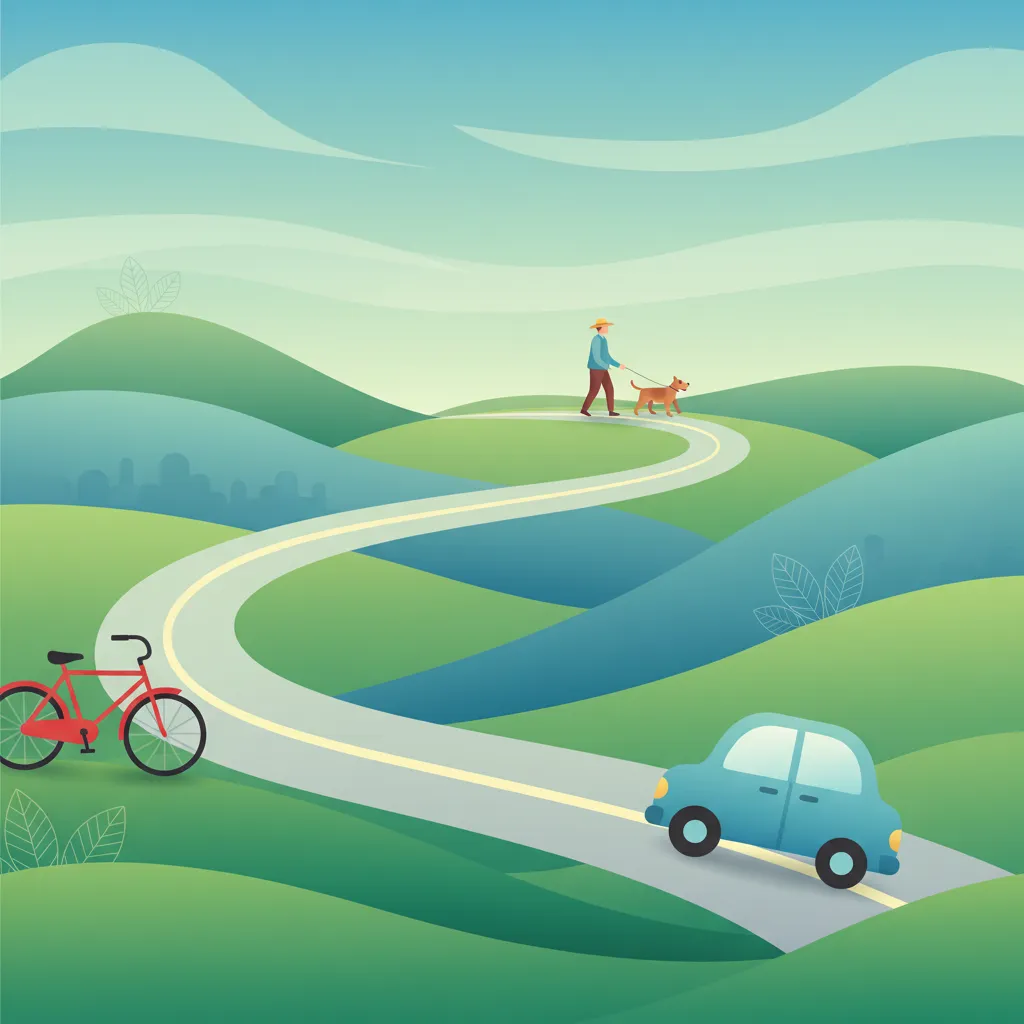
In this lesson, learners explore riding on rural and countryside roads, where road markings may be sparse and surface conditions varied. The content covers safe overtaking in single-lane sections, interaction with agricultural vehicles and animals, and the handling of gravel or uneven surfaces. Learners will also study the importance of anticipating curves and adjusting speed to light conditions, equipping them with the skills needed for safe countryside travel.
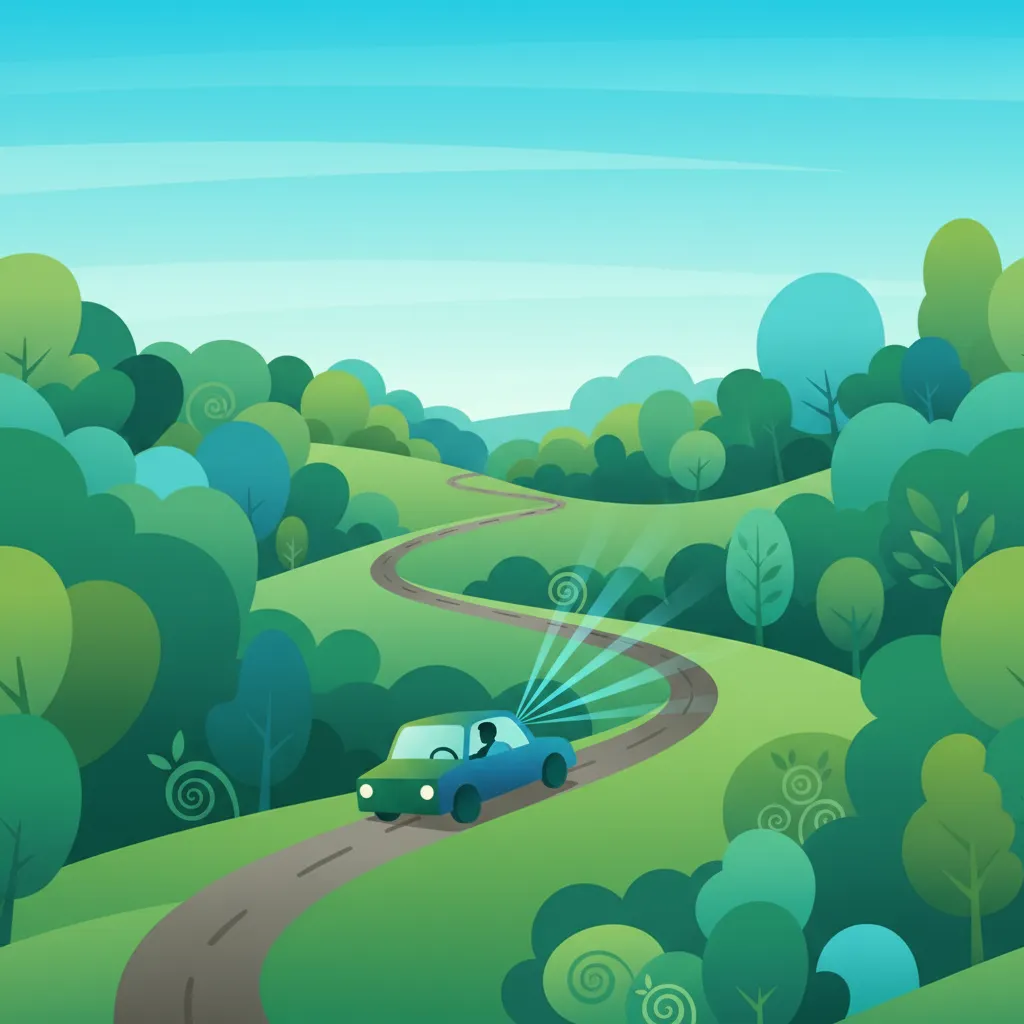
This lesson introduces defensive driving principles for rural settings, teaching learners how to continually scan the environment and anticipate potential hazards. It discusses the unique challenges posed by slow-moving agricultural traffic, field entrances, and unpredictable farm equipment maneuvers. The lesson emphasizes proactive decision-making and early brake application to avoid collisions in mixed traffic.
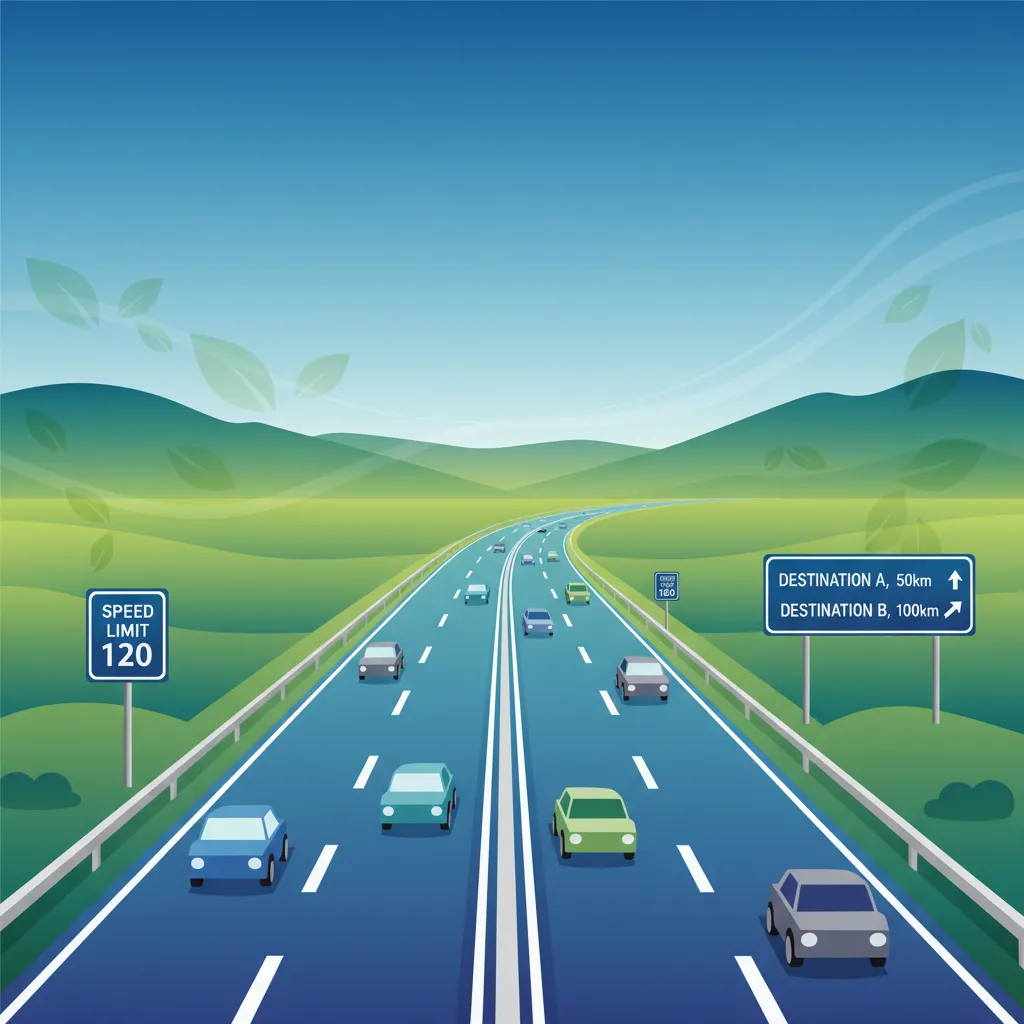
This lesson details the rules and best practices for driving on Poland's fastest roads. It covers the higher speed limits, the strict lane discipline of keeping right except to overtake, and prohibitions on stopping. The aim is to ensure drivers can handle the demands of sustained high-speed travel safely and efficiently.

This lesson defines what constitutes a 'built-up area' in Poland, marked by specific informational signs. It explains the default speed limit of 50 km/h that applies within these zones unless otherwise indicated. The content highlights the need for increased vigilance due to higher traffic density and the frequent presence of pedestrians.
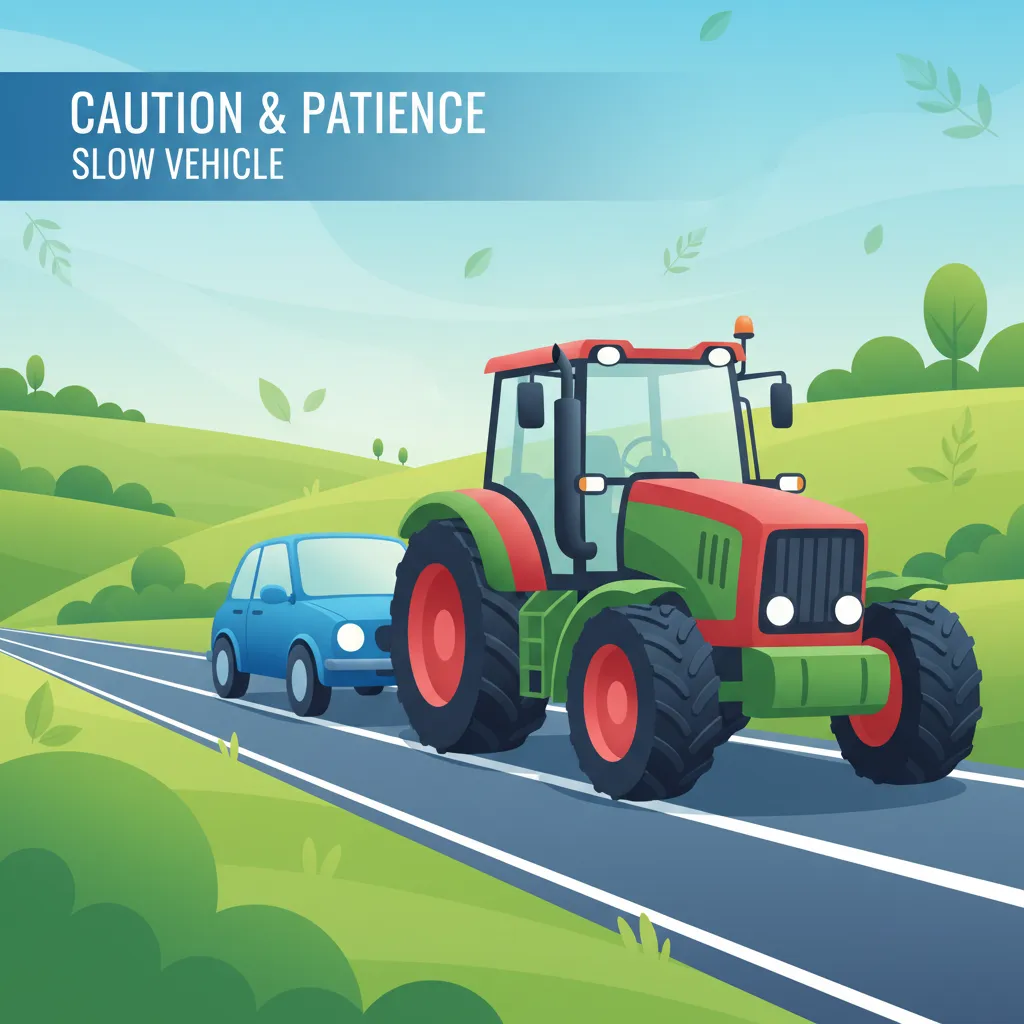
This lesson addresses encounters with slow-moving vehicles, such as tractors, which are common on rural roads. It teaches drivers to be patient, maintain a safe following distance, and only overtake when it is absolutely safe and legal to do so. Recognizing the large size and limited maneuverability of such vehicles is crucial for avoiding accidents.

This lesson examines the variety of pavement markings that define lane structures, traffic flow, and special zones on Polish roads. Learners will study solid and broken lines, lane division markings, and the distinct symbols for bicycle lanes, bus lanes, and tram tracks, all of which affect motorcyclist positioning. The lesson also addresses surface texture indicators that signal changing road conditions, enabling riders to maintain correct lane discipline.

This lesson focuses on the rules of lane usage for maintaining safe and efficient traffic flow. It covers the meaning of different lane markings, such as solid versus broken lines, and the general principle of keeping to the rightmost lane unless overtaking. Proper lane discipline is crucial for predictability and preventing conflicts on multi-lane roads.
This lesson prepares drivers for the event of a vehicle breakdown on a motorway or expressway. It details the correct procedure: pulling over to the emergency lane, activating hazard lights, and placing the warning triangle at the legally required distance. The importance of wearing a reflective vest when outside the vehicle is also a key safety point.
This lesson explores the correct lane and road positioning for tractors, emphasizing the use of the right-hand lane or shoulder where appropriate. It clarifies how speed limits differ between road types and provides guidelines for adjusting speed based on vehicle load, road condition, and traffic density. Proper positioning improves safety for both the tractor driver and other road users sharing the same space.
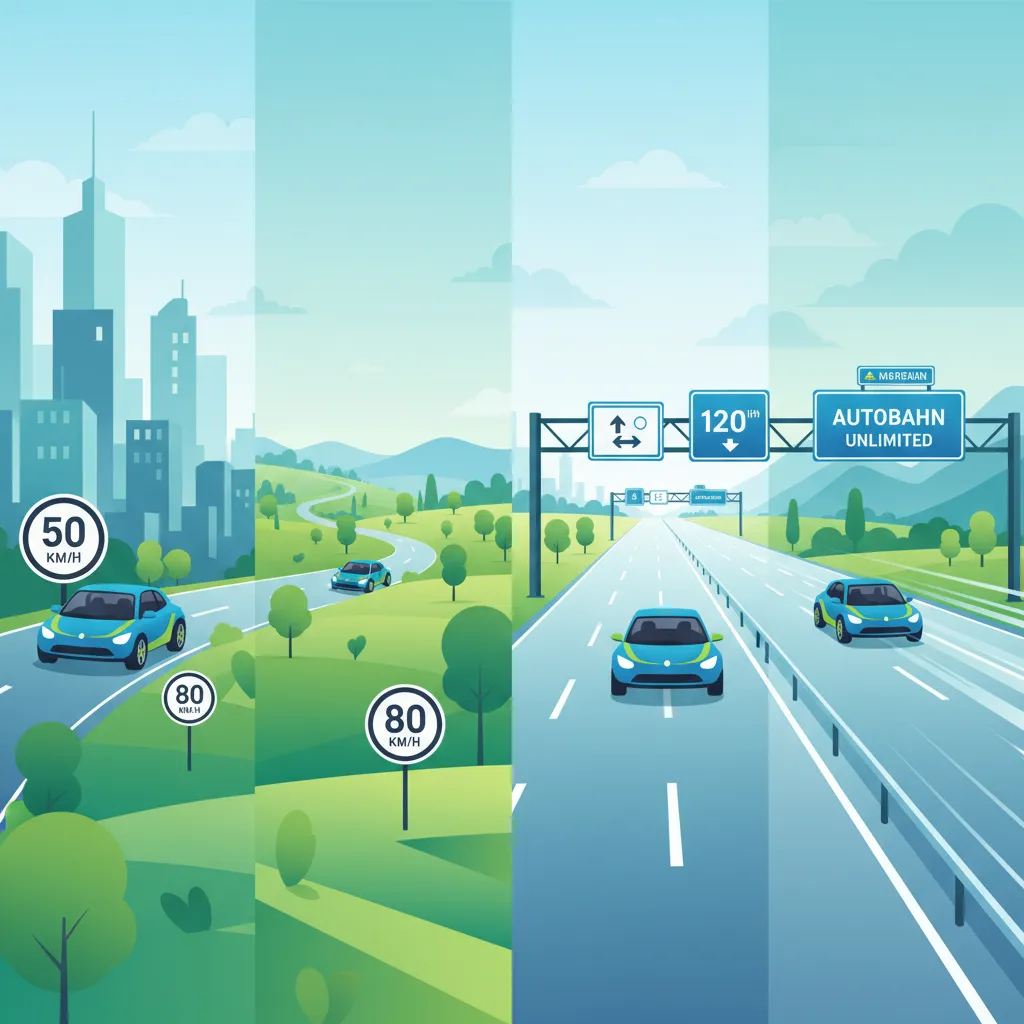
This lesson details the statutory speed limits for different road environments in Poland. It covers the 50 km/h limit in built-up areas (obszar zabudowany), as well as the higher limits for rural roads, expressways, and motorways. Understanding these default limits is fundamental for legal and safe driving across the country.
Explore typical hazards on Polish rural roads including sharp bends, poor surfaces, and limited visibility. Learn crucial theory for anticipating dangers, understanding Polish traffic law, and adjusting speed for safe navigation on country roads.
This lesson teaches the crucial concept that drivers must always adapt their speed to the current conditions. It explains how factors like rain, fog, ice, heavy traffic, and poor visibility reduce safety margins and require a lower speed than the posted limit. This principle of defensive driving is essential for preventing accidents in challenging situations.
This lesson introduces defensive driving principles for rural settings, teaching learners how to continually scan the environment and anticipate potential hazards. It discusses the unique challenges posed by slow-moving agricultural traffic, field entrances, and unpredictable farm equipment maneuvers. The lesson emphasizes proactive decision-making and early brake application to avoid collisions in mixed traffic.
In this lesson, learners explore riding on rural and countryside roads, where road markings may be sparse and surface conditions varied. The content covers safe overtaking in single-lane sections, interaction with agricultural vehicles and animals, and the handling of gravel or uneven surfaces. Learners will also study the importance of anticipating curves and adjusting speed to light conditions, equipping them with the skills needed for safe countryside travel.
This lesson provides essential guidance for driving in fog, one of the most dangerous conditions. It instructs on the correct use of low-beam headlights and fog lights to maximize visibility without causing glare. The core advice is to significantly reduce speed and use the edge of the road or markings as a guide.
This lesson prepares drivers for the event of a vehicle breakdown on a motorway or expressway. It details the correct procedure: pulling over to the emergency lane, activating hazard lights, and placing the warning triangle at the legally required distance. The importance of wearing a reflective vest when outside the vehicle is also a key safety point.
This lesson focuses on the specific challenges of driving in rainy conditions. It explains the phenomenon of hydroplaning, where tires lose contact with the road surface, and how to prevent it by reducing speed. The importance of good tire condition, effective windscreen wipers, and extending following distances is also covered in detail.
This lesson addresses encounters with slow-moving vehicles, such as tractors, which are common on rural roads. It teaches drivers to be patient, maintain a safe following distance, and only overtake when it is absolutely safe and legal to do so. Recognizing the large size and limited maneuverability of such vehicles is crucial for avoiding accidents.
This lesson focuses on the specific hazards introduced by seasonal weather, such as mud, snow, ice, fog, and heavy rain. It explains how these conditions affect traction, braking, and driver visibility, and provides guidance on adjusting speed and using appropriate tires. The lesson also covers the proper use of lights and reflectors to improve visibility in low-light conditions.
This lesson defines what constitutes a 'built-up area' in Poland, marked by specific informational signs. It explains the default speed limit of 50 km/h that applies within these zones unless otherwise indicated. The content highlights the need for increased vigilance due to higher traffic density and the frequent presence of pedestrians.
This lesson provides practical methods for maintaining a safe buffer zone behind the vehicle in front. It explains the 'two-second rule' as a minimum following distance in good conditions and how to increase it to three or more seconds in adverse weather. This skill is critical for allowing enough time to react and brake safely to avoid rear-end collisions.
Find clear answers to common questions learners have about Characteristics of Rural Roads and Visibility Issues. Learn how the lesson is structured, which driving theory objectives it supports, and how it fits into the overall learning path of units and curriculum progression in Poland. These explanations help you understand key concepts, lesson flow, and exam focused study goals.
Main dangers include poor visibility around bends and over hills, narrow or winding roads, uneven road surfaces, limited street lighting, potential for agricultural vehicles or animals on the road, and infrequent signage. Anticipating these issues is key for safe driving.
Reduced visibility due to curves, hills, vegetation, or poor lighting means you have less time to react to hazards. It's essential to reduce your speed and increase your observation, especially when approaching blind spots or crests.
The general speed limit on rural roads outside built-up areas in Poland is 90 km/h. However, this should be adjusted based on visibility, road conditions, and the presence of hazards. Always drive at a speed that allows you to stop safely within the distance you can see clearly.
While there aren't specific signs for all farm vehicles, they are considered slow-moving traffic. You must ensure it's safe to overtake, check for oncoming traffic, and be aware that they may suddenly slow down or turn. Always maintain a safe distance and overtake only when clear.
Rural roads often have poorer surfaces, fewer signs, and greater potential for hidden hazards like animals or cyclists. The theory test will assess your ability to anticipate these specific risks and adjust your speed and behaviour accordingly, which differs from the stop-start nature of urban driving.
Build custom practice sessions tailored precisely to your needs. Focus on areas requiring improvement, review specific Polish road signs, or master complex traffic rules to ensure full preparation for your official driving license exam.