
This lesson, part of your Polish Category A motorcycle theory preparation, guides you through navigating complex intersections and junctions found in urban, rural, and highway settings. You'll master priority rules, blind-spot management, and safe lane selection for multi-lane setups, traffic lights, and roundabouts. Understanding these complex scenarios is crucial for your exam success and ensuring safe, confident riding on Polish roads.
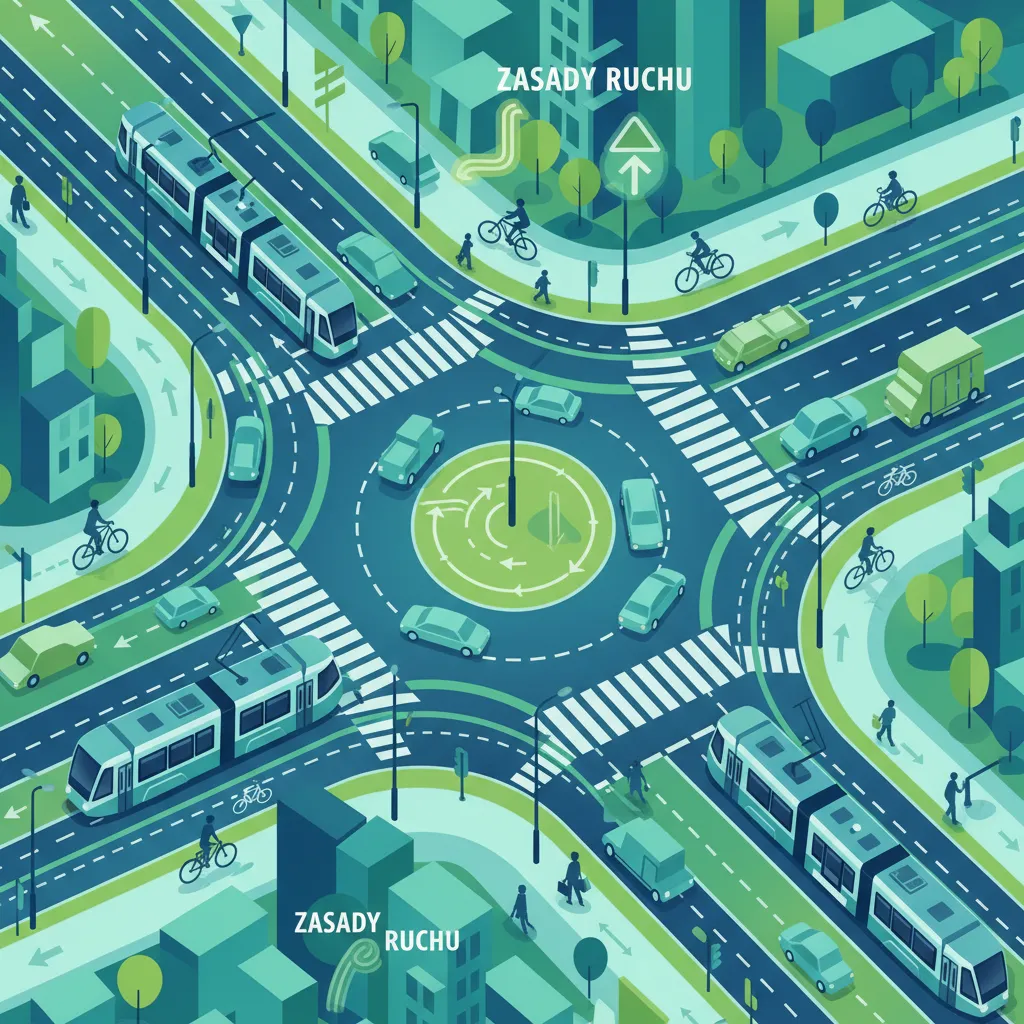
Lesson content overview
Intersections and junctions are fundamental elements of any road network, serving as critical points where traffic streams converge, diverge, or cross. For motorcyclists, mastering their navigation is not merely a matter of convenience but a paramount safety imperative. These areas are statistically where the majority of road collisions occur, demanding heightened awareness, precise control, and a thorough understanding of Polish traffic law. This lesson provides a comprehensive guide to identifying, approaching, and safely navigating complex junctions encountered across urban, rural, and highway environments.
Intersections are inherent conflict points on the road. Whether simple crossroads or intricate highway interchanges, they require drivers to make rapid decisions and execute precise maneuvers. For motorcyclists, whose smaller profile can make them less visible, understanding the underlying dynamics of these areas is crucial for safe riding.
Proficiency in navigating intersections is a cornerstone of safe riding in Poland. Collisions at or near junctions represent a significant percentage of all road accidents. By properly understanding priority rules (zasady pierwszeństwa), selecting the correct lanes (wybór pasa ruchu), and anticipating the actions of other road users, especially vulnerable ones like pedestrians and cyclists, motorcyclists can significantly mitigate risks.
This advanced lesson builds upon several foundational competencies essential for safe riding. Prior to delving into complex junctions, learners should have a solid grasp of Polish road signs, markings, and surface indicators, as detailed in our Polish Motorcycle Theory – Comprehensive Licence Preparation for Category A course, specifically from Lesson 3. A firm understanding of basic priority rules and general intersection navigation, covered in Lesson 4, is also a prerequisite. Furthermore, familiarity with fundamental motorcycle handling, braking, and acceleration, as discussed in Lesson 2, forms the practical basis for executing maneuvers safely within these complex environments.
Navigating complex junctions effectively hinges on adhering to several core principles that govern traffic flow and safety. These principles work in conjunction to create a predictable and orderly environment, reducing the likelihood of conflict and collision.
The legal order determining which traffic stream has precedence is known as the right-of-way hierarchy. This system prevents conflicts by establishing clear priority, ensuring that drivers know when to yield and when they can proceed. Motorcyclists must always yield when required, irrespective of any perceived speed advantage or the size of their vehicle. Understanding the right-of-way, particularly at uncontrolled intersections or when interacting with specific signs, is non-negotiable.
Lane discipline involves allocating specific movements, such as turning left, turning right, or proceeding straight, to designated lanes. This practice significantly reduces the need for lane changes within the junction itself, thereby minimizing potential collision points. For motorcyclists, selecting the correct lane well in advance of the intersection is mandatory. Failure to do so can lead to dangerous last-minute maneuvers or being trapped in a lane not suitable for their intended direction.
Blind spots are areas around a vehicle that are not visible to the rider through mirrors or peripheral vision, due to the vehicle's geometry or the presence of other traffic. Motorcycles, being smaller, are particularly susceptible to being obscured in other vehicles' blind spots. Effective blind-spot management is critical for safe merging, turning, and lane changes. Riders must habitually perform visual and shoulder checks (tzw. "kontrola ramienia") before any maneuver to ensure the path is clear.
Reducing speed sufficiently before reaching an intersection allows ample time for perception, reaction, and safe execution of maneuvers. This adjustment ensures shorter stopping distances and better control, especially for low-speed turns or unexpected obstacles. Motorcyclists must continuously assess factors such as current speed, road conditions, and visibility to calculate an appropriate approach speed that permits a complete stop within the visible distance, plus a safety margin.
Polish law mandates that drivers give precedence to vulnerable road users, including pedestrians, cyclists, and certain public transport vehicles, at specific points. This legal requirement is designed to protect those with less physical protection in the event of a collision. Motorcyclists must anticipate the presence of vulnerable users and be prepared to yield, even if they technically have the right-of-way, to ensure their safety.
Strict adherence to traffic lights, road signs, and road markings (such as dedicated green arrow lanes) is essential for coordinated traffic flow. Traffic signals are designed to regulate conflicting movements, providing clear timing for each traffic stream. Failure to obey these signals carries immediate legal penalties and dramatically increases the risk of severe collisions.
This principle involves synchronizing turning maneuvers with yielding traffic based on signal phases or the availability of safe gaps. Proper turn timing avoids blocking traffic and prevents collisions. Motorcyclists must accurately gauge the speed and distance of oncoming or crossing traffic and use their turn signals well in advance to communicate their intentions clearly to other road users.
Recognizing the type of junction ahead is the first step towards safe navigation. Each type presents unique challenges and requires specific approaches, lane usage, and adherence to particular priority rules under Polish law.
Crossroads, also known as four-way intersections, are points where two or more roads intersect. They can be uncontrolled, controlled by traffic signs, or regulated by traffic lights. At uncontrolled crossroads in Poland, the rule of "right-hand priority" (zasada prawej ręki) typically applies, meaning vehicles must yield to traffic approaching from their right. However, many are controlled by signs or signals that override this basic rule.
At a T-junction, one road ends at a perpendicular road. Traffic on the road that terminates must generally yield to traffic on the through road. This is often indicated by a Give Way sign or a Stop sign.
Y-junctions occur when a road splits into two diverging directions. These require careful lane selection well before the split, as riders must commit to one path. Signage typically indicates destinations for each diverging arm.
Roundabouts are circular intersections where traffic flows clockwise around a central island (in Poland). The defining characteristic is that vehicles entering the roundabout must yield to traffic already circulating within it, unless specific signs indicate otherwise. This design helps maintain a continuous flow of traffic but requires careful entry and exit strategies.
These are intersections with multiple lanes per direction, often featuring dedicated lanes for specific movements (e.g., left-turn lane, straight-only lane). Navigating these requires excellent lane discipline, early signaling, and awareness of complex road markings.
Interchanges are grade-separated junctions, typically found on motorways and expressways, involving overpasses, underpasses, slip roads, and ramps. They are designed to facilitate high-speed merging and exiting without conflicting traffic streams directly crossing each other. Understanding the flow of these complex structures is crucial for high-speed riding.
Riders must develop the ability to recognise the type of junction well in advance. This allows them to anticipate the expected lane usage, signal requirements, and the applicable priority rules. Misinterpreting a junction type can lead to incorrect maneuvers and dangerous situations.
Traffic lights are designed to manage conflicting traffic flows at intersections, providing clear, timed instructions for road users. Understanding their nuances is critical for safe passage.
Standard traffic lights feature red, amber (yellow), and green signals. More complex intersections may include protected left-turn arrows (zielona strzałka do skrętu w lewo), pedestrian green signals, or flashing amber lights at pedestrian crossings or in certain traffic calming situations.
The primary purpose of traffic light coordination is to regulate conflicting movements of vehicles and pedestrians, ensuring that only non-conflicting traffic streams are permitted to proceed simultaneously. This systematic timing prevents collisions and maintains an orderly flow.
Motorcyclists must comply with the signal displayed for their specific lane.
Typical errors include rolling through an amber light, making a turn on a red light without a protected green arrow, or assuming a green light means the intersection is clear without checking for conflicting traffic or pedestrians. Always be prepared for unexpected situations, even with a green light.
When approaching a green light, always cover your brakes and be prepared to stop. Traffic lights can change quickly, or other road users might violate the signal.
Roundabouts (ronda) are common in Poland and offer a unique challenge and opportunity for traffic flow. Safe navigation requires specific knowledge and skills.
A typical roundabout consists of:
According to Article 7 of the Polish Road Traffic Act, vehicles entering a roundabout must yield to traffic already circulating within it, unless specific road signs indicate otherwise (e.g., if a roundabout is controlled by traffic lights or a priority road sign that gives entry priority to specific arms, which is rare). This rule is paramount for preventing collisions. Additionally, motorcyclists must give way to pedestrians at crosswalks adjacent to roundabout exits.
A frequent error is entering a roundabout without yielding to circulating traffic, leading to side-impact collisions. Another mistake is taking the wrong lane for the desired exit, which can cause confusion and dangerous lane changes within the roundabout.
Multi-lane intersections demand heightened spatial awareness and strict lane discipline from motorcyclists. These junctions often feature dedicated lanes for specific turning movements, designed to streamline traffic flow and reduce conflict points.
Switching lanes after activating the turn signal, entering a turning lane too late, or failing to signal intentions altogether are common errors that lead to confusion and increase the risk of side-swipe or rear-end collisions.
Blind spots are invisible zones around vehicles that pose a significant risk, particularly for motorcyclists. Effective assessment and management of these areas are crucial for safe riding.
Blind spots are areas around any vehicle that cannot be seen directly in mirrors or through peripheral vision. They are created by the vehicle's structure, the arrangement of traffic, or environmental factors. Due to their smaller size, motorcycles are frequently hidden in the blind spots of larger vehicles.
Never initiate a lane change or merge without confirming an adequate and safe gap in traffic. This involves checking mirrors, signaling, and performing a decisive shoulder check. Maintain at least a 2-second following distance to allow enough time for safe integration into a traffic stream.
Never assume other drivers have seen you, especially when you are in their blind spot. Always ride defensively.
Vulnerable road users (VRUs) are defined as road users with reduced or no physical protection in the event of a collision. This category primarily includes pedestrians, cyclists, and sometimes horse riders or those on personal mobility devices. Motorcyclists have a significant responsibility to protect VRUs due to their own relatively limited protection compared to a car.
Article 29 of the Polish Road Traffic Act explicitly states the driver's obligation to give way to pedestrians at marked crossings. Similarly, cyclists have specific rights and protections; for instance, the 1.5 m overtaking distance is mandatory. Motorcyclists must anticipate and yield to vulnerable users, even if they technically have the right-of-way, recognizing their lower level of protection.
Proper approach speed adjustment is a fundamental skill that underpins safe navigation through any intersection. It's not just about slowing down, but about choosing a speed that grants the rider maximum control and reaction time.
This refers to the deliberate reduction of speed sufficiently before reaching an intersection. The goal is to enable a safe stop if necessary, or to smoothly execute a turn or other maneuver without requiring sudden, aggressive inputs.
The optimal approach speed is highly variable and depends on numerous factors:
Always adopt a speed that allows you to bring your motorcycle to a complete stop within the visible distance ahead. This means if you can only see 50 meters due to a bend or crest, you must be able to stop within those 50 meters. A good safety margin often involves being able to stop in half the visible distance, effectively doubling your theoretical braking distance to account for unexpected hazards and perception-reaction time.
The average perception-reaction time for a driver is approximately 1.5 seconds. At 50 km/h, this means you travel about 21 meters before you even start braking. Adjusting speed adequately is crucial.
Highways (autostrady) and expressways (drogi ekspresowe) operate at significantly higher speeds than urban or rural roads. Their intersections, known as interchanges, are designed to manage these high speeds through specialized merging and exiting lanes.
Traffic signs and road markings are the silent language of the road, providing vital information about priority, permissible movements, and potential hazards at junctions. Correct interpretation is non-negotiable for safe navigation.
Stop (B-20), Give Way (A-7), No Entry (B-2), or No Right Turn (B-21).Intersection with Priority from the Right (A-5) or Dangerous Bend (A-1, A-2).Road markings complement signs and traffic lights, often clarifying lane usage and priority.
Stop sign or red light.Give Way sign.Always recognize the legal effect of a sign or marking. A Stop sign demands a full halt, while a Give Way sign requires yielding, not necessarily stopping. Combine information from multiple sources: a sign might give general instructions, while road markings define specific lane actions.
Adhering to Polish traffic law is not just about avoiding fines; it's about ensuring the safety and predictability of the entire road system. Here are key regulations pertaining to intersections.
| Rule | Statement | Applicability | Legal Status | Rationale | Example (Correct) | Example (Incorrect) |
|---|---|---|---|---|---|---|
| Stop at a Stop Sign | The driver must bring the vehicle to a complete stop at the stop line or before the pedestrian crossing. | All intersections equipped with a B-20 stop sign. | Mandatory (Polish Road Traffic Act, Art. 53). | Guarantees visibility and safe entry for all traffic streams. | Stopping, looking both ways, proceeding when safe. | Rolling through without stopping. |
| Give Way (Yield) at Uncontrolled Intersections | The driver must yield to traffic approaching from the right (zasada prawej ręki). | Intersections without traffic lights or signs (unless a major road is clearly defined). | Mandatory (Polish Road Traffic Act, Art. 9). | Prevents collisions by establishing clear right-of-way. | Slowing down, allowing a vehicle from the right to pass. | Continuing without checking traffic from the right. |
| Roundabout Yield | Vehicles entering a roundabout must yield to traffic already circulating. | All roundabouts, unless signs indicate otherwise. | Mandatory (Polish Road Traffic Act, Art. 7). | Maintains ordered flow and prevents collisions. | Waiting for a safe gap before entering. | Entering when traffic is already in the roundabout. |
| Traffic Light Compliance | Obey red, amber, and green signals; green arrow permits exclusive turn. | All signalized junctions. | Mandatory. | Coordinates movements and reduces conflict points. | Stopping at red, proceeding at green after confirming clear crossing. | Running a red light or turning on red without a green arrow. |
| Pedestrian Right-of-Way | Drivers must yield to pedestrians crossing at marked or unmarked crossings. | Anywhere pedestrians may cross the carriageway. | Mandatory (Polish Road Traffic Act, Art. 29). | Protects vulnerable road users. | Stopping when a pedestrian steps onto crosswalk. | Continuing while a pedestrian is crossing. |
| Cyclist Overtaking Distance | Minimum passing distance of 1.5 m when overtaking cyclists. | When overtaking any cyclist on a road. | Mandatory. | Prevents collision caused by blind-spot of cyclist. | Adjusting speed to maintain required distance. | Passing within 0.5 m of a cyclist. |
| Lane Usage for Turns | Use designated turning lanes; do not change lanes after the turn signal is activated. | Intersections with marked turning lanes. | Mandatory. | Reduces last-minute lane changes that cause accidents. | Entering the turning lane well before the intersection. | Swerving into the turning lane after signalling. |
| Speed Reduction on Approach | Reduce speed to a level that allows stopping within the visible distance. | All intersections, especially those with limited visibility. | Mandatory. | Ensures sufficient reaction time. | Approaching a yellow-light intersection at reduced speed. | Approaching a red-light junction at full speed. |
Understanding common mistakes and high-risk scenarios at junctions is as important as knowing the rules. Identifying these situations can help motorcyclists prevent accidents.
Riding conditions are rarely ideal. Motorcyclists must constantly adapt their approach to junctions based on environmental factors and the state of their vehicle.
Understanding the direct consequences of actions and inactions at junctions reinforces the importance of safe riding practices.
Correct Application of Priority:
Violation of Yield Rules:
Give Way sign or roundabout.Adequate Speed Reduction on Approach:
Insufficient Speed Adjustment:
Blind-Spot Neglect:
Mastering complex junction navigation relies heavily on knowledge acquired in previous lessons and forms a critical foundation for advanced riding skills.
Applying theoretical knowledge to practical scenarios solidifies understanding and prepares riders for real-world situations.
Stop sign (B-20) requires a full and complete stop before the stop line, followed by yielding to all traffic on the intersecting road.Give Way sign (A-7) and must yield to traffic on the main road.Understanding the "why" behind safety rules enhances a rider's ability to make informed decisions and adopt a defensive mindset at junctions.
This checklist summarizes the essential knowledge and actions required for a motorcyclist to navigate complex intersections safely and in full compliance with Polish traffic law.
Identify Junction Type: Recognize if it's a crossroad, T-junction, Y-junction, roundabout, or highway interchange.
Interpret Signals & Markings: Read all relevant traffic signs, road markings (lane arrows, stop/give way lines), and traffic light signals well in advance.
Determine Right-of-Way: Establish who has priority based on signs, signals, and Polish legal rules (e.g., Stop, Give Way, roundabout yielding, right-hand rule).
Select Correct Lane: Choose the appropriate lane for your intended direction (straight, left, right, U-turn) well before the junction, respecting all lane markings.
Adjust Approach Speed: Reduce your speed sufficiently to allow for a full, controlled stop within the visible distance, considering weather, road surface, and traffic.
Conduct Blind-Spot Checks: Perform mirror checks and crucial shoulder checks before any lane change, turn, or merge maneuver.
Signal Intentions Clearly: Activate your turn signal at least 30 meters before the maneuver and keep it on until the maneuver is completed.
Yield to Vulnerable Users: Always give way to pedestrians at crosswalks and be prepared to yield to cyclists and other vulnerable road users where legally required.
Enter Roundabouts Safely: Enter only when a safe and adequate gap exists in circulating traffic; maintain the correct lane for your intended exit.
Merge onto Highways Decisively: Use acceleration lanes to match highway speed before merging, finding a safe gap, and merging smoothly.
Maintain Overtaking Distance: When passing cyclists or other vulnerable users, ensure a minimum lateral distance of 1.5 meters.
Apply Conditional Variations: Increase safety margins (e.g., follow distance, braking distance) when riding in adverse weather, low light, with a heavy load, or on unfamiliar roads.
Observe Post-Junction Behavior: Ensure the roadway is clear and stable before accelerating away from the junction.
This comprehensive checklist forms the complete knowledge base required for safe and compliant navigation of complex intersections under Polish traffic law.
This lesson covers the essential knowledge for navigating complex junctions on Polish roads as a motorcyclist, focusing on priority rules, lane discipline, and blind-spot management. Key regulations include yielding at roundabouts (Article 7), right-hand priority at uncontrolled intersections (Article 9), and pedestrian right-of-way at crossings (Article 29). Motorcyclists must select correct lanes before intersections, activate turn signals at least 30 meters ahead, and maintain the mandatory 1.5-meter distance when passing cyclists. Approach speed should always allow stopping within visible distance, accounting for 1.5-second perception-reaction time. The lesson includes practical scenarios, a regulatory table with legal citations, and a comprehensive navigation checklist.
A short set of high-value points that capture the most important learning from this lesson.
At uncontrolled intersections in Poland, the right-hand rule (zasada prajej ręki) applies—yield to traffic approaching from your right unless signs or signals override it.
Vehicles entering a roundabout must yield to circulating traffic (Article 7 of the Polish Road Traffic Act), and motorcyclists must maintain lane position for their intended exit.
Turn signals must be activated at least 30 meters before any turn or lane change to give other road users sufficient time to anticipate your maneuver.
When overtaking cyclists, maintain a minimum lateral distance of 1.5 meters—this is a mandatory legal requirement under Polish law.
Reduce approach speed to ensure you can stop within the visible distance ahead, accounting for perception-reaction time (approximately 1.5 seconds).
Explore all units and lessons included in this driving theory course.
Pedestrians have priority at marked and unmarked crossings even when you have a green light—you must stop if a pedestrian is crossing or about to cross.
Protected left-turn arrows (zielona strzałka) grant exclusive right-of-way, overriding other signal phases and allowing turns without yielding to oncoming traffic.
Lane changes are prohibited after activating your turn signal for a specific movement in multi-lane intersections—select your lane well in advance.
A shoulder check (kontrola ramienia) is essential before any lane change or merge because mirrors alone cannot cover blind spots.
At a Stop sign, you must bring the motorcycle to a complete stop behind the stop line or before the pedestrian crossing—not a rolling stop.
Rolling through a Stop sign instead of coming to a complete halt, assuming cross-traffic will yield as expected.
Entering a roundabout without yielding to circulating traffic, leading to side-impact collisions with vehicles that have priority.
Filtering ahead of heavy vehicles (trucks, buses) at intersections and positioning in their blind spots just before the light changes.
Changing lanes after activating the turn signal in multi-lane intersections, confusing other drivers about intended path.
Failing to perform a shoulder check before merging or changing lanes, missing vehicles hidden in blind spots.
Lesson content overview
A short set of high-value points that capture the most important learning from this lesson.
At uncontrolled intersections in Poland, the right-hand rule (zasada prajej ręki) applies—yield to traffic approaching from your right unless signs or signals override it.
Vehicles entering a roundabout must yield to circulating traffic (Article 7 of the Polish Road Traffic Act), and motorcyclists must maintain lane position for their intended exit.
Turn signals must be activated at least 30 meters before any turn or lane change to give other road users sufficient time to anticipate your maneuver.
When overtaking cyclists, maintain a minimum lateral distance of 1.5 meters—this is a mandatory legal requirement under Polish law.
Reduce approach speed to ensure you can stop within the visible distance ahead, accounting for perception-reaction time (approximately 1.5 seconds).
Explore all units and lessons included in this driving theory course.
Pedestrians have priority at marked and unmarked crossings even when you have a green light—you must stop if a pedestrian is crossing or about to cross.
Protected left-turn arrows (zielona strzałka) grant exclusive right-of-way, overriding other signal phases and allowing turns without yielding to oncoming traffic.
Lane changes are prohibited after activating your turn signal for a specific movement in multi-lane intersections—select your lane well in advance.
A shoulder check (kontrola ramienia) is essential before any lane change or merge because mirrors alone cannot cover blind spots.
At a Stop sign, you must bring the motorcycle to a complete stop behind the stop line or before the pedestrian crossing—not a rolling stop.
Rolling through a Stop sign instead of coming to a complete halt, assuming cross-traffic will yield as expected.
Entering a roundabout without yielding to circulating traffic, leading to side-impact collisions with vehicles that have priority.
Filtering ahead of heavy vehicles (trucks, buses) at intersections and positioning in their blind spots just before the light changes.
Changing lanes after activating the turn signal in multi-lane intersections, confusing other drivers about intended path.
Failing to perform a shoulder check before merging or changing lanes, missing vehicles hidden in blind spots.
Explore search topics learners often look for when studying Intersections and Complex Junctions in Various Settings. These topics reflect common questions about road rules, driving situations, safety guidance, and lesson level theory preparation for learners in Poland.
Browse additional driving theory lessons that cover connected traffic rules, road signs, and common driving situations related to this topic. Improve your understanding of how different rules interact across everyday traffic scenarios.
Learn advanced strategies for handling multi-lane intersections, complex traffic light systems, and roundabouts in Poland. This lesson focuses on safe lane positioning and priority rule application at challenging junctions, essential for Category A riders.
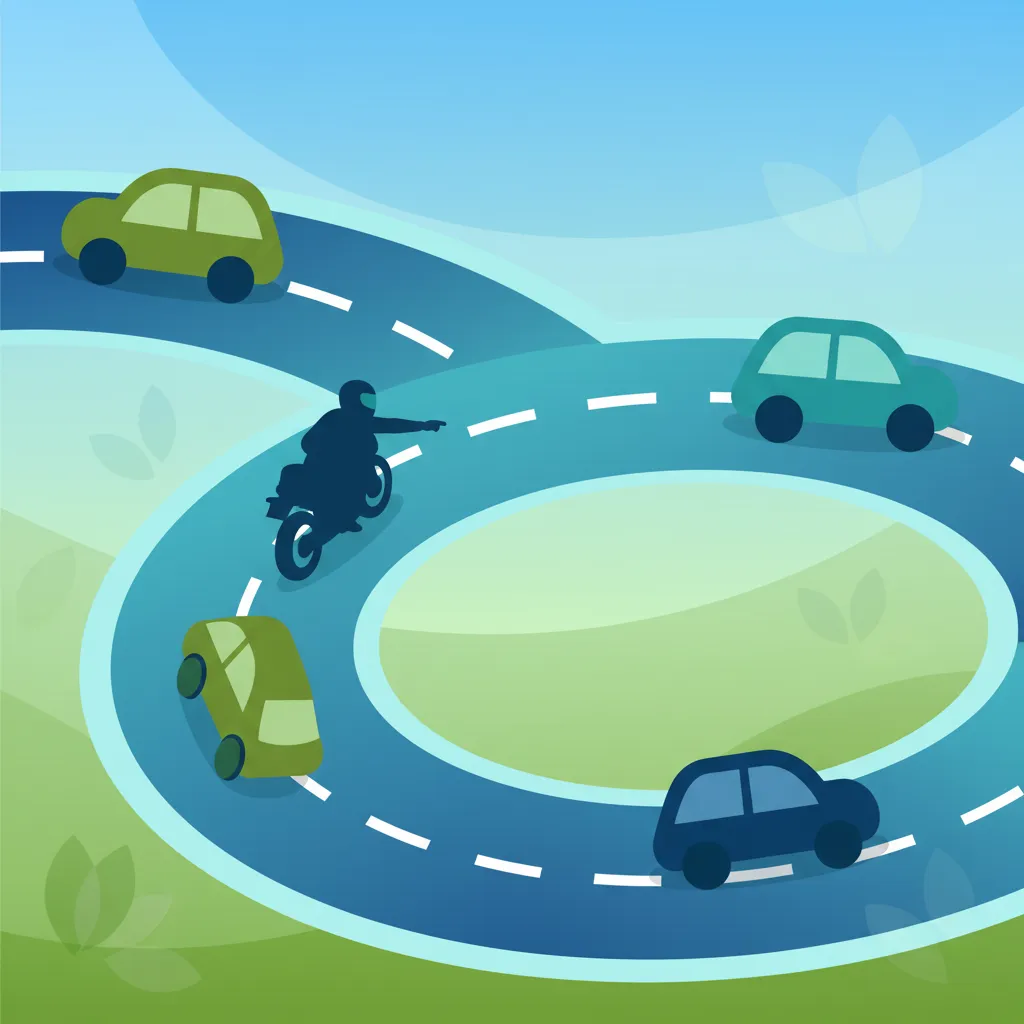
This lesson focuses on the proper techniques for negotiating roundabouts, which are common in Polish urban environments. Learners will learn the correct approach to entering a roundabout, yielding to circulating traffic, selecting the appropriate lane, and signaling intentions when exiting. The lesson also discusses speed adaptation for safe circulation and blind-spot checks before changing lanes within the roundabout, ensuring smooth and legal navigation.

This lesson provides strategies for safely navigating the numerous intersections typical of urban environments. It reinforces the application of priority rules in situations with limited visibility and high traffic volume. Techniques for making turns in narrow streets and being aware of pedestrians and cyclists at junctions are central to the instruction.
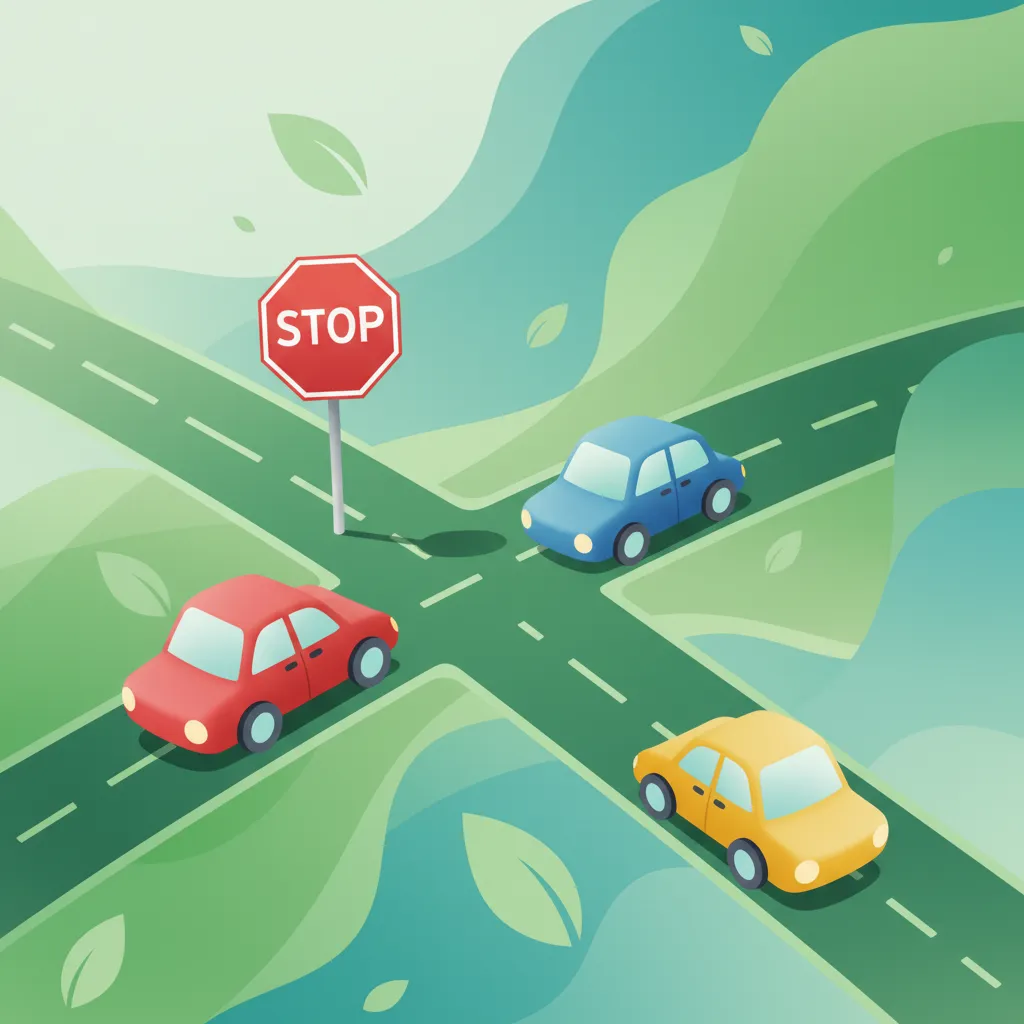
In this lesson, learners examine the specific actions required at stop signs and give-way intersections under Polish traffic regulations. The content explains the legal requirement for a full stop before the stop line, incorporating a visual scan of all directions before proceeding. It also covers the give-way protocol, where riders must yield to traffic already in the intersection or on the main road, emphasizing the need for correct positioning and observation.
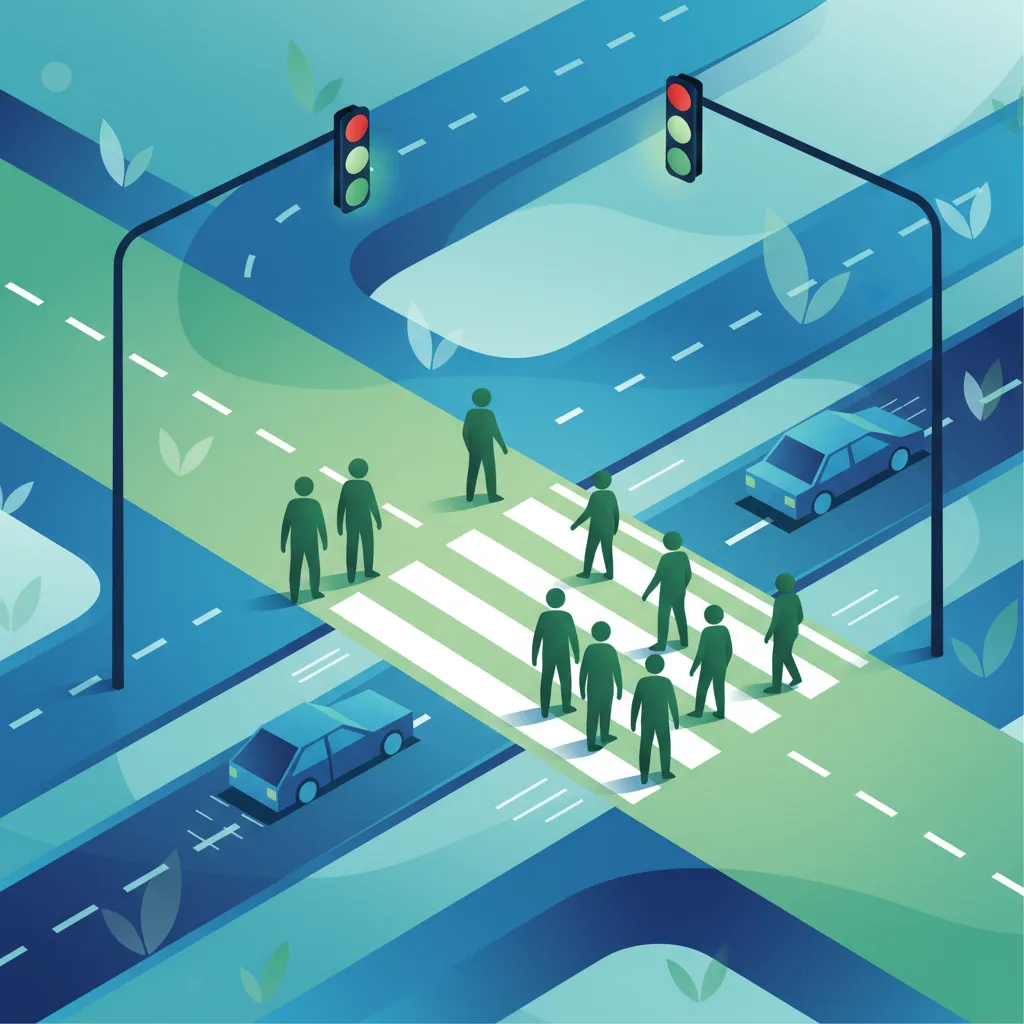
This lesson addresses advanced scenarios, including multi-lane intersections and interactions with vulnerable road users. It reinforces the legal obligation to give absolute priority to pedestrians at marked crossings (zebra crossings). The content also covers navigating around traffic islands and using dedicated turning lanes in complex urban environments.

This lesson focuses on the unique demands of urban riding within Polish cities, addressing traffic lights, pedestrian zones, one-way streets, and the presence of tram tracks. Learners will study safe lane positioning on narrow roads, blind-spot management, and how to share the road with buses and cyclists. The content also covers strategies for navigating stop-and-go traffic, anticipating signal changes, and maintaining visibility in dense urban environments.

This lesson outlines strategies for planning escape routes and adopting protective positioning to avoid potential collisions. Learners will study the concept of a defensive riding line that maximizes visibility and provides an optimal safety corridor. The content emphasizes maintaining adequate distance buffers, choosing lanes that reduce exposure to hazards, and preparing for emergency maneuvers such as swift swerves, allowing riders to react quickly in critical situations.

This lesson examines the responsibilities of motorcyclists when approaching pedestrian crossings and interacting with cyclists, emphasizing the marked right-of-way for pedestrians at zebra crossings. Learners will study how to determine safe passing distances, adjust speed, and use visual cues such as eye contact to ensure pedestrians have cleared the crossing. The content also covers interactions with cyclists sharing the road, highlighting the need for anticipation and adequate passing gaps.

In this lesson, learners focus on the identification and management of blind spots that affect motorcyclists, particularly when sharing the road with larger vehicles such as trucks and buses. The content covers the use of side mirrors, head-turn techniques, and optimal rider positioning to minimize blind-spot exposure. Learners will also study the characteristics of blind spots at intersections and during overtaking maneuvers to reduce collision risk.
This lesson introduces the fundamental principles of right-of-way on Polish roads, explaining how priority road signs determine the flow of traffic at intersections. Learners will explore the hierarchy of vehicle classes and the specific obligations that arise when approaching a yield line or a give-way sign. The content details the legal precedence of main road traffic over secondary road traffic, helping riders safely navigate intersections and avoid right-of-way infractions.
This lesson examines the variety of pavement markings that define lane structures, traffic flow, and special zones on Polish roads. Learners will study solid and broken lines, lane division markings, and the distinct symbols for bicycle lanes, bus lanes, and tram tracks, all of which affect motorcyclist positioning. The lesson also addresses surface texture indicators that signal changing road conditions, enabling riders to maintain correct lane discipline.
Develop critical hazard perception skills for complex junctions. Understand common risks like blind spots, cyclist/pedestrian interactions, and unexpected maneuvers, applying defensive riding techniques specific to urban, rural, and highway environments in Poland.
This lesson outlines strategies for planning escape routes and adopting protective positioning to avoid potential collisions. Learners will study the concept of a defensive riding line that maximizes visibility and provides an optimal safety corridor. The content emphasizes maintaining adequate distance buffers, choosing lanes that reduce exposure to hazards, and preparing for emergency maneuvers such as swift swerves, allowing riders to react quickly in critical situations.
In this lesson, learners study warning signs that alert drivers to potential hazards, focusing on those that are particularly relevant to motorcyclists. The content includes signs indicating curves, slippery surfaces, animal crossings, tram tracks, and construction zones, each requiring specific riding adjustments. The lesson teaches riders how to interpret these signs to anticipate hazards, adjust speed appropriately, and maintain a safe distance from potential dangers.
This lesson examines the responsibilities of motorcyclists when approaching pedestrian crossings and interacting with cyclists, emphasizing the marked right-of-way for pedestrians at zebra crossings. Learners will study how to determine safe passing distances, adjust speed, and use visual cues such as eye contact to ensure pedestrians have cleared the crossing. The content also covers interactions with cyclists sharing the road, highlighting the need for anticipation and adequate passing gaps.
This lesson focuses on the unique demands of urban riding within Polish cities, addressing traffic lights, pedestrian zones, one-way streets, and the presence of tram tracks. Learners will study safe lane positioning on narrow roads, blind-spot management, and how to share the road with buses and cyclists. The content also covers strategies for navigating stop-and-go traffic, anticipating signal changes, and maintaining visibility in dense urban environments.

In this lesson, learners explore riding on rural and countryside roads, where road markings may be sparse and surface conditions varied. The content covers safe overtaking in single-lane sections, interaction with agricultural vehicles and animals, and the handling of gravel or uneven surfaces. Learners will also study the importance of anticipating curves and adjusting speed to light conditions, equipping them with the skills needed for safe countryside travel.
This lesson focuses on the proper techniques for negotiating roundabouts, which are common in Polish urban environments. Learners will learn the correct approach to entering a roundabout, yielding to circulating traffic, selecting the appropriate lane, and signaling intentions when exiting. The lesson also discusses speed adaptation for safe circulation and blind-spot checks before changing lanes within the roundabout, ensuring smooth and legal navigation.
In this lesson, learners focus on the identification and management of blind spots that affect motorcyclists, particularly when sharing the road with larger vehicles such as trucks and buses. The content covers the use of side mirrors, head-turn techniques, and optimal rider positioning to minimize blind-spot exposure. Learners will also study the characteristics of blind spots at intersections and during overtaking maneuvers to reduce collision risk.

In this lesson, learners examine defensive overtaking practices, focusing on when and how to safely pass other road users. The content covers speed differential calculations, appropriate passing distances, and the importance of maintaining clear visibility during overtaking. Learners will also study the impact of road curvature, traffic flow, and lane selection on overtaking safety, allowing them to minimize risks associated with passing maneuvers.
In this lesson, learners examine the specific actions required at stop signs and give-way intersections under Polish traffic regulations. The content explains the legal requirement for a full stop before the stop line, incorporating a visual scan of all directions before proceeding. It also covers the give-way protocol, where riders must yield to traffic already in the intersection or on the main road, emphasizing the need for correct positioning and observation.
This lesson teaches systematic visual scanning techniques that enhance situational awareness while riding a motorcycle. Learners will explore forward and peripheral vision strategies, the importance of regular rear-view checks, and methods for anticipating hazards through environmental cues. The content outlines scanning patterns that allow riders to monitor traffic flow, detect lane changes, and assess vehicle speeds, enabling them to identify potential dangers early.
Find clear answers to common questions learners have about Intersections and Complex Junctions in Various Settings. Learn how the lesson is structured, which driving theory objectives it supports, and how it fits into the overall learning path of units and curriculum progression in Poland. These explanations help you understand key concepts, lesson flow, and exam focused study goals.
At complex junctions with multiple lanes in Poland, motorcyclists must pay extra attention to lane markings and the intentions of other drivers. While the general priority rules apply, your smaller profile makes blind-spot awareness critical. Always ensure you are in the correct lane well in advance and signal clearly, anticipating potential lane changes from larger vehicles.
When approaching a multi-lane roundabout on a Category A motorcycle in Poland, decide your exit early and position yourself in the correct lane (usually the right lane for exits 1-2, left for 3+). Maintain a steady speed, use clear signals, and be acutely aware of vehicles alongside you, as your blind spots can be significant. When exiting, confirm your path is clear, especially from vehicles intending to cross your line.
Yes, interacting with trams and buses at urban junctions in Poland presents unique challenges for motorcyclists. Trams have absolute priority and restricted braking distances, so never cut in front of them. Buses, especially when pulling out from stops, require extra space. Always anticipate their movements and be prepared for sudden stops or starts, maintaining safe following distances.
Adjusting your approach speed is vital for safety at complex junctions, particularly when visibility is poor due to weather or obstacles. A reduced speed gives you more time to react to unexpected hazards, properly assess priority, and identify other road users like pedestrians or cyclists who might be obscured. It allows for smoother braking and reduces the risk of skidding, which is especially important for motorcyclists.
If you find yourself in the wrong lane at a multi-lane intersection in Poland, do not make sudden, last-minute maneuvers. It is safer to continue through the intersection in the incorrect lane and find a safe, legal place to turn around or re-route. Forcing a lane change or turn can create a dangerous situation for yourself and other road users, especially on a motorcycle.
Build custom practice sessions tailored precisely to your needs. Focus on areas requiring improvement, review specific Polish road signs, or master complex traffic rules to ensure full preparation for your official driving license exam.