
Welcome to the lesson on Motorway and Highway Riding Etiquette, part of the 'Polish Motorcycle Theory – Comprehensive Licence Preparation for Category A' curriculum. This lesson builds upon your understanding of general road rules and focuses specifically on the unique demands of riding on high-speed roads in Poland.
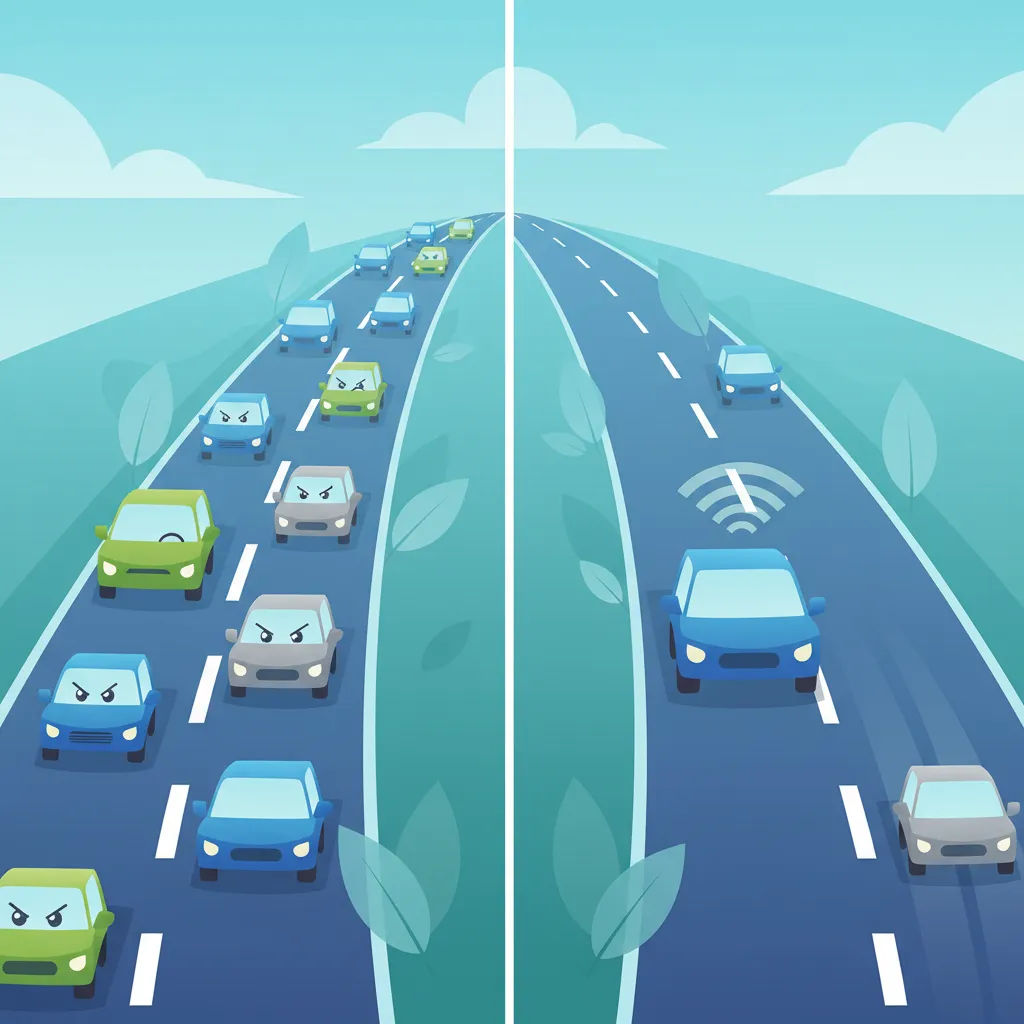
Lesson content overview
Riding a motorcycle on high-speed roads demands a specific set of skills, knowledge, and adherence to etiquette that goes beyond standard urban or rural riding. This lesson is designed to equip you with the essential understanding of how to navigate Polish motorways (autostrady) and high-speed highways (drogi ekspresowe) safely and efficiently. By mastering these protocols, you will reduce accident risks, improve traffic flow, and fully comply with the legal obligations for Category A licence holders under Polish law.
Understanding the unique dynamics of high-speed environments is crucial. These roads are engineered for predictability and speed, which means every rider's behavior directly impacts the safety and flow of traffic. This module builds upon your existing knowledge of Polish road signs, markings, speed management, and general priority rules, preparing you for the advanced challenges of motorway riding.
Polish motorways (autostrady) and high-speed highways (drogi ekspresowe) are the backbone of the national road network, designed for rapid transit over long distances. Motorways are typically designated by green road signs and offer controlled access, multiple lanes in each direction, and no at-grade intersections. High-speed highways, often indicated by blue signs, share many characteristics with motorways but may have slightly different design standards or limited access points. Both types of roads operate under specific legal frameworks tailored for higher speeds and demanding greater discipline from drivers, including motorcyclists.
The design of these roads aims to minimize conflict points and ensure a smooth, high-volume traffic flow. This is achieved through dedicated entry and exit lanes, strict lane discipline rules, and prohibitions on stopping except in emergencies. For motorcyclists, understanding these design principles is key to safe integration into the traffic stream.
Successful motorway riding hinges on a few core principles that ensure safety, efficiency, and legal compliance. These guidelines govern everything from your position on the road to how you interact with other vehicles at high speeds.
A fundamental rule on multi-lane carriageways is right-lane preference. This means that motorcycles, like all vehicles, must travel in the rightmost available lane, unless actively overtaking another vehicle or preparing to exit. This principle, enshrined in Article 45 § 1 of the Polish Road Traffic Act (Prawo o ruchu drogowym), is crucial for maintaining efficient traffic flow. By keeping to the right, you allow faster traffic to use the left lanes for overtaking, preventing blockages and reducing frustration among other drivers.
Lane discipline extends beyond just staying right; it also involves maintaining a consistent lane position and avoiding unnecessary or sudden lane changes. Predictable behavior from all road users is paramount in high-speed environments. Any abrupt maneuver can surprise other drivers, potentially leading to dangerous situations. Always signal well in advance of a lane change and thoroughly check your mirrors and blind spots to verify a safe gap before moving.
Motorways and high-speed highways feature dedicated lanes for entering and exiting to ensure smooth transitions without disrupting the main traffic flow.
The acceleration lane (often called rampa wjazdowa or merge lane) is a short, designated lane at the entrance of a motorway. Its purpose is to allow you to increase your speed to match that of the main carriageway traffic before merging. Article 74 § 1 of the Polish Road Traffic Act mandates the use of this lane for entry, emphasizing the importance of matching speed. Merging at a significantly lower speed creates a speed differential hazard, forcing main-lane traffic to brake suddenly, which is a common cause of accidents. Riders must use the full length of the acceleration lane to achieve the necessary speed and merge smoothly, looking for a safe gap in the traffic.
Conversely, the deceleration lane (or rampa zjazdowa, exit lane) is used when leaving the motorway. This lane allows vehicles to reduce speed safely before exiting, without affecting the speed of vehicles still on the main carriageway. According to Article 74 § 2, vehicles must use the deceleration lane to leave the carriageway. Riders should signal their intention to exit well in advance, move into the deceleration lane, and then gradually reduce speed as they proceed towards the off-ramp. Failing to use this lane and braking sharply on the main carriageway can create a serious rear-end collision risk.
At high speeds, the importance of maintaining a safe following distance cannot be overstated. This is the minimum longitudinal gap required behind the vehicle in front of you, providing adequate time to react and stop if necessary. The general guideline, applicable worldwide and implicitly supported by Article 80 § 1 of the Polish Road Traffic Act ("drivers must keep a safe distance that allows avoidance of a collision"), is the two-second rule. This means you should maintain a distance that allows you to count "one thousand one, one thousand two" from when the vehicle in front passes a fixed point to when you pass the same point.
At 120 km/h, a two-second gap translates to approximately 66 meters. This distance needs to be increased in adverse conditions such as rain, fog, snow, or low visibility, where braking distances are longer and reaction times may be slower. Always adjust your following distance to suit current speed, road conditions, and your vehicle's load.
Overtaking on a motorway requires a clear understanding of protocols to ensure safety and prevent disruption. According to Article 20 § 3 of the Polish Road Traffic Act, overtaking must generally be performed on the left. Before initiating an overtake, a motorcyclist must:
lifesaver) to confirm the lane is clear.Article 52 § 1 also prohibits overtaking where road markings or signs explicitly forbid it. Never overtake on the right unless specifically permitted by law (e.g., in heavy, slow-moving, multi-lane traffic where lanes are clearly defined and designated) or on deceleration lanes, which can create dangerous lane-drop scenarios. After completing an overtake, it's crucial to return to the right lane promptly, not remaining in the left lane and impeding faster traffic.
Aerodynamic positioning, often referred to as drafting, involves riding in the aerodynamic wake of a larger vehicle to reduce wind resistance. This can improve fuel efficiency and reduce rider fatigue on long journeys, especially at high speeds. While there's no explicit law governing drafting distance, it falls under the general safe distance requirement (Art. 80).
For motorcyclists, safely drafting means maintaining a sufficient gap—typically around 1 meter behind the vehicle ahead. Riding too close (e.g., less than 0.5 meters) can expose you to unpredictable turbulent airflow, which can destabilize your motorcycle and significantly increase the risk of a collision if the leading vehicle brakes suddenly. Always prioritize safety over potential fuel savings.
When considering aerodynamic positioning, observe the leading vehicle for any signs of braking or sudden maneuvers. Be ready to react instantly and increase your following distance if conditions change or if you experience any instability.
The emergency lane (also known as the hard shoulder) is a crucial safety feature on motorways, strictly reserved for emergencies. Article 64 § 1 of the Polish Road Traffic Act clearly states that it may only be used when stopping due to a breakdown, police direction, or an accident. It is never to be used for regular travel, cruising to avoid traffic, or for a brief stop without a genuine emergency.
If you experience a mechanical issue, a tire puncture, or a medical emergency, you should:
Stopping on the main carriageway in a non-emergency situation or using the emergency lane for anything other than its intended purpose is illegal and extremely dangerous.
Polish road traffic law provides specific articles governing motorway and highway riding, ensuring safety and order. Here are some of the most critical:
Right-Lane Usage (Art. 45 § 1): You must travel in the rightmost lane of a multi-lane carriageway unless overtaking. This rule is fundamental for maintaining traffic flow.
Acceleration Lane Use (Art. 74 § 1): Entry onto a motorway must be performed using the acceleration lane, matching the speed of the main carriageway traffic before merging.
Deceleration Lane Use (Art. 74 § 2): When exiting, you must use the deceleration lane to reduce speed gradually, preventing sudden braking on the main lanes.
Safe Following Distance (Art. 80 § 1): Maintain a distance that allows you to avoid a collision, typically a minimum of two seconds in good conditions.
Left-Hand Overtaking (Art. 20 § 3): Overtaking must generally be performed on the left. Return to the right lane promptly after completing the maneuver.
Emergency Lane Restriction (Art. 64 § 1): The emergency lane is for breakdowns, accidents, or police direction only; it is not for regular travel or non-emergency stops.
Signaling Requirements (Art. 106): Use turn signals at least 30 meters before any lane change or exit to inform other road users of your intentions.
Hazard Lights (Art. 112): When stopped on the emergency lane due to a breakdown or emergency, hazard lights must be activated to warn other drivers.
Even experienced riders can make mistakes on motorways. Recognizing and actively avoiding these common pitfalls is vital for your safety and the safety of others:
Motorway riding is not static; it requires constant adaptation to changing conditions. Your etiquette and techniques must evolve with the environment:
The rules and etiquette for motorway riding are not arbitrary; they are deeply rooted in the physics of vehicle dynamics and human psychology.
To solidify your understanding, let's consider a few practical scenarios that demonstrate correct and incorrect motorway riding etiquette.
Merging onto a Busy Motorway:
rampa wjazdowa), gradually increasing your speed. As you near the end of the lane, you check your left mirror and perform a quick head-check (lifesaver) to find a clear gap in the main traffic. Matching your speed to 120 km/h, you signal left, smoothly merge into the rightmost lane, and then cancel your signal.Overtaking a Series of Vehicles on a Two-Lane Highway:
Taking an Exit During Rain:
rampa zjazdowa). As you enter the deceleration lane, you begin to gently reduce your speed, taking into account the wet road surface, which increases braking distance. You continue to slow down within the lane, preparing for the off-ramp's curve and subsequent road conditions.Encountering a Mechanical Issue:
pas awaryjny), moving as far to the right as safely possible, off the main carriageway. Once stopped, you immediately activate your hazard warning lights (światła awaryjne). You then ensure your own safety by stepping off the motorcycle on the side away from traffic and moving behind any safety barrier if available, before calling for assistance.By understanding and applying these principles, you will be well-prepared to ride safely and confidently on Polish motorways and high-speed highways, contributing to a smooth and secure journey for yourself and all other road users.
This lesson covers the essential rules and etiquette for riding motorcycles on Polish motorways (autostrady) and high-speed highways (drogi ekspresowe), which are designated by green and blue road signs respectively. Key regulations from the Polish Road Traffic Act include mandatory right-lane usage, required use of acceleration and deceleration lanes for safe entry and exit, the two-second following distance rule as a minimum safety margin, and left-hand overtaking with immediate return to the right lane. The content also addresses critical adaptations for adverse weather, emergency lane protocols for breakdowns, and common mistakes such as late signaling, insufficient following distances, and improper use of the hard shoulder. Understanding and applying these principles ensures both legal compliance for the Category A theory exam and safe real-world riding on high-speed Polish roads.
A short set of high-value points that capture the most important learning from this lesson.
Right-lane preference is mandatory on multi-lane carriageways unless actively overtaking or preparing to exit, per Art. 45 § 1 of the Polish Road Traffic Act.
Always use acceleration lanes to match main carriageway speed before merging, and deceleration lanes to reduce speed before exiting.
Maintain a minimum two-second following distance; at 120 km/h this equals approximately 66 meters of stopping space.
Overtake on the left and return to the rightmost lane promptly; lingering in the left lane impedes faster traffic.
The emergency lane is reserved strictly for breakdowns, accidents, or police direction—never for regular travel or convenience stops.
Explore all units and lessons included in this driving theory course.
Lane discipline: travel right, pass left, return right immediately after overtaking.
Signaling distance: activate turn signals at least 30 meters before any lane change or exit maneuver.
Following distance rule: two seconds minimum in good conditions, extend to three or more seconds in rain, fog, snow, or when carrying passengers.
Emergency lane protocol: pull over as far right as possible, activate hazard lights immediately, exit motorcycle on traffic-free side.
Aerodynamic drafting: maintain at least 1-meter gap behind leading vehicles; riding closer creates turbulent instability and leaves no reaction space.
Merging onto the motorway at significantly lower speed than main traffic, forcing other vehicles to brake suddenly.
Signaling too late (under 30 meters) for lane changes or exits, leaving other drivers insufficient reaction time.
Remaining in the left lane after completing an overtake, even when the right lane is available, impeding faster traffic.
Using the emergency lane for non-emergency purposes such as bypassing congestion or making a quick stop.
Drafting too closely behind larger vehicles (under 0.5 meters), which causes aerodynamic instability and eliminates collision avoidance space.
Lesson content overview
A short set of high-value points that capture the most important learning from this lesson.
Right-lane preference is mandatory on multi-lane carriageways unless actively overtaking or preparing to exit, per Art. 45 § 1 of the Polish Road Traffic Act.
Always use acceleration lanes to match main carriageway speed before merging, and deceleration lanes to reduce speed before exiting.
Maintain a minimum two-second following distance; at 120 km/h this equals approximately 66 meters of stopping space.
Overtake on the left and return to the rightmost lane promptly; lingering in the left lane impedes faster traffic.
The emergency lane is reserved strictly for breakdowns, accidents, or police direction—never for regular travel or convenience stops.
Explore all units and lessons included in this driving theory course.
Lane discipline: travel right, pass left, return right immediately after overtaking.
Signaling distance: activate turn signals at least 30 meters before any lane change or exit maneuver.
Following distance rule: two seconds minimum in good conditions, extend to three or more seconds in rain, fog, snow, or when carrying passengers.
Emergency lane protocol: pull over as far right as possible, activate hazard lights immediately, exit motorcycle on traffic-free side.
Aerodynamic drafting: maintain at least 1-meter gap behind leading vehicles; riding closer creates turbulent instability and leaves no reaction space.
Merging onto the motorway at significantly lower speed than main traffic, forcing other vehicles to brake suddenly.
Signaling too late (under 30 meters) for lane changes or exits, leaving other drivers insufficient reaction time.
Remaining in the left lane after completing an overtake, even when the right lane is available, impeding faster traffic.
Using the emergency lane for non-emergency purposes such as bypassing congestion or making a quick stop.
Drafting too closely behind larger vehicles (under 0.5 meters), which causes aerodynamic instability and eliminates collision avoidance space.
Explore search topics learners often look for when studying Motorway and Highway Riding Etiquette. These topics reflect common questions about road rules, driving situations, safety guidance, and lesson level theory preparation for learners in Poland.
Browse additional driving theory lessons that cover connected traffic rules, road signs, and common driving situations related to this topic. Improve your understanding of how different rules interact across everyday traffic scenarios.
Understand essential rules for Polish motorways and highways. This lesson covers lane discipline, safe merging via acceleration lanes, proper exiting using deceleration lanes, and maintaining safe distances at high speeds.
In this lesson, learners focus on the complex task of merging onto highways and changing lanes at high speeds, following Polish highway regulations. The content covers the use of acceleration lanes for building speed, selecting appropriate gaps, and positioning the motorcycle safely within traffic flow. It also highlights blind-spot monitoring, proper signaling, and the importance of maintaining a safety margin when entering or exiting lanes for hazard-free highway integration.
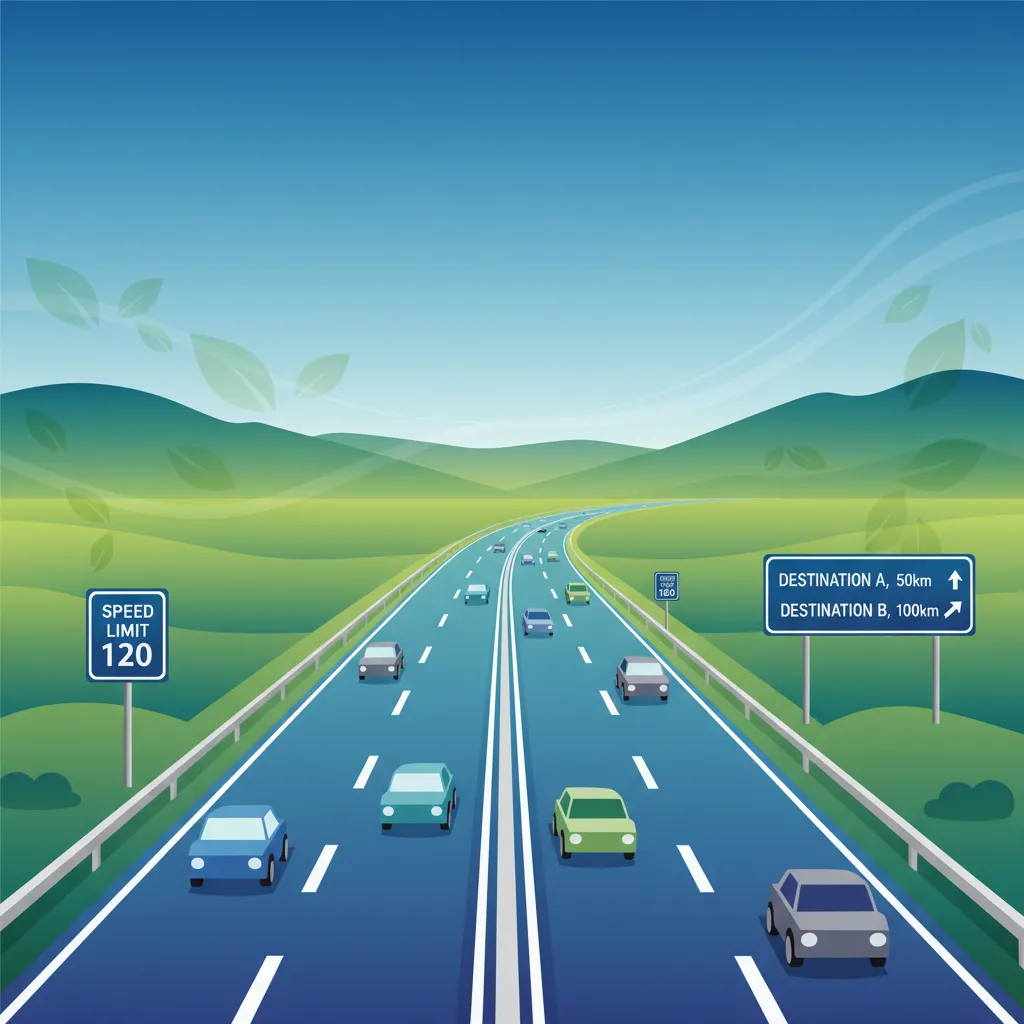
This lesson details the rules and best practices for driving on Poland's fastest roads. It covers the higher speed limits, the strict lane discipline of keeping right except to overtake, and prohibitions on stopping. The aim is to ensure drivers can handle the demands of sustained high-speed travel safely and efficiently.
This lesson provides a guide to safely entering high-speed roads. It explains the function of the acceleration lane, where drivers must increase their speed to match the flow of traffic on the main carriageway. The importance of signaling, checking mirrors, and looking over the shoulder for blind spots before merging is heavily emphasized.
This lesson provides a focused guide on the techniques for entering and exiting high-speed roads. It explains the purpose of acceleration lanes for getting up to speed and deceleration lanes for slowing down safely away from the main traffic flow. Correct observation, signaling, and speed adjustment are emphasized for seamless transitions.
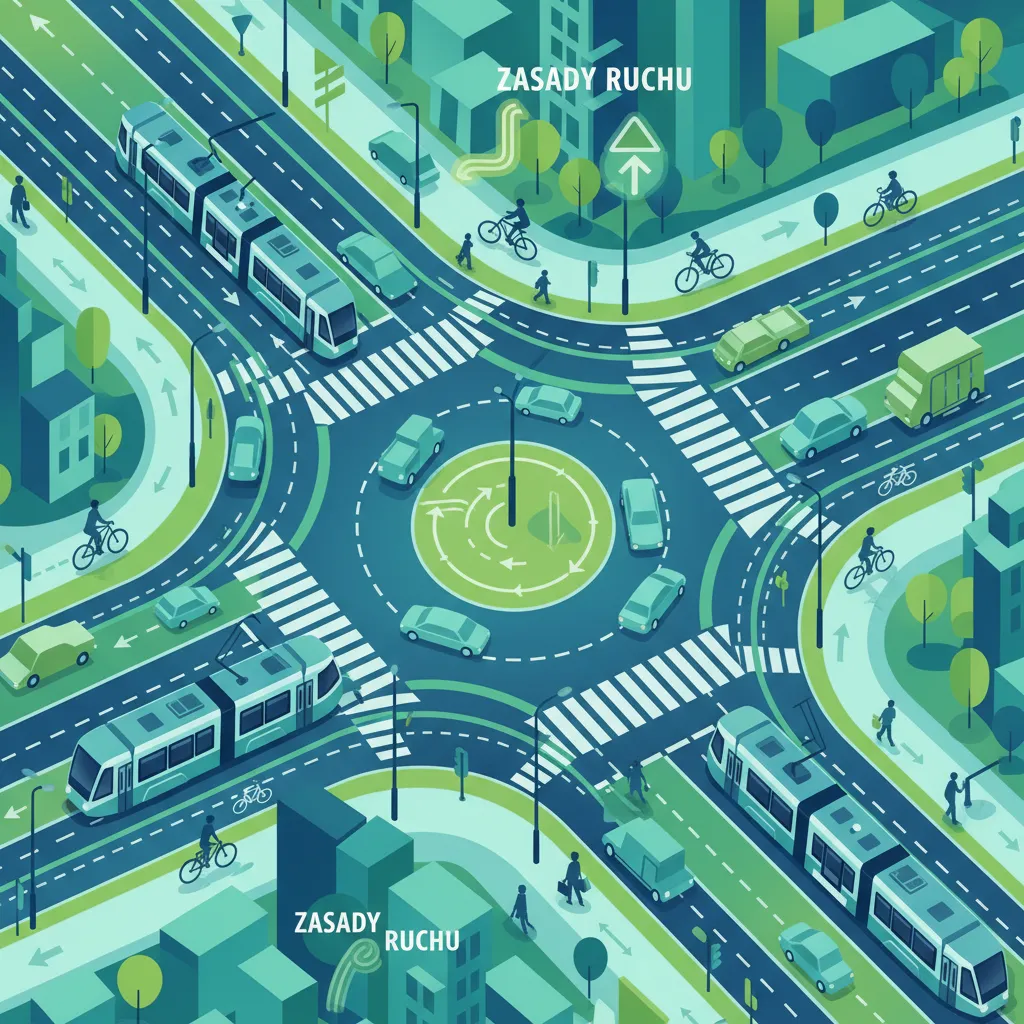
In this lesson, learners investigate complex junctions and intersections found across urban, rural, and highway environments, focusing on multi-lane configurations, traffic light coordination, and roundabout navigation. The content emphasizes priority rules, blind-spot assessment when merging, and safe lane selection for turning maneuvers. Learners will also consider interactions with cyclists and pedestrians, and the importance of adjusting approach speed for safe navigation.
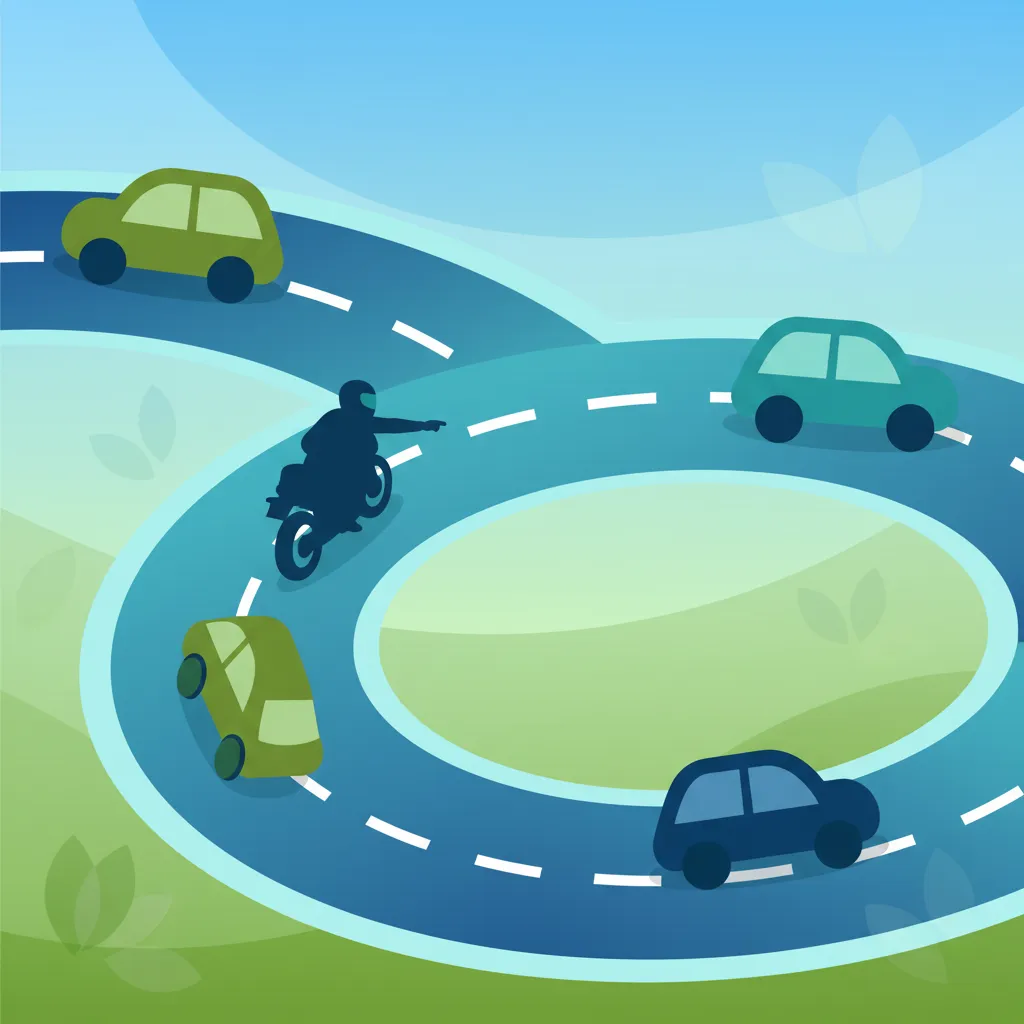
This lesson focuses on the proper techniques for negotiating roundabouts, which are common in Polish urban environments. Learners will learn the correct approach to entering a roundabout, yielding to circulating traffic, selecting the appropriate lane, and signaling intentions when exiting. The lesson also discusses speed adaptation for safe circulation and blind-spot checks before changing lanes within the roundabout, ensuring smooth and legal navigation.

This lesson examines the variety of pavement markings that define lane structures, traffic flow, and special zones on Polish roads. Learners will study solid and broken lines, lane division markings, and the distinct symbols for bicycle lanes, bus lanes, and tram tracks, all of which affect motorcyclist positioning. The lesson also addresses surface texture indicators that signal changing road conditions, enabling riders to maintain correct lane discipline.
This lesson introduces the fundamental principles of right-of-way on Polish roads, explaining how priority road signs determine the flow of traffic at intersections. Learners will explore the hierarchy of vehicle classes and the specific obligations that arise when approaching a yield line or a give-way sign. The content details the legal precedence of main road traffic over secondary road traffic, helping riders safely navigate intersections and avoid right-of-way infractions.
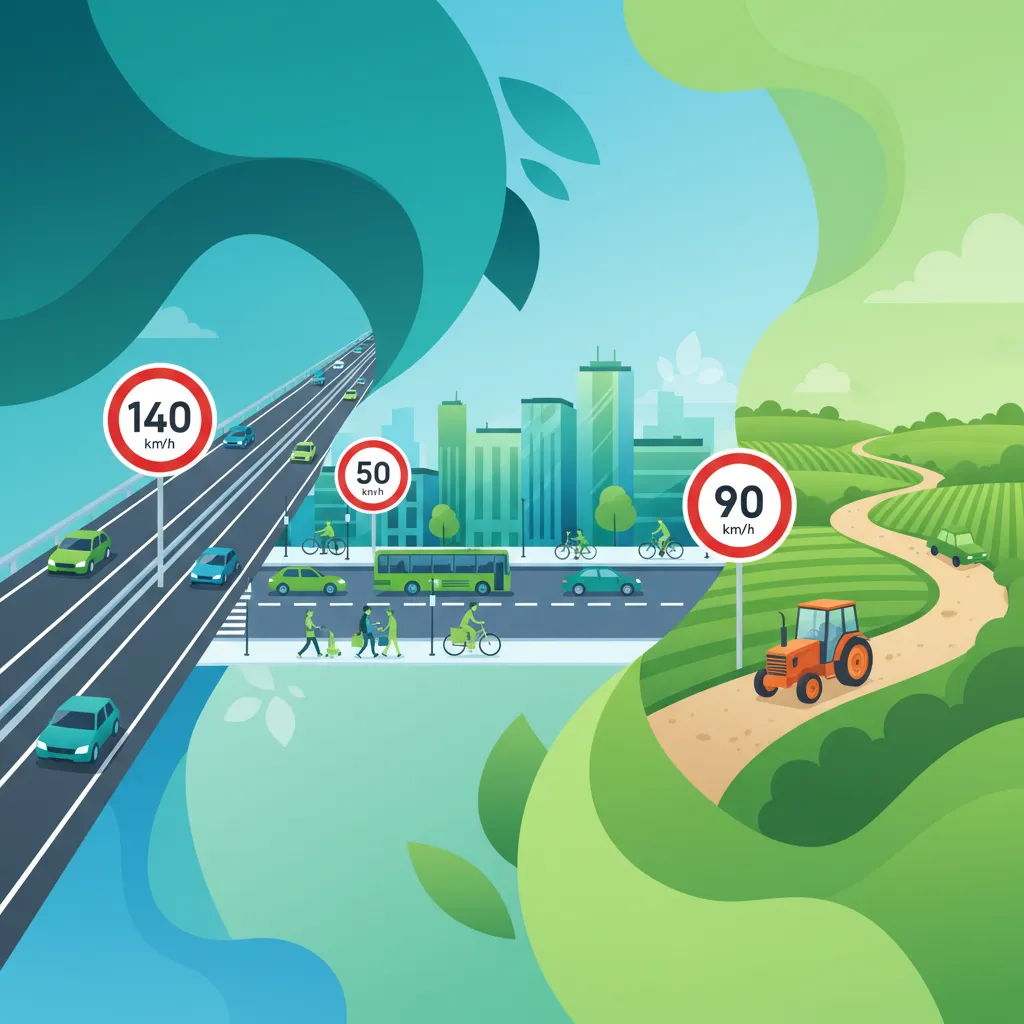
This lesson provides a comprehensive overview of the statutory speed limits applicable to different categories of Polish roads, including urban areas, residential zones, rural roads, highways, and motorways. Learners will examine the visual cues of speed limit signs and learn how speed limit transitions affect rider behavior. The content also covers how enforcement mechanisms impact compliance and the importance of real-time speed adaptation to remain within legal thresholds.

This lesson focuses on the rules of lane usage for maintaining safe and efficient traffic flow. It covers the meaning of different lane markings, such as solid versus broken lines, and the general principle of keeping to the rightmost lane unless overtaking. Proper lane discipline is crucial for predictability and preventing conflicts on multi-lane roads.
Learn about frequent errors motorcyclists make on Polish motorways and highways. This lesson focuses on identifying and avoiding these mistakes to enhance safety and improve compliance with traffic laws.

In this lesson, learners explore riding on rural and countryside roads, where road markings may be sparse and surface conditions varied. The content covers safe overtaking in single-lane sections, interaction with agricultural vehicles and animals, and the handling of gravel or uneven surfaces. Learners will also study the importance of anticipating curves and adjusting speed to light conditions, equipping them with the skills needed for safe countryside travel.

This lesson focuses on the unique demands of urban riding within Polish cities, addressing traffic lights, pedestrian zones, one-way streets, and the presence of tram tracks. Learners will study safe lane positioning on narrow roads, blind-spot management, and how to share the road with buses and cyclists. The content also covers strategies for navigating stop-and-go traffic, anticipating signal changes, and maintaining visibility in dense urban environments.
This lesson details the rules and best practices for driving on Poland's fastest roads. It covers the higher speed limits, the strict lane discipline of keeping right except to overtake, and prohibitions on stopping. The aim is to ensure drivers can handle the demands of sustained high-speed travel safely and efficiently.
This lesson provides a comprehensive overview of the statutory speed limits applicable to different categories of Polish roads, including urban areas, residential zones, rural roads, highways, and motorways. Learners will examine the visual cues of speed limit signs and learn how speed limit transitions affect rider behavior. The content also covers how enforcement mechanisms impact compliance and the importance of real-time speed adaptation to remain within legal thresholds.

This lesson outlines strategies for planning escape routes and adopting protective positioning to avoid potential collisions. Learners will study the concept of a defensive riding line that maximizes visibility and provides an optimal safety corridor. The content emphasizes maintaining adequate distance buffers, choosing lanes that reduce exposure to hazards, and preparing for emergency maneuvers such as swift swerves, allowing riders to react quickly in critical situations.

This lesson prepares drivers for the event of a vehicle breakdown on a motorway or expressway. It details the correct procedure: pulling over to the emergency lane, activating hazard lights, and placing the warning triangle at the legally required distance. The importance of wearing a reflective vest when outside the vehicle is also a key safety point.
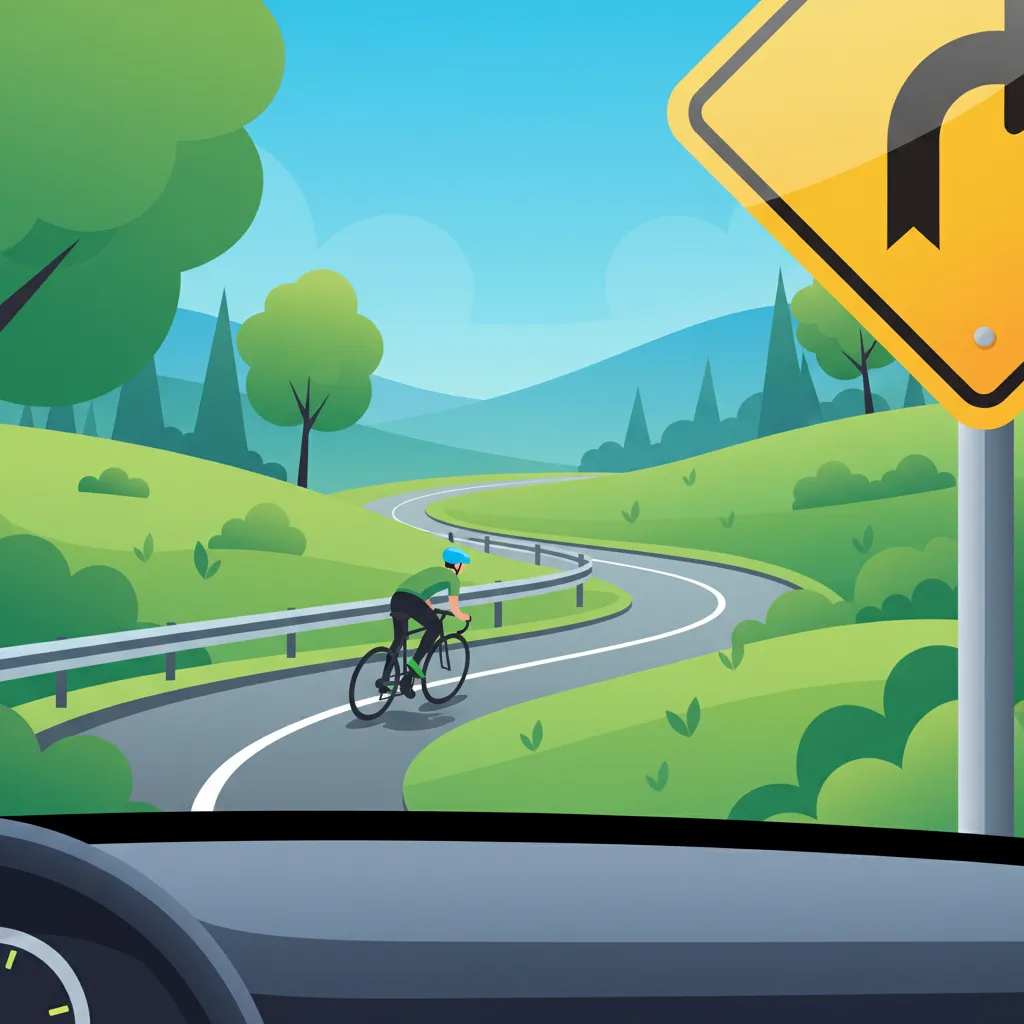
In this lesson, learners study warning signs that alert drivers to potential hazards, focusing on those that are particularly relevant to motorcyclists. The content includes signs indicating curves, slippery surfaces, animal crossings, tram tracks, and construction zones, each requiring specific riding adjustments. The lesson teaches riders how to interpret these signs to anticipate hazards, adjust speed appropriately, and maintain a safe distance from potential dangers.

This lesson focuses on the specific challenges of riding in rain, detailing how wet road surfaces reduce tyre grip and increase braking distances. Learners will learn about hydroplaning risk, the importance of deep tyre tread, and the need for smooth throttle and brake modulation to maintain stability. The content also covers visibility concerns, such as proper headlamp use and the selection of waterproof clothing, so riders can safely navigate wet conditions.
This lesson addresses environmental factors that impact rider visibility, such as low light, night conditions, fog, and glare from headlights. Learners will explore strategies for riding safely in reduced visibility, including the use of reflective gear, proper headlamp settings, and appropriate eye protection. The content also covers hazard detection techniques in adverse weather and how to adjust speed to maintain safety, enhancing rider safety across all conditions.
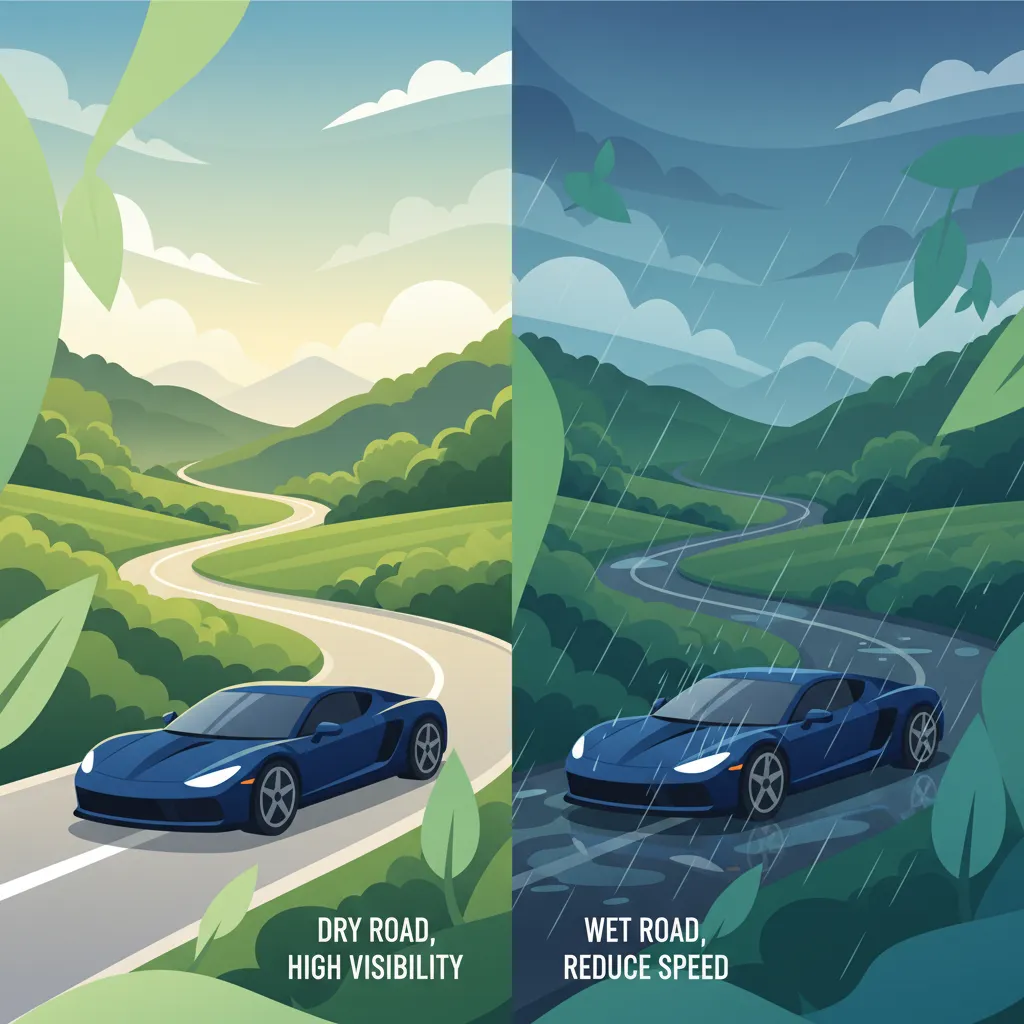
In this lesson, learners examine how environmental conditions such as rain, wind, ice, and reduced visibility necessitate adjustments in riding speed. The content provides guidelines for assessing road surfaces, judging appropriate cornering speeds, and reducing speed proactively in adverse weather. Learners will understand the impact of temperature on tyre performance and the need to increase safety margins, mastering adaptive speed management to maintain control.
Find clear answers to common questions learners have about Motorway and Highway Riding Etiquette. Learn how the lesson is structured, which driving theory objectives it supports, and how it fits into the overall learning path of units and curriculum progression in Poland. These explanations help you understand key concepts, lesson flow, and exam focused study goals.
On a Polish motorway, you must use the acceleration lane to match the speed of traffic before merging. Observe the traffic flow carefully, indicate your intention to merge, and find a safe gap to enter the carriermost lane. Never stop on the acceleration lane unless absolutely necessary due to traffic.
For motorcycles on Polish motorways, maintaining a safe following distance is crucial due to higher speeds. The general rule is to maintain at least a two-second gap to the vehicle in front. This should be increased in adverse weather conditions, at night, or when carrying a passenger or load.
Always check your mirrors and blind spots before changing lanes on a Polish highway. Signal your intention clearly and well in advance. Ensure there is a sufficient gap in the target lane. On a motorcycle, a quick head-check over the shoulder is essential to verify your blind spot is clear, especially when overtaking.
In Poland, as in many countries, the rightmost lane is generally for normal travel, and overtaking should be done from the left. Motorcyclists should use the lane appropriate for their speed and intended exit. Avoid unnecessary lane straddling or lingering in the overtaking lane if not actively overtaking.
Aerodynamic positioning involves tucking in slightly to reduce wind resistance, which can improve fuel efficiency and stability at high speeds on motorways. However, it's important to maintain full control and visibility, and not compromise your ability to react to traffic or road conditions.
If you experience a breakdown on a Polish motorway, turn on your hazard lights immediately. If possible, move to the emergency stopping strip (pasy awaryjne). Switch off the engine, put on your high-visibility vest, and exit the vehicle from the side away from traffic. Use the emergency phone or call for assistance from a safe location off the carriageway.
Build custom practice sessions tailored precisely to your needs. Focus on areas requiring improvement, review specific Polish road signs, or master complex traffic rules to ensure full preparation for your official driving license exam.