
Welcome to the 'Urban Riding: Navigation and Safety' lesson, part of the Polish Motorcycle Theory - Comprehensive Licence Preparation for Category A course. This lesson focuses specifically on the unique challenges and rules for riding a motorcycle in busy Polish cities, building on your knowledge of general road rules and priority scenarios.
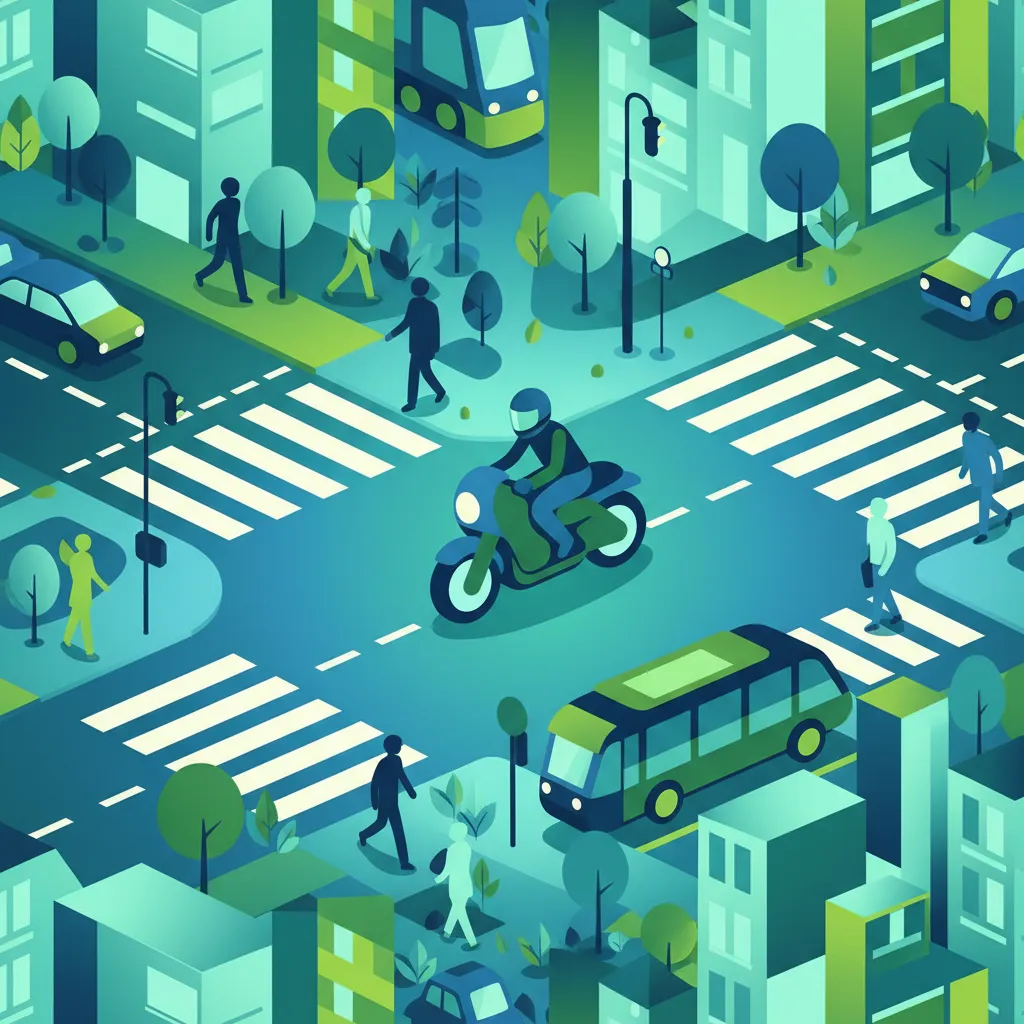
Lesson content overview
Navigating the bustling streets of Polish cities on a motorcycle presents a unique set of challenges and demands specific skills. This lesson is designed to equip you with the knowledge and strategies essential for safe urban riding, ensuring compliance with the Prawo o ruchu drogowym (Polish Road Traffic Law) and minimizing risk. Mastering urban environments is crucial for all Category A riders, as city streets are often where the highest density of conflict points between road users occurs.
Urban riding requires a combination of legal adherence, precise vehicle control, and advanced hazard perception. This module delves into the specifics of navigating complex city traffic, from understanding intricate intersections to safely sharing the road with various vulnerable users. Developing these skills will not only help you pass your Polish motorcycle theory exam but, more importantly, will prepare you for confident and safe riding in any urban setting.
Successful urban riding is built upon several core principles that guide decision-making and actions on the road. These principles integrate legal obligations with practical defensive riding tactics.
Motorcyclists must always occupy the lane intended for motor vehicles and remain within its boundaries. In Poland, lane splitting (riding between lanes of stopped or slow-moving traffic) is generally not permitted. Proper positioning ensures you are visible to other road users and prevents illegal use of sidewalks or tram tracks. For instance, in narrow lanes, you may ride closer to the left curb, but you must never cross the lane line into the opposing traffic or onto the pavement. Overtaking must always be performed from the left, maintaining safe distances.
As a motorcyclist, you are inherently less visible than larger vehicles. It is imperative to maintain maximum visual contact with potential hazards ahead and around you, and to communicate your intentions clearly and early. This includes using turn signals well in advance and adjusting your body posture to convey your next move. This principle helps compensate for the motorcycle's smaller profile and reduces the element of surprise for other drivers, pedestrians, and cyclists.
Polish law establishes a clear precedence among traffic participants, such as trams, pedestrians at zebra crossings, and vehicles approaching from the right at uncontrolled intersections. Understanding and respecting this hierarchy is fundamental to predictable and safe movement, drastically reducing the potential for conflicts. For example, a motorcyclist must yield to trams on intersecting tracks and to pedestrians who are on or about to step onto a zebra crossing.
Maintaining adequate longitudinal (front-to-back) and lateral (side-to-side) clearance from other road users is vital, especially in stop-and-go traffic. This principle ensures you have sufficient reaction time to avoid sudden obstacles or braking situations and helps prevent "sandwich" crashes, where your motorcycle is trapped between two larger vehicles. It includes observing minimum following distances, avoiding others' blind spots, and judiciously using your lane width.
Riding behavior must always be adjusted based on prevailing conditions such as weather, lighting, and traffic density. This principle is about mitigating increased risk factors like slippery surfaces, reduced visibility, or heightened congestion. It implies modifying your speed, increasing following distances, ensuring appropriate lighting, and maintaining a heightened state of alertness.
Understanding and correctly responding to traffic control devices is paramount for urban motorcycle safety. This section details how to approach traffic lights, pedestrian zones, and one-way streets.
Traffic lights are signal devices that control vehicle movements at intersections using a sequence of red, amber, and green lights. Beyond the standard three-color lights, you may also encounter flashing amber signals, which indicate a need for caution and yielding, or specific pedestrian crossing signals.
A signal device with red, amber, and green lights controlling vehicle movement at intersections. Amber indicates caution; red requires a stop before the stop line.
Practical Meaning: You must stop before the stop line when a red light is displayed. A green light permits you to proceed, provided the intersection is clear. Amber lights signal a change to red, requiring you to anticipate and prepare to stop safely. Accelerating to "beat" an amber light is a common misunderstanding and a dangerous practice. According to Article 2 § 13-1 § 1 of the Prawo o ruchu drogowym, stopping before the stop line at a red light is mandatory.
Signal Anticipation: Effective signal anticipation involves more than just reacting to the current light. It means observing the traffic flow, the behavior of other drivers, and the timing of lights to predict changes. This allows for smoother deceleration, avoiding harsh braking, and being prepared to move efficiently when the light turns green. This skill is crucial in stop-and-go traffic, where sudden stops can be hazardous.
Pedestrian zones are urban areas where pedestrians have priority, sometimes completely prohibiting motorized traffic or allowing it at reduced speeds. Zebra crossings are marked with white stripes on the road, clearly designating areas where pedestrians cross and have the right of way.
A marked pedestrian crossing with white stripes where pedestrians have priority; riders must stop when pedestrians are present or about to cross.
Practical Meaning: When approaching a zebra crossing, you must be prepared to stop. If pedestrians are on the crossing, or clearly indicating an intention to cross (e.g., stepping onto the curb near the crossing), you must stop before the crossing line and yield to them. Article 23 § 1-1 of Polish law mandates yielding to pedestrians on zebra crossings. A common and dangerous misunderstanding is assuming pedestrians will wait for motorcyclists. Always give them ample space and time to cross safely.
One-way streets are designated for traffic flow in a single direction only, indicated by specific road signs. These can range from narrow residential one-way streets to wider ones that might include dedicated bus lanes.
Practical Meaning: You must only travel in the direction indicated by the signage. Entering a one-way street from the opposite side is illegal and extremely dangerous, as it places you directly in the path of oncoming traffic. Always observe road signs indicating the direction of traffic flow, as stated in Article 5 § 1 of the Prawo o ruchu drogowym. Pay close attention when turning onto a one-way street from a side road, as the entry direction might be counter-intuitive.
Urban environments are dynamic spaces shared by diverse road users. As a motorcyclist, understanding the specific characteristics and legal rights of trams, buses, and cyclists is vital for collision prevention.
Tram tracks are railway lines embedded in the roadway, used by trams, which frequently intersect with motor vehicle lanes. Trams have specific rights of way and operational characteristics that demand careful consideration from motorcyclists.
Embedded railway rails used by trams, often intersecting with road lanes. Trams typically have priority, and motorcyclists must not obstruct them.
Practical Meaning: According to Article 2 § 29-1 of Polish law, trams generally have priority over other road users. This means you must yield to trams when they approach from the right or when they are already in motion on the same track you intend to cross. Riding over tram tracks at high speed or attempting to cross in front of an approaching tram are common and extremely dangerous misunderstandings. Always wait for the tram to pass before proceeding. Stopping on tram tracks is also prohibited (Art. 2 § 29-2), as it can delay trams and create hazardous situations.
Crossing tram tracks, especially when wet or at an angle, requires extra caution. Attempt to cross tracks as perpendicularly as possible to minimize the risk of your tires slipping along the rail, which can lead to a loss of control. Reduce your speed significantly before crossing.
Buses are large, heavy vehicles with limited maneuverability and specific operational needs, particularly at bus stops. Safe interaction with buses requires understanding their blind spots and respecting their need for space.
An area around a vehicle that cannot be directly observed by the rider or other road users through mirrors or direct vision.
Practical Meaning: You must avoid lingering in a bus's blind spots, particularly alongside its rear and sides. Bus drivers have restricted visibility, especially on their right side. When a bus is stopped at a bus stop, wait for it to fully stop and for passengers to clear before considering an overtake. Overtaking a bus from the right, especially in a narrow lane, is generally not advisable and may contravene overtaking rules (Art. 2 § 14-1), compromising safety. When passing a bus, allow ample lateral clearance. In Poland, motorcycles may sometimes use dedicated bus lanes if explicitly permitted by signage, but this is an exception and not the norm.
Never cut in front of a bus, especially near a stop or intersection. Buses have significant braking distances, and sudden maneuvers from a motorcycle can lead to severe collisions.
Cyclists are vulnerable road users, and motorcyclists must take extra precautions to ensure their safety. Sharing urban roads effectively means understanding the space requirements and typical movements of bicycles.
Practical Meaning: When overtaking a cyclist, you must maintain a minimum safe lateral distance of at least 1 meter. This is a mandatory rule under Article 49 § 2 of the Prawo o ruchu drogowym. Never ride directly between a cyclist and the curb or any parked cars, as this leaves them no escape route if they swerve or encounter an obstacle. Anticipate that cyclists may need to swerve to avoid potholes, drain covers, or open car doors.
Proper lane positioning and active blind spot management are proactive safety measures that significantly reduce collision risk in complex urban traffic.
Lane positioning refers to where your motorcycle is placed within the lane, whether centered, closer to the left, or closer to the right. This choice depends on lane width, traffic conditions, and the presence of hazards.
Practical Meaning: In Poland, where traffic drives on the right, it is generally recommended to position your motorcycle towards the left side of your lane (but within your lane boundaries). This position offers several advantages:
On very narrow residential streets, where the lane width might be barely sufficient for one vehicle, you should still maintain a position that gives you the best visibility and safety margin without encroaching on the opposing lane or the sidewalk. Riding on the sidewalk to avoid traffic or obstacles is strictly prohibited by Article 24 § 4 of the Prawo o ruchu drogowym.
Blind spots are areas around any vehicle, including your own motorcycle, that are not directly visible to the driver or rider through mirrors or direct vision. They are a major cause of collisions if not actively managed.
Practical Meaning: As a motorcyclist, you must actively check your own blind spots before any lane change or turn by performing a "head check" (a quick glance over your shoulder). Crucially, you must also be aware of the blind spots of other, larger vehicles, such as cars, vans, and especially buses or trucks. Avoid lingering in these zones, particularly when alongside a vehicle. If you cannot see the driver's face in their mirror, they likely cannot see you. Position yourself so you are clearly visible, often by riding slightly ahead or behind their blind spot zone. While no specific article directly addresses blind spots, the general requirement to ensure a safe distance (Art. 3 § 2) implies responsibility for managing these risks.
Stop-and-go traffic, characterized by frequent acceleration and deceleration, is a common feature of urban riding. It demands excellent low-speed control and constant awareness of your surroundings.
A traffic condition where vehicles frequently start and stop due to congestion or signals, requiring constant clutch control and anticipation.
Practical Meaning: In stop-and-go conditions, maintain a smooth and controlled balance at low speeds, using precise clutch control to avoid stalling or jerky movements. Critically, always maintain an adequate safe following distance. The recommended minimum is a 2-second gap from the vehicle in front in good conditions; this should be increased in adverse weather. This distance provides crucial reaction time and prevents "sandwich" crashes if the vehicle behind you fails to stop. While no specific law dictates the 2-second rule, Article 1 § 11 implies that one must not obstruct traffic flow, and safe distancing is key to this.
When stopped in a queue, keep your motorcycle in first gear with the clutch pulled in. This allows for a quick escape if you need to maneuver to avoid a rear-end collision. Also, consider positioning your motorcycle slightly to one side of the lane, rather than directly behind the vehicle in front, to provide an escape path.
In the visual clutter of urban environments, ensuring you are seen and understood by other road users is fundamental to your safety.
Visibility in dense urban environments refers to the ability of the motorcyclist to remain easily detectable by other road users, despite numerous visual distractions and varied lighting.
Practical Meaning: Always use your daytime running lights (DRL) or low-beam headlights, even during daylight hours. This significantly increases your detectability. Wear high-visibility gear, such as bright helmets, jackets with reflective strips, or a high-visibility vest. Avoid lane positioning that hides your motorcycle behind larger vehicles; instead, try to occupy a position where you are clearly in another driver's line of sight. According to Article 73 § 1 of Prawo o ruchu drogowym, lights must be used when visibility is reduced (e.g., fog, rain, night), but proactive use in urban daylight is a strong safety measure.
Turn signals, also known as indicators, are electrical devices that communicate your intention to turn or change lanes. Their early and correct use is crucial for predictable and safe riding.
An electrical device indicating the rider’s intention to turn or change lanes. Must be activated at least 30 meters before the maneuver.
Practical Meaning: You must activate your turn signals at least 30 meters before initiating a turn or lane change. This is mandatory under Article 39 § 2 of Polish law. Early signaling gives other road users ample time to register your intention and adjust their speed or position accordingly. Neglecting to signal, or signaling too late, can lead to other drivers being unaware of your intentions, drastically increasing the risk of collisions. Always confirm your signal has cancelled after completing the maneuver.
Activate Early: Signal at least 30 meters before your intended maneuver (turn or lane change).
Confirm Intention: Ensure the signal is clearly visible and understood by other road users.
Check Safely: Before moving, verify that your path is clear and that other vehicles are reacting appropriately to your signal.
Cancel Promptly: Turn off the signal immediately after completing the maneuver to avoid misleading other drivers.
Urban conditions are rarely constant. Riders must constantly adapt their behavior to changes in weather, lighting, and specific road types to maintain safety.
Weather and lighting conditions significantly impact motorcycle handling and visibility.
Urban areas feature various road types and situations that require specific responses.
Adhering to the Prawo o ruchu drogowym is non-negotiable for safe urban riding. Here are critical regulations translated into practical guidance:
Understanding common mistakes can help you avoid them. Here are frequent violations by motorcyclists in urban Polish environments:
Beyond simply knowing the rules, understanding the underlying safety and reasoning principles enhances your ability to make safe decisions intuitively.
Let's consider some practical scenarios to apply the concepts discussed.
Correct Behavior: The rider, noting the light rain, proactively increases their following distance. Observing the light turn amber, they smoothly reduce speed, anticipating the change to red. They ensure their low-beam headlights are on and gently apply both brakes to stop safely before the stop line, waiting for the green light. Incorrect Behavior: The rider, assuming they can make it, accelerates to "beat" the amber light. Due to the wet road, their braking distance is increased, and they enter the intersection as the light turns red, risking a collision with cross-traffic.
Correct Behavior: The motorcyclist slows down and observes the bus. They check their mirrors and blind spots for following traffic. Once the bus has come to a complete stop and passengers are clearly moving away from the bus doors, the rider activates their left turn signal, ensures there is sufficient space in the adjacent lane, and safely overtakes the bus, maintaining ample lateral clearance. Incorrect Behavior: The rider impatiently attempts to pass the bus while it is still moving into the stop, or before passengers have fully boarded/disembarked. This creates a high risk of collision with passengers or with the bus itself if it suddenly moves or an unexpected hazard appears.
Correct Behavior: The rider reduces their speed significantly, using only low-beam headlights to avoid blinding pedestrians. They are highly alert for pedestrians who may not expect vehicles. The rider yields to all pedestrians, only proceeding cautiously when the path is clear and their vehicle access is explicitly permitted by signage, maintaining extra space from all individuals. Incorrect Behavior: The rider continues at a higher speed, assuming pedestrians will see them due to their headlights. They fail to yield proactively, causing pedestrians to hastily move out of the way, risking a collision in the reduced visibility conditions.
To deepen your understanding and prepare for your Polish Category A motorcycle theory exam, explore these related topics and practice questions.
This lesson covers the essential skills and regulations for safely navigating Polish cities on a motorcycle. Key topics include proper lane positioning on narrow streets, yielding to trams and pedestrians at zebra crossings, maintaining safe distances from other vehicles, and using turn signals at least 30 meters before any maneuver. The content details specific legal obligations under the Prawo o ruchu drogowym and explains the physics behind stopping distances and friction coefficients. Ten common urban riding violations are identified, ranging from blocking tram tracks to riding in prohibited bicycle lanes, along with practical scenarios demonstrating correct and incorrect responses to traffic situations like approaching amber lights in rain or overtaking buses at stops.
A short set of high-value points that capture the most important learning from this lesson.
In Poland, motorcycles must stay within lane boundaries; lane splitting is generally not permitted and lane changes must be signaled at least 30 meters in advance.
Trams have priority over other road users at intersections, and motorcyclists must never stop on or block tram tracks.
A minimum 1-meter lateral clearance is mandatory when overtaking cyclists under Article 49 § 2 of the Polish Road Traffic Law.
In dense urban traffic, position yourself to remain visible; if you cannot see the driver's face in their mirror, they cannot see you.
In stop-and-go traffic, keep the motorcycle in first gear with clutch pulled to maintain an escape path and avoid sandwich crashes.
Explore all units and lessons included in this driving theory course.
Traffic lights: Stop before the stop line on red; amber means prepare to stop, not accelerate.
Zebra crossings: Pedestrians have absolute priority; stop when they are on or about to step onto the crossing.
Adverse weather: Wet roads increase braking distances by up to 40%; painted markings and tram tracks become extremely slippery.
Overtake buses only from the left; never attempt to pass a moving bus near a stop or from the right side.
Night and reduced visibility: Use low-beam headlights and reflective gear; high beams are prohibited in urban areas.
Accelerating to beat an amber light, especially in wet conditions where braking distances are significantly increased.
Stopping with a wheel on tram tracks, blocking tram movement and violating Article 29-2.
Failing to check blind spots before lane changes, assuming mirrors alone provide sufficient awareness of surrounding traffic.
Attempting to pass a bus from the right in a narrow lane, which violates overtaking rules and creates collision risk with passengers.
Not canceling turn signals after completing a maneuver, misleading other road users about your intended direction.
Lesson content overview
A short set of high-value points that capture the most important learning from this lesson.
In Poland, motorcycles must stay within lane boundaries; lane splitting is generally not permitted and lane changes must be signaled at least 30 meters in advance.
Trams have priority over other road users at intersections, and motorcyclists must never stop on or block tram tracks.
A minimum 1-meter lateral clearance is mandatory when overtaking cyclists under Article 49 § 2 of the Polish Road Traffic Law.
In dense urban traffic, position yourself to remain visible; if you cannot see the driver's face in their mirror, they cannot see you.
In stop-and-go traffic, keep the motorcycle in first gear with clutch pulled to maintain an escape path and avoid sandwich crashes.
Explore all units and lessons included in this driving theory course.
Traffic lights: Stop before the stop line on red; amber means prepare to stop, not accelerate.
Zebra crossings: Pedestrians have absolute priority; stop when they are on or about to step onto the crossing.
Adverse weather: Wet roads increase braking distances by up to 40%; painted markings and tram tracks become extremely slippery.
Overtake buses only from the left; never attempt to pass a moving bus near a stop or from the right side.
Night and reduced visibility: Use low-beam headlights and reflective gear; high beams are prohibited in urban areas.
Accelerating to beat an amber light, especially in wet conditions where braking distances are significantly increased.
Stopping with a wheel on tram tracks, blocking tram movement and violating Article 29-2.
Failing to check blind spots before lane changes, assuming mirrors alone provide sufficient awareness of surrounding traffic.
Attempting to pass a bus from the right in a narrow lane, which violates overtaking rules and creates collision risk with passengers.
Not canceling turn signals after completing a maneuver, misleading other road users about your intended direction.
Explore search topics learners often look for when studying Urban Riding: Navigation and Safety. These topics reflect common questions about road rules, driving situations, safety guidance, and lesson level theory preparation for learners in Poland.
Browse additional driving theory lessons that cover connected traffic rules, road signs, and common driving situations related to this topic. Improve your understanding of how different rules interact across everyday traffic scenarios.
Explore advanced techniques for navigating challenging urban road layouts in Poland. Learn to safely manage complex intersections, tram tracks, and diverse traffic interactions to enhance your city riding skills and comply with traffic laws.
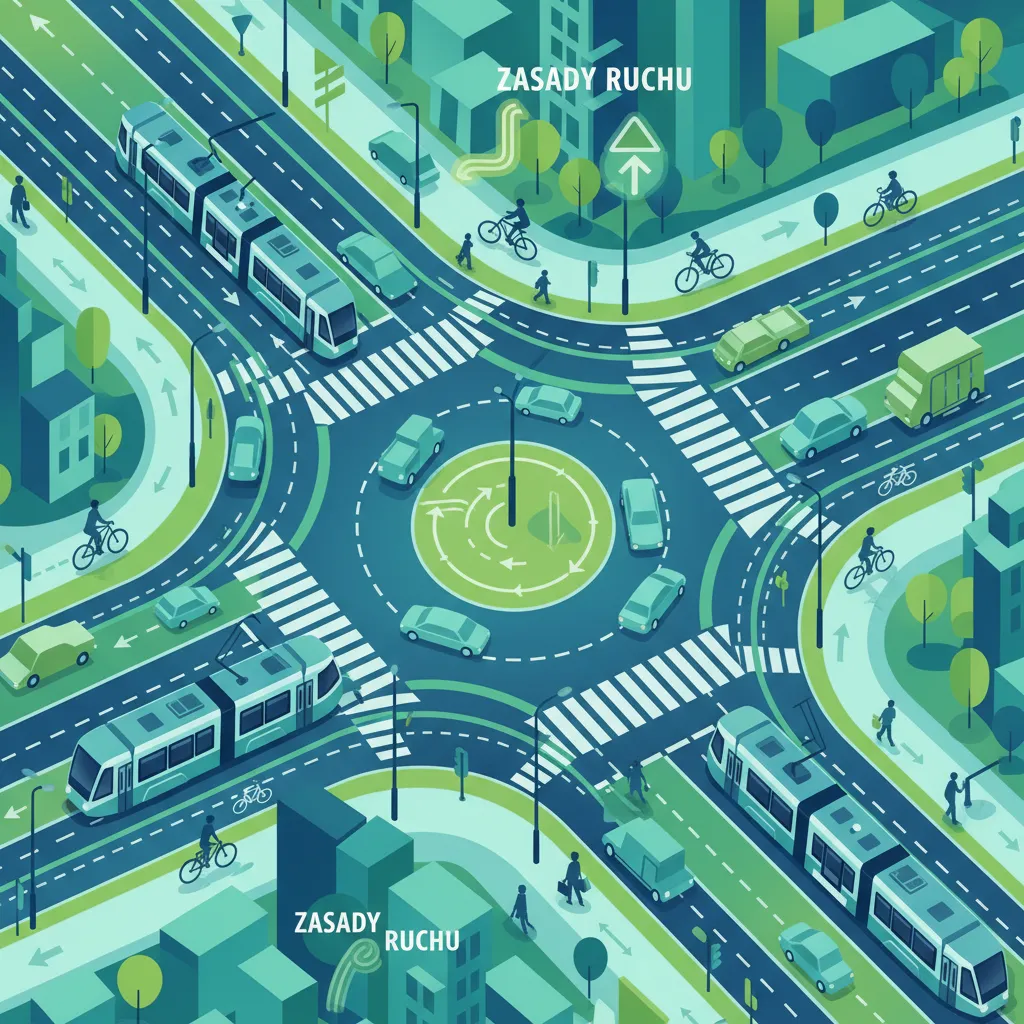
In this lesson, learners investigate complex junctions and intersections found across urban, rural, and highway environments, focusing on multi-lane configurations, traffic light coordination, and roundabout navigation. The content emphasizes priority rules, blind-spot assessment when merging, and safe lane selection for turning maneuvers. Learners will also consider interactions with cyclists and pedestrians, and the importance of adjusting approach speed for safe navigation.
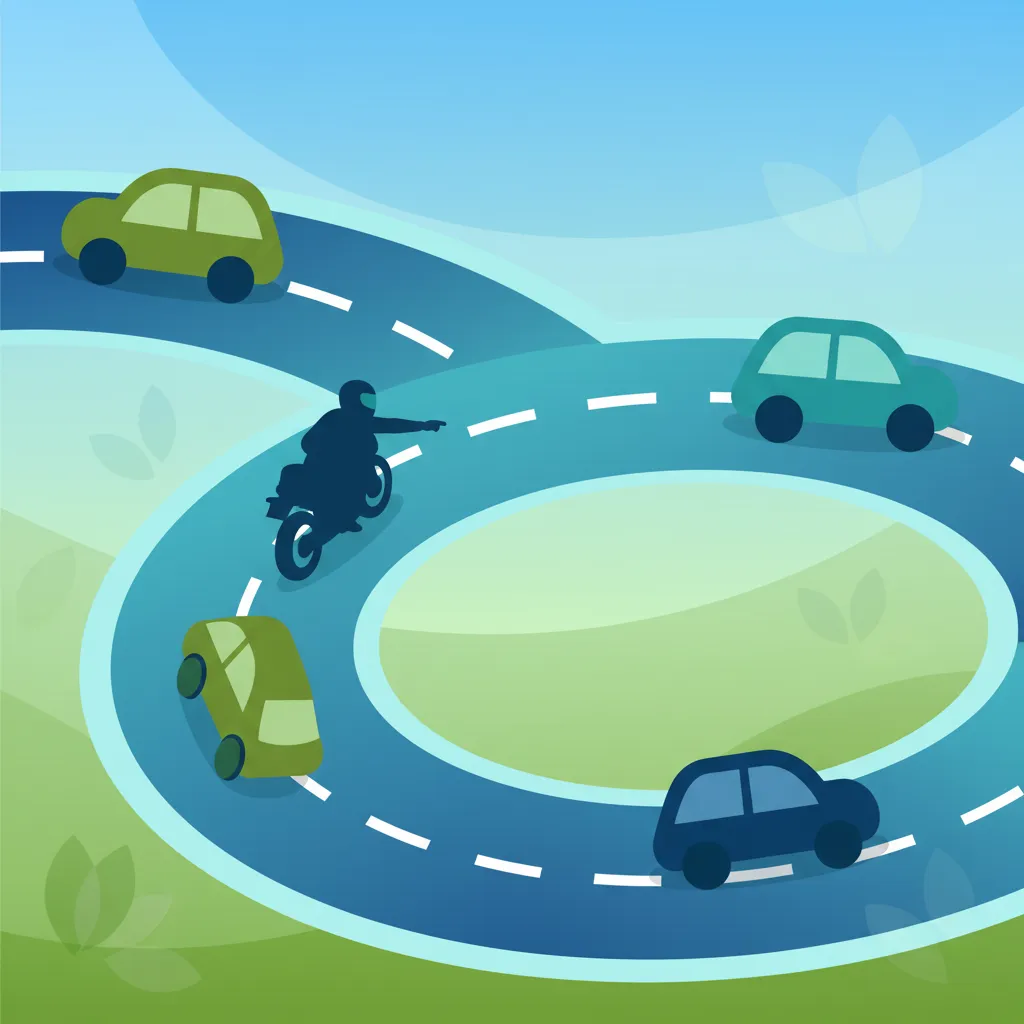
This lesson focuses on the proper techniques for negotiating roundabouts, which are common in Polish urban environments. Learners will learn the correct approach to entering a roundabout, yielding to circulating traffic, selecting the appropriate lane, and signaling intentions when exiting. The lesson also discusses speed adaptation for safe circulation and blind-spot checks before changing lanes within the roundabout, ensuring smooth and legal navigation.
This lesson examines the variety of pavement markings that define lane structures, traffic flow, and special zones on Polish roads. Learners will study solid and broken lines, lane division markings, and the distinct symbols for bicycle lanes, bus lanes, and tram tracks, all of which affect motorcyclist positioning. The lesson also addresses surface texture indicators that signal changing road conditions, enabling riders to maintain correct lane discipline.
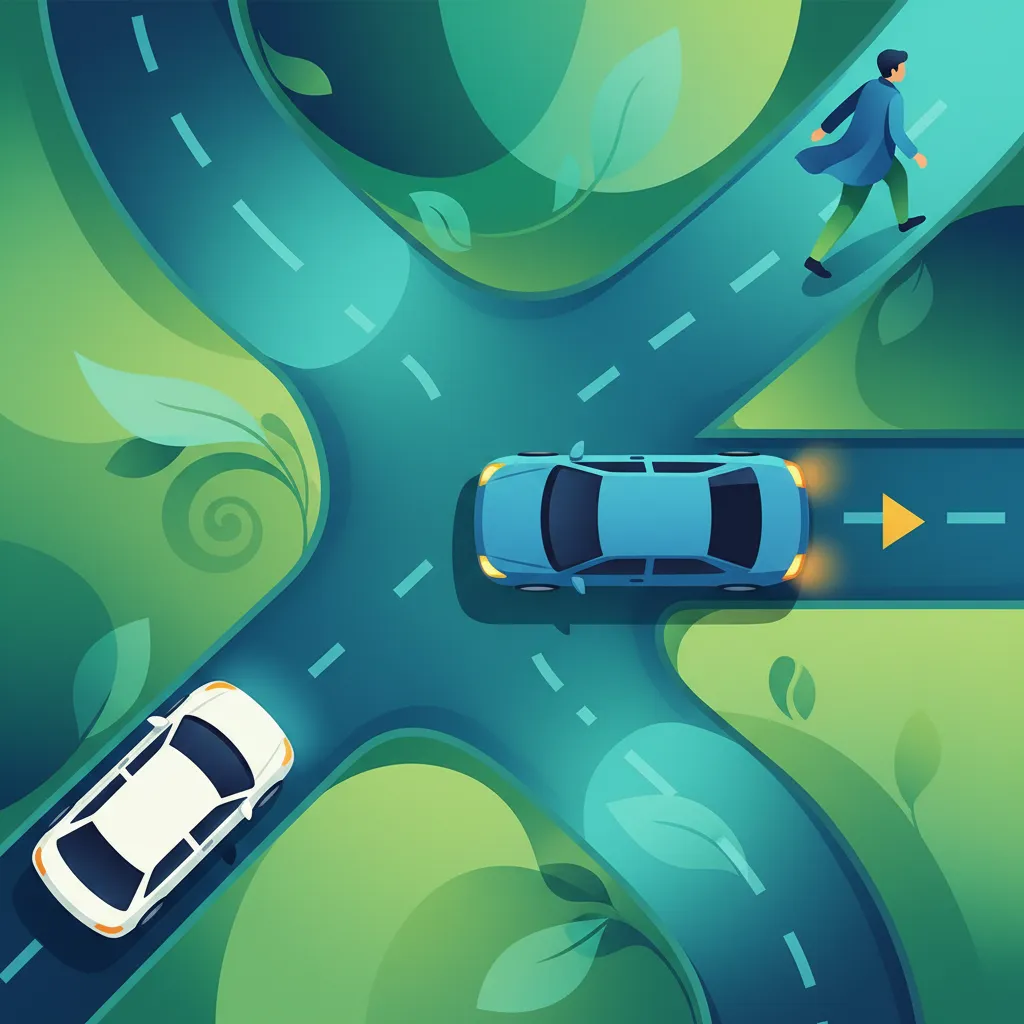
This lesson provides strategies for safely navigating the numerous intersections typical of urban environments. It reinforces the application of priority rules in situations with limited visibility and high traffic volume. Techniques for making turns in narrow streets and being aware of pedestrians and cyclists at junctions are central to the instruction.
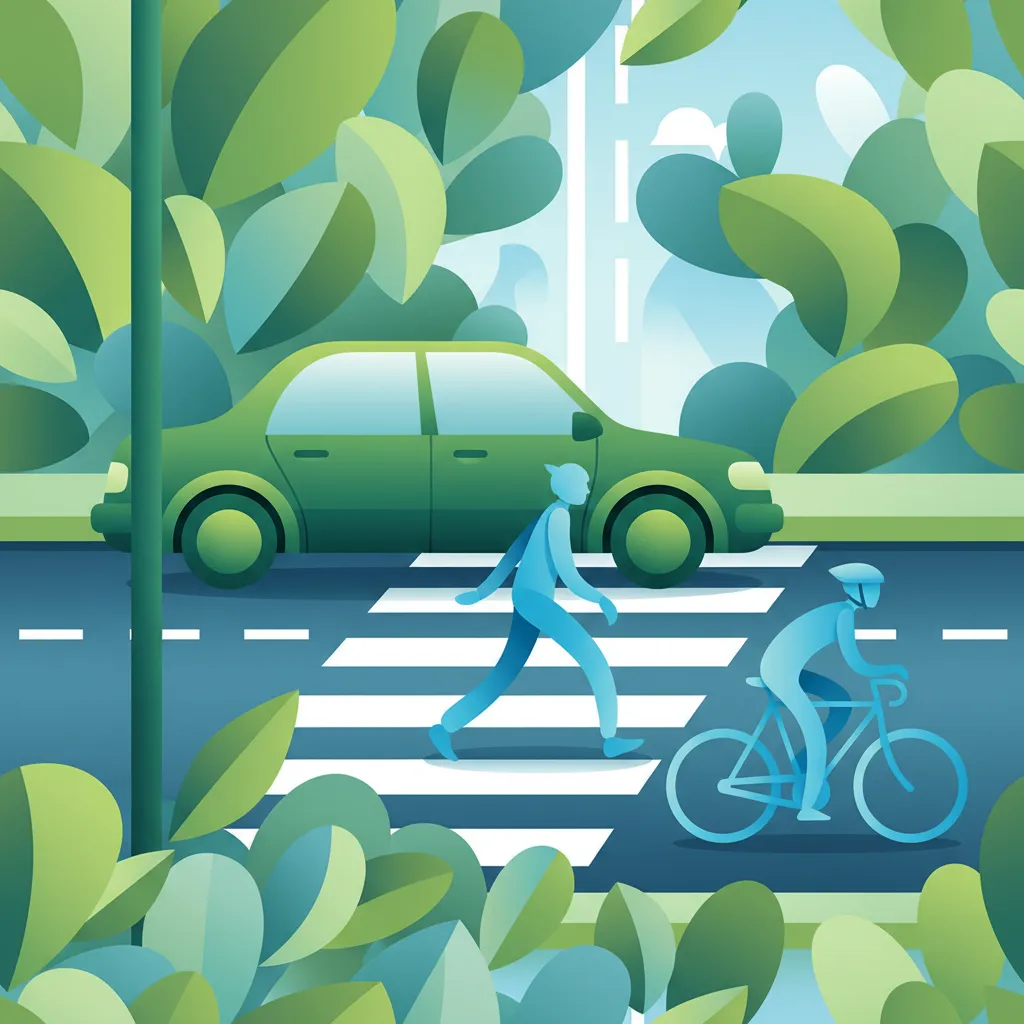
This lesson examines the responsibilities of motorcyclists when approaching pedestrian crossings and interacting with cyclists, emphasizing the marked right-of-way for pedestrians at zebra crossings. Learners will study how to determine safe passing distances, adjust speed, and use visual cues such as eye contact to ensure pedestrians have cleared the crossing. The content also covers interactions with cyclists sharing the road, highlighting the need for anticipation and adequate passing gaps.

This lesson introduces the fundamental principles of right-of-way on Polish roads, explaining how priority road signs determine the flow of traffic at intersections. Learners will explore the hierarchy of vehicle classes and the specific obligations that arise when approaching a yield line or a give-way sign. The content details the legal precedence of main road traffic over secondary road traffic, helping riders safely navigate intersections and avoid right-of-way infractions.
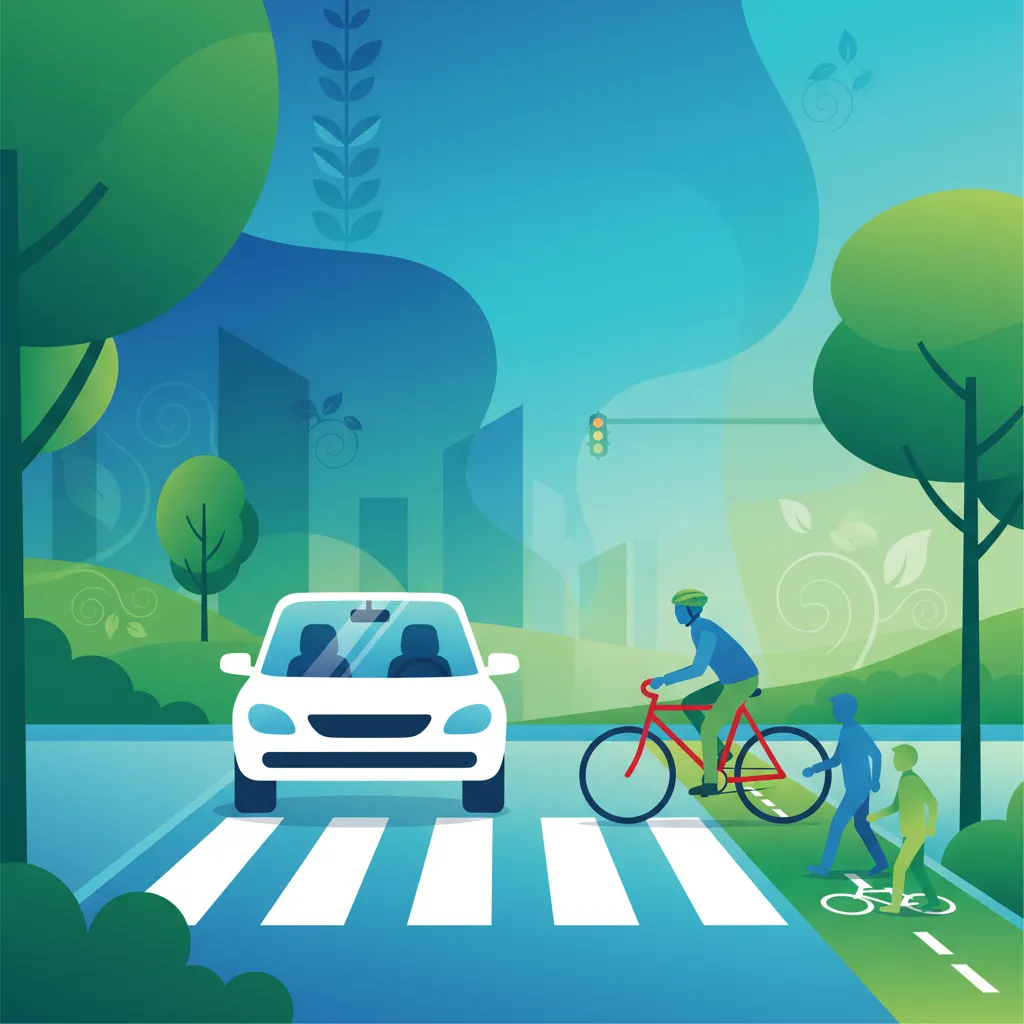
This lesson focuses on safe coexistence with cyclists and pedestrians, who are prevalent in urban areas. It covers the rules for driving alongside dedicated bicycle lanes and the legal requirement to yield to pedestrians at marked crossings. The content stresses the importance of constant awareness, especially when turning at intersections, to prevent conflicts with vulnerable road users.
This lesson outlines strategies for planning escape routes and adopting protective positioning to avoid potential collisions. Learners will study the concept of a defensive riding line that maximizes visibility and provides an optimal safety corridor. The content emphasizes maintaining adequate distance buffers, choosing lanes that reduce exposure to hazards, and preparing for emergency maneuvers such as swift swerves, allowing riders to react quickly in critical situations.
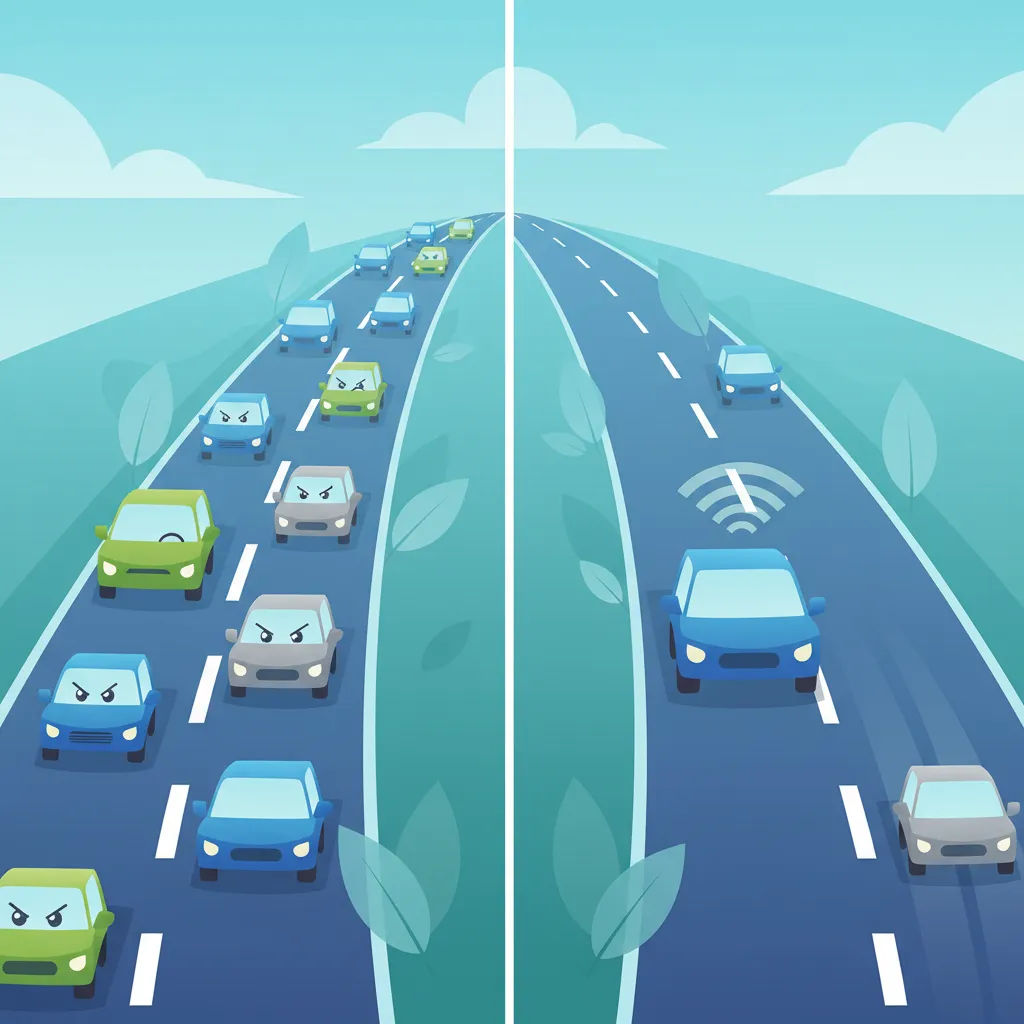
This lesson examines the specific rules and etiquette for riding on Polish motorways and high-speed highways, focusing on proper lane positioning, entry via acceleration lanes, and maintaining appropriate following distances. Learners will study overtaking protocols at high speeds, proper use of deceleration lanes for exits, and techniques for aerodynamic positioning. The content also covers safe lane changes and emergency lane usage to ensure efficient travel.
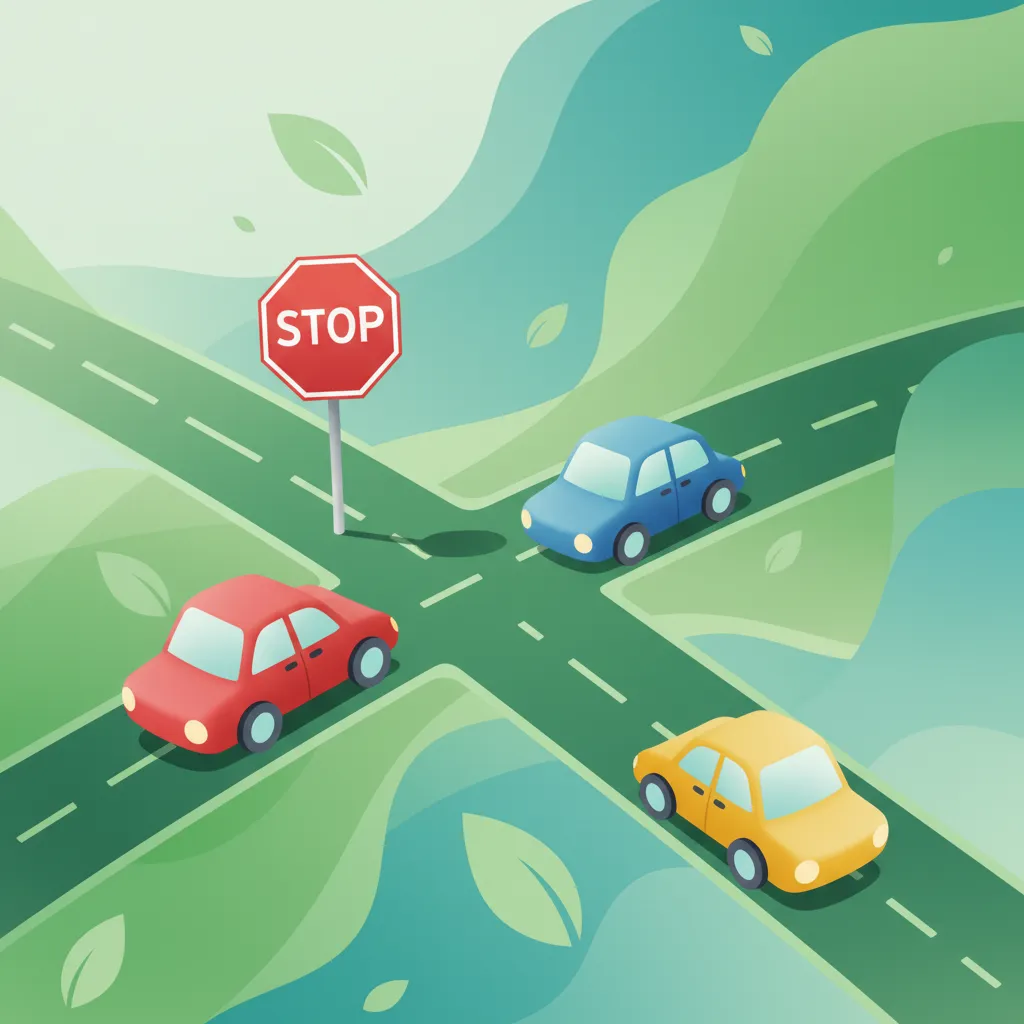
In this lesson, learners examine the specific actions required at stop signs and give-way intersections under Polish traffic regulations. The content explains the legal requirement for a full stop before the stop line, incorporating a visual scan of all directions before proceeding. It also covers the give-way protocol, where riders must yield to traffic already in the intersection or on the main road, emphasizing the need for correct positioning and observation.
Identify and understand the most frequent hazards encountered when riding a motorcycle in Polish cities. This lesson provides practical solutions and defensive strategies to mitigate risks associated with urban environments, helping you navigate safely.
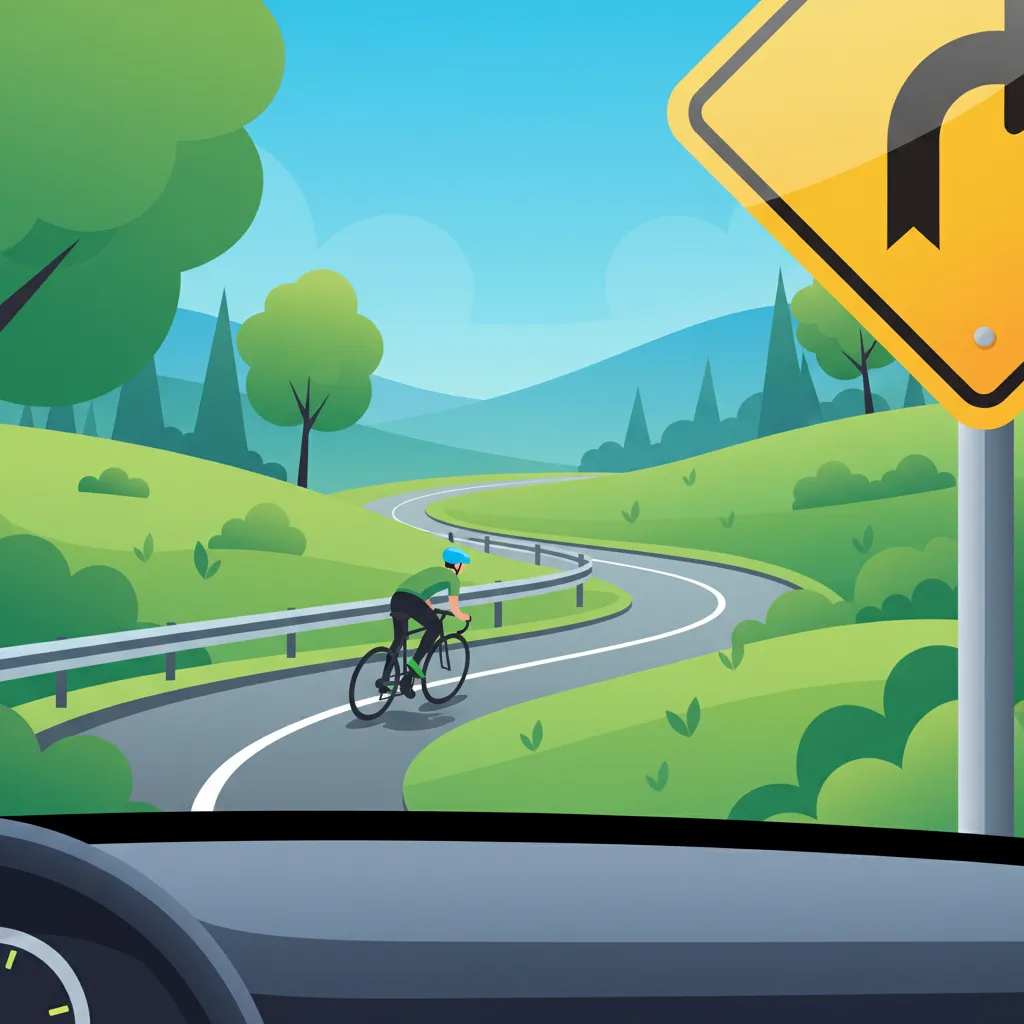
In this lesson, learners study warning signs that alert drivers to potential hazards, focusing on those that are particularly relevant to motorcyclists. The content includes signs indicating curves, slippery surfaces, animal crossings, tram tracks, and construction zones, each requiring specific riding adjustments. The lesson teaches riders how to interpret these signs to anticipate hazards, adjust speed appropriately, and maintain a safe distance from potential dangers.

In this lesson, learners explore riding on rural and countryside roads, where road markings may be sparse and surface conditions varied. The content covers safe overtaking in single-lane sections, interaction with agricultural vehicles and animals, and the handling of gravel or uneven surfaces. Learners will also study the importance of anticipating curves and adjusting speed to light conditions, equipping them with the skills needed for safe countryside travel.
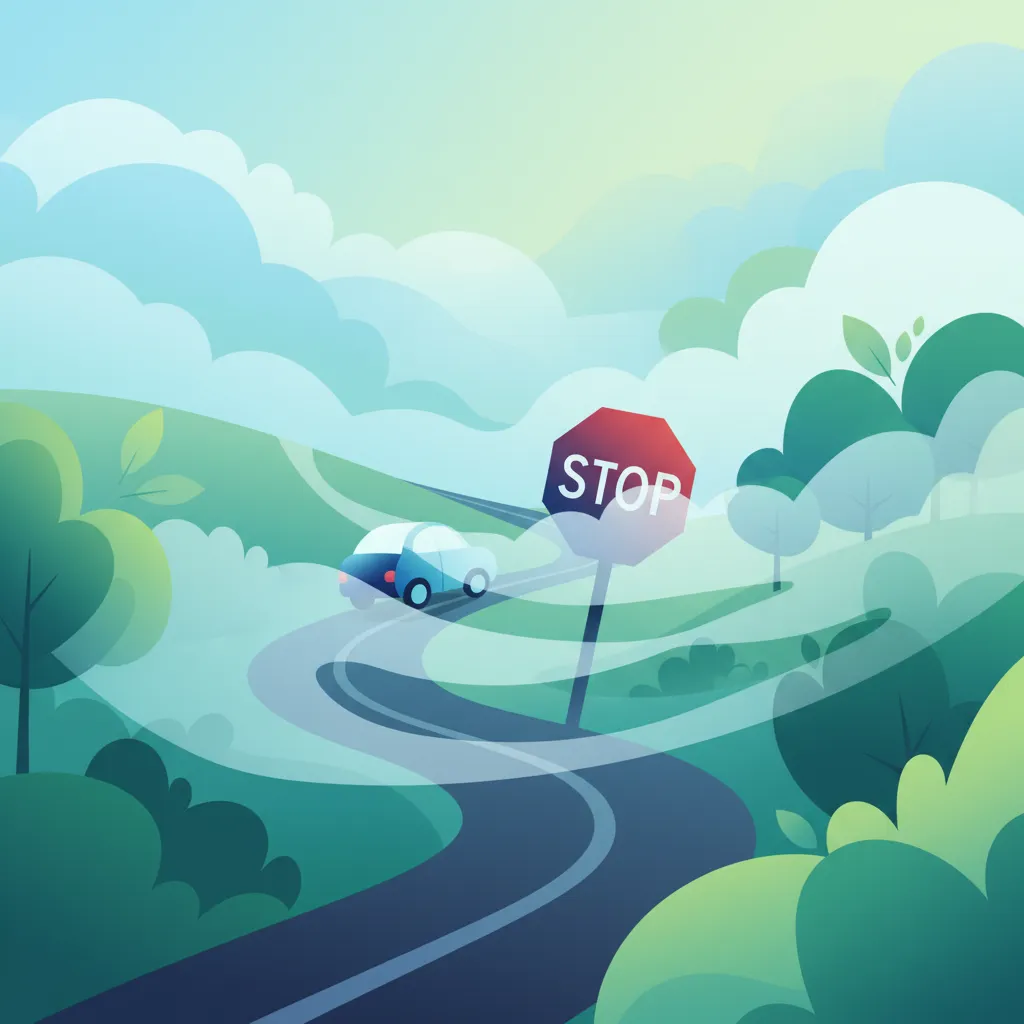
This lesson addresses environmental factors that impact rider visibility, such as low light, night conditions, fog, and glare from headlights. Learners will explore strategies for riding safely in reduced visibility, including the use of reflective gear, proper headlamp settings, and appropriate eye protection. The content also covers hazard detection techniques in adverse weather and how to adjust speed to maintain safety, enhancing rider safety across all conditions.
This lesson outlines strategies for planning escape routes and adopting protective positioning to avoid potential collisions. Learners will study the concept of a defensive riding line that maximizes visibility and provides an optimal safety corridor. The content emphasizes maintaining adequate distance buffers, choosing lanes that reduce exposure to hazards, and preparing for emergency maneuvers such as swift swerves, allowing riders to react quickly in critical situations.
In this lesson, learners investigate complex junctions and intersections found across urban, rural, and highway environments, focusing on multi-lane configurations, traffic light coordination, and roundabout navigation. The content emphasizes priority rules, blind-spot assessment when merging, and safe lane selection for turning maneuvers. Learners will also consider interactions with cyclists and pedestrians, and the importance of adjusting approach speed for safe navigation.

This lesson equips learners with a structured approach to risk assessment and decision-making when facing adverse weather or seasonal conditions. The content introduces a hazard perception framework, guiding riders to assess weather forecasts, evaluate road surface conditions, and calculate safety margins. Learners will learn how to make go/no-go decisions, adjust speed dynamically, and plan contingencies for unexpected events to prioritize safety.

In this lesson, learners focus on the identification and management of blind spots that affect motorcyclists, particularly when sharing the road with larger vehicles such as trucks and buses. The content covers the use of side mirrors, head-turn techniques, and optimal rider positioning to minimize blind-spot exposure. Learners will also study the characteristics of blind spots at intersections and during overtaking maneuvers to reduce collision risk.
This lesson focuses on the proper techniques for negotiating roundabouts, which are common in Polish urban environments. Learners will learn the correct approach to entering a roundabout, yielding to circulating traffic, selecting the appropriate lane, and signaling intentions when exiting. The lesson also discusses speed adaptation for safe circulation and blind-spot checks before changing lanes within the roundabout, ensuring smooth and legal navigation.
This lesson focuses on safe coexistence with cyclists and pedestrians, who are prevalent in urban areas. It covers the rules for driving alongside dedicated bicycle lanes and the legal requirement to yield to pedestrians at marked crossings. The content stresses the importance of constant awareness, especially when turning at intersections, to prevent conflicts with vulnerable road users.
This lesson teaches systematic visual scanning techniques that enhance situational awareness while riding a motorcycle. Learners will explore forward and peripheral vision strategies, the importance of regular rear-view checks, and methods for anticipating hazards through environmental cues. The content outlines scanning patterns that allow riders to monitor traffic flow, detect lane changes, and assess vehicle speeds, enabling them to identify potential dangers early.
Find clear answers to common questions learners have about Urban Riding: Navigation and Safety. Learn how the lesson is structured, which driving theory objectives it supports, and how it fits into the overall learning path of units and curriculum progression in Poland. These explanations help you understand key concepts, lesson flow, and exam focused study goals.
The primary risks include limited visibility for other road users, especially buses and cars in blind spots, and unexpected hazards like tram tracks, pedestrian crossings, and sudden braking in stop-and-go traffic. Navigating intersections with complex signals and managing interactions with cyclists and pedestrians also pose significant challenges.
In narrow streets, maintain a position that allows you to be seen by oncoming traffic and potential hazards from driveways or side streets. Generally, this means riding towards the centre of your lane to create space and visibility, rather than hugging the kerb where you might be less visible or risk hitting debris.
Riding parallel to tram tracks requires extreme caution. Avoid riding directly in the grooves, as your tyres can slip. If you need to cross them, do so at a 90-degree angle when possible and safe. Always be aware that trams have priority and may appear suddenly.
Use your headlight at all times, wear bright and reflective clothing, and position yourself strategically in your lane to maximize visibility. Make eye contact with drivers when possible, especially at junctions, and be prepared for them not to see you.
Maintain a safe following distance to allow for quick braking, and be prepared to filter through traffic safely and legally if permitted and prudent in the specific situation. Constantly scan for potential hazards ahead and to the sides, and be aware of your surroundings to anticipate traffic flow changes.
Build custom practice sessions tailored precisely to your needs. Focus on areas requiring improvement, review specific Polish road signs, or master complex traffic rules to ensure full preparation for your official driving license exam.