
The F-9 sign, often a yellow auxiliary sign with an arrow and the word 'Objazd', is your guide when a road is closed. Placed at intersections along the diversion, it continuously directs you around the obstruction. Always follow the direction indicated by the arrow until you reach the end of the detour, usually marked by another sign. This sign is crucial for navigating temporary route changes safely and without confusion during your driving test.
The F-9 Detour Guide Sign is essential for navigating temporary 'Objazd' routes and road closures across Poland safely. Correct road sign interpretation and its traffic sign explanation are vital for your Polish driving theory test, ensuring you confidently follow local regulations.
The F-9 sign is a smaller, auxiliary sign (usually yellow) with the word 'Objazd' and an arrow. It is placed at every intersection along a detour route to ensure drivers do not get lost. Its purpose is to lead the driver through the alternative path and eventually back to the original road or toward a major destination after the closure area. It acts as a continuous 'trail of breadcrumbs' for the driver.
A directional sign placed along the detour route to guide drivers toward the end of the diversion.
Get clear, practical answers to the most common questions about the F-9 - Detour Guide Sign road sign. Learn how the sign works, what rules it represents, and how it affects real driving situations. This FAQ strengthens your understanding and supports accurate decision making for the Polish driving theory exam in Poland.
The F-9 'Objazd' sign indicates a detour route. It's a directional sign, typically yellow with an arrow, placed at intersections to guide drivers around a road closure. You must follow the direction of the arrow to stay on the alternative path.
When you see the F-9 sign, you should follow the direction indicated by its arrow. Continue to follow these signs at each intersection until you are directed back to your original route or reach your destination after the closure.
A common mistake is ignoring the 'Objazd' arrows and trying to find your own way, or assuming the detour has ended prematurely. Another trap is turning in the direction opposite to the arrow at an intersection, which would take you off the designated detour route.
The detour indicated by the F-9 sign ends when you encounter a sign explicitly stating the end of the detour or when you are guided back onto the main road you were originally travelling on. Do not assume the detour is over until you see such an indication.
Yes, it's good practice to use your turn signals when following the F-9 detour signs, especially if the detour involves multiple turns through different intersections. This clearly communicates your intentions to other road users and contributes to safer driving.
A clear reference image of the F-9 - Detour Guide Sign road sign used in Poland.
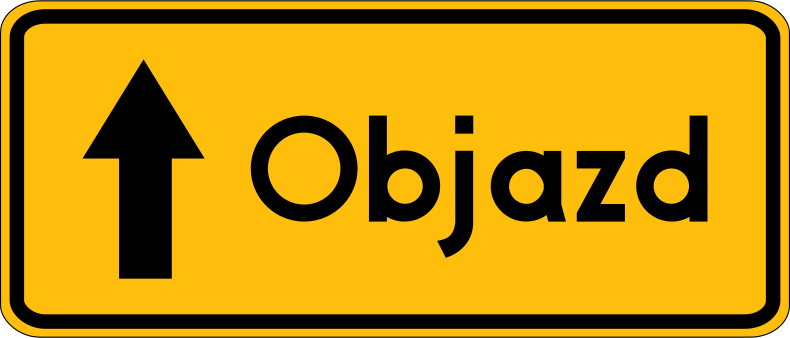
The F-9 - Detour Guide Sign road sign may also be known by these alternative names or terms.
The F-9 - Detour Guide Sign road sign is part of the Supplementary Signs (F) category, which groups together signs with similar rules and functions.
Master Polish traffic signs by comparing closely related ones. This targeted review helps solidify your understanding of similar road signs and improves sign recognition for your theory test revision.
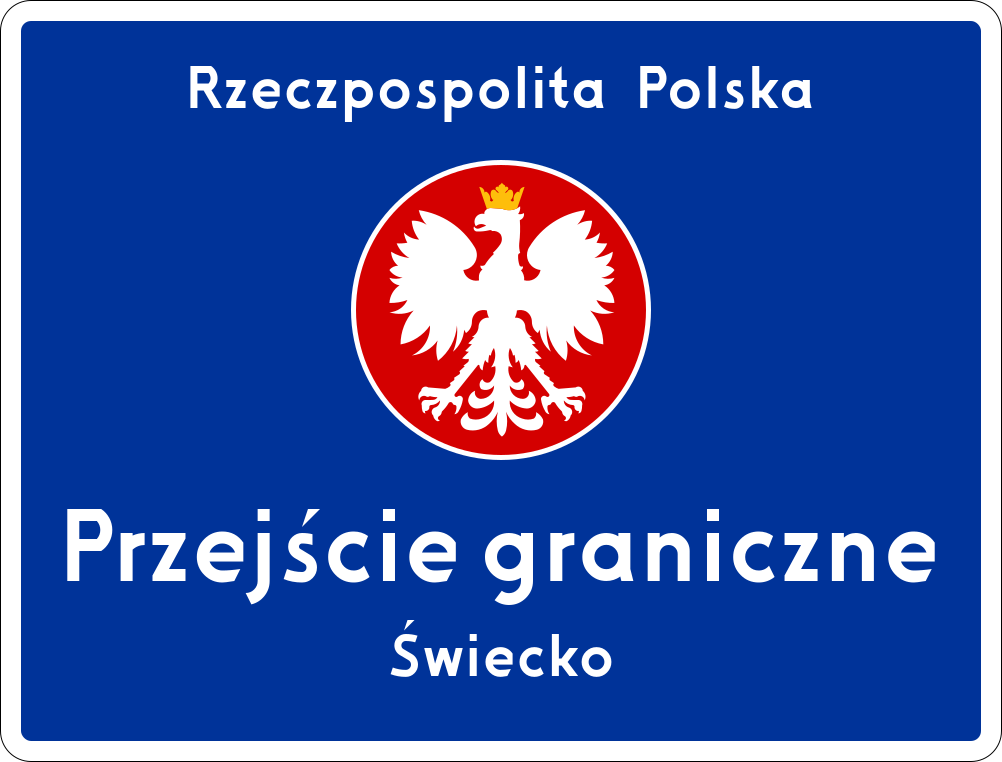
Prepare for border crossings with the F-1 sign
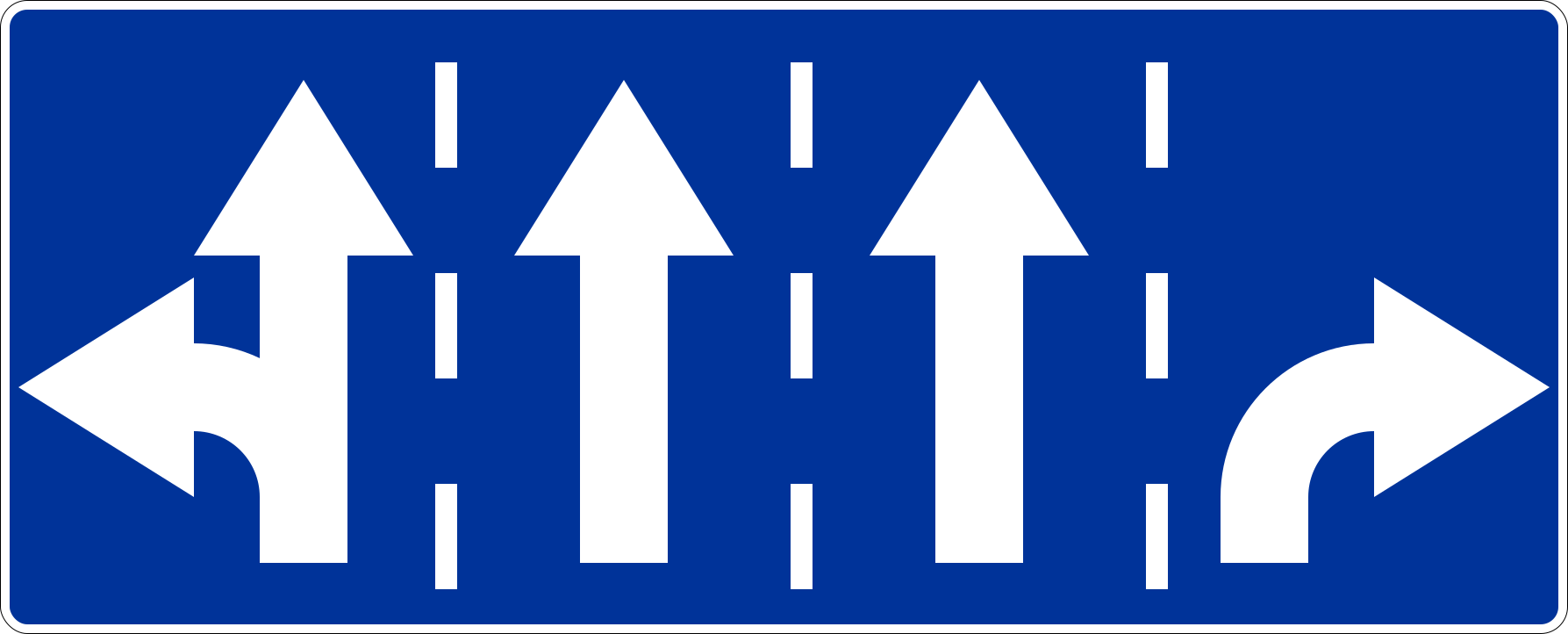
Use the F-10 sign to navigate your lane correctly at junctions.
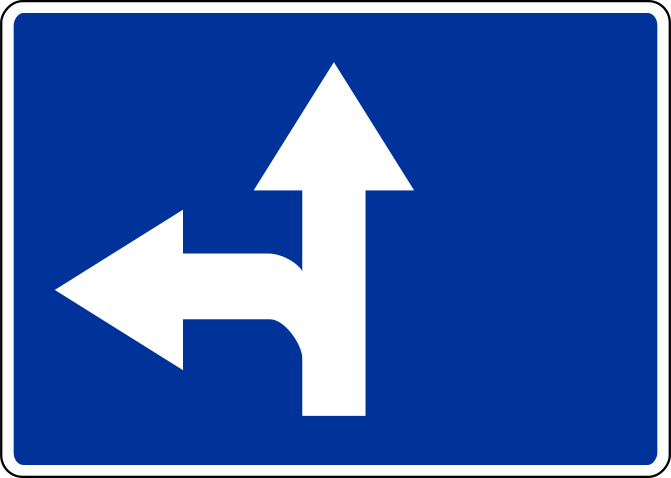
F-11: Follow the Direction for Your Specific Lane!
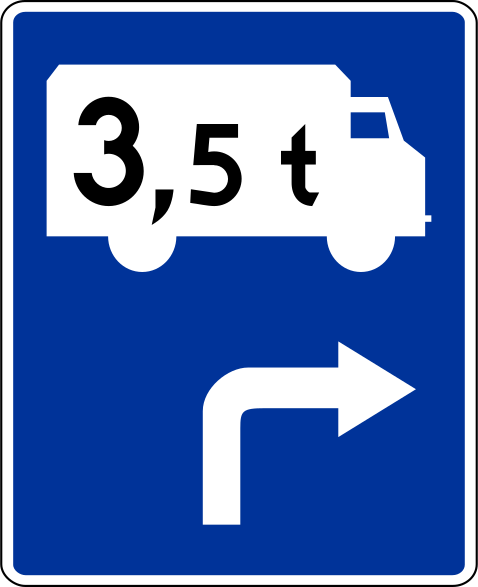
F-12 Transit Route Sign: Guiding Heavy Traffic Efficiently
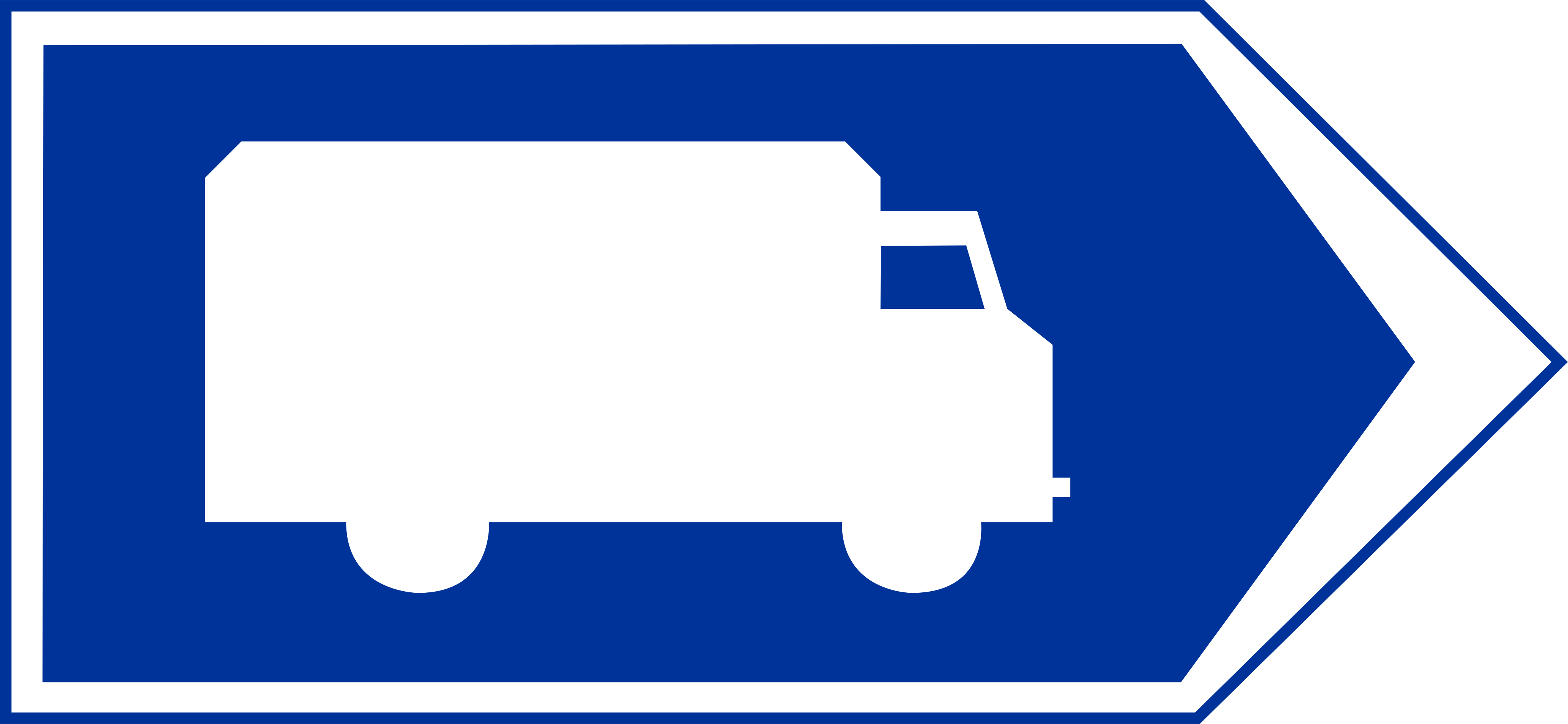
Follow the F-13 Sign for Your Designated Transit Route
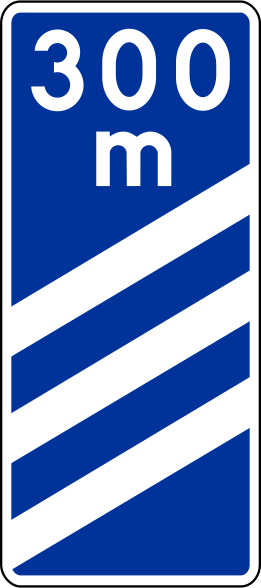
Approaching a Highway Exit? The F-14a Sign Warns You 300 Meters Ahead!
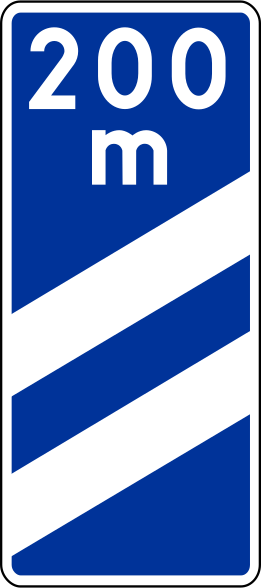
Prepare to exit the motorway with the F-14b 200-meter exit marker sign.
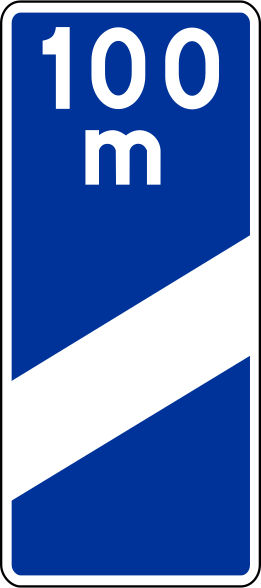
Prepare to Exit: The F-14c Highway Exit Marker (100m) Road Sign
Deepen your understanding of specific road signs by reviewing official Polish traffic rules and associated real-world driving scenarios. These expert-led resources help you bridge the gap between visual recognition and practical exam application.
Navigate Polish roads with confidence by understanding critical cyclist priority rules at junctions and crossings. This guide explains your legal obligations as a driver to yield to cyclists, a common area of confusion and potential exam pitfalls. Learn the nuances of right-of-way at intersections and designated cyclist passages to drive safely and pass your theory test.
Being involved in a car accident in Poland requires immediate, specific actions to ensure safety and legal compliance. This guide clarifies your obligations, from securing the accident scene and rendering aid to reporting the incident correctly. Mastering these post-accident procedures is vital for safe driving and is a common focus area in the Polish driving theory exam.
Know Your Obligations: What to Do After a Road Incident in Poland.
Master Polish Crossing Markings for a Safer Drive and Exam Success.
The D-34b sign acts as a summary for a rest area or a nearby town. Instead of multiple separate signs, it groups symbols together on one large blue board. For example, it might show symbols for a petrol station, a restaurant, and a hotel simultaneously. This allows drivers to see at a glance what services are available at an upcoming exit or stop without cluttering the roadside with too many individual signs.
The E-2a is a rectangular board usually mounted on the shoulder. It serves as the final confirmation of which way to turn at a junction. It can list multiple cities in one direction and include road numbers. Unlike arrow-shaped signs, this board provides a broader overview of the directions available at that specific point in the journey. It is a staple of standard national and local road navigation.
After reviewing the full list of Polish road signs, explore specific sign categories for in-depth understanding. Challenge your knowledge with practice questions focused on sign recognition and interpretation to solidify your preparation for the driving theory exam.
Browse All Polish Road Signs