
The F-10 Lane Directions sign is an informational traffic sign crucial for understanding which way you can go from each lane at an upcoming intersection. This large board displays arrows indicating the permitted movements for every lane, helping drivers position themselves correctly well in advance. In Poland, a key rule to remember is that if the leftmost lane arrow allows a left turn, it generally also permits a U-turn, unless a specific 'No U-turn' sign (B-23) or a traffic light signal prohibits it. Always check for these exceptions to ensure safe and lawful navigation.
This crucial F-10 sign clearly indicates permitted movements from each lane, helping you navigate junctions safely and correctly. Understanding its specific road sign meaning is vital for your theory test revision and for real-world driving in Poland.
The F-10 sign is a large board placed before an intersection, showing arrows for every available lane. It is vital for lane discipline. A very important rule in Poland: if the leftmost lane arrow allows a left turn, it also permits a U-turn (zawracanie), UNLESS there is a 'No U-turn' (B-23) sign or a directional traffic signal (S-3) that doesn't show a U-turn arrow. This sign helps drivers position themselves correctly well in advance of the junction.
Informs drivers which directions are permitted from each individual lane of the road.
Get clear, practical answers to the most common questions about the F-10 - Lane Directions road sign. Learn how the sign works, what rules it represents, and how it affects real driving situations. This FAQ strengthens your understanding and supports accurate decision making for the Polish driving theory exam in Poland.
The F-10 sign's primary purpose is to inform drivers about the permitted directions of travel from each specific lane on the road as they approach an intersection. It ensures drivers choose the correct lane early to avoid last-minute, potentially dangerous maneuvers.
In Poland, if the arrow on the F-10 sign for the leftmost lane points left, it usually implies that a U-turn is also permitted from that lane. However, this is only valid if there isn't a 'No U-turn' sign (B-23) present or a traffic signal that doesn't show a U-turn option.
A common mistake is not noticing the F-10 sign early enough and being in the wrong lane for their intended direction. This can lead to sudden lane changes at the junction, which is dangerous. Another trap is forgetting to check for signs like B-23 that might revoke the default U-turn permission from the left lane.
If you are in the correct lane as indicated by the F-10 sign, you are permitted to travel in the direction shown by the arrow for your lane. If you are in the leftmost lane and the arrow points left, you may also perform a U-turn, provided no other signs or signals prohibit it.
If you realise you are in the wrong lane after seeing the F-10 sign, it is best to continue in the direction permitted by your current lane if it is safe to do so. Avoid abrupt lane changes. If your intended direction is not possible from your current lane, you may need to proceed and find an alternative route or a safe place to turn around later.
A clear reference image of the F-10 - Lane Directions road sign used in Poland.
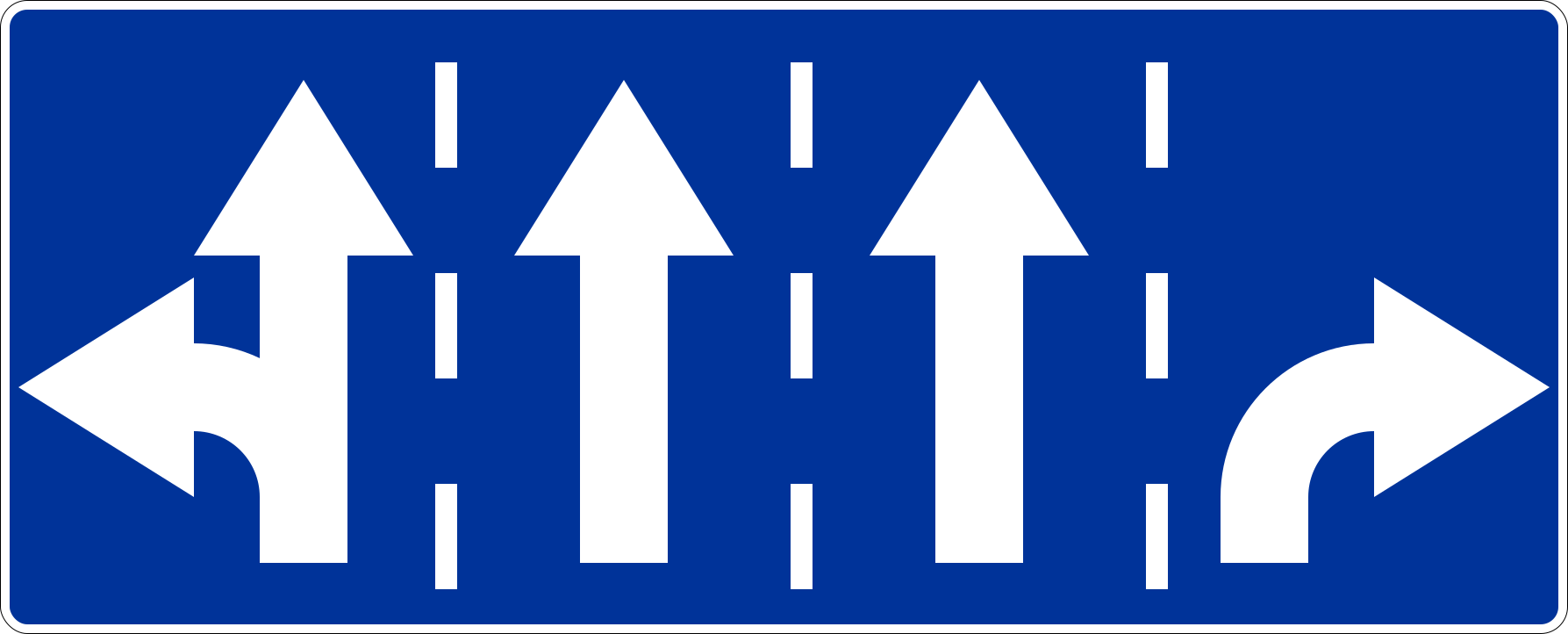
The F-10 - Lane Directions road sign may also be known by these alternative names or terms.
The F-10 - Lane Directions road sign is part of the Supplementary Signs (F) category, which groups together signs with similar rules and functions.
Reviewing related lane direction signs, like the F-10 and others, helps solidify your understanding and improves sign recognition for the Polish theory test. Comparing these similar road signs is key for accurate recall during your exam preparation.
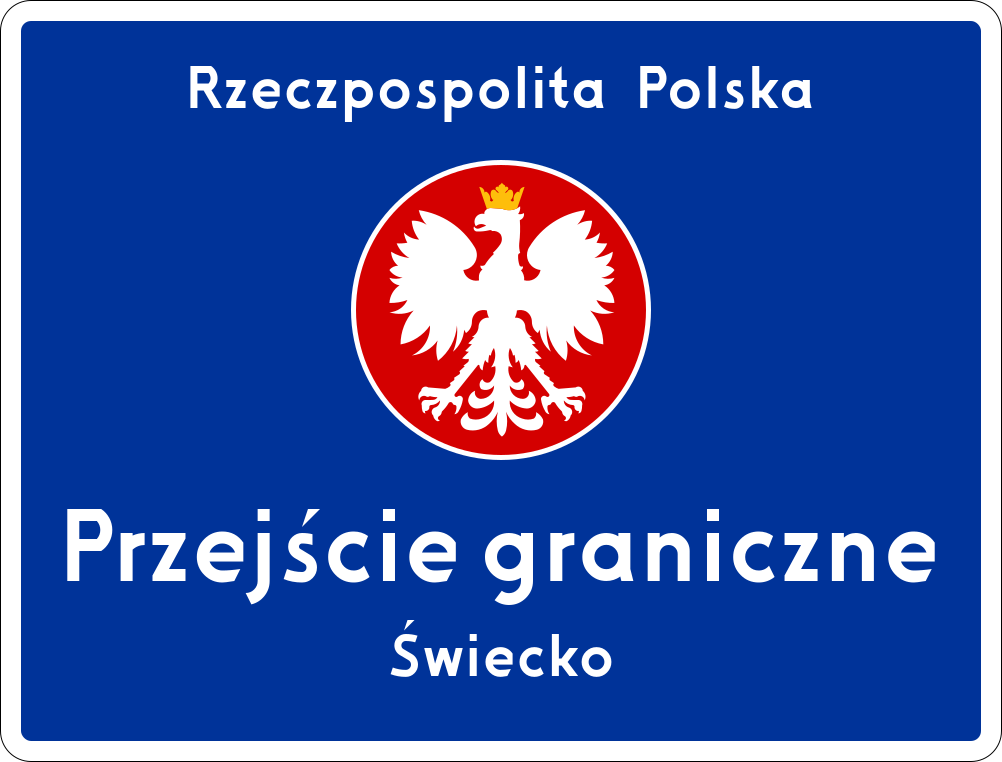
Prepare for border crossings with the F-1 sign
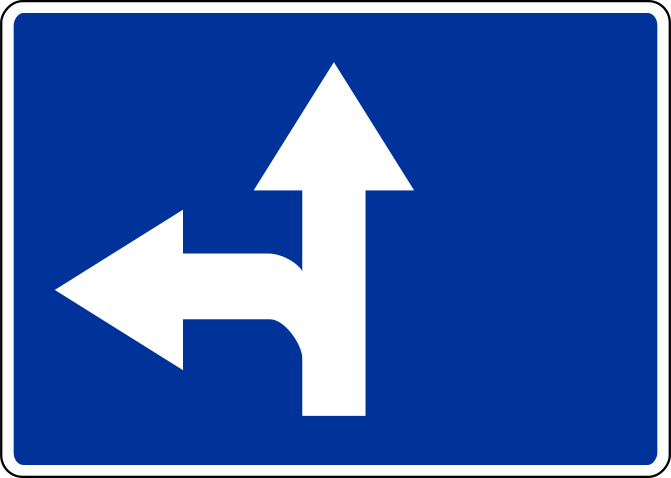
F-11: Follow the Direction for Your Specific Lane!
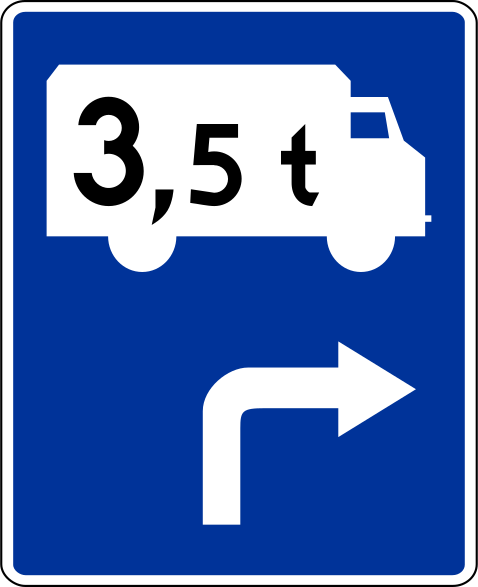
F-12 Transit Route Sign: Guiding Heavy Traffic Efficiently
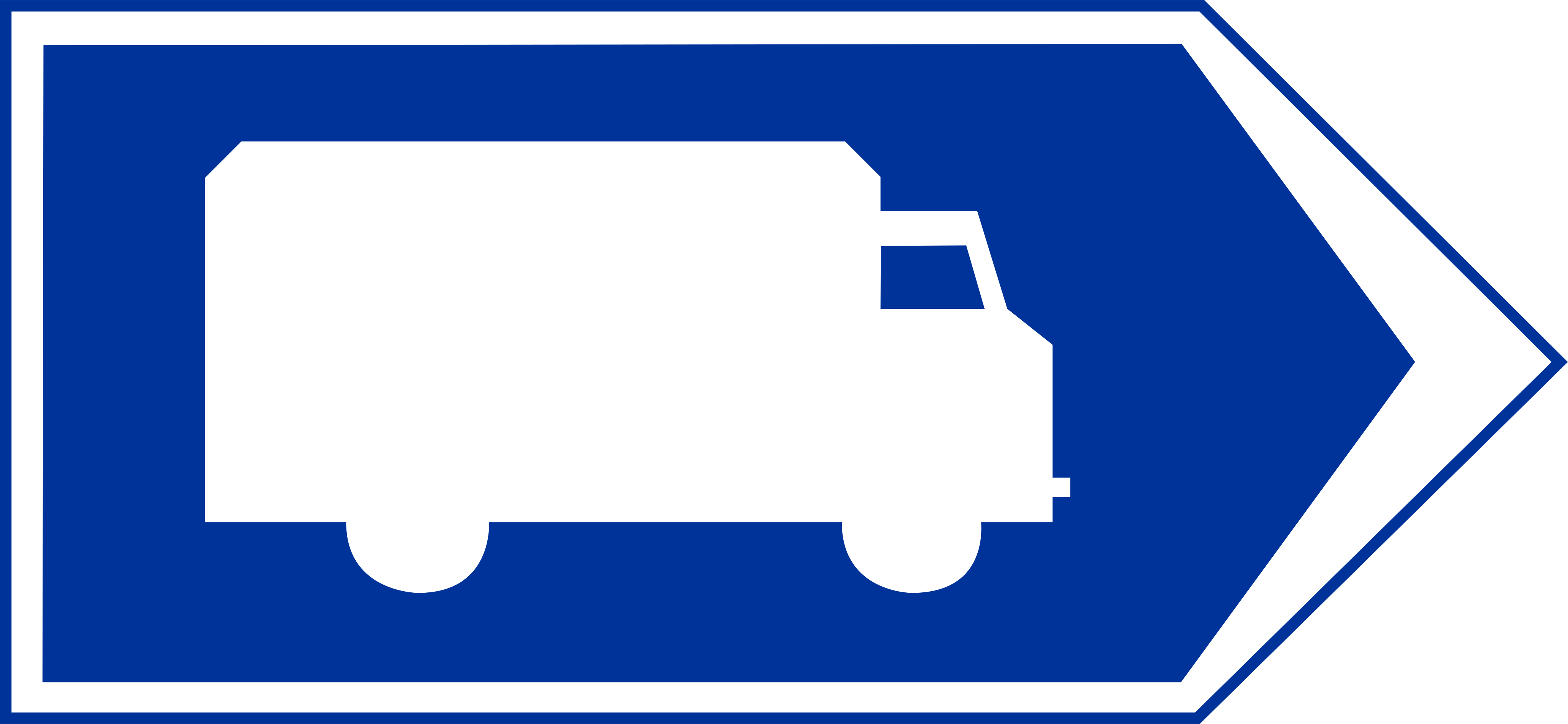
Follow the F-13 Sign for Your Designated Transit Route
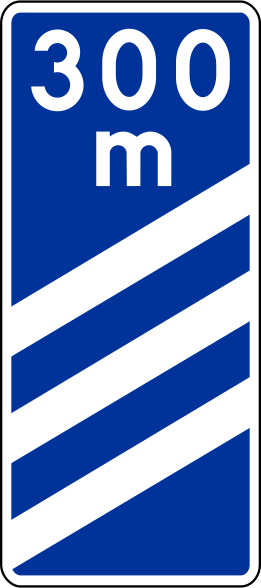
Approaching a Highway Exit? The F-14a Sign Warns You 300 Meters Ahead!
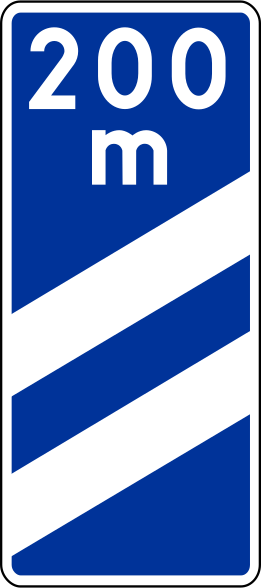
Prepare to exit the motorway with the F-14b 200-meter exit marker sign.
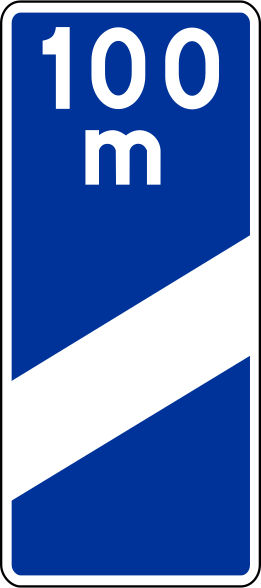
Prepare to Exit: The F-14c Highway Exit Marker (100m) Road Sign
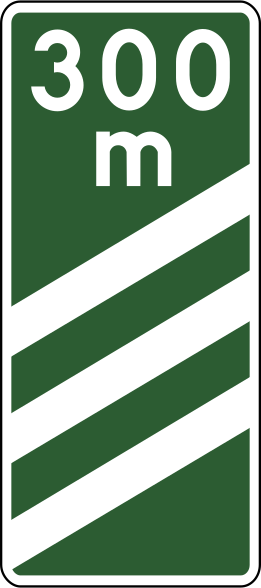
Know the F-14d sign: Expressway Exit Approaching in 300 Meters
Deepen your understanding of specific road signs by reviewing official Polish traffic rules and associated real-world driving scenarios. These expert-led resources help you bridge the gap between visual recognition and practical exam application.
Mastering Lane Discipline and Priority at Polish Intersections with Arrow Signals
Learn why driving in Poland with a foreign license is illegal if your Polish driving privileges have been revoked. This article explains the fundamental principle that driving entitlements are personal and singular under Polish law, as reinforced by court rulings, helping you understand the strict requirements for legal driving.
When you start your car in Poland, you might notice the engine running at higher revolutions per minute (RPM). This article explains that while elevated RPMs are often a normal part of the engine's automated warm-up process, they can also signal underlying faults. Understanding this distinction is essential for safe driving and for preparing effectively for the Polish driving theory exam.
Master Polish Road Markings to Avoid Fines and Drive Confidently
The P-8b arrow indicates a mandatory turn. A key rule for the left turn arrow (P-8b left): if it is placed in the leftmost lane of the road, it also allows the driver to perform a U-turn (zawracanie), provided there is no B-23 sign or an S-3 signal that excludes it. These arrows help organize traffic into dedicated turning lanes, reducing congestion in through-traffic lanes.
The P-8a arrow is painted on the lane surface to regulate movement at an intersection. If you are in a lane with this arrow, you are legally forbidden from turning left or right. It is used to streamline traffic and prevent collisions that occur when drivers try to turn from a middle lane. Often, these arrows are combined (e.g., straight and right), meaning both directions are allowed from that specific lane.
After reviewing the full list of Polish road signs, explore specific sign categories for in-depth understanding. Challenge your knowledge with practice questions focused on sign recognition and interpretation to solidify your preparation for the driving theory exam.
Browse All Polish Road Signs