
The F-7 'Way to Drive' sign is an informational traffic sign that shows you the correct route when a direct left turn is prohibited at an intersection. Instead of turning directly, you'll be guided via a detour, often involving several right turns or a specific loop. This sign is crucial for maintaining traffic flow and safety in complex junctions, especially in urban areas. Always follow the indicated white line on the blue background precisely to complete your 'left turn' legally.
This supplementary sign (F-7) is crucial for understanding legal detours when a direct left turn is prohibited. Master its interpretation for effective theory test revision and safe navigation through complex Polish road networks.
When a direct left turn is banned at an intersection (usually by a B-21 sign), the F-7 sign shows the legal detour maneuver. This often involves driving straight, turning right several times, or using a dedicated loop to cross the main road perpendicularly. It is a vital navigational aid in complex urban layouts where left turns are restricted to improve traffic flow on main arteries.
Provides a diagram of the specific route to take to reach a road where turning left is directly prohibited at the main intersection.
Get clear, practical answers to the most common questions about the F-7 - Way to Drive (No Left Turn) road sign. Learn how the sign works, what rules it represents, and how it affects real driving situations. This FAQ strengthens your understanding and supports accurate decision making for the Polish driving theory exam in Poland.
The F-7 sign indicates that a direct left turn is forbidden at the upcoming intersection. It provides a diagram showing the alternative, indirect route you must take to proceed in that general direction. This usually involves making several right turns or using a loop to cross the main road.
The most common way to follow the F-7 sign is by performing a series of right turns, effectively making a 'three-point turn' or 'U-turn' using designated roads. The sign's diagram will clearly illustrate this specific sequence, often involving going straight, turning right, and then right again to get onto the correct road to continue your journey.
No, attempting a direct left turn is prohibited if the F-7 sign is displayed alongside a prohibition sign (like B-21). The F-7 sign specifically directs you to use an alternative, legal route. Disregarding the F-7 sign and making a direct left turn would be a traffic violation.
These restrictions and detour signs are used to improve traffic flow on busy main roads, enhance safety at complex intersections, or manage traffic during road works. By banning direct left turns and providing a clear detour, they prevent conflicts and delays that could otherwise occur, especially in busy urban environments.
When following the detour indicated by the F-7 sign, pay close attention to lane discipline and always follow the exact path shown on the diagram. You may need to yield to other traffic when merging back onto the main road after completing the detour. Ensure you are in the correct lane well in advance of each turn shown on the route.
A clear reference image of the F-7 - Way to Drive (No Left Turn) road sign used in Poland.

The F-7 - Way to Drive (No Left Turn) road sign may also be known by these alternative names or terms.
The F-7 - Way to Drive (No Left Turn) road sign is part of the Supplementary Signs (F) category, which groups together signs with similar rules and functions.
Reviewing similar traffic signs, like this 'Way to Drive (No Left Turn)' indicator, alongside other road markings aids in developing sharp sign recognition. Mastering traffic sign comparison is crucial for passing your theory test revision and ensuring safe driving.
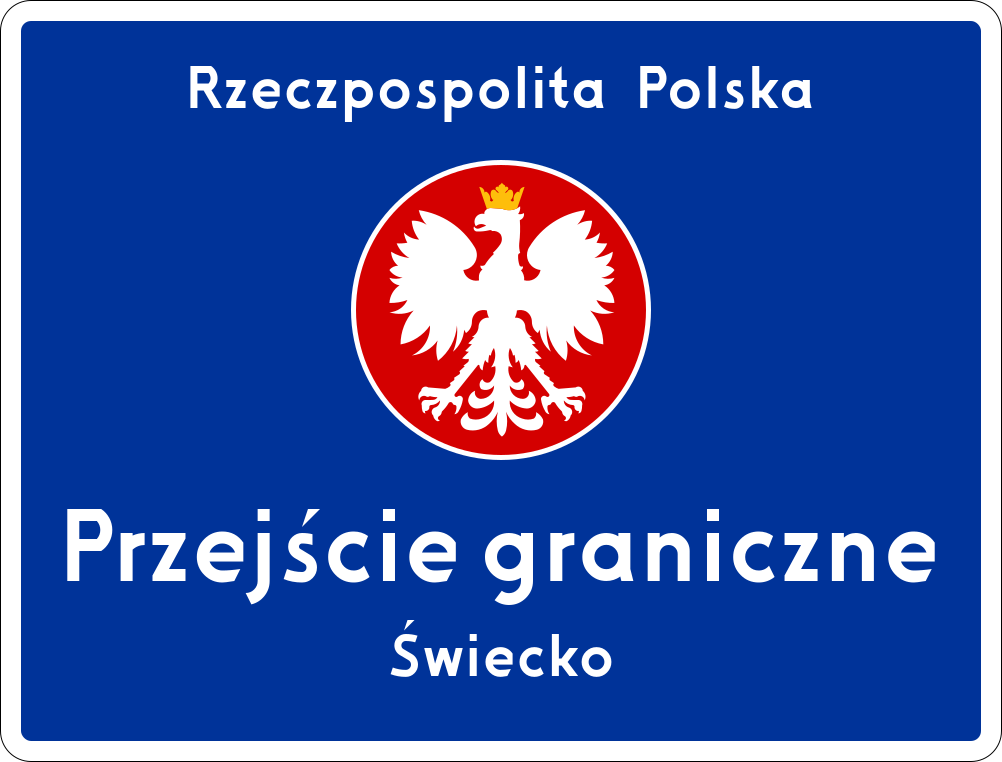
Prepare for border crossings with the F-1 sign
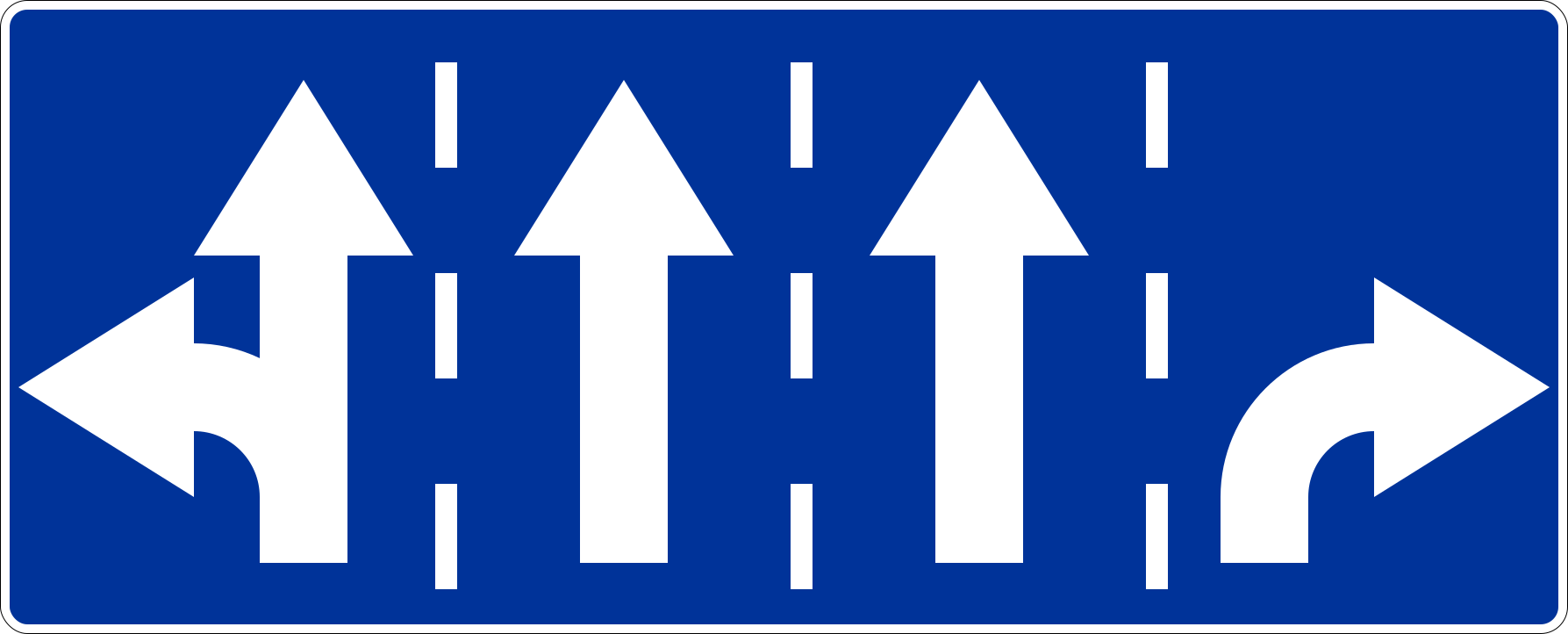
Use the F-10 sign to navigate your lane correctly at junctions.
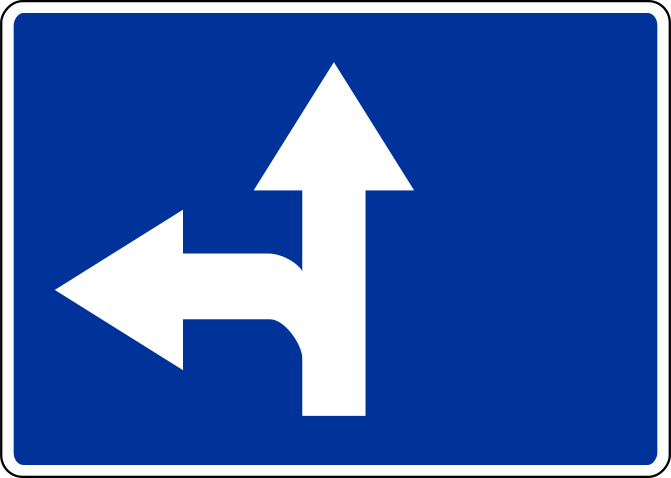
F-11: Follow the Direction for Your Specific Lane!
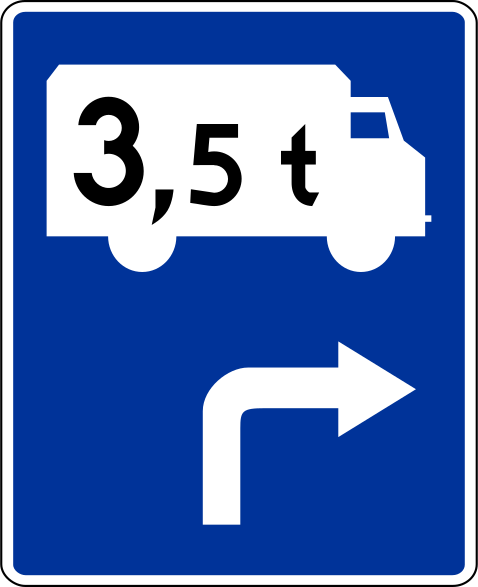
F-12 Transit Route Sign: Guiding Heavy Traffic Efficiently
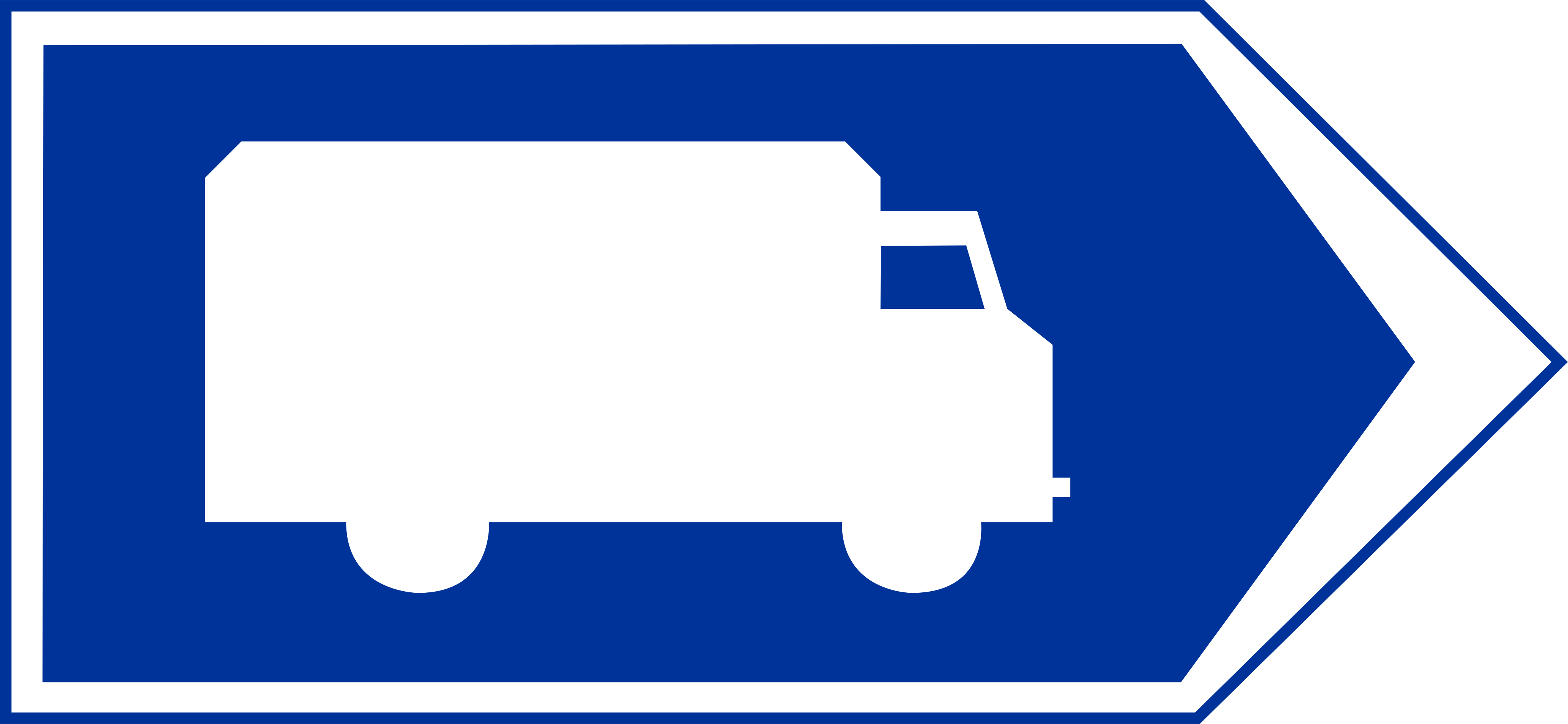
Follow the F-13 Sign for Your Designated Transit Route
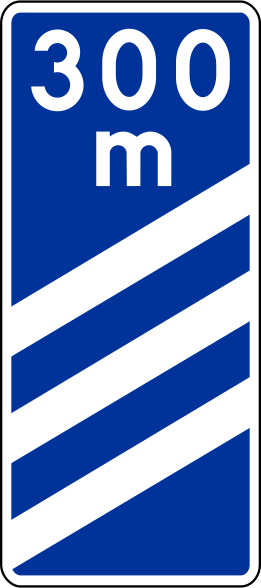
Approaching a Highway Exit? The F-14a Sign Warns You 300 Meters Ahead!
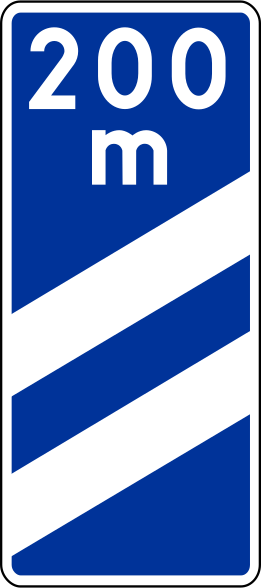
Prepare to exit the motorway with the F-14b 200-meter exit marker sign.
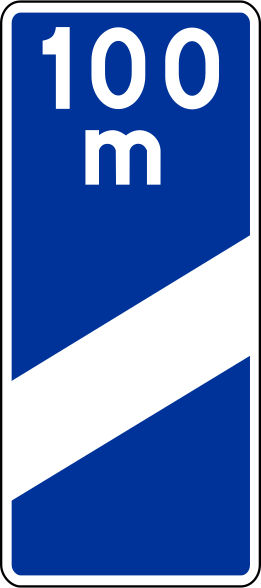
Prepare to Exit: The F-14c Highway Exit Marker (100m) Road Sign
Deepen your understanding of specific road signs by reviewing official Polish traffic rules and associated real-world driving scenarios. These expert-led resources help you bridge the gap between visual recognition and practical exam application.
Navigating Polish intersections requires a clear understanding of priority rules, particularly the differing obligations imposed by the mandatory Stop sign (B-20) and the Yield sign (A-7). This article will break down the legal requirements for each sign, explaining precisely when and how you must act to ensure safety and compliance with Polish traffic law. Mastering these distinctions is vital for success in your driving theory exam and for safe driving.
This article provides a detailed explanation of how Polish traffic signs A-7 ('Ustąp Pierwszeństwa' - Yield), B-20 ('STOP'), and D-1 ('Droga z Pierwszeństwem' - Priority Road) dictate right-of-way at intersections. Understanding the nuances of these signs is a fundamental aspect of the Polish driving theory exam, and mastering them will significantly improve your preparedness for real-world driving scenarios.
Master Polish Priority Signs and Navigate Intersections with Confidence
Your Essential Guide to First Aid After an Accident – Pass Your Polish Theory Exam!
The G-1c is the final marker post before the railway tracks, featuring a single diagonal red stripe. It is placed on the right side of the road at approximately 1/3 of the distance from the initial warning sign to the crossing. Passing this sign means you are usually within 50 to 80 meters of the tracks. At this stage, the driver should be at a slow, safe speed, ready to come to an absolute halt if required by lights, barriers, or a Stop sign.
The D-1 sign marks the beginning or the continuation of a route where drivers have priority over vehicles entering from side roads. It is characterized by a yellow diamond shape with a thick white border. In urban areas, this sign is typically placed before every intersection where the priority is maintained, while on rural roads, it confirms the road's status over longer stretches. If the priority road changes direction at an intersection, it will be accompanied by a T-6 supplementary plate showing the actual flow of traffic.
After reviewing the full list of Polish road signs, explore specific sign categories for in-depth understanding. Challenge your knowledge with practice questions focused on sign recognition and interpretation to solidify your preparation for the driving theory exam.
Browse All Polish Road Signs