
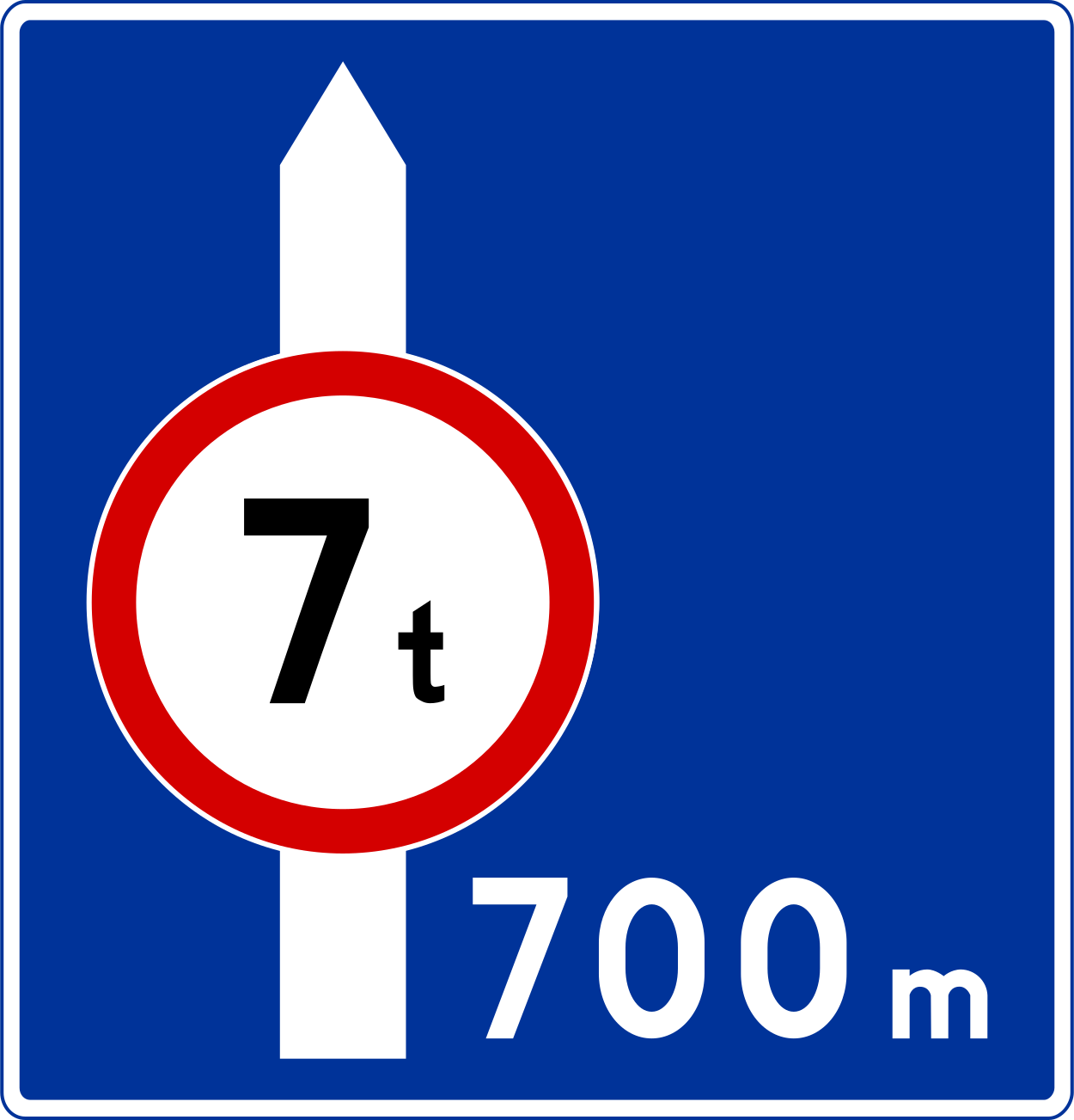
The F-5 sign is your advance notice that a specific prohibition is coming up, showing a miniature version of the restriction symbol and the distance to it. This crucial warning sign gives you ample time to prepare, check your vehicle's suitability, and plan an alternative route if necessary, preventing you from reaching a point where turning back might be difficult or impossible. It's a key sign for understanding route planning and adherence to traffic regulations in Poland.
This F-5 sign provides crucial advance notice of an upcoming prohibition, allowing drivers to prepare for restrictions like weight limits or vehicle type exclusions. Essential for theory test revision, mastering road sign meaning ensures safe navigation and compliance with Polish traffic rules.
The F-5 sign is an essential tool for preventing drivers from entering a section of road where they would be legally prohibited. It features a miniature version of the upcoming prohibition sign (e.g., 'No Trucks' or 'Weight Limit') along with a distance in meters or kilometers. This gives drivers of restricted vehicles enough time to find an alternative route or a place to turn around safely before they actually reach the restricted zone.
Advance warning that a specific prohibition sign is located further down the road at a stated distance.
Get clear, practical answers to the most common questions about the F-5 - Warning of Prohibition road sign. Learn how the sign works, what rules it represents, and how it affects real driving situations. This FAQ strengthens your understanding and supports accurate decision making for the Polish driving theory exam in Poland.
The F-5 sign warns you in advance that a specific prohibition is located further down the road. It displays a smaller version of the prohibition sign (like 'No Trucks' or 'Weight Limit') and indicates the distance in meters or kilometers to where that prohibition takes effect. It's designed to give you time to react before you reach the actual restricted area.
When you see the F-5 sign, you should immediately pay attention to the symbol and the distance shown. Check if the upcoming prohibition applies to your vehicle type, weight, or dimensions. If it does, start looking for a safe place to turn around or an alternative route before you reach the actual prohibition sign.
A common trap is ignoring the distance and assuming you can deal with the restriction when you see the actual prohibition sign. Learners might also forget to check if their vehicle is affected or plan their detour too late, leading to difficult maneuvers or driving into a prohibited zone. The exam tests your ability to anticipate and plan ahead.
Yes, if the prohibition shown on the F-5 sign (e.g., a weight limit, truck ban, or height restriction) does not apply to your vehicle category, you can continue. However, always double-check the symbol and distance carefully. The sign is specifically there to alert drivers whose vehicles fall under the upcoming restriction.
The distance is critical because it informs you how much time and space you have to make a decision. It allows drivers of restricted vehicles to safely change lanes, exit the road, or find a detour before reaching the point where they would be violating the prohibition. Ignoring the distance means you might be forced to turn around in a difficult spot.
A clear reference image of the F-5 - Warning of Prohibition road sign used in Poland.
The F-5 - Warning of Prohibition road sign may also be known by these alternative names or terms.
The F-5 - Warning of Prohibition road sign is part of the Supplementary Signs (F) category, which groups together signs with similar rules and functions.
Comparing this 'Warning of Prohibition' sign with others improves your ability to quickly distinguish between similar traffic signs, crucial for accurate theory test revision and safe driving. This targeted sign comparison enhances your overall sign recognition and reduces errors during your exam preparation.
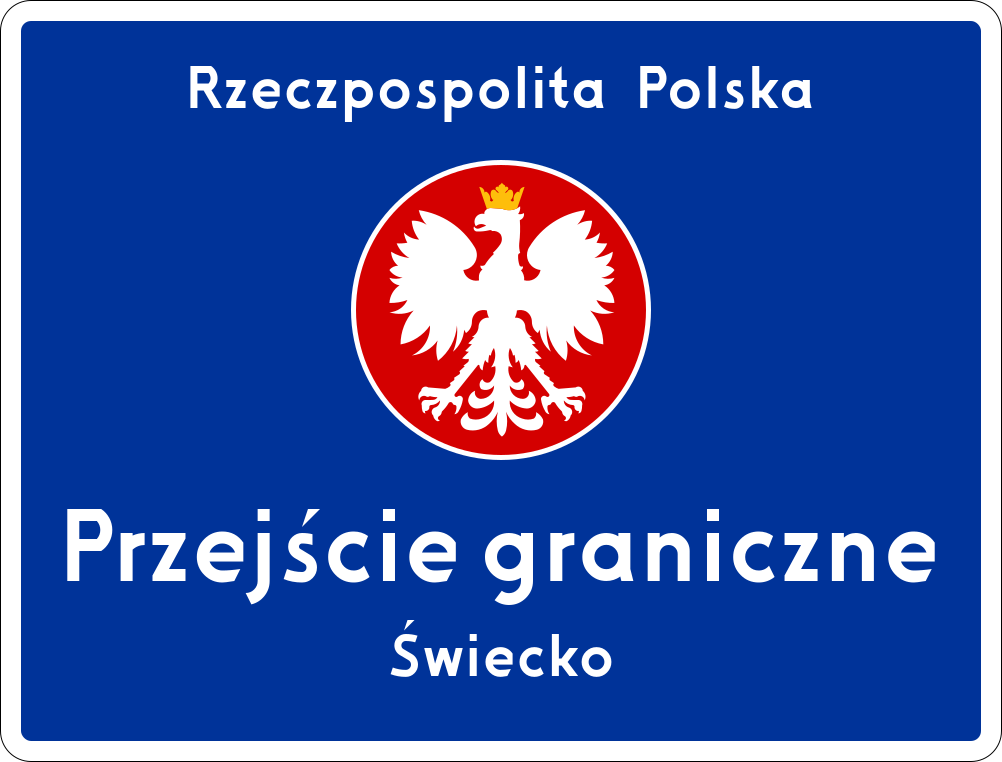
Prepare for border crossings with the F-1 sign
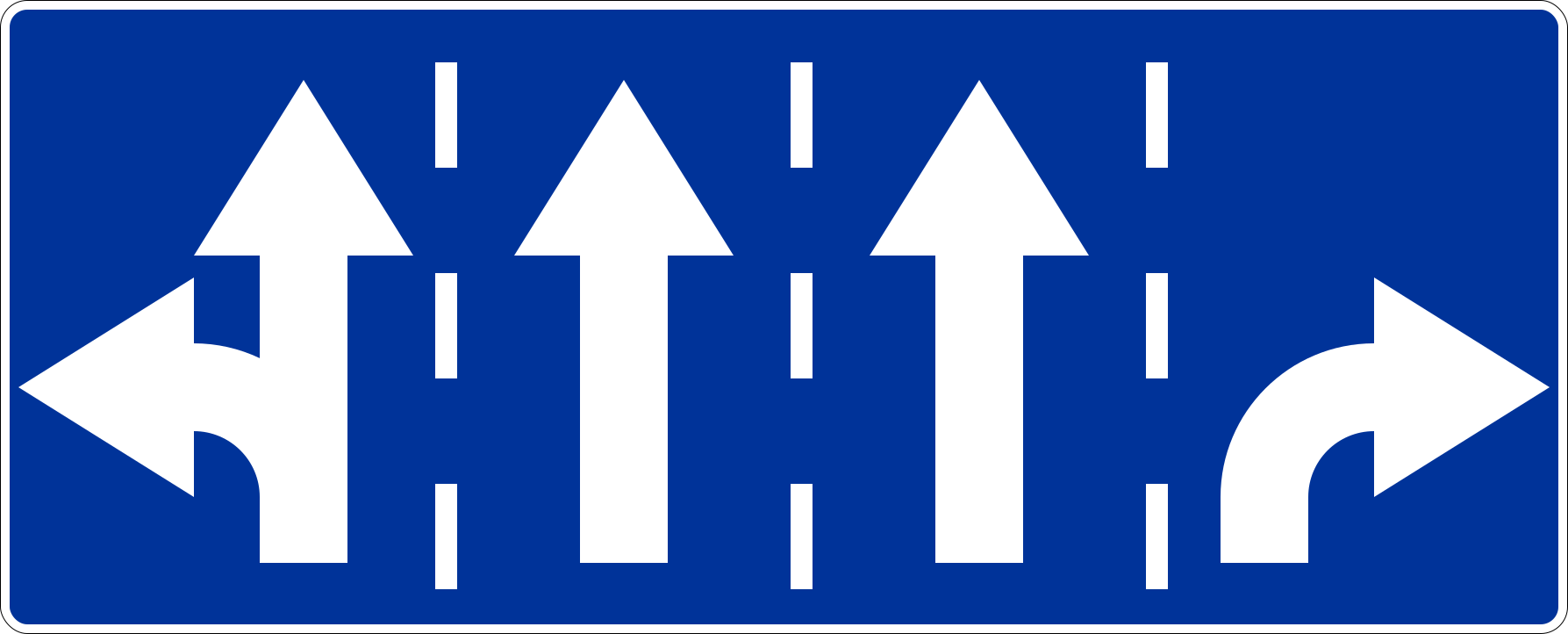
Use the F-10 sign to navigate your lane correctly at junctions.
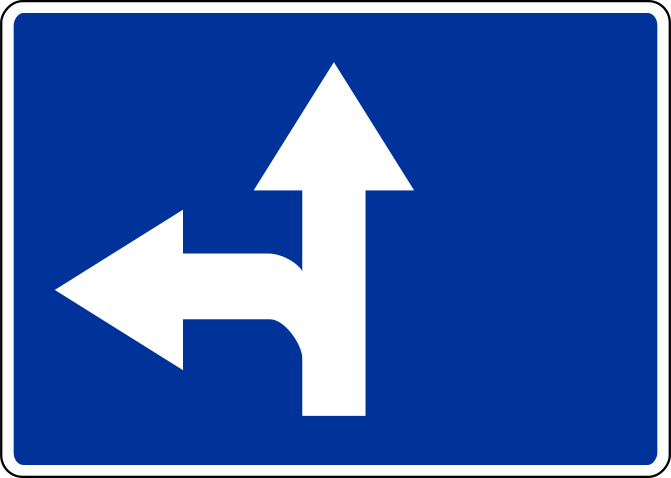
F-11: Follow the Direction for Your Specific Lane!
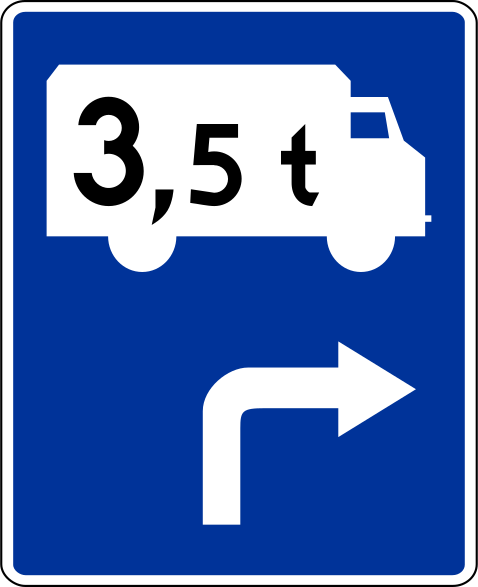
F-12 Transit Route Sign: Guiding Heavy Traffic Efficiently
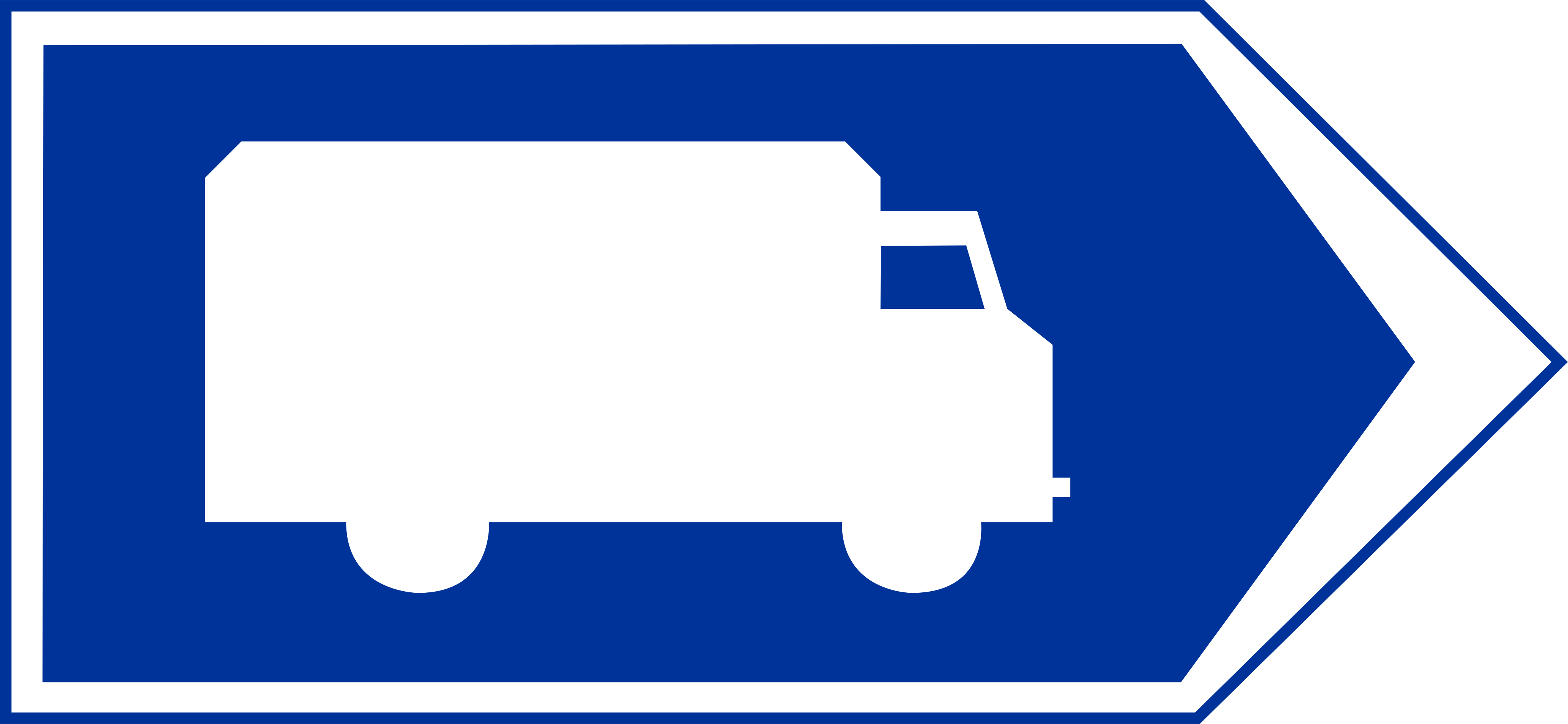
Follow the F-13 Sign for Your Designated Transit Route
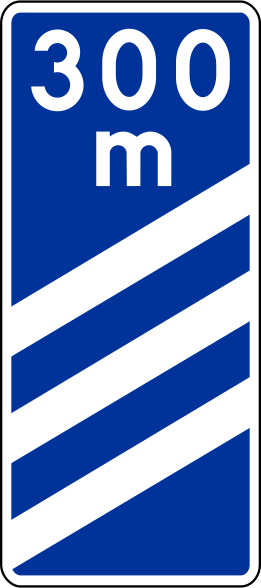
Approaching a Highway Exit? The F-14a Sign Warns You 300 Meters Ahead!
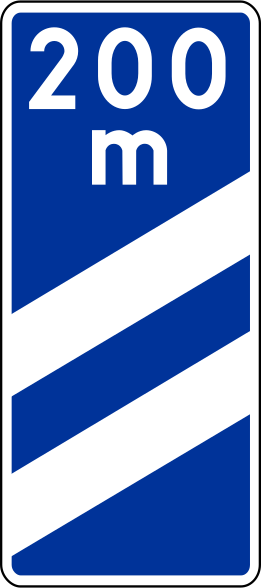
Prepare to exit the motorway with the F-14b 200-meter exit marker sign.
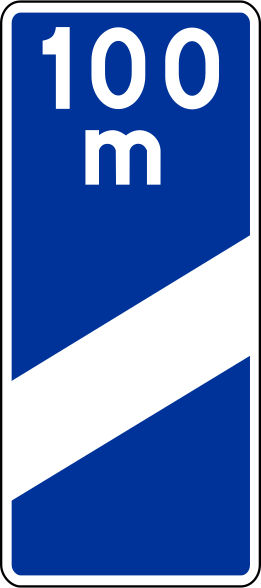
Prepare to Exit: The F-14c Highway Exit Marker (100m) Road Sign
Deepen your understanding of specific road signs by reviewing official Polish traffic rules and associated real-world driving scenarios. These expert-led resources help you bridge the gap between visual recognition and practical exam application.
Learn how your reaction time, typically one second, translates into significant reaction distance on Polish roads. This article breaks down the factors affecting reaction time and its critical role in safe driving and success on the Polish driving theory examination, ensuring you understand how to maintain safe distances at any speed.
Master Polish Crossing Markings for a Safer Drive and Exam Success.
How Far Do You Travel Before You Even React? Essential for Your Polish Driving Exam.
Navigating Polish intersections requires a clear understanding of priority rules, particularly the differing obligations imposed by the mandatory Stop sign (B-20) and the Yield sign (A-7). This article will break down the legal requirements for each sign, explaining precisely when and how you must act to ensure safety and compliance with Polish traffic law. Mastering these distinctions is vital for success in your driving theory exam and for safe driving.
The F-12 sign is used to guide through-traffic (transit) away from city centers or sensitive areas. It features a symbol of a specific vehicle (usually a truck) and an arrow. By following this sign, long-distance drivers can stay on roads designed for heavy traffic, avoiding narrow streets or residential zones. This sign is an advance warning placed before the junction where the turn must be made.
The G-1c is the final marker post before the railway tracks, featuring a single diagonal red stripe. It is placed on the right side of the road at approximately 1/3 of the distance from the initial warning sign to the crossing. Passing this sign means you are usually within 50 to 80 meters of the tracks. At this stage, the driver should be at a slow, safe speed, ready to come to an absolute halt if required by lights, barriers, or a Stop sign.
After reviewing the full list of Polish road signs, explore specific sign categories for in-depth understanding. Challenge your knowledge with practice questions focused on sign recognition and interpretation to solidify your preparation for the driving theory exam.
Browse All Polish Road Signs