
As you travel across Poland, the F-3 sign, a large informational board, indicates that you are entering a new administrative region known as a Voivodeship. This is the highest level of administrative division in Poland. While it doesn't impose driving restrictions, it's useful for navigation and awareness, as local road conditions or regulations might differ slightly between regions. Drivers should note the change for orientation during long journeys.
Understanding the F-3 administrative boundary sign is essential for geographical awareness and navigating Poland's highest administrative divisions. This crucial road sign meaning helps drivers correctly interpret regional changes and is vital knowledge for the Polish driving theory test revision.
The F-3 sign is a large informational board placed at the boundary of a 'województwo' (voivodeship). It serves to inform travelers about the regional administration they are entering. In Poland, this is the highest level of administrative division. These signs are often accompanied by regional logos or tourist information regarding the specific province. They help drivers orient themselves geographically during long-distance travel.
Indicates the entry into a new administrative region (Voivodeship) of Poland.
Get clear, practical answers to the most common questions about the F-3 - Administrative Boundary (Voivodeship) road sign. Learn how the sign works, what rules it represents, and how it affects real driving situations. This FAQ strengthens your understanding and supports accurate decision making for the Polish driving theory exam in Poland.
The F-3 sign's primary purpose is to inform drivers that they are crossing into a new administrative region within Poland, specifically a Voivodeship. It helps with geographical orientation and awareness of potential regional differences in road maintenance or local initiatives.
No, the F-3 sign itself does not require you to change your speed or driving behaviour. It is purely an informational sign indicating a boundary change. However, it's always wise to remain aware of your surroundings and adjust your driving to road conditions, which might vary between administrative regions.
A common exam trap is confusing informational signs like the F-3 with regulatory signs (prohibitory, mandatory, or restrictive). The F-3 sign only informs; it does not dictate any immediate action. Learners might incorrectly assume it implies a speed limit change or other restriction.
While the F-3 sign itself doesn't change rules, entering a new Voivodeship might mean a change in who is responsible for road maintenance or which local authorities are in charge. This could potentially lead to differences in road surface quality or the implementation of local traffic management strategies in the new region.
The F-3 sign usually displays the name of the Voivodeship you are entering, such as 'Województwo Mazowieckie' or 'Województwo Dolnośląskie'. It may also include regional emblems or brief tourist information about the specific province.
A clear reference image of the F-3 - Administrative Boundary (Voivodeship) road sign used in Poland.
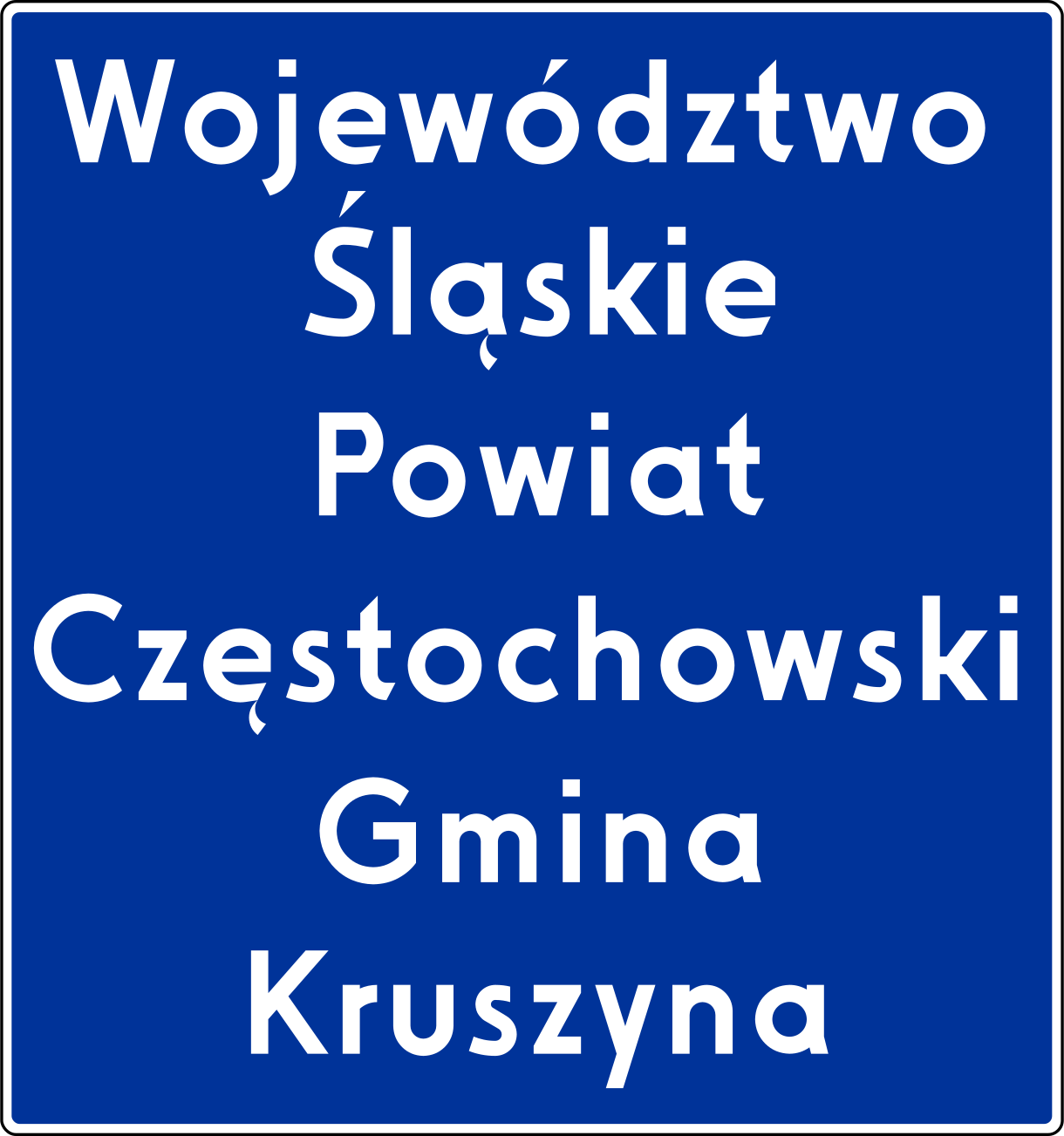
The F-3 - Administrative Boundary (Voivodeship) road sign may also be known by these alternative names or terms.
The F-3 - Administrative Boundary (Voivodeship) road sign is part of the Supplementary Signs (F) category, which groups together signs with similar rules and functions.
Reviewing similar road signs alongside the Voivodeship boundary marker aids in distinguishing them, enhancing your sign recognition for the theory test. This comparative study sharpens your recall of traffic sign differences, crucial for accurate driving theory revision.
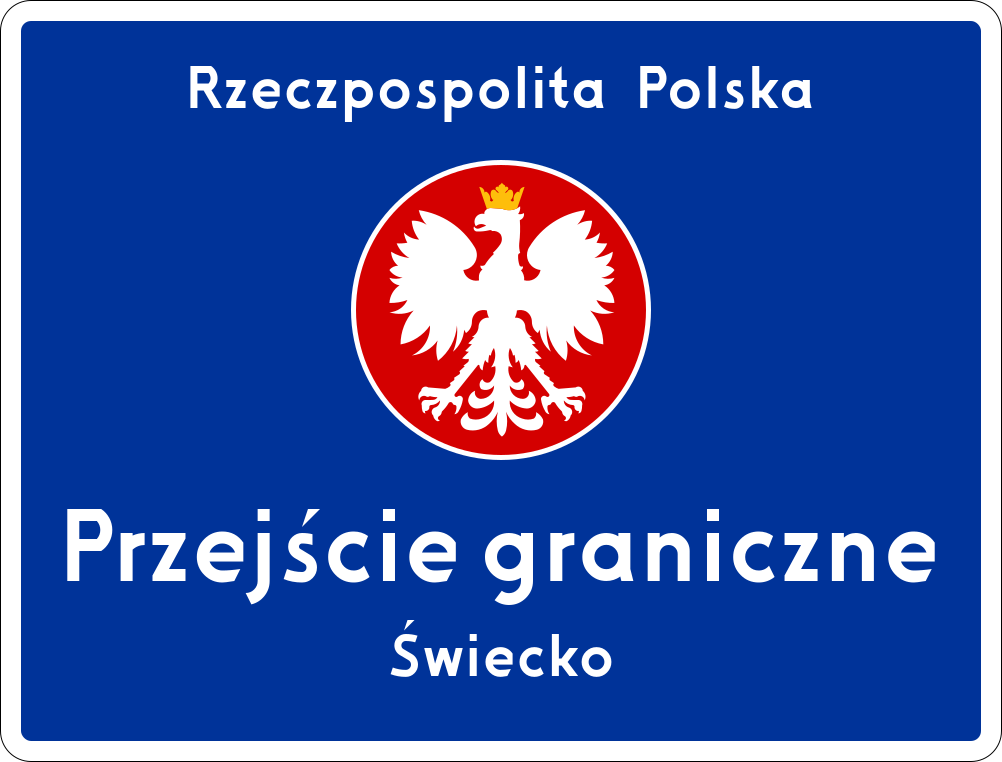
Prepare for border crossings with the F-1 sign
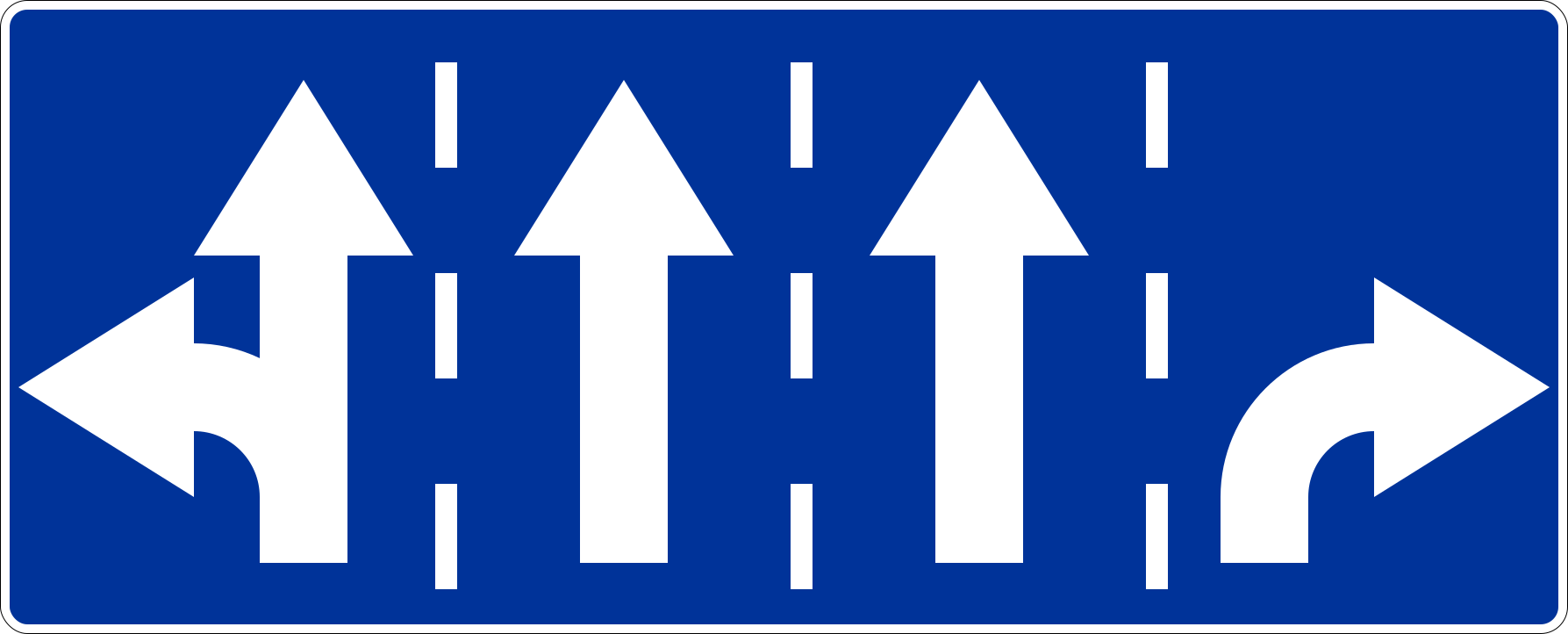
Use the F-10 sign to navigate your lane correctly at junctions.
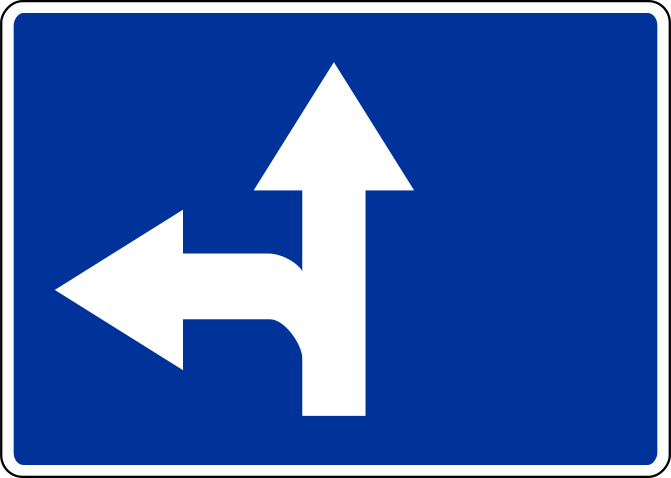
F-11: Follow the Direction for Your Specific Lane!
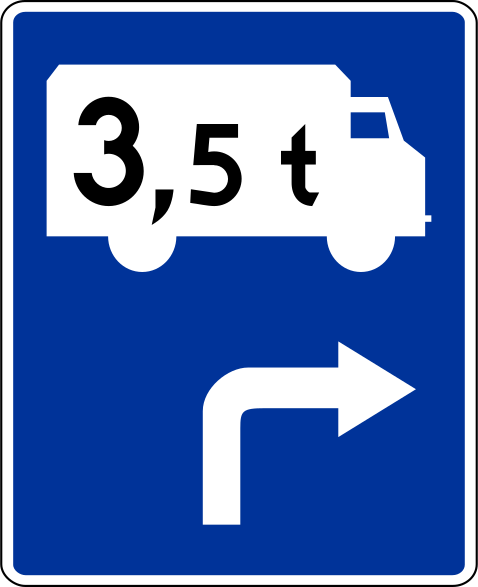
F-12 Transit Route Sign: Guiding Heavy Traffic Efficiently
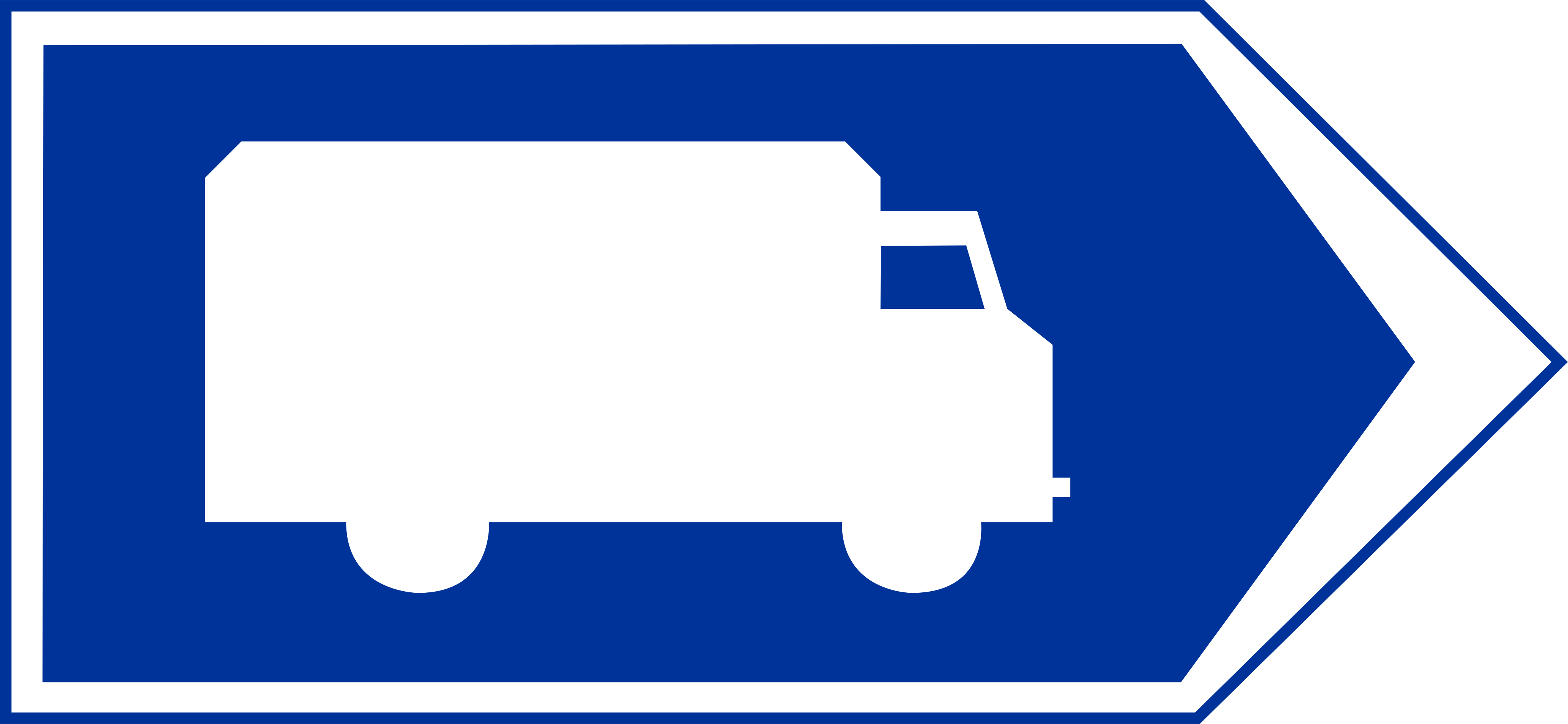
Follow the F-13 Sign for Your Designated Transit Route
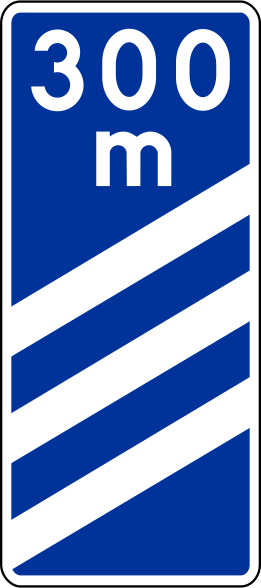
Approaching a Highway Exit? The F-14a Sign Warns You 300 Meters Ahead!
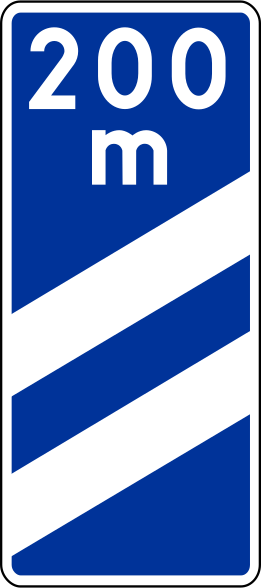
Prepare to exit the motorway with the F-14b 200-meter exit marker sign.
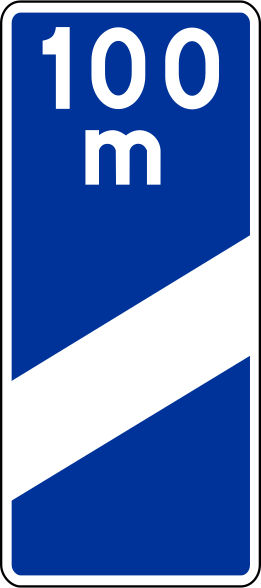
Prepare to Exit: The F-14c Highway Exit Marker (100m) Road Sign
Deepen your understanding of specific road signs by reviewing official Polish traffic rules and associated real-world driving scenarios. These expert-led resources help you bridge the gap between visual recognition and practical exam application.
Learn why driving in Poland with a foreign license is illegal if your Polish driving privileges have been revoked. This article explains the fundamental principle that driving entitlements are personal and singular under Polish law, as reinforced by court rulings, helping you understand the strict requirements for legal driving.
Navigating Polish intersections requires a clear understanding of priority rules, particularly the differing obligations imposed by the mandatory Stop sign (B-20) and the Yield sign (A-7). This article will break down the legal requirements for each sign, explaining precisely when and how you must act to ensure safety and compliance with Polish traffic law. Mastering these distinctions is vital for success in your driving theory exam and for safe driving.
Master Your Rights and Obligations During a Polish Roadside Inspection
Navigate Tram Intersections Like a Pro: Essential for Your Polish Driving Exam.
The D-1 sign marks the beginning or the continuation of a route where drivers have priority over vehicles entering from side roads. It is characterized by a yellow diamond shape with a thick white border. In urban areas, this sign is typically placed before every intersection where the priority is maintained, while on rural roads, it confirms the road's status over longer stretches. If the priority road changes direction at an intersection, it will be accompanied by a T-6 supplementary plate showing the actual flow of traffic.
The T-17 plate is used with A-30 to mark the proximity of a national border. While within the Schengen Area these crossings are often open and require no stop, the sign reminds drivers that laws, speed limits, and even equipment requirements (like having a fire extinguisher or specific bulbs) may change immediately after crossing. It is also used at external EU borders where a full customs stop is required.
After reviewing the full list of Polish road signs, explore specific sign categories for in-depth understanding. Challenge your knowledge with practice questions focused on sign recognition and interpretation to solidify your preparation for the driving theory exam.
Browse All Polish Road Signs