
The F-16 'End of Lane (Two-Way Road)' sign is a warning sign informing you that the inner (left) lane in your direction of travel is about to end. This is common on multi-lane roads, and it signals the need to merge into the right-hand lane. In Poland, the 'zipper merge' rule (jazda na suwak) is crucial here: drivers in the continuing lane must allow vehicles from the ending lane to merge smoothly if traffic is slow or stopped. Always check your mirrors and signal your intentions early.
The F-16 sign, signaling the end of a lane on a two-way road, demands immediate attention to ensure safe merging into the adjacent lane. Correct road sign meaning and adherence to Polish traffic rules, especially the 'jazda na suwak' (zipper merge) principle, are vital for passing your driving theory test and preventing collisions.
The F-16 sign is used on roads with at least two lanes in one direction to warn that the leftmost lane (the inner lane) is coming to an end. Drivers in that lane must merge into the right-hand lane. In Poland, the 'zipper merge' (jazda na suwak) rule applies here: drivers in the continuing lane must allow one vehicle from the ending lane to merge in front of them if traffic is slow or at a standstill.
Warns that the inner (left) lane in your direction is ending on a two-way road.
Get clear, practical answers to the most common questions about the F-16 - End of Lane (Two-Way Road) road sign. Learn how the sign works, what rules it represents, and how it affects real driving situations. This FAQ strengthens your understanding and supports accurate decision making for the Polish driving theory exam in Poland.
The F-16 sign warns that the left lane you are currently in will soon end. You must prepare to merge safely into the right lane. This sign is typically placed some distance before the actual lane closure to give you ample time to adjust your driving.
Upon seeing the F-16 sign, check your mirrors, especially your right-side mirror, and signal your intention to move to the right lane. As you approach the lane closure, look for an opportunity to merge smoothly. If traffic is slow, be prepared to apply the 'zipper merge' principle.
The 'zipper merge' (jazda na suwak) rule, applicable in Poland when traffic is slow or stopped, means drivers in the continuing lane should allow one vehicle from the ending lane to merge in front of them. This helps maintain traffic flow and avoids unnecessary congestion. You should not speed up to prevent someone from merging, nor should you block them unnecessarily.
Yes, you must not speed up to 'cut off' vehicles in the continuing lane as your lane ends. It's also prohibited to fail to yield or refuse to follow the zipper merge rule in dense traffic. Stopping abruptly in the ending lane out of frustration is also unsafe and prohibited.
A common trap is not understanding that the F-16 sign requires a merge, not just a lane change. Learners might also forget the zipper merge rule or not realize they must signal their intention to merge early. The exam will test your understanding of when and how to merge safely, especially in congested traffic.
You will see the F-16 sign on roads where traffic is divided into multiple lanes in the same direction, such as approach roads to toll booths, multi-lane urban roads, or sections where roadworks reduce the number of available lanes ahead. It specifically warns about the inner (left) lane ending.
A clear reference image of the F-16 - End of Lane (Two-Way Road) road sign used in Poland.
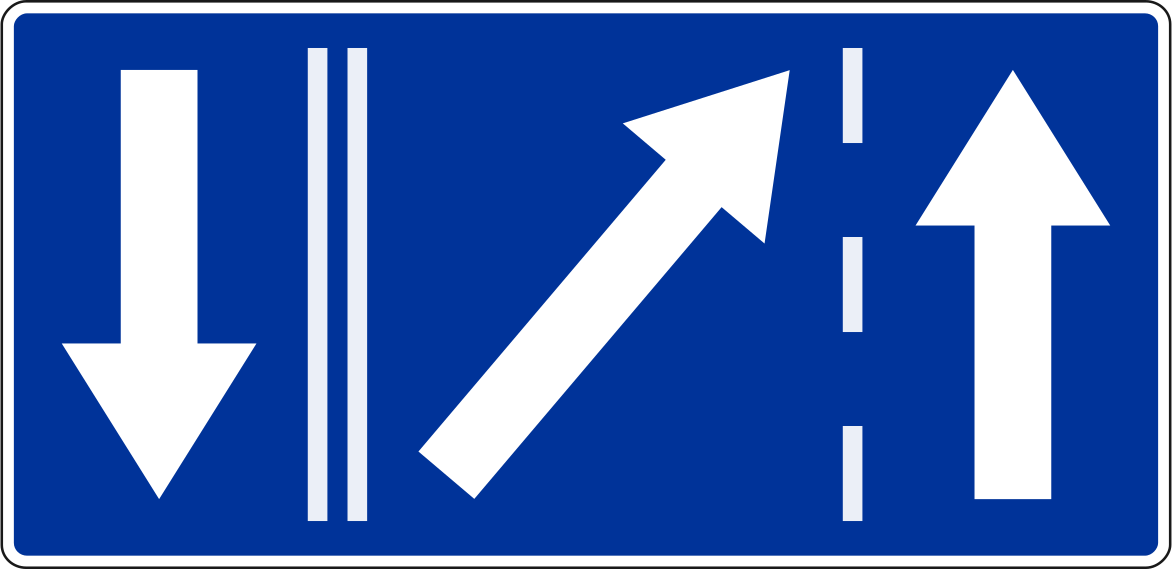
The F-16 - End of Lane (Two-Way Road) road sign may also be known by these alternative names or terms.
The F-16 - End of Lane (Two-Way Road) road sign is part of the Supplementary Signs (F) category, which groups together signs with similar rules and functions.
Studying similar road signs side-by-side helps solidify your understanding and reduces confusion during the theory test. Practise traffic sign comparison and improve your sign recognition skills for a smoother driving licence process.
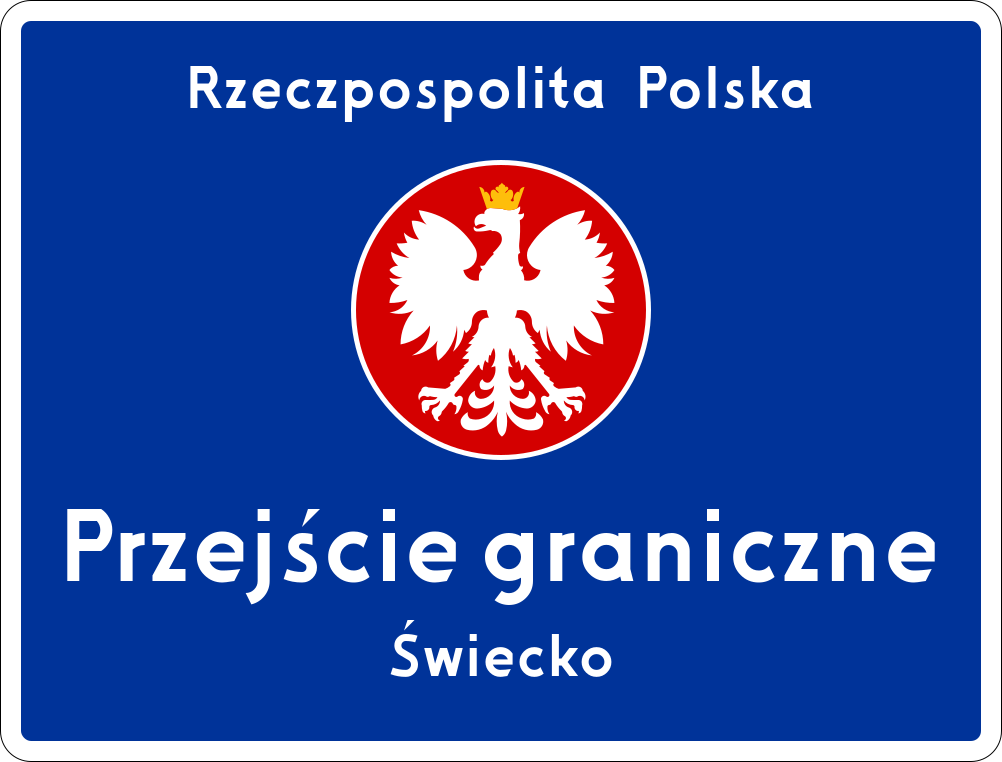
Prepare for border crossings with the F-1 sign
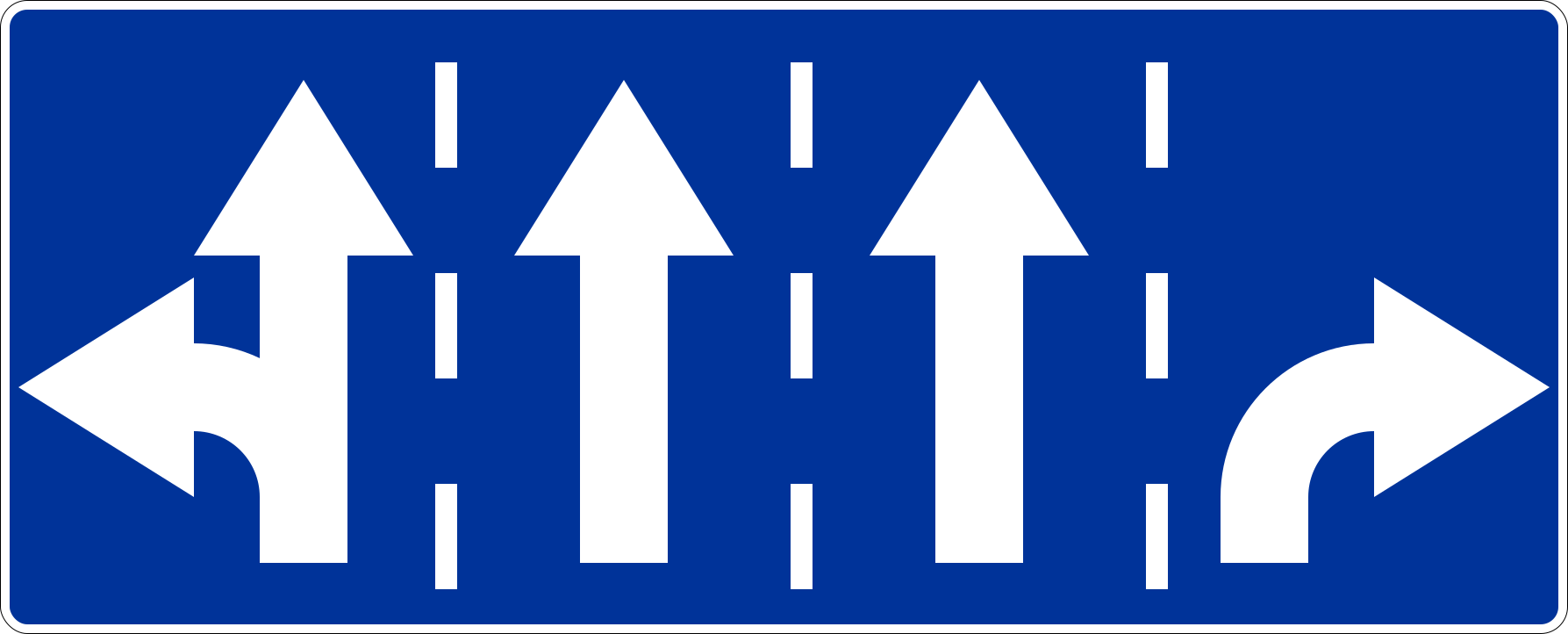
Use the F-10 sign to navigate your lane correctly at junctions.
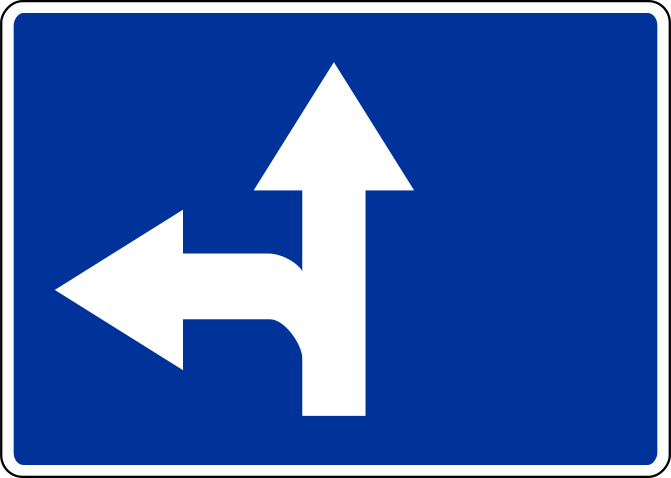
F-11: Follow the Direction for Your Specific Lane!
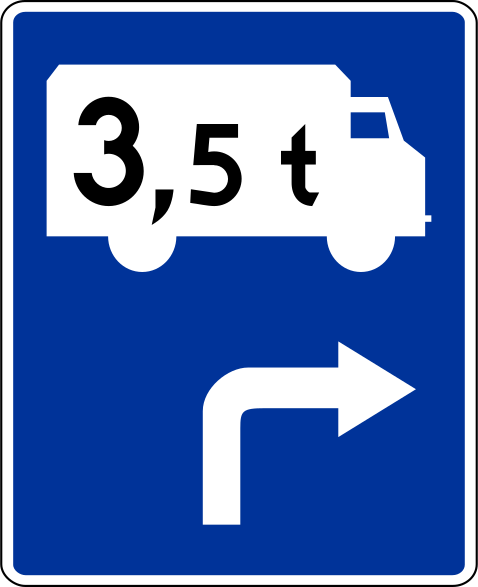
F-12 Transit Route Sign: Guiding Heavy Traffic Efficiently
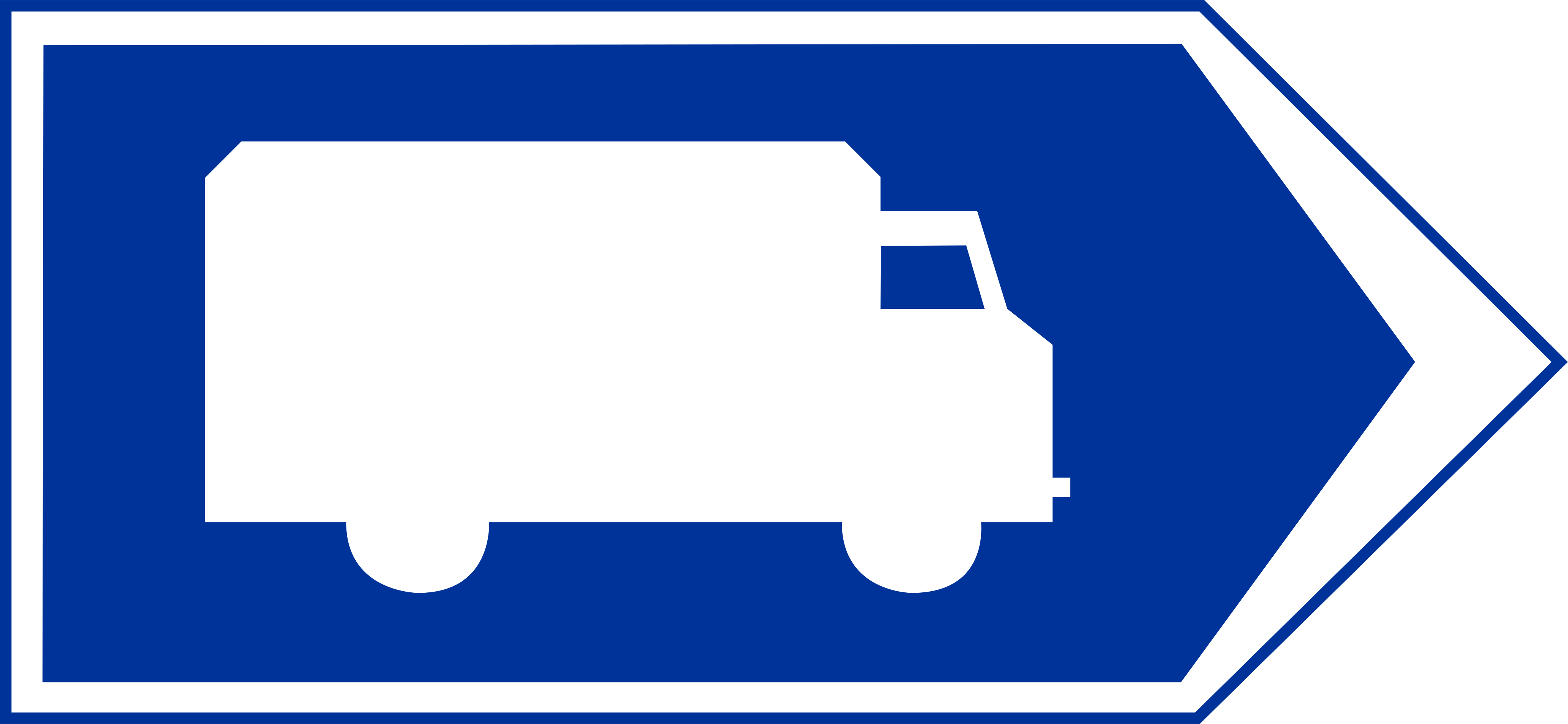
Follow the F-13 Sign for Your Designated Transit Route
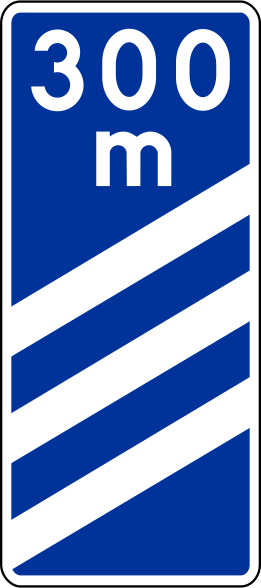
Approaching a Highway Exit? The F-14a Sign Warns You 300 Meters Ahead!
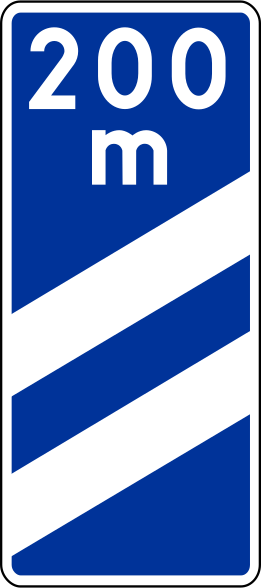
Prepare to exit the motorway with the F-14b 200-meter exit marker sign.
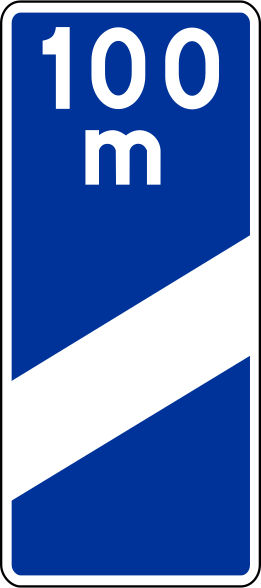
Prepare to Exit: The F-14c Highway Exit Marker (100m) Road Sign
Deepen your understanding of specific road signs by reviewing official Polish traffic rules and associated real-world driving scenarios. These expert-led resources help you bridge the gap between visual recognition and practical exam application.
Discover the new Polish regulations that permit 17-year-olds to start their driving journey with a Category B license. This guide clarifies the essential conditions for supervised driving, focusing on the qualifications of the accompanying driver and the specific restrictions young drivers must adhere to. Gaining this knowledge is crucial for passing the Polish theory exam and ensuring safe, legal driving practices from day one.
Your Essential Guide to First Aid After an Accident – Pass Your Polish Theory Exam!
As a future driver in Poland, understanding Resuscytacja Krążeniowo-Oddechowa (CPR) is not just a life-saving skill but also a component tested in the driving theory exam. This article breaks down the critical theoretical elements, from identifying an unresponsive person to the correct sequence of actions for chest compressions and rescue breaths, ensuring you are prepared for both your exam and real-world emergencies.
Navigate Tram Intersections Like a Pro: Essential for Your Polish Driving Exam.
The D-2 sign officially cancels the priority status previously granted by the D-1 sign. It appears as the standard yellow diamond but is crossed out with a thick black diagonal line. This sign is usually placed before an intersection with another priority road, an equal-priority intersection (where the 'right-hand rule' applies), or a roundabout. It serves as a critical warning for drivers to transition from 'priority' mindset to 'yielding' mindset.
The D-14 sign warns drivers that a lane is tapering off and will soon disappear. It is most commonly found when a slow-moving traffic lane (D-13) ends, when an expressway lane is dropped, or after an intersection. The sign shows which lane is ending with a bent arrow. This requires the 'zipper merge' technique (jazda na suwak) in congested traffic, where drivers from the ending lane should be allowed to merge one by one into the continuing lane.
After reviewing the full list of Polish road signs, explore specific sign categories for in-depth understanding. Challenge your knowledge with practice questions focused on sign recognition and interpretation to solidify your preparation for the driving theory exam.
Browse All Polish Road Signs