
When an ambulance, police vehicle, or fire truck approaches with blue flashing lights and a siren, it signals an urgent response to an emergency. As a driver in Poland, it is your legal and moral responsibility to immediately give way, ensuring these vehicles can pass without obstruction. This involves understanding their signals and knowing how to safely maneuver your vehicle to create a clear path.
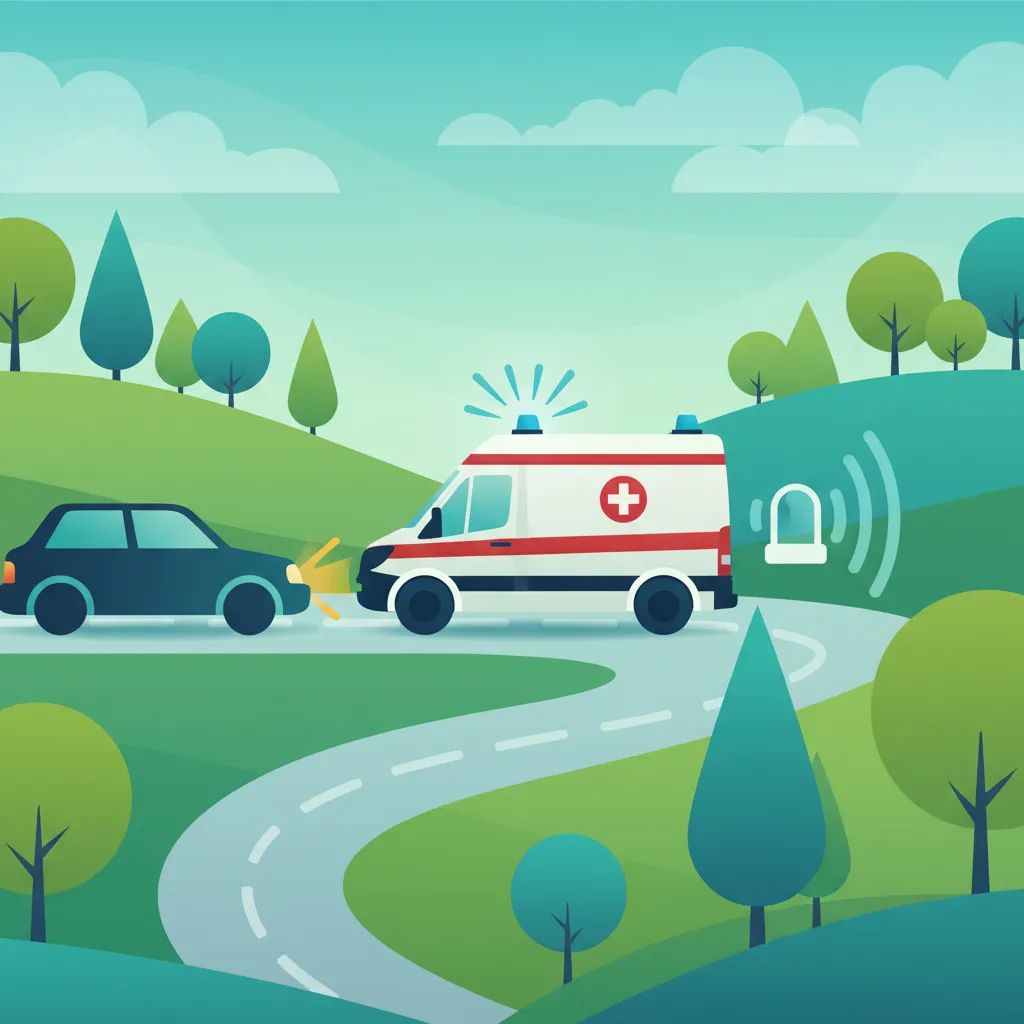
Theory topic content overview
Read the full theory topic guide for Emergency Vehicle Priority with structured, easy-to-scan content built for learners in Poland. This detailed section explains the exact rule, meaning, traffic context, comparison points, and exam logic behind this Polish driving theory topic so you can study faster, understand the concept more clearly, and avoid common interpretation mistakes on the theory test.
Emergency vehicle priority is a fundamental concept in Polish traffic law, designed to ensure that emergency responders can reach incidents as quickly and safely as possible. As a driver in Poland, understanding and correctly applying these rules is not only a legal obligation but a crucial aspect of road safety. This topic delves into what constitutes an emergency vehicle, their signals, and your precise duties to give way, including the vital role of the korytarz życia (emergency corridor).
Emergency vehicle priority refers to the legal requirement for all other road users to give immediate and unobstructed passage to designated emergency vehicles actively responding to an emergency. In Poland, these vehicles typically include:
These vehicles signal their urgent status by using blue flashing lights and an audible siren. Both signals typically must be in use for the vehicle to have priority and be exempt from certain traffic rules.
Understanding and correctly reacting to emergency vehicles is vital for several reasons:
korytarz życia and general reactions, are frequently featured in the Polish driving theory exam. Knowing these rules is essential to pass.Emergency vehicles in Poland use a distinct combination of signals to indicate they require priority:
Your immediate reaction upon seeing blue lights or hearing a siren must be to:
Important Note on Blue Lights Alone: If an official vehicle is only using blue flashing lights without an audible siren, it typically indicates a vehicle on duty but not requiring immediate priority. You are not legally obliged to give way as if it were an emergency response, though it's always wise to exercise caution.
Korytarz Życia (Emergency Corridor) in PolandA critical aspect of emergency vehicle priority in Poland, particularly on multi-lane roads and motorways, is the formation of the korytarz życia (emergency corridor). This is a dedicated lane created by drivers to allow emergency vehicles to pass through congested traffic.
How to Form a Korytarz Życia:
This creates a clear, central passage for emergency vehicles. It's crucial that this action is taken proactively and immediately upon perceiving an emergency vehicle, even before it is directly behind you, to ensure the corridor is ready.
korytarz życia on multi-lane roads) and stop if necessary.teren zabudowany) that is using blue flashing lights and a siren. Outside built-up areas, you must exercise extreme caution. Generally, it is safest to assume you should not overtake such a vehicle if it is actively responding to an emergency.Learners and even experienced drivers in Poland often make these mistakes when encountering emergency vehicles:
Korytarz Życia Formation: Moving to the right from the far-left lane, or not creating the corridor at all. Solution: Remember the "left goes left, rest go right" rule for multi-lane roads.Principle of Limited Trust: While emergency vehicles have priority, you must still apply the zasada ograniczonego zaufania (principle of limited trust). This means being prepared for unexpected actions from other road users who might panic or react incorrectly themselves, even when yielding to an emergency vehicle.When an emergency vehicle with blue flashing lights and an audible siren approaches in Poland, your primary duty is to facilitate its passage immediately and safely. This means:
Korytarz Życia: Remember the specific rules for emergency corridor formation on multi-lane roads: far-left lane to the left, all other lanes to the right.By mastering these rules, you contribute to public safety, demonstrate responsible driving, and are well-prepared for your Polish driving theory exam.
In Poland, emergency vehicles (police, ambulances, fire trucks) with active blue flashing lights and sirens have unconditional priority on the road. Drivers must immediately locate the vehicle, signal intentions, slow down, and create a clear path—typically by moving to the side or, on multi-lane roads, forming a korytarz życia (emergency corridor) where the far-left lane moves left and all other lanes move right. This corridor must be created proactively even before the emergency vehicle is directly behind you. Emergency vehicles override all standard priority rules, including green lights and right-of-way at intersections, and overtaking them is prohibited in built-up areas. The content also emphasizes applying the principle of limited trust—expecting other drivers to make mistakes even when yielding to emergency responders.
A short set of high-value points that capture the most important ideas from this theory explanation.
Emergency vehicles in Poland signal priority using both blue flashing lights AND an audible siren simultaneously; blue lights alone do not obligate you to give way.
The korytarz życia (emergency corridor) on multi-lane roads requires vehicles in the far-left lane to move left, while all other lanes move right to create a central passage.
An emergency vehicle with active lights and siren always has priority over your green light or established right-of-way at intersections.
Never overtake an emergency vehicle in a built-up area (teren zabudowany) when it is actively using emergency signals.
Apply the zasada ograniczonego zaufania (principle of limited trust) even when yielding to emergency vehicles—be prepared for other drivers to react incorrectly.
Both blue flashing lights AND siren must be active for an emergency vehicle to have legal priority on Polish roads.
On multi-lane roads: far-left lane goes left, all other lanes go right when forming the emergency corridor.
Move proactively to create the corridor immediately upon perceiving emergency signals, even before the vehicle is directly behind you.
Overtaking emergency vehicles is prohibited in built-up areas and requires extreme caution outside them.
Even if you have priority at an intersection, you must yield to emergency vehicles with active signals.
Waiting too long to react—always respond immediately when you see blue lights or hear a siren.
Forming the emergency corridor incorrectly by moving right from the far-left lane instead of moving left.
Panic braking or making sudden swerving movements instead of smooth, predictable lane changes.
Assuming your green light or right-of-way supersedes an emergency vehicle's priority at an intersection.
Following too closely behind an emergency vehicle to take advantage of its path through traffic.
Start with a short, direct summary of Emergency Vehicle Priority before reading the full explanation below.
When you encounter an emergency vehicle in Poland using blue flashing lights and a siren, you must immediately give way. This means slowing down, moving to the side of the road, and stopping if necessary to create an unobstructed path. Always check your surroundings and avoid sudden movements, ensuring the emergency vehicle can pass safely and quickly.
Review the most important terms, rule signals, and traffic concepts linked to Emergency Vehicle Priority.
Explore related theory topic pages connected to Emergency Vehicle Priority and continue with the next useful rule explanation.
See the common search queries learners use when trying to understand Emergency Vehicle Priority in Poland.

Continue your preparation by exploring specific Polish driving theory topics in detail. Review each section to reinforce your understanding of traffic rules, road signs, and safe driving practices. Our comprehensive explanations are structured to support your learning journey and help you confidently approach the official driving licence theory exam.
Polish Driving Theory TopicsTheory topic content overview
A short set of high-value points that capture the most important ideas from this theory explanation.
Emergency vehicles in Poland signal priority using both blue flashing lights AND an audible siren simultaneously; blue lights alone do not obligate you to give way.
The korytarz życia (emergency corridor) on multi-lane roads requires vehicles in the far-left lane to move left, while all other lanes move right to create a central passage.
An emergency vehicle with active lights and siren always has priority over your green light or established right-of-way at intersections.
Never overtake an emergency vehicle in a built-up area (teren zabudowany) when it is actively using emergency signals.
Apply the zasada ograniczonego zaufania (principle of limited trust) even when yielding to emergency vehicles—be prepared for other drivers to react incorrectly.
Both blue flashing lights AND siren must be active for an emergency vehicle to have legal priority on Polish roads.
On multi-lane roads: far-left lane goes left, all other lanes go right when forming the emergency corridor.
Move proactively to create the corridor immediately upon perceiving emergency signals, even before the vehicle is directly behind you.
Overtaking emergency vehicles is prohibited in built-up areas and requires extreme caution outside them.
Even if you have priority at an intersection, you must yield to emergency vehicles with active signals.
Waiting too long to react—always respond immediately when you see blue lights or hear a siren.
Forming the emergency corridor incorrectly by moving right from the far-left lane instead of moving left.
Panic braking or making sudden swerving movements instead of smooth, predictable lane changes.
Assuming your green light or right-of-way supersedes an emergency vehicle's priority at an intersection.
Following too closely behind an emergency vehicle to take advantage of its path through traffic.
Start with a short, direct summary of Emergency Vehicle Priority before reading the full explanation below.
When you encounter an emergency vehicle in Poland using blue flashing lights and a siren, you must immediately give way. This means slowing down, moving to the side of the road, and stopping if necessary to create an unobstructed path. Always check your surroundings and avoid sudden movements, ensuring the emergency vehicle can pass safely and quickly.
Review the most important terms, rule signals, and traffic concepts linked to Emergency Vehicle Priority.
Explore related theory topic pages connected to Emergency Vehicle Priority and continue with the next useful rule explanation.
See the common search queries learners use when trying to understand Emergency Vehicle Priority in Poland.
Continue your preparation by exploring specific Polish driving theory topics in detail. Review each section to reinforce your understanding of traffic rules, road signs, and safe driving practices. Our comprehensive explanations are structured to support your learning journey and help you confidently approach the official driving licence theory exam.
Polish Driving Theory TopicsUse this exam-focused revision tip to understand how Emergency Vehicle Priority is likely to appear in theory questions for learners in Poland. This section helps you identify the most testable part of the rule, avoid common traps, and remember the concept more effectively during Polish driving theory exam preparation.
A common exam question in Poland relates to reacting to emergency vehicles. Pay close attention to scenarios involving intersections, overtakes, and creating emergency corridors. Remember that the principle of limited trust means you must always be prepared for others to make mistakes, even in an emergency situation where priority is clear.
Read direct answers to the most common learner questions about Emergency Vehicle Priority in Poland. This FAQ focuses on rule confusion, practical meaning, comparison with similar concepts, and the exact uncertainties that appear most often in Polish driving theory revision and exam preparation.
Emergency vehicles in Poland primarily use blue flashing lights and an audible siren to signal their urgent status and request priority from other road users.
You must slow down, move to the nearest edge of the road, and stop if required, to create a clear and unobstructed path for the emergency vehicle to pass safely.
Yes, if an emergency vehicle is approaching an intersection, you must stop, even if you have a green light, to allow it to pass safely before proceeding.
Generally, you are not permitted to overtake an emergency vehicle, especially in built-up areas, if it is using its emergency signals and responding to an incident. Always ensure you do not impede their progress.
An emergency corridor is a clear path created by drivers moving their vehicles to the sides of the road on multi-lane highways or motorways, allowing emergency vehicles to quickly navigate through congested traffic.
If an emergency vehicle approaches from behind, signal your intention to move to the side (usually the right) and safely slow down or stop to provide a clear lane for them to pass.
If you cannot immediately move to the side safely due to traffic or road conditions, proceed cautiously until it is safe to do so. The key is to avoid sudden or dangerous maneuvers that could create further risk.
Build custom practice sessions tailored precisely to your needs. Focus on areas requiring improvement, review specific Polish road signs, or master complex traffic rules to ensure full preparation for your official driving license exam.