
Learn the crucial procedures for vehicle breakdowns on Swiss motorways and national roads, including how to safely utilize the Pannenstreifen (hard shoulder). This guide explains the legal requirements for wearing a Warnweste (safety vest) and the vital role of SOS emergency phones. Mastering these safety protocols is essential for any driver preparing for the Swiss theory exam and for ensuring your safety in unexpected roadside situations.
Article content overview
Breaking down on a Swiss motorway or national road can be a stressful and potentially dangerous situation. Understanding the correct procedures is paramount for your safety, the safety of other road users, and for passing your Swiss driving theory exam. This guide will walk you through the essential steps, from securing your vehicle to contacting assistance, ensuring you are prepared for unexpected roadside incidents. We will cover the specific Swiss regulations regarding the hard shoulder (Pannenstreifen), the mandatory safety vest (Warnweste), and the crucial role of SOS emergency telephones.
Upon noticing any issue that suggests a breakdown or mechanical failure, your primary objective is to move your vehicle to a safe location as quickly and efficiently as possible. This often means steering onto the Pannenstreifen, the designated hard shoulder on Swiss motorways and national roads. As soon as you initiate this manoeuvre, you must activate your hazard warning lights (Warnblinker) to alert other drivers to your predicament. Remaining calm is crucial; panic can lead to poor decisions.
Once you have safely stopped on the Pannenstreifen, it is imperative to assess the immediate surroundings. The goal is to minimise risk to yourself and others. If possible, position your vehicle so that it is as far to the right as feasible, maximising the space between your car and the active traffic lanes.
For breakdowns occurring on national roads or motorways, the Pannenstreifen is your designated safe zone. Always attempt to reach it before stopping, if safely possible.
Swiss traffic law mandates that all vehicles must carry a reflective safety vest, the Warnweste, for each occupant. While carrying it is legally required, the specific rules for donning it before exiting the vehicle differ from some other European countries. In Switzerland, it is highly recommended to put on your Warnweste before exiting the vehicle, especially if visibility is poor or traffic is heavy. This significantly increases your visibility to oncoming vehicles.
When exiting your vehicle, always do so from the side facing away from moving traffic, typically the passenger side. Never exit directly into a lane of traffic. Even on the Pannenstreifen, the risk of being struck by a vehicle that may swerve or misjudge the distance is real. Once outside the vehicle and wearing your Warnweste, if possible and safe to do so, move behind a safety barrier if one is present. This provides an additional layer of protection from passing vehicles.
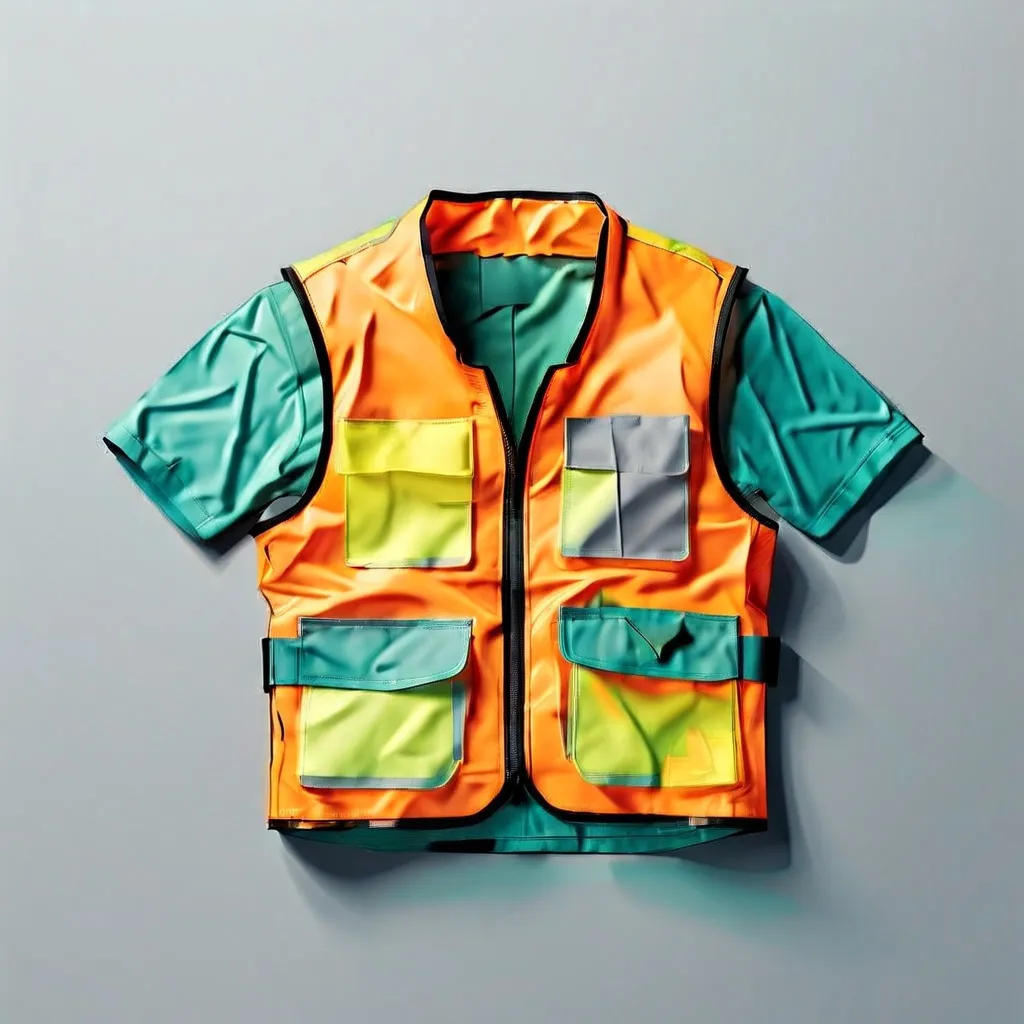
A high-visibility vest required to be carried in all vehicles in Switzerland. It significantly increases the wearer's visibility to other road users, especially during breakdowns or at night.
After ensuring your personal safety and that of any passengers, the next critical step is to place a warning triangle (Warndreieck) to alert other drivers from a distance. This is a vital safety measure that provides ample warning of a stationary vehicle ahead. The warning triangle must be placed at a sufficient distance behind your vehicle to give oncoming traffic enough time to react and slow down.
On Swiss motorways and national roads, the standard recommendation is to place the warning triangle at least 100 meters behind your vehicle. This distance allows drivers approaching at speed to see the hazard and adjust their driving accordingly. Ensure the triangle is clearly visible and positioned within the lane or on the shoulder where it can be easily seen.
Switzerland has an excellent network of emergency communication devices on its motorways and national roads. Orange SOS telephones, often referred to as Pannenhilfe telephones or emergency call boxes, are strategically placed approximately every 2 kilometers along these routes. These phones offer a direct, free connection to the cantonal police emergency coordination centre.
When you locate an SOS telephone, press the button to establish a connection. Be prepared to provide your precise location, the nature of your problem (breakdown, accident, etc.), and any other relevant details. The operator will guide you through the next steps, which may include dispatching breakdown services or police assistance.
In addition to the SOS phones, various breakdown assistance services are available. The Touring Club Schweiz (TCS) offers a 24-hour breakdown assistance hotline at 0800 140 140, which is a free call from Switzerland. Similar services may be available through other motoring organisations.
Do not attempt to repair your vehicle on the Pannenstreifen unless you are absolutely certain it is safe and you have the necessary expertise. The primary focus should always be on ensuring personal safety and contacting professional assistance.
Driving on Swiss motorways can involve tunnels and sections where the hard shoulder is temporarily used as a traffic lane, known as Pannenstreifenumnutzung (PUN). These situations require specific attention.
If your breakdown occurs within a tunnel, follow the tunnel's specific emergency procedures, which are often indicated by signage. Tunnels are equipped with emergency exits and niches for a reason, and these should be used to evacuate passengers to safety if necessary. Never attempt to turn around or reverse in a tunnel.
When driving on PUN sections, the Pannenstreifen is open for use as a regular traffic lane, often indicated by green illuminated arrows above the lane. In such cases, a breakdown would require you to seek the nearest emergency bay (Nothaltebucht) if possible. If you break down in a Nothaltebucht or on a released Pannenstreifen, this triggers an alarm in the traffic management centre, which can then close the PUN section to allow for safe access by breakdown services.
A system on Swiss national roads where the hard shoulder (Pannenstreifen) is temporarily opened as an additional traffic lane, typically during periods of high traffic volume, to improve traffic flow and safety.
Swiss traffic legislation places a strong emphasis on safety and clear procedures during a breakdown. Understanding these rules is not only for practical safety but also for your theory exam. Key points to remember include:
By internalising these steps, you equip yourself with the knowledge to handle a breakdown situation on Swiss roads responsibly and safely. This understanding is a crucial component of competent driving and a vital part of preparing for your Swiss driving theory test.
Handling a breakdown on Swiss motorways requires a specific sequence of safety steps: immediately activate hazard lights, steer safely onto the Pannenstreifen, ensure all occupants don their Warnweste before exiting from the side away from traffic, and place a warning triangle at least 100 metres behind the vehicle. Contact emergency services via the SOS phones located every 2 kilometres or call the TCS hotline at 0800 140 140. Special procedures apply in tunnels and PUN sections where the hard shoulder may be used as a traffic lane, requiring drivers to seek emergency bays instead.
A short set of high-value points that capture the most important ideas from this article.
Always activate hazard warning lights immediately upon detecting a breakdown to alert other road users.
Steer onto the Pannenstreifen (hard shoulder) as quickly as possible while maintaining control and safety.
Put on your Warnweste before exiting the vehicle, ideally while still inside, to maximise visibility before exposure.
Place the warning triangle at least 100 meters behind your vehicle to give approaching traffic adequate reaction time.
Use the orange SOS phones found every 2 km on Swiss motorways for direct connection to emergency services.
The Pannenstreifen is the designated safe zone on Swiss motorways and national roads for breakdowns.
Exit your vehicle on the side facing away from traffic, typically the passenger side, never directly into a traffic lane.
SOS emergency telephones are spaced approximately every 2 kilometres along Swiss motorways and connect directly to cantonal police.
In tunnels or PUN sections, seek the nearest emergency bay (Nothaltebucht) as the hard shoulder may be used as a traffic lane.
The TCS breakdown assistance hotline is 0800 140 140 and is free to call from within Switzerland.
Failing to activate hazard lights immediately, delaying the warning to other drivers.
Exiting the vehicle before putting on the Warnweste, especially in poor visibility or heavy traffic.
Placing the warning triangle too close to the vehicle instead of the required 100-metre distance.
Remaining near or behind the vehicle instead of moving behind a safety barrier while waiting for assistance.
Attempting vehicle repairs on the Pannenstreifen without properly assessing safety first.
Article content overview
A short set of high-value points that capture the most important ideas from this article.
Always activate hazard warning lights immediately upon detecting a breakdown to alert other road users.
Steer onto the Pannenstreifen (hard shoulder) as quickly as possible while maintaining control and safety.
Put on your Warnweste before exiting the vehicle, ideally while still inside, to maximise visibility before exposure.
Place the warning triangle at least 100 meters behind your vehicle to give approaching traffic adequate reaction time.
Use the orange SOS phones found every 2 km on Swiss motorways for direct connection to emergency services.
The Pannenstreifen is the designated safe zone on Swiss motorways and national roads for breakdowns.
Exit your vehicle on the side facing away from traffic, typically the passenger side, never directly into a traffic lane.
SOS emergency telephones are spaced approximately every 2 kilometres along Swiss motorways and connect directly to cantonal police.
In tunnels or PUN sections, seek the nearest emergency bay (Nothaltebucht) as the hard shoulder may be used as a traffic lane.
The TCS breakdown assistance hotline is 0800 140 140 and is free to call from within Switzerland.
Failing to activate hazard lights immediately, delaying the warning to other drivers.
Exiting the vehicle before putting on the Warnweste, especially in poor visibility or heavy traffic.
Placing the warning triangle too close to the vehicle instead of the required 100-metre distance.
Remaining near or behind the vehicle instead of moving behind a safety barrier while waiting for assistance.
Attempting vehicle repairs on the Pannenstreifen without properly assessing safety first.
Explore related topics, search based questions, and concepts that learners often look up when studying Swiss Motorway Breakdown. These themes reflect real search intent and help you understand how this topic connects to wider driving theory knowledge in Switzerland.
Find clear and practical answers to common questions learners often have about Swiss Motorway Breakdown. This section helps explain difficult points, remove confusion, and reinforce the key driving theory concepts that matter for learners in Switzerland.
The 'Pannenstreifen' is the hard shoulder on Swiss motorways and national roads. It should only be used for breakdowns or emergencies, unless specific signage (PUN - Pannenstreifenumnutzung) permits its use as a driving lane.
Yes, Swiss law requires you to carry a Warnweste in your vehicle. While not legally mandated to don it before exiting the vehicle in Switzerland (unlike some other countries), it is highly recommended for your safety before stepping out onto or near the roadway.
Orange SOS emergency phones are strategically placed approximately every 2 kilometers on Swiss motorways and national roads, providing a direct connection to the cantonal police emergency coordination.
Activate your hazard lights, don your Warnweste, exit the vehicle cautiously from the side away from traffic, and place the warning triangle at least 100 meters behind your vehicle. Then, use an SOS phone or your mobile to call for assistance.
For breakdown assistance, you can call the TCS (Touring Club Schweiz) on 0800 140 140 (free call) or use the SOS emergency phones for immediate contact with emergency services. Motorway operations centres can also dispatch patrols.
Continue your learning journey by searching our extensive library of Swiss driving theory articles. Explore additional topics, review specific road rules, or deepen your understanding of official traffic procedures to excel in your exam and drive safely in Switzerland.