
Navigate Switzerland's roads with confidence by understanding the differences between Nationalstrassen and Kantonsstrassen. This guide will demystify the numbering systems and signage for these key road types, helping you prepare effectively for your theory exam. Grasping these distinctions is fundamental for safe driving and recognizing your position on the network.
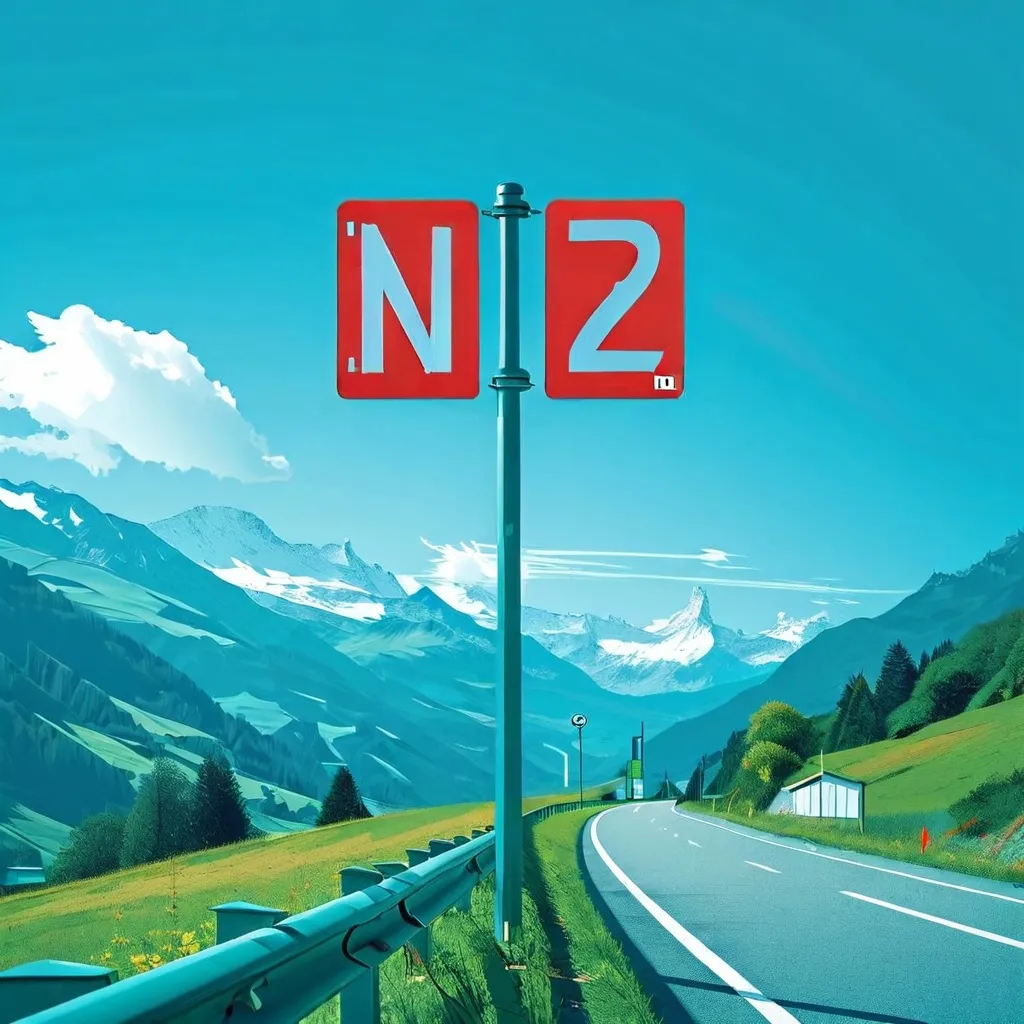
Article content overview
Switzerland's road network is a meticulously organised system designed to facilitate efficient and safe travel across diverse terrains. For anyone learning to drive or preparing for the theory exam in Switzerland, understanding the distinction between different road classifications and their numbering systems is fundamental. This guide will demystify the hierarchy of Swiss roads, focusing on Nationalstrassen (national roads) and Kantonsstrassen (cantonal roads), and crucially, how to interpret their route signage. Grasping these distinctions is not just about knowing where you are; it's essential for making informed driving decisions, predicting traffic behaviour, and ultimately, passing your theory test with confidence.
Switzerland's road network is structured across several administrative levels, each with its own responsibilities for construction, maintenance, and signage. At the highest level are the Nationalstrassen (National Roads), which form the backbone of the country's transport system. These are managed by the Federal Roads Authority (ASTRA - Bundesamt für Strassen). Within this category, we find the Autobahnen (motorways) and Autostrassen (expressways), which are primarily designated with an 'A' prefix, such as the vital A1 or A2. Historically, these major routes also carried an 'N' designation for their national route number, creating a dual-numbering system. However, the trend is increasingly towards the 'A' prefix for clarity.
Next in the hierarchy are the Kantonsstrassen (Cantonal Roads). As their name suggests, these roads are managed by the respective cantons. Their designation and numbering systems can vary significantly from one canton to another. While many employ a 'K' prefix, some might use numbers only or other specific conventions unique to that canton. These roads are vital for inter-cantonal and local travel, connecting larger towns and cities to the national network.
Below the cantonal level are Gemeindestrassen (Municipal Roads) and Verbindungsstrassen (Connecting Roads), managed at the municipal level. These are typically local access roads, urban streets, and smaller rural routes. Their signage often uses a white background, indicating local jurisdiction and often featuring just a number or no route number at all. Understanding this hierarchy is the first step to deciphering the complex web of Swiss road signage and making correct navigational choices.
The visual cues on Swiss road signs are crucial for drivers to understand the type of road they are on and the associated regulations. The Swiss Federal Roads Authority (ASTRA) employs a colour-coded system that, combined with numbering, provides immediate information about the route.
Motorways and expressways are clearly indicated by green route signs. These signs will feature an 'A' followed by a number (e.g., A1, A2, A9). For example, the A1 is the primary east-west artery of Switzerland, running from Geneva to St. Gallen. The A2 is the crucial north-south route connecting Basel to Lugano via the Gotthard. The 'A' prefix signifies that these are part of the federal motorway network, and as such, a motorway vignette is required for their use. The dual-numbering system, where an 'N' number might also be present, is being phased out in favour of the 'A' prefix for clarity, especially on newer signage and digital systems.
While the Autobahnen and Autostrassen are the most prominent Nationalstrassen, the network also includes other major federal routes that may not be of motorway standard. These are often indicated by yellow route signs. These signs typically display an 'N' followed by a number. These routes are still part of the national network and are managed by ASTRA, but they might have different speed limits, fewer lanes, or more intersections than typical motorways. It's important to note that the distinction between 'A' routes and 'N' routes can sometimes be confusing due to the historical dual numbering and ongoing revisions to the network's classification and signage. However, the yellow sign generally signifies a route of national importance, even if it doesn't have full motorway characteristics.
Cantonal roads are generally marked with white route signs. These signs will typically display a 'K' followed by a number, or simply a number if the canton does not use the 'K' prefix. For instance, you might see a sign indicating 'K12' or simply '12'. These roads are vital for navigating within and between cantons, offering access to towns, villages, and scenic areas that might not be directly served by motorways. While they are managed at the cantonal level, they are still significant routes within the broader Swiss transport infrastructure.
Switzerland also designates specific tourist routes, often identified by blue signs. These routes are designed to showcase scenic landscapes and attractions and may not always follow the most direct or fastest path. While not a primary classification for speed or navigation in the same way as national or cantonal roads, they are important for leisure driving and understanding the variety of road types available.
The numbering of Swiss roads follows a systematic approach, although historical practices and ongoing network development can add layers of complexity. The distinction between national and cantonal road numbering is key for drivers.
The core of the Nationalstrassen network comprises motorways and expressways, historically numbered with an 'N' designation, which was then also represented by an 'A' prefix for the motorway classification. For example, a route might have been known as N1 and signed as A1. The purpose of this dual system was to distinguish between the road's status as a national route (N) and its technical classification as a motorway (A). As part of ongoing efforts to simplify signage and conform to international standards, the 'A' prefix is becoming the primary identifier for Swiss motorways and expressways.
The Bundesbeschluss über das Nationalstrassennetz (Federal Resolution on the National Road Network) provides the framework for these classifications. Roads are categorized into first-class motorways (Autobahnen), second-class expressways (Autostrassen), and third-class roads for mixed traffic, all under federal jurisdiction. The numbering system is intended to reflect their importance and connectivity. For instance, the N2 (now largely signed as A2) is a critical north-south axis, while the N1 (signed as A1) serves the main east-west corridor. Understanding these designations helps in route planning and interpreting navigation systems.
Each canton has the authority to number its own cantonal roads. This autonomy leads to variations in how these routes are designated. In many cantons, a 'K' prefix is used, followed by a number that reflects its hierarchical importance or geographical sequence within that canton. For example, a 'K1' might be a primary arterial road within a canton, while a 'K50' could be a less significant connecting route.
However, it's important to be aware that not all cantons use the 'K' prefix. Some may simply use numbers, and the sequence might not be immediately obvious to an outsider. The Strassenverkehrsverordnung (StVO), or Road Traffic Ordinance, and related cantonal regulations govern these aspects. The key takeaway for drivers preparing for the theory exam is to recognise that white signs with a number (or 'K' plus a number) denote a cantonal road, requiring adherence to the specific traffic rules and speed limits applicable to that road class within that canton.
Understanding the differences between Nationalstrassen and Kantonsstrassen, and how they are signed, is more than just academic knowledge; it has direct implications for your driving behaviour and performance on the theory test.
When navigating, distinguishing between green (motorway), yellow (national road), and white (cantonal road) signs helps you anticipate the type of road ahead. Motorways generally have higher speed limits and fewer conflict points, while cantonal roads may have lower limits, more intersections, and a greater presence of local traffic, including cyclists and pedestrians. This awareness allows you to adjust your speed, anticipation, and defensive driving strategies accordingly. For instance, approaching a white-signed route might require greater vigilance for slower vehicles, oncoming traffic on narrower sections, and potential agricultural machinery.
The Swiss theory exam often tests your understanding of road classifications and their associated rules. Questions might involve:
For example, you might be asked about the correct lane usage on a road designated with a yellow sign versus a white sign, or the implications of a speed limit change on a national road versus a cantonal road. Familiarity with these distinctions ensures you can answer such questions accurately.
To reinforce your understanding, here are some essential terms related to Swiss road numbering and classifications.
Mastering the intricacies of Swiss road numbering is a crucial step towards safe and confident driving. The theory exam will assess your ability to interpret these signs and understand the rules associated with different road classifications.
By diligently studying these distinctions and practicing with relevant questions, you will be well-prepared to navigate Switzerland's roads and achieve success in your driving theory test.
This article explains the systematic hierarchy of Swiss roads, from federally managed Nationalstrassen to cantonal Kantonsstrassen and municipal roads. The colour-coded signage provides immediate visual information: green signs with 'A' prefix for motorways, yellow signs with 'N' prefix for national roads, and white signs with 'K' or numbers for cantonal roads. The distinction matters for speed limits, vignette requirements, and anticipating traffic conditions. Understanding this classification system is essential for both safe driving in Switzerland and answering theory exam questions about road types and their associated rules.
A short set of high-value points that capture the most important ideas from this article.
Swiss roads use a colour-coded system: green signs indicate motorways (A prefix), yellow signs indicate national roads (N prefix), and white signs indicate cantonal roads (K prefix or number only)
The 'A' prefix is becoming the standard for Swiss motorways and expressways, replacing the historical dual-numbering system that used both 'N' and 'A' designations
Cantonal roads are managed by individual cantons and their numbering conventions vary, with some using the 'K' prefix and others using numbers only
A motorway vignette is mandatory for driving on Swiss motorways (green A-signed routes) and expressways
Understanding road classifications helps you anticipate traffic behaviour, speed limits, and appropriate driving strategies for each road type
Green route sign with 'A' number = Federal motorway/expressway (vignette required)
Yellow route sign with 'N' number = National road managed by ASTRA, not necessarily full motorway standard
White route sign with 'K' or number = Cantonal road, managed by the canton with potentially varying conventions
ASTRA (Bundesamt für Strassen) manages all Nationalstrassen at the federal level
The road hierarchy flows from Nationalstrassen (federal) to Kantonsstrassen (cantonal) to Gemeindestrassen (municipal)
Confusing 'A' and 'N' prefixes assuming they indicate different road types, when both belong to the national network and 'A' simply indicates motorway classification
Assuming all cantonal roads use the 'K' prefix, when some cantons use plain numbers without a prefix
Forgetting that a motorway vignette is required on green-signed motorways and expressways, not just on 'A' numbered routes
Not adjusting driving strategy when transitioning from a green-signed motorway to a yellow or white-signed route with different speed limits and intersection patterns
Overlooking that yellow-signed national roads may have different characteristics than full motorways despite being part of the national network
Article content overview
A short set of high-value points that capture the most important ideas from this article.
Swiss roads use a colour-coded system: green signs indicate motorways (A prefix), yellow signs indicate national roads (N prefix), and white signs indicate cantonal roads (K prefix or number only)
The 'A' prefix is becoming the standard for Swiss motorways and expressways, replacing the historical dual-numbering system that used both 'N' and 'A' designations
Cantonal roads are managed by individual cantons and their numbering conventions vary, with some using the 'K' prefix and others using numbers only
A motorway vignette is mandatory for driving on Swiss motorways (green A-signed routes) and expressways
Understanding road classifications helps you anticipate traffic behaviour, speed limits, and appropriate driving strategies for each road type
Green route sign with 'A' number = Federal motorway/expressway (vignette required)
Yellow route sign with 'N' number = National road managed by ASTRA, not necessarily full motorway standard
White route sign with 'K' or number = Cantonal road, managed by the canton with potentially varying conventions
ASTRA (Bundesamt für Strassen) manages all Nationalstrassen at the federal level
The road hierarchy flows from Nationalstrassen (federal) to Kantonsstrassen (cantonal) to Gemeindestrassen (municipal)
Confusing 'A' and 'N' prefixes assuming they indicate different road types, when both belong to the national network and 'A' simply indicates motorway classification
Assuming all cantonal roads use the 'K' prefix, when some cantons use plain numbers without a prefix
Forgetting that a motorway vignette is required on green-signed motorways and expressways, not just on 'A' numbered routes
Not adjusting driving strategy when transitioning from a green-signed motorway to a yellow or white-signed route with different speed limits and intersection patterns
Overlooking that yellow-signed national roads may have different characteristics than full motorways despite being part of the national network
Explore related topics, search based questions, and concepts that learners often look up when studying Swiss Road Numbering (N vs K). These themes reflect real search intent and help you understand how this topic connects to wider driving theory knowledge in Switzerland.
Find clear and practical answers to common questions learners often have about Swiss Road Numbering (N vs K). This section helps explain difficult points, remove confusion, and reinforce the key driving theory concepts that matter for learners in Switzerland.
Nationalstrassen are federal roads, often designated with 'A' (Autobahn) or 'N' prefixes, managed by ASTRA. Kantonsstrassen are roads managed by individual cantons, frequently indicated with a 'K' prefix or specific cantonal numbering.
Nationalstrassen, including Autobahnen (motorways) and Autostrassen (expressways), are typically indicated by signs with an 'A' prefix followed by a number (e.g., A1). Some national routes might historically or in specific contexts use 'N' prefixes, but 'A' is common for motorways.
The 'K' prefix on a Swiss road sign typically denotes a Kantonsstrasse, meaning it is a cantonal road managed by the respective canton, rather than a national road managed by the federal government (ASTRA).
While historically there was a distinction between 'N' for national routes and 'A' for motorways, the system has largely been consolidated, with 'A' prefixes becoming dominant for motorways and expressways under federal management. The 'N' designation might still appear in certain contexts but is less common for direct signage than 'A'.
Yes, Swiss route signs have distinct backgrounds: green for motorways (Autobahnen), yellow for national and important cantonal through-routes, and white for local roads. This helps in quickly identifying the road's classification and importance.
Continue your learning journey by searching our extensive library of Swiss driving theory articles. Explore additional topics, review specific road rules, or deepen your understanding of official traffic procedures to excel in your exam and drive safely in Switzerland.