
Prepare for your Swiss driving license theory exam by mastering the critical rules for hazard warning and warning triangle placement. This set from Swiss Driving License Theory covers breakdowns and accidents, detailing procedures for motorways, blind spots, and low visibility. Learn how to act responsibly to prevent secondary accidents and ensure road safety for everyone.
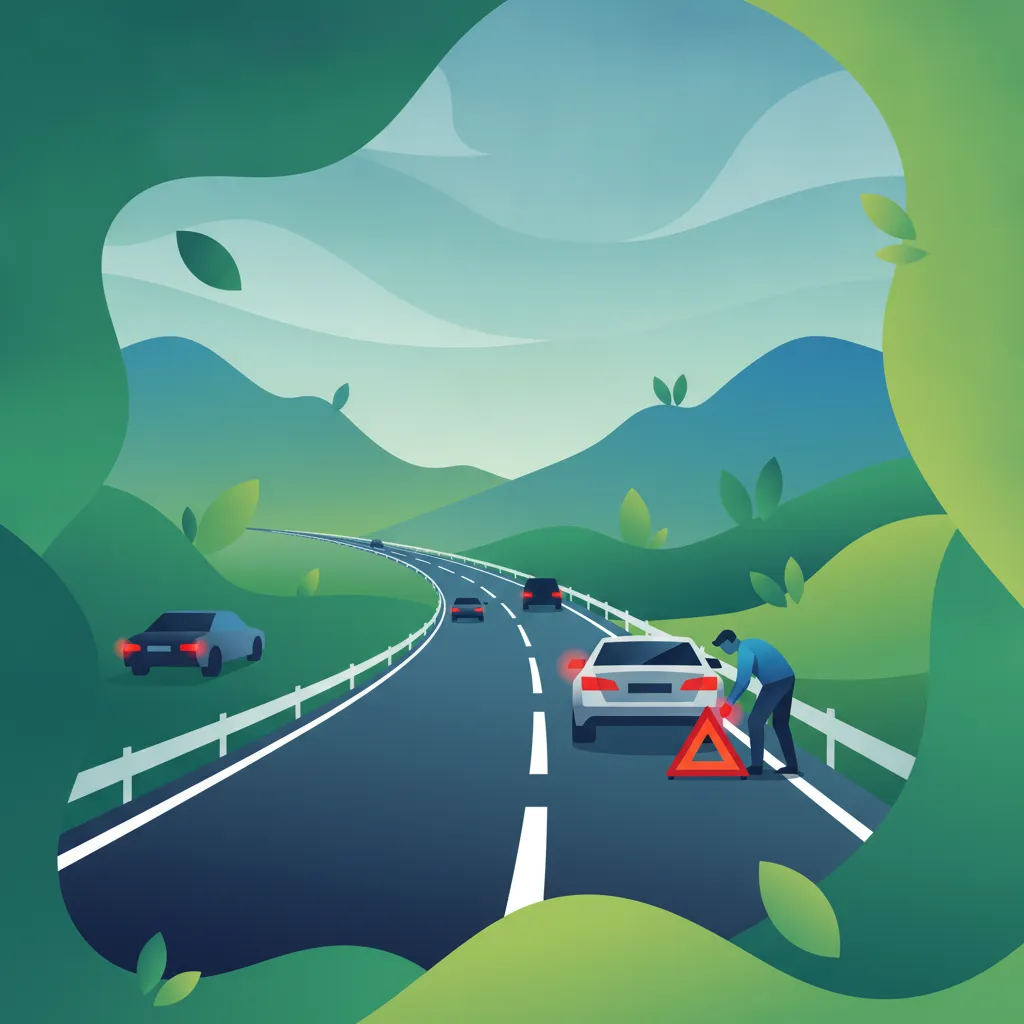
Sharpen your understanding of essential Swiss regulations for hazard warning. This practice set covers correct warning triangle placement, hazard light usage, and safety precautions, crucial for your theory test revision and safe driving.
Understand your responsibilities for warning other drivers in emergency situations on Swiss roads. This set covers correct warning triangle placement, appropriate use of hazard lights, and vital safety precautions for various road types, including motorways and challenging visibility conditions.
Preview sample questions from the Warning Triangle & Hazards practice set to see how they help you prepare for the driving theory exam in Switzerland.
Learners choose Warning Triangle & Hazards to improve accuracy and understanding of key exam themes in Switzerland. It offers realistic driving theory questions and targeted revision for effective preparation.
Find answers to the most common queries learners have when practising Warning Triangle & Hazards, including how questions match the official theory exam in Switzerland, how scoring works, and how this practice improves exam readiness.
On Swiss motorways, you must place the warning triangle at least 100 metres behind your stationary vehicle to give approaching traffic sufficient warning. Always prioritise your own safety when doing so, wearing a safety vest and staying behind the crash barrier if possible.
Hazard warning lights should be activated immediately whenever your vehicle becomes a hazard to other traffic, such as during a breakdown, an accident, or when you are unexpectedly stopped in a dangerous location. They alert other drivers to a potential danger ahead.
Yes, the general principle is to place the warning triangle to give adequate warning. In urban areas (innerorts), it should be placed shortly before the danger spot, typically within 50 metres. Outside built-up areas (ausserorts), it should be 150–250 metres before the danger spot. Always consider visibility and road conditions when determining the exact placement.
If your vehicle breaks down on a blind bend, switch on your hazard warning lights. Prioritise personal safety by moving to a safe location, if possible, behind a crash barrier. Then, place your warning triangle well before the bend, at a distance that allows approaching drivers to see it and react safely before reaching your vehicle or the bend itself. This might mean placing it further than standard distances to account for the obstruction.
While not explicitly mandated for all situations by law, it is strongly recommended and considered best practice to wear a safety vest when exiting your vehicle on a motorway or busy road to place a warning triangle. This greatly increases your visibility to other drivers and is crucial for your personal safety.
By completing Warning Triangle & Hazards, you will gain stronger rule knowledge, faster recognition of signs and situations, better decision making in traffic scenarios, and increased accuracy on exam style questions used in Switzerland. These outcomes directly support higher scoring exam performance.
Explore similar practice sets to reinforce your knowledge on hazard signaling and emergency procedures. This targeted revision strengthens your understanding of specific Swiss traffic rules, improving your overall theory test preparation and driving confidence.
Know the Critical Steps for a Safe Motorway Breakdown Response in Switzerland.

Master High-Pressure Situations on Swiss Roads.

Know Your Responsibilities: Safe Responses to Swiss Emergency Services

Drive Smart, Drive Safe: Master Defensive Strategies for Swiss Roads

Know Your Legal Duties: Act Safely and Responsibly After a Collision.

Master Swiss Motorway and Tunnel Safety: Conquer Advanced Hazards
Questions in Warning Triangle & Hazards
Exam focused questionss
Warning Triangle & Hazards offers quick, focused exam style practice to boost your Swiss knowledge for the driving theory exam in Switzerland.
Warning Triangle & Hazards helps learners in Switzerland with clear explanations and targeted Swiss practice to improve essential driving theory topics.
This practice set is ideal for intermediate learners preparing for their Swiss driving theory exam. It addresses common misunderstandings regarding hazard signaling and triangle placement, particularly in less obvious scenarios. If you want to confidently handle emergency situations on Swiss roads and avoid critical exam errors, this set is for you.
Explore more topics for the Swiss driving theory exam in Switzerland.
Ready to enhance your knowledge of Swiss road rules and signs? Explore our categorized practice questions to focus your study on specific topics, reinforce weak areas, and build confidence for your official theory exam. Begin your journey to passing the Swiss driving test by selecting a category.
Explore Practice Categories